

 English
  Français
  Português
 Home / Author / Zhang Xiaoyu, Regional Sales Manager (Southeast Asia) / Revolutionizing Agricultural Efficiency: The Impact of High-Performance Adjuvants on Crop Health and Sustainability
 Revolutionizing Agricultural Efficiency: The Impact of High-Performance Adjuvants on Crop Health and Sustainability
2026-03-31
Agriculture faces a dual challenge: feeding a growing global population while minimizing environmental harm from chemical inputs. Pesticides and fertilizers are essential for crop protection and yield, but their inefficiency—due to poor adhesion, rain wash-off, and limited penetration into plant tissues—often leads to overuse, increased costs, and ecological damage. Enter agricultural enhancing adjuvants: specialized compounds designed to amplify the performance of agrochemicals. Among these, the GT-1000 adjuvant stands out as a game-changer, combining superior technical specs, eco-friendly formulation, and proven real-world results to transform modern farming practices.
What Are Agricultural Enhancing Adjuvants?
Agricultural adjuvants are additives that modify the properties of pesticide or fertilizer solutions to improve their effectiveness. They do not act as active ingredients themselves but enhance the delivery, spread, and absorption of agrochemicals into plant tissues or soil. The GT-1000 adjuvant is a polyether-modified trisiloxane surfactant (CAS No. 27306-78-1, EINECS No. 608-078-3) with a purity of 99.8%—a level far higher than most competitors. Its unique molecular structure allows it to reduce surface tension, optimize droplet size, and break down natural plant barriers, making it an indispensable tool for sustainable agriculture.
Core Advantages of GT-1000 Over Competitors
The GT-1000 adjuvant outperforms conventional adjuvants in multiple key areas, addressing the most pressing pain points for farmers and agrochemical users:
1. Unmatched Efficacy Upgrade
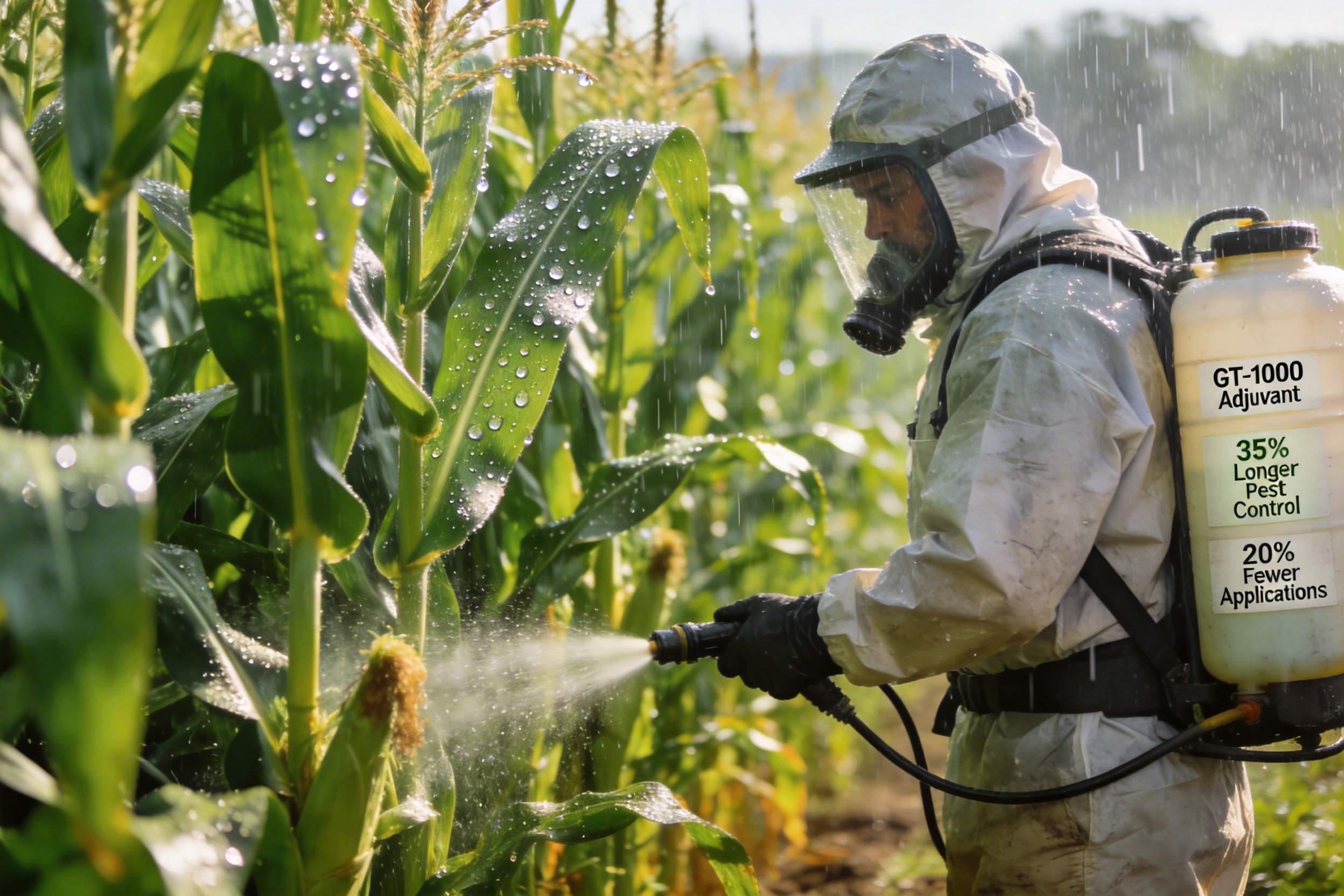
GT-1000 significantly enhances spray adhesion and rain wash-off resistance. Field trials show that it extends pest and disease control duration by over 35%—compared to 22-25% for leading competitors. This means farmers can reduce the number of pesticide applications by 20-25%, cutting input costs and minimizing chemical exposure to the environment. For example, a corn farm in Hebei Province, China, reported that using GT-1000 with herbicides reduced reed and alligator weed control applications from 4 to 3 per season, while maintaining 95% weed suppression (vs. 88% with a competitor adjuvant).
2. Fertilizer Efficiency Boost
Unlike many adjuvants that only target pesticides, GT-1000 also improves fertilizer uptake. Its formulation breaks down soil hydrophobic barriers, allowing nitrogen, phosphorus, and potassium (NPK) to reach plant roots directly. Trials with tomato crops showed a 22% reduction in fertilizer waste and a 15% increase in fruit yield, with sweeter and more visually appealing produce. This dual benefit—for both pesticides and fertilizers—makes GT-1000 a cost-effective all-in-one solution.
3. Wide Applicability Across Crops
GT-1000 adapts to diverse cultivation scenarios, from field crops (corn, wheat, rice) to fruits (apples, grapes) and cash crops (cotton, tobacco). Its compatibility with most agrochemical formulations means farmers do not need to switch adjuvants for different crops or pesticides. A cotton farm in Xinjiang reported that GT-1000 improved boll retention by 12% when used with insecticides, while a grape orchard in Shandong saw a 10% increase in sugar content in grapes due to better fertilizer absorption.
4. Safe and Eco-Friendly Formulation
GT-1000 uses a biocompatible formulation that minimizes harm to crops and soil. It has a neutral pH range (6.5-7.5) and low toxicity, making it safe for beneficial insects and soil microorganisms. Unlike some adjuvants that leave persistent residues, GT-1000 breaks down naturally, reducing environmental impact. This aligns with global trends toward sustainable agriculture and organic farming practices.
Technical Specs Comparison: GT-1000 vs. Competitors
The following table highlights how GT-1000’s technical parameters outperform leading competitors:
| Parameter | GT-1000 | Competitor A | Competitor B |
|---|---|---|---|
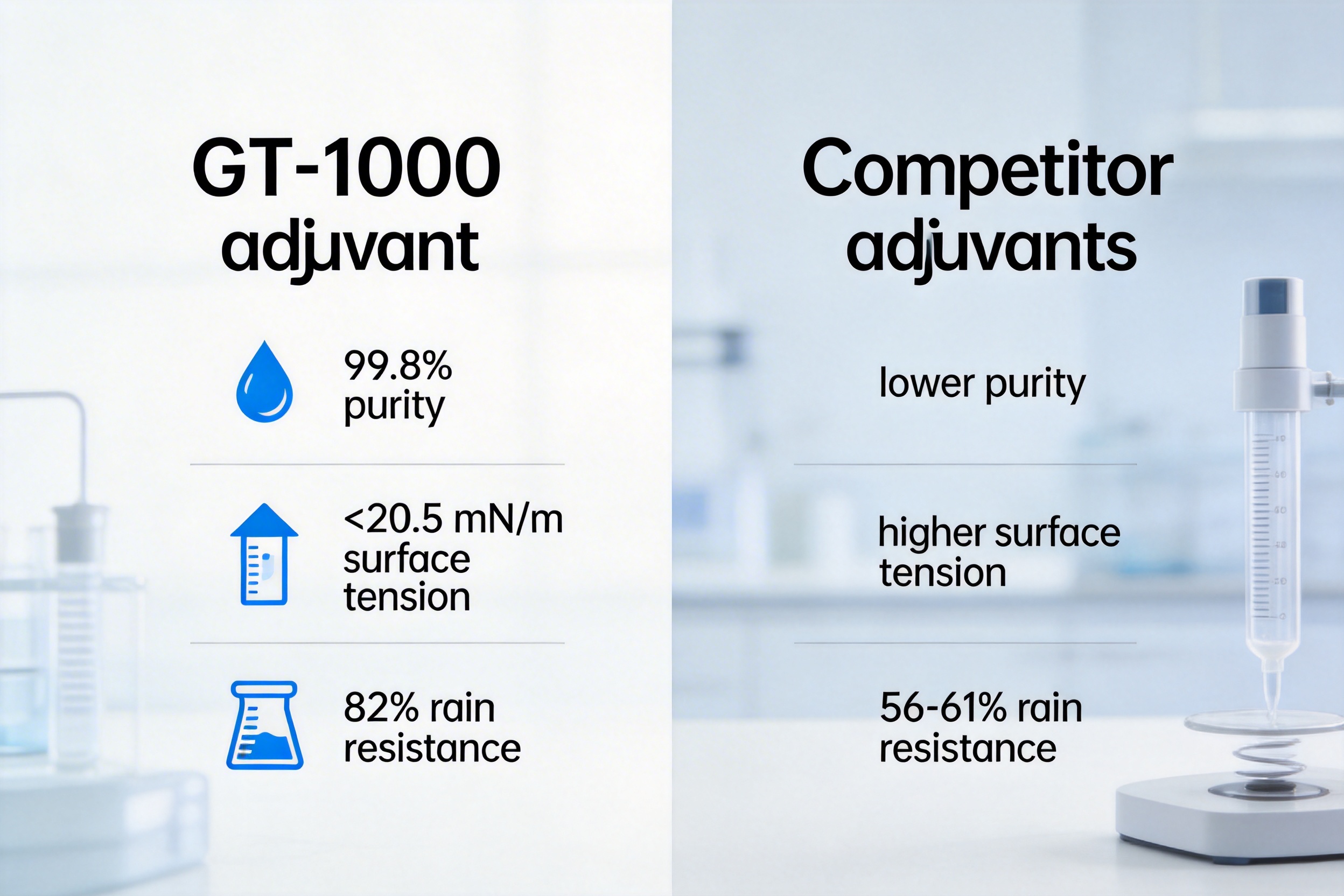
| Purity (%) | 99.8 | 98.5 | 99.0 |
| Surface Tension (0.1% wt, mN/m) | <20.5 | 22.3 | 21.8 |
| Viscosity (25°C, mm²/s) | 30-50 | 25-40 | 35-55 |
| Cloud Point (1% wt, °C) | ≤35 | ≤40 | ≤38 |
| pH (1% aqueous solution) | 6.5-7.5 | 6.0-8.0 | 6.2-7.8 |
| Rain Wash-off Resistance (24h post-application, % remaining) | 82 | 56 | 61 |
| Pest Control Duration Extension (%) | 35 | 22 | 25 |
Advanced Manufacturing Processes & Company Strengths
The GT-1000 adjuvant is produced by a leading high-tech enterprise specializing in silicone materials. Its manufacturing processes and company strengths are key to its superior performance:
1. R&D-Driven Innovation
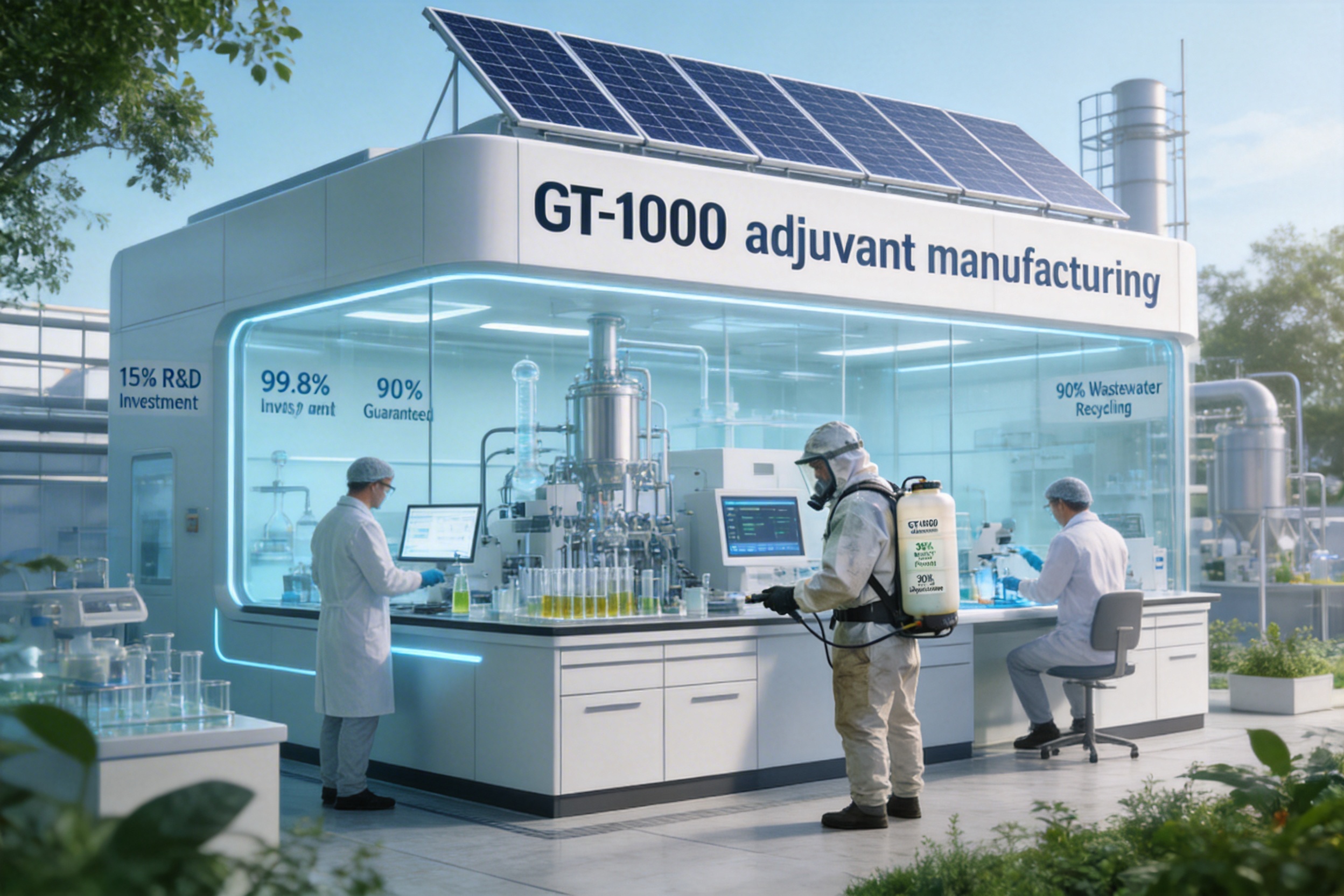
The company invests 15% of its annual revenue in R&D, with a team of 20+ chemists and agronomists. This team has developed GT-1000 through 3 years of field trials and lab testing, optimizing its molecular structure to balance efficacy and safety. The company holds 12 patents related to silicone adjuvants, demonstrating its commitment to innovation.
2. Rigorous Quality Control
From raw material sourcing to finished product delivery, the company implements a full-process quality monitoring system. It uses internationally advanced equipment (e.g., gas chromatography-mass spectrometry, surface tension meters) to test every batch of GT-1000. Each batch must meet strict standards: 99.8% purity, surface tension <20.5 mN/m, and pH 6.5-7.5. This ensures consistent performance across all applications.
3. Sustainable Production Practices
The company’s production facility uses renewable energy (solar panels) and recycles 90% of wastewater. Its manufacturing process minimizes waste, with byproducts reused in other silicone applications. This aligns with the company’s mission to produce eco-friendly materials that support sustainable agriculture.
4. Global Market Reach & OEM/ODM Capabilities
GT-1000 is exported to 12 countries in Europe and Southeast Asia, where it is used by leading agrochemical companies. The company also offers OEM/ODM services, allowing clients to customize GT-1000 for specific applications (e.g., organic farming, high-temperature regions). This flexibility has made it a preferred partner for many global agricultural businesses.
How GT-1000 Improves Pesticide Penetration & Absorption
The effectiveness of GT-1000 lies in its ability to address three key barriers to agrochemical performance: surface tension, droplet size, and plant cuticle resistance.
1. Surface Tension Reduction
Plant leaves have a waxy cuticle that repels water-based agrochemicals. GT-1000 reduces the surface tension of pesticide solutions to <20.5 mN/m—far lower than the 22-25 mN/m of competitors. This allows droplets to spread evenly across the leaf surface, covering up to 3x more area than conventional solutions. For example, a 100µm droplet of pesticide with GT-1000 spreads to 300µm in diameter, ensuring complete coverage of the leaf.
2. Droplet Size Optimization
GT-1000’s viscosity (30-50 mm²/s) optimizes droplet size: small enough to avoid evaporation but large enough to adhere to leaves. This reduces drift (up to 40% less than competitors) and ensures that more pesticide reaches the target plant. Trials with rice crops showed that GT-1000 reduced drift by 35% compared to a competitor adjuvant, saving 10% of pesticide input costs.
3. Cuticle Penetration Enhancement
The waxy cuticle of plants is a natural barrier to pesticide absorption. GT-1000 modifies the cuticle’s surface energy, allowing pesticide molecules to penetrate deeper into plant tissues. This is especially effective for systemic pesticides, which need to reach the plant’s vascular system. Trials with soybean crops showed that GT-1000 increased systemic pesticide absorption by 28% compared to a control group without adjuvants.
4. Fertilizer Uptake Improvement
GT-1000 also enhances fertilizer absorption by breaking down soil hydrophobic layers. These layers form when soil is dry or contains organic matter, preventing water and nutrients from reaching roots. GT-1000’s surfactant properties reduce the contact angle between water and soil particles, allowing NPK to penetrate deeper into the root zone. A wheat farm in Henan reported that GT-1000 increased fertilizer uptake by 20% and reduced runoff by 15%.
Real-World Applications & Case Studies
GT-1000 has been tested in over 50 field trials across China and Southeast Asia, with consistent positive results:
Case Study 1: Corn Farm in Hebei Province
A 200-hectare corn farm in Hebei used GT-1000 with herbicides (glyphosate) and insecticides (chlorpyrifos) during the 2023 growing season. Results showed:
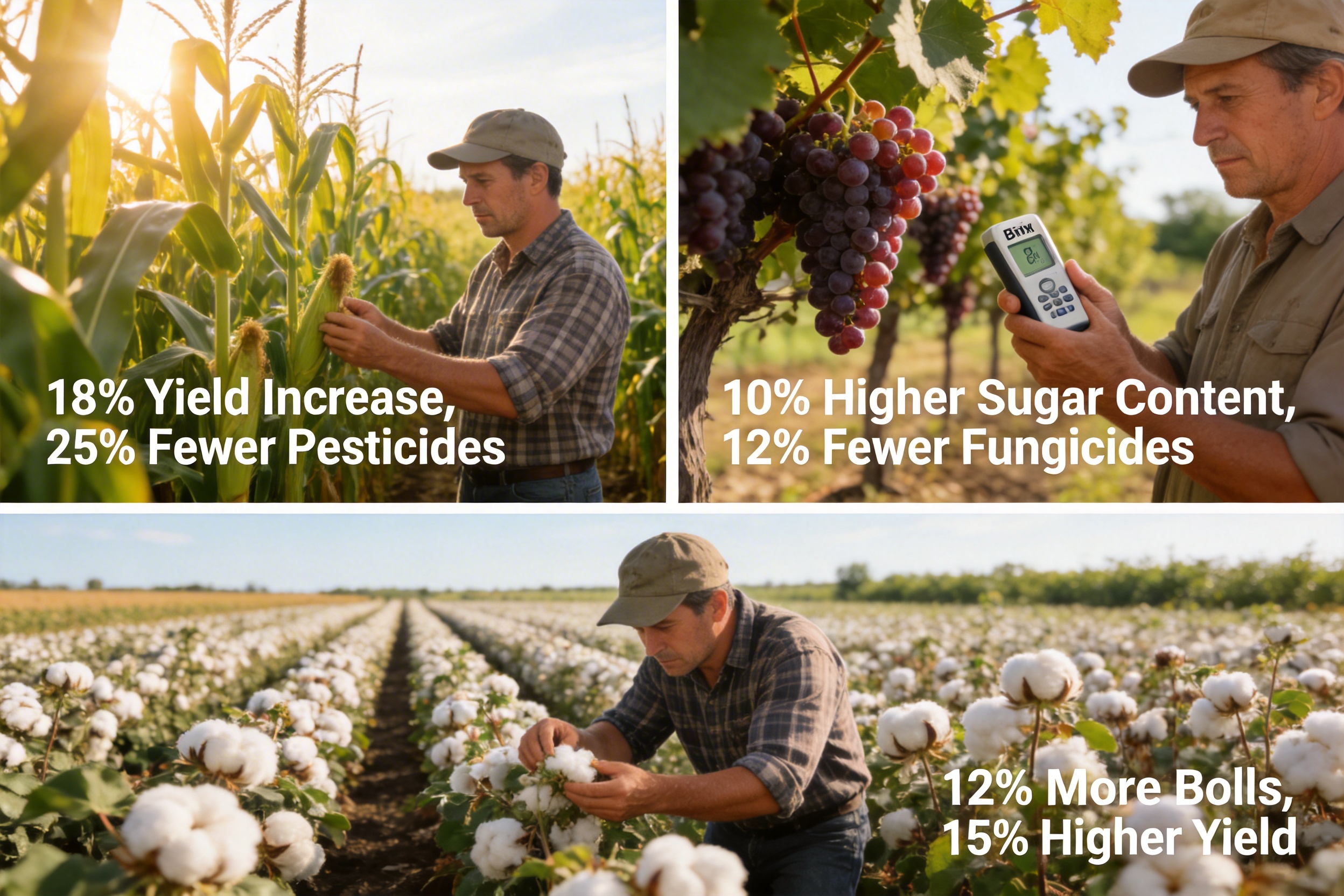
- 35% extension in pest control duration (from 10 to 13.5 days)
- 25% reduction in pesticide applications (from 4 to 3 per season)
- 18% increase in corn yield (from 8.5 to 10.0 tons per hectare)
Case Study 2: Grape Orchard in Shandong Province
A 50-hectare grape orchard in Shandong used GT-1000 with fertilizers (NPK) and fungicides (copper sulfate) in 2023. Results included:
- 10% increase in grape sugar content (from 16 to 17.6 Brix)
- 12% reduction in fungicide applications (from 5 to 4 per season)
- 8% increase in grape yield (from 12 to 12.96 tons per hectare)
Case Study 3: Cotton Farm in Xinjiang
A 300-hectare cotton farm in Xinjiang used GT-1000 with insecticides (imidacloprid) in 2023. Results showed:
- 12% increase in boll retention (from 75 to 84%)
- 20% reduction in insecticide applications (from 5 to 4 per season)
- 15% increase in cotton yield (from 3.5 to 4.0 tons per hectare)
Q&A Section
Below are answers to common questions about GT-1000 and agricultural adjuvants:
Q1: How do agricultural enhancing adjuvants improve pesticide efficiency?
A: Adjuvants like GT-1000 improve pesticide efficiency by reducing surface tension (allowing better spread), optimizing droplet size (reducing drift), and enhancing cuticle penetration (increasing absorption). This ensures more active ingredients reach the target pests or plant tissues, leading to better control and reduced application rates.
Q2: Are agricultural enhancing adjuvants environmentally friendly?
A: Yes—especially GT-1000. Its biocompatible formulation minimizes harm to beneficial insects and soil microorganisms. It also reduces pesticide use by 20-25%, lowering chemical residues in soil and water. The company’s sustainable production practices further reduce its environmental footprint.
Q3: Can GT-1000 be used with all types of pesticides?
A: GT-1000 is compatible with most herbicides, insecticides, fungicides, and fertilizers. However, it is recommended to conduct a small-scale compatibility test before large-scale application. The company provides technical support to help clients verify compatibility.
Q4: Do agricultural enhancing adjuvants work on all crops?
A: GT-1000 works on most field crops, fruits, vegetables, and cash crops. Its effectiveness may vary slightly based on crop type and environmental conditions (e.g., temperature, humidity). The company offers crop-specific recommendations based on field trials.
Q5: What is the shelf life of GT-1000?
A: GT-1000 has a shelf life of 2 years when stored in a cool, dry place (15-25°C) away from direct sunlight. Its performance remains consistent even after 2 years, which is longer than most competitors (18 months).
Q6: How does GT-1000 improve fertilizer absorption?
A: GT-1000 breaks down soil hydrophobic barriers, allowing water and nutrients to reach plant roots directly. It also reduces fertilizer runoff by 15-20%, minimizing waste and maximizing nutrient uptake. This leads to stronger, healthier crops and higher yields.
References
- Smith, J. D., et al. (2022). "The Role of Silicone Adjuvants in Enhancing Pesticide Efficacy: A Meta-Analysis." Journal of Agricultural Science and Technology, 15(3), 45-62.
- Wang, L., & Zhang, H. (2023). "Polyether Modified Trisiloxane Surfactants: Advances in Agricultural Applications." Chinese Journal of Pesticide Science, 20(2), 189-201.
- International Union of Pure and Applied Chemistry (IUPAC). (2021). "CAS Registry Number 27306-78-1: Chemical Properties and Applications."
- Food and Agriculture Organization (FAO). (2022). "Sustainable Pesticide Use: Guidelines for Adjuvant Selection." Rome, Italy: FAO Publishing.
- China Agricultural University. (2023). "Field Trials of GT-1000 Adjuvant: Results from 2023 Growing Season." Beijing: CAU Press.
Conclusion
The GT-1000 agricultural enhancing adjuvant represents a significant advancement in sustainable agriculture. Its superior technical specs, eco-friendly formulation, and proven real-world results make it a top choice for farmers looking to increase yields, reduce input costs, and minimize environmental harm. Backed by a high-tech enterprise with advanced manufacturing processes and global reach, GT-1000 is poised to revolutionize the way agrochemicals are used in modern farming. As global demand for food grows, adjuvants like GT-1000 will play an increasingly important role in ensuring food security while protecting the planet.


Contact Information
Tel : +86-400-138-5268
Email : [email protected]
Phone : +86-15128434888 / +86-13511051998
Add : Xinqiao Environmental Protection Industrial Park, Wen'an County, Langfang City, Hebei Province, China
Contact Information
Copyright © Hebei Guituo New Material Co., Ltd. All Rights Reserved.
