

 English
  Français
  Português
 Home / Author / Zhang Xiaoyu, Regional Sales Manager (Southeast Asia) / Organosilicone Surfactants for High-Performance Agricultural Formulations
 Organosilicone Surfactants for High-Performance Agricultural Formulations
2026-08-12
Modern agricultural formulations must do more than contain an active ingredient. They must spread evenly across leaves, remain stable during storage, resist separation during transport, and deliver the active component to the intended target with minimum waste. An organosilicone surfactant helps address these requirements by combining the low surface-tension characteristics of silicone chemistry with the compatibility and functional versatility of organic surface-active groups.
GT-7100 organosilicone surfactant is a polyether-modified trisiloxane designed for use as an agricultural silicone wetting synergist and multifunctional formulation additive. It is suitable for applications involving pesticides, herbicides, fungicides, foliar fertilizers, agrochemical mixtures, and other systems where rapid wetting, spreading, penetration, dispersion, or formulation stability is important.
With a reported purity of 99.8%, a surface tension below 20.5 mN/m at 0.1% by weight, and a near-neutral pH in a one-percent aqueous solution, GT-7100 offers a balanced performance profile for formulators seeking efficient coverage and reliable compatibility. Its low viscosity, controlled cloud point, and silicone-polyether molecular structure support convenient blending and practical use across a wide range of water-based and agricultural systems.
Hebei Guituo New Material Co., Ltd. develops and manufactures organosilicon materials, silicone additives, wetting agents, modified silicone oils, surfactants, and defoamers. The company combines research and development, production, quality control, and sales support to provide customized materials for agricultural, textile, daily chemical, electronic, and other industrial applications.
Why Surface Performance Matters in Agricultural Formulations
The performance of a pesticide or fertilizer is influenced by more than the chemical activity of its primary ingredient. After spraying, a droplet must make contact with the plant surface, overcome the natural resistance of the leaf, spread across the available area, and remain in place long enough for the active ingredient to perform its intended function. Poor wetting can cause droplets to bead up, roll away, form puddles, or concentrate unevenly.
Plant leaves commonly possess waxy cuticles that repel water. This natural barrier protects the plant from excessive moisture loss, but it can also make it difficult for aqueous spray droplets to spread. A formulation with high surface tension may cover only a small portion of a leaf, even when the spray volume appears adequate. Uneven coverage can reduce the consistency of pest control, disease protection, weed management, or nutrient delivery.
Organosilicone surfactants reduce the surface tension of aqueous formulations. This enables droplets to spread more readily over hydrophobic or difficult-to-wet surfaces. In practical terms, the same amount of spray liquid may cover a larger area, producing a thinner and more uniform film. The result can be improved contact between the formulation and the target surface, provided that the surfactant is selected and dosed correctly for the crop, active ingredient, and application conditions.
Surface tension is only one part of formulation performance. The surfactant must also interact appropriately with oils, water, solids, active ingredients, adjuvants, and packaging materials. It should support stable dispersion without causing excessive foam, undesirable phase separation, or incompatibility. This is why a high-quality agricultural silicone synergist must be evaluated as a complete formulation tool rather than simply as a low-surface-tension additive.
Molecular Function of Polyether-Modified Trisiloxanes
Polyether-modified trisiloxanes contain a silicone-based portion and an organic polyether portion. The silicone segment provides exceptional interfacial activity and helps reduce surface tension. The polyether segment contributes hydrophilic behavior, water compatibility, and interaction with other components in the formulation.
This molecular arrangement allows the surfactant to position itself at the interface between water and air, water and oil, or water and a solid plant surface. By reducing the energetic barrier at the interface, it becomes easier for the liquid to spread and form a more continuous film. The same interfacial activity can assist the formation and stabilization of emulsions or improve the dispersion of poorly soluble materials.
The balance between silicone and polyether chemistry is important. A material that is too hydrophobic may be difficult to incorporate into water-based formulations. A material that is too hydrophilic may not provide the desired spreading performance on waxy plant surfaces. Polyether-modified trisiloxanes are designed to provide a practical balance between rapid wetting, compatibility, and handling convenience.
GT-7100 is identified as a silicone surfactant and polyether-modified trisiloxane. Its reported performance characteristics make it suitable for formulations requiring a strong reduction in surface tension while maintaining a near-neutral aqueous environment. As with any additive, final performance depends on concentration, formulation composition, water quality, temperature, crop type, spray method, and the characteristics of the active ingredient.
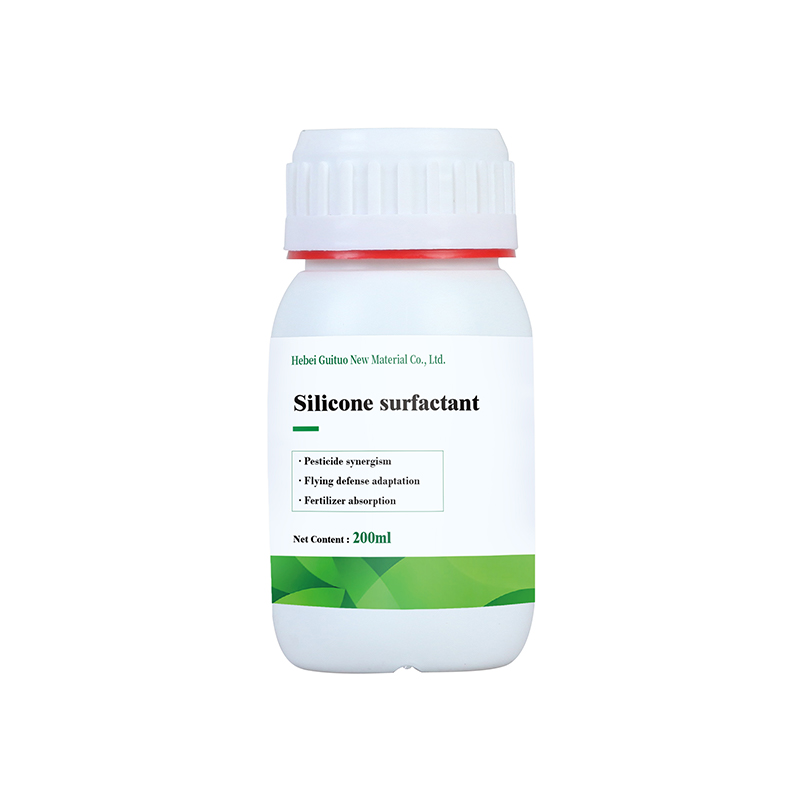
Organosilicone Surfactant
Product Profile and Technical Characteristics
GT-7100 is supplied as an organosilicon surfactant for agricultural and industrial formulation use. The following values describe the stated product profile and provide a starting point for formulation development.
| Parameter | Stated Value | Formulation Significance |
|---|---|---|
| Product model | GT-7100 | Identifies the specific organosilicone surfactant grade |
| Product name | Organosilicon surfactants | Suitable for surface-active and synergistic applications |
| CAS number | 27306-78-1 | Provides a chemical identification reference |
| Purity | 99.8% | Supports consistent formulation performance |
| EINECS number | 608-078-3 | Provides a regulatory identification reference |
| Synonyms | Silicone surfactant; polyether-modified trisiloxane | Describes the product’s chemical and functional identity |
| Viscosity at 25°C | 30–50 mm²/s | Supports metering, blending, and handling |
| Surface tension at 0.1% by weight | Below 20.5 mN/m | Promotes rapid wetting and spreading |
| Cloud point at 1.0% by weight | Not higher than 35°C | Helps formulators assess temperature-related behavior |
| pH of a one-percent aqueous solution at 25°C | 6.5–7.5 | Provides a near-neutral aqueous profile |
High purity is an important advantage in specialty additives. A purer material can reduce the influence of unwanted by-products and help minimize variations between production batches. Consistency is particularly important when the surfactant is used in concentrated formulations, where small changes in additive behavior may affect viscosity, storage stability, foam generation, or spray performance.
The stated viscosity range of 30–50 mm²/s at 25°C is practical for industrial handling. It can support accurate dosing through standard liquid-additive equipment while allowing the material to be blended into concentrates or diluted systems. Actual processing conditions should still be established through plant trials, because temperature and formulation viscosity can affect pumping and mixing behavior.
The surface tension value below 20.5 mN/m at 0.1% by weight is one of the product’s most important functional characteristics. It demonstrates the material’s ability to influence the air-liquid and solid-liquid interfaces at a relatively low use concentration. This can help formulators achieve strong wetting performance without relying on excessive additive loading.
Key Performance Advantages
Rapid Wetting and Spreading
The primary advantage of GT-7100 is its ability to improve the wetting and spreading of liquid formulations. When added at a suitable level, it can help spray droplets spread over leaves, stems, soil particles, fibers, coatings, or other solid surfaces. Better spreading may increase the effective contact area and reduce the tendency of droplets to remain as isolated beads.
Improved wetting can be especially valuable for plants with waxy, smooth, dusty, or irregular surfaces. It can also assist the application of formulations under conditions where natural surface tension would otherwise limit coverage. More uniform coverage supports a more predictable distribution of the active component across the target area.
Enhanced Penetration Potential
Some organosilicone surfactants can promote the movement of a liquid into small surface irregularities or assist the penetration of compatible active ingredients through plant cuticles. This does not mean that every active ingredient will penetrate in the same way. The result depends on the chemical structure of the active ingredient, the plant species, the cuticle condition, environmental humidity, spray concentration, and exposure time.
GT-7100 can be evaluated as a penetration-supporting synergist where deeper contact is required. In herbicide, fungicide, and insecticide systems, improved wetting and contact may contribute to more efficient use of the active ingredient. Formulators should verify crop safety and efficacy through controlled testing before commercial application.
Improved Dispersion
Many agricultural active ingredients have limited water solubility. Without appropriate dispersion support, solid particles may settle, agglomerate, or become unevenly distributed in a spray tank. A suitable organosilicone surfactant can help maintain more uniform particle distribution by modifying the interfaces between the solid ingredient and the liquid phase.
Better dispersion helps ensure that the formulation remains consistent during mixing and application. It may also reduce the risk that the first and last portions of a tank contain substantially different concentrations of the active ingredient. Agitation remains important, but the surfactant can support the overall stability of the dispersed system.
Emulsification and Solubilization Support
Organosilicone surfactants can assist systems containing both oil-soluble and water-soluble components. Their interfacial activity can help reduce the energy required to form an emulsion and may improve the compatibility of ingredients that would otherwise separate rapidly. In some formulations, they can also help solubilize poorly water-soluble substances or improve their distribution in the continuous phase.
Emulsion performance is influenced by the oil phase, water quality, mixing energy, temperature, electrolyte level, and the presence of other surfactants. GT-7100 should therefore be selected through compatibility screening rather than assumed to be universally suitable for every emulsion type. Its value lies in offering formulators a flexible tool for developing stable and functional systems.
Foam Management Flexibility
Foam can be useful in some products but undesirable in others. Excessive foam can slow filling, create inaccurate batch volumes, interfere with spray tank operation, and complicate packaging. Depending on the formulation and dosage, organosilicone materials may contribute to foam suppression or support a controlled foam profile.
GT-7100 is positioned as a multifunctional surface-active additive. Its foam behavior must be tested in the final formulation because the presence of proteins, powders, solvents, salts, and other surfactants can significantly change foam generation. Where defoaming is required, dedicated defoamer grades may also be evaluated alongside the surfactant.
Near-Neutral Aqueous Character
The stated pH range of 6.5–7.5 for a one-percent aqueous solution at 25°C is close to neutral. This can be beneficial in formulations where strong acidity or alkalinity could affect active ingredients, packaging materials, plant compatibility, or the performance of other additives.
A near-neutral pH does not eliminate the need for a full compatibility assessment. The pH of the complete formulation may differ from the pH of the surfactant solution, especially when fertilizers, salts, buffers, or alkaline pesticides are present. Nevertheless, the product’s reported pH range provides a useful starting point for development.

Advantages Compared with Conventional Surfactants
Conventional organic surfactants remain useful in many formulations, but they may not provide the same balance of ultralow surface tension, rapid spreading, and low-dose performance associated with organosilicone chemistry. Traditional nonionic, anionic, cationic, or amphoteric surfactants can differ substantially in their foam behavior, electrolyte tolerance, cloud point, biodegradation profile, crop safety, and compatibility with active ingredients.
One important competitive advantage of an organosilicone surfactant is efficient interfacial activity at low concentration. Because silicone has a low surface-energy character, silicone-based surfactants can often reduce surface tension more strongly than many conventional organic surfactants. This may allow formulators to achieve the desired wetting effect with a smaller additive quantity, although the optimum dosage must be confirmed experimentally.
Another advantage is rapid spreading on difficult-to-wet surfaces. Traditional surfactants may improve wetting gradually, while a polyether-modified trisiloxane can produce fast droplet expansion when the formulation and application conditions are appropriate. This is valuable when spray droplets have limited time to spread before drying or moving away from the target surface.
Organosilicone surfactants can also provide several functions within one additive package. A single product may contribute to wetting, spreading, penetration, dispersion, emulsification, and selected foam-control requirements. This multifunctionality can simplify formulation design and reduce the need to combine numerous separate additives.
Compared with unmodified silicone oils, a polyether-modified trisiloxane is generally more suitable for water-containing systems because the polyether component improves compatibility with the aqueous phase. Compared with a simple organic wetting agent, the silicone portion can offer stronger surface-tension reduction. This combination is a central reason why organosilicone surfactants are widely considered high-performance agricultural adjuvants.
The competitive position of GT-7100 is supported by its stated purity, measured surface tension, controlled viscosity, near-neutral pH, and defined cloud point. These parameters give formulators a clearer basis for comparing the product with alternative silicone surfactants and conventional wetting agents. Performance comparisons should include standardized tests covering spreading area, contact angle, dynamic surface tension, storage stability, foam, and crop tolerance.
Use in Pesticide and Herbicide Formulations
In pesticide formulations, the surfactant can improve the distribution of the active ingredient across plant surfaces. Better coverage may help reduce untreated areas and increase the consistency of contact between the active ingredient and the pest or pathogen. The effect is particularly relevant for contact products that depend on thorough surface coverage.
In herbicide systems, improved wetting can help the spray remain in contact with leaf tissue rather than forming isolated droplets. If the active ingredient is compatible with the surfactant, improved spreading and penetration may support more efficient weed control. However, excessive penetration or overly aggressive wetting can sometimes increase the risk of crop injury, so the surfactant level should be optimized carefully.
In fungicide formulations, uniform coverage of leaves and stems is essential for preventive protection. Organosilicone surfactants may assist the formation of a more continuous spray film and improve access to small surface areas. Their role is not to replace the fungicide but to help the formulation deliver the fungicide more effectively.
In insecticide applications, the surfactant may help droplets reach insects, eggs, or concealed plant surfaces. The performance will depend on the pest species, formulation type, spray volume, leaf architecture, and environmental conditions. Field trials are necessary to establish whether the improved wetting translates into measurable biological performance.
Use in Fertilizers and Nutrient Solutions
Foliar fertilizers must be distributed evenly to provide consistent nutrient availability. Poor wetting can cause uneven leaf coverage, while poor dispersion can lead to sedimentation or localized concentration. GT-7100 may help improve the distribution of compatible nutrient solutions and suspensions across plant surfaces.
The product can be considered for liquid micronutrient systems, foliar feeds, and mixed agrochemical applications. Its near-neutral aqueous profile may be useful when the formulation contains ingredients sensitive to extreme pH. Nevertheless, salts and concentrated nutrients can strongly influence surfactant behavior, so testing should include the actual fertilizer concentration and water source.
Compatibility is especially important in fertilizer mixtures containing calcium, magnesium, iron, zinc, manganese, or other multivalent ions. Such ions can affect viscosity, dispersion, cloud point, and phase stability. A laboratory screening program should examine the appearance, pH, viscosity, sedimentation, and sprayability of the complete mixture after storage at different temperatures.
Formulation Stability and Storage Performance
Formulation stability is essential from production through final application. A product that separates, precipitates, gels, or changes viscosity during storage may become difficult to use and may deliver inconsistent performance. Organosilicone surfactants can help stabilize interfaces and reduce the tendency of certain components to separate.
In suspension concentrates, the surfactant may support the dispersion of fine solid particles. In emulsifiable or microemulsion systems, it may contribute to the formation of a more uniform oil-water structure. In soluble concentrates, it may help maintain the distribution of functional ingredients and improve re-dispersion after storage.
The stated cloud point of GT-7100 is not higher than 35°C at one percent by weight. Cloud point is an important indicator of temperature-dependent behavior in nonionic surfactant systems. It should be considered when products are transported or stored in hot climates, although cloud point alone does not predict the complete stability of a finished formulation.
Stability testing should include accelerated heat storage, low-temperature storage, freeze-thaw cycles, centrifugation, dilution stability, and re-dispersion assessment. The surfactant should be evaluated in the actual formulation rather than in water alone. These tests help determine whether the additive improves long-term performance and whether any new instability is introduced.
Manufacturing Strengths and Quality Assurance
The reliability of an organosilicone surfactant depends on both molecular design and manufacturing control. Small variations in raw materials, reaction conditions, catalyst activity, polyether structure, or purification can influence surface tension, viscosity, cloud point, color, odor, and compatibility. A manufacturer with integrated research, production, and quality systems can respond more effectively to these variables.
Hebei Guituo New Material Co., Ltd. operates as a high-technology enterprise focused on the research, production, and sale of high-end silicone materials. According to the supplied company information, it has established a production and quality assurance system supported by advanced manufacturing equipment, precision testing facilities, process monitoring, and an experienced technical and production team.
Process control begins with raw-material selection. Silicone intermediates, polyether components, catalysts, solvents, and auxiliary materials must be assessed for identity, purity, moisture, and consistency. Controlling raw-material variation helps reduce changes in the final surfactant and creates a more reliable foundation for batch-to-batch quality.
Reaction control is another important manufacturing strength. Organosilicon synthesis and modification processes may require careful management of temperature, mixing, feed rate, reaction time, and catalyst conditions. Consistent heat transfer and homogeneous mixing help promote a uniform reaction environment. Proper control can improve molecular distribution and reduce unwanted side reactions.
After synthesis, purification and finishing steps influence the final product’s performance. Removing residual raw materials, catalyst traces, low-molecular-weight components, or other impurities can help achieve the stated purity level. Filtration and controlled filling further reduce the risk of foreign particles and packaging-related contamination.
Quality monitoring should continue throughout the process rather than being limited to final inspection. In-process checks may include appearance, viscosity, density, moisture, acidity or alkalinity, and reaction completion. Final-product testing can include purity, surface tension, cloud point, pH, and other customer-specific indicators.
The company describes a full-process quality monitoring mechanism from the production source to finished-product delivery. This approach is valuable because agricultural additives may be used by customers in high-volume manufacturing, where a small variation can affect thousands of liters of finished formulation. Traceability, batch records, retained samples, and documented release procedures help customers investigate and control any unexpected result.
Advanced testing facilities also support product development. Surface tension measurement, viscosity analysis, pH testing, cloud-point determination, stability testing, and compatibility screening provide objective data for formulation decisions. These capabilities help transform the surfactant from a generic raw material into a technically supported solution.

Customization, OEM, and ODM Support
Agricultural formulators often require more than an off-the-shelf surfactant. They may need a specific balance of spreading, penetration, emulsification, foam control, electrolyte tolerance, or storage stability. The optimal additive can vary according to the active ingredient, formulation type, target crop, climate, water hardness, and application equipment.
Hebei Guituo New Material Co., Ltd. accepts OEM and ODM orders. This creates opportunities for customers to discuss customized grades, packaging, product labeling, technical specifications, and application requirements. Custom development may involve adjusting compatibility, viscosity, hydrophilic-lipophilic balance, dilution behavior, or performance in a particular formulation system.
Customization should begin with a clear technical brief. Important information includes the active ingredients, solvent system, water content, target concentration, desired surface tension, pH range, storage conditions, application method, and known compatibility limitations. The more complete the brief, the more efficiently the manufacturer can recommend a grade or develop an appropriate modification.
Laboratory screening can then compare candidate materials. Useful measurements include dynamic and equilibrium surface tension, contact angle, spreading diameter, wetting time, foam height, emulsion stability, suspension stability, viscosity change, and low-temperature behavior. Small-scale testing should be followed by pilot and field evaluation before full commercial production.
Recommended Formulation and Application Approach
GT-7100 should be added according to the requirements of the finished formulation and the recommendations provided by the manufacturer. There is no universal dosage that is ideal for every crop, active ingredient, and spray method. Starting with a low concentration and increasing gradually during laboratory testing can help identify the point at which performance improves without creating excessive foam or crop-safety concerns.
For tank-mix applications, the surfactant may be added after the main active ingredients have been dispersed, depending on the mixing instructions for the specific products. The order of addition should be established through compatibility testing. Agitation should be maintained sufficiently to keep suspended materials evenly distributed, while avoiding unnecessary air entrainment.
Water quality can have a major effect on performance. Hard water, high salt levels, suspended solids, extreme pH, and organic contamination may alter wetting, dispersion, or emulsion stability. Formulators should test GT-7100 using the actual water source or a representative water profile rather than relying only on laboratory-grade water.
Temperature and humidity also influence spray behavior. Warm conditions may accelerate drying and change penetration, while high humidity may extend the time available for spreading and absorption. Wind, rainfall, leaf age, wax content, and crop stress should be considered when evaluating the field performance of an organosilicone synergist.
Applications Beyond Agriculture
Although agricultural formulations are a principal application area, organosilicone surfactants can support a wider range of industrial systems. Their surface-active properties may be useful in coatings, release-agent formulations, textile processing, chemical manufacturing, cleaning systems, and other applications that require improved wetting or interfacial control.
In coatings and paints, a silicone surfactant may help improve substrate wetting, leveling, pigment dispersion, and surface uniformity. The correct grade depends on whether the formulation is water-based, solvent-based, high-solid, or radiation-curable. Excessive surface activity may cause cratering or intercoat adhesion problems, so performance must be balanced against surface appearance and recoatability.
In release-agent systems, organosilicon chemistry can help create a low-energy surface that assists the separation of molded or processed materials. The required performance depends on the substrate, processing temperature, release cycle, and desired transfer level. A customized grade may be preferred when low transfer or repeated release is important.
In textile processing, improved wetting and dispersion can help distribute functional chemicals more evenly across fibers and fabrics. Organosilicone additives may also be used in systems designed to provide softness, smoothness, lubricity, or surface modification. Process conditions and fabric composition determine the most appropriate chemistry.
Environmental and Responsible-Use Considerations
Responsible use is essential for all agricultural additives. The supplied product information describes organosilicone surfactants as environmentally safer than many traditional surfactants and indicates that they are biodegradable and generally low in toxicity when used properly. These characteristics should be confirmed for the specific grade, jurisdiction, formulation, and use pattern through appropriate safety and regulatory documentation.
Even a relatively favorable environmental profile does not mean that unrestricted application is appropriate. Overuse, spray drift, improper disposal, and runoff can affect soil and water systems. Products should be used at the lowest effective concentration, in accordance with label requirements, local regulations, and technical recommendations.
Application near ponds, rivers, drainage channels, wells, and sensitive habitats requires particular care. Operators should avoid spraying during conditions that favor drift or heavy runoff. Empty containers, residues, and cleaning water should be managed according to applicable waste-handling requirements.
Crop safety must also be considered. A surfactant that improves penetration can increase the uptake of an active ingredient or alter the drying pattern of a spray. Testing should cover sensitive crop varieties, high temperatures, drought-stressed plants, young foliage, and tank mixtures with multiple active ingredients. Proper use rates and controlled field trials help reduce the risk of phytotoxicity.
Why Choose a Specialized Organosilicone Supplier?
A specialized supplier offers more than material availability. The supplier should understand how silicone structure, polyether modification, formulation composition, and field application interact. This knowledge helps customers choose a product based on measurable performance rather than price alone.
Hebei Guituo New Material Co., Ltd. has developed a broad product matrix covering silicone additives, wetting agents, modified silicone oils, dimethyl silicone oils, surfactants, defoamers, and related materials. This portfolio allows customers to evaluate complementary products from one technical source, which may simplify procurement and formulation development.
The company reports that its agricultural silicone products have achieved an advanced domestic level and have been selected by leading agrochemical enterprises. Its products are also exported to overseas markets, including Europe and Southeast Asia, where repeat purchasing and market recognition reflect the importance of stable quality and reliable supply.
Supply reliability is particularly important for agricultural manufacturers because seasonal demand can be concentrated. A supplier with production capacity, inventory planning, quality systems, and export experience can help customers maintain continuity during peak periods. Technical communication and responsive after-sales support are equally important when customers are optimizing a new formulation.
Customers can contact the company for product consultation, sample evaluation, formulation support, OEM, ODM, and customized material requirements. Communication should include the intended use, performance targets, regulatory market, packaging expectations, and required documentation.
Performance Comparison Framework
When comparing GT-7100 with competing organosilicone or conventional surfactants, customers should consider a complete set of performance and commercial factors. A low price or a single surface-tension value does not necessarily indicate the best overall value for a finished formulation.
| Comparison Area | Questions for Evaluation | Potential Value of GT-7100 |
|---|---|---|
| Wetting | How quickly does the solution wet waxy or hydrophobic surfaces? | Reported low surface tension supports rapid wetting |
| Spreading | What coverage area is achieved at the intended use concentration? | Silicone chemistry can promote broad, uniform spreading |
| Purity | Are impurities controlled consistently between batches? | Reported purity is 99.8% |
| Compatibility | Does the additive remain stable with the active ingredient and other adjuvants? | Polyether modification supports aqueous formulation compatibility |
| Handling | Can the product be metered and blended efficiently? | Reported viscosity is 30–50 mm²/s at 25°C |
| pH profile | Is the additive suitable for systems sensitive to strong acidity or alkalinity? | Reported one-percent solution pH is 6.5–7.5 |
| Temperature behavior | How does performance change during storage or use in warm climates? | Reported cloud point is not higher than 35°C at one percent |
| Technical support | Can the supplier assist with customization and scale-up? | OEM, ODM, research, production, and technical support are available |
This comparison should be supported by standardized tests. Contact-angle measurements can show how a droplet interacts with a leaf or other surface. Spreading-area tests can indicate coverage. Dynamic surface-tension testing can provide insight into behavior during rapid spraying. Foam tests, storage tests, and crop-safety trials complete the evaluation.
Quality, Documentation, and Customer Confidence
Industrial customers need clear documentation to support purchasing, formulation approval, regulatory review, and quality management. A technical data sheet should identify the product, key specifications, recommended handling conditions, packaging, storage requirements, and test methods where applicable.
Safety documentation is also important. Customers should request the applicable safety data sheet and confirm classification, transport information, handling precautions, and environmental guidance for the destination market. Regulatory requirements can differ significantly between countries and between agricultural uses and industrial uses.
Batch-specific certificates of analysis can help customers verify that delivered material meets the agreed specifications. Important release parameters may include appearance, purity, viscosity, surface tension, pH, and cloud point. Retained samples and traceability records further strengthen quality assurance.
Professional technical support should continue after delivery. If a customer observes unexpected foam, separation, viscosity change, or crop response, the supplier should be able to review the batch, formulation conditions, water quality, mixing sequence, and application method. This collaborative approach can shorten troubleshooting time and improve the final product.
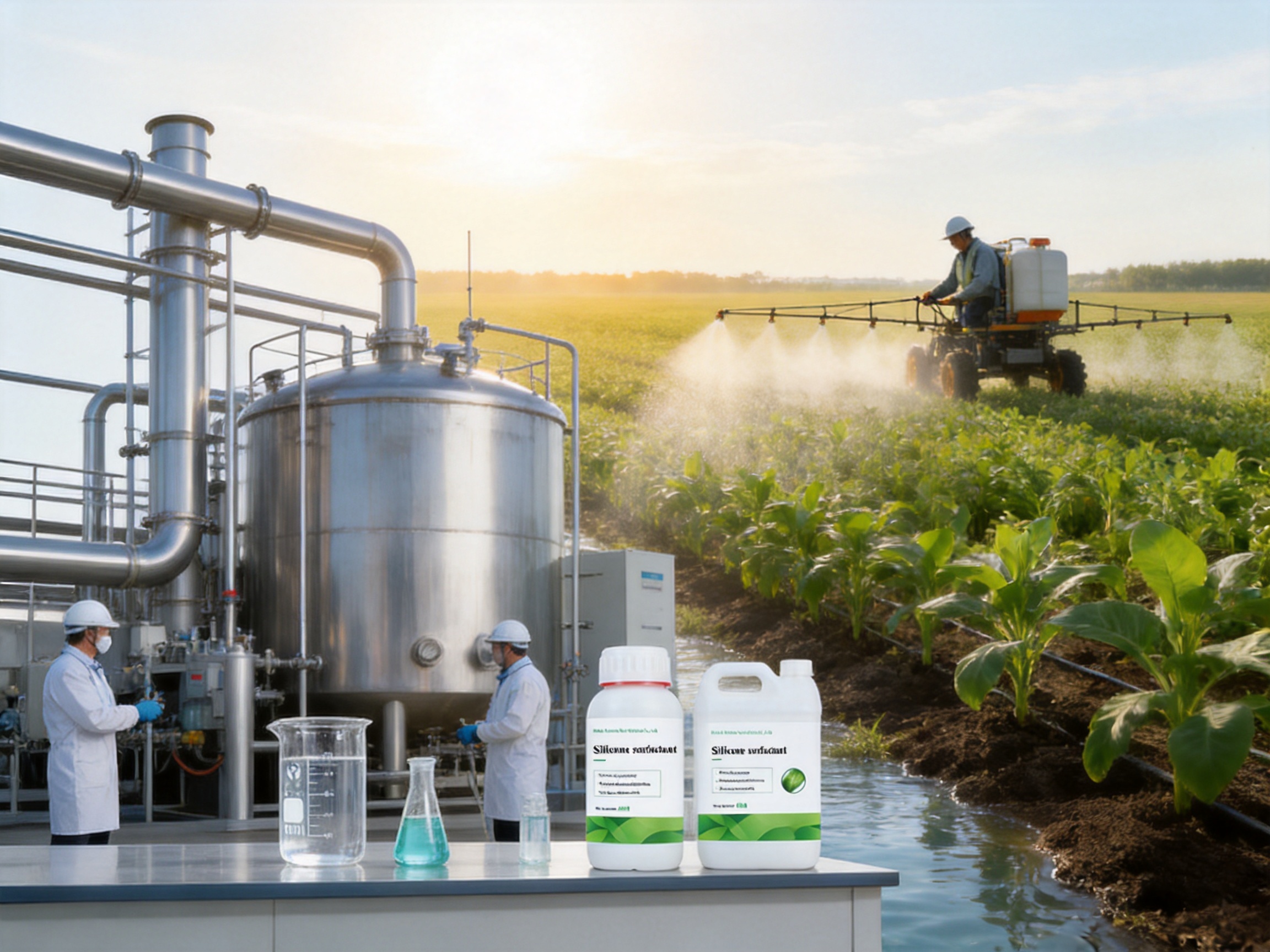
Conclusion
Organosilicone surfactants provide a powerful way to improve the performance of agricultural and industrial formulations. By reducing surface tension, they help liquids wet and spread across solid surfaces. Through their interfacial activity, they can also contribute to dispersion, emulsification, solubilization, penetration, adhesion, and selected foam-control functions.
GT-7100 polyether-modified trisiloxane is designed for formulators seeking strong wetting performance, practical handling, and broad application flexibility. Its stated 99.8% purity, surface tension below 20.5 mN/m at 0.1% by weight, viscosity of 30–50 mm²/s at 25°C, cloud point not higher than 35°C at one percent, and near-neutral aqueous pH provide a useful technical foundation.
Compared with many conventional surfactants, the product offers the potential for more efficient spreading at low dosage, improved coverage of hydrophobic plant surfaces, and multifunctional performance in complex formulations. Its polyether-modified silicone structure is intended to balance strong interfacial activity with compatibility in water-containing systems.
The product’s value is supported by the manufacturer’s integrated strengths in research and development, advanced production equipment, precision testing, process monitoring, experienced personnel, product customization, OEM, ODM, and international supply. These capabilities allow the company to support customers from initial material selection through formulation development, scale-up, and commercial supply.
Successful use still depends on responsible formulation and application. Compatibility, crop safety, environmental exposure, dosage, storage stability, water quality, and local regulatory requirements should all be evaluated. When selected and used correctly, GT-7100 can help agricultural manufacturers develop more uniform, efficient, and reliable spray products.
Q&A
Q1: What is an organosilicone surfactant?
An organosilicone surfactant is a surface-active material that combines silicone chemistry with organic functional groups. In GT-7100, the product is identified as a polyether-modified trisiloxane. The silicone portion contributes strong surface-tension reduction, while the polyether portion supports compatibility with water and other formulation ingredients.
Q2: What is the main function of GT-7100 in agricultural formulations?
Its main function is to improve wetting and spreading. It helps spray droplets distribute more evenly across plant surfaces and may also support penetration, dispersion, emulsification, solubilization, and adhesion when used in a compatible system.
Q3: How does GT-7100 improve pesticide performance?
GT-7100 can reduce surface tension, allowing pesticide droplets to spread over a larger area and make more uniform contact with leaves or other target surfaces. Improved coverage may contribute to more consistent biological performance, although the final result depends on the active ingredient, crop, pest, formulation, and field conditions.
Q4: Can the product be used with herbicides, fungicides, and insecticides?
It is designed for use with a wide range of agricultural formulations, including herbicides, fungicides, insecticides, and foliar fertilizers. Compatibility must be tested with each specific active ingredient and formulation because different chemicals can respond differently to silicone surfactants.
Q5: What is the reported purity of GT-7100?
The reported purity is 99.8%. High purity can help support consistent performance and reduce the influence of unwanted components, but customers should confirm the required specification through the supplier’s current technical documentation and batch certificate.
Q6: What is the surface tension of the product solution?
The reported surface tension is below 20.5 mN/m when measured at a concentration of 0.1% by weight. The actual result in a finished agricultural formulation will depend on the complete composition, water quality, temperature, and test method.
Q7: Is GT-7100 suitable for water-based formulations?
The product’s polyether-modified structure is intended to provide compatibility with water-containing systems. Nevertheless, customers should conduct dilution, storage, and formulation compatibility tests before production, especially when the system contains salts, solvents, oils, powders, or multiple surfactants.
Q8: Does GT-7100 prevent foam?
Organosilicone surfactants can influence foam behavior, but the result depends strongly on the complete formulation. GT-7100 may help address certain foam-related requirements, while dedicated defoamer grades may be more appropriate when strong foam suppression is required. Foam testing should be performed under actual mixing and filling conditions.
Q9: What does the cloud point indicate?
Cloud point indicates a temperature-related change in the appearance or behavior of a nonionic surfactant solution. GT-7100 has a reported cloud point of not higher than 35°C at one percent by weight. This value should be considered during storage and formulation design, but it does not alone determine the stability of a finished product.
Q10: Is the product safe for crops?
It is generally intended for agricultural use when applied according to technical recommendations. Crop safety depends on dosage, crop variety, environmental conditions, active ingredient, and tank-mix composition. Users should perform crop-safety trials and follow all applicable product labels and regulatory requirements.
Q11: Can GT-7100 improve nutrient absorption from foliar fertilizers?
By improving wetting and coverage, GT-7100 may help distribute compatible nutrient solutions more uniformly across leaves. Whether it improves nutrient absorption depends on the nutrient form, leaf condition, concentration, humidity, and application timing. Testing should be conducted with the complete fertilizer formulation.
Q12: What manufacturing strengths support the product?
The manufacturer reports advanced production equipment, precision testing facilities, full-process quality monitoring, experienced technical and production teams, and integrated research, production, and sales capabilities. These systems are intended to support consistent quality, stable supply, and technical customization.
Q13: Does the company provide customized products?
Yes. The company accepts OEM and ODM orders and can discuss customized silicone materials according to application, performance, packaging, and supply requirements. Customers should provide information about the formulation, target properties, market, and regulatory conditions.
Q14: How should customers evaluate GT-7100 against competing products?
Customers should compare wetting speed, spreading area, dynamic surface tension, dispersion, emulsion stability, foam, viscosity, cloud point, storage performance, crop safety, documentation, supply reliability, and total formulation cost. A laboratory and field comparison under identical conditions provides the most useful result.
Q15: What contact information is available for product inquiries?
Product inquiries can be directed to Hebei Guituo New Material Co., Ltd. by telephone at +86-400-138-5268, +86-15128434888, or +86-13511051998. The company can also be contacted through WhatsApp at +86-13722611888 or by email at [email protected].
References
1. Rosen, M. J., and Kunjappu, J. T. Surfactants and Interfacial Phenomena. General principles of surface tension, wetting, adsorption, and emulsification.
2. Tadros, T. F. Applied Surfactants: Principles and Applications. Technical discussion of surfactant behavior in dispersions, emulsions, and formulation systems.
3. United States Environmental Protection Agency. Guidance materials concerning pesticide adjuvants, responsible application, environmental protection, and product stewardship.
4. International Organization for Standardization. General principles for laboratory measurement of surface tension, viscosity, pH, and formulation stability.
5. Technical product information supplied for GT-7100 organosilicon surfactant, including stated specification values and application characteristics.
6. Manufacturer information supplied for Hebei Guituo New Material Co., Ltd., including research, production, quality assurance, customization, OEM, ODM, and export capabilities.
Product: Organosilicone Surfactant

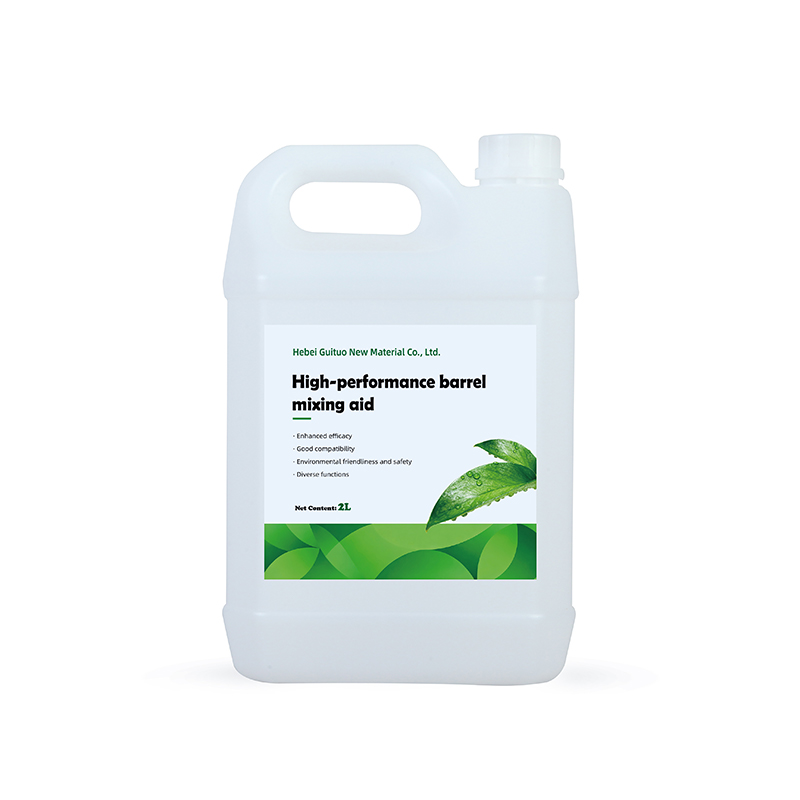
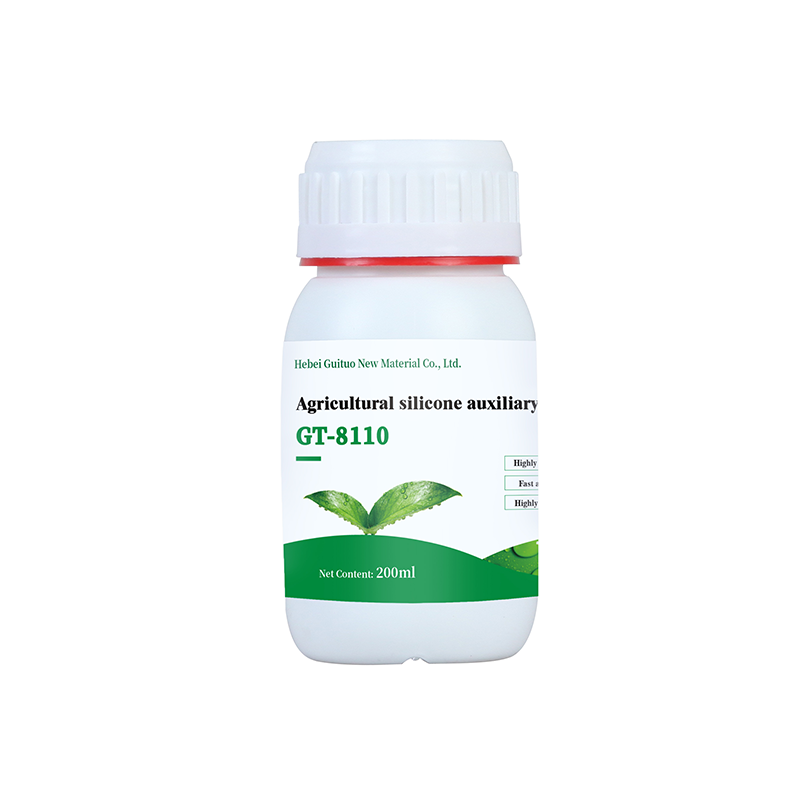

Contact Information
Tel : +86-400-138-5268
Email : [email protected]
Phone : +86-15128434888 / +86-13511051998
Add : Xinqiao Environmental Protection Industrial Park, Wen'an County, Langfang City, Hebei Province, China
Contact Information
Copyright © Hebei Guituo New Material Co., Ltd. All Rights Reserved.
