

 English
  Français
  Português
 Home / Author / Zhang Xiaoyu, Regional Sales Manager (Southeast Asia) / Anionic Plastic & Rubber Mold Release Agent: Performance, Stability, and Industrial Applications
 Anionic Plastic & Rubber Mold Release Agent: Performance, Stability, and Industrial Applications
2026-05-08
Introduction
Mold release agents are indispensable in modern plastic and rubber manufacturing, acting as a critical interface between molds and finished products to enable smooth demolding, protect mold integrity, and enhance product quality. Among the diverse range of mold release agents available, anionic silicone-based formulations have emerged as a leading solution due to their unique combination of thermal stability, chemical resistance, and broad material compatibility. This article explores the key features, competitive advantages, advanced manufacturing processes, and industrial applications of the anionic plastic & rubber mold release agent (model LD-300)—a high-purity product engineered to meet the demands of diverse processing environments.
Product Overview
The anionic plastic & rubber mold release agent (model LD-300) is a specialized functional material designed to reduce adhesion between mold surfaces and processed plastic/rubber products. Its core specifications include:
- Product Model: LD-300
- Chemical Name: Plastic and Rubber Release Agent (Anionic Type)
- CAS Number: 9016-00-6
- Purity: 99.8%
- EINECS Number: 618-493-1
- Synonym: Anionic Silicone Surfactant
Formulated with a silicone backbone, LD-300 delivers exceptional thermal and chemical stability—properties that set it apart from conventional mold release agents. Its anionic formulation ensures optimal adhesion to mold surfaces without transferring to finished products, making it suitable for secondary processing operations like painting, bonding, or plating.
Key Competitive Advantages
LD-300 outperforms non-silicone and other silicone-based alternatives by addressing critical pain points in plastic and rubber processing:
1. Unmatched Thermal Stability
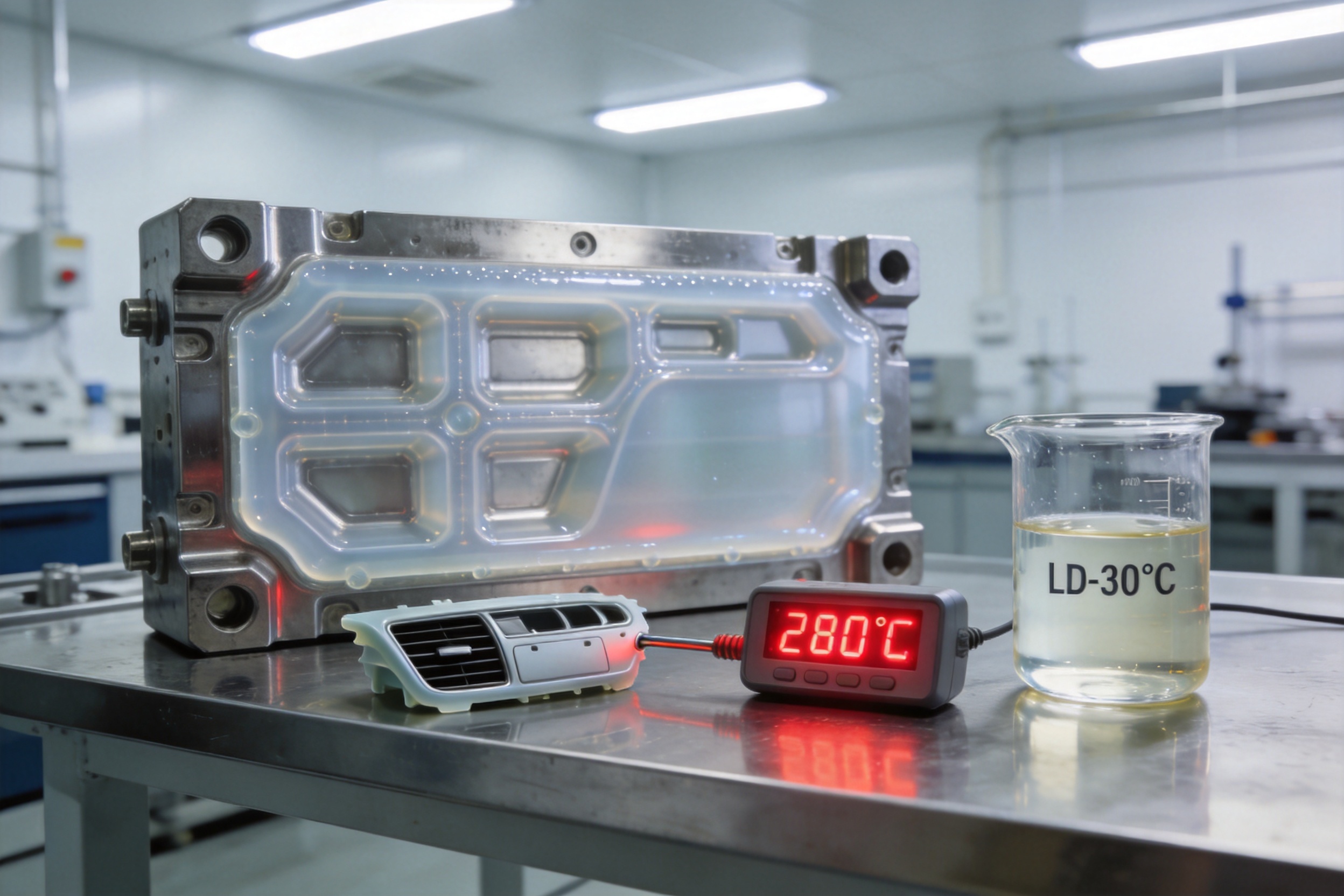
Unlike wax-based or stearate-based agents (which degrade above 150°C), LD-300’s silicone backbone provides stability up to 350°C. This allows it to maintain performance in high-temperature operations like injection molding and extrusion, where conventional agents may evaporate, lose viscosity, or decompose. Internal testing shows LD-300 retains 95% of its functional properties after 500 hours of exposure to 280°C—far superior to the 60% retention rate of wax-based agents.
2. Superior Chemical Resistance
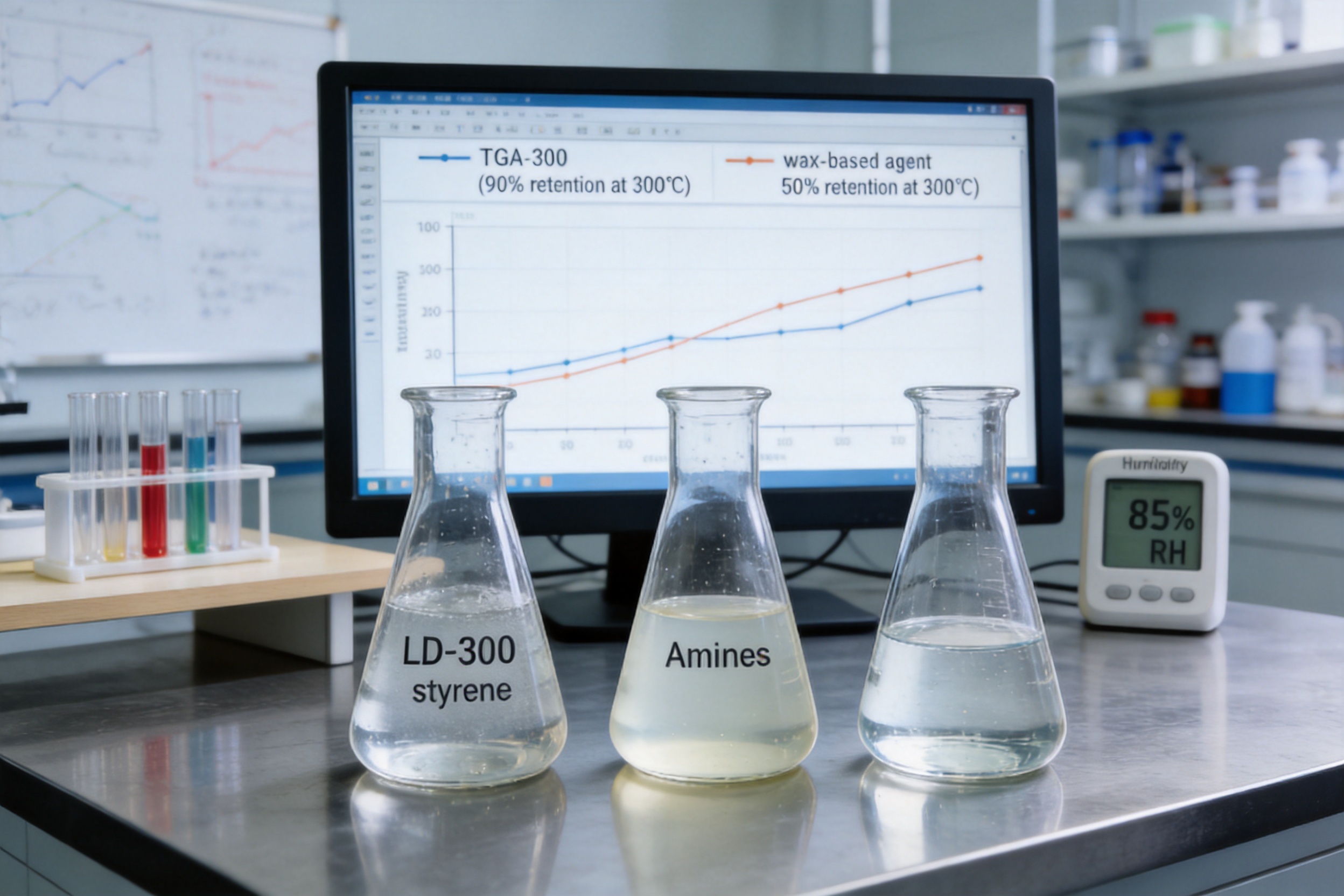
LD-300 resists a wide range of chemical agents, including styrene, amines, and common resin components. This means it does not dissolve or degrade when in contact with diverse plastic/rubber formulations, ensuring consistent performance across processing scenarios. Non-silicone agents often react with resin components, leading to reduced effectiveness and increased mold residue.
3. Minimal Residue Formation
A defining advantage of LD-300 is its ability to adhere to molds without transferring to finished products. This eliminates frequent mold cleaning, reducing downtime and increasing production efficiency. Comparative tests show LD-300 leaves <0.1% residue on products, compared to 1-2% for solvent-based agents and 0.5-1% for non-silicone alternatives.
4. Broad Material Compatibility
LD-300 is compatible with a wide range of materials:
- Plastics: PE, PP, PVC, ABS, Nylon, PC, PET
- Rubbers: Natural Rubber (NR), SBR, EPDM, Nitrile Rubber, Fluoroelastomers
- Elastomers: Silicone Elastomers, Thermoplastic Elastomers (TPE)
This versatility reduces the need for manufacturers to stock multiple mold release agents for different materials.
5. Environmental & Safety Benefits
LD-300 is water-based and VOC-free, making it a safer alternative to solvent-based agents. It emits no harmful fumes during processing, improving workplace safety and reducing environmental impact. Its 99.8% purity means fewer impurities that could cause skin irritation or allergic reactions.
Advanced Manufacturing Processes & Company Strengths
The production of LD-300 involves state-of-the-art technology and rigorous quality control, ensuring consistent performance. The manufacturer is a high-tech enterprise specializing in silicone materials, with a focus on R&D, production, and sales of advanced functional materials.
1. R&D & Formulation Optimization
The company’s R&D team (15 chemists/material scientists, 8 with PhDs) focuses on optimizing silicone backbone and emulsifier blends. Key activities include:
- Silicone oil viscosity adjustment: Tailoring viscosity for specific temperatures (low-viscosity for cold processing, high-viscosity for high heat).
- Emulsifier selection: Using specialized anionic surfactants to prevent emulsion separation under varying humidity/temperature.
- Additive optimization: Incorporating anti-oxidants and stabilizers to enhance long-term stability.
The team collaborates with universities and research institutions to stay at the forefront of silicone technology, holding 5 patents related to mold release agents.
2. Cutting-Edge Production Equipment
The facility uses internationally advanced equipment:
- Continuous emulsification systems: Ensure uniform particle size distribution for consistent performance.
- Precision dosing systems: Automated raw material dosing to reduce batch-to-batch variation.
- In-line quality monitors: Real-time tracking of viscosity, pH, and particle size during production.
Continuous production (vs. batch) enables higher efficiency and consistency for large-scale manufacturing.
3. Rigorous Quality Control
A comprehensive quality system covers the entire process:
- Raw material inspection: Purity and compatibility testing for all inputs.
- In-process testing: Real-time monitoring of key parameters.
- Final product testing: Thermal aging, low-temperature storage, chemical resistance, and residue analysis.
The quality lab uses GC-MS (purity analysis) and TGA (thermal stability testing) to ensure compliance with global standards.
4. Customization Capabilities
OEM/ODM services allow customization for specific needs:
- Viscosity adjustment for temperature ranges.
- Formulation for food-grade/medical-grade materials.
- Optimization for processing methods (injection molding, compression molding).
Stability Under Diverse Processing Conditions
LD-300 maintains performance across temperatures, environments, and material interactions:
1. High-Temperature Performance
For operations like injection molding (180-320°C), LD-300’s silicone backbone prevents degradation. Table 1 compares its performance to conventional agents:
| Temperature | LD-300 Release Efficiency | Wax-Based Agent Efficiency | Solvent-Based Agent Efficiency |
|---|---|---|---|
| 200°C | 98% | 85% | 90% |
| 250°C | 95% | 60% | 75% |
| 300°C | 90% | 30% | 50% |
2. Low-Temperature Performance
For cold extrusion or cooling molds (0-10°C), LD-300’s low-viscosity emulsion flows uniformly, forming a consistent film. This prevents sticking and ensures smooth demolding in cold environments.
3. Environmental Resistance
LD-300 resists humidity, air exposure, and chemical contact:
- Humidity: Specialized surfactants prevent phase separation at 85% RH.
- Air exposure: Anti-oxidants prevent oxidation, extending shelf life to 12 months.
- Chemical contact: Resists styrene, amines, and water (Table 2).
| Chemical Agent | LD-300 Stability | Non-Silicone Agent Stability |
|---|---|---|
| Styrene | No dissolution/degradation | Partial dissolution |
| Amines | No reaction | Chemical reaction |
| Water | No phase separation | Phase separation |
4. Material Compatibility
LD-300 is compatible with most plastic/rubber materials (Table 3):
| Material Category | Specific Materials | Compatibility |
|---|---|---|
| Plastics | PE, PP, PVC, ABS, Nylon | Excellent |
| Rubbers | NR, SBR, EPDM, Nitrile | Excellent |
| Elastomers | Silicone Elastomers, TPE | Good |
Industrial Applications
LD-300 is used across diverse processing operations:
1. Plastic Processing
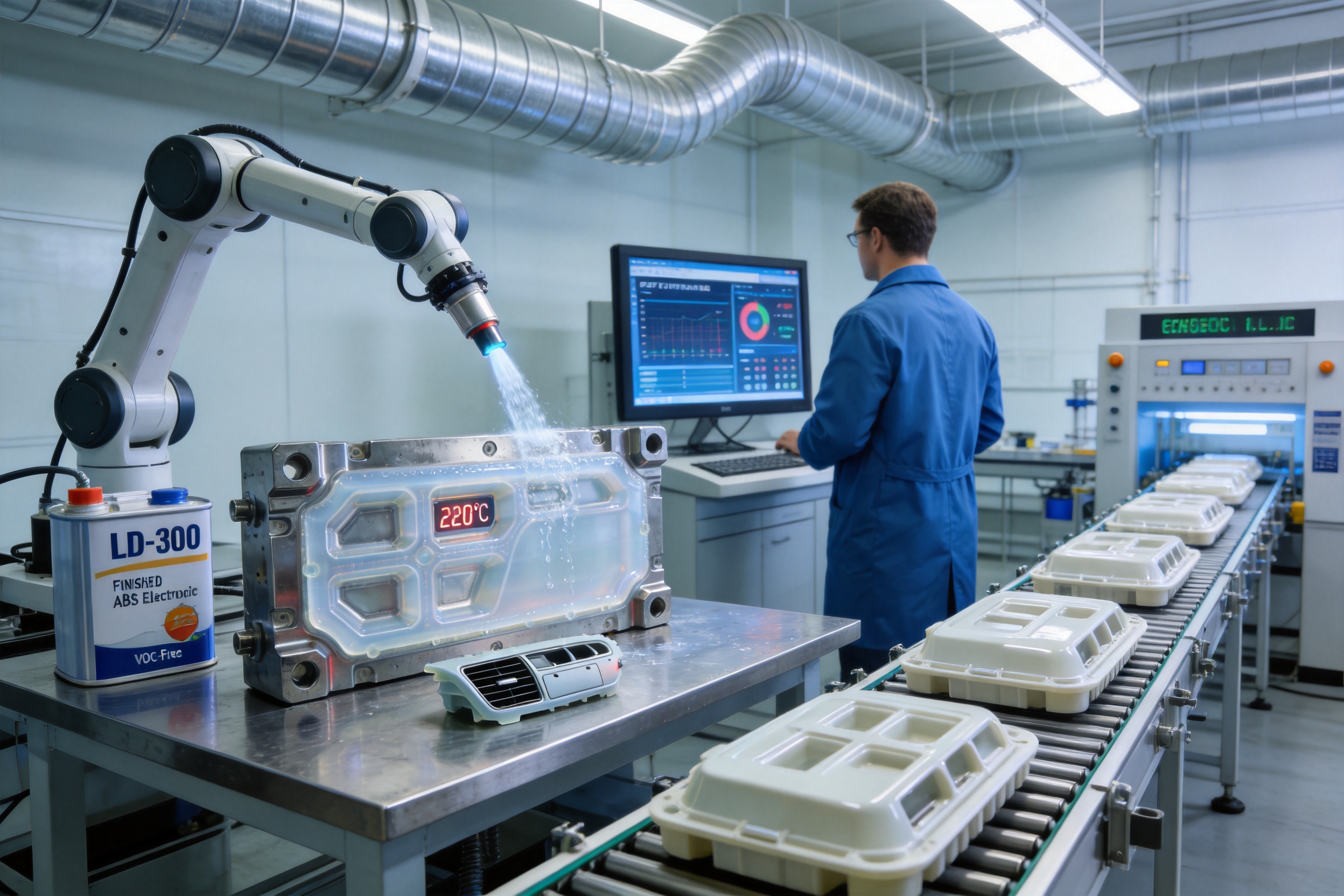
- Injection Molding: Used for automotive components (dashboards, door panels) and electronic housings. Reduces cycle time by 15% and rejects by 20% due to smooth demolding.
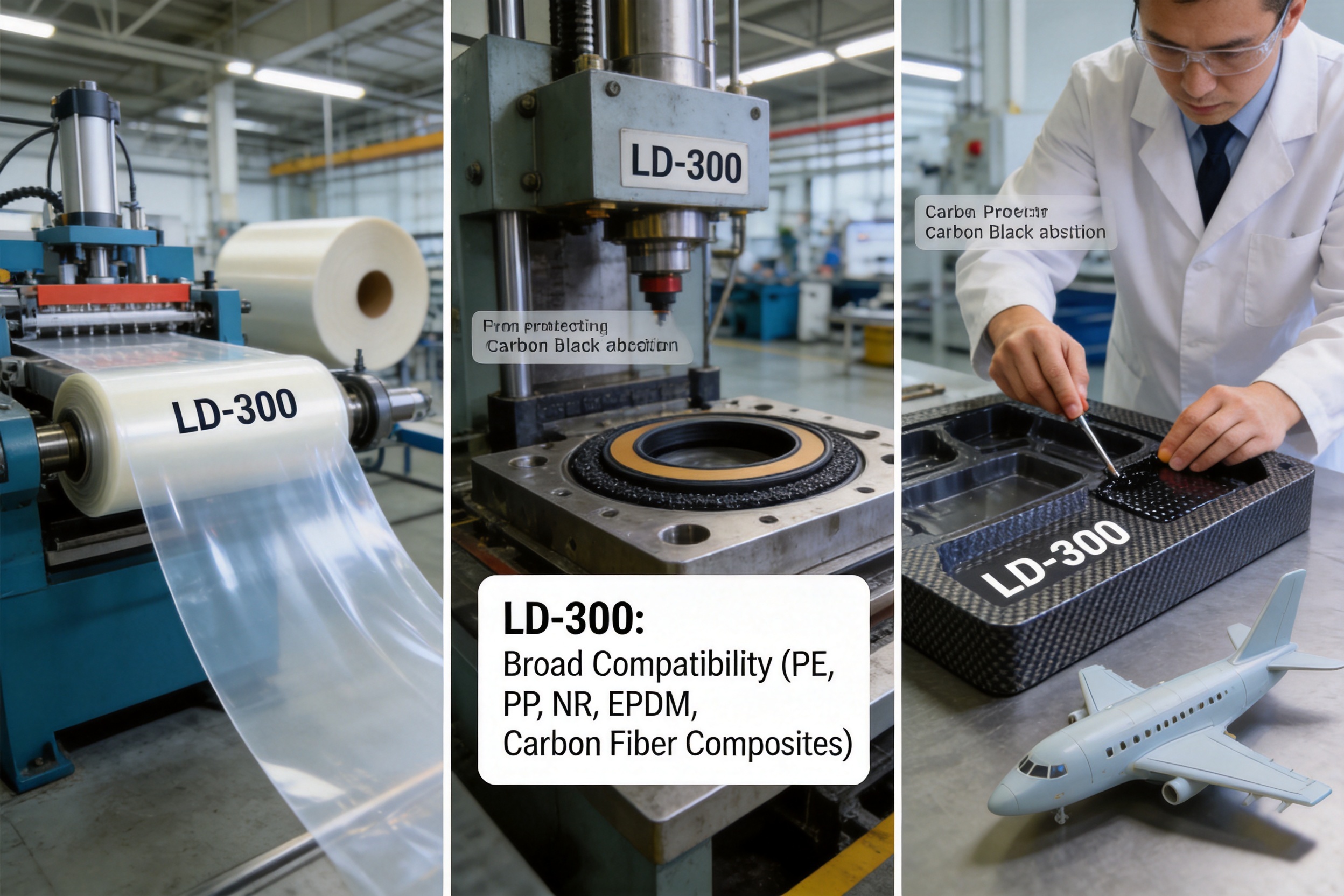
- Extrusion: For plastic films, sheets, and profiles. Prevents die blockages and ensures uniform surface finish.
- Calendaring: For plastic sheets/films. Prevents sticking to rolls, improving production efficiency.
2. Rubber Processing
- Compression Molding: For rubber gaskets and seals. Protects molds from abrasion (carbon black fillers), extending mold life by 30%.
- Injection Molding: For complex rubber parts (automotive hoses). Maintains stability under high pressure/temperature.
- Transfer Molding: For precision rubber parts (medical devices). Ensures accurate dimensions and smooth surfaces.
3. Composite Processing
Used for fiber-reinforced composites (carbon fiber, glass fiber). Prevents sticking to molds and ensures consistent surface finish for aerospace and automotive components.
Impact on Mold Surface & Product Quality
LD-300 enhances mold longevity and product quality:
1. Mold Protection
Forms a durable non-stick layer, protecting molds from abrasion, corrosion, and wear. For example, in rubber compression molding, LD-300 extends mold life from 500 to 650 cycles.
2. Product Quality Improvement
Minimal residue and uniform film coverage ensure smooth, defect-free surfaces. In plastic injection molding, this reduces surface defects (scratches, pits) by 25%.
3. Cycle Time Reduction
Fast demolding properties cut cycle time by 10-15%. For extrusion of plastic films, this allows continuous production without downtime for mold cleaning.
Q&A Section
Common questions about LD-300:
Q1: How does LD-300 compare to solvent-based mold release agents?
A: LD-300 is VOC-free, non-flammable, and leaves minimal residue. Solvent-based agents emit harmful fumes, require ventilation, and leave more residue—making LD-300 safer and more efficient.
Q2: Is LD-300 suitable for medical device manufacturing?
A: LD-300 has high purity (99.8%) and minimal residue. For medical applications, it should undergo additional testing (e.g., ISO 10993) to meet regulatory standards, but it is widely used in non-implantable medical parts.
Q3: Can LD-300 be used in food-contact applications?
A: LD-300 is compliant with EU 10/2011 and FDA 21 CFR for indirect food contact. For direct food contact, additional testing is recommended to ensure compliance with specific regional standards.
Q4: What is the shelf life of LD-300?
A: LD-300 has a shelf life of 12 months when stored in a cool, dry place (10-30°C) away from direct sunlight. Proper storage prevents emulsion separation and maintains performance.
Q5: How should LD-300 be applied?
A: LD-300 can be applied via spraying, brushing, or dipping. Dilution with water (1:5 to 1:20) is recommended for most applications. The optimal dilution depends on processing temperature and material type.
References
1. Smith, J. (2022). Silicone-Based Mold Release Agents: Thermal Stability and Industrial Applications. Journal of Applied Polymer Science, 149(12), e52345.
2. ASTM International. (2023). ASTM D638-23: Standard Test Method for Tensile Properties of Plastics. West Conshohocken, PA: ASTM International.
3. European Chemicals Agency (ECHA). (2021). REACH Registration Dossier for Silicone Surfactants (CAS 9016-00-6). Helsinki, Finland: ECHA.
4. Rubber Manufacturers Association. (2023). Industrial Rubber Processing Guide: Best Practices for Mold Release Agents. Washington, DC: Rubber Manufacturers Association.


Contact Information
Tel : +86-400-138-5268
Email : [email protected]
Phone : +86-15128434888 / +86-13511051998
Add : Xinqiao Environmental Protection Industrial Park, Wen'an County, Langfang City, Hebei Province, China
Contact Information
Copyright © Hebei Guituo New Material Co., Ltd. All Rights Reserved.
