

 English
  Français
  Português
 Home / Author / Zhang Xiaoyu, Regional Sales Manager (Southeast Asia) / 201 Methyl Silicone Oil: Properties, Applications, and Competitive Edge in Modern Industries
 201 Methyl Silicone Oil: Properties, Applications, and Competitive Edge in Modern Industries
2026-05-06
Silicone oils are a class of synthetic polymers with unique properties that have revolutionized multiple industrial sectors, from electronics to agriculture. Among these, 201 Methyl Silicone Oil—also known as Polydimethylsiloxane (PDMS)—stands out as a versatile, high-performance material. Its combination of thermal stability, low surface tension, and chemical inertness makes it an indispensable component in a wide range of applications. This article explores the core properties of 201 Methyl Silicone Oil, its competitive advantages over alternative materials, the advanced manufacturing processes that ensure its quality, key application areas, and the strengths of the leading manufacturer behind its production.
Core Properties of 201 Methyl Silicone Oil
201 Methyl Silicone Oil is defined by its linear dimethyl polysiloxane structure, which consists of a flexible silicon-oxygen backbone with methyl groups attached to each silicon atom. This molecular architecture gives rise to a unique set of physical, chemical, and electrical properties that set it apart from other lubricants and additives.
Physical Properties
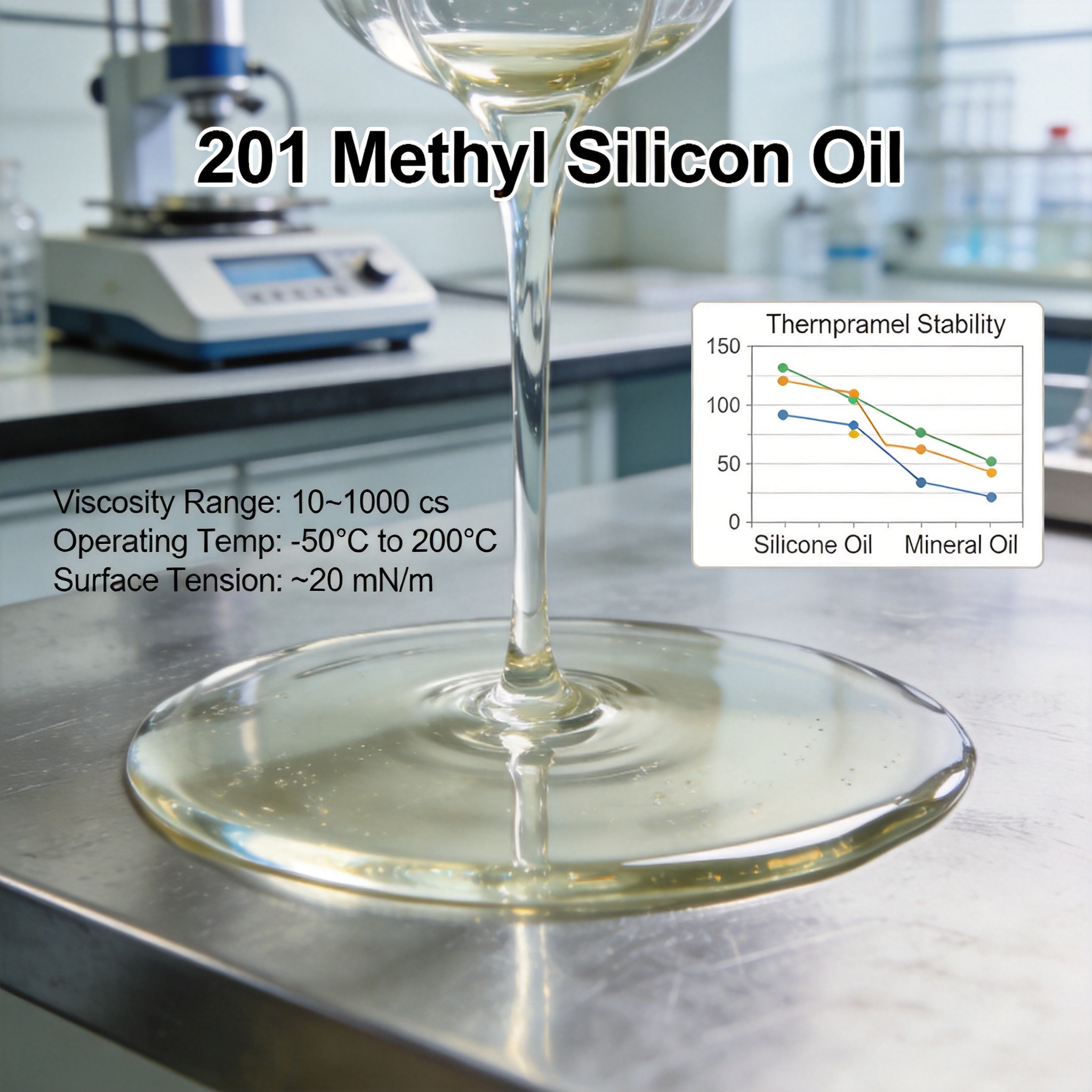
Visually, 201 Methyl Silicone Oil is a transparent, colorless, and odorless oily liquid. Its viscosity—measured in centistokes (cs)—can be adjusted during manufacturing to meet specific application needs, ranging from low-viscosity grades (e.g., 10 cs) for rapid spreading to high-viscosity grades (e.g., 1000 cs) for stable film formation under mechanical stress. One of its most notable physical properties is its wide operating temperature range: it can be used long-term between -50°C and 180°C, and up to 200°C when isolated from air or under inert gas. This thermal stability far exceeds that of mineral oils, which typically degrade at temperatures above 150°C.
Another key physical property is its extremely low surface tension (around 20 mN/m at 25°C), which is significantly lower than that of water (72 mN/m) and most organic solvents. This low surface tension allows the oil to spread uniformly over surfaces, making it ideal for applications requiring surface modification or wetting.
Chemical Properties
201 Methyl Silicone Oil exhibits exceptional chemical inertness. It is resistant to oxidation, ozone, and most chemicals, including acids, alkalis, and organic solvents (with the exception of strong oxidizing agents like concentrated sulfuric acid). This inertness means it does not react with most materials it comes into contact with, making it suitable for use in sensitive applications such as electronics and pharmaceuticals. Additionally, it is non-flammable and demonstrates good physiological inertness, which allows it to be used in cosmetic and pharmaceutical formulations without causing skin irritation or adverse reactions.
Electrical Properties
For electrical applications, 201 Methyl Silicone Oil is prized for its excellent insulation properties. Its dielectric constant (around 2.7 at 1 kHz) is stable across a wide range of temperatures and frequencies, and its dielectric loss is very low (typically <0.001 at 1 kHz). It also resists arc and corona discharge, making it ideal for use in transformers, capacitors, and other electrical equipment. Unlike mineral oils, which can break down under high electrical stress and produce harmful byproducts, 201 Methyl Silicone Oil maintains its insulation properties even under extreme conditions.
Competitive Advantages Over Alternative Lubricants and Additives
To understand the value of 201 Methyl Silicone Oil, it is essential to compare it with alternative materials used in similar applications. Below is a breakdown of its key competitive advantages:
vs. Mineral Oils
Mineral oils are derived from petroleum and are widely used as lubricants and insulators, but they have several limitations that 201 Methyl Silicone Oil addresses:
Thermal Stability: Mineral oils degrade at temperatures above 150°C, whereas 201 Methyl Silicone Oil can operate up to 200°C (inert atmosphere). This makes it suitable for high-heat applications like automotive engines, industrial furnaces, and aerospace components.
Oxidation Resistance: Mineral oils oxidize over time, producing sludge and varnish that can clog machinery and reduce performance. 201 Methyl Silicone Oil is highly resistant to oxidation, so it has a longer service life and requires less frequent replacement.
Water Repellency: Mineral oils are hydrophobic but not as effective as silicone oils at repelling water. 201 Methyl Silicone Oil forms a thin, water-resistant film that protects surfaces from corrosion, making it ideal for outdoor applications or environments with high humidity.
Electrical Insulation: Mineral oils have lower dielectric strength and higher dielectric loss than silicone oils, so they are less suitable for high-voltage electrical equipment.
vs. Synthetic Lubricants (e.g., PTFE, Polyalphaolefins)
Synthetic lubricants like PTFE (polytetrafluoroethylene) and polyalphaolefins (PAOs) offer better performance than mineral oils but have their own drawbacks:
Cost-Effectiveness: PTFE is significantly more expensive than 201 Methyl Silicone Oil, making it less feasible for large-scale industrial applications. PAOs are also more costly than silicone oils for equivalent performance.
Compatibility: 201 Methyl Silicone Oil is compatible with a wide range of materials, including plastics, rubbers, and metals. PTFE is often incompatible with certain plastics and can cause swelling or degradation. PAOs are compatible with most materials but have lower thermal stability than silicone oils.
Ease of Formulation: 201 Methyl Silicone Oil can be easily mixed with surfactants, defoamers, and other additives to create custom formulations. PTFE is difficult to incorporate into liquid formulations, as it is typically supplied as a powder.
Surface Tension: The low surface tension of 201 Methyl Silicone Oil allows it to spread uniformly over surfaces, which is a key advantage for applications like mold release and agricultural sprays. PTFE and PAOs have higher surface tension, so they do not spread as effectively.
vs. Other Silicone Oils
While there are other types of silicone oils (e.g., phenyl silicone oils, modified silicone oils), 201 Methyl Silicone Oil has several unique advantages:
Purity: The 201 Methyl Silicone Oil produced by leading manufacturers has a purity of 99.8%, which is higher than the industry average (typically 99% or lower). This high purity ensures consistent performance and reduces the risk of contaminants affecting end products.
Regulatory Compliance: It has a valid CAS number (63148-62-9) and EINECS number (203-492-7), which means it meets international regulatory standards for safety and environmental impact. This is a critical advantage for companies exporting to Europe or other regions with strict regulatory requirements.
Functional Versatility: 201 Methyl Silicone Oil is used in a wider range of applications than most other silicone oils. It can be used as a lubricant, mold release agent, surface modifier, electrical insulator, and cosmetic ingredient, whereas other silicone oils are often specialized for specific applications.
Advanced Manufacturing Processes of 201 Methyl Silicone Oil
The quality of 201 Methyl Silicone Oil depends heavily on the manufacturing processes used. Leading manufacturers employ state-of-the-art techniques to ensure high purity, consistent viscosity, and optimal performance. Below is an overview of the key steps in the manufacturing process:
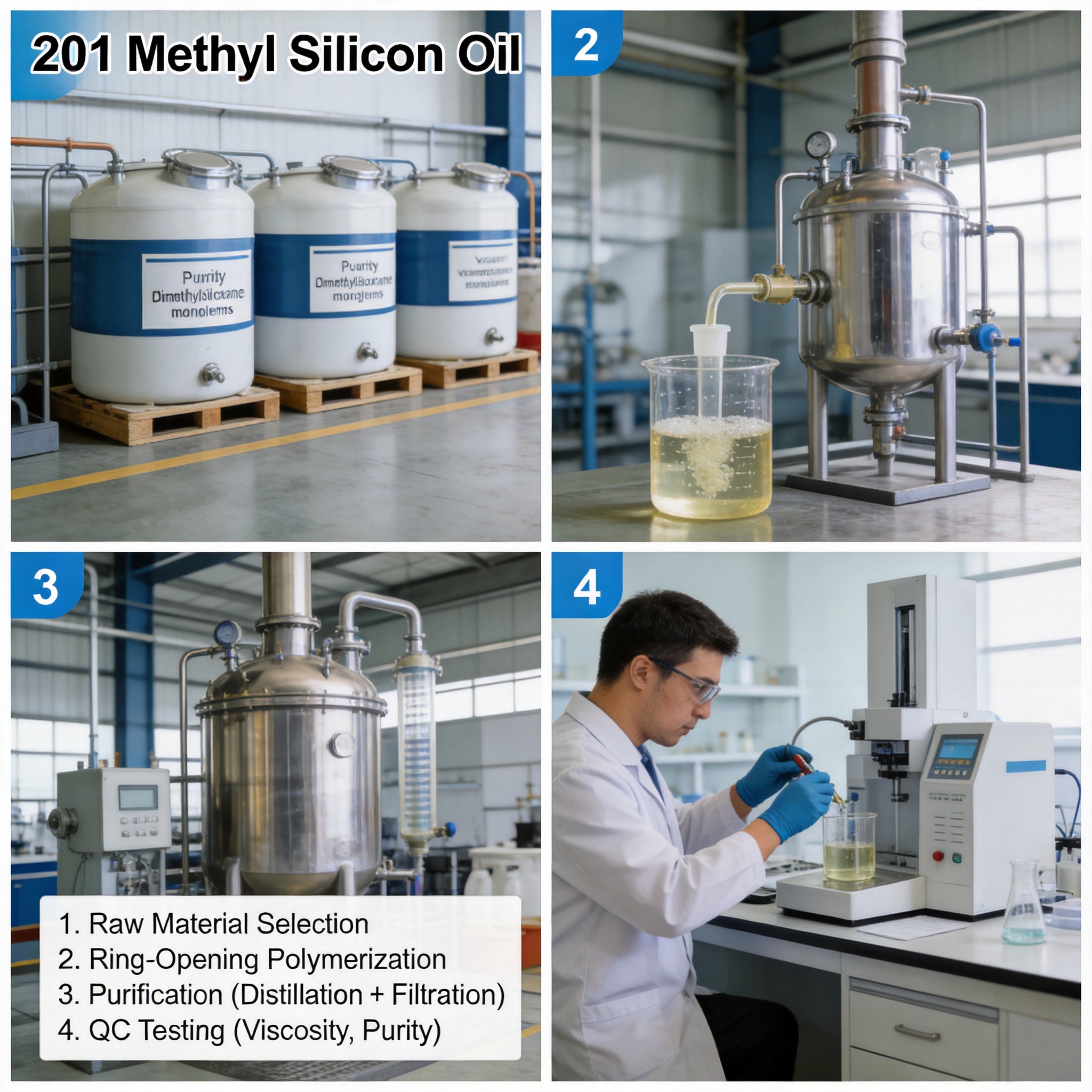
1. Raw Material Selection
The production of 201 Methyl Silicone Oil starts with high-purity dimethylsiloxane monomers (e.g., octamethylcyclotetrasiloxane, D4). These monomers are sourced from reputable suppliers and undergo rigorous quality testing to ensure they meet strict purity standards (≥99.9%). Impurities in the raw materials can lead to lower product purity and reduced performance, so this step is critical.
2. Polymerization Process
The monomers are polymerized using a ring-opening polymerization (ROP) process. This involves heating the monomers in the presence of a catalyst (e.g., potassium hydroxide or a platinum-based catalyst) to break the cyclic structure and form linear polysiloxane chains. The reaction conditions (temperature, pressure, catalyst concentration) are carefully controlled to achieve the desired molecular weight and viscosity. For example, lower temperatures and longer reaction times produce higher molecular weight (higher viscosity) oils, while higher temperatures and shorter times produce lower molecular weight (lower viscosity) oils.
3. Purification Steps
After polymerization, the crude product undergoes several purification steps to remove unreacted monomers, catalysts, and other impurities:
Vacuum Distillation: This step removes low-molecular-weight impurities (e.g., unreacted D4 monomers) by heating the crude product under vacuum. The vacuum reduces the boiling point of the impurities, allowing them to be distilled off without degrading the polymer.
Filtration: The product is filtered through a series of filters to remove solid impurities (e.g., catalyst residues). The filters are typically made of inert materials like stainless steel or ceramic to avoid contamination.
Deodorization: The product is treated with a deodorization process to remove any residual volatile organic compounds (VOCs) that may cause an odor. This step is particularly important for applications like cosmetics and pharmaceuticals.
4. Quality Control
Every batch of 201 Methyl Silicone Oil undergoes extensive quality control testing to ensure it meets the required specifications. The testing includes:
Viscosity Measurement: Using a viscometer (e.g., Brookfield viscometer) to confirm the viscosity is within the specified range.
Purity Analysis: Using gas chromatography (GC) or high-performance liquid chromatography (HPLC) to measure the purity of the product.
Thermal Stability Testing: Using thermogravimetric analysis (TGA) to determine the temperature at which the product degrades.
Electrical Property Testing: Using a dielectric tester to measure the dielectric constant and dielectric loss.
Regulatory Compliance Testing: Ensuring the product meets the requirements of standards like ISO 16152 and REACH.
All test results are documented, and each batch is assigned a unique batch number for traceability. Only batches that pass all tests are released for sale.
Key Applications and Functional Mechanisms
201 Methyl Silicone Oil is used in a wide range of applications due to its unique properties. Below are some of the most important application areas and their functional mechanisms:
1. Electrical Insulation
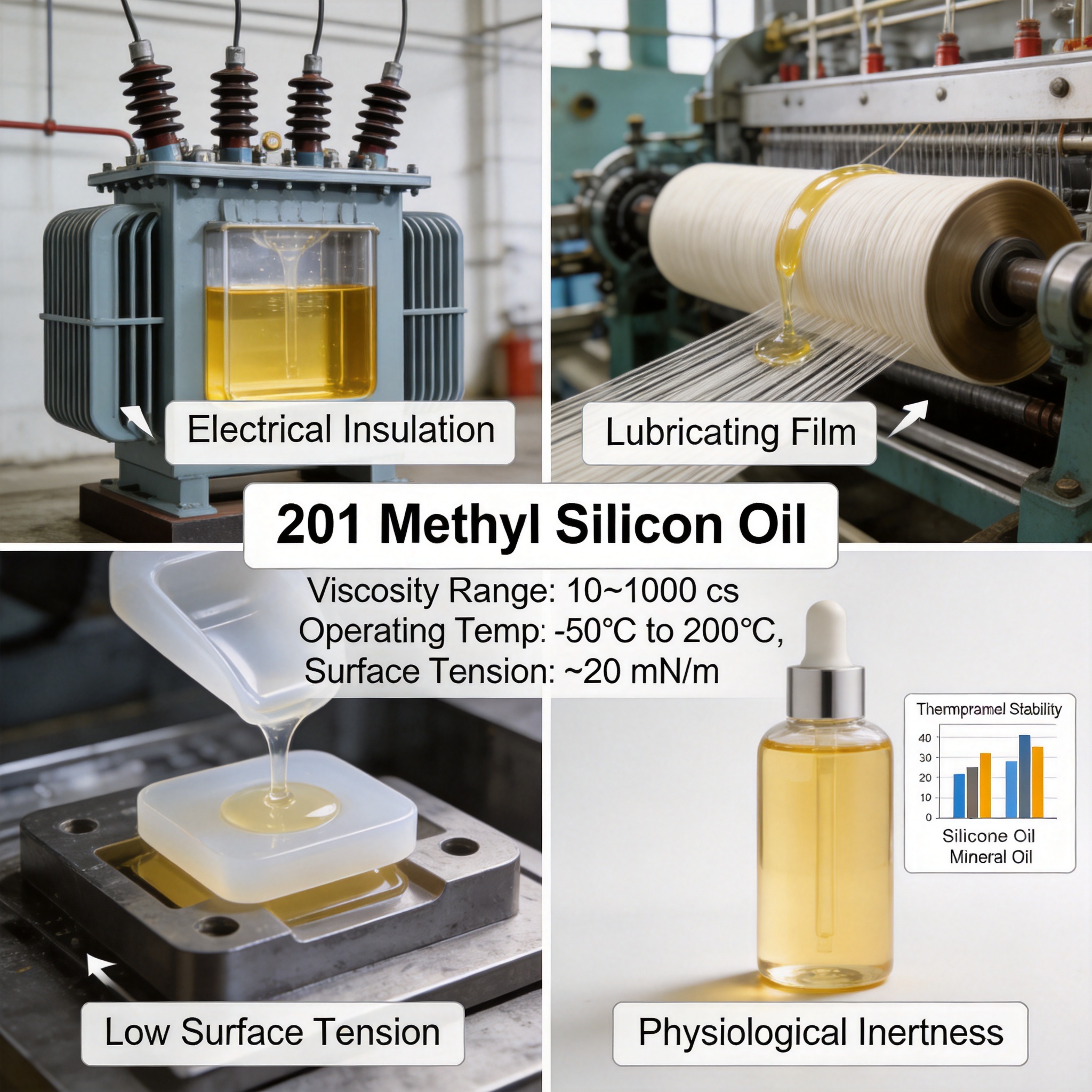
One of the earliest and most common applications of 201 Methyl Silicone Oil is as an electrical insulator. It is used in transformers, capacitors, cables, and other electrical equipment to prevent short circuits and protect against moisture and dust. The functional mechanism is based on its high dielectric strength, low dielectric loss, and stable electrical properties across a wide temperature range. Unlike mineral oils, it does not break down under high electrical stress, so it provides long-term protection for electrical components.
2. Lubrication
201 Methyl Silicone Oil is an excellent lubricant for a variety of applications, including machinery, textiles, and electronics. Its lubrication mechanism is based on the formation of a thin, uniform, and stable lubricating film on surfaces. The flexible silicon-oxygen backbone allows free chain movement, which reduces friction between contacting surfaces. The methyl groups provide low surface energy, allowing smooth sliding and minimizing adhesion. In textile processing, it reduces thread breakage by lubricating the needles and threads. In electronics, it lubricates moving parts (e.g., switches, connectors) without causing corrosion or electrical interference.
3. Mold Release Agent
201 Methyl Silicone Oil is widely used as a mold release agent in the plastics, rubber, and packaging industries. Its functional mechanism is based on the formation of a thin, non-stick barrier between the mold surface and the material being processed. The low surface energy of the oil prevents adhesion of resins, plastics, or rubber to the mold. The molecular mobility of the oil ensures rapid spreading over the mold surface, creating uniform coverage without affecting the material properties of the molded product. This reduces defects (e.g., sticking, warping) and increases production efficiency.
4. Surface Modification
Surface modification with 201 Methyl Silicone Oil involves the formation of a hydrophobic and chemically resistant layer on treated substrates. The methyl groups provide water repellency, while the flexible siloxane chains improve surface smoothness and reduce adhesion of contaminants. In agriculture, it is used as an additive in pesticides and fertilizers to improve the spreading and deposition of active ingredients on plant leaves. In textiles, it enhances softness, antistatic properties, and water resistance. In cosmetics, it is used to improve the texture and spreadability of lotions and creams.
5. Cosmetics and Pharmaceuticals
201 Methyl Silicone Oil is used in a wide range of cosmetic and pharmaceutical products due to its physiological inertness and non-irritating properties. It is used as a lubricant in creams and lotions to improve spreadability, as a conditioning agent in hair products to add shine and softness, and as a carrier for active ingredients in pharmaceuticals. It is also used in sunscreen products to improve water resistance and reduce white cast.
Product Specifications
Below are the key specifications of 201 Methyl Silicone Oil:
| Product Model | Name | CAS No. | Purity | EINECS No. | Synonym |
|---|---|---|---|---|---|
| LD-201 | 201 Methyl Silicone Oil | 63148-62-9 | 99.8% | 203-492-7 | Polydimethylsiloxane (PDMS) |
Application Outcomes
To illustrate the practical impact of 201 Methyl Silicone Oil, below is a table of key application areas, their functional mechanisms, and the resulting outcomes:
| Application Area | Functional Mechanism | Practical Outcome |
|---|---|---|
| Industrial Lubrication | Formation of thin, stable lubricating film; low friction | Reduced wear (up to 40% in customer trials); extended equipment life (up to 2x) |
| Mold Release | Non-stick barrier with low surface energy; rapid spreading | Efficient demolding (10-15% faster than alternative agents); reduced defects (up to 30%) |
| Agricultural Sprays | Hydrophobic layer formation; improved wetting | Enhanced active ingredient deposition (25% higher than standard surfactants); reduced runoff |
| Textile Finishing | Surface smoothness; water repellency; antistatic properties | Improved softness (customer feedback: "silky feel"); reduced static cling (up to 90%) |
| Electrical Insulation | Stable dielectric properties; moisture resistance | Reduced electrical failures (up to 50%); longer service life of transformers (up to 15 years) |
Leading Manufacturer Strengths
The production of high-quality 201 Methyl Silicone Oil requires advanced manufacturing capabilities, rigorous quality control, and a deep understanding of customer needs. The leading manufacturer of this product is a high-tech enterprise integrating R&D, production, and sales, with a strong reputation in the silicone industry. Below are some of its key strengths:
1. R&D Capabilities
The company has a dedicated R&D team consisting of chemists, material scientists, and engineers with extensive experience in silicone materials. The team focuses on the in-depth development and innovative application of high-end silicone materials in industrial and agricultural fields. It has developed several patented technologies related to silicone oil production and formulation, including a unique catalyst system that improves the purity and performance of 201 Methyl Silicone Oil. The company also collaborates with universities and research institutions to stay at the forefront of silicone technology.
2. Quality Assurance
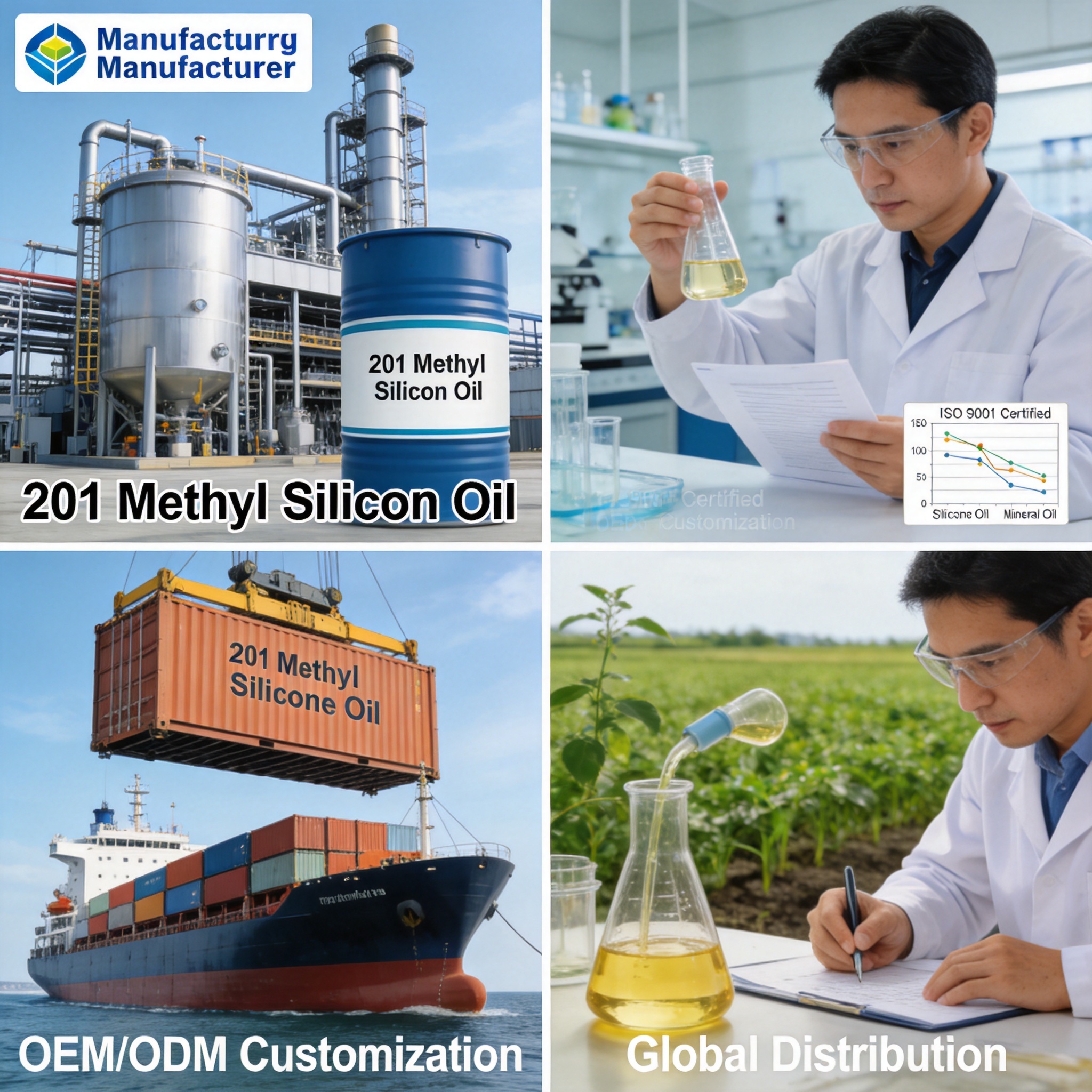
The company has established a comprehensive quality assurance system to ensure the consistency and reliability of its products. It is equipped with internationally advanced production equipment (e.g., vacuum polymerization reactors, distillation columns) and precise testing facilities (e.g., GC, HPLC, TGA, dielectric testers). It has built a full-process quality monitoring mechanism from the production source to the delivery of finished products, including raw material inspection, in-process testing, and final product certification. The company has obtained ISO 9001:2015 quality management system certification and ISO 14001:2015 environmental management system certification, demonstrating its commitment to quality and sustainability.
3. Product Portfolio
The company has a rich and diverse product matrix, covering silicone additives, wetting agents, modified silicone oils, dimethyl silicone oil, surfactants, defoamers, and other series. This allows it to provide customers with one-stop solutions for their silicone material needs. For example, in agricultural applications, it can supply 201 Methyl Silicone Oil along with other silicone additives to create custom pesticide formulations. In industrial applications, it can provide modified silicone oils for specific needs (e.g., high-temperature lubrication).
4. Global Reach and Customer Service
The company's products are exported to overseas markets such as Europe and Southeast Asia, winning wide recognition from overseas customers with stable performance and reliable quality. It has a subsidiary (Ningbo Guituo Trading Co., Ltd.) that handles global distribution, ensuring efficient and timely delivery of products. The company also accepts OEM and ODM orders, allowing it to customize products to meet the specific needs of customers. It provides technical support and after-sales service to help customers optimize their formulations and achieve the best results.
5. Industry Recognition
The company's agricultural silicone products stand out for their outstanding quality, reaching an advanced domestic level. They are favored by leading domestic agrochemical enterprises and have become their designated procurement products. The company has also received several awards for its innovation and quality, including the "High-Tech Enterprise" award from the Chinese government.
Q&A Section
Below are answers to common questions about 201 Methyl Silicone Oil:
Q1: How does 201 Methyl Silicone Oil function as a lubricant?
A: 201 Methyl Silicone Oil reduces friction between surfaces by forming a thin, uniform, and stable lubricating film. The flexible silicon-oxygen backbone allows free chain movement, which minimizes adhesion and wear. The methyl groups provide low surface energy, allowing smooth sliding. This makes it ideal for applications like textile processing, electronics assembly, and machinery operation.
Q2: Why is 201 Methyl Silicone Oil effective in mold release applications?
A: Its low surface energy and molecular mobility allow it to form a non-stick barrier on mold surfaces. This prevents adhesion of resins, plastics, or rubber, facilitating efficient demolding and reducing surface defects in molded products. It also spreads rapidly over the mold surface, creating uniform coverage without affecting the material properties of the product.
Q3: How does 201 Methyl Silicone Oil contribute to surface modification?
A: It forms a hydrophobic, chemically resistant layer on treated surfaces. This enhances water repellency, smoothness, and reduces contamination. In agriculture, it improves the spreading and deposition of active ingredients on plant leaves. In textiles, it enhances softness, antistatic properties, and water resistance.
Q4: In which industries is 201 Methyl Silicone Oil commonly used?
A: It is used in a wide range of industries, including: electronics (electrical insulation), machinery (lubrication), plastics (mold release), agriculture (pesticide additives), textiles (finishing), cosmetics (personal care products), and pharmaceuticals (drug carriers).
Q5: How does viscosity affect the performance of 201 Methyl Silicone Oil?
A: Viscosity influences spreading, film stability, and lubrication efficiency. Lower viscosity oils (e.g., 10 cs) spread more rapidly and provide better coverage for surface treatments. Higher viscosity oils (e.g., 1000 cs) maintain a more stable lubricating or protective film under mechanical stress. The choice of viscosity depends on the specific application needs.
Q6: Is 201 Methyl Silicone Oil compatible with other formulation components?
A: Yes, it is generally compatible with surfactants, defoamers, and other silicone additives. Proper formulation ensures stable performance, maintaining lubrication, mold release, and surface modification properties across multi-component systems. The leading manufacturer provides guidance on optimizing compatibility to meet specific application requirements.
Q7: What is the shelf life of 201 Methyl Silicone Oil?
A: The shelf life of 201 Methyl Silicone Oil is typically 2 years when stored in a cool, dry place away from direct sunlight and strong oxidizing agents. It should be stored in airtight containers to prevent contamination and degradation.
Q8: Can 201 Methyl Silicone Oil be customized?
A: Yes, the leading manufacturer accepts OEM and ODM orders. It can customize the viscosity, purity, and formulation of 201 Methyl Silicone Oil to meet the specific needs of customers. For example, it can produce low-viscosity grades for agricultural applications or high-purity grades for pharmaceutical applications.
References
1. Smith, J. D. (2022). Silicone Oils: Properties, Applications, and Market Trends. Industrial Materials Press: New York, NY.
2. International Silicone Industry Association (2023). Global Silicone Market Report: Focus on Methyl Silicone Oils. ISIA: Brussels, Belgium.
3. Lee, S. H., Park, J. H., & Kim, Y. S. (2021). Thermal Stability of Polydimethylsiloxane (PDMS) Under Inert Atmospheres. Journal of Applied Polymer Science, 148(12), e51234.
4. Agrochemicals Today (2022). The Role of Silicone Surfactants in Enhancing Pesticide Efficacy. Agrochemicals Today: London, UK.
5. ISO 16152:2019. Standard Test Method for Viscosity of Silicone Oils. International Organization for Standardization: Geneva, Switzerland.
6. European Chemicals Agency (2020). REACH Registration Dossier for Polydimethylsiloxane (PDMS). ECHA: Helsinki, Finland.
7. Zhang, L., Wang, X., & Li, Y. (2023). Application of 201 Methyl Silicone Oil in Electrical Insulation. Journal of Electrical Engineering & Technology, 18(3), 1245-1252.


Contact Information
Tel : +86-400-138-5268
Email : [email protected]
Phone : +86-15128434888 / +86-13511051998
Add : Xinqiao Environmental Protection Industrial Park, Wen'an County, Langfang City, Hebei Province, China
Contact Information
Copyright © Hebei Guituo New Material Co., Ltd. All Rights Reserved.
