

 English
  Français
  Português
 Home / Author / Zhang Xiaoyu, Regional Sales Manager (Southeast Asia) / Advanced Organosilicone Surfactants for High-Efficiency Agricultural Formulations
 Advanced Organosilicone Surfactants for High-Efficiency Agricultural Formulations
2026-05-14
Modern agriculture depends on formulations that perform consistently under difficult field conditions. Leaves may be waxy, dusty, vertical, hairy, or water-repellent. Spray droplets may bounce, bead, drift, evaporate, or dry before active ingredients can reach their targets. In this environment, the performance of an agrochemical is determined not only by the active ingredient, but also by the quality of the additives that help the formulation spread, wet, disperse, adhere, and penetrate. Organosilicone surfactant technology has become one of the most effective solutions for improving these critical application properties.
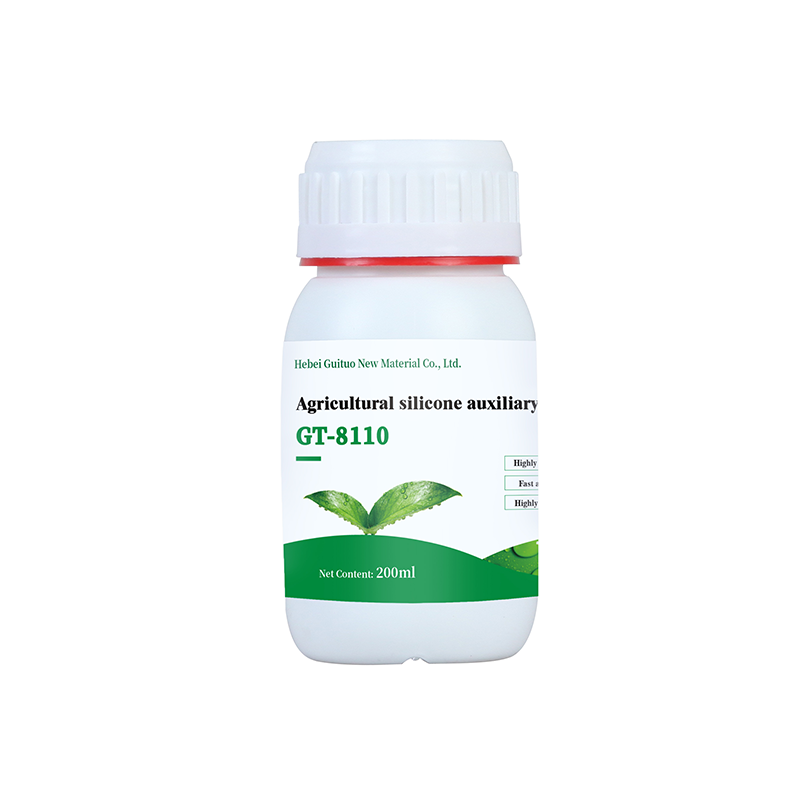
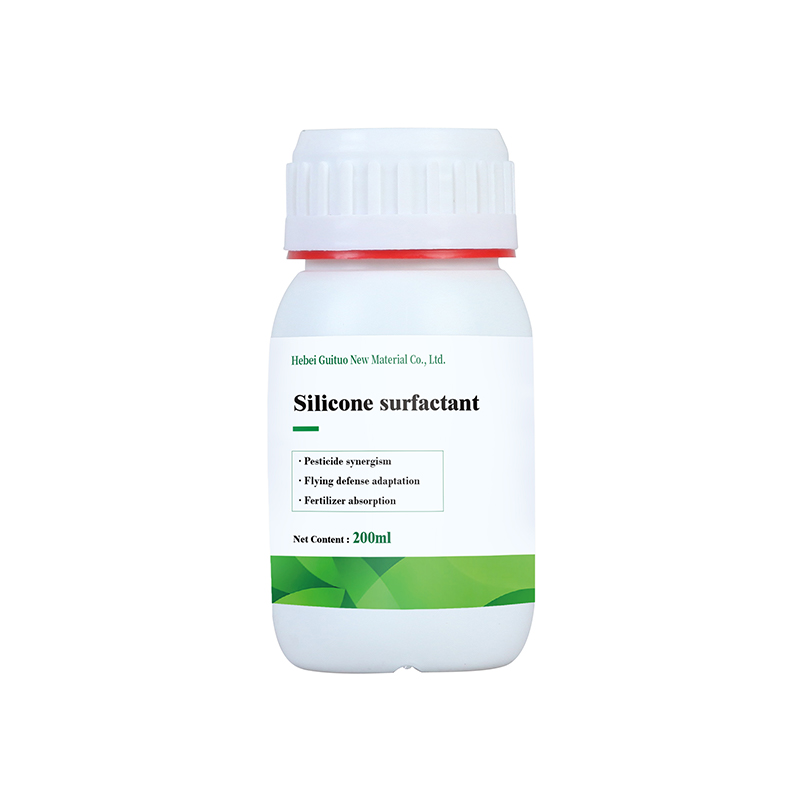
Organosilicone Surfactant GT-7100 is a high-performance agricultural silicone synergist designed to reduce surface tension, improve wetting, enhance spreading, support dispersion, and increase the application efficiency of pesticides, herbicides, fungicides, foliar fertilizers, and other agrochemical mixtures. As a polyether-modified trisiloxane surfactant, it combines the low-surface-energy characteristics of silicone chemistry with the formulation compatibility of organic polyether structures. This combination enables exceptionally fast spreading on plant surfaces and supports more uniform coverage than many conventional non-silicone surfactants.
The product is offered by Hebei Guituo New Material Co., Ltd., with Ningbo Guituo Trading Co., Ltd. serving as a subsidiary responsible for market development and trade services. The company focuses on advanced silicone materials for industrial and agricultural applications and has built a product portfolio that includes silicone additives, wetting agents, modified silicone oils, dimethyl silicone oils, surfactants, defoamers, and related materials. Its agricultural silicone products are recognized for stable quality, reliable performance, and practical value in high-efficiency agrochemical systems.
Product Overview
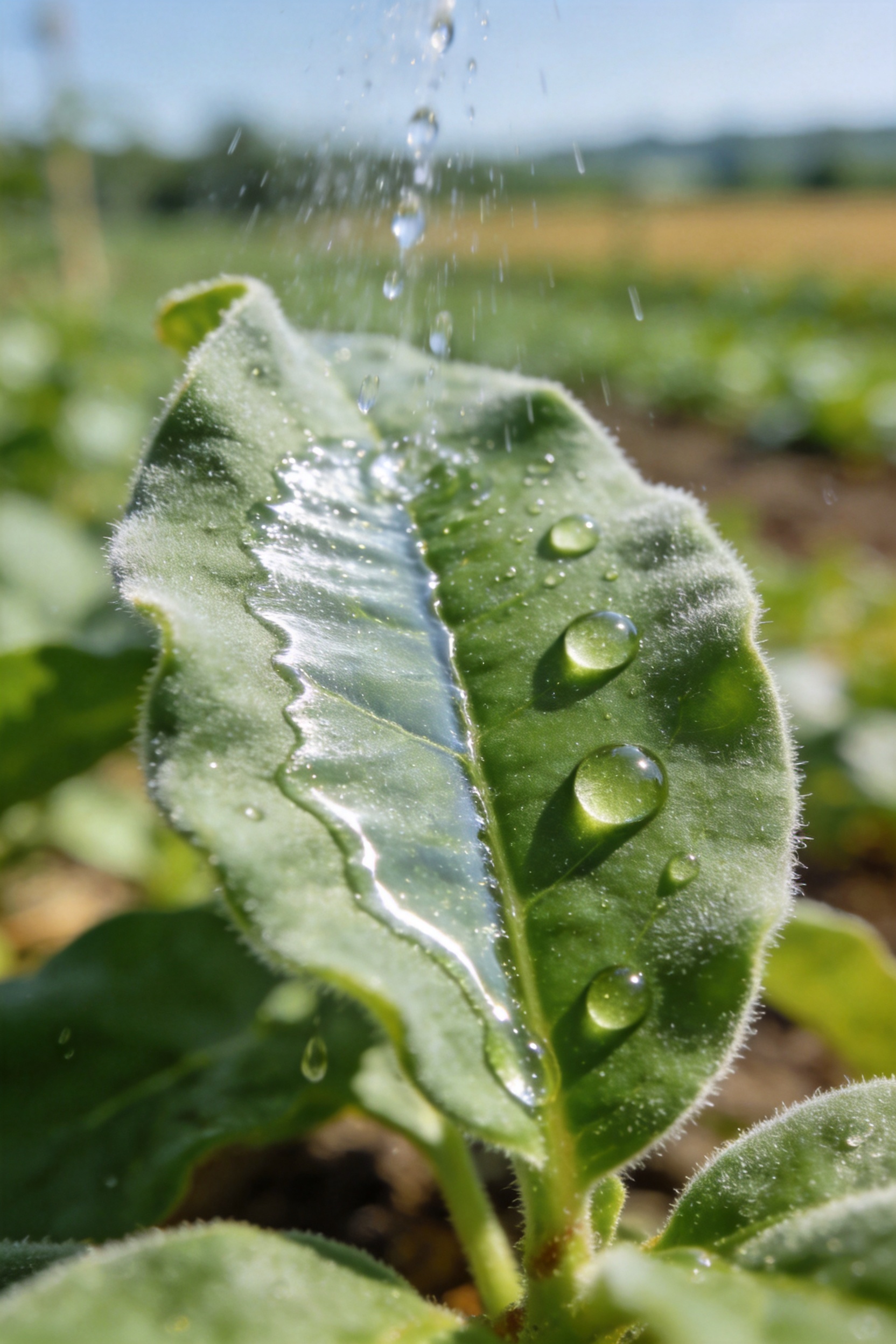
Organosilicone Surfactant GT-7100 is designed for applications where strong wetting and spreading are required. Its main function is to reduce surface and interfacial tension so that spray solutions can wet difficult surfaces more effectively. In agricultural spraying, this means that droplets can spread rapidly across leaf surfaces instead of remaining as isolated beads. Better spreading increases the contact area between the active ingredient and the plant surface, improving the chance of effective absorption or surface action.
The product is also useful where dispersion and solubilization are important. Many agrochemical formulations contain ingredients that are not naturally easy to disperse in water. Solid particles may settle, poorly soluble components may separate, and oil-water systems may become unstable. By supporting uniform distribution, GT-7100 helps formulations remain more homogeneous during mixing, storage, and application. This is especially valuable for pesticide concentrates, herbicide tank mixes, foliar nutrition products, and multi-component agrochemical systems.
In addition to wetting and dispersion, organosilicone surfactants can influence foaming behavior, penetration, and formulation stability. Depending on the final formulation design, they may help suppress excessive foam, improve penetration into plant surfaces, or support the even distribution of active ingredients. Because modern agriculture increasingly demands lower waste, more precise application, and better crop safety, high-quality silicone surfactants have become important tools for formulation engineers and growers.
Key Technical Specifications
| Item | Specification |
|---|---|
| Product Model | GT-7100 |
| Product Name | Organosilicon Surfactant |
| CAS No. | 27306-78-1 |
| Purity | 99.8% |
| EINECS No. | 608-078-3 |
| Synonyms | Silicone Surfactant, Polyether Modified Trisiloxane |
| Viscosity at 25°C | 30–50 mm²/s |
| Surface Tension at 0.1% wt | <20.5 mN/m |
| Cloud Point at 1.0% wt | ≤35°C |
| pH Value, 1% Aqueous Solution at 25°C | 6.5–7.5 |
These specifications show the product’s suitability for precision formulation work. The low surface tension value is particularly important because it indicates the ability of the surfactant to create rapid spreading at low use levels. The neutral pH range helps improve compatibility with many agricultural systems, while the controlled viscosity makes the material easier to handle, measure, blend, and process in industrial production environments.
How Organosilicone Surfactants Work
Surfactants are surface-active agents that reduce the surface tension of liquids or the interfacial tension between two phases. In water-based agricultural sprays, high surface tension can cause droplets to form spheres. These droplets may sit on the surface of leaves rather than spread. If a leaf is waxy or hydrophobic, droplets may bounce or roll away, wasting product and reducing biological performance. By reducing surface tension, surfactants help droplets flatten and spread.
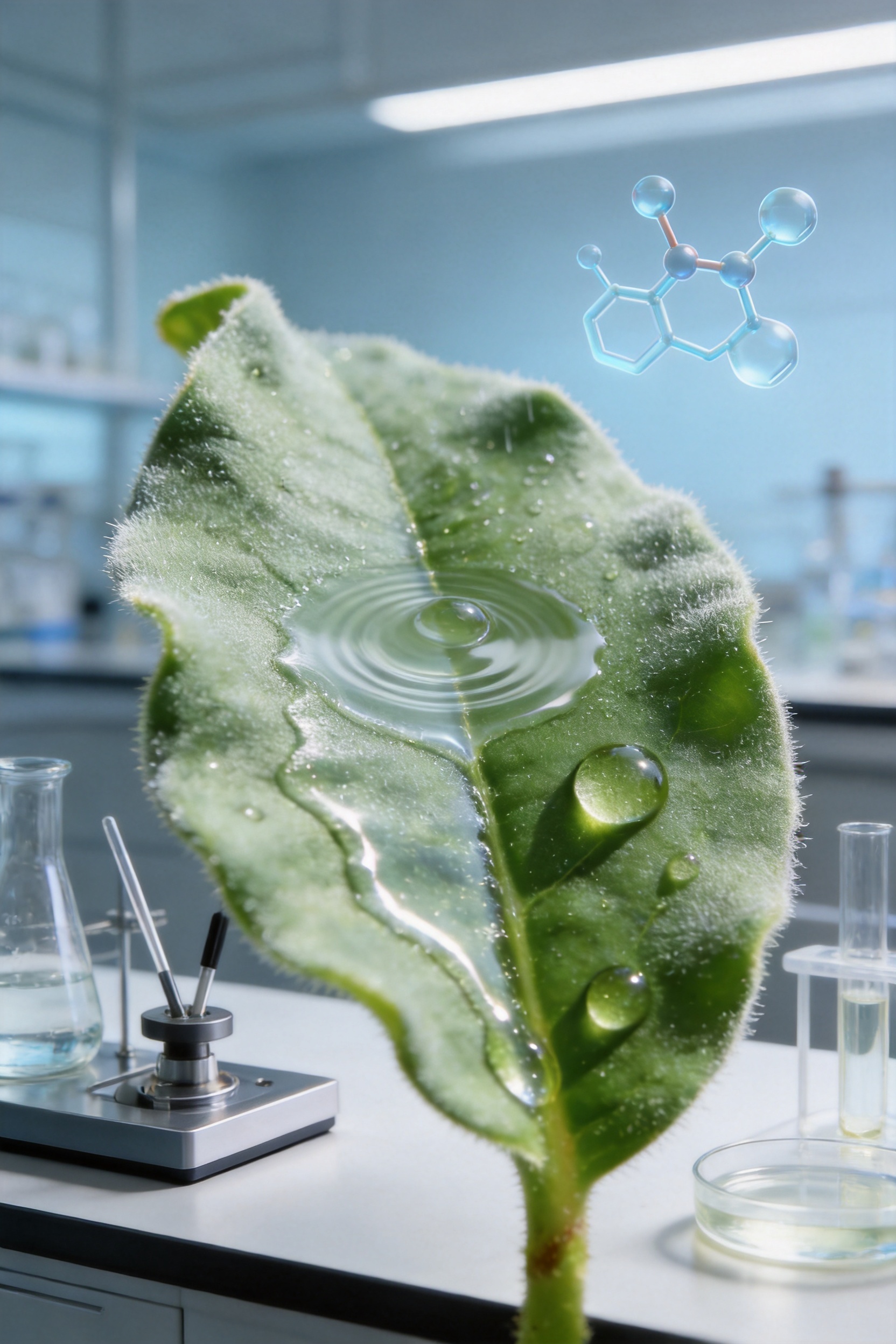
Organosilicone surfactants are especially effective because their silicone backbone has very low surface energy. When combined with polyether groups, the molecule becomes capable of interacting with water-based systems while still delivering silicone-like spreading behavior. This structure allows the surfactant to migrate rapidly to interfaces and lower the energy barrier between the spray solution and the target surface.
The result is often described as “super-spreading.” A properly formulated organosilicone surfactant can make a small droplet cover a much larger surface area than a conventional surfactant. This is why organosilicone additives are widely used in herbicides, insecticides, fungicides, and foliar fertilizers. They help the active ingredient contact the target more completely, which can improve field performance and reduce losses caused by poor coverage.
Wetting is only one part of the mechanism. Organosilicone surfactants can also improve penetration. Some active ingredients need to move through the leaf cuticle or enter surface structures to become fully effective. By increasing contact area and helping the spray film interact with plant surfaces, the surfactant can support better uptake. This is particularly relevant for systemic herbicides and certain foliar nutrients.
Dispersion is another critical effect. In liquid formulations, active ingredients and auxiliary components must remain evenly distributed. Poor dispersion can cause uneven concentration, clogging, sedimentation, or inconsistent field performance. GT-7100 helps reduce these problems by supporting the stable distribution of formulation components and reducing the tendency of particles or droplets to aggregate.
Advantages Over Conventional Surfactants
Compared with many traditional nonionic, anionic, or amphoteric surfactants, organosilicone surfactants can achieve stronger spreading at lower concentrations. Conventional surfactants may improve wetting, but they often cannot reduce surface tension to the same low level as polyether-modified trisiloxane materials. With a surface tension of less than 20.5 mN/m at 0.1% wt, GT-7100 offers powerful wetting performance suitable for demanding agricultural applications.
One advantage is rapid coverage. In real field conditions, spray droplets have only a limited time to spread before drying or being affected by wind, sunlight, or leaf angle. Faster spreading means that a larger area can be covered in a shorter period. This can improve the uniformity of pesticide or nutrient distribution and reduce the risk of untreated patches on plant surfaces.
A second advantage is improved efficiency. When a formulation spreads better, the same amount of spray solution can cover more surface area. This does not automatically mean that use rates should be reduced without testing, but it does mean that formulation developers and growers may achieve better performance from the same active ingredient level. In professional formulation design, this can help optimize cost-performance balance.
A third advantage is compatibility with diverse agricultural systems. GT-7100 has a neutral pH range and controlled viscosity, making it suitable for many water-based formulations and tank-mix applications. Its polyether-modified structure supports interaction with aqueous systems while maintaining the performance benefits of silicone chemistry. This balanced design helps formulation engineers integrate the product into different product types.
A fourth advantage is improved visual and functional consistency. When a spray solution wets evenly, it tends to form a more uniform film. This can be valuable in foliar fertilizers, where nutrient distribution matters, and in contact pesticides, where the active ingredient must reach insects, fungi, or surface tissues. Conventional surfactants may create partial spreading, but high-performance organosilicone surfactants offer a stronger effect on difficult surfaces.
A fifth advantage is manufacturing consistency. Competitor products may vary in purity, viscosity, active content, or surface tension performance from batch to batch. GT-7100 is produced under a full-process quality monitoring system, from raw material selection to finished product testing. This helps customers receive reliable material that behaves consistently in industrial blending, laboratory development, and field application.
Advantages in Agricultural Formulations
In pesticide formulations, the surfactant helps improve the contact between the pesticide and the target surface. Many insects hide on leaf undersides, stems, or textured plant surfaces. Improved wetting can help the spray reach these areas more effectively. For contact pesticides, coverage is directly related to performance. For systemic pesticides, wetting and spreading can also support absorption.
In herbicide formulations, organosilicone surfactants are often used to improve coverage on weed leaves. Many weeds have waxy cuticles or narrow leaves that are difficult to wet. Without a strong wetting agent, herbicide droplets may bead and slide away. GT-7100 helps the spray solution spread across these surfaces, increasing the probability that the active ingredient remains in place long enough to work.
In fungicide formulations, uniform coverage is essential because fungal infection can occur across leaf surfaces and in small protected zones. A surfactant that improves spreading can help fungicide films cover more surface area. This is especially useful in protective fungicide applications, where untreated regions can become entry points for disease.
In foliar fertilizers, the goal is to deliver nutrients evenly and efficiently to plant surfaces. Poor wetting may cause fertilizer droplets to concentrate in limited areas, increasing the risk of uneven nutrition or localized stress. Better spreading can support more uniform nutrient distribution. With proper formulation design and recommended application practices, organosilicone surfactants can improve foliar feeding efficiency.
In tank-mix systems, additives must perform under variable conditions. Farmers may combine several products in the spray tank, including pesticides, fertilizers, water conditioners, and other adjuvants. GT-7100’s wetting and dispersion benefits can support improved mixture performance, though compatibility testing is always recommended before large-scale use. This practical approach helps reduce the risk of precipitation, phase separation, or unexpected reactions.
Performance Benefits for Growers and Formulators
For growers, the primary benefit is more reliable field application. A spray solution that spreads well can reduce visible beading and improve the distribution of active ingredients across plant surfaces. Better coverage often leads to better biological performance, especially when the limiting factor is poor contact between the chemical and the target.
For formulation companies, the benefit is design flexibility. GT-7100 can be used to improve the wetting profile of different formulations without relying solely on high levels of conventional surfactants. Because the product is powerful at low concentrations, it can help formulators create efficient products with strong application properties. Its controlled viscosity also supports practical handling in manufacturing plants.
For distributors and agricultural service providers, the benefit is product differentiation. Agrochemical markets are competitive, and customers increasingly expect formulations that are easy to use and visibly effective. A high-performance organosilicone surfactant can help create products that stand out through faster spreading, better coverage, and more consistent field behavior.
For large-scale agricultural operations, the benefit is operational efficiency. When spray solutions wet plants more effectively, application quality can improve across large acreages. This can be especially important in crops with dense canopies, waxy foliage, or high-value production systems where uniform treatment matters. Although application conditions must still be managed carefully, an effective surfactant provides an important performance advantage.
Manufacturing Strength and Process Control
High-performance organosilicone surfactants require more than a good formula. They require precise synthesis, careful raw material control, stable production equipment, and rigorous quality testing. Hebei Guituo New Material Co., Ltd. has built its operations around these requirements, integrating research, development, production, and sales to support advanced silicone material applications.
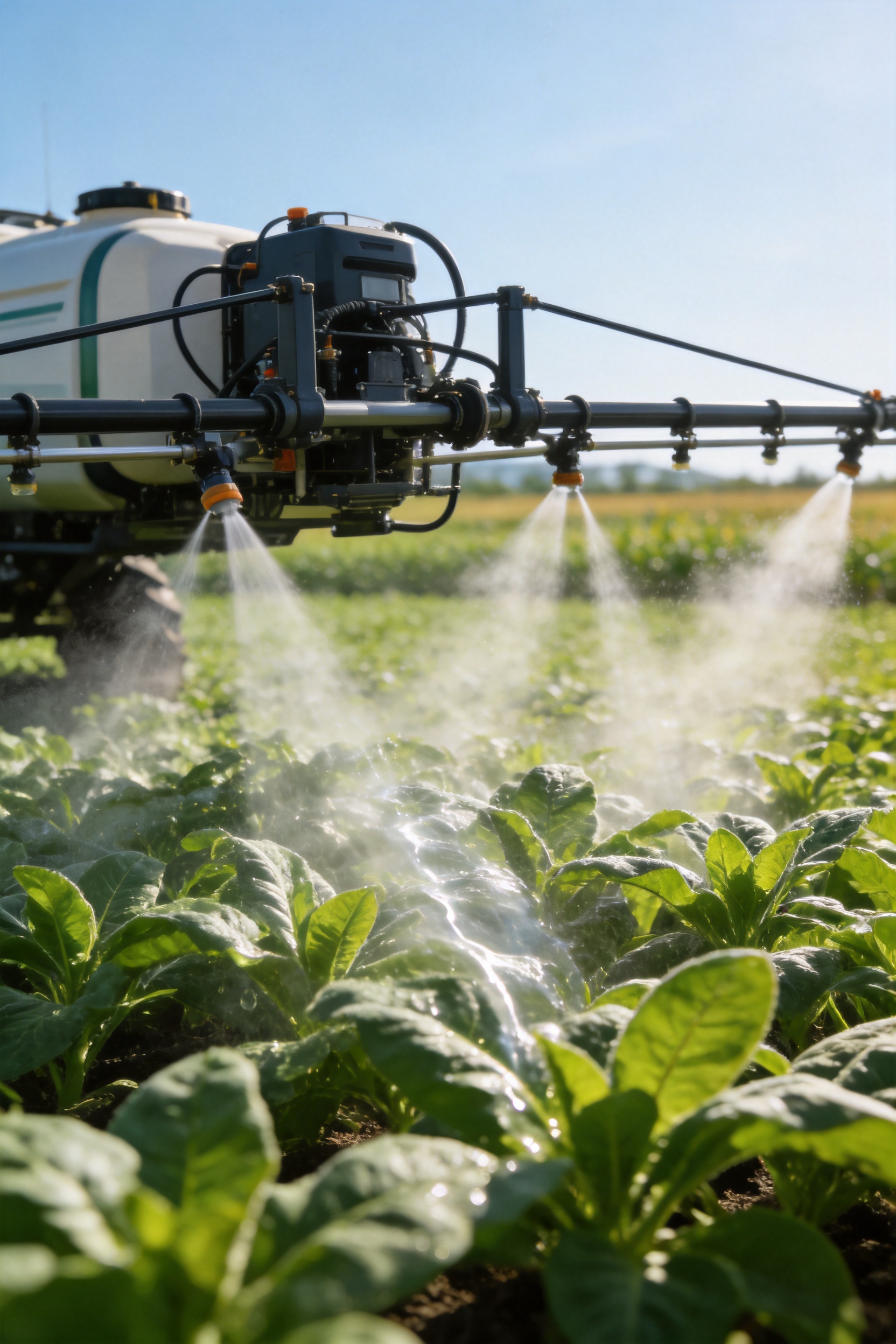
The company uses advanced production equipment and precise testing facilities to maintain quality from the beginning of production to final delivery. In silicone surfactant manufacturing, small variations in molecular structure can influence viscosity, surface tension, cloud point, compatibility, and storage stability. Therefore, process control is essential. By monitoring production parameters and finished product indicators, the company helps ensure that every batch meets high standards.
The manufacturing process begins with raw material selection. Polyether raw materials, silicone intermediates, catalysts, and auxiliary materials must meet defined quality criteria. Impurities or inconsistent molecular weights can affect final surfactant performance. The company’s quality assurance system helps screen incoming materials and reduce the risk of variation before production begins.
During synthesis, the organosilicone structure is formed through controlled reaction processes. For polyether-modified trisiloxane surfactants, reaction conditions such as temperature, mixing, catalyst control, and reaction time must be carefully managed. Proper control helps achieve the intended balance between silicone character and hydrophilic polyether functionality. This balance determines whether the final material can deliver both water compatibility and super-spreading behavior.
After synthesis, purification and stabilization steps help improve product consistency. Filtration, removal of unwanted residues, and adjustment of physical properties may be applied according to production requirements. The goal is to produce a clean, stable, high-purity surfactant that can be blended easily into customer formulations.
Finished product testing is a key step. Important indicators include appearance, viscosity, surface tension, pH value, cloud point, purity, and batch consistency. For agricultural customers, these values are not abstract laboratory numbers. They directly affect the way a product mixes, spreads, stores, and performs in the field. By maintaining a full-process quality monitoring mechanism, the company provides customers with confidence in production reliability.
Quality Assurance as a Competitive Advantage
In the additive market, customers often compare products by price alone. However, true value depends on performance consistency, formulation compatibility, technical support, and supply reliability. A low-cost surfactant that varies from batch to batch can create significant hidden costs, including failed formulations, customer complaints, storage problems, and inconsistent field results. GT-7100 is positioned as a high-quality solution for customers who need dependable performance.
The company’s quality assurance system is one of its major strengths. It includes production source control, in-process monitoring, finished product inspection, and delivery management. This full-chain approach helps ensure that the surfactant performs consistently when used by formulation manufacturers or agricultural customers. In a market where small differences in quality can have large effects, this reliability is a strong competitive advantage.
The company also has an experienced technical and production team. Practical know-how is especially important in silicone chemistry because production involves both chemical precision and application understanding. A product must not only meet laboratory specifications but also work in real formulations. The team’s industry experience helps connect manufacturing control with customer application needs.
Another strength is the company’s broad product matrix. Because it produces silicone additives, wetting agents, modified silicone oils, dimethyl silicone oils, surfactants, defoamers, and related materials, it can support customers across multiple formulation challenges. This is helpful for customers who need more than a single additive and want technical guidance on integrated silicone material solutions.
The company’s agricultural silicone products have reached an advanced domestic level and are favored by leading agrochemical enterprises. This market recognition reflects the practical performance of the products in real industrial and agricultural settings. The company’s products are also exported to markets such as Europe and Southeast Asia, where customers value stable performance and reliable quality.
Applications Beyond Agriculture
Although GT-7100 is especially important as an agricultural silicone synergist, organosilicone surfactants also have relevance in other fields where wetting, spreading, and surface tension reduction are needed. The broader product category includes paint additives, chemical raw materials, and release agent applications. This demonstrates the versatility of silicone surfactant chemistry.
In coatings and paint additives, surface tension control can influence leveling, substrate wetting, pigment dispersion, and defect reduction. Poor wetting can lead to craters, pinholes, uneven films, or reduced adhesion. Silicone-based additives can help coatings flow more evenly across difficult surfaces. While the exact grade and formulation must be selected for each system, organosilicone surfactant technology is valuable in many coating environments.
In chemical raw materials, surfactants serve as functional intermediates or performance modifiers. They may be used in emulsions, dispersions, cleaning systems, polymer processes, or specialty chemical formulations. Their ability to manage interfaces makes them important tools wherever oil, water, solids, and surfaces interact.
In release agent systems, silicone chemistry is widely valued for low surface energy and controlled release performance. Surfactant structures may help emulsify silicone oils or improve the distribution of release components in water-based systems. This can support more uniform application and better process control in manufacturing environments.
The ability to serve multiple industries also strengthens the company’s technical base. Knowledge from agriculture, textiles, daily chemicals, electronics, coatings, and industrial silicone applications can support cross-functional innovation. This helps the company respond to new customer requirements and develop customized materials for specific performance targets.
Formulation Guidance and Practical Use Considerations
When using organosilicone surfactants, proper formulation design and application practice are essential. Because these surfactants are highly efficient, excessive use may not provide additional benefit and may increase the risk of unwanted effects. The recommended dosage should be determined through laboratory screening, compatibility testing, and field validation.
Compatibility testing is important because agrochemical formulations vary widely in pH, solvent content, electrolyte concentration, active ingredient type, and auxiliary additives. Although GT-7100 is compatible with many agricultural systems, formulators should test it with the specific pesticide, herbicide, fungicide, or fertilizer formulation before commercial use. Tank-mix users should also perform small-scale jar tests when combining multiple products.
Water quality can influence performance. Hard water, high salts, extreme pH, or contaminated water may affect formulation stability and surfactant behavior. In professional agricultural practice, water quality management is part of good spraying performance. The surfactant can significantly improve wetting, but it cannot compensate for every possible water or mixing problem.
Application conditions also matter. High temperature, strong wind, low humidity, or imminent rainfall can reduce spray performance. Better wetting improves the chance of effective coverage, but growers should still follow label directions for active ingredients and use recommended application windows. Responsible use ensures both crop safety and environmental protection.
Crop sensitivity should be evaluated. Most crops can benefit from improved wetting when products are used correctly, but some plants or growth stages may be more sensitive to strong spreading agents. Formulators and users should follow manufacturer guidance and conduct crop safety testing where needed, especially for high-value crops, greenhouse crops, young plants, or stressed plants.
Environmental and Responsible Application Considerations
Modern agricultural additives must support performance while being used responsibly. Organosilicone surfactants can improve application efficiency by helping spray solutions cover targets more effectively. Better targeting may help reduce waste caused by runoff from poorly wetted surfaces. However, any powerful surfactant must be used according to recommended practices.
Responsible application includes correct dilution, proper mixing, appropriate timing, and avoidance of excessive use. Operators should avoid spraying near sensitive water bodies when runoff risk is high. They should also follow all label directions for the agrochemical products being used. The surfactant is an efficiency-enhancing additive, not a substitute for good agricultural practice.
Environmental safety also depends on formulation design. Professional formulators should evaluate the complete formulation, not only the surfactant. Active ingredients, solvents, emulsifiers, salts, and other additives all influence environmental behavior. By choosing high-quality additives and validating formulations carefully, manufacturers can create products that perform effectively while supporting responsible use.
The company’s focus on stable manufacturing contributes to environmental responsibility because consistent products reduce the risk of off-spec materials, rework, and waste. Reliable production also helps customers avoid formulation failures that may lead to disposal problems. Quality and sustainability are closely connected in chemical manufacturing.
Why GT-7100 Stands Out in Competitive Markets
GT-7100 stands out because it combines strong technical performance with manufacturing reliability. Its low surface tension performance supports rapid wetting and spreading. Its high purity and controlled physical properties support consistent formulation behavior. Its neutral pH range improves practical compatibility. These product-level advantages are reinforced by the company’s advanced production equipment, precise testing facilities, and full-process quality monitoring system.
Compared with generic surfactants, GT-7100 offers a more specialized solution for high-efficiency agriculture. Many conventional additives can reduce surface tension to some extent, but they may not provide the same degree of spreading on hydrophobic plant surfaces. This difference matters in real field applications, where uneven wetting can reduce the effectiveness of expensive active ingredients.
Compared with low-grade silicone surfactants, GT-7100 offers stronger assurance of consistency. In silicone materials, inconsistent production can cause variations in spreading, cloud point, odor, color, viscosity, or compatibility. Customers who manufacture agricultural formulations need predictable behavior because every formulation must pass stability, performance, and storage requirements. A dependable supplier helps reduce development risk.
Compared with suppliers that only provide standard materials, the company offers OEM and ODM support. This is important for customers who need customized products, private-label solutions, or formulation-specific performance. The ability to accept customized orders reflects technical flexibility and production capability.
Compared with companies with limited application experience, Hebei Guituo New Material Co., Ltd. has built a wide product matrix and serves multiple industries. This broader experience helps the company understand different surface chemistry challenges and provide practical product recommendations. For customers, this means not just receiving a chemical material, but gaining access to application-oriented support.
Role in Next-Generation Agricultural Efficiency
Agriculture is moving toward greater precision. Growers must increase productivity while managing cost, labor, environmental pressure, and regulatory requirements. Agrochemical formulations must therefore become more efficient, more reliable, and easier to apply correctly. Additives such as GT-7100 play an important role in this transition.
By improving wetting, the surfactant helps active ingredients reach the surfaces where they are needed. By supporting dispersion, it helps maintain formulation uniformity. By enhancing spreading, it helps reduce gaps in coverage. By supporting penetration in appropriate systems, it can help certain active ingredients perform more effectively. These benefits align with the need for efficient crop protection and nutrient delivery.
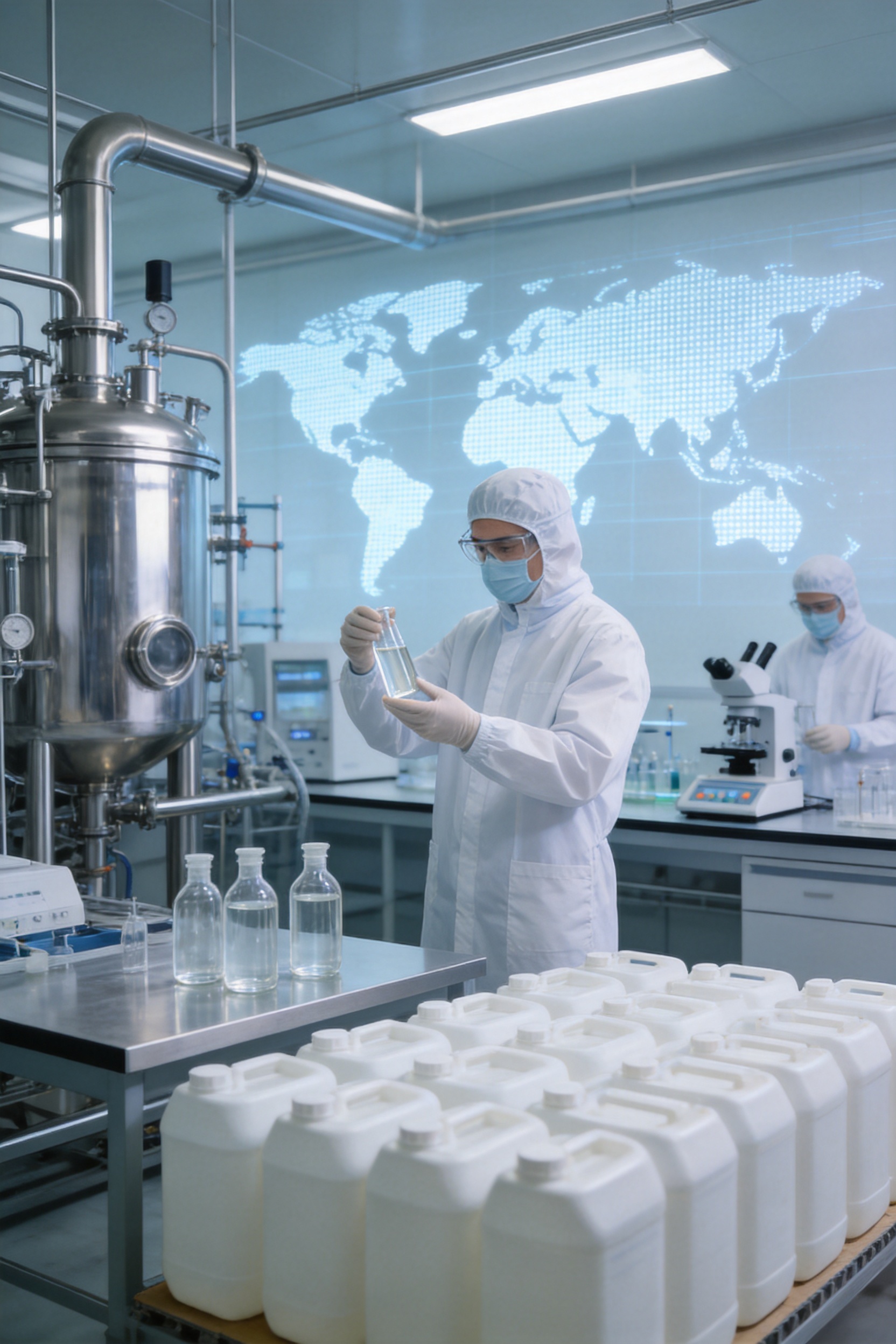
The product is also relevant to the development of lower-volume spraying and precision application technologies. As equipment becomes more advanced, spray quality becomes even more important. Droplet size, coverage, retention, and surface interaction must be carefully managed. High-performance surfactants can support these goals by improving the way droplets behave after they contact the target.
In addition, the product supports formulation innovation. Agrochemical companies are constantly developing new active ingredient combinations, suspension concentrates, emulsifiable concentrates, soluble liquids, microemulsions, suspoemulsions, and foliar nutrient blends. Each system presents different interface challenges. A versatile organosilicone surfactant gives formulators a valuable tool for solving these challenges.
Company Capabilities and Supply Reliability
Hebei Guituo New Material Co., Ltd. is a high-tech enterprise integrating research and development, production, and sales. It focuses on the development and innovative application of high-end silicone materials in industrial and agricultural fields. This integrated model helps the company connect customer needs with technical development and manufacturing execution.
The company has established a comprehensive guarantee system to ensure product quality and stable supply. Advanced production equipment supports efficient and controlled manufacturing. Precise testing facilities allow the company to monitor important quality indicators. A full-process quality monitoring mechanism provides control from production source to finished product delivery.
The company’s experienced technical and production team is another important asset. Silicone surfactants require specialized knowledge in synthesis, formulation behavior, and application performance. A skilled team can identify process risks, optimize production conditions, and support customers with practical solutions. This human expertise is as important as equipment in maintaining product excellence.
The company’s products are widely used in agriculture, daily chemicals, electronics, textiles, and other fields. This demonstrates not only product diversity but also manufacturing adaptability. Serving different industries requires meeting different performance standards and customer expectations. The ability to do so indicates strong operational capability.
For international customers, export experience is valuable. Products exported to markets such as Europe and Southeast Asia must meet customer requirements for quality, documentation, and reliable delivery. Repeated purchases from overseas customers show that the company’s products have earned trust through stable performance.
Q&A Section
What is an organosilicone surfactant?
An organosilicone surfactant is a surface-active material that combines silicone-based molecular structures with organic functional groups, such as polyether segments. This structure allows it to reduce surface tension very effectively and improve wetting, spreading, dispersion, and penetration in many formulations.
What is GT-7100 mainly used for?
GT-7100 is mainly used as an agricultural silicone synergist in pesticides, herbicides, fungicides, foliar fertilizers, and agrochemical mixtures. It helps spray solutions spread more evenly on plant surfaces and improves the contact between active ingredients and target areas.
Why is low surface tension important?
Low surface tension allows droplets to spread instead of forming beads. On waxy or water-repellent plant surfaces, this is essential for improving coverage. GT-7100 has a surface tension of less than 20.5 mN/m at 0.1% wt, which supports strong wetting and rapid spreading.
How does GT-7100 improve pesticide performance?
It improves pesticide performance by helping the spray solution cover more of the plant surface. Better coverage increases the likelihood that the active ingredient contacts pests, fungal infection sites, or plant tissues. This can improve application efficiency when used according to recommended formulation and field practices.
Can it be used with herbicides?
Yes, organosilicone surfactants are commonly used with herbicides to improve wetting and spreading on weed leaves. However, compatibility and crop safety should always be tested before large-scale use, especially when working with sensitive crops or unfamiliar tank mixes.
Does the product help with dispersion?
Yes. GT-7100 can support the even distribution of formulation components and help reduce problems such as settling, phase separation, or poor mixing. This is valuable in agrochemical systems containing active ingredients that are difficult to disperse.
Is it suitable for foliar fertilizers?
Yes, it can be used in foliar fertilizer systems where improved wetting and nutrient distribution are desired. By helping the spray solution spread more evenly, it can support more uniform nutrient contact with leaf surfaces.
What makes GT-7100 different from ordinary surfactants?
Its polyether-modified trisiloxane structure provides stronger surface tension reduction and spreading than many conventional surfactants. It also offers high purity, controlled viscosity, a neutral pH range, and reliable batch consistency supported by advanced manufacturing and testing systems.
Why is manufacturing quality important for silicone surfactants?
Small differences in synthesis and raw material quality can affect viscosity, cloud point, surface tension, compatibility, and application performance. Strong manufacturing control helps ensure that every batch performs consistently in customer formulations.
Can customized products be supplied?
Yes. The company accepts OEM and ODM orders and can support customers that need customized silicone material solutions for specific formulation or market requirements.
References
Knoche, M. “Organosilicone Surfactant Performance in Agricultural Spray Applications.” Weed Research.
Stevens, P. J. G. “Organosilicone Surfactants as Adjuvants for Agrochemicals.” Pesticide Science.
Hazen, J. L. “Adjuvants: Terminology, Classification, and Chemistry.” Weed Technology.
Stock, D., and Holloway, P. J. “Possible Mechanisms for Surfactant-Induced Foliar Uptake of Agrochemicals.” Pesticide Science.
Green, J. M., and Beestman, G. B. “Recently Patented and Commercialized Formulation and Adjuvant Technology.” Crop Protection.
Technical Data Sheet for Organosilicone Surfactant GT-7100, Hebei Guituo New Material Co., Ltd.


Contact Information
Tel : +86-400-138-5268
Email : [email protected]
Phone : +86-15128434888 / +86-13511051998
Add : Xinqiao Environmental Protection Industrial Park, Wen'an County, Langfang City, Hebei Province, China
Contact Information
Copyright © Hebei Guituo New Material Co., Ltd. All Rights Reserved.
