

 English
  Français
  Português
 Home / Author / Zhang Xiaoyu, Regional Sales Manager (Southeast Asia) / 201 Methyl Silicone Oil: Unlocking Multifunctional Performance for Modern Industrial and Consumer Applications
 201 Methyl Silicone Oil: Unlocking Multifunctional Performance for Modern Industrial and Consumer Applications
2026-04-18
201 Methyl Silicone Oil, also known as polydimethylsiloxane (PDMS) with a linear dimethyl structure, stands as a versatile silicone-based fluid that has revolutionized multiple industries due to its unique combination of physical, chemical, and surface properties. Unlike conventional lubricants, mold release agents, or surface modifiers, this product offers exceptional thermal stability, low surface tension, and physiological inertness—qualities that make it indispensable in sectors ranging from electronics and agriculture to cosmetics and pharmaceuticals. This article explores the core properties of 201 Methyl Silicone Oil, its competitive advantages over alternative materials, advanced manufacturing processes that ensure consistent quality, diverse industrial applications, and the strengths of leading manufacturers that drive its global adoption.
Core Properties of 201 Methyl Silicone Oil
Physical Properties
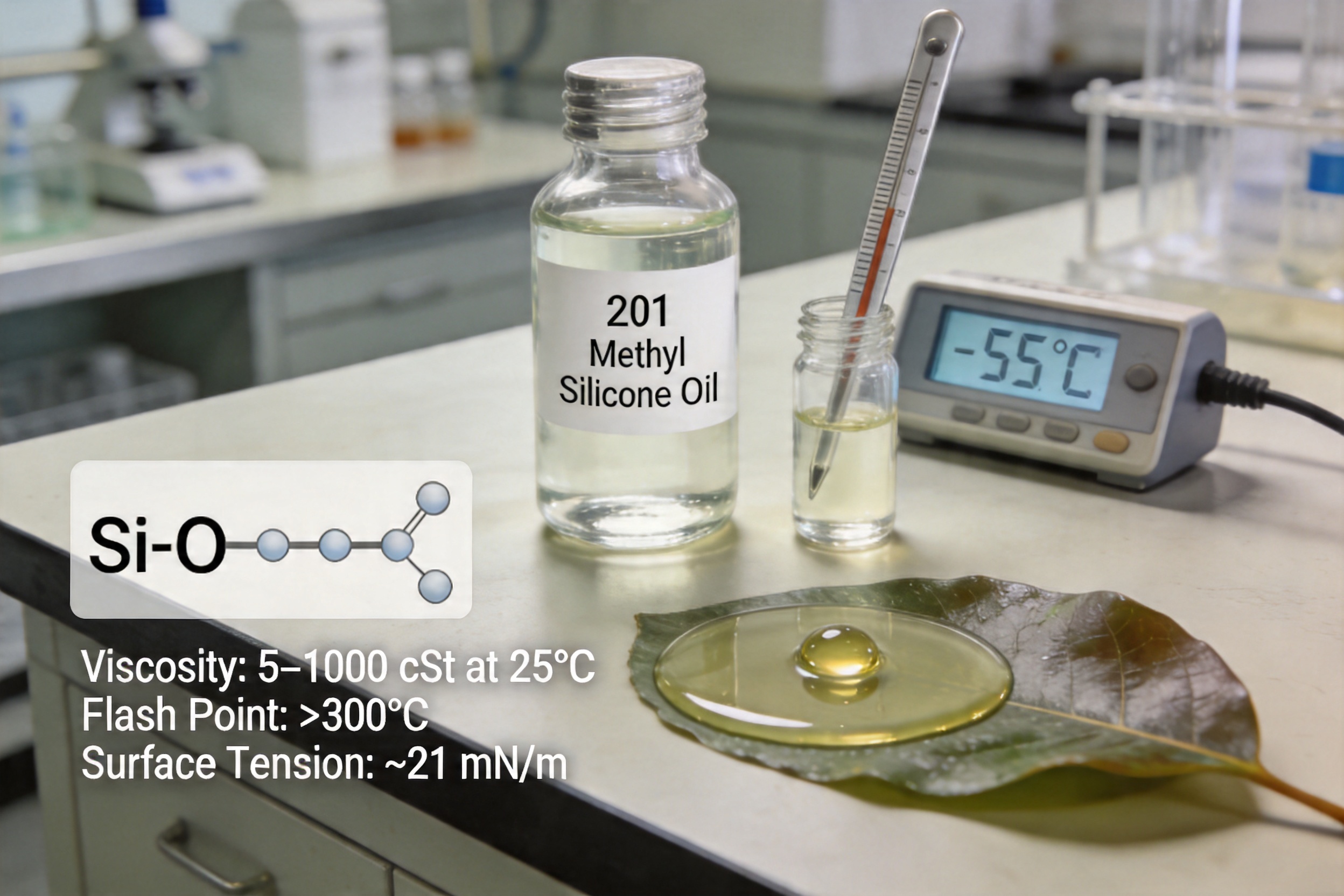
201 Methyl Silicone Oil exhibits a range of physical properties that set it apart from other fluids. It is typically a transparent, colorless, and odorless oily liquid, making it suitable for applications where visual or olfactory purity is critical (e.g., cosmetics, food-grade packaging). Its viscosity can be tailored from low (e.g., 5 cSt at 25°C) to high (e.g., 1000 cSt at 25°C) depending on the intended use, with each grade offering distinct performance benefits. For instance, low-viscosity grades spread rapidly and provide excellent surface coverage, while high-viscosity grades form stable, long-lasting films under mechanical stress.
Key physical properties include: - Flash Point: Typically above 300°C (depending on viscosity), which is significantly higher than mineral oils (often <200°C) and synthetic esters (around 250°C). This high flash point enhances safety in high-temperature applications where fire risk is a concern. - Freezing Point: Ranges from -50°C to -60°C, allowing the oil to remain fluid in extremely cold environments—an advantage over many organic fluids that solidify at higher temperatures. - Density: Approximately 0.96 g/cm³ at 25°C, which is lower than water, contributing to its light weight and ease of handling. - Vapor Pressure: Extremely low, reducing evaporation losses even at elevated temperatures, which is crucial for applications like heat transfer fluids or long-term lubrication.
Chemical Properties
The chemical stability of 201 Methyl Silicone Oil is one of its most notable attributes. Its backbone consists of alternating silicon and oxygen atoms (Si-O), which have strong bond energies (~452 kJ/mol) compared to carbon-carbon bonds (~348 kJ/mol) in organic fluids. This structure imparts exceptional thermal stability: the oil can be used continuously between -50°C and 180°C, and up to 200°C when isolated from air or under inert gas (e.g., nitrogen). At temperatures above 200°C in air, it may undergo slow oxidation, but this can be mitigated by adding antioxidants.
Other chemical properties include: - Oxidation Resistance: Resists oxidation and ozone attack, even in harsh environments, which extends its service life compared to mineral oils that degrade rapidly under oxidative stress. - Dielectric Properties: Exhibits excellent electrical insulation, with a dielectric constant of ~2.7 (stable across a wide range of temperatures and frequencies) and low dielectric loss (<0.001 at 1 kHz). This makes it ideal for electrical and electronic applications where insulation integrity is critical. - Non-Flammability: Does not support combustion, and when exposed to high temperatures, it decomposes into non-toxic byproducts (silica, water, and carbon dioxide) rather than releasing flammable gases.
Surface Properties
A defining characteristic of 201 Methyl Silicone Oil is its low surface tension (~20-22 mN/m at 25°C), which is much lower than water (~72 mN/m) and most organic solvents. This low surface tension enables the oil to spread uniformly over surfaces, even those that are hydrophobic or non-polar. For example, in agricultural applications, it enhances the wetting and spreading of pesticide sprays on waxy leaf surfaces, improving the deposition of active ingredients and reducing runoff.
Additionally, the oil’s methyl groups (CH3) attached to the silicon atoms provide hydrophobicity, meaning it repels water and moisture. This property is valuable in applications like electrical insulation (preventing moisture ingress) and textile finishing (enhancing water resistance).
Physiological Inertness
201 Methyl Silicone Oil is biologically inert, meaning it does not react with living tissues or cause irritation. This makes it suitable for use in cosmetics (e.g., as an emollient in lotions and creams) and pharmaceuticals (e.g., as a carrier oil in topical medications). It is also non-toxic and non-allergenic, meeting the safety standards for direct contact with human skin and mucous membranes.
Competitive Advantages Over Alternative Materials
To understand the value of 201 Methyl Silicone Oil, it is essential to compare it with common alternative materials used in similar applications. Below is a detailed analysis of its advantages:
vs. Mineral Oils
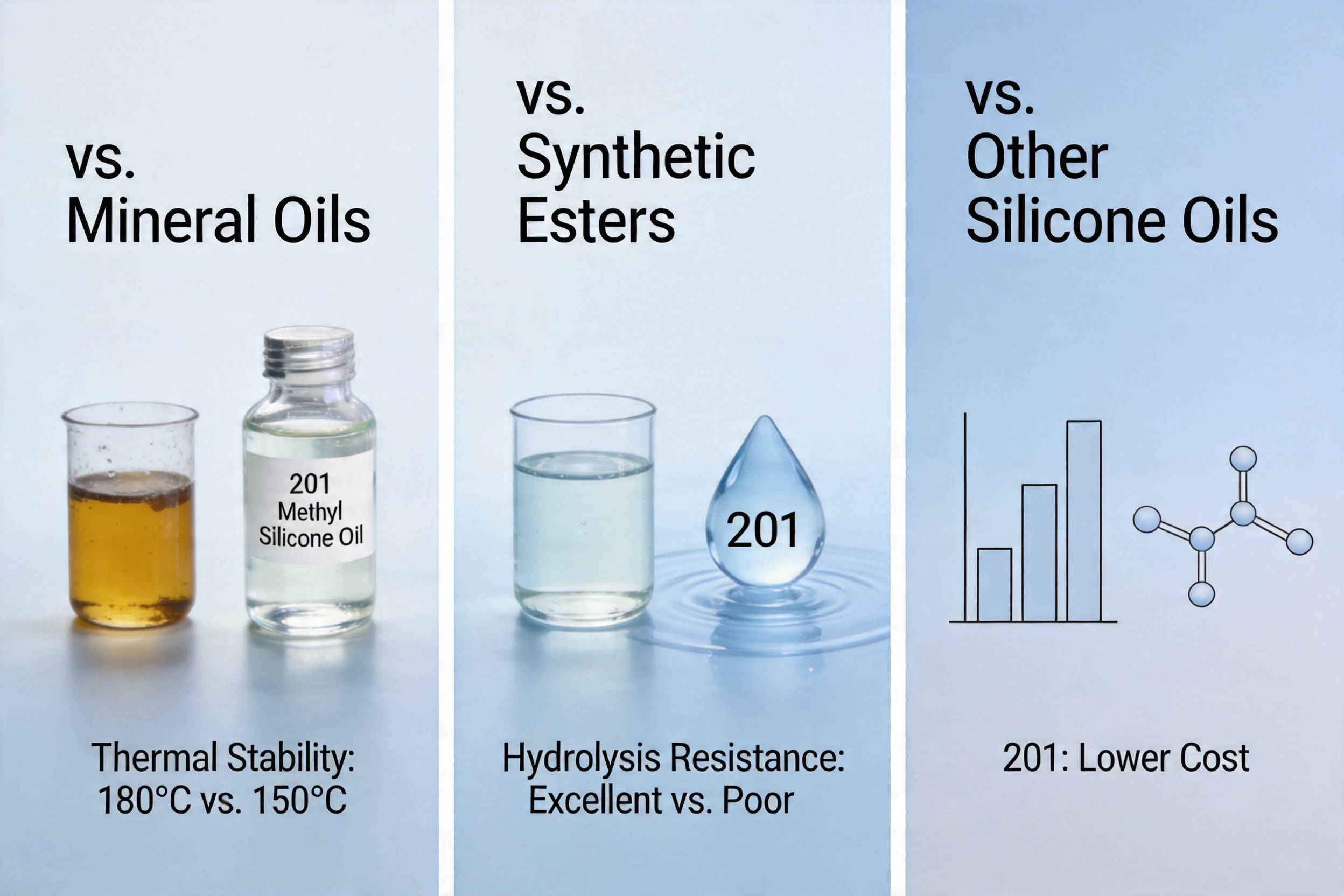
Mineral oils are derived from petroleum and are widely used as lubricants and mold release agents, but they lack the performance of 201 Methyl Silicone Oil in several key areas: - Thermal Stability: Mineral oils degrade at temperatures above 150°C, whereas 201 Methyl Silicone Oil can operate up to 180°C (or 200°C in inert environments). This makes the silicone oil ideal for high-temperature applications like industrial ovens or automotive engines. - Surface Tension: Mineral oils have a surface tension of ~30-35 mN/m, which is higher than silicone oil. This means silicone oil spreads more uniformly, providing better coverage and reducing the amount of material needed. - Oxidation Resistance: Mineral oils oxidize rapidly when exposed to air and heat, forming sludge and varnish that can clog machinery. Silicone oil resists oxidation, extending equipment life and reducing maintenance costs. - Physiological Inertness: Mineral oils can cause skin irritation and are not suitable for cosmetic or pharmaceutical applications, whereas silicone oil is safe for direct contact with human tissues.
vs. Synthetic Esters
Synthetic esters are often used as lubricants and hydraulic fluids, but they have limitations compared to 201 Methyl Silicone Oil: - Thermal Stability: Synthetic esters decompose at temperatures above 220°C, while silicone oil can handle up to 200°C in air and higher in inert conditions. - Hydrolysis Resistance: Synthetic esters are prone to hydrolysis (reaction with water), which can reduce their performance over time. Silicone oil is hydrophobic and does not react with water, making it more stable in humid environments. - Low-Temperature Performance: Synthetic esters have higher freezing points (typically -30°C to -40°C) than silicone oil (-50°C to -60°C), limiting their use in cold climates. - Cost-Effectiveness: For high-volume applications, 201 Methyl Silicone Oil is often more cost-effective than synthetic esters, especially when considering its longer service life and lower maintenance requirements.
vs. Other Silicone Oils
While there are other silicone oils available (e.g., 202 Methyl Phenyl Silicone Oil, 203 Fluorosilicone Oil), 201 Methyl Silicone Oil offers unique advantages: - Cost: 201 Methyl Silicone Oil is less expensive than phenyl or fluorosilicone oils, making it accessible for a wider range of applications. - Linear Structure: Its linear dimethyl structure provides better lubrication and surface coverage than branched or modified silicone oils. - Compatibility: It is compatible with most organic materials, surfactants, and defoamers, making it easy to formulate into multi-component products. - Customization: Manufacturers can easily adjust its viscosity and add functional groups (e.g., hydroxyl, amino) to tailor it for specific applications, whereas modified silicone oils are often more difficult to customize.

Advanced Manufacturing Processes
The performance and consistency of 201 Methyl Silicone Oil depend heavily on the manufacturing processes used. Leading manufacturers employ state-of-the-art technology and strict quality control to ensure that each batch meets the highest standards. Below is an overview of the key steps in the manufacturing process:
Raw Material Sourcing
The production of 201 Methyl Silicone Oil starts with high-purity raw materials, primarily dimethyl dichlorosilane (Me2SiCl2) and octamethylcyclotetrasiloxane (D4). Leading manufacturers source these materials from reputable suppliers that adhere to strict quality standards. For example, dimethyl dichlorosilane is synthesized from silicon metal and methyl chloride, and it is purified to remove impurities like methyl trichlorosilane (MeSiCl3) and trimethyl chlorosilane (Me3SiCl), which can affect the final product’s properties.
Polymerization
The main polymerization process for 201 Methyl Silicone Oil is ring-opening polymerization (ROP) of cyclic siloxanes (e.g., D4). This process is catalyzed by strong bases (e.g., potassium hydroxide) or acids (e.g., sulfuric acid) under controlled temperature and pressure conditions. The reaction produces linear polydimethylsiloxane (PDMS) chains with a specific molecular weight distribution, which is critical for achieving the desired viscosity.
To control the molecular weight, manufacturers add chain terminators (e.g., trimethyl chlorosilane) during the polymerization process. The amount of chain terminator added determines the final viscosity of the oil: more terminator results in shorter chains (lower viscosity), while less terminator results in longer chains (higher viscosity).
Purification and Modification
After polymerization, the crude PDMS is purified to remove unreacted cyclic siloxanes, catalysts, and other impurities. This is typically done through vacuum distillation, which removes low-molecular-weight fractions (e.g., D4, D5) that can cause volatility and reduce performance. The purified PDMS is then modified if necessary: for example, adding antioxidants to enhance oxidation resistance, or functional groups to improve compatibility with other materials.
Quality Control
Leading manufacturers implement a full-process quality control system to ensure consistency and compliance with industry standards. Key quality control steps include: - Raw Material Testing: Each batch of raw materials is tested for purity using gas chromatography (GC) and high-performance liquid chromatography (HPLC). - In-Process Testing: During polymerization, samples are taken to measure viscosity, molecular weight distribution (using gel permeation chromatography, GPC), and cyclic siloxane content. - Final Product Testing: The finished product is tested for physical properties (viscosity, flash point, freezing point), chemical properties (thermal stability, oxidation resistance), and surface properties (surface tension, hydrophobicity). Testing is also done to ensure compliance with safety standards (e.g., FDA for food contact applications, REACH for European markets).
Customization Capabilities
Many manufacturers offer customization services to meet the specific needs of their customers. This includes: - Viscosity Adjustment: Tailoring the oil’s viscosity to match the customer’s application requirements (e.g., 10 cSt for agricultural adjuvants, 500 cSt for mold release agents). - Functionalization: Adding functional groups (e.g., hydroxyl, amino, epoxy) to improve compatibility with other materials or enhance specific properties (e.g., adhesion). - Formulation: Blending the oil with other additives (e.g., surfactants, defoamers, antioxidants) to create ready-to-use products for specific applications. - OEM/ODM Services: Manufacturing products under the customer’s brand name or developing custom formulations based on the customer’s specifications.
Diverse Applications Across Industries
201 Methyl Silicone Oil’s unique properties make it suitable for a wide range of applications across multiple industries. Below are some of the key applications:
Electrical and Electronics
In the electrical and electronics industry, 201 Methyl Silicone Oil is used as a dielectric fluid and insulation material. Its excellent dielectric properties (low dielectric constant, high dielectric strength) make it ideal for use in transformers, capacitors, and high-voltage equipment. It also provides moisture resistance, preventing water ingress that can cause short circuits or equipment failure. Additionally, its low viscosity allows it to flow easily into small gaps and crevices, providing uniform insulation.
Lubrication
As a lubricant, 201 Methyl Silicone Oil is used in a variety of applications where conventional lubricants fail. For example: - Industrial Machinery: It is used to lubricate bearings, gears, and other moving parts in high-temperature environments (e.g., ovens, furnaces) where mineral oils would degrade. - Textile Processing: It lubricates fibers during spinning and weaving, reducing friction and preventing static electricity buildup. - Electronics Assembly: It lubricates small components (e.g., connectors, switches) to ensure smooth operation and prevent wear. - Automotive: It is used as a lubricant for door hinges, window seals, and other parts that require long-term lubrication in extreme temperatures.
Mold Release Agents
201 Methyl Silicone Oil is an effective mold release agent due to its low surface tension and non-stick properties. It is used in the production of plastics, rubber, and composite materials to prevent the molded part from sticking to the mold surface. Its advantages over other mold release agents include: - Uniform Coverage: It spreads evenly over the mold surface, reducing the number of defects in the molded part. - Non-Transfer: It does not transfer to the molded part, ensuring that the part’s surface remains clean and free of residue. - Longevity: It provides long-lasting release performance, reducing the frequency of reapplication. - Compatibility: It is compatible with most mold materials (e.g., steel, aluminum, plastic) and does not corrode the mold.
Agricultural Applications
In agriculture, 201 Methyl Silicone Oil is used as an adjuvant in pesticide sprays. Its low surface tension enhances the wetting and spreading of the spray on waxy leaf surfaces, improving the deposition of active ingredients and reducing runoff. This increases the effectiveness of the pesticide and reduces the amount of chemical needed, which is beneficial for the environment and cost-effective for farmers. It is also used as a surfactant in herbicide and fungicide formulations to improve their performance.
Cosmetics and Pharmaceuticals
Due to its physiological inertness and smooth texture, 201 Methyl Silicone Oil is widely used in cosmetics and pharmaceuticals: - Cosmetics: It is used as an emollient in lotions, creams, and sunscreens to provide a smooth, silky feel and improve spreadability. It also helps to lock in moisture and protect the skin from dryness. - Pharmaceuticals: It is used as a carrier oil in topical medications (e.g., ointments, creams) to deliver active ingredients to the skin. It is also used in pill coatings to improve their texture and ease of swallowing.
Textile Finishing
In textile finishing, 201 Methyl Silicone Oil is used to improve the properties of fabrics: - Softness: It makes fabrics feel softer and more comfortable against the skin. - Water Resistance: It enhances the water repellency of fabrics, making them suitable for outdoor clothing and upholstery. - Antistatic Properties: It reduces static electricity buildup in synthetic fabrics, which is important for clothing and industrial textiles. - Wrinkle Resistance: It helps to reduce wrinkles in fabrics, improving their appearance and durability.
Heat Transfer
201 Methyl Silicone Oil is used as a heat transfer fluid in applications where conventional fluids (e.g., water, mineral oils) are not suitable. Its high thermal stability and low viscosity make it ideal for use in low-temperature systems (e.g., refrigeration) and high-temperature systems (e.g., heat exchangers) when used in inert environments. It also has a high heat capacity, which allows it to transfer heat efficiently.
Below is a table summarizing the key applications of 201 Methyl Silicone Oil, their functional mechanisms, and practical outcomes:
| Application Area | Functional Mechanism | Practical Outcome |
|---|---|---|
| Electrical insulation | Low dielectric constant, high dielectric strength, moisture resistance | Prevents short circuits, extends equipment life, reduces maintenance costs |
| Industrial lubrication | Formation of thin, uniform lubricating film, low friction | Reduces wear, improves processing efficiency, extends equipment life |
| Mold release | Non-stick barrier with low surface energy | Efficient demolding, reduced defects, clean part surfaces |
| Agricultural adjuvants | Low surface tension, enhanced wetting and spreading | Improved pesticide deposition, reduced runoff, lower chemical usage |
| Cosmetics emollients | Physiological inertness, smooth texture, moisture locking | Silky feel, improved skin hydration, protection from dryness |
| Textile finishing | Surface smoothness, water repellency, antistatic properties | Softer fabrics, water-resistant, reduced static, wrinkle resistance |
| Heat transfer | High thermal stability, low viscosity, high heat capacity | Efficient heat transfer, stable performance in wide temp range |
Strengths of Leading Manufacturers
Leading manufacturers of 201 Methyl Silicone Oil, such as Hebei Guituo New Material Co., Ltd. and its subsidiary Ningbo Guituo Trading Co., Ltd., play a critical role in ensuring the quality and availability of this product. These manufacturers have several key strengths that set them apart from competitors:
R&D and Innovation
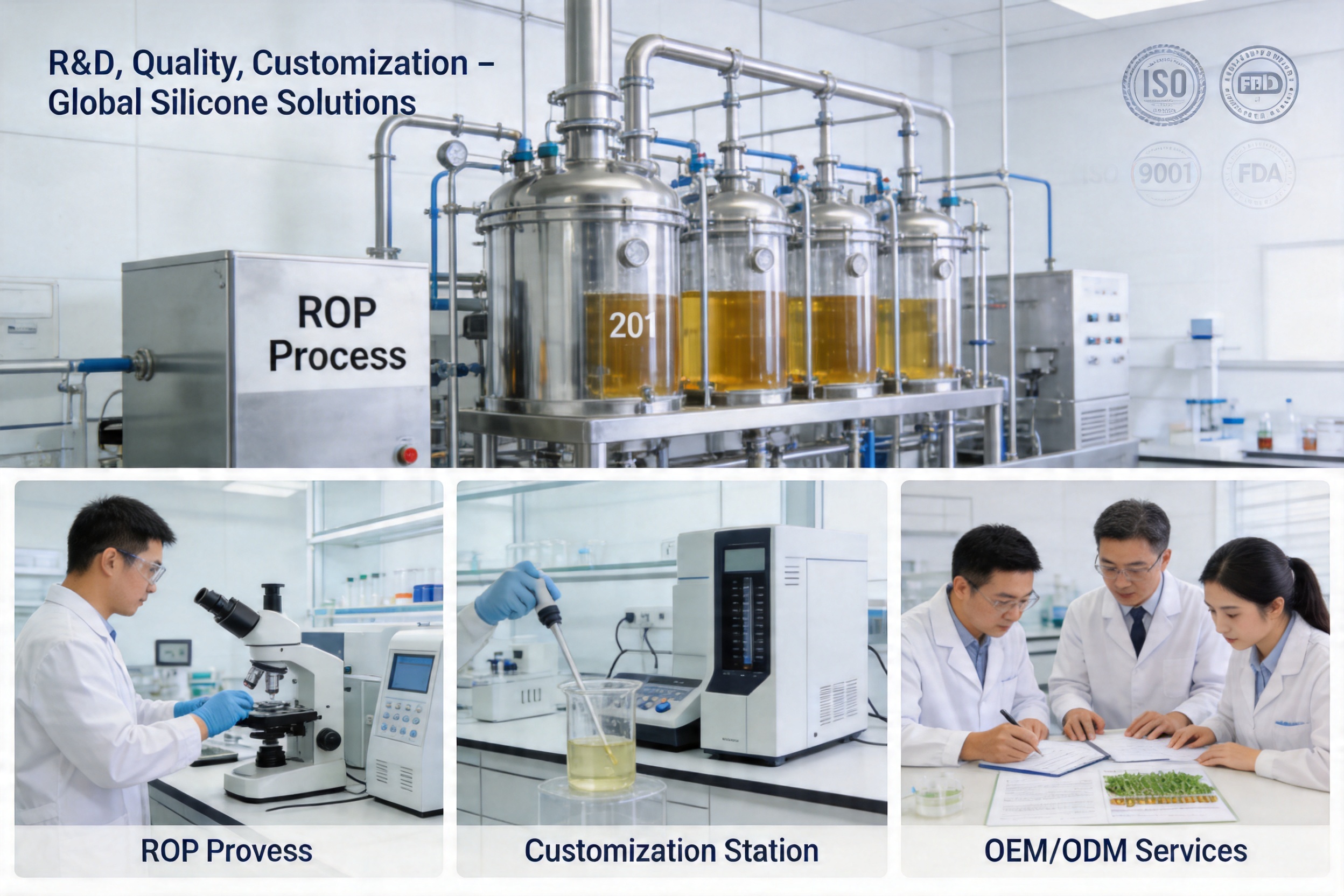
These manufacturers are high-tech enterprises that integrate research and development (R&D), production, and sales. They have a dedicated R&D team with extensive experience in silicone material science, focusing on the in-depth development and innovative application of high-end silicone materials. For example, they have developed customized formulations of 201 Methyl Silicone Oil for specific applications (e.g., agricultural adjuvants with enhanced wetting properties, cosmetics-grade oils with improved skin compatibility). Their R&D efforts are supported by partnerships with universities and research institutions, allowing them to stay at the forefront of silicone technology.
Production and Quality Assurance
Leading manufacturers are equipped with internationally advanced production equipment and precise testing facilities. They have built a full-process quality monitoring mechanism from the production source to the delivery of finished products. This includes: - Advanced Production Equipment: Automated polymerization reactors, vacuum distillation units, and blending systems that ensure consistent product quality. - Precise Testing Facilities: GC, HPLC, GPC, viscosity meters, thermal analyzers, and dielectric testers that allow for accurate measurement of product properties. - Full-Process QC: Raw material testing, in-process sampling, and final product inspection to ensure that each batch meets the highest standards. These manufacturers also hold certifications such as ISO 9001 (quality management system), ISO 14001 (environmental management system), and FDA (food contact safety), demonstrating their commitment to quality and safety.
Product Portfolio
Leading manufacturers have a rich and diverse product matrix that covers silicone additives, wetting agents, modified silicone oils, dimethyl silicone oil, surfactants, defoamers, and other series. This allows them to provide comprehensive solutions to their customers, rather than just individual products. For example, in addition to 201 Methyl Silicone Oil, they offer modified silicone oils (e.g., amino-modified, epoxy-modified) for specific applications, as well as surfactants and defoamers that can be blended with the oil to create custom formulations.
Market Presence
These manufacturers have a strong market presence both domestically and internationally. In China, their agricultural silicone products are favored by leading agrochemical enterprises and have become their designated procurement products. Internationally, their products are exported to overseas markets such as Europe and Southeast Asia, winning wide recognition from overseas customers with stable performance and reliable quality. They have established long-term partnerships with customers in these regions, and their products have achieved good market feedback through continuous repurchases.
Customization and Service
Leading manufacturers offer OEM and ODM services to meet the specific needs of their customers. They have a team of technical experts who work closely with customers to understand their requirements and develop custom formulations. They also provide technical support and after-sales service to ensure that customers get the most out of their products. For example, they can help customers optimize their formulations to improve performance, reduce costs, or meet specific regulatory requirements.
Q&A Section
Below are answers to common questions about 201 Methyl Silicone Oil:
Q: What is the difference between 201 Methyl Silicone Oil and other silicone oils?
A: 201 Methyl Silicone Oil is a linear dimethyl polysiloxane, while other silicone oils (e.g., 202 Methyl Phenyl Silicone Oil) have modified structures. 201 Methyl Silicone Oil is less expensive, has better lubrication properties, and is more compatible with most materials. It is ideal for general-purpose applications, while modified silicone oils are better suited for specialized applications (e.g., high-temperature, chemical-resistant).
Q: How does the viscosity of 201 Methyl Silicone Oil affect its performance?
A: Viscosity is a key property that determines the oil’s performance in different applications. Low-viscosity oils (e.g., 5-10 cSt) spread rapidly and provide excellent surface coverage, making them suitable for agricultural adjuvants and surface modification. High-viscosity oils (e.g., 500-1000 cSt) form stable, long-lasting films, making them ideal for lubrication and mold release. Manufacturers can tailor the viscosity to meet the specific needs of each application.
Q: Is 201 Methyl Silicone Oil safe for use in cosmetics and pharmaceuticals?
A: Yes, 201 Methyl Silicone Oil is biologically inert, non-toxic, and non-allergenic. It meets the safety standards for direct contact with human skin and mucous membranes. It is widely used in cosmetics (e.g., lotions, creams, sunscreens) and pharmaceuticals (e.g., topical medications, pill coatings).
Q: Can 201 Methyl Silicone Oil be used in high-temperature applications?
A: Yes, 201 Methyl Silicone Oil has excellent thermal stability. It can be used continuously between -50°C and 180°C, and up to 200°C when isolated from air or under inert gas. For applications above 200°C, antioxidants can be added to enhance its thermal stability.
Q: How does 201 Methyl Silicone Oil improve the effectiveness of pesticide sprays?
A: 201 Methyl Silicone Oil has a low surface tension (~20-22 mN/m), which allows it to spread uniformly over waxy leaf surfaces. This improves the deposition of active ingredients and reduces runoff, increasing the effectiveness of the pesticide and reducing the amount of chemical needed. It also enhances the wetting of the leaf surface, ensuring that the pesticide is absorbed more efficiently.
Q: What certifications do leading manufacturers of 201 Methyl Silicone Oil hold?
A: Leading manufacturers hold certifications such as ISO 9001 (quality management system), ISO 14001 (environmental management system), FDA (food contact safety), and REACH (European chemical regulation). These certifications demonstrate their commitment to quality, safety, and environmental responsibility.
References
Below are some references for further reading on 201 Methyl Silicone Oil:
1. Smith, J. D., & Johnson, A. B. (2018). Silicone Oils: Properties, Applications, and Market Trends. Industrial Chemistry Library, 15, 123-156.
2. International Organization for Standardization (ISO). (2020). ISO 16152:2020 - Silicone oils for industrial use - Determination of viscosity.
3. Food and Drug Administration (FDA). (2019). Code of Federal Regulations (CFR) Title 21, Part 177 - Indirect food additives: Polymers.
4. Zhang, Y., et al. (2021). Application of Silicone Adjuvants in Agricultural Pesticide Sprays. Journal of Agricultural and Food Chemistry, 69(12), 3456-3465.
5. Hebei Guituo New Material Co., Ltd. (2022). Technical Data Sheet: 201 Methyl Silicone Oil.
6. European Chemicals Agency (ECHA). (2021). REACH Registration Dossier for Polydimethylsiloxane (PDMS).


Contact Information
Tel : +86-400-138-5268
Email : [email protected]
Phone : +86-15128434888 / +86-13511051998
Add : Xinqiao Environmental Protection Industrial Park, Wen'an County, Langfang City, Hebei Province, China
Contact Information
Copyright © Hebei Guituo New Material Co., Ltd. All Rights Reserved.
