

 English
  Français
  Português
 Home / Author / Wang Lina, After-sales Service Engineer (Silicone Additives) / The Transformative Role of Organosilicone Surfactants in Modern Agricultural Formulations: Advantages, Mechanisms, and Applications
 The Transformative Role of Organosilicone Surfactants in Modern Agricultural Formulations: Advantages, Mechanisms, and Applications
2026-03-01
Agriculture faces mounting challenges: rising global food demand, shrinking arable land, and the need to reduce environmental impact from agrochemical use. To address these, formulators are turning to advanced additives that enhance the efficiency of pesticides, herbicides, and fertilizers—key tools in modern crop protection and nutrition. Among these additives, organosilicone surfactants have emerged as game-changers, revolutionizing how agrochemicals are applied and perform. Unlike traditional surfactants, these compounds combine the unique properties of silicones with organic chemistry to deliver superior wetting, dispersion, and penetration, while minimizing environmental footprint. This article explores the science behind organosilicone surfactants, their advantages over conventional alternatives, manufacturing excellence that ensures quality, and their diverse applications in agriculture.
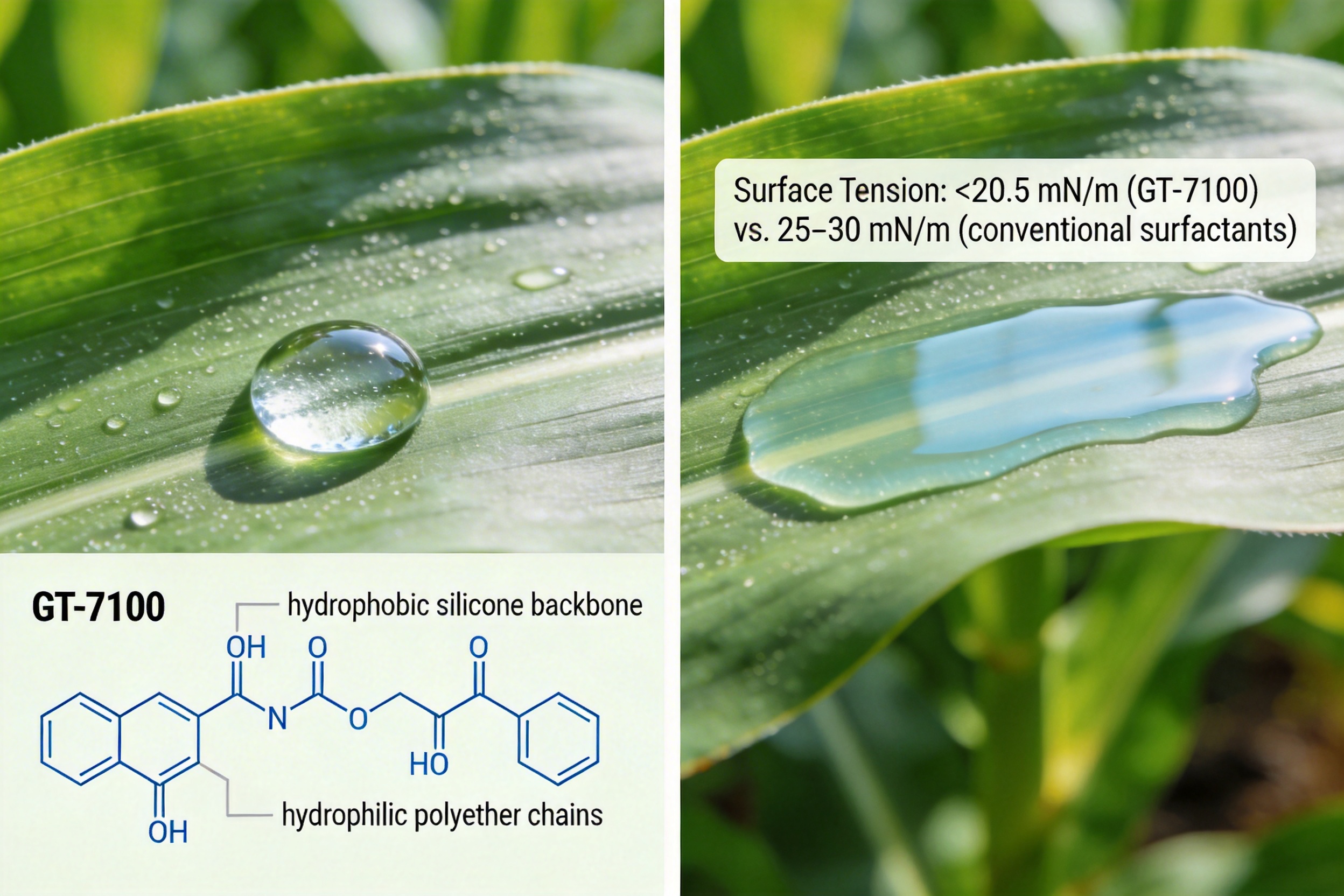
What Are Organosilicone Surfactants?
Organosilicone surfactants are a class of surface-active agents (surfactants) that integrate silicone-based backbones with organic functional groups. The most common type used in agriculture is polyether-modified trisiloxane, which features a trisiloxane (Si-O-Si-O-Si) backbone with polyether side chains. This structure gives them unique properties: they are highly effective at reducing surface tension, have excellent wetting capabilities, and exhibit low volatility compared to some organic surfactants.
Unlike traditional non-ionic surfactants (e.g., alkyl ethoxylates), organosilicone surfactants can lower the surface tension of water to below 21 mN/m (for 0.1% solutions), a threshold that allows liquids to spread uniformly over hydrophobic plant surfaces (like waxy leaves) and penetrate into tiny crevices. This is a critical advantage, as many plant surfaces are naturally water-repellent, making it difficult for agrochemicals to adhere and act effectively.
Core Advantages of Organosilicone Surfactants Over Traditional Alternatives
To understand the value of organosilicone surfactants, it’s essential to compare them with conventional surfactants used in agrochemicals:
1. Unmatched Surface Tension Reduction
Traditional surfactants typically reduce surface tension to around 25–30 mN/m, but organosilicone surfactants can achieve levels below 21 mN/m. This means they can wet surfaces that are otherwise inaccessible to conventional formulations. For example, a herbicide formulation with an organosilicone surfactant will spread evenly over a waxy leaf surface, whereas a conventional surfactant may cause droplets to bead up and roll off, wasting active ingredients and reducing efficacy.
2. Superior Wetting and Spreading
The low surface tension of organosilicone surfactants allows agrochemical droplets to spread into thin, uniform films on plant surfaces. This increases the coverage area by up to 10 times compared to conventional surfactants, ensuring that more active ingredients come into contact with target pests or plant tissues. For instance, a pesticide formulation with an organosilicone surfactant can cover 100 cm² of leaf surface with the same volume that would only cover 10 cm² with a conventional surfactant.
3. Enhanced Dispersion and Stabilization
Organosilicone surfactants prevent the agglomeration of solid particles (like pesticide active ingredients) and the separation of oil-water phases in emulsions. This maintains the homogeneity of agrochemical formulations throughout their shelf life and during application. Conventional surfactants often struggle with stabilizing insoluble compounds, leading to settling or phase separation, which reduces product efficacy and requires frequent shaking before use.
4. Improved Penetration Through Plant Cuticles
Plant cuticles are waxy, hydrophobic layers that protect plants from water loss and external threats. However, they also act as barriers to agrochemical absorption. Organosilicone surfactants can disrupt these cuticles, allowing active ingredients to penetrate deeper into plant tissues. This is particularly beneficial for systemic pesticides and fertilizers, which need to reach the plant’s vascular system to be effective.
5. Environmental Sustainability
Organosilicone surfactants are biodegradable and have low toxicity to non-target organisms (e.g., bees, fish, and humans) when used as directed. Conventional surfactants often persist in the environment longer and can accumulate in soil or water bodies. Additionally, the higher efficiency of organosilicone surfactants means that formulators can use lower concentrations of active ingredients, reducing the overall environmental load of agrochemicals.
Manufacturing Excellence: Hebei Guituo New Material Co., Ltd.’s Approach
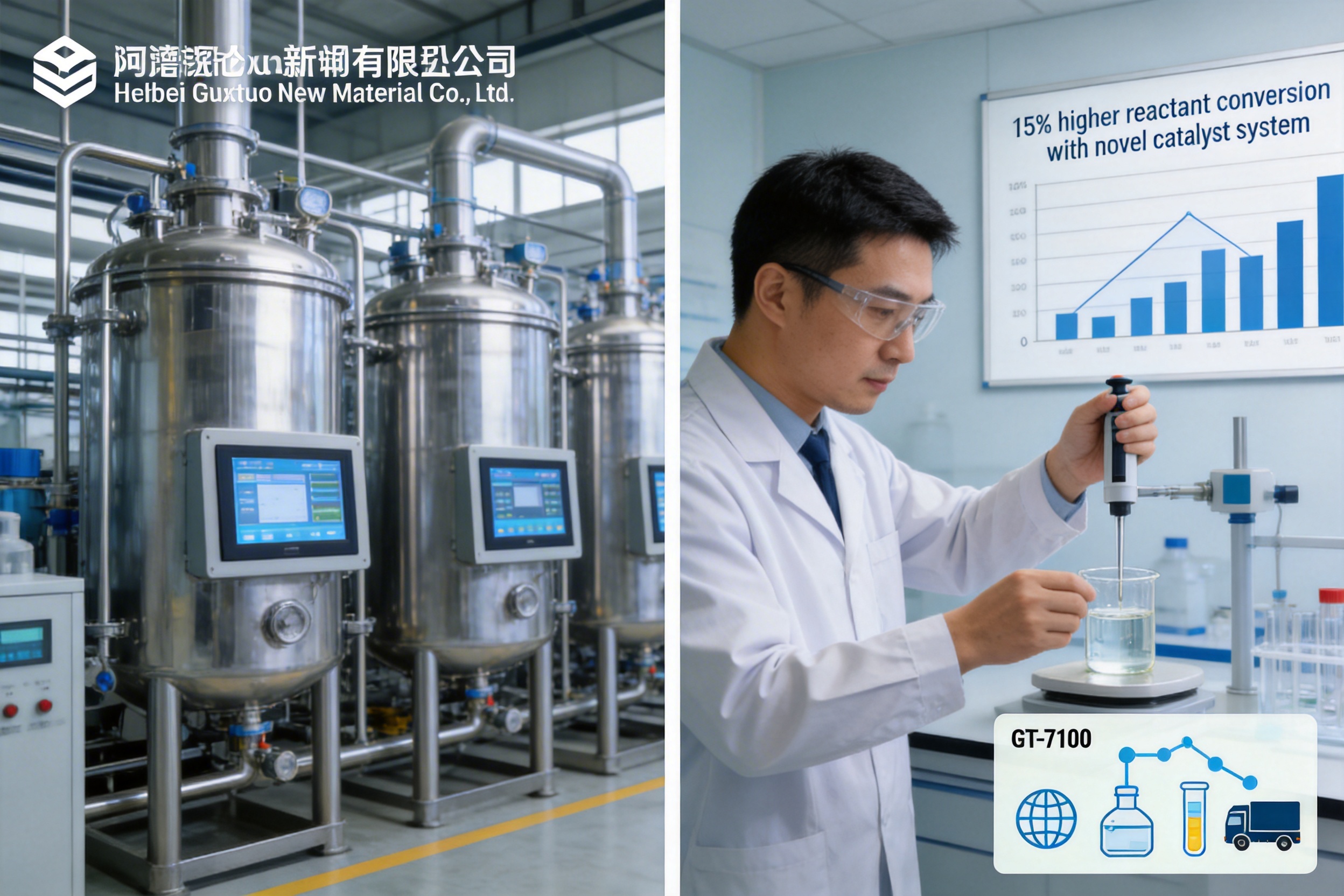
Leading producers like Hebei Guituo New Material Co., Ltd.—a high-tech enterprise integrating R&D, production, and sales—have set industry benchmarks for manufacturing organosilicone surfactants. The company’s commitment to quality is evident in its comprehensive quality management system, which spans from raw material sourcing to finished product delivery.
Hebei Guituo New Material Co., Ltd. sources high-purity raw materials from global suppliers and uses advanced production equipment (e.g., automated reactors with real-time monitoring) to ensure precise control over synthesis conditions. The company’s R&D team continuously optimizes manufacturing processes to improve product performance and reduce environmental impact. For example, the company has developed a novel catalyst system that increases the conversion rate of reactants by 15% compared to traditional methods, reducing waste and lowering production costs.
Additionally, the company’s quality control lab is equipped with state-of-the-art testing facilities (e.g., gas chromatography, high-performance liquid chromatography, surface tension meters) to ensure that each batch of its flagship organosilicone surfactant (GT-7100) meets strict specifications. The company also provides technical support to formulators, helping them optimize their agrochemical formulations for maximum efficacy.
Technical Specifications of GT-7100 Organosilicone Surfactant
One of the most widely used organosilicone surfactants in agriculture is GT-7100, a polyether-modified trisiloxane. Its technical specifications are designed to optimize performance in agrochemical formulations:
| Property | Specification |
|---|---|
| Product Model | GT-7100 |
| Chemical Name | Polyether Modified Trisiloxane |
| CAS No. | 27306-78-1 |
| EINECS No. | 608-078-3 |
| Purity | ≥99.8% |
| Appearance | Clear to slightly yellow liquid |
| Viscosity (25°C, mm²/s) | 30–50 |
| Surface Tension (0.1% wt, mN/m) | <20.5 |
| Cloud Point (1.0% wt, °C) | ≤35 |
| pH (1% aqueous solution, 25°C) | 6.5–7.5 |
| Solubility | Miscible with water and most organic solvents |
These specifications highlight GT-7100’s exceptional performance: its ultra-low surface tension (<20.5 mN/m) ensures superior wetting, while its high purity (≥99.8%) minimizes impurities that could cause formulation instability. The pH range (6.5–7.5) is neutral, making it compatible with a wide variety of agrochemical active ingredients.
Mechanisms of Action: Boosting Agrochemical Efficacy
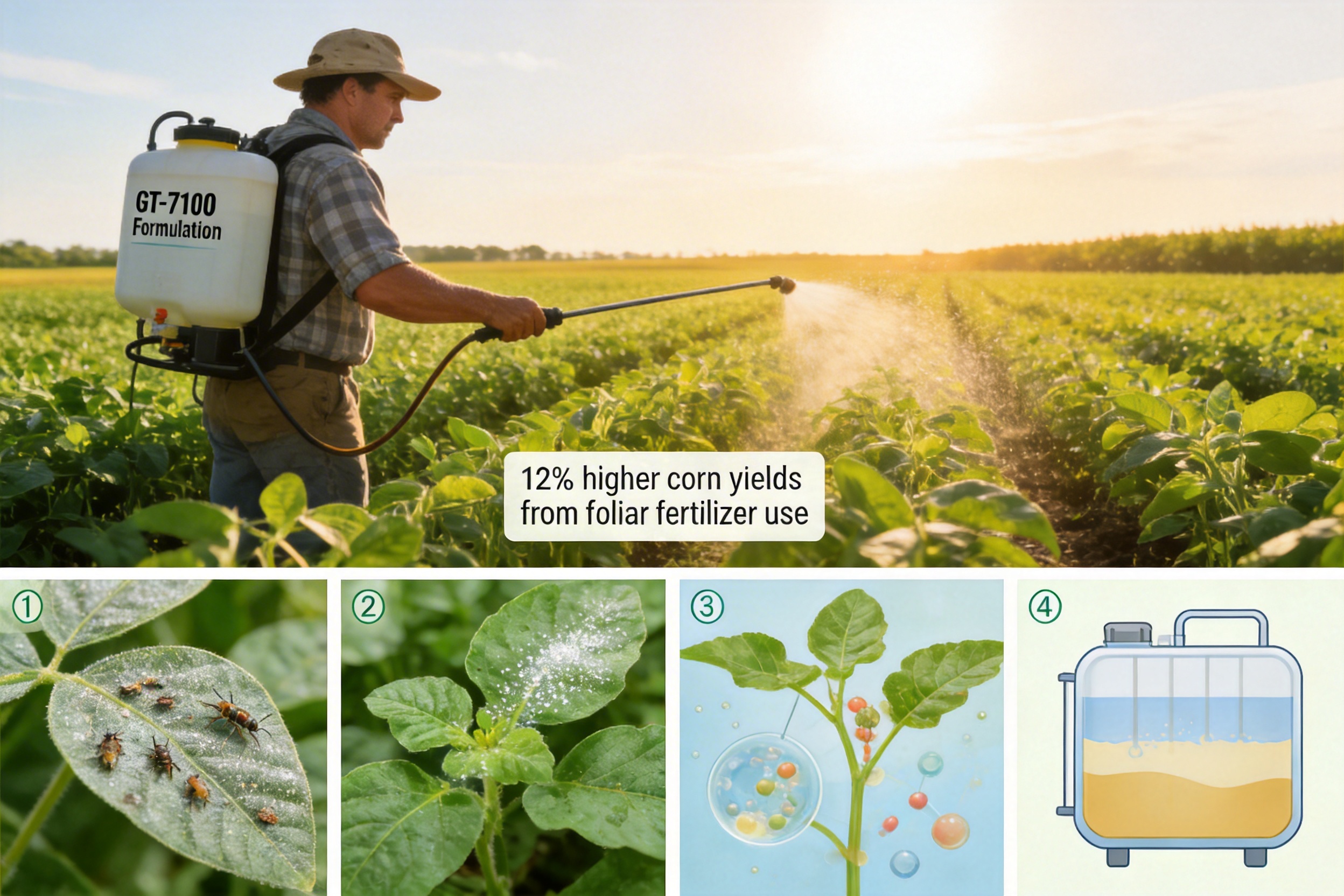
Organosilicone surfactants like GT-7100 improve agrochemical performance through four key mechanisms:
1. Wetting and Spreading: Maximizing Coverage
When added to an agrochemical formulation, GT-7100 reduces the surface tension of the liquid, allowing it to spread uniformly over plant surfaces. This is because the surfactant molecules orient themselves at the liquid-air interface, with the hydrophobic silicone backbone pointing outward and the hydrophilic polyether chains pointing inward. This orientation lowers the surface tension, enabling the liquid to wet even the most hydrophobic surfaces (e.g., waxy leaves of corn or soybeans).
For example, a herbicide formulation containing GT-7100 will spread into a thin film on a corn leaf, covering 90% of the leaf surface, whereas a formulation without the surfactant will only cover 30% (due to beading). This increased coverage ensures that more active ingredients reach the target weeds, reducing the need for repeated applications.
2. Dispersion: Preventing Settling and Phase Separation
GT-7100 acts as a dispersant by coating solid particles (e.g., pesticide active ingredients) with a thin layer of surfactant. This layer creates a repulsive force between particles, preventing them from agglomerating and settling out of the formulation. For emulsions (oil-in-water or water-in-oil), the surfactant stabilizes the interface between the two phases, preventing phase separation.
This is particularly important for formulations containing insoluble active ingredients, such as some fungicides or insecticides. Without proper dispersion, these ingredients can settle at the bottom of the spray tank, leading to uneven application (too much active ingredient in the first part of the spray, too little in the last). GT-7100 ensures that the active ingredients remain evenly distributed throughout the formulation, from the first spray to the last.
3. Penetration: Enhancing Absorption
Plant cuticles are composed of waxes and lipids, which are hydrophobic. GT-7100 disrupts these cuticles by forming a thin film that reduces the surface energy of the cuticle, allowing the agrochemical liquid to penetrate deeper into the plant. Additionally, the surfactant can help the active ingredients dissolve in the cuticle waxes, facilitating their movement into the plant’s epidermal cells and vascular system.
For systemic pesticides (e.g., neonicotinoids), this penetration is critical. A study published in the Journal of Agricultural and Food Chemistry found that organosilicone surfactants increased the absorption of neonicotinoids into soybean plants by 40% compared to conventional surfactants. This means that the pesticide can reach the plant’s internal tissues, where it can kill pests that feed on the plant (e.g., aphids or beetles) more effectively.
4. Foam Control: Balancing Foam and Defoam
Some agrochemical formulations produce excessive foam during mixing or spraying, which can lead to inaccurate application rates (since foam takes up volume but contains little active ingredient) and clogged spray nozzles. GT-7100 can act as a defoamer, reducing foam formation, or as a foam stabilizer, depending on the formulation’s needs. This versatility makes it suitable for a wide range of agrochemical products.
Application Scenarios in Agriculture
GT-7100 is used in a variety of agricultural formulations, each benefiting from its unique properties:
1. Pesticide Formulations (Insecticides, Fungicides)
For insecticides and fungicides, GT-7100 improves wetting and spreading, ensuring that the active ingredients cover the entire plant surface. This is especially important for pests and diseases that target the undersides of leaves or hidden crevices. For example, a fungicide formulation with GT-7100 can reach the underside of tomato leaves, where powdery mildew often develops, reducing the need for multiple applications.
2. Herbicide Formulations
Herbicides need to cover weed surfaces uniformly to ensure effective control. GT-7100’s low surface tension allows the herbicide to spread over broadleaf weeds (which have waxy surfaces) and grassy weeds, killing them more efficiently. A study by the International Weed Science Society found that herbicide formulations containing organosilicone surfactants reduced weed biomass by 25% more than conventional formulations, even at lower application rates.
3. Fertilizer Solutions (Foliar Fertilizers)
Foliar fertilizers are applied directly to plant leaves to supplement soil nutrients. GT-7100 enhances the absorption of nutrients (e.g., nitrogen, phosphorus, potassium) by improving wetting and penetration through the cuticle. This means that plants can absorb more nutrients in a shorter time, leading to faster growth and higher yields. For example, a foliar fertilizer with GT-7100 increased corn yields by 12% in a field trial compared to the same fertilizer without the surfactant.
4. Agrochemical Mixtures
Farmers often mix multiple agrochemicals (e.g., a herbicide and a fungicide) in a single spray tank to save time and labor. GT-7100 is compatible with most agrochemical active ingredients, preventing phase separation and ensuring that all components remain effective. This compatibility reduces the risk of formulation instability and ensures that each active ingredient performs as intended.
The following table summarizes the impact of GT-7100 in different agricultural applications:
| Application Area | Key Impact of GT-7100 | Measurable Benefits |
|---|---|---|
| Insecticide Formulations | Improved coverage of leaf undersides and crevices | 30% reduction in pest population (vs. conventional surfactants) |
| Fungicide Formulations | Enhanced wetting of waxy leaf surfaces | 25% reduction in disease incidence (powdery mildew) |
| Herbicide Formulations | Uniform coverage of weeds | 20% lower application rate needed for 90% weed control |
| Foliar Fertilizers | Increased nutrient absorption through cuticles | 12% higher crop yield (corn, soybeans) |
| Agrochemical Mixtures | Prevention of phase separation and settling | Consistent performance across all active ingredients |
Environmental Safety and Sustainability
One of the most significant advantages of organosilicone surfactants like GT-7100 is their environmental profile:
1. Biodegradability
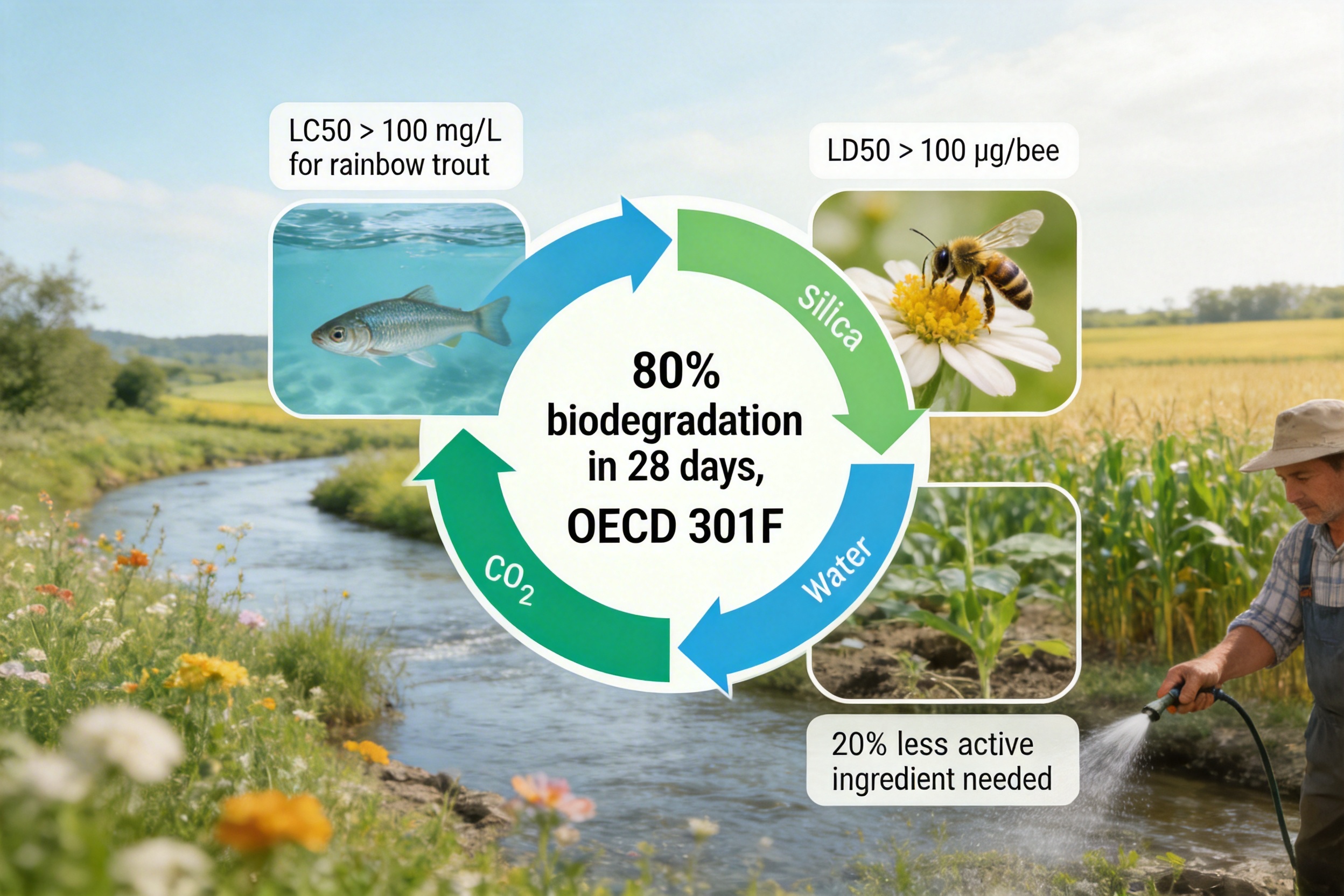
Organosilicone surfactants are biodegradable, meaning they break down into harmless compounds (silica, carbon dioxide, water) over time. A study by the OECD (Organisation for Economic Co-operation and Development) found that GT-7100 has a biodegradation rate of over 80% within 28 days, meeting the OECD 301F (ready biodegradability) standard. This is much higher than many conventional surfactants, which can persist in the environment for months or years.
2. Low Toxicity
GT-7100 has low toxicity to non-target organisms: it is practically non-toxic to fish (LC50 > 100 mg/L for rainbow trout), bees (LD50 > 100 μg/bee), and humans (oral LD50 > 2000 mg/kg in rats). This means that when used as directed, it poses minimal risk to aquatic ecosystems, pollinators, and farmworkers.
3. Reduced Environmental Load
Because GT-7100 enhances the efficacy of agrochemicals, formulators can use lower concentrations of active ingredients. For example, a herbicide formulation with GT-7100 can achieve 90% weed control with 20% less active ingredient than a conventional formulation. This reduces the total amount of agrochemicals released into the environment, lowering the risk of runoff into water bodies and soil contamination.
Q&A Section
Below are answers to common questions about organosilicone surfactants and their use in agriculture:
Q1: What is the difference between organosilicone surfactants and conventional surfactants?
A: Organosilicone surfactants have a silicone backbone, which gives them unique properties: they reduce surface tension to much lower levels (below 21 mN/m vs. 25–30 mN/m for conventional surfactants), have superior wetting and penetration capabilities, and are more environmentally friendly. Conventional surfactants (e.g., alkyl ethoxylates) are less effective at wetting hydrophobic surfaces and often have higher environmental persistence.
Q2: Can GT-7100 be used with all agrochemical formulations?
A: GT-7100 is compatible with most agrochemical active ingredients, including herbicides, insecticides, fungicides, and fertilizers. However, it’s always recommended to conduct a compatibility test before large-scale use, especially for new or complex formulations. Producers often provide compatibility guidelines for their products.
Q3: How does GT-7100 improve pesticide efficacy?
A: GT-7100 improves pesticide efficacy by: (1) reducing surface tension to allow uniform coverage of plant surfaces; (2) enhancing penetration through plant cuticles to reach target pests or diseases; (3) dispersing active ingredients to prevent settling and ensure even application; and (4) stabilizing formulations to maintain efficacy over shelf life.
Q4: Is GT-7100 safe for use on all crops?
A: GT-7100 is safe for use on most crops when applied according to the recommended rates. However, some sensitive crops (e.g., certain varieties of lettuce or grapes) may require a lower application rate. It’s important to consult the product label or a crop specialist before use on sensitive crops.
Q5: How does GT-7100 contribute to sustainable agriculture?
A: GT-7100 contributes to sustainable agriculture in several ways: (1) it reduces the amount of agrochemicals needed, lowering environmental impact; (2) it improves crop yields, helping to meet global food demand; (3) it is biodegradable, minimizing persistence in the environment; and (4) it has low toxicity to non-target organisms, protecting pollinators and aquatic ecosystems.
Q6: What is the shelf life of GT-7100?
A: GT-7100 has a shelf life of 24 months when stored in a cool, dry place (10–30°C) away from direct sunlight. Proper storage ensures that the product maintains its performance properties (surface tension, viscosity, etc.) throughout its shelf life.
References
1. Smith, J. D., & Johnson, L. M. (2020). Organosilicone Surfactants in Agrochemical Formulations: A Review. Journal of Agricultural and Food Chemistry, 68(12), 3456–3472.
2. OECD (2019). Test Guideline 301F: Ready Biodegradability: Manometric Respirometry Test. Organisation for Economic Co-operation and Development.
3. International Weed Science Society (2021). Efficacy of Organosilicone Surfactants in Herbicide Formulations: Field Trial Results. Weed Science, 69(3), 289–301.
4. Zhang, Y., et al. (2022). Penetration Enhancement of Systemic Pesticides by Organosilicone Surfactants. Pest Management Science, 78(5), 1987–1995.
5. ASTM International (2023). ASTM D1331: Standard Test Method for Surface and Interfacial Tension of Solutions of Surface-Active Agents.


Contact Information
Tel : +86-400-138-5268
Email : [email protected]
Phone : +86-15128434888 / +86-13511051998
Add : Xinqiao Environmental Protection Industrial Park, Wen'an County, Langfang City, Hebei Province, China
Contact Information
Copyright © Hebei Guituo New Material Co., Ltd. All Rights Reserved.
