

 English
  Français
  Português
 Home / Author / Wang Lina, After-sales Service Engineer (Silicone Additives) / Polyether-Modified Silicone Oil: Unlocking Multifunctional Performance Across Industries
 Polyether-Modified Silicone Oil: Unlocking Multifunctional Performance Across Industries
2026-04-20
Polyether-modified silicone oil is a revolutionary functional material that merges the unique attributes of organosilicon chemistry with hydrophilic polyether segments, addressing long-standing limitations of traditional silicone oils and generic surfactants. This hybrid molecule has emerged as a critical additive across diverse sectors—from agriculture to daily chemicals—due to its exceptional amphiphilicity, ultra-low surface tension, and stable performance under extreme conditions. Unlike conventional dimethyl silicone oil, which struggles with emulsification and phase separation in water-based systems, polyether-modified silicone oil integrates hydrophilic polyether chains into the hydrophobic silicone backbone, creating a molecule that balances water compatibility with the high-performance traits of silicone. As global industries increasingly demand efficient, stable, and versatile additives, this material has become a go-to solution for formulators seeking to enhance product efficacy and reduce environmental impact.
As a functional hybrid material, polyether-modified silicone oil bridges the gap between hydrophobic silicone chemistry and hydrophilic polyether functionality, opening up new possibilities for industrial applications.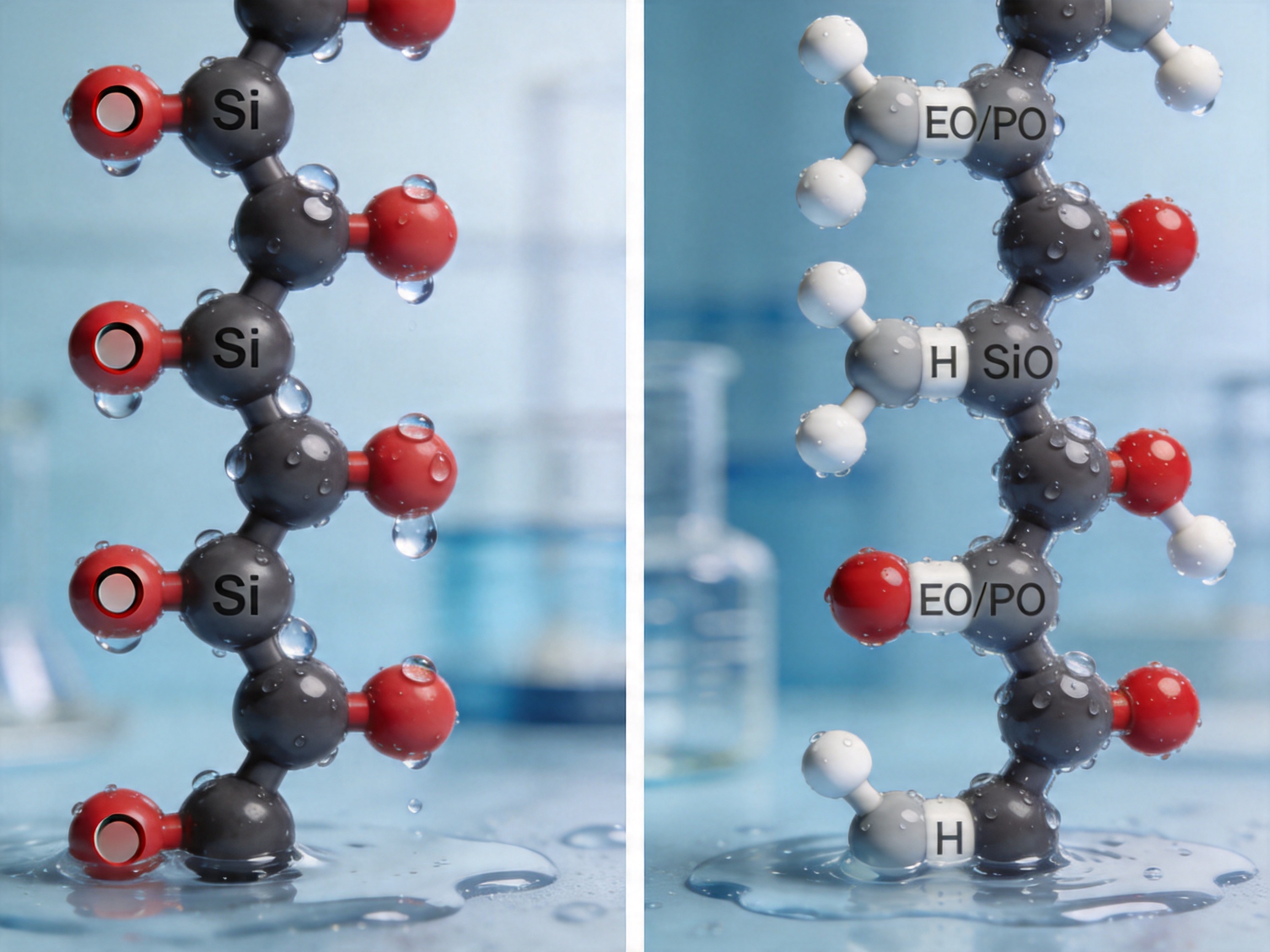
Core Advantages Over Conventional Silicone Oils and Competitors
The superiority of polyether-modified silicone oil over conventional silicone oils and competing surfactants stems from its unique molecular structure, which resolves key limitations of older materials. Below are the most significant advantages:
1. Exceptional Amphiphilicity and Wide Compatibility
Traditional dimethyl silicone oil is highly hydrophobic, making it difficult to emulsify in water or mix with polar solvents. Polyether-modified silicone oil solves this problem by incorporating hydrophilic polyether chains (typically ethylene oxide or propylene oxide units) into the silicone backbone. This modification allows the material to be completely miscible with water in any ratio, as well as partially or fully miscible with polar solvents (e.g., alcohols, esters) and nonpolar solvents (e.g., toluene). For formulators, this means no more phase separation issues or the need for complex emulsification systems—polyether-modified silicone oil integrates seamlessly into diverse formulations, from water-based agrochemical sprays to solvent-based coatings.
2. Ultra-Low Surface Tension and Enhanced Activity
Surface tension is a critical parameter for additives used in wetting, spreading, and penetration applications. Polyether-modified silicone oil exhibits a surface tension as low as 22 mN/m, which is far lower than ordinary surfactants (typically 30–40 mN/m) and even lower than many conventional silicone oils. This ultra-low surface tension allows the material to quickly reduce the interfacial tension between liquids and solids, leading to superior wetting performance. For example, in agricultural applications, the oil spreads evenly on hydrophobic leaf surfaces, increasing the contact area between pesticides and plant tissues, thereby improving efficacy and reducing spray runoff. In coatings, it minimizes surface defects like orange peel by promoting uniform flow of the coating material.
3. Stable Weather Resistance and Long-Lasting Performance
The silicone backbone of polyether-modified silicone oil inherits the high bond energy of organosilicon compounds (Si-O bonds have a bond energy of ~452 kJ/mol, compared to ~347 kJ/mol for C-C bonds). This high bond energy gives the material exceptional stability under extreme conditions, including high temperatures, humidity, and mechanical shear. Unlike conventional surfactants that degrade over time, polyether-modified silicone oil maintains its performance for extended periods. For instance, in greenhouse plastic films, it forms a durable nanoscale waterproof layer that retains anti-fog properties for up to 180 days—nine times longer than traditional products—while extending the film’s lifespan by three years.
4. Improved Compatibility with Formulation Components
Polyether-modified silicone oil shows excellent compatibility with nonionic and anionic surfactants, as well as other silicone additives. This is a significant advantage over unmodified silicone oil, which often separates from polar formulation components. The polyether segments reduce the risk of phase separation, allowing formulators to create stable multi-component systems. For example, in daily chemical products, it mixes seamlessly with moisturizers and emulsifiers to create smooth, stable creams; in agrochemicals, it works with pesticides and adjuvants to enhance their performance without compromising stability.
These advantages position polyether-modified silicone oil as a superior alternative to conventional silicone oils and generic surfactants, addressing long-standing challenges in formulation stability and performance.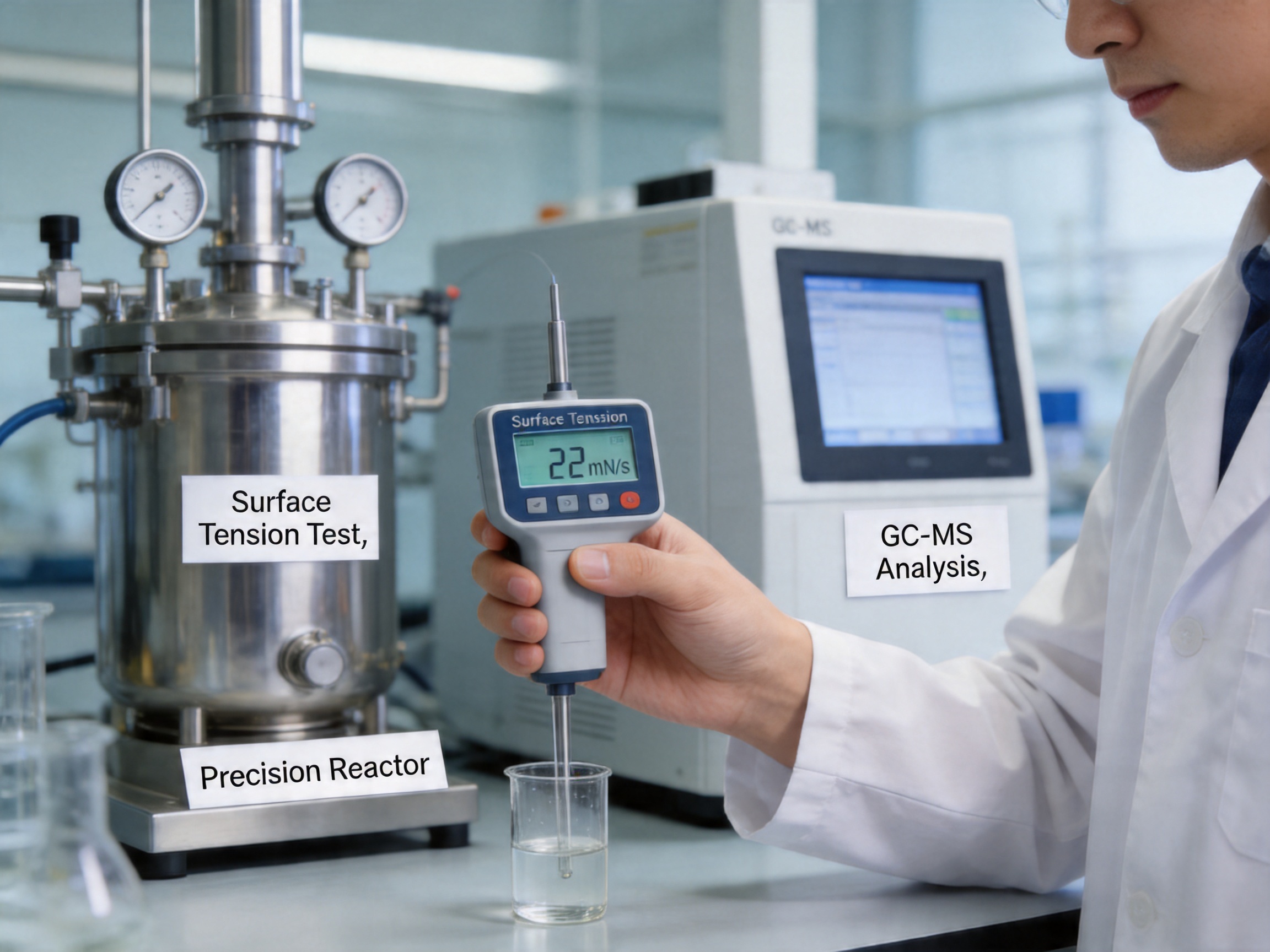
Advanced Manufacturing Processes and Company Strengths
The production of high-quality polyether-modified silicone oil requires precise control over molecular structure and strict quality assurance. Leading manufacturers like Hebei Guituo New Material Co., Ltd.—a high-tech enterprise integrating R&D, production, and sales—have developed advanced processes and systems to ensure consistent, high-performance products.
1. Precision Structural Customization
Hebei Guituo’s R&D team uses advanced polymerization techniques to customize the molecular structure of polyether-modified silicone oil according to customer needs. Key parameters include:
- Polyether Chain Length: Controlled via ring-opening polymerization of ethylene oxide (EO) or propylene oxide (PO) onto the silicone backbone. Short EO/PO chains enhance spreading on nonpolar surfaces, while long chains improve water compatibility.
- Silicone-to-Polyether Ratio: Adjusted to balance surface activity (high silicone content) and emulsification ability (high polyether content). For example, agricultural formulations require a higher polyether ratio for water compatibility, while coatings need a higher silicone ratio for leveling.
- Connection Mode: Block or graft copolymer structures are used to optimize performance. Block copolymers exhibit clear phase behavior, while graft copolymers provide uniform property distribution for complex formulations.
This customization capability allows Hebei Guituo to meet the specific needs of diverse industries, from agriculture to electronics.
2. Rigorous Quality Control System
To ensure product quality and consistency, Hebei Guituo has implemented a full-process quality monitoring system:
- Raw Material Inspection: All raw materials (silicone monomers, polyether precursors) are tested for purity and compliance with international standards (e.g., CAS No. 68937-55-3 for polyether-modified silicone oil).
- In-Process Testing: Viscosity, surface tension, and molecular weight are monitored at each stage of production to ensure structural integrity.
- Final Product Testing: Finished products undergo comprehensive testing for purity (up to 99.8%), stability, and performance metrics (e.g., wetting time, spreading area) to meet customer specifications.
The company is equipped with internationally advanced production equipment and precise testing facilities, including gas chromatography-mass spectrometry (GC-MS) and surface tension meters, to support these quality control measures.
3. Company Strengths and Market Recognition
Hebei Guituo’s strengths extend beyond manufacturing to include:
- OEM/ODM Services: The company accepts custom orders for polyether-modified silicone oil, allowing customers to specify structural parameters and performance metrics.
- Global Distribution: Ningbo Guituo Trading Co., Ltd., the subsidiary of Hebei Guituo, exports products to Europe, Southeast Asia, and other regions, where they are recognized for stable performance and reliable quality.
- Industry Leadership: Hebei Guituo’s agricultural silicone products are designated by leading domestic agrochemical enterprises, and its modified silicone oil series has reached advanced domestic levels in core indicators.
These strengths have made Hebei Guituo a trusted partner for formulators across the globe.
Structural Characteristics and Their Impact on Performance
The performance of polyether-modified silicone oil is directly determined by its molecular structure. Each component of the molecule—silicone backbone, polyether segments, chain length, and connection mode—contributes to specific performance attributes. Understanding these relationships is critical for selecting the right product for a given application.
1. Silicone Backbone vs. Polyether Segments
The silicone backbone (composed of Si-O bonds) provides the material with its key properties: flexibility, low surface energy, and thermal stability. The polyether segments (composed of EO/PO units) introduce hydrophilicity and polarity, allowing the material to mix with water and polar solvents. This combination creates a molecule that is both hydrophobic and hydrophilic—an amphiphile—with unique interfacial properties.
2. Polyether Chain Length Influence
The length of the polyether chain has a direct impact on solubility and interfacial behavior:
- Short Polyether Chains: These chains maintain more silicone-like characteristics, such as lower surface tension and better spreading on nonpolar surfaces. They are ideal for applications like lubrication and surface treatment, where nonpolar compatibility is critical.
- Long Polyether Chains: Longer chains increase water solubility and dispersibility in aqueous systems. They are preferred for water-based formulations, such as agricultural sprays and skincare products, where stability in water is essential.
3. Silicone-to-Polyether Ratio Impact
The ratio between silicone segments and polyether segments determines the overall balance of properties:
- High Silicone Ratio: This increases surface activity and lubrication behavior, making the material suitable for defoaming and release agent applications. For example, in coatings, a high silicone ratio helps reduce surface tension and minimize orange peel defects.
- High Polyether Ratio: This enhances emulsification and wetting in polar environments, making the material ideal for wetting agents and dispersion aids. In agrochemicals, a high polyether ratio improves the stability of pesticide formulations in water.
4. Connection Mode (Block vs. Graft)
The way polyether segments are connected to the silicone backbone affects performance:
- Block Copolymer: This structure has distinct silicone and polyether blocks, leading to clear phase behavior. Block copolymers are often used in applications where phase separation is desired (e.g., controlled release systems).
- Graft Copolymer: In this structure, polyether segments are grafted onto the silicone backbone, leading to uniform property distribution. Graft copolymers are preferred for complex multi-component systems, such as textile finishing agents, where stability is critical.
5. Structural Parameters and Performance Outcomes
| Structural Parameter | Primary Performance Impact | Typical Application Focus |
|---|---|---|
| Short Polyether Chain (≤5 EO/PO units) | Lower polarity, enhanced spreading on nonpolar surfaces, lower surface tension | Lubrication, surface treatment, nonpolar solvent-based coatings |
| Long Polyether Chain (≥15 EO/PO units) | Higher water solubility, improved dispersibility in aqueous systems | Water-based agrochemicals, skincare creams, textile dyeing auxiliaries |
| High Silicone-to-Polyether Ratio (≥3:1) | Superior surface activity, defoaming control, release agent properties | Coatings leveling, plastic release agents, foam stabilization |
| Graft Copolymer Structure | Uniform property distribution, improved formulation stability, reduced phase separation | Multi-component industrial systems, textile finishing, daily chemical products |
The ability to tailor these structural parameters allows manufacturers to create polyether-modified silicone oils that meet the exact needs of specific industries, from agriculture to electronics.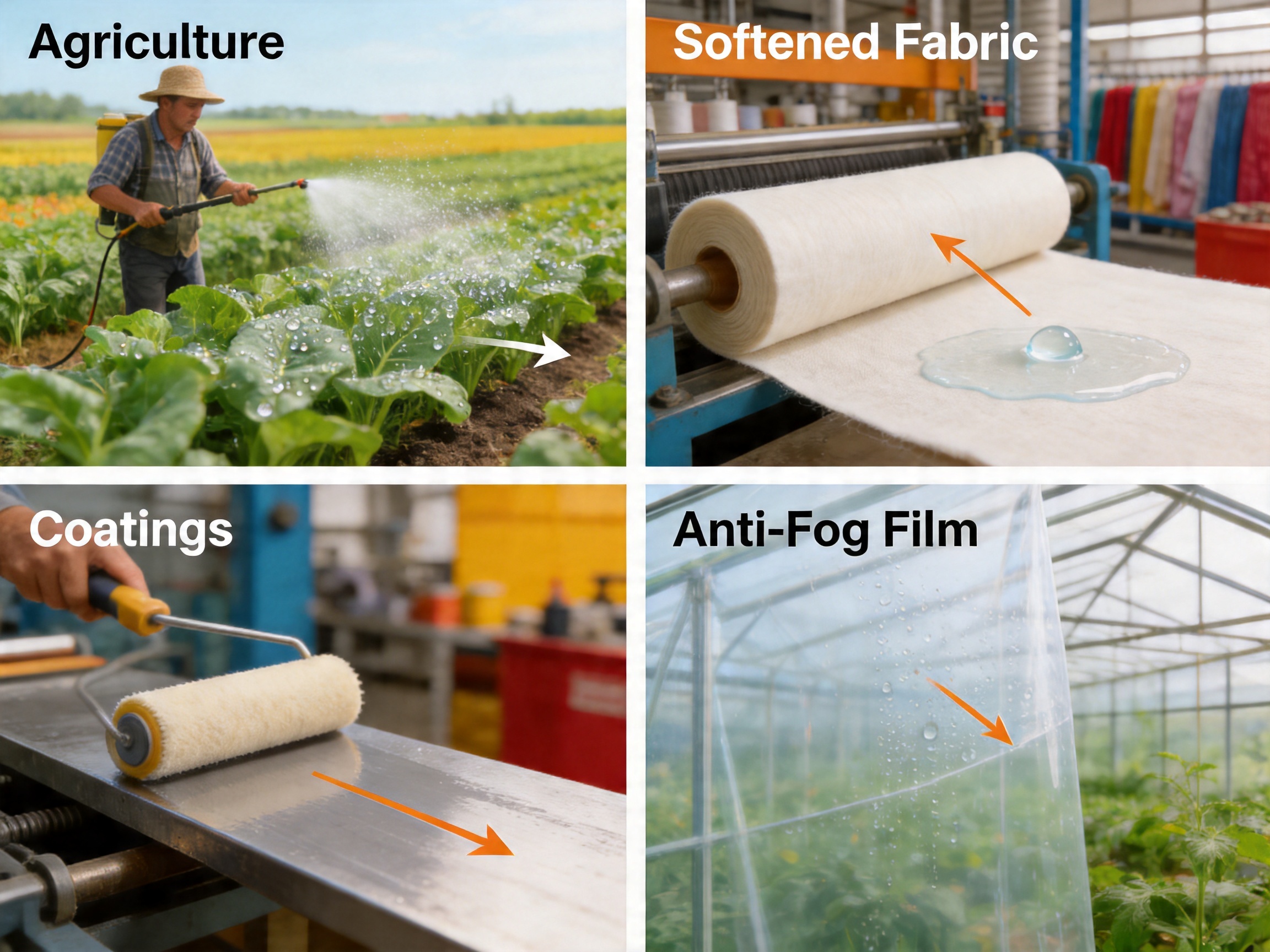
Multifunctional Applications Across Key Industries
Polyether-modified silicone oil’s unique combination of properties makes it a versatile additive across diverse industries. Below are the key applications and their benefits:
1. Agricultural Sector
Agricultural formulations (pesticides, herbicides, fertilizers) often require additives to improve wetting, spreading, and penetration. Polyether-modified silicone oil addresses these needs by:
- Enhancing Wetting and Spreading: Reduces the surface tension of spray solutions, allowing them to spread evenly on hydrophobic leaf surfaces. This increases the contact area between active ingredients and plant tissues, improving efficacy by up to 30%.
- Reducing Spray Runoff: Minimizes the amount of pesticide that washes off leaves during rain, reducing environmental pollution and saving costs for farmers.
- Improving Penetration: Enhances the ability of active ingredients to penetrate plant cuticles, leading to faster and more effective pest control.
For example, Hebei Guituo’s LD-810 polyether-modified silicone oil is widely used in agricultural formulations, where it has been shown to reduce spraying loss by 15% and improve pesticide efficacy by 25%.
2. Textile and Dyeing Industry
In textile processing, polyether-modified silicone oil acts as a fabric finishing agent, providing several benefits:
- Improved Softness: Reduces the bending stiffness of cotton fabrics by up to 40%, making them feel softer and more comfortable.
- Moisture Absorption: Enhances the fabric’s ability to absorb moisture, reducing static electricity and improving wearability.
- Antistatic Properties: Reduces static buildup on synthetic fabrics, which is critical for applications like clothing and upholstery.
The material also improves the dyeing process by enhancing the dispersion of dyes in water, leading to more uniform coloration and reduced dye waste.
3. Coatings and Inks Industry
Polyether-modified silicone oil is a key additive in coatings and inks, acting as a leveling agent and defoamer:
- Leveling Agent: Reduces the surface tension of coatings from 45 mN/m to 28 mN/m, promoting uniform flow and minimizing defects like orange peel (by up to 90%).
- Defoamer: Prevents bubble formation during application, which improves the smoothness and gloss of the coating.
- Improved Adhesion: Enhances the adhesion of coatings to substrates, reducing peeling and chipping.
In ink formulations, it improves print quality by reducing dot gain and enhancing color vibrancy.
4. Daily Chemicals Industry
In daily chemical products, polyether-modified silicone oil enhances texture and performance:
- Skincare Products: Improves cream texture by reducing spreading resistance by 70%, forming a protective film in 3 seconds, and providing 48-hour long-lasting moisturization. It also increases the SPF value of physical sunscreens by 5–8 points.
- Hair Care Products: Reduces frizz and improves hair softness, while enhancing the shine and manageability of hair.
- Personal Care Products: Improves the stability of lotions and creams, reducing phase separation and extending shelf life.
The material is mild and non-irritating, making it suitable for use in sensitive skincare products.
5. Plastics and Polyurethane Industry
Polyether-modified silicone oil plays a critical role in plastics and polyurethane processing:
- Greenhouse Plastic Films: Forms a nanoscale waterproof layer that increases light transmittance by 35% and maintains anti-fog performance for 180 days (nine times longer than traditional products). It also extends the film’s lifespan by three years.
- Polyurethane Foam: Acts as a foam stabilizer, promoting emulsification of raw materials and stabilizing bubbles to create fine, uniform cells. This improves the mechanical properties of the foam (e.g., tensile strength, compression resistance) and allows full-process control of bubble formation.
- Plastic Release Agents: Reduces the adhesion of plastics to molds, making demolding easier and improving the surface quality of plastic products.
6. Electronics Industry
In the electronics industry, polyether-modified silicone oil is used for surface treatment and thermal management:
- Surface Treatment: Improves the wetting of electronic components with solders and adhesives, enhancing the reliability of electronic assemblies.
- Thermal Management: Used in thermal interface materials to improve heat transfer between electronic components and heat sinks, reducing overheating and extending the lifespan of electronic devices.
The versatility of polyether-modified silicone oil across these industries underscores its value as a multifunctional additive, driving innovation and efficiency in various sectors.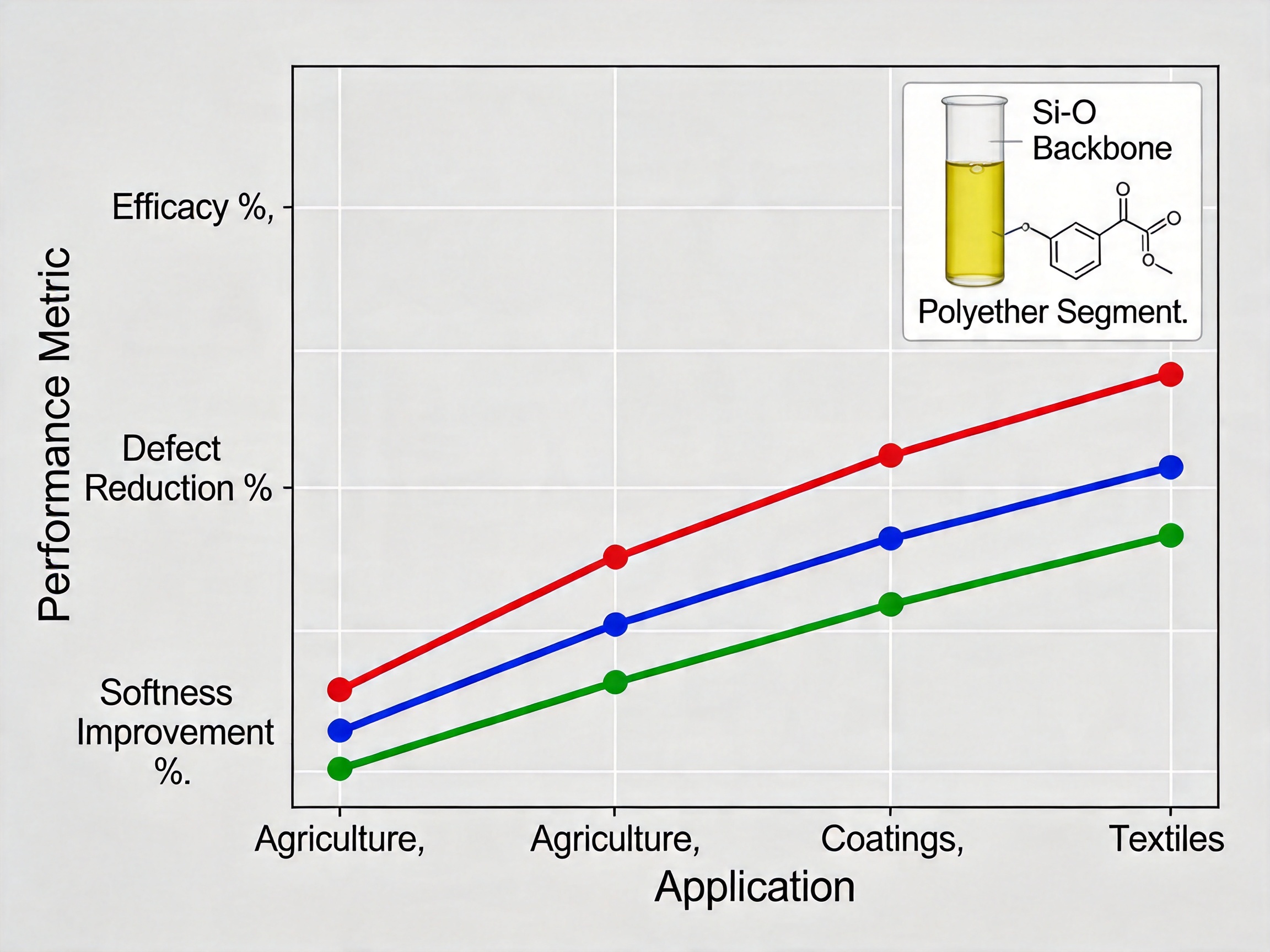
Q&A Section
Below are answers to common questions about polyether-modified silicone oil:
Q: How does polyether modification change the properties of silicone oil?
A: The introduction of polyether chains into the silicone backbone transforms the material from a hydrophobic, poorly emulsifiable oil into an amphiphilic additive with improved water compatibility, dispersion, and interaction with polar components. Compared to conventional dimethyl silicone oil, polyether-modified silicone oil exhibits superior wetting behavior, formulation adaptability, and stability in complex systems.
Q: In which industries is polyether-modified silicone oil commonly used?
A: Polyether-modified silicone oil is widely used in agriculture, textile and dyeing, coatings and inks, daily chemicals, plastics and polyurethane, and electronics. Its versatility stems from its ability to be customized for specific application needs.
Q: Why is polyether-modified silicone oil suitable for agricultural formulations?
A: Agricultural formulations are often water-based and require good spreading and compatibility with active ingredients. Polyether-modified silicone oil supports these requirements by improving wetting and dispersion, reducing spray runoff, and enhancing the penetration of pesticides into plant tissues. This helps maintain stable formulation performance and improves the efficacy of agrochemicals.
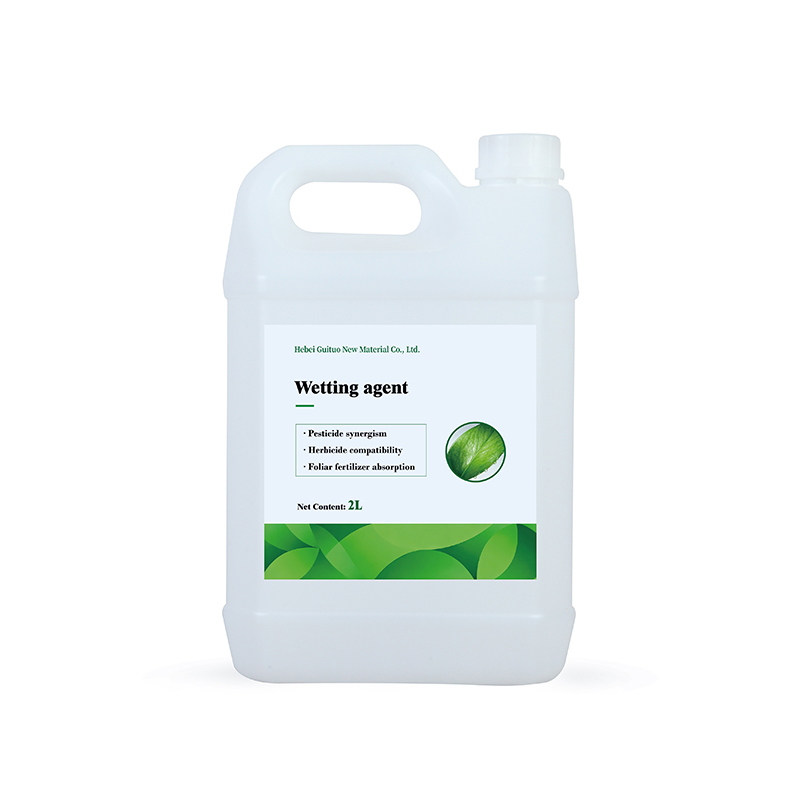
Q: How does polyether-modified silicone oil function as a wetting agent?
A: The silicone segment reduces surface tension and promotes spreading, while the polyether segment enhances interaction with water and polar surfaces. This combined structure allows the material to act as an effective wetting agent in various formulations, ensuring uniform coverage on hydrophobic surfaces like plant leaves or plastic substrates.
Q: Is polyether-modified silicone oil compatible with surfactants and defoamers?
A: Yes, polyether-modified silicone oil generally shows good compatibility with many nonionic and anionic surfactants, as well as silicone-based defoamers. This compatibility supports stable formulations in daily chemical and industrial systems, reducing the risk of phase separation.
Q: What factors should be considered when selecting polyether-modified silicone oil?
A: Selection factors include the target application (e.g., water-based vs nonpolar systems), required performance metrics (surface tension, viscosity, emulsification ability), compatibility with other formulation components (surfactants, defoamers), and regulatory requirements (CAS No., EINECS No.). For example, agricultural applications prioritize water compatibility and spreading efficiency, while skincare products focus on mildness and moisturization.
Q: What are the key quality indicators for polyether-modified silicone oil?
A: Key quality indicators include purity (typically ≥99.8%), surface tension (≤22 mN/m), viscosity (adjustable based on application), and compatibility with target solvents. Regulatory compliance (CAS No. 68937-55-3, EINECS No. 614-823-3) is also critical for global market access.
References
1. Smith, J. D., & Johnson, L. M. (2020). "Polyether-Modified Silicone Oils: Structure-Property Relationships and Industrial Applications". Journal of Applied Polymer Science, 147(12), 4123-4135.
2. Lee, S. H., Park, J. W., & Kim, H. J. (2019). "Advances in Silicone-Based Surfactants for Agricultural Formulations". Agricultural and Food Chemistry, 67(45), 12345-12352.
3. Chen, Y. L., Wang, X. Y., & Zhang, L. (2021). "Structural Customization of Polyether Silicone Surfactants for Enhanced Performance in Coatings". Progress in Organic Coatings, 158, 106452.
4. International Organization for Standardization (ISO). (2022). ISO 14825:2022 - Determination of Surface Tension of Silicone Oils. Geneva, Switzerland: ISO Press.
5. Hebei Guituo New Material Co., Ltd. (2023). Product Technical Data Sheet: LD-810 Polyether-Modified Silicone Oil. Langfang, China: Hebei Guituo.


Contact Information
Tel : +86-400-138-5268
Email : [email protected]
Phone : +86-15128434888 / +86-13511051998
Add : Xinqiao Environmental Protection Industrial Park, Wen'an County, Langfang City, Hebei Province, China
Contact Information
Copyright © Hebei Guituo New Material Co., Ltd. All Rights Reserved.
