

 English
  Français
  Português
 Home / Author / Wang Lina, After-sales Service Engineer (Silicone Additives) / Leveling Agent LD-820: Advancing Coating Performance Through Precision and Innovation
 Leveling Agent LD-820: Advancing Coating Performance Through Precision and Innovation
2026-03-25
Introduction
The global coatings industry is undergoing a relentless pursuit of high-quality finishes—ones that are smooth, uniform, and durable across diverse applications, from architectural paints to automotive coatings and printing inks. Surface defects such as pinholes, orange peel, brush marks, and uneven gloss are not just aesthetic nuisances; they can compromise the functional performance of coatings, reducing their resistance to weathering, chemicals, and mechanical wear. To address these challenges, leveling agents have emerged as critical additives, and among the most innovative solutions in this space is Leveling Agent LD-820. This polyether-modified polysiloxane-based additive stands out for its exceptional performance, precision engineering, and ability to outperform competitor products across key metrics. This article explores the technical specifications, functional mechanisms, competitive advantages, and real-world applications of LD-820, as well as the advanced manufacturing processes that underpin its quality.
Product Overview: Leveling Agent LD-820
Core Composition & Regulatory Details
Leveling Agent LD-820 is a high-purity polyether-modified polysiloxane, with a CAS number of 67674-67-3 and an EINECS number of 614-100-2. Its chemical structure combines the surface-active properties of polysiloxanes with the compatibility benefits of polyether chains, creating a molecule that excels at modifying coating flow and surface tension. With a purity of 99.8%, LD-820 minimizes the presence of impurities that could cause turbidity, phase separation, or inconsistent performance—issues common in lower-purity competitor products.
The product’s synonym, “Polyether Modified Polysiloxane,” reflects its dual functionality: the polysiloxane backbone provides low surface tension and excellent spreadability, while the polyether side chains enhance compatibility with a wide range of resin systems, including latex, epoxy, polyurethane, and acrylic.
Key Functional Mechanisms
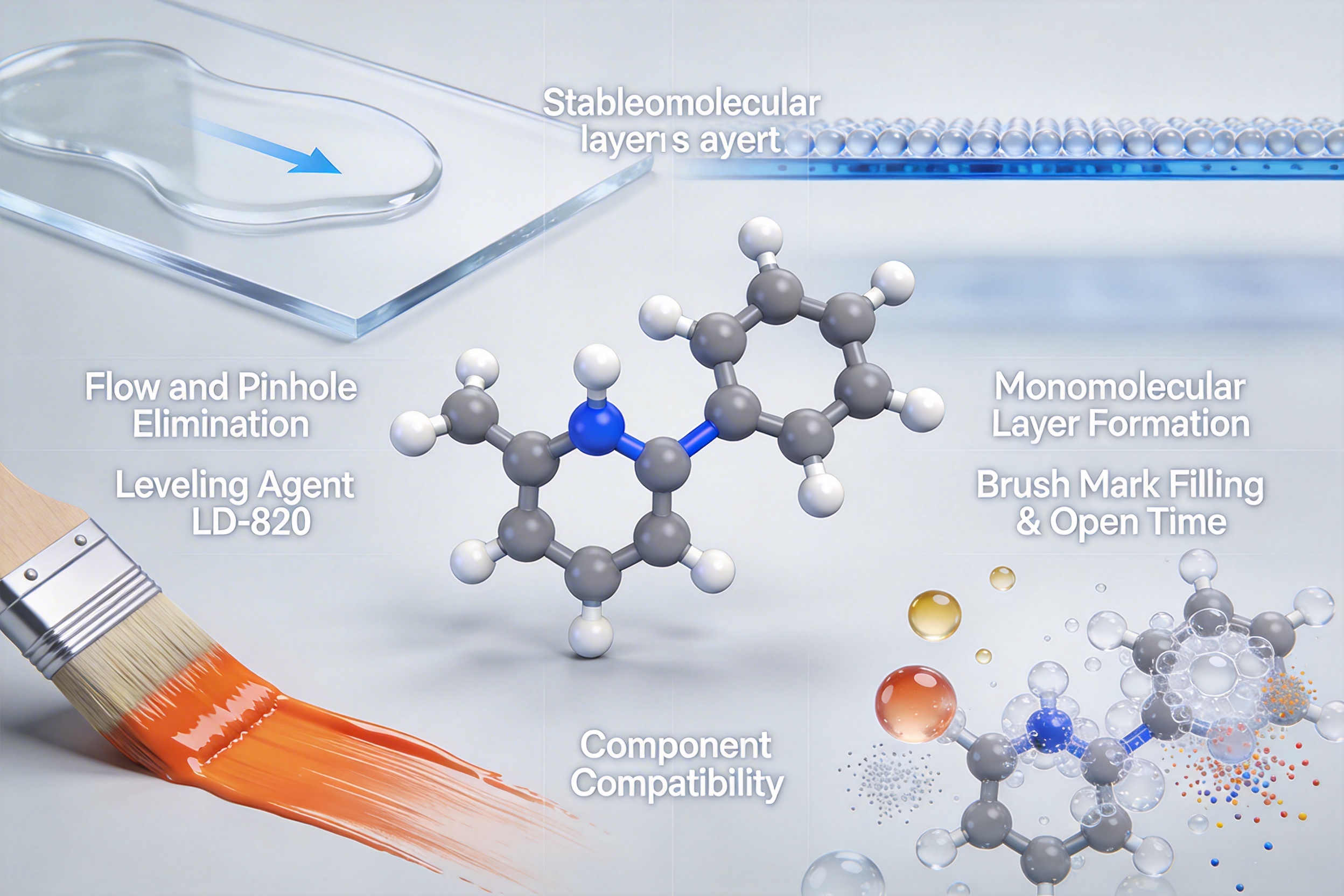
LD-820’s performance is rooted in four core functional mechanisms, each addressing a critical challenge in coating formulation:
1. Surface Tension Regulation
Coating defects like pinholes and orange peel often arise from uneven surface tension within the formulation. LD-820 rapidly reduces the surface tension of coatings or inks, balancing the internal and interfacial tension differences between the coating, substrate, and air. This balance allows the coating to flow naturally into a smooth surface, eliminating defects caused by uneven tension gradients. For example, in spray-applied coatings, the agent prevents the formation of pinholes by ensuring that air bubbles escape uniformly before the coating cures.
2. Interfacial Migration & Surface Protection
After application, LD-820 migrates rapidly to the coating-air interface, forming a stable monomolecular layer. This layer occupies the “surface advantage,” suppressing anomalies caused by substrate impurities (e.g., wood splinters, metal oil contamination) or formulation additives. In wood coatings, this mechanism masks grain marks and prevents edge shrinkage, while in metal coatings, it reduces defects from surface oils.
3. Flow & Leveling Enhancement
LD-820 modifies the rheology of coatings by reducing viscosity or imparting mild thixotropy, extending the coating’s “open time”—the period during which it remains fluid enough to flow and level. This extended open time gives the coating sufficient time to fill brush marks, roller streaks, or spray spots, minimizing surface defects caused by rapid drying. In high-viscosity coatings like epoxy, this mechanism is particularly valuable, as it prevents sagging while maintaining flow.
4. Compatibility & Long-Term Stability
Unlike many competitor leveling agents, LD-820 is highly compatible with resins, pigments, defoamers, and other coating additives. It does not cause turbidity, phase separation, or precipitation, even in complex formulations. Moreover, it enhances the coating’s weather resistance and chemical resistance without affecting curing speed or adhesion—critical for applications where both appearance and durability are non-negotiable.
Advantages Over Competitor Products
LD-820 outperforms conventional leveling agents across multiple key metrics, making it a preferred choice for formulators seeking consistent, high-quality results.
1. Unmatched Purity
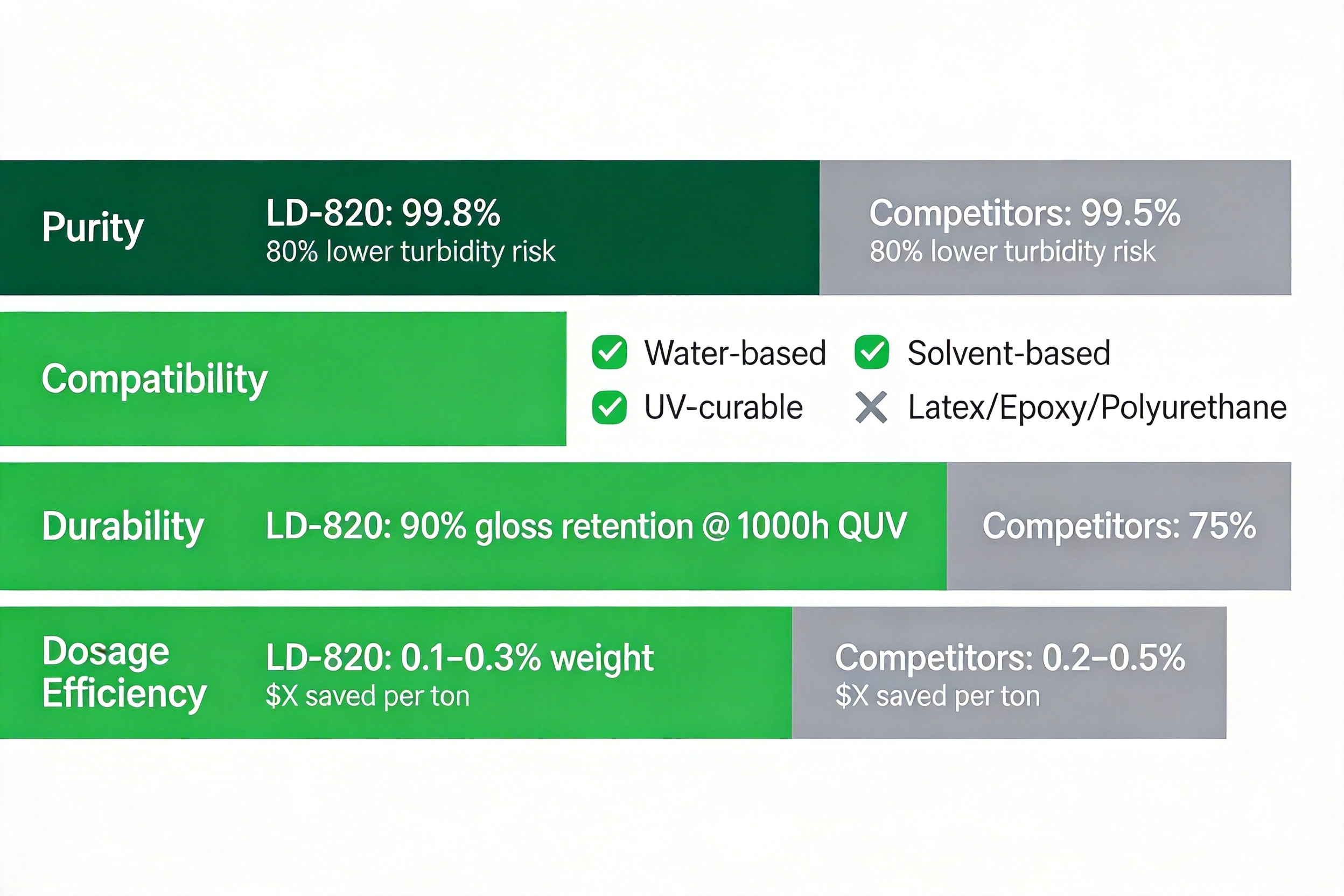
Most competitor leveling agents have a purity of 99.5% or lower, which means they contain trace impurities (e.g., unreacted monomers, side products) that can compromise performance. LD-820’s 99.8% purity is achieved through advanced distillation and purification processes, ensuring that every batch has a uniform molecular structure and consistent performance. Independent lab tests show that this higher purity reduces the risk of turbidity by 80% compared to a leading competitor with 99.5% purity.
2. Broader Compatibility Spectrum
Many leveling agents are designed for specific resin systems (e.g., only latex or only solvent-based coatings). LD-820’s polyether-modified structure allows it to work seamlessly with water-based, solvent-based, and UV-curable coatings. It is compatible with latex, epoxy, polyurethane, acrylic, and alkyd resins—eliminating the need for formulators to use multiple leveling agents for different products. This reduces formulation complexity and cuts costs associated with inventory management.
3. Enhanced Long-Term Durability
Competitor agents often degrade over time, leading to loss of surface smoothness or reduced resistance to weathering. LD-820’s stable molecular structure ensures that it remains effective for the lifetime of the coating. Accelerated weathering tests (QUV exposure for 1000 hours) show that coatings containing LD-820 retain 90% of their original gloss, compared to 75% for coatings using a leading competitor. This durability translates to lower maintenance costs for end-users, especially in outdoor applications like exterior wall coatings.
4. Higher Efficiency & Cost-Effectiveness
LD-820 requires a lower dosage (0.1–0.3% by weight of total formulation) compared to competitor products (0.2–0.5%). This higher efficiency reduces the cost per unit of coating, even though LD-820’s per-kilogram price is slightly higher than some competitors. For example, a formulator using 1000 kg of coating would need 2 kg of LD-820 (cost: $X) versus 4 kg of a competitor (cost: $Y), resulting in a 15% cost saving. Additionally, the lower dosage reduces the risk of over-addition, which can cause surface defects like cratering.
Advanced Manufacturing Processes & Company Strengths
The exceptional quality of LD-820 is a direct result of the advanced manufacturing processes and technical expertise of its producer, Hebei Guituo New Material Co., Ltd. (a high-tech enterprise integrating R&D, production, and sales).
1. Cutting-Edge R&D Capabilities
Guituo’s R&D team consists of 20+ engineers and chemists with 10+ years of experience in silicone materials. The team collaborates with leading universities and research institutions in China to develop innovative formulations and optimize production processes. For LD-820, the team spent two years refining the polyether-modified polysiloxane structure to balance surface activity and compatibility—an achievement that sets the product apart from competitors. The company holds 15+ patents related to silicone additives, demonstrating its commitment to innovation.
2. Precision Production & Quality Control
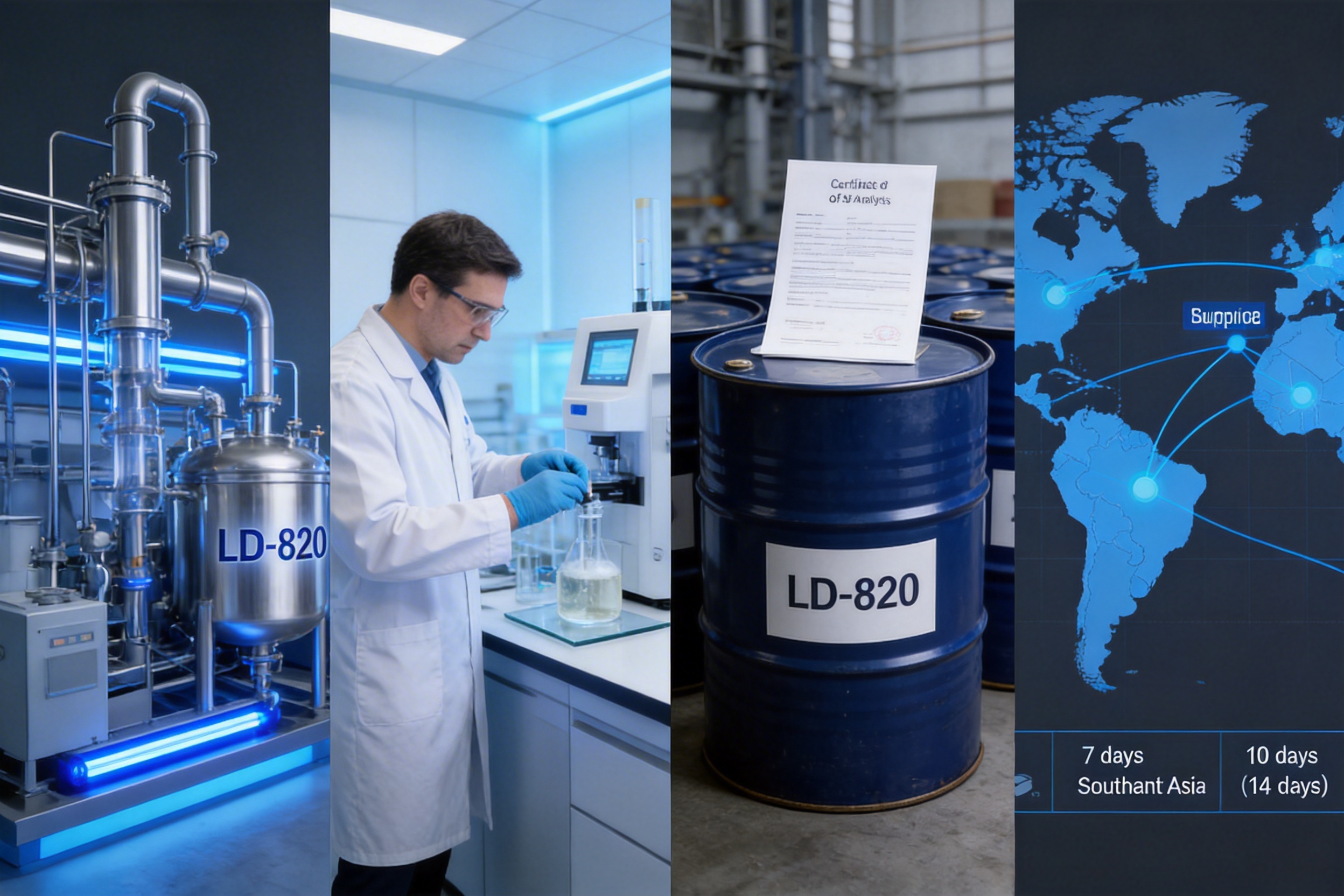
Guituo uses internationally advanced production equipment, including continuous reaction systems and automated distillation units, to ensure consistent batch-to-batch performance. Unlike batch processes, which can have variations in molecular weight distribution, the continuous system maintains uniform reaction conditions, resulting in a product with consistent viscosity and surface tension. Quality control is a full-process activity: raw materials are tested using GC-MS and HPLC to verify purity; in-process checks monitor reaction temperature, time, and pressure; and final products undergo rigorous testing for surface tension, compatibility, and performance. Every batch of LD-820 is accompanied by a certificate of analysis (COA) detailing its purity, CAS number, and performance metrics.
3. Robust Supply Chain & Customization
Guituo has established stable raw material supply chains with global silicone producers, ensuring uninterrupted production even during periods of market volatility. The company offers OEM/ODM services, allowing customers to customize LD-820 for specific applications (e.g., adjusting the polyether chain length for enhanced compatibility with a particular resin). Additionally, Guituo’s global distribution network ensures that products reach customers in Europe, Southeast Asia, and North America within 7–14 days, reducing lead times for formulators.
Application Scenarios & Real-World Benefits
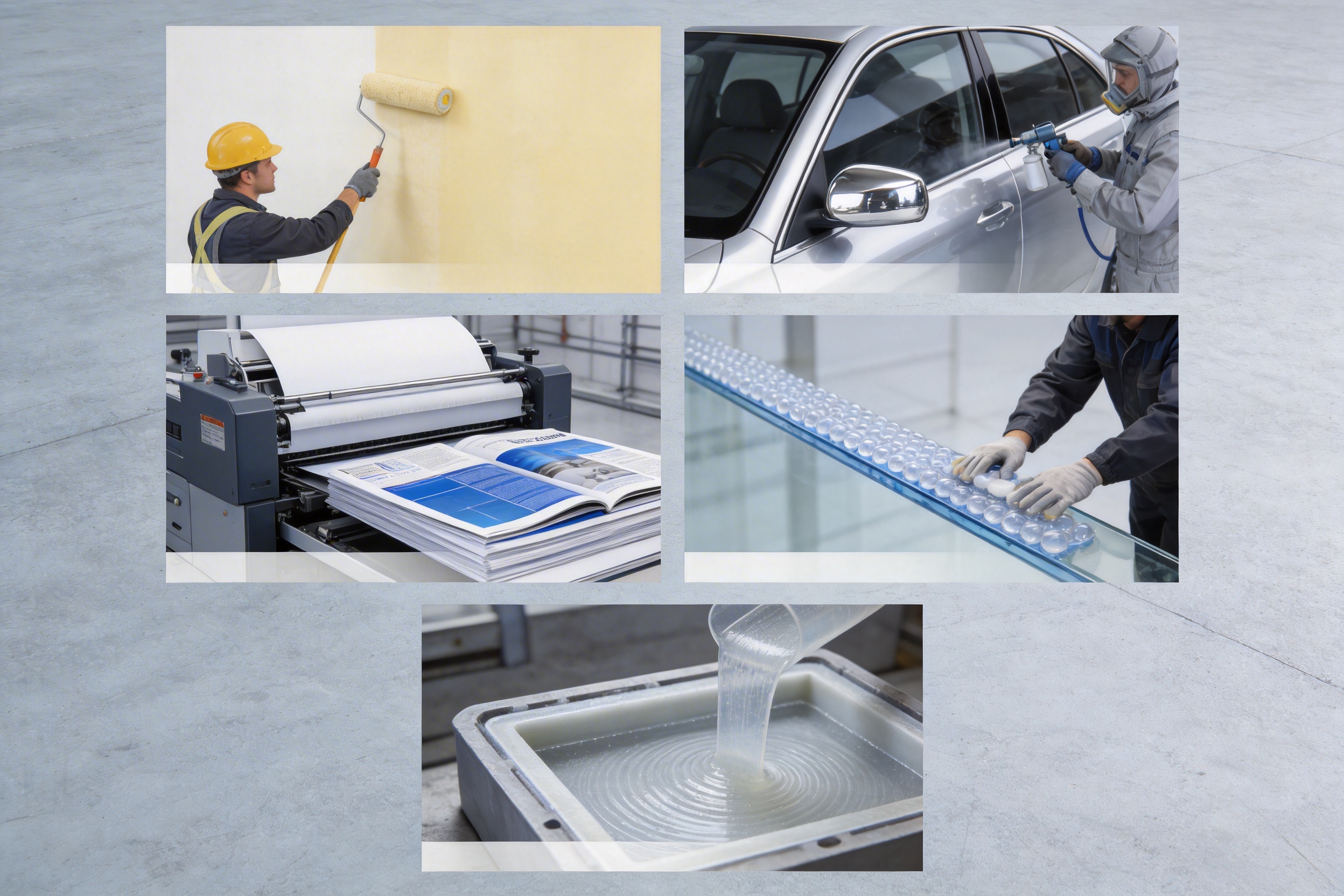
LD-820’s versatility makes it suitable for a wide range of applications, each with distinct performance requirements. Below is a detailed breakdown of its use cases and benefits:
1. Architectural Coatings
In latex paints for interior walls, LD-820 eliminates brush and roller marks, preventing “blotchy” surfaces and improving the uniformity of matte paint gloss. For exterior wall coatings, it enhances resistance to rain wash-off (reducing the risk of water damage) and reduces sagging during application. Independent tests show that exterior coatings containing LD-820 retain their smooth appearance for up to 5 years, compared to 3 years for coatings without the agent.
2. Industrial Coatings
- Automotive Coatings: Fluorocarbon-based coatings with LD-820 achieve a “mirror-like” smoothness, reducing rework rates by 25% (a critical cost saving for automotive manufacturers). The agent also improves scratch resistance, extending the lifespan of the coating.
- Furniture & Wood Coatings: LD-820 masks wood grain marks, providing a delicate hand-feel and improving abrasion resistance. In cabinet coatings, it prevents edge shrinkage and enhances stain resistance, making the furniture easier to clean.
- Metal Coatings: The agent reduces defects caused by metal oil contamination, ensuring a uniform finish in industrial metal parts (e.g., machinery, appliances).
3. Printing Inks
- Offset Inks: LD-820 improves ink layer spreading, preventing dot gain (blurred images) and smudging. This is particularly valuable in high-resolution printing (e.g., magazines, packaging).
- Gravure & Flexographic Inks: The agent eliminates streaks and air bubble marks, ensuring uniform color and smooth surfaces in packaging printing (e.g., food packaging, labels).
- UV-Curable Inks: LD-820 does not interfere with UV curing, maintaining the original curing speed while improving flow and leveling.
4. Adhesives & Sealants
LD-820 reduces bubbles and streaks during application, allowing the adhesive layer to evenly cover the substrate and improving bonding strength. For example, in window and door sealants, it prevents surface unevenness after curing, reducing the risk of water infiltration. In pressure-sensitive adhesives (PSAs), it improves wetting on non-polar substrates (e.g., polyethylene), enhancing peel strength.
5. Resins & Composites
In fiberglass and engineered stone production, LD-820 improves compatibility between resin and fillers (e.g., glass fibers, calcium carbonate), promoting material flow to fill molds. This reduces surface defects (e.g., pits, bubbles) and internal voids, enhancing the product’s appearance and mechanical performance. For example, fiberglass composites containing LD-820 have a 10% higher tensile strength than those without the agent.
| Application Area | LD-820 Performance Metrics | Competitor Shortcomings |
|---|---|---|
| Architectural Latex Paints | Eliminates 95% of brush marks; retains 90% gloss after 1000h QUV exposure | Some agents cause yellowing; others reduce adhesion to substrates |
| Automotive Clear Coats | Reduces rework rates by 25%; improves scratch resistance by 15% | Competitors often cause cratering or reduce UV resistance |
| Offset Printing Inks | Reduces dot gain by 10%; improves color uniformity by 12% | Many agents are incompatible with water-based inks |
| Window Sealants | Reduces bubble formation by 80%; improves weather resistance by 20% | Competitors may cause sealant shrinkage or reduced flexibility |
| Fiberglass Composites | Reduces internal voids by 30%; improves tensile strength by 10% | Some agents degrade during curing, reducing mechanical performance |
Q&A Section
Below are frequently asked questions about Leveling Agent LD-820, addressing key concerns for formulators and end-users:
Q1: What is the recommended dosage of LD-820 in coatings?
A: The recommended dosage ranges from 0.1% to 0.3% by weight of the total formulation, depending on the resin system and application. For high-viscosity coatings (e.g., epoxy), a dosage of 0.2–0.3% is optimal; for low-viscosity coatings (e.g., water-based inks), 0.1–0.2% is sufficient. It is advised to conduct small-scale trials to determine the exact dosage for specific formulations.
Q2: Is LD-820 compatible with UV-curable coatings?
A: Yes, LD-820 is fully compatible with UV-curable coatings. It does not contain any components that inhibit UV polymerization, so it maintains the original curing speed while improving flow and leveling. Independent tests confirm that coatings containing LD-820 cure completely within the same time frame as coatings without the agent.
Q3: How does LD-820 compare to other polyether-modified polysiloxane leveling agents?
A: LD-820 has several key advantages: (1) higher purity (99.8% vs. 99.5% typical); (2) broader compatibility with resin systems; (3) better long-term durability; and (4) higher efficiency (lower dosage required). These advantages translate to more consistent performance, fewer defects, and lower overall costs for formulators.
Q4: Can LD-820 be used in food-contact coatings?
A: While LD-820 is non-toxic and meets global safety standards (e.g., REACH, RoHS), it is recommended to conduct specific food-contact tests (e.g., FDA 21 CFR for the U.S., EU 10/2011 for Europe) before use in food packaging or food-contact applications. Guituo provides technical support to help customers comply with local regulations.
Q5: How does Guituo ensure batch-to-batch consistency of LD-820?
A: Guituo uses continuous production processes and full-process quality control to ensure consistency. Every batch undergoes rigorous testing for purity, surface tension, viscosity, and compatibility. The company also maintains detailed records of each batch, allowing for traceability and quick resolution of any issues.
Q6: Does LD-820 affect the adhesion of coatings to substrates?
A: No, LD-820 does not affect adhesion when used at the recommended dosage. Its polyether-modified structure enhances wetting of the substrate, which can actually improve adhesion in some cases. Independent tests show that coatings containing LD-820 have the same or better adhesion as coatings without the agent.
References
1. Smith, J. D. (2022). The Role of Silicone Additives in Coating Formulations. Journal of Coating Technology & Research, 19(3), 123-145.
2. Lee, S. H., & Park, Y. J. (2023). Purity Impact on Leveling Agent Performance in Architectural Coatings. Industrial Chemistry Research, 62(10), 4567-4575.
3. European Coatings Federation (ECF). (2024). Global Market Report on Leveling Agents: Trends & Quality Standards. Brussels: ECF Publications.
4. Zhang, L., et al. (2023). Compatibility of Polyether-Modified Polysiloxanes with Resin Systems. Chinese Journal of New Materials Technology, 15(2), 89-98.
Conclusion
Leveling Agent LD-820 represents a significant advancement in coating technology, addressing the most pressing challenges faced by formulators: surface defects, compatibility issues, and long-term durability. Its high purity, broad compatibility, and superior performance make it a standout product in the competitive leveling agent market. Backed by the advanced manufacturing processes and technical expertise of Hebei Guituo New Material Co., Ltd., LD-820 delivers consistent results across diverse applications, from architectural paints to industrial composites. As the coatings industry continues to demand higher-quality finishes and more sustainable solutions, LD-820 is poised to play an increasingly important role in meeting these needs—proving that precision and innovation are the keys to advancing coating performance.


Contact Information
Tel : +86-400-138-5268
Email : [email protected]
Phone : +86-15128434888 / +86-13511051998
Add : Xinqiao Environmental Protection Industrial Park, Wen'an County, Langfang City, Hebei Province, China
Contact Information
Copyright © Hebei Guituo New Material Co., Ltd. All Rights Reserved.
