

 English
  Français
  Português
 Home / Author / Wang Lina, After-sales Service Engineer (Silicone Additives) / Emulsified Silicone Oil for High-Performance Industrial and Agricultural Formulations
 Emulsified Silicone Oil for High-Performance Industrial and Agricultural Formulations
2026-06-05
Emulsified silicone oil is a versatile silicone-based material designed to deliver lubrication, release, water repellency, polishing, anti-stick performance, foam control, wetting improvement, and surface protection in water-based and multi-component systems. As industries move toward safer, more efficient, and easier-to-apply additives, emulsified silicone oil has become an important choice for formulators working in agriculture, daily chemicals, textiles, leather care, coatings, plastics, rubber, glass, ceramics, paper, wood, metal processing, and many other fields.
The product discussed here is Emulsified Silicone Oil, model LD-620, also known as Polydimethylsiloxane Emulsion. It is supplied as a white viscous liquid and is associated with CAS No. 9016-00-6, EINECS No. 618-493-1, and a stated purity of 99.8%. Its performance profile includes excellent chemical stability, heat resistance, cold resistance, weather resistance, lubricity, water repellency, low surface tension, and broad formulation compatibility. These properties allow it to function in both demanding industrial environments and consumer-facing products where consistency, safety, and reliable surface performance are essential.
Compared with many conventional oils, waxes, mineral-based lubricants, or ordinary emulsions, emulsified silicone oil offers a distinctive balance of surface activity and durability. It can spread effectively over difficult surfaces, reduce friction, improve gloss, create hydrophobic protection, assist with mold release, and support controlled defoaming in aqueous systems. Because it is supplied in emulsified form, it is especially convenient for water-based formulations where pure silicone oil would otherwise be difficult to disperse evenly.
Hebei Guituo New Material Co., Ltd. supports this product with a strong manufacturing and technical platform. The company integrates research and development, production, quality control, and sales, and has established a product matrix covering silicone additives, wetting agents, modified silicone oil, dimethyl silicone oil, surfactants, defoamers, and related functional materials. This broad technical foundation allows the company to design emulsified silicone oil products that meet practical application requirements rather than simply supplying a generic additive.
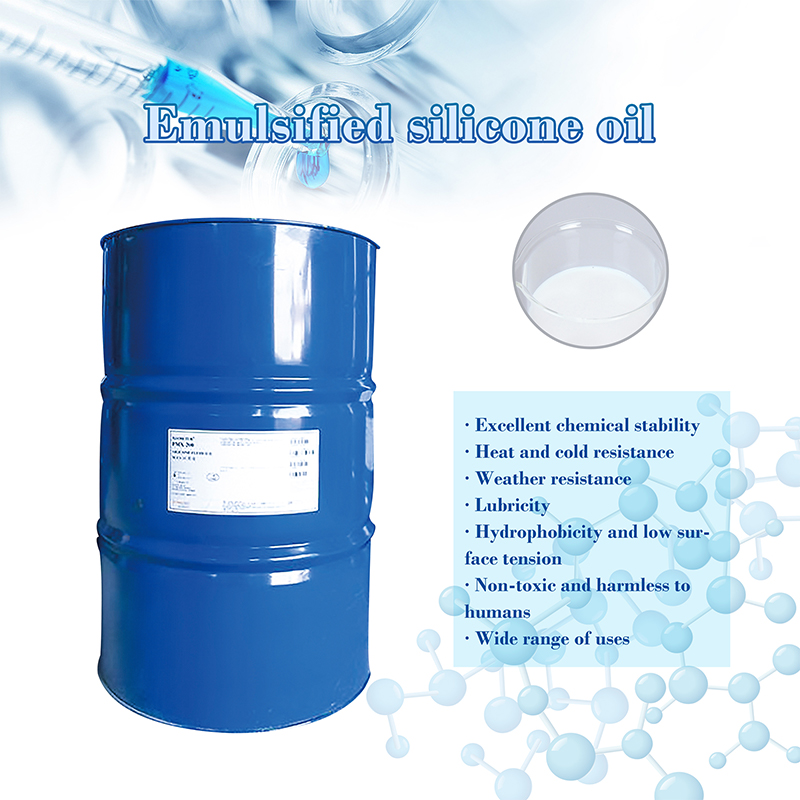
Emulsified Silicone Oil
Product Identity and Core Characteristics
Emulsified Silicone Oil LD-620 is a white viscous liquid formed by dispersing silicone oil into an aqueous or polar continuous phase with the assistance of emulsifiers or stabilizing agents. This structure makes the silicone oil easier to incorporate into water-based products and allows formulators to obtain the performance of silicone oil without the processing challenges commonly associated with direct oil addition.
The product name is Emulsified Silicone Oil, and its common synonym is Polydimethylsiloxane Emulsion. Polydimethylsiloxane, often abbreviated as PDMS, is known for its flexible siloxane backbone, low surface energy, thermal stability, oxidation resistance, and excellent lubricating effect. When converted into a stable emulsion, these properties become easier to use in industrial production, spray systems, coating baths, shampoos, polish formulas, textile treatment baths, and many other aqueous applications.
The product is described as insoluble in ethanol and methanol while being soluble in aromatic hydrocarbons, aliphatic hydrocarbons, and chlorinated hydrocarbons such as benzene and carbon tetrachloride. In practical formulation work, its emulsified state allows it to be handled in water-compatible systems while still providing the inherent performance benefits of silicone oil. This is particularly important for modern industries that aim to reduce solvent use and improve process safety.
Its advantages come from several interrelated properties. Chemical stability helps the product resist degradation in complex formulations. Heat and cold resistance allow it to perform across broad temperature ranges. Weather resistance supports outdoor use, especially in agriculture, coatings, and surface protection. Lubricity reduces friction between surfaces and improves smoothness. Water repellency helps treated substrates resist moisture. Low surface tension supports spreading and wetting. Its non-toxic and harmless profile, when used appropriately according to application requirements, makes it suitable for areas such as personal care, food-related production support, and fermentation industry applications where material safety is highly valued.
| Item | Product Information |
|---|---|
| Product Model | LD-620 |
| Name | Emulsified Silicone Oil |
| CAS No. | 9016-00-6 |
| EINECS No. | 618-493-1 |
| Purity | 99.8% |
| Synonym | Polydimethylsiloxane Emulsion |
| Appearance | White viscous liquid |
| Main Functions | Lubrication, release, water repellency, polishing, anti-stick, smoothing, wetting support, foam control |
Why Emulsification Matters
Silicone oil has outstanding surface properties, but pure silicone oil is not always easy to use in water-based systems. It may float, separate, form uneven droplets, or fail to distribute uniformly if introduced without proper emulsification. Emulsified silicone oil solves this problem by converting the oil into a fine dispersion stabilized by surfactants or emulsifying agents. This makes it easier to meter, dilute, mix, spray, coat, or blend into finished products.
Emulsification also improves application consistency. In agriculture, for example, uniform dispersion helps the silicone component spread evenly across plant leaf surfaces. In textile treatment, stable droplets help create even fiber coverage. In polishes and surface care products, uniformity contributes to consistent gloss and tactile smoothness. In coating systems, controlled emulsion structure supports repeatable defoaming and surface performance.
The emulsion’s stability is one of the most important factors determining product quality. A poorly stabilized silicone oil emulsion may separate during storage, create sediment, show oil floating, or produce inconsistent results during use. In contrast, a well-designed emulsion resists phase separation, droplet coalescence, and viscosity drift. This directly improves production efficiency for downstream users because less time is spent correcting formulation defects or dealing with unstable batches.
Hebei Guituo New Material Co., Ltd. places strong emphasis on surfactant selection, emulsion preparation methods, and quality monitoring. Because the company manufactures and supplies related silicone additives, wetting agents, modified silicone oils, surfactants, and defoamers, it can develop emulsified silicone oil systems with better internal compatibility. This is a major advantage over suppliers that offer only a single commodity-grade emulsion without the broader technical capability to adjust performance.
Advantages Over Conventional Competitive Materials
Emulsified silicone oil competes with mineral oil emulsions, wax emulsions, fatty acid derivatives, ordinary lubricants, traditional release agents, and low-cost surfactant blends. While these materials may perform adequately in simple conditions, they often lack the full combination of stability, low surface tension, water repellency, thermal durability, and surface smoothness provided by silicone chemistry.
One major advantage is low surface energy. Silicone oil can create a surface with excellent slip and release characteristics. This is useful in mold release, plastic film anti-stick treatment, rubber processing, paper release, leather finishing, and polishing applications. Conventional oils may provide temporary lubrication, but they often oxidize, become sticky, attract dust, or lose performance under heat. Silicone oil remains more stable and maintains a cleaner surface feel.
Another advantage is broad temperature performance. Many organic additives become too viscous at low temperature or degrade at high temperature. Emulsified silicone oil retains useful performance across a wide range of conditions, making it suitable for products that may be stored, transported, or used in changing climates. In outdoor agricultural applications, this helps maintain spreading and wetting performance under variable temperature and humidity.
Water repellency is also a strong competitive benefit. Wax emulsions can provide hydrophobicity, but they may create heavy films or reduce breathability on some substrates. Silicone oil can provide efficient water repellency with a smooth and often lighter surface effect. This can be useful for textiles, leather, paper, wood, stone, ceramics, and construction-related surfaces where protection against moisture is desirable.
Emulsified silicone oil also offers formulation efficiency. Because a small amount can significantly alter surface tension and lubrication properties, it may reduce the need for multiple separate additives. For manufacturers, this can simplify formulation design, reduce process variability, and improve cost-performance balance. When supplied by a technically capable manufacturer, the product can be adjusted to suit the final application rather than forcing the user to adapt to a fixed formulation.
Compared with many competitors, LD-620 also benefits from a stated high purity level of 99.8%, a broad application range, and the manufacturing support of a company that serves agriculture, daily chemicals, electronics, textiles, and industrial materials. This multi-industry experience matters because silicone emulsions must often solve problems that differ greatly from one sector to another. A supplier with cross-sector experience can provide more practical guidance on dosage, compatibility, dilution, and testing.
Manufacturing Strength and Quality Control
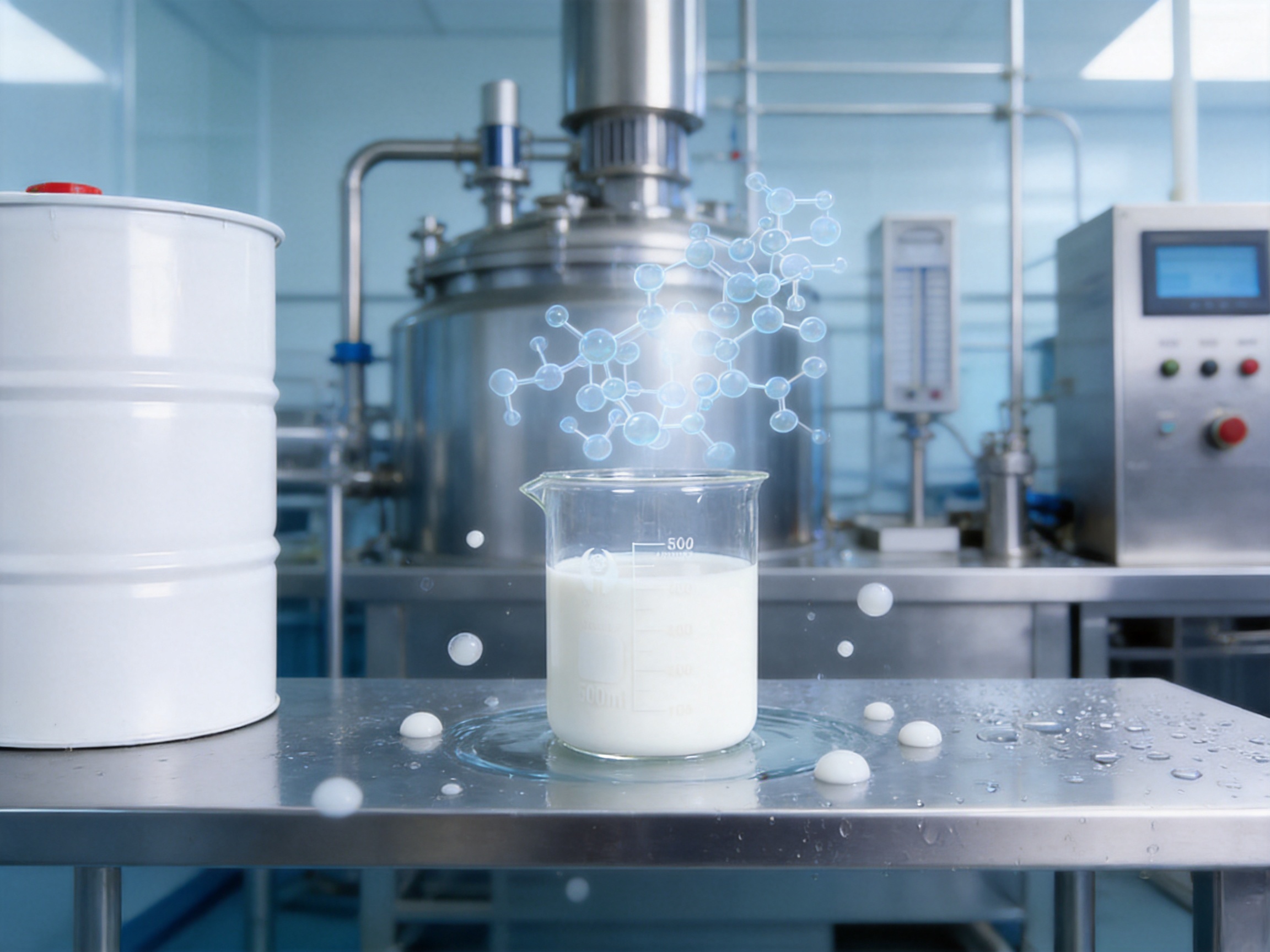
High-quality emulsified silicone oil is not made simply by mixing silicone oil and water. It requires careful control of raw material quality, emulsifier selection, mixing energy, temperature, droplet distribution, viscosity, pH range, storage stability, and batch-to-batch consistency. Advanced production equipment and precise testing facilities are essential to maintain product reliability.
Hebei Guituo New Material Co., Ltd. has built a full-process quality monitoring system from production source to finished product delivery. This approach begins with raw material inspection. Silicone oil, emulsifiers, water, and functional additives must meet internal specifications before production begins. If raw materials vary too much, the finished emulsion may show unstable viscosity, weak dilution performance, poor storage stability, or inconsistent surface behavior.
During production, controlled emulsification is essential. The silicone phase must be dispersed into fine droplets and stabilized before droplets can merge or separate. The equipment must provide suitable shear and mixing conditions while avoiding unnecessary damage to the emulsion structure. Temperature control is also important because viscosity and surfactant behavior can change during processing. By maintaining stable process conditions, the manufacturer can produce emulsions that remain uniform during storage and easy to use during application.
Testing after production is equally important. Typical evaluation may include appearance, viscosity, solid content or active content, pH value, emulsion stability, dilution stability, centrifugal stability, heat resistance, cold resistance, droplet size distribution, and application performance tests. For customers in specific industries, additional tests may be needed, such as leaf spreading tests for agrochemical use, fabric hand-feel evaluation for textiles, gloss testing for polishes, release testing for mold applications, or foam control evaluation for coatings.
The company’s experienced technical and production team provides another competitive strength. Emulsified silicone oil performance depends heavily on practical know-how. Two emulsions may look similar but behave very differently in real formulations. The ability to identify why an emulsion destabilizes, why foam control changes, why a surface becomes too slippery, or why a treatment bath separates is a valuable service advantage. Hebei Guituo New Material Co., Ltd. combines production experience with formulation understanding, allowing it to support customers from product selection through application optimization.
Role of Droplet Size, Viscosity, and Emulsion Stability
The performance of emulsified silicone oil is closely related to droplet size and base oil viscosity. Smaller droplets often disperse quickly and produce rapid wetting or spreading. Larger droplets may provide stronger lubrication, richer surface coverage, or more pronounced release performance. Medium droplet systems can balance stability, coverage, and ease of use. The correct choice depends on the final application.
Base silicone oil viscosity also changes the product’s behavior. Low-viscosity silicone oil can spread rapidly and create a light surface feel. Medium-viscosity oil can provide balanced lubrication and film formation. High-viscosity oil can produce stronger slip, thicker coverage, or more durable protection. In an emulsion, the viscosity of the internal silicone phase affects droplet formation, storage behavior, and final surface properties.
Emulsion stability is especially important for customers who store products for extended periods or ship them across regions with different climates. A stable emulsion should resist oil separation, creaming, sedimentation, and irreversible thickening. It should also remain usable after dilution, especially in spray tanks, coating baths, shampoo bases, detergent systems, and industrial process water.
| Performance Factor | Effect on Emulsified Silicone Oil | Practical Importance |
|---|---|---|
| Low silicone oil viscosity | Fine droplets and rapid spreading | Useful for agricultural sprays, light polishes, and water-based formulations |
| Medium silicone oil viscosity | Balanced surface coverage and flow | Suitable for textiles, coatings, and general industrial applications |
| High silicone oil viscosity | Stronger lubrication and thicker surface effect | Useful for release, protective layers, and high-slip applications |
| Small droplet size | Fast dispersion and improved uniformity | Helps spray coverage and formulation stability |
| Stable emulsifier system | Reduced separation and better storage life | Improves batch reliability and customer processing efficiency |
Hebei Guituo New Material Co., Ltd. can tailor product performance by adjusting silicone oil viscosity, emulsifier system, modification method, and production process. This is a practical advantage over commodity suppliers whose products may not be optimized for specific industries. Customers often need more than a general silicone emulsion; they need a material that performs correctly in their own process conditions.
Applications in Agriculture
In agriculture, emulsified silicone oil is valued for wetting, spreading, and deposition support. Plant leaf surfaces are often waxy, uneven, and difficult to wet. When water-based agrochemical sprays contact these surfaces, droplets may bead up and roll off, reducing the amount of active ingredient that remains on the target. Silicone-based additives help lower surface tension and improve coverage.
Emulsified silicone oil can support more uniform distribution of pesticides, fertilizers, plant growth regulators, and other agricultural inputs. Improved spreading may help active ingredients contact more of the leaf surface. Better deposition can reduce waste caused by runoff. More uniform coverage also supports consistent field performance. While final results depend on the complete formulation and application conditions, the use of a suitable silicone emulsion can be an important part of efficient agrochemical design.
The product’s weather resistance and temperature tolerance are also valuable in agriculture. Agricultural products may be stored in rural warehouses, transported under hot or cold conditions, and used outdoors in changing environments. A stable silicone emulsion helps maintain predictable performance throughout these conditions.
Hebei Guituo New Material Co., Ltd. has particular strength in agricultural silicone products, which are recognized by leading domestic agrochemical enterprises. This experience gives the company insight into compatibility with agrochemical actives, dilution behavior in water, spray tank stability, and field-use requirements. For customers, this means the emulsified silicone oil is supported by real agricultural application knowledge rather than only laboratory data.
Applications in Personal Care and Daily Chemicals
In personal care and daily chemical products, emulsified silicone oil can improve smoothness, softness, shine, conditioning, and tactile feel. It is often used in hair care products because silicone oil can help hair feel smoother and easier to comb. In shampoos or conditioners, a stable silicone emulsion can deposit a fine lubricating layer on hair fibers, reducing friction and improving manageability.
In cleaning and polish products, emulsified silicone oil can provide gloss, water repellency, and anti-stick effects. It can be used in leather polishes, automotive care products, furniture polish, flooring treatments, and surface cleaners. The low surface tension of silicone oil helps it spread across surfaces, while its hydrophobic nature supports water-beading and protective effects.
Compatibility is critical in personal care and daily chemical products. A silicone emulsion must not destabilize the overall formula, collapse desired foam excessively, create unwanted separation, or produce an unpleasant feel. The correct balance of emulsion stability and surface performance is required. Hebei Guituo New Material Co., Ltd.’s broader product matrix, including surfactants, wetting agents, silicone oils, and defoamers, enables better compatibility design for complex formulations.
Compared with ordinary oils used in daily chemicals, emulsified silicone oil provides a cleaner, smoother, less greasy effect. It can deliver slip and shine without the heavy residue associated with some mineral or vegetable oils. This is one reason silicone emulsions remain popular in products where sensory performance strongly influences customer satisfaction.

Applications in Textiles, Leather, and Fiber Processing
Textile and leather industries require additives that improve softness, smoothness, handle, release, water repellency, and processing efficiency. Emulsified silicone oil is well suited for these requirements because it can be diluted in water and applied through padding, spraying, dipping, finishing baths, or coating systems.
On textiles, the product can help create a smoother hand feel and improve fiber lubrication. It can reduce friction during processing and provide more uniform finishing. Depending on formulation design, it may also contribute to water repellency and anti-stick properties. For synthetic fibers, cotton blends, and specialty textiles, silicone emulsions can improve both manufacturing performance and final user experience.
For leather polishing and finishing, emulsified silicone oil can enhance gloss, improve surface smoothness, and contribute to water resistance. It can create a refined surface feel without excessive oiliness when correctly formulated. Because leather surfaces vary in porosity and finishing chemistry, emulsion stability and droplet behavior must be selected carefully.
Competitor materials such as wax emulsions or fatty lubricants may provide softness but can yellow, build up, or reduce surface clarity. Silicone emulsions offer better thermal stability and a cleaner surface profile. This makes them valuable for premium finishing applications where appearance and touch are both important.
Applications in Mold Release, Plastics, Rubber, and Film Processing
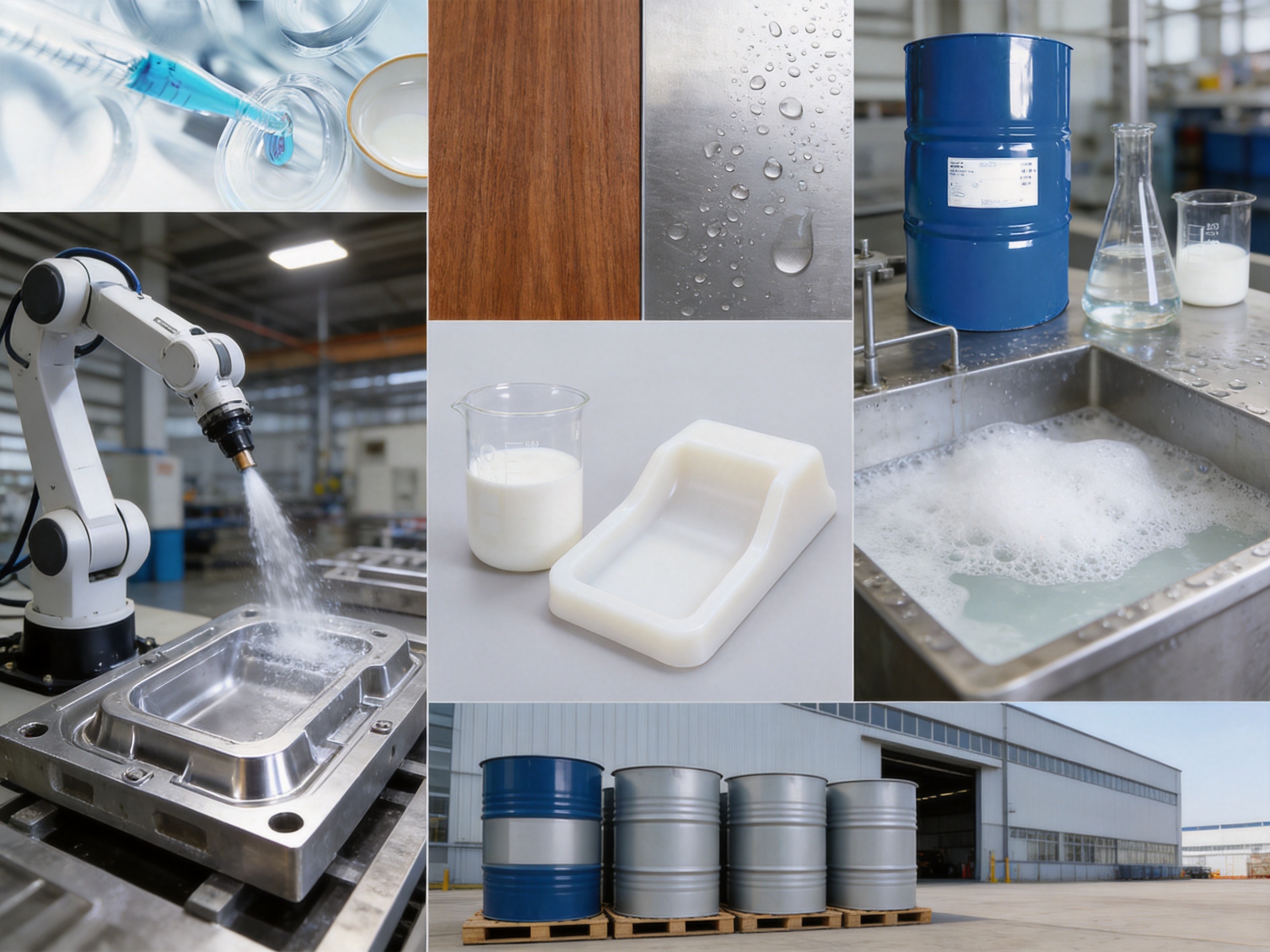
One of the classic uses of silicone oil is release performance. Emulsified silicone oil can be used as a mold release agent in polyurethane, plastics, rubber, glass, ceramics, stone, paper, and wood industries. It helps reduce adhesion between molded parts and mold surfaces, supporting cleaner demolding and improved production efficiency.
In polyurethane processing, release performance can affect cycle time, part appearance, and mold maintenance. A suitable silicone emulsion helps create a release layer that reduces sticking while maintaining surface quality. In rubber and plastics, silicone emulsion can assist in mold release, anti-blocking, and lubrication. In plastic film applications, it can provide anti-stick function and help reduce unwanted adhesion between film layers.
Compared with traditional release agents, emulsified silicone oil offers strong surface slip at relatively low usage levels. Its heat resistance helps it remain effective in processes involving elevated temperatures. Its chemical stability reduces the risk of degradation that could contaminate mold surfaces or affect finished parts. Because it is emulsified, it can be applied in water-based systems, which may help reduce solvent exposure and improve workshop handling conditions.
For manufacturers, consistent release performance means fewer rejected parts, less downtime for mold cleaning, and better production rhythm. The product’s stable quality and controlled emulsion structure therefore create direct operational value. Hebei Guituo New Material Co., Ltd.’s quality monitoring system supports this consistency by controlling production from raw materials to finished product delivery.
Applications in Coatings, Metal Processing, and Foam Control
Emulsified silicone oil can be used for defoaming in water-based coatings and other industrial systems. Foam is a common problem during mixing, pumping, coating, spraying, and application. Excess foam can reduce production efficiency, create surface defects, lower coating density, and cause appearance problems. Silicone-based materials are widely used for foam control because they can disrupt bubble films effectively.
In coatings, emulsified silicone oil may help manage foam while also contributing to surface slip and water repellency. However, foam control must be balanced carefully. Too much silicone or poorly compatible silicone can cause craters, fisheyes, or adhesion problems. This is why formulation expertise is essential. A well-designed emulsion with the correct droplet size and compatibility profile can provide effective foam control without creating surface defects.
In metal processing, emulsified silicone oil can support anti-rust, lubrication, and surface smoothing functions. It may be used where a thin protective layer is needed to reduce moisture contact or improve handling. It can also improve slip in cutting, forming, or finishing systems when compatible with the overall process chemistry.
Competitor defoamers or lubricants may work in narrow conditions but fail when pH, temperature, electrolyte content, or surfactant concentration changes. Silicone emulsions designed with robust stabilizer systems can offer broader reliability. Hebei Guituo New Material Co., Ltd. can also combine emulsified silicone oil with compatible defoamers or wetting agents to achieve a targeted balance of foam suppression, spreading, and coating performance.
Applications in Glass, Ceramics, Stone, Paper, and Wood
Glass, ceramics, stone, paper, and wood surfaces often require controlled release, polishing, hydrophobic treatment, or anti-stick performance. Emulsified silicone oil can be applied to create smoothness and improve water repellency. On hard surfaces, it can enhance gloss and reduce friction. On porous materials, it can help limit water absorption depending on the treatment system and substrate structure.
In paper processing, silicone emulsions may be used for release or anti-stick performance. They can help prevent adhesion in certain converting operations and improve surface handling. In wood treatment, emulsified silicone oil can contribute to moisture resistance and surface smoothness. In stone or ceramic polishing, it can provide a clean gloss and protective touch.
The benefit of an emulsion is ease of application. Water-based dilution allows treatment by spraying, wiping, roller coating, or bath application. This flexibility is important for industries where process equipment and substrate sizes vary widely. The product’s chemical and weather resistance also supports durable performance after application.
Compatibility in Complex Formulations
Modern formulations often contain multiple components: surfactants, solvents, active ingredients, salts, thickeners, pigments, fillers, preservatives, fragrances, defoamers, wetting agents, and polymers. Emulsified silicone oil must be compatible with these components to perform reliably. Compatibility problems can appear as separation, viscosity change, foam instability, reduced active efficacy, surface defects, or inconsistent deposition.
In agricultural formulations, compatibility ensures that the silicone emulsion does not interfere with pesticides, fertilizers, or other active materials. In daily chemicals, compatibility helps maintain product texture, appearance, and foam behavior. In textiles, compatibility ensures stable finishing baths and uniform fiber treatment. In coatings, compatibility helps prevent defects while maintaining defoaming performance.
Hebei Guituo New Material Co., Ltd. designs emulsified silicone oil products with application compatibility in mind. Its access to surfactants, wetting agents, modified silicone oils, and defoamers allows the company to evaluate how different chemistries interact. This is a competitive advantage because compatibility is often the deciding factor between a laboratory sample and a successful commercial product.
Customers should still conduct their own compatibility testing under actual production conditions. Recommended tests include storage stability, dilution stability, pH tolerance, freeze-thaw testing, heat aging, centrifugation, active ingredient compatibility, foam testing, substrate application testing, and final product performance evaluation. The manufacturer can provide technical guidance to help customers select appropriate test methods.
Processing and Handling Recommendations
Emulsified silicone oil should be handled as a functional dispersion. Before use, it is advisable to mix gently if the product has been stored for a period of time. High-speed mixing may not always be necessary and, in some systems, excessive shear can affect emulsion stability. The product should be added according to formulation sequence recommendations, usually after the main aqueous phase is prepared or during a stage where sufficient mixing is available for uniform distribution.
When diluting, it is often best to add the emulsion gradually into water or the target formulation with moderate stirring. Sudden addition into highly concentrated salts, strong solvents, or incompatible surfactant systems may cause instability. Temperature should be controlled within the recommended processing range for the specific application. Freezing or overheating should generally be avoided unless the product has been tested for those conditions.
Storage conditions should protect the product from extreme temperatures and contamination. Containers should be closed after use to prevent evaporation, microbial contamination, or accidental introduction of incompatible materials. For industrial users, first-in-first-out inventory control is recommended to maintain consistent quality.
Dosage depends strongly on application. Agricultural sprays may require low inclusion levels to improve spreading. Polishes and surface treatments may use higher levels to achieve gloss and water repellency. Release agents may require optimization based on mold material, process temperature, part geometry, and desired surface finish. Coatings and defoaming systems require careful dosage control to avoid surface defects. Technical consultation and application trials are recommended for best results.
Customization, OEM, and ODM Capability
Not every customer needs the same emulsified silicone oil. A textile finisher may prioritize softness and dilution stability. An agrochemical producer may need rapid spreading and tank-mix compatibility. A coating manufacturer may focus on foam control without surface defects. A mold release user may require stronger slip and thermal resistance. Customization is therefore essential.
Hebei Guituo New Material Co., Ltd. accepts OEM and ODM orders, allowing customers to obtain tailored products for specific markets and application conditions. Customization may include adjustment of silicone oil viscosity, active content, emulsifier type, droplet size, pH range, dilution behavior, compatibility profile, packaging, labeling, and performance targets. This flexibility is especially valuable for distributors, formulators, and industrial manufacturers seeking differentiated products.
The company’s research and development capability supports continuous improvement. Its focus on high-end silicone materials in industrial and agricultural fields allows it to respond to changing market requirements, such as lower solvent systems, more stable water-based formulations, improved spreading agents, safer handling profiles, and more efficient release technologies. Advanced production equipment and precise testing facilities help translate formulation concepts into stable commercial products.
Another strength is stable supply. The company has established a comprehensive guarantee system for quality and delivery. For customers, stable supply reduces procurement risk and helps maintain continuous production. This is especially important for agrochemical, textile, coating, and industrial manufacturing customers whose production schedules depend on reliable additive availability.
Global Market Relevance
The demand for emulsified silicone oil continues to grow because manufacturers around the world need efficient surface-control additives. Water-based systems are increasingly favored in coatings, cleaning products, agricultural formulations, and textile treatments. As more industries shift away from heavy solvent use, stable silicone emulsions become more important.
Hebei Guituo New Material Co., Ltd. supplies products to domestic customers and exports to overseas markets such as Europe and Southeast Asia. Repeat purchases from overseas customers indicate that the product’s stable performance and reliable quality meet practical market expectations. International customers often evaluate suppliers based on consistency, documentation, technical communication, customization capacity, and long-term cooperation. The company’s integrated manufacturing and technical structure supports these requirements.
In competitive global markets, price alone is not enough. Customers need additives that reduce formulation risk, improve product value, and support efficient production. Emulsified Silicone Oil LD-620 is positioned as a performance-driven product with broad application potential and strong technical support. Its combination of chemical stability, water repellency, lubrication, low surface tension, and emulsion convenience makes it suitable for both established and emerging applications.
How to Select the Right Emulsified Silicone Oil
Selecting the right emulsified silicone oil begins with defining the target function. If the goal is wetting and spreading, droplet size and surface tension reduction are key. If the goal is release, the silicone film’s durability and slip are critical. If the goal is hair conditioning, sensory feel and deposition behavior matter. If the goal is defoaming, compatibility and bubble-breaking efficiency must be evaluated.
The next step is to examine the formulation environment. Important factors include pH, temperature, salt content, solvent content, surfactant type, polymer content, active ingredients, mixing method, and storage conditions. A silicone emulsion that works well in one system may not be ideal in another. Technical support from the supplier can shorten the selection process.
Application testing should be realistic. Laboratory screening is useful, but final validation should occur under actual or simulated production and use conditions. For agriculture, this may include spray dilution, leaf coverage, runoff observation, and active ingredient compatibility. For textiles, it may include bath stability, fabric hand feel, whiteness, water repellency, and wash durability. For mold release, it may include repeated release cycles, part surface inspection, and mold cleanliness. For coatings, it may include foam control, film appearance, adhesion, and storage stability.
Documentation and consistency should also be considered. Reliable suppliers provide product identification, batch control, technical data, and communication support. Hebei Guituo New Material Co., Ltd.’s full-process quality monitoring mechanism and experienced team support customers who need dependable long-term cooperation.
Q&A
What is emulsified silicone oil?
Emulsified silicone oil is a stable dispersion of silicone oil in water or another polar phase, usually supported by emulsifiers or surfactants. It allows the performance benefits of silicone oil, such as lubrication, water repellency, release, and low surface tension, to be used more easily in water-based formulations.
What are the main advantages of Emulsified Silicone Oil LD-620?
LD-620 offers chemical stability, heat and cold resistance, weather resistance, lubricity, water repellency, low surface tension, and broad application versatility. It is supplied as a white viscous liquid and is associated with high purity, making it suitable for many industrial and agricultural uses.
How does it compare with mineral oil or wax emulsions?
Compared with many mineral oil or wax emulsions, emulsified silicone oil provides lower surface energy, better slip, stronger release performance, cleaner surface feel, and improved thermal stability. It can often achieve effective performance at low use levels while reducing greasiness or heavy buildup.
Can it be used in agricultural formulations?
Yes. In agriculture, emulsified silicone oil can improve wetting, spreading, and deposition on plant surfaces. It helps water-based sprays cover waxy or difficult-to-wet leaves more uniformly, supporting better use of active ingredients when properly formulated.
Is it suitable for hair care products?
Yes. Emulsified silicone oil can be used in hair care products to improve smoothness, combability, shine, and conditioning feel. Its emulsified form helps it disperse into shampoo or conditioner systems more easily than pure silicone oil.
How does it support mold release?
The silicone oil phase creates a low-energy, slippery surface layer that helps reduce adhesion between molded products and mold surfaces. This can improve demolding efficiency, reduce defects, and help maintain production rhythm in plastics, rubber, polyurethane, and related industries.
Can it function as a defoaming component?
Yes. Emulsified silicone oil can help control foam in water-based coatings and industrial processes. Its effectiveness depends on droplet size, compatibility, dosage, and formulation conditions. In some systems, it may be combined with other defoamers for stronger foam suppression.
Why is emulsion stability important?
Emulsion stability determines whether the product remains uniform during storage, transportation, dilution, and application. A stable emulsion reduces separation, oil floating, sedimentation, and inconsistent performance, helping customers maintain reliable production quality.
What should customers test before commercial use?
Customers should test compatibility, dilution stability, storage stability, pH tolerance, temperature resistance, and application performance under real process conditions. Specific tests should match the target use, such as leaf coverage for agriculture, hand feel for textiles, release cycles for molding, or foam control for coatings.
Can the product be customized?
Yes. Hebei Guituo New Material Co., Ltd. accepts OEM and ODM orders and can adjust product characteristics such as silicone oil viscosity, emulsion system, droplet behavior, compatibility profile, active content, and packaging according to customer needs.
Conclusion
Emulsified Silicone Oil LD-620 is a multifunctional silicone emulsion designed for industries that require reliable surface control, lubrication, release, water repellency, polishing, smoothing, wetting support, and foam management. Its value lies not only in the inherent properties of silicone oil but also in the convenience and consistency created by a well-designed emulsion system.
The product offers clear advantages over many conventional competitive materials. It provides low surface energy, strong slip, excellent stability, broad temperature performance, hydrophobic protection, and compatibility with many water-based systems. These benefits make it useful in agriculture, personal care, daily chemicals, textiles, leather, coatings, metal processing, plastics, rubber, glass, ceramics, stone, paper, and wood applications.
Hebei Guituo New Material Co., Ltd. strengthens the product’s value through advanced production equipment, precise testing facilities, full-process quality monitoring, experienced technical teams, broad silicone chemistry expertise, and OEM or ODM customization capability. The company’s integrated product matrix and experience in agricultural and industrial silicone materials allow it to support customers with practical, application-oriented solutions.
For manufacturers seeking a stable, efficient, and adaptable silicone additive, emulsified silicone oil is a strong choice. When selected and applied correctly, it can improve formulation performance, enhance product quality, reduce processing problems, and create competitive advantages in demanding markets.
References
1. Owen, M. J. Silicone Surface Science. Advances in Silicon Science.
2. Clarson, S. J., and Semlyen, J. A. Siloxane Polymers. Prentice Hall.
3. Noll, W. Chemistry and Technology of Silicones. Academic Press.
4. Hill, R. M. Silicone Surfactants. Marcel Dekker.
5. Schramm, L. L. Emulsions, Foams, and Suspensions: Fundamentals and Applications. Wiley-VCH.
6. Tadros, T. F. Emulsion Formation and Stability. Wiley-VCH.
7. Rosen, M. J., and Kunjappu, J. T. Surfactants and Interfacial Phenomena. Wiley.
8. Technical product information provided for Emulsified Silicone Oil LD-620 and related silicone additive applications.
Product: Emulsified Silicone Oil


Contact Information
Tel : +86-400-138-5268
Email : [email protected]
Phone : +86-15128434888 / +86-13511051998
Add : Xinqiao Environmental Protection Industrial Park, Wen'an County, Langfang City, Hebei Province, China
Contact Information
Copyright © Hebei Guituo New Material Co., Ltd. All Rights Reserved.
