

 English
  Français
  Português
 Home / Author / Li Mei, Product Sales Specialist (Agricultural Silicone Products) / Organosilicone Surfactants for Advanced Wetting, Dispersion, and Formulation Performance
 Organosilicone Surfactants for Advanced Wetting, Dispersion, and Formulation Performance
2026-07-23
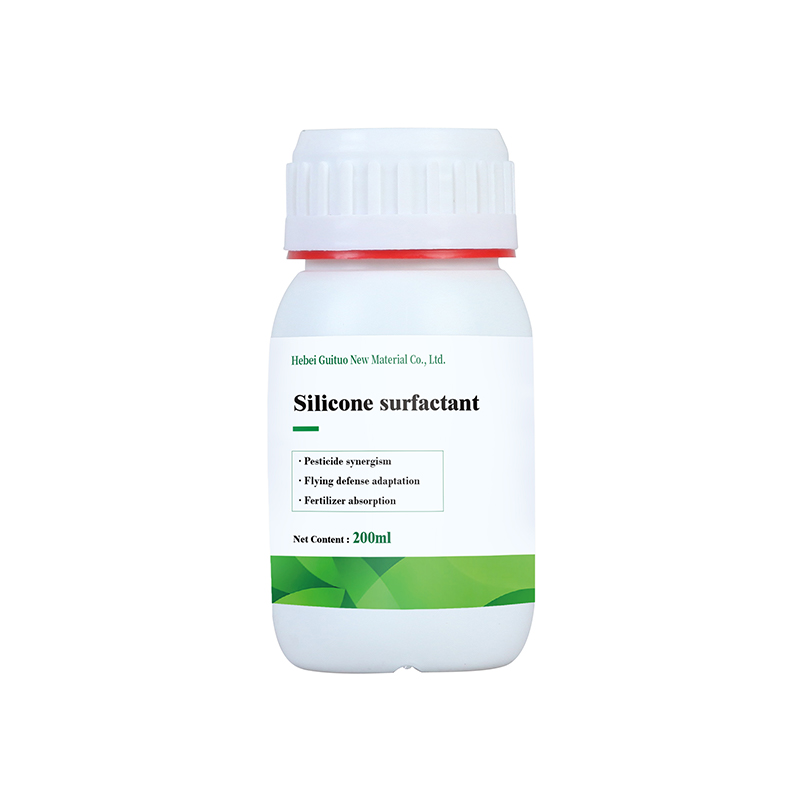
Organosilicone surfactants are high-performance surface-active materials designed to improve the behavior of liquid formulations on solid surfaces and within complex mixtures. By combining the exceptionally low surface tension characteristics of silicone structures with the compatibility and functional flexibility of organic polyether segments, these materials provide a practical solution for agricultural chemicals, coatings, paints, chemical formulations, release systems, and other industrial applications.
GT-7100 organosilicone surfactant is a polyether-modified trisiloxane developed for applications that require rapid wetting, spreading, penetration, dispersion, and formulation stability. With a surface tension below 20.5 mN/m at a 0.1% weight concentration, the product can help liquid droplets spread across difficult surfaces more efficiently than many conventional organic surfactants. Its balanced viscosity, near-neutral aqueous pH, high purity, and broad functional profile make it suitable for use as an agricultural silicone synergist and as a performance additive in different chemical systems.
The performance of a surfactant is determined not only by its ability to lower surface tension, but also by its compatibility with active ingredients, solvents, water, oils, polymers, pigments, fillers, and processing conditions. A well-designed organosilicone surfactant must therefore deliver more than rapid spreading. It should support uniform coverage, improve dispersion, reduce separation, promote penetration where appropriate, and maintain reliable performance throughout storage and use. GT-7100 is designed around these combined requirements.
Organosilicone Surfactant
What Is an Organosilicone Surfactant?
An organosilicone surfactant is a surface-active compound containing both silicone-based and organic structural components. Silicone segments provide low surface tension, high spreading ability, and distinctive interfacial behavior. Organic segments, often based on polyether chemistry, contribute compatibility with water, solvents, active substances, and other formulation ingredients.
This combination allows organosilicone surfactants to function at interfaces between liquids and solids, liquids and gases, or immiscible liquids such as oil and water. At the interface, the molecules orient themselves in a way that reduces interfacial energy. As a result, a liquid can spread more easily, particles can remain more evenly distributed, and incompatible phases may be stabilized or separated depending on the formulation objective.
Traditional organic surfactants can provide effective emulsification and wetting, but they may require relatively high concentrations to achieve the desired effect. Some may also produce excessive foam, show limited compatibility with certain active ingredients, or provide inadequate spreading on waxy, hydrophobic, or uneven surfaces. Organosilicone surfactants address many of these limitations by offering extremely efficient surface tension reduction at low use levels.
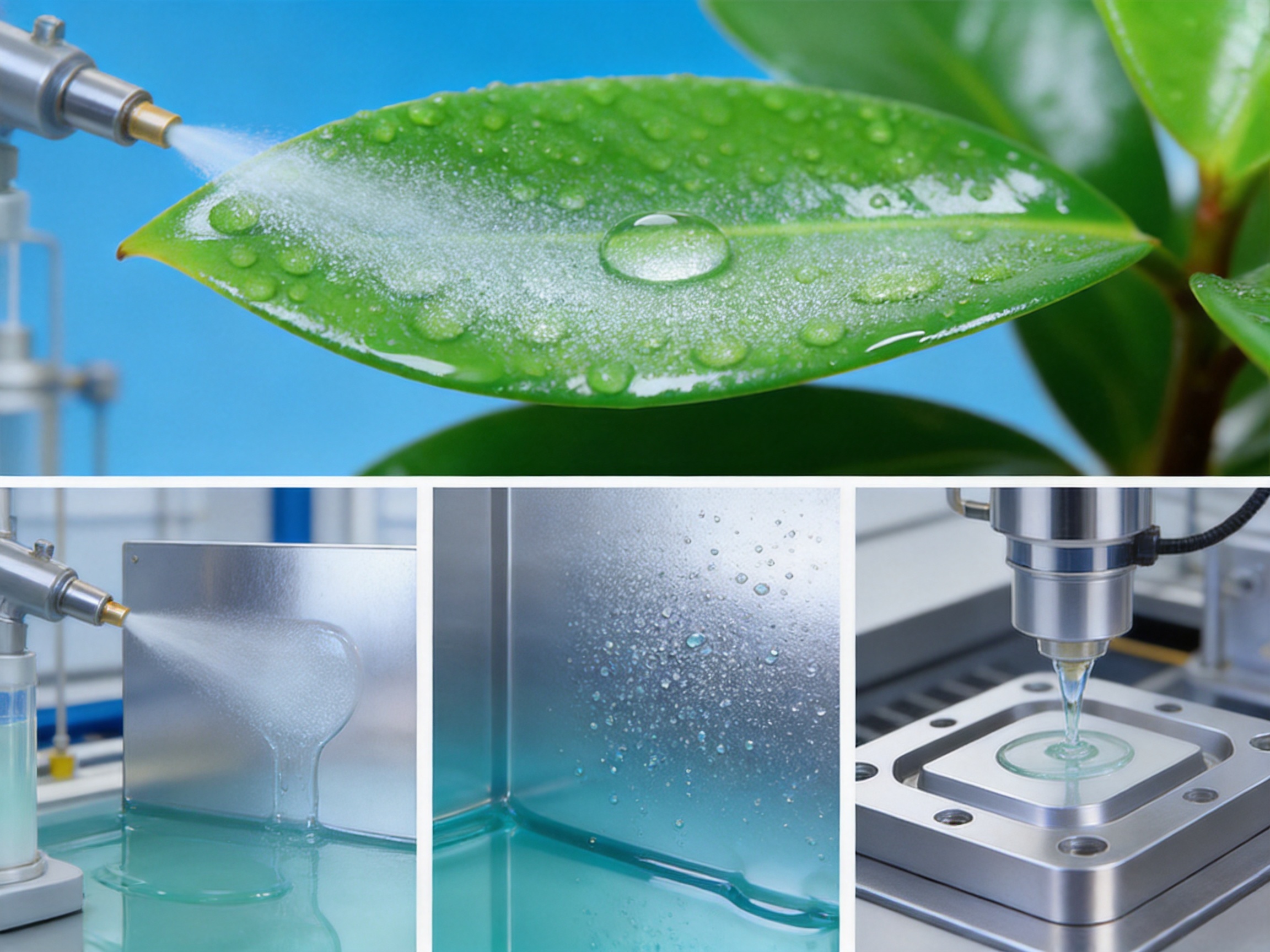
In agricultural formulations, this behavior is particularly valuable. Crop leaves often have waxy, water-repellent surfaces. A conventional water-based spray may form rounded droplets, bounce from the leaf, or remain concentrated in small areas. A properly selected organosilicone surfactant helps the spray spread into a more uniform film, improving contact between the formulation and the target surface.
In coatings and paints, the same interfacial activity can assist substrate wetting, pigment distribution, leveling, and surface uniformity. In release-agent systems, silicone-based surface activity can help create a more continuous and effective separation layer. In chemical processing, it can support emulsification, demulsification, solubilization, and defoaming functions.
Product Profile of GT-7100
GT-7100 is identified as an organosilicon surfactant and polyether-modified trisiloxane. It is designed for applications that require strong wetting and spreading performance together with practical formulation compatibility.
| Parameter | Specification | Application Significance |
|---|---|---|
| Product model | GT-7100 | Commercial grade for organosilicone additive applications |
| Product name | Organosilicon surfactants | Surface-active silicone material for formulation improvement |
| CAS Number | 27306-78-1 | Chemical identification for technical and regulatory documentation |
| Purity | 99.8% | Supports consistent formulation behavior and reduced impurity-related variation |
| EINECS Number | 608-078-3 | Reference for European chemical inventory identification |
| Synonyms | Silicone surfactant; polyether-modified trisiloxane | Describes the material’s chemical family and functional structure |
| Viscosity at 25°C | 30–50 mm²/s | Supports handling, blending, and controlled dosing |
| Surface tension at 0.1% by weight | Below 20.5 mN/m | Promotes rapid spreading and low-energy wetting |
| Cloud point at 1.0% by weight | Not higher than 35°C | Important for temperature-dependent aqueous compatibility |
| pH of 1% aqueous solution at 25°C | 6.5–7.5 | Near-neutral profile for use in many formulation systems |
The combination of low surface tension and controlled viscosity is an important advantage. A surfactant that lowers surface tension effectively but is difficult to pump, mix, or dose may create manufacturing problems. GT-7100 is formulated to provide a practical balance between high interfacial activity and convenient processing.
How the Product Improves Wetting
Wetting describes the ability of a liquid to make contact with and spread across a solid surface. It depends on surface tension, interfacial tension, the surface energy of the solid, droplet size, temperature, viscosity, and the presence of surface contaminants or protective waxes.
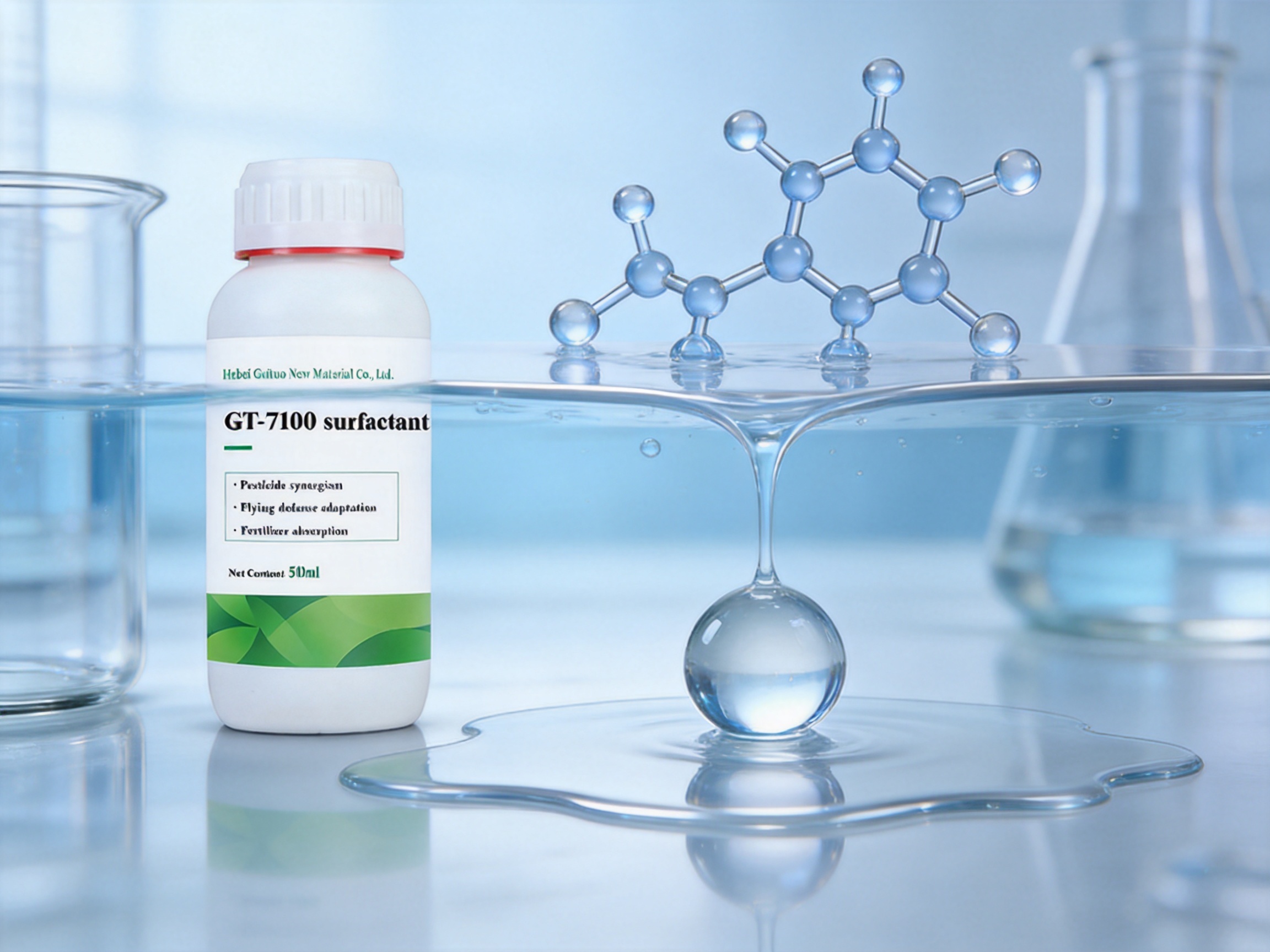
When a water-based formulation is sprayed onto a hydrophobic plant leaf, the droplet may remain rounded because the liquid has insufficient affinity for the surface. The actual contact area is small, and the active ingredient may not be distributed uniformly. GT-7100 reduces the surface tension of the spray mixture, allowing the droplet to flatten and spread across a greater area.
Improved wetting can produce several practical benefits. It may reduce the formation of isolated droplets, decrease puddling in some applications, improve contact with uneven surfaces, and support more consistent distribution of active ingredients. In agricultural use, this may help increase the efficiency of foliar sprays, herbicides, fungicides, insecticides, and plant nutrition products.
Wetting is also important in industrial coatings. If a coating does not wet the substrate properly, it may show craters, pinholes, uneven gloss, poor adhesion, or visible surface defects. A compatible organosilicone surfactant can help the coating form a more uniform layer by improving the contact between the liquid coating and the substrate.
The effectiveness of wetting depends on the complete formulation. The same surfactant may behave differently in a dilute aqueous solution, a concentrated suspension, an oil-in-water emulsion, or a solvent-rich coating. For this reason, laboratory evaluation should consider the actual formulation, application concentration, temperature, substrate, and drying conditions.
Spreading and Plant Surface Coverage
Spreading is closely related to wetting but emphasizes the movement of a liquid across a surface after contact has been established. An organosilicone surfactant can enable a spray droplet to spread outward, producing a thin and relatively continuous film.
For agricultural products, improved spreading can help increase the area covered by a given spray volume. This is especially useful when the target is a leaf surface, stem, fruit, or other plant structure with a waxy cuticle. More uniform coverage may reduce untreated gaps and can support more consistent contact between the active ingredient and the target organism or plant tissue.
However, greater spreading does not automatically mean that a formulation should be used at a higher concentration. Excessive surfactant levels may increase runoff, cause undesirable leaf wetness, or produce plant stress on sensitive crops. The correct dosage must be established through compatibility testing, crop-safety testing, and field evaluation.
GT-7100 is intended to act as a highly efficient synergist. Its low surface tension performance means that relatively small quantities may produce a noticeable change in droplet behavior. This efficiency can help formulators balance performance, cost, spray volume, and the requirements of the active ingredient.
Penetration and Absorption Support
Some agricultural formulations require more than surface coverage. They may need to move through a waxy plant cuticle or reach protected areas on the plant. Organosilicone surfactants can assist this process by improving wetting and contact, helping the liquid remain in closer contact with the surface, and modifying the interfacial behavior of the formulation.
The degree of penetration depends on the active ingredient, plant species, cuticle structure, environmental conditions, drying rate, and spray concentration. A surfactant should not be regarded as a universal penetration enhancer for every formulation. Instead, it should be evaluated as one component of a system that may improve the delivery of suitable active substances.
For herbicides, improved surface contact may contribute to more efficient interaction with the plant. For foliar fertilizers, better wetting can support more uniform nutrient distribution. For fungicides and insecticides, enhanced coverage may help the formulation reach target areas that would otherwise receive insufficient deposits.
Because organosilicone surfactants can substantially alter droplet behavior, formulators should carefully evaluate spray drift, runoff, evaporation, and rainfastness. Performance should be measured under realistic application conditions rather than inferred only from surface tension results.
Dispersion and Suspension Stability
Dispersion refers to the distribution of solid particles or liquid droplets throughout a continuous phase. Many agricultural, paint, and chemical formulations contain ingredients that are insoluble or only partially soluble in water. Without adequate stabilization, these ingredients may settle, agglomerate, float, or separate during storage and application.
Organosilicone surfactants can support dispersion by reducing interfacial tension between particles and the surrounding liquid. They can also improve particle wetting, reduce the tendency of dry powders to form floating lumps, and assist the incorporation of hydrophobic ingredients into aqueous systems.
In pesticide suspension concentrates, for example, the active ingredient must remain distributed throughout the formulation so that each dose contains a consistent amount of material. In paint systems, pigments and fillers must be wetted and dispersed to achieve stable color, opacity, viscosity, and surface appearance. In specialty chemical systems, dispersion quality can affect reaction efficiency, filtration, sedimentation, and final product uniformity.
GT-7100 can be considered as part of a broader stabilization package. Depending on the system, additional dispersants, rheology modifiers, preservatives, defoamers, or emulsifiers may also be needed. The product’s role is to improve interfacial compatibility and support more uniform distribution, not to replace every other formulation aid.
Dispersion testing should include initial mixing behavior, storage stability, freeze-thaw cycles where relevant, dilution stability, sedimentation, redispersibility, and performance after transport. A formulation that appears stable immediately after production may still develop separation after prolonged storage or exposure to temperature fluctuations.
Emulsification, Demulsification, and Solubilization
Emulsification involves the formation and stabilization of droplets from two normally immiscible liquids, such as oil and water. A surfactant can position itself at the oil-water interface and reduce the energy required to create small droplets. This may assist the preparation of emulsions, microemulsions, or other mixed-phase systems.
Organosilicone surfactants can be selected for systems in which rapid emulsification, fine droplet formation, or improved distribution of oil-soluble ingredients is required. Their performance depends on the hydrophilic-lipophilic balance of the complete molecule, the oil phase, the water phase, the mixing energy, and the concentration.
In other processes, the objective is demulsification rather than stabilization. A suitable silicone-based additive may help disrupt an unwanted emulsion and promote phase separation. This can be useful in industrial processing, wastewater treatment, oil handling, and cleaning operations. The same general class of material may therefore serve different functions depending on its chemistry and dosage.
Solubilization is another possible function. Poorly water-soluble substances may be incorporated into a liquid system with the help of suitable surfactant structures. This may improve clarity, distribution, or handling. Compatibility must be checked carefully because solubilization is highly dependent on concentration, temperature, solvent composition, and the chemical nature of the substance being incorporated.
Foaming and Defoaming Behavior
Foam can be beneficial or undesirable. In cleaning products and some processing systems, foam may be part of the intended product experience. In pesticide manufacturing, coatings, circulation systems, and filling operations, excessive foam can interfere with mixing, measurement, pumping, packaging, and application.
Silicone-based materials are widely recognized for their ability to influence foam behavior. Depending on the specific molecular design and formulation, an organosilicone additive may help suppress foam, break existing foam, or support controlled interfacial behavior. GT-7100 can be evaluated for foam-related performance when used in a compatible system.
Foam control is not determined by surfactant identity alone. Agitation speed, tank geometry, water hardness, dissolved air, temperature, viscosity, and the presence of other surfactants can significantly change the result. A product that reduces foam in one formulation may not provide the same effect in another.
For industrial users, practical foam testing should simulate actual production conditions. Evaluation may include shake tests, recirculation tests, high-speed mixing, filling-line testing, and observation of foam collapse time. This approach helps identify the correct addition point and dosage.
Advantages Compared with Conventional Surfactants
Organosilicone surfactants compete with a wide range of conventional nonionic, anionic, cationic, amphoteric, and polymeric surfactants. Each class has useful properties, but organosilicone chemistry offers several distinctive advantages when the application requires very low surface tension and rapid spreading.
Very Low Surface Tension
GT-7100 provides a surface tension below 20.5 mN/m at 0.1% by weight under the stated test conditions. This low value indicates strong interfacial activity and supports rapid wetting of many difficult surfaces. Conventional organic surfactants may require higher concentrations to produce comparable spreading behavior, although the actual comparison must always be made under equivalent test conditions.
High Efficiency at Low Use Levels
Because the silicone structure is highly active at interfaces, organosilicone surfactants may deliver significant wetting performance at relatively low addition rates. This can help reduce the total additive load and preserve the properties of the base formulation. Lower use levels may also simplify dosing and reduce the risk of changing viscosity, color, odor, or other characteristics.
Rapid Droplet Spreading
Rapid spreading is valuable in agricultural spraying, coating application, substrate treatment, and industrial surface processing. It can help a liquid move over a surface before significant evaporation occurs. This is especially important when the application window is short or the substrate is difficult to wet.
Broad Functional Potential
A single organosilicone surfactant may contribute to wetting, spreading, dispersion, emulsification, solubilization, penetration support, and foam management. The degree of each function depends on the formulation, but this multifunctionality can reduce the need to use several separate additives.
Near-Neutral Aqueous pH
GT-7100 has a stated pH range of 6.5 to 7.5 in a 1% aqueous solution at 25°C. This near-neutral profile can be beneficial in formulations where strong acidity or alkalinity might affect active ingredients, packaging materials, pigments, polymers, or plant safety. It does not eliminate the need for compatibility testing, but it provides a useful starting point for many aqueous systems.
Controlled Viscosity
A viscosity of 30–50 mm²/s at 25°C supports practical transfer, blending, and metering. Controlled viscosity can be particularly important for automated production lines and for customers who purchase bulk material for repeated formulation use.
High Purity
The stated purity of 99.8% supports reliable batch-to-batch performance. High purity can reduce the possibility that unknown impurities will affect odor, color, storage stability, pH, active ingredient compatibility, or final product performance.
Applications in Agricultural Formulations
Agriculture is one of the most important application areas for organosilicone surfactants. Modern crop protection products must often deliver active ingredients to surfaces that resist water. Efficient wetting and coverage can improve the practical performance of spray applications while supporting more precise use of formulation components.
Herbicides
Herbicide sprays benefit from uniform coverage and reliable contact with weed foliage. GT-7100 can help reduce droplet beading and improve the distribution of the spray across leaf surfaces. Better coverage may support more consistent contact with the target plant, particularly when the active ingredient performs primarily through foliar action.
Different weed species have different leaf structures and wax levels. Therefore, the surfactant dosage should be optimized for the herbicide, crop, weed, water quality, temperature, humidity, and application equipment. Crop-safety evaluations are essential before commercial use.
Fungicides
Fungicide formulations often require coverage of upper and lower leaf surfaces, stems, fruit, or other plant structures. Improved wetting can help distribute the spray more evenly and reduce untreated areas. In protective fungicide systems, uniform deposition may be especially important because the product must form a consistent layer on the plant surface.
Insecticides
Insecticide performance may depend on reaching insects, eggs, larvae, or protected plant areas. An organosilicone surfactant can improve spray spreading and contact, although the actual benefit depends on the active ingredient and mode of action. It may also help distribute an oil-based or poorly water-soluble component in a water-based spray system.
Foliar Fertilizers
Foliar nutrient products require even distribution across leaves to reduce concentration differences and support efficient nutrient contact. GT-7100 can improve the wetting of leaf surfaces and help maintain a more uniform spray film. In concentrated fertilizer systems, compatibility with salts and other additives must be evaluated carefully.
Adjuvant Formulations
GT-7100 may be used as a primary or secondary component in agricultural adjuvants. It can be combined with other wetting agents, oils, buffers, stickers, drift-control polymers, or deposition modifiers. The objective is to create a formulation that balances spreading, retention, penetration, foam control, and environmental behavior.
| Agricultural Application | Primary Function | Potential Benefit |
|---|---|---|
| Herbicide sprays | Wetting and spreading | More uniform contact with weed foliage |
| Fungicide formulations | Coverage and dispersion | More consistent distribution on plant surfaces |
| Insecticide products | Wetting and penetration support | Improved contact with target areas |
| Foliar fertilizers | Surface wetting and nutrient dispersion | More uniform nutrient delivery |
| Tank-mix adjuvants | Interfacial modification | Improved application behavior and compatibility |
| Emulsifiable agricultural products | Emulsification and phase control | More stable and consistent mixtures |
Use in Paints and Coatings
Paints and coatings must wet substrates, disperse pigments, release air, and form a uniform film. Surface defects often originate from poor compatibility between the liquid formulation and the substrate. Organosilicone surfactants can help reduce these problems when selected and dosed correctly.
In waterborne coatings, GT-7100 may assist the wetting of metal, plastic, glass, wood, or previously coated surfaces. It may also improve leveling and reduce the appearance of craters or surface irregularities. In pigment-containing systems, it can support the wetting and distribution of hydrophobic particles.
In solvent-borne coatings, compatibility with the resin and solvent package is critical. Excessive silicone additive can cause intercoat adhesion problems, surface defects, or recoat difficulties. For this reason, testing should include gloss, leveling, adhesion, recoating, blocking, surface tension, and long-term storage behavior.
Organosilicone surfactants may also support anti-cratering performance by helping the coating accommodate small differences in surface energy. Their effect is formulation-specific and should be assessed under practical application conditions such as spraying, brushing, rolling, and dipping.
Use as a Release Agent and Processing Aid
Release agents are used to reduce adhesion between a product and a mold, tool, conveyor, or processing surface. Silicone-based chemistry is widely used in release applications because it can create a low-energy interface and reduce sticking.
GT-7100 may be considered for release-agent systems where spreading and surface coverage are important. A thin, uniform layer can help improve release consistency and reduce the risk of localized buildup. The correct product selection depends on the mold material, processed polymer, temperature, pressure, cycle time, and required surface finish.
Release formulations should be tested for transfer, residue, paintability, printability, and compatibility with downstream processes. Some applications require a permanent release effect, while others need a clean and transferable film. The additive level and carrier system should be adjusted accordingly.
Manufacturing Technology and Quality Strengths
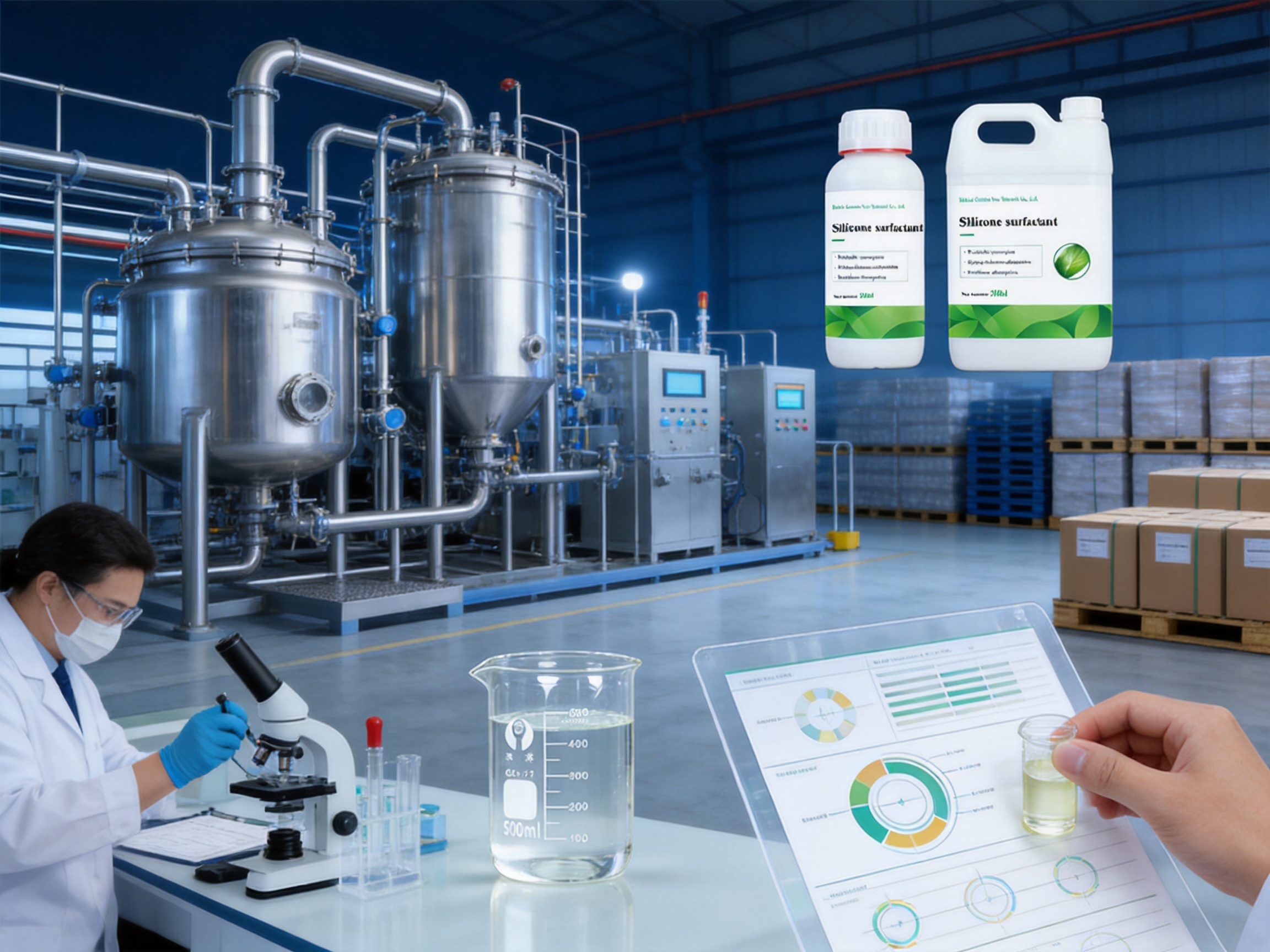
Product performance begins with molecular design but depends equally on manufacturing control. Hebei Guituo New Material Co., Ltd. integrates research and development, production, sales, technical support, and quality management. The company focuses on high-end silicone materials for industrial and agricultural applications and maintains a product portfolio that includes silicone additives, wetting agents, modified silicone oils, dimethyl silicone oils, surfactants, and defoamers.
The company reports the use of advanced production equipment and precise testing facilities. These resources support controlled synthesis, blending, purification, filtration, packaging, and inspection. For a high-efficiency surfactant, small changes in molecular composition or residual impurities can affect surface tension, cloud point, viscosity, foam behavior, and compatibility. A controlled manufacturing system is therefore essential.
Research and Development
Organosilicone surfactant development requires an understanding of silicone chemistry, polyether modification, interfacial science, formulation technology, and end-use performance. The company’s technical approach is based on developing silicone materials for practical industrial and agricultural requirements rather than treating the surfactant as an isolated raw material.
Research may involve optimizing molecular structure, hydrophilic-lipophilic balance, viscosity, cloud point, water compatibility, spreading behavior, and interaction with active ingredients. Application-oriented development allows the product to be evaluated in real formulation environments, including pesticide concentrates, diluted spray solutions, coatings, and other chemical systems.
Process Control
A full-process quality monitoring mechanism is used to control product quality from the production source through finished-product delivery. Key control points may include raw material verification, reaction conditions, feed ratios, temperature management, mixing uniformity, filtration, filling, labeling, and final inspection.
Such process control is important because organosilicone products are sensitive to composition and processing history. Accurate metering and stable reaction conditions help maintain consistent active content and functional properties. Controlled filtration and clean handling can also reduce the risk of foreign particles or contamination.
Testing and Inspection
Testing facilities support the evaluation of critical parameters such as purity, viscosity, pH, surface tension, cloud point, appearance, and storage stability. These tests provide customers with a technical basis for receiving inspection and formulation development.
For application-specific projects, additional testing may include spreading diameter, contact angle, dynamic wetting, foam behavior, emulsion stability, sedimentation, dilution stability, compatibility with active ingredients, and plant-safety screening. The appropriate test program depends on the customer’s product and intended use.
Experienced Technical and Production Teams
Experienced technical and production personnel play an important role in translating laboratory performance into stable commercial manufacturing. Technical teams can assist with product selection, dosage recommendations, formulation troubleshooting, sample evaluation, and customization. Production teams help ensure that agreed specifications are maintained at commercial scale.
Stable Supply and Custom Service
Customers in agricultural and industrial markets often require reliable delivery, consistent documentation, and repeatable quality. The company’s manufacturing and supply system is designed to support stable availability. In addition to standard products, the company accepts OEM and ODM orders, allowing customers to request customized specifications, packaging, labeling, or product combinations where appropriate.
Custom development should begin with a clear technical brief. Important information includes the intended application, formulation type, active ingredients, solvent or water phase, target surface, processing temperature, required storage period, desired foam profile, dosage range, packaging format, and regulatory market. This information enables a more efficient product evaluation and reduces unnecessary trial and error.
Recommended Formulation and Handling Approach
GT-7100 should be evaluated in the customer’s actual formulation rather than judged solely by general chemical classification. A practical development program normally begins with a small laboratory screening.
Step One: Confirm the Formulation Objective
Determine whether the primary objective is wetting, spreading, penetration support, dispersion, emulsification, solubilization, foam control, or a combination of functions. The best dosage and addition point may differ for each objective.
Step Two: Conduct Compatibility Screening
Mix the surfactant with the relevant water phase, solvent phase, active ingredient, polymer, pigment, salt, oil, or resin. Observe clarity, separation, viscosity change, precipitation, color change, odor, and foam. Compatibility should be checked at both the intended use concentration and an elevated screening concentration.
Step Three: Test Surface Performance
Measure contact angle, spreading behavior, surface tension, droplet appearance, and coverage on the actual target substrate. For agricultural products, use representative leaf surfaces or artificial substrates during early screening, followed by crop-specific tests.
Step Four: Evaluate Storage Stability
Test the finished formulation under suitable temperature conditions. Observe phase separation, sedimentation, crystallization, viscosity drift, odor, color, and redispersibility. Where relevant, include freeze-thaw, heat-aging, and accelerated storage studies.
Step Five: Confirm Application Performance
Evaluate spraying, coating, dipping, brushing, or other intended application methods. Record spray pattern, droplet behavior, foaming, runoff, drying, residue, and final performance. For agricultural products, conduct crop-safety and efficacy testing according to applicable technical and regulatory requirements.
Step Six: Establish the Commercial Addition Procedure
Once the dosage range is identified, define the addition point, mixing order, mixing time, temperature, and equipment requirements. Some formulations perform best when the surfactant is pre-diluted, while others require direct addition to a specific phase. A controlled procedure improves batch-to-batch reproducibility.
Environmental and Safety Considerations
Organosilicone surfactants should be handled responsibly and used according to the technical documentation and applicable regulations. Environmental performance depends on the molecular structure, concentration, degradation behavior, formulation, application rate, and receiving environment.
The product should not be over-applied simply because it is effective at low concentration. In agricultural applications, excessive use may increase runoff, alter droplet behavior, or cause stress to sensitive plants. Avoiding unnecessary discharge near drains, ponds, streams, and other water sources is an important part of responsible use.
Users should consult the relevant safety data sheet before handling the material. Appropriate personal protective equipment, ventilation, storage conditions, spill-control procedures, and disposal practices should be established according to the product documentation and local requirements.
Environmental claims should be evaluated in the context of the complete formulation. Even when an additive has a favorable profile, the active ingredients, solvents, oils, preservatives, and other components may determine the overall environmental impact. Proper dilution, accurate application, and prevention of runoff remain essential.
Why Choose a Specialized Silicone Materials Manufacturer?
Purchasing from a specialized silicone materials manufacturer can provide advantages over buying a generic surfactant from a non-specialized distributor. Silicone additives require specific knowledge of molecular design, interfacial behavior, processing, and end-use formulation. A technically focused supplier can provide more than a specification sheet.
Hebei Guituo New Material Co., Ltd. has developed a broad product matrix for industrial and agricultural applications. This portfolio allows customers to compare wetting agents, surfactants, modified silicone oils, defoamers, and other additives within one technical supply system. Such breadth can simplify formulation development when a project requires multiple performance functions.
The company’s reported strengths include advanced production equipment, precise testing facilities, full-process quality monitoring, experienced technical personnel, and stable product supply. Its agricultural silicone products are supplied to agrochemical customers and are exported to overseas markets, including Europe and Southeast Asia.
International customers may also benefit from technical communication, customized packaging, OEM and ODM services, and coordinated export support. A supplier capable of supporting both standard and customized requirements can help reduce development time and improve continuity between laboratory trials and commercial production.
Comparison with Other Additive Options
Conventional nonionic surfactants may provide good emulsification and compatibility with many water-based systems. However, they may not achieve the same degree of surface tension reduction or rapid spreading as a polyether-modified trisiloxane. They can also require higher addition levels, depending on the substrate and formulation.
Silicone oils can provide slip, gloss, release, or antifoam performance, but they are not always optimized for water compatibility or agricultural spray wetting. A modified silicone surfactant such as GT-7100 is designed specifically to combine silicone interfacial activity with organic compatibility.
Polymeric dispersants can provide strong stabilization of pigments or particles, but they may not deliver rapid droplet spreading on hydrophobic surfaces. A formulation may use both a polymeric dispersant and an organosilicone surfactant when it requires stable particle distribution together with high-performance wetting.
Oils and methylated seed-oil adjuvants can improve retention and penetration, but they may influence odor, residue, emulsification, crop safety, and tank-mix behavior. Organosilicone surfactants offer a different performance profile and may be selected when low surface tension and fast spreading are the primary requirements.
The correct choice is not determined by one universal ranking. It depends on the formulation objective, target substrate, use conditions, regulatory requirements, cost structure, and desired balance between wetting, retention, penetration, foam, and environmental behavior.
Quality Documentation and Customer Support
Professional customers generally require consistent technical documentation when introducing a new additive. Typical documents may include a technical data sheet, safety data sheet, certificate of analysis, specification sheet, packaging information, and batch identification. Additional documents may be available depending on the destination market and application.
Customers should confirm the required documentation before placing a commercial order. They should also communicate whether the product will be used in agricultural formulations, paints, coatings, release systems, or other chemical products, because regulatory and labeling requirements may differ between markets.
Technical support is particularly valuable when a customer experiences separation, excessive foam, poor spreading, unstable viscosity, or inadequate crop performance. Troubleshooting should consider the entire formulation and process, including water quality, mixing order, active ingredient concentration, tank-mix sequence, temperature, storage conditions, and application equipment.
Packaging, Storage, and Transportation
Organosilicone surfactants should be stored in sealed original containers in a cool, dry, and well-ventilated area. Direct sunlight, excessive heat, freezing conditions, and contamination should be avoided unless the product documentation specifies otherwise.
Before use, the material should be inspected for changes in appearance, separation, unusual odor, or other signs of deterioration. If the product has been stored for an extended period, a small compatibility and performance check is advisable before large-scale formulation.
Packaging selection should reflect the customer’s consumption rate, filling equipment, transport conditions, and storage duration. Standard industrial packaging may be suitable for regular production, while customized packaging can be considered for private-label, OEM, or specialized distribution programs.
Frequently Asked Questions
What is GT-7100 organosilicone surfactant?
GT-7100 is a polyether-modified trisiloxane organosilicone surfactant. It is designed to reduce surface tension and improve wetting, spreading, dispersion, penetration support, emulsification, and other interfacial properties in agricultural and industrial formulations.
What is the key performance advantage of the product?
Its key performance advantage is strong surface tension reduction. At a 0.1% weight concentration, the stated surface tension is below 20.5 mN/m. This can help liquid droplets spread more efficiently on hydrophobic or difficult-to-wet surfaces.
Can it be used in pesticide formulations?
Yes. The product is intended for evaluation in pesticide, herbicide, fungicide, insecticide, foliar fertilizer, and agricultural adjuvant formulations. It may improve wetting, spreading, coverage, dispersion, and penetration support. The dosage must be optimized for the specific active ingredient, crop, and application method.
Can it be added directly to a spray tank?
It may be used in tank mixes when compatibility has been confirmed. The correct addition sequence depends on the formulation and other tank-mix components. Users should follow technical recommendations and conduct a small jar test before preparing a large volume.
Is the product suitable for paints and coatings?
It can be evaluated for paints and coatings where improved substrate wetting, leveling, pigment wetting, or surface uniformity is required. Compatibility with the resin, solvent, pigment, and other additives should be tested, especially where adhesion and recoating are important.
Can it function as a defoamer?
Organosilicone materials can influence foam behavior, but the result depends on the formulation and dosage. GT-7100 should be tested under actual mixing and processing conditions to determine whether it suppresses, breaks, or modifies foam effectively.
What does the cloud point indicate?
The cloud point indicates the temperature at which a solution containing the surfactant may begin to lose clarity or undergo a change in phase behavior under specified conditions. GT-7100 has a stated cloud point of no higher than 35°C at a 1% concentration. Actual behavior may vary with salts, solvents, active ingredients, and concentration.
Is GT-7100 compatible with all agrochemicals?
No additive should be assumed to be compatible with every agrochemical. Compatibility depends on the active ingredient, formulation type, pH, solvent, salts, polymers, temperature, and concentration. Laboratory screening and field validation are recommended before commercial use.
How should the dosage be determined?
Dosage should be determined through a stepwise formulation study. Begin with a low concentration, compare wetting and spreading against the current additive, and then assess dispersion, stability, foam, crop safety, and application performance. The lowest concentration that achieves the required performance is normally the most practical starting point.
Does improved spreading always improve agricultural efficacy?
Not always. Improved spreading can increase contact area, but efficacy also depends on the active ingredient, target organism, weather, deposition, retention, absorption, and crop tolerance. Excessive spreading may increase runoff or reduce retention. Field testing is necessary to confirm the overall result.
What is the pH of the product?
The pH of a 1% aqueous solution at 25°C is stated as 6.5–7.5, which is a near-neutral range. The pH of the final formulation may differ because of other ingredients and should be measured after all components have been added.
What is the viscosity of GT-7100?
The stated viscosity at 25°C is 30–50 mm²/s. This range supports practical handling, pumping, blending, and dosing in many production environments.
Is customization available?
Yes. Hebei Guituo New Material Co., Ltd. accepts OEM and ODM orders. Customers can discuss customized specifications, packaging, labeling, application requirements, and product development needs with the technical and commercial teams.
What information should be provided when requesting a quotation?
Useful information includes the intended application, estimated annual volume, packaging preference, destination market, required documentation, formulation type, target performance, delivery schedule, and whether OEM or ODM service is required. Providing these details helps the supplier recommend the most suitable product and commercial arrangement.
Conclusion
Organosilicone surfactants provide a powerful way to improve the performance of modern liquid formulations. Their ability to reduce surface tension, promote rapid spreading, enhance wetting, support dispersion, and influence emulsification makes them valuable in agriculture, coatings, paints, release agents, and specialty chemical systems.
GT-7100 offers a combination of high purity, low surface tension, controlled viscosity, near-neutral aqueous pH, and polyether-modified trisiloxane chemistry. These properties make it a strong candidate for formulations that require efficient surface interaction at practical addition levels.
The product’s advantages are supported by the manufacturing strengths of Hebei Guituo New Material Co., Ltd., including research and development capability, advanced production equipment, precise testing facilities, full-process quality control, experienced technical teams, stable supply, and OEM and ODM support. By combining product performance with manufacturing discipline and application assistance, the company can support customers from laboratory screening through commercial production.
As with every specialty additive, successful implementation depends on testing the product in the actual formulation and application environment. When properly selected and used, GT-7100 can help formulators achieve more uniform wetting, better coverage, improved dispersion, more stable products, and more efficient processing.
References
1. Rosen, M. J., and Kunjappu, J. T. Surfactants and Interfacial Phenomena. Wiley technical reference on surface activity, adsorption, wetting, emulsification, and interfacial tension.
2. Myers, D. Surfactant Science and Technology. General reference on surfactant structures, formulation behavior, dispersion, and industrial applications.
3. Tadros, T. F. Emulsion Formation and Stability. Technical reference on emulsification, interfacial films, droplet stability, and formulation design.
4. Technology documentation for GT-7100 organosilicone surfactant, including product specifications for purity, viscosity, surface tension, cloud point, and aqueous pH.
5. Agricultural spray-adjuvant formulation principles covering droplet spreading, crop-surface wetting, deposition, penetration, crop safety, and environmental management.
6. Coatings formulation principles covering substrate wetting, pigment dispersion, leveling, foam control, surface defects, adhesion, and recoating performance.
7. Manufacturer technical information concerning silicone additives, agricultural organosilicon synergists, surfactants, modified silicone oils, defoamers, OEM services, and ODM development.
Product: Organosilicone Surfactant


Contact Information
Tel : +86-400-138-5268
Email : [email protected]
Phone : +86-15128434888 / +86-13511051998
Add : Xinqiao Environmental Protection Industrial Park, Wen'an County, Langfang City, Hebei Province, China
Contact Information
Copyright © Hebei Guituo New Material Co., Ltd. All Rights Reserved.
