

 English
  Français
  Português
 Home / Author / Li Mei, Product Sales Specialist (Agricultural Silicone Products) / High-Performance Organosilicone Defoamer for Reliable Industrial Foam Control
 High-Performance Organosilicone Defoamer for Reliable Industrial Foam Control
2026-06-29
Foam is a common but costly challenge in industrial production. It appears during mixing, pumping, filtration, washing, extraction, fermentation, distillation, evaporation, textile treatment, coating preparation, agrochemical formulation, and many other processes. When foam is uncontrolled, it reduces vessel capacity, slows production, causes overflow, traps air in materials, creates surface defects, and interferes with separation efficiency. A well-designed organosilicone defoamer provides a practical solution by rapidly breaking foam and preventing foam from rebuilding under demanding operating conditions.
Organosilicone defoamer is a silicone-based foam control additive formulated to eliminate or suppress foam generated in production systems. Its main functional foundation is silicone oil, especially polydimethylsiloxane-based material, combined with suitable emulsifiers, dispersing aids, and functional additives. The product discussed here is Organosilicone Defoamer, model LD-610, also described as Organosilicon Defoamer or Polydimethylsiloxane Emulsion. It is supplied as a white viscous emulsion with stable physical properties and a strong defoaming effect.
The value of this product lies not only in its ability to remove visible foam but also in its contribution to process stability. By controlling foam in chemical, paper, coating, food-related processing, textile, pharmaceutical, agricultural, daily chemical, electronics, and industrial production systems, organosilicone defoamer supports smoother operation, better separation, more complete liquid discharge, improved drying efficiency, and reduced risk of product defects. Hebei Guituo New Material Co., Ltd. develops and supplies this type of silicone additive through a product matrix that includes silicone additives, wetting agents, modified silicone oil, dimethyl silicone oil, surfactants, and defoamers.
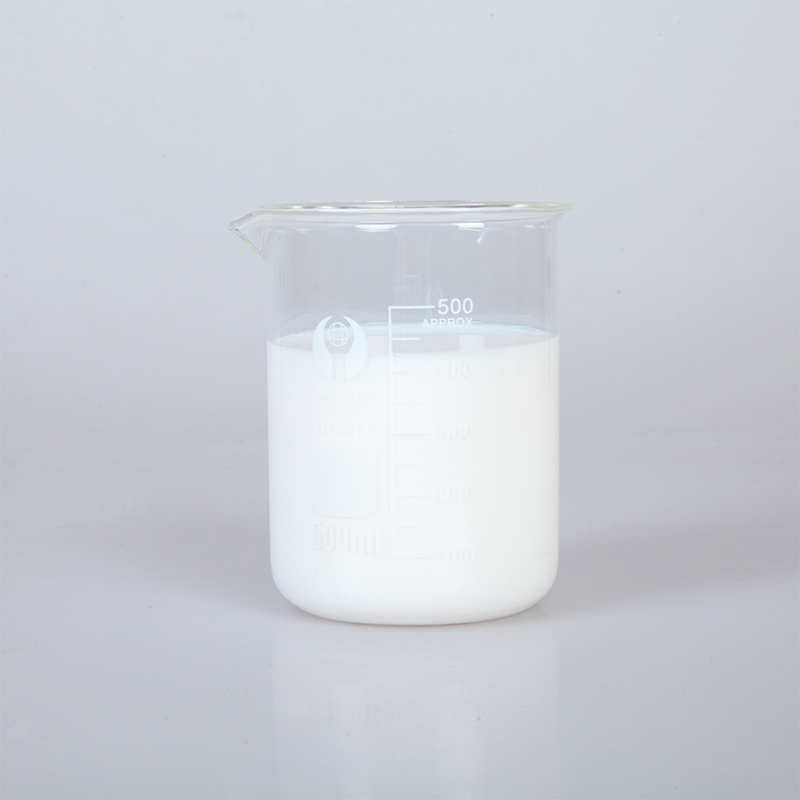
Organosilicone Defoamer
Product Identity and Technical Positioning
Organosilicone Defoamer LD-610 is positioned as a high-efficiency silicone emulsion defoamer for multiple industrial systems. According to the supplied product information, the product model is LD-610, the name is Organosilicon Defoamer, the CAS number is 9016-00-6, the EINECS number is 618-493-1, the synonym is Polydimethylsiloxane Emulsion, and the listed purity is 99.8%. These details indicate a silicone-based material designed for consistent foam control performance.
| Item | Product Information |
|---|---|
| Product Model | LD-610 |
| Product Name | Organosilicone Defoamer |
| Alternative Name | Organosilicon Defoamer |
| CAS No. | 9016-00-6 |
| EINECS No. | 618-493-1 |
| Synonym | Polydimethylsiloxane Emulsion |
| Appearance | White viscous emulsion |
| Main Function | Foam elimination and foam suppression |
Silicone oil is an oily liquid that is generally non-volatile at room temperature and has strong resistance to both high and low temperatures. It is chemically inert, physically stable, and biologically inactive. These properties make it suitable for use in defoaming systems where the additive must function without easily reacting with the host formulation. In practical production, a defoamer should be effective at low dosage, stable during storage, dispersible during use, and compatible with the target system. LD-610 is designed around these expectations.
Compared with many conventional mineral oil, fatty alcohol, or non-silicone defoaming systems, organosilicone defoamers generally offer lower surface tension and stronger spreading ability at the gas-liquid interface. This allows them to enter foam films efficiently, disturb film elasticity, and accelerate bubble collapse. In processes where foam is generated continuously, a silicone-based defoamer can provide rapid knockdown and persistent foam control when properly selected and dosed.
How Organosilicone Defoamer Works
Foam consists of gas bubbles separated by thin liquid films. These films are often stabilized by surfactants, proteins, polymers, fine particles, or other surface-active substances. In many industrial systems, foam becomes persistent because the liquid film around each bubble resists rupture. A defoamer must overcome this film stability. Organosilicone defoamer works by using materials with low surface tension and controlled incompatibility with the foaming liquid. When introduced into a foaming system, the defoamer droplets migrate toward the foam film, spread over the interface, and create local instability. This causes thinning, rupture, and collapse of bubbles.
The most important feature is balance. A defoamer must be sufficiently incompatible to break foam, but sufficiently compatible to disperse without causing defects such as oil spots, sedimentation, haze, or separation. If a defoamer is too compatible, it may lose its foam-breaking ability. If it is too incompatible, it may create surface contamination or instability. A well-formulated organosilicone defoamer achieves a practical middle point: it remains stable in the product during storage and activates effectively when foam appears.
LD-610 is based on this principle. Silicone oil provides the low surface tension needed for foam rupture, while emulsification and formulation technology help distribute the active material in water-based or mixed systems. Functional additives can assist spreading, droplet stability, and persistence. The result is a foam control agent that can be used across a wide range of production environments.
Advantages Over Conventional Foam Control Additives
The first advantage of organosilicone defoamer is fast foam knockdown. In many manufacturing processes, foam must be removed quickly to prevent overflow or interruption. Silicone-based materials can spread rapidly on foam films, making them effective in sudden foaming situations. This is especially useful in mixing tanks, reactors, wash systems, textile treatment baths, coating preparation tanks, and agrochemical dilution systems.
The second advantage is high efficiency at relatively low addition levels. Because silicone oil has very low surface tension, small amounts can often deliver strong defoaming action. This can reduce additive loading, minimize changes to the main formulation, and help maintain the intended properties of the final product. In competitive applications, this efficiency can provide cost value even when the unit price of silicone defoamer is higher than that of some traditional defoamers.
The third advantage is broad temperature adaptability. Silicone oil is known for resistance to both high and low temperatures. Many production systems experience temperature fluctuations, heating steps, cooling stages, or seasonal storage variation. A stable organosilicone defoamer can help maintain foam control performance under these changing conditions.
The fourth advantage is chemical inertness. Silicone oil is generally stable and not easily involved in unwanted reactions under common use conditions. This makes organosilicone defoamer suitable for complex systems that contain salts, surfactants, polymers, active ingredients, pigments, fillers, or solvents. The product must still be tested in each specific formulation, but the silicone foundation gives it a strong starting point for broad compatibility.
The fifth advantage is process improvement beyond simple foam removal. Foam can reduce filtration speed, lower extraction efficiency, interfere with evaporation, increase drying time, and create measurement errors. By controlling foam, LD-610 can support improved separation, gas release, liquid discharge, dehydration, and drying. This means the defoamer contributes to productivity, equipment utilization, and product consistency.
The sixth advantage is compatibility customization. Hebei Guituo New Material Co., Ltd. has a product layout covering silicone additives, wetting agents, modified silicone oil, surfactants, and defoamers. This integrated capability supports adjustment of silicone oil viscosity, emulsifier selection, molecular modification, and dispersion behavior. Compared with suppliers that provide only standard foam control products, a manufacturer with broader silicone and surfactant knowledge can better adapt a defoamer to customer-specific systems.
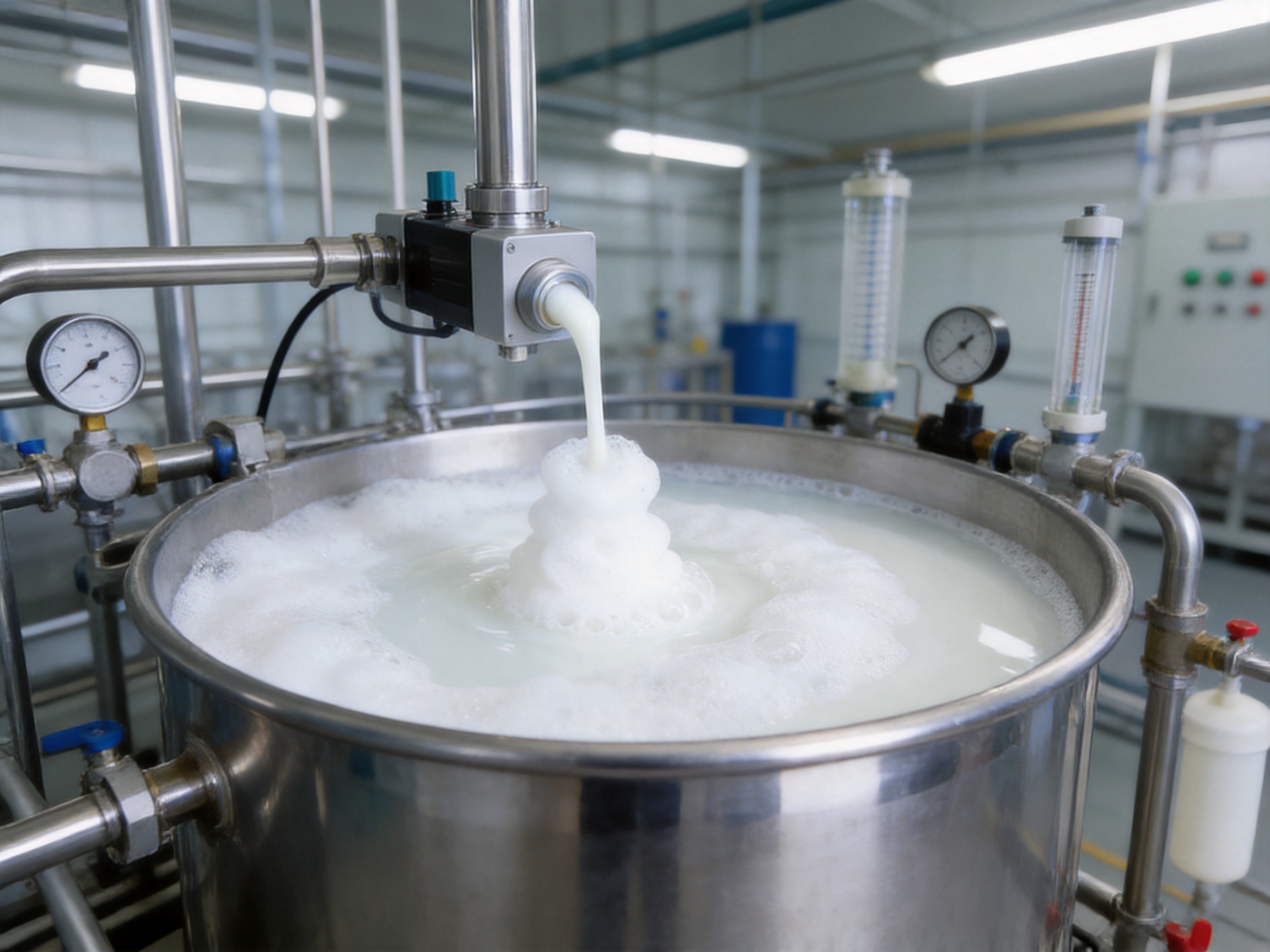
Compatibility in Water-Based Systems
Many modern industrial formulations are water-based because water is economical, easy to handle, and preferred in many environmental and operational contexts. However, water-based systems often contain surfactants, dispersants, wetting agents, thickeners, and other materials that stabilize foam. In these systems, a defoamer must disperse evenly without causing visible defects.
Organosilicone defoamer for aqueous systems is commonly supplied as an emulsion. The emulsion form allows silicone active matter to be distributed through water with the help of selected emulsifiers and stabilizers. The emulsion must remain stable during transportation and storage, but it must also release enough defoaming activity during application. This is a demanding formulation challenge.
LD-610 is described as a white viscous emulsion. The viscous emulsion form supports practical handling and dosing in plant operations. When added correctly, it can be mixed into water-based systems to suppress foam during agitation, pumping, and filling. In agricultural and daily chemical applications, where water is often the main medium, stable dispersion helps maintain formulation uniformity.
In water-based systems, users should consider addition sequence, mixing intensity, dilution water quality, pH, electrolyte content, and surfactant concentration. Excessive shear may over-disperse defoamer droplets and reduce foam-breaking power. Insufficient mixing may produce local concentration differences. Therefore, compatibility evaluation should include both storage observation and dynamic foam testing. A suitable defoamer should show no obvious oil spots, no severe layering, and consistent foam control after repeated agitation.
Performance in High-Surfactant Formulations
High-surfactant formulations are among the most difficult environments for foam control. Detergents, wetting agents, agricultural adjuvants, emulsifiable concentrates, suspension concentrates, and some textile auxiliaries can generate stable foam because surfactants strengthen bubble films. The same surfactants that improve wetting and dispersion may also reduce defoamer effectiveness.
In these systems, organosilicone defoamer must maintain activity without excessive interaction with the surfactant network. Tailored silicone structures and carefully selected emulsifiers can improve this balance. Hebei Guituo New Material Co., Ltd. has experience in both surfactants and defoamers, which supports better matching between foam control additives and surfactant-rich formulas.
Compared with ordinary defoamers, silicone defoamers often perform better in high-surfactant systems because of their strong surface activity difference. They can penetrate foam films that are stabilized by common surfactants. However, the formulation must be designed carefully. If the emulsifier system is unsuitable, the defoamer may become too finely dispersed and lose efficiency. If the active silicone phase is not properly selected, compatibility defects may appear. Advanced formulation knowledge is therefore essential.
Performance in Oil-Based and Solvent Systems
Oil-based and solvent-based systems require a different approach. In these media, compatibility depends on polarity, solvent strength, resin content, and the presence of surface-active additives. A defoamer used in coatings, electronics, textile processing, or industrial oils should not interfere with surface uniformity, gloss, adhesion, or coating appearance.
Modified silicone oils are often used to improve compatibility in nonpolar or semi-polar systems. Modification can adjust solubility, spreading behavior, and interaction with resins or solvents. The goal is to preserve defoaming action while reducing the risk of craters, fisheyes, haze, or phase separation. Because Hebei Guituo New Material Co., Ltd. includes modified silicone oil within its product matrix, it can support compatibility strategies for different oil-based and solvent-based applications.
For users, the best practice is to test the defoamer under actual process conditions. Laboratory foam tests, drawdown tests, storage tests, and application trials can identify whether the defoamer improves production without harming final product appearance. A technically capable supplier can help adjust dosage and product selection according to these results.
Applications in Agricultural Formulations
Agricultural formulations are a major area for silicone additives. They often contain active ingredients, dispersants, wetting agents, emulsifiers, solvents, salts, suspending agents, and other components. During manufacturing, packaging, transportation, dilution, and spraying, foam can appear easily. Excessive foam can reduce filling accuracy, slow production, cause overflow, and affect user experience in the field.
Organosilicone defoamer supports agricultural formulation stability by controlling foam during high-speed mixing and dispersion. It can be used in systems where active ingredients must remain uniformly dispersed and where foam would otherwise trap air or reduce processing efficiency. In addition, agricultural products may be diluted by end users before application, so defoaming performance during dilution and tank mixing can also be important.
Hebei Guituo New Material Co., Ltd. focuses on the development and application of high-end silicone materials in industrial and agricultural fields. Its agricultural silicone products have been adopted by domestic agrochemical enterprises, reflecting recognition of product quality and performance. For an organosilicone defoamer used in agriculture, the key advantage is not only foam reduction but also the ability to coexist with wetting agents and active ingredients without reducing formulation stability.
Applications in Coatings and Paint Additives
Foam is a frequent problem in paints and coatings. It can enter the system during pigment dispersion, grinding, let-down, stirring, pumping, filling, and application. If air bubbles remain in the coating film, they can create pinholes, craters, uneven gloss, poor leveling, and reduced protective performance. A defoamer must remove foam during production and help prevent bubble defects during application.
Organosilicone defoamer can be effective in coating systems because of its strong surface activity. However, coatings are sensitive to surface defects. The defoamer must be selected carefully to balance foam control with appearance. In water-based coatings, emulsion stability and compatibility with thickeners, dispersants, and resins are important. In solvent-based coatings, compatibility with resin and solvent systems is critical.
LD-610 can be considered where a silicone emulsion defoamer is suitable for the coating formulation. Its strong defoaming effect may help improve grinding efficiency, reduce tank foam, and enhance filling stability. For finished coating performance, users should conduct film tests to confirm that no craters, fisheyes, or gloss issues occur at the selected dosage.
Applications in Textile Processing
Textile processing involves scouring, dyeing, washing, finishing, printing, and various chemical treatments. Many of these processes use surfactants and operate under agitation, circulation, or high temperature. Foam can reduce bath efficiency, cause uneven treatment, interfere with pump operation, and create stains or spots on fabric.
Organosilicone defoamer is useful in textile systems because it can suppress foam in processing baths and improve production continuity. High and low temperature stability is valuable because textile operations may involve heated baths or cooling steps. Chemical inertness is also useful because textile formulas can contain dyes, auxiliaries, alkalis, salts, and finishing agents.
A high-quality silicone defoamer should control foam without depositing unwanted residues on fabric. This requires appropriate product selection and dosage. The manufacturer’s ability to adjust silicone oil and emulsifier systems is an advantage for textile customers who need both defoaming efficiency and fabric quality protection.
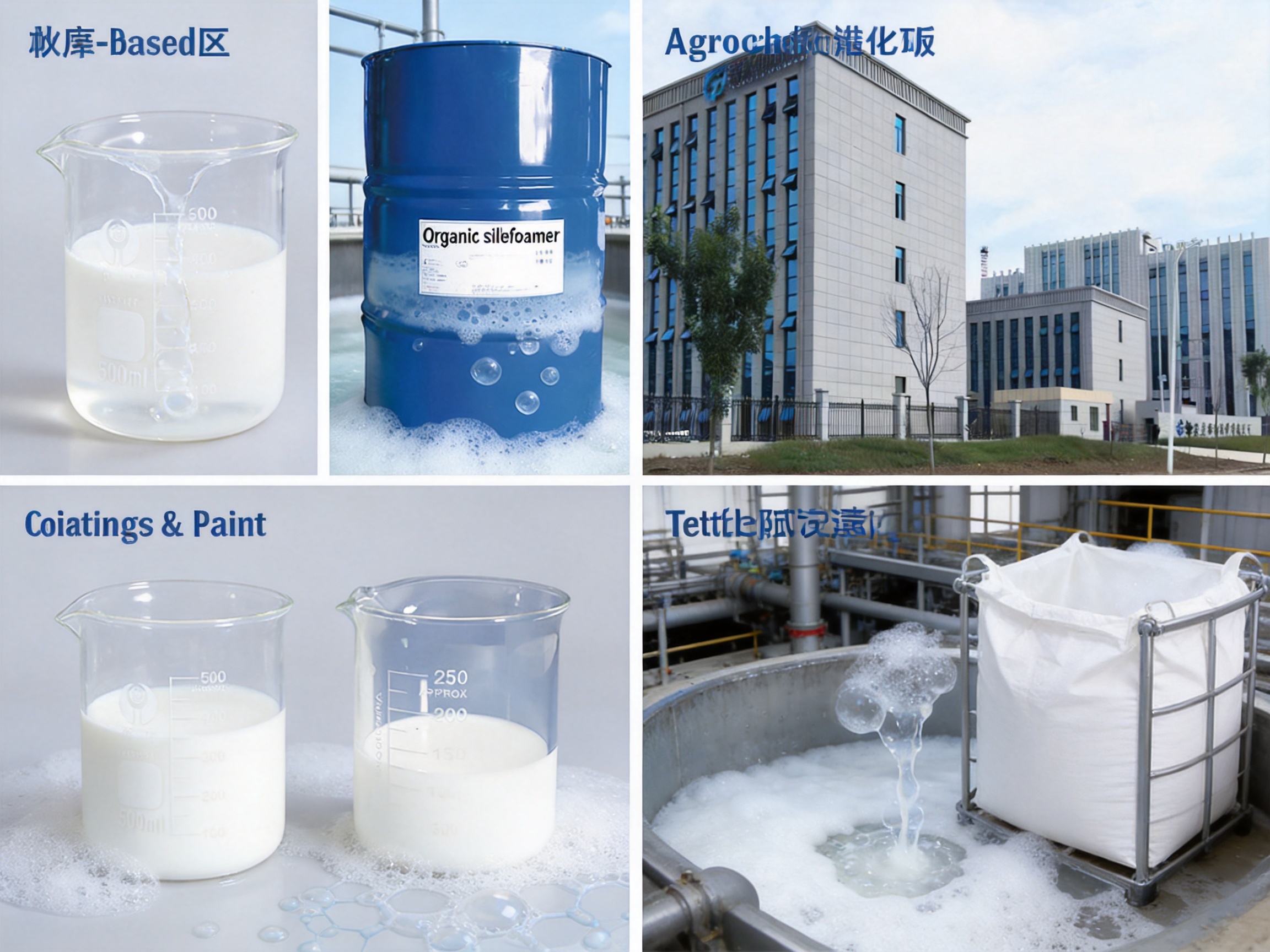
Applications in Chemical, Paper, Food-Related, and Pharmaceutical Processing
In chemical production, foam can affect reaction control, heat transfer, separation, filtration, washing, extraction, distillation, and evaporation. In paper manufacturing, foam can interfere with pulp handling, drainage, coating, and surface quality. In food-related and pharmaceutical processing, foam may reduce vessel capacity and complicate separation or filling operations. Organosilicone defoamer is widely valued because it can improve process efficiency across these diverse environments.
The product’s role in filtration is especially important. Foam can block filter surfaces or reduce liquid flow, while entrained air can disturb separation. By breaking foam and helping gas escape, a defoamer supports smoother filtration and washing. In evaporation and dehydration, foam can reduce effective volume and cause carryover. Foam control improves equipment capacity and process reliability.
For sensitive applications such as food-related or pharmaceutical processing, regulatory suitability, grade selection, and purity requirements must be confirmed according to the specific use and local regulations. The general technical principle remains the same: a suitable silicone defoamer reduces foam without compromising the intended process or final product quality.
Manufacturing Strength and Quality Assurance
The performance of an organosilicone defoamer depends strongly on manufacturing quality. Even when two products use similar raw material categories, differences in silicone oil selection, emulsification method, particle size distribution, additive balance, mixing control, and quality testing can produce significant differences in actual performance. A reliable manufacturer must control the full process from raw material inspection to final product delivery.
Hebei Guituo New Material Co., Ltd. is described as a high-tech enterprise integrating research and development, production, and sales. It focuses on the development and innovative application of high-end silicone materials in industrial and agricultural fields. The company has established a comprehensive guarantee system for product quality and stable supply, including advanced production equipment, precise testing facilities, and full-process quality monitoring from production source to finished product delivery.
This manufacturing foundation matters for customers because defoamer performance must be consistent from batch to batch. In industrial production, a sudden change in defoamer activity can cause foam overflow, surface defects, or formulation instability. Full-process monitoring reduces these risks. Precise testing facilities allow key parameters to be checked before shipment. Experienced technical and production teams help maintain stable product standards.
Advanced manufacturing also supports customization. OEM and ODM orders are accepted, which means customers can request products adapted to specific process conditions or formulation requirements. Customization may involve changing active content, adjusting viscosity, improving dilution stability, selecting different emulsifier systems, modifying silicone oil type, or designing defoamers for particular pH, temperature, or surfactant environments.
Process Design Behind a Stable Silicone Emulsion Defoamer
A silicone emulsion defoamer may appear simple, but its production requires careful control. Silicone oil and functional additives must be blended uniformly. Emulsifiers must be selected to create droplets with appropriate stability and defoaming activity. The emulsification process must manage shear, temperature, addition sequence, and residence time. If the droplets are too large, storage stability may be poor. If the droplets are too small or too stable, defoaming performance may weaken. The ideal droplet structure depends on the target application.
Production consistency is therefore essential. Advanced equipment helps maintain controlled dispersion and reproducible emulsion quality. Testing facilities can evaluate appearance, viscosity, pH where applicable, storage stability, dilution behavior, foam knockdown speed, foam suppression persistence, and compatibility with representative systems. These tests help ensure that each batch meets practical performance requirements.
In addition, a company with experience in wetting agents and surfactants can design emulsifier packages more effectively. This is important because surfactants are both helpful and challenging in defoamer formulation. They stabilize the emulsion but may also affect foam control. A balanced surfactant system allows the product to remain stable before use and become active under foaming conditions.
Quality Indicators for Selecting an Organosilicone Defoamer
When selecting an organosilicone defoamer, customers should evaluate several practical indicators. The first is foam knockdown speed, which measures how quickly existing foam collapses after addition. The second is foam suppression persistence, which measures how long the system resists new foam formation during continued agitation. The third is compatibility, including whether the defoamer causes oil spots, haze, separation, sedimentation, craters, fisheyes, or other defects.
The fourth indicator is dilution stability. Many defoamers are diluted before use, especially in water-based processes. A suitable product should disperse uniformly under the recommended dilution method. The fifth indicator is storage stability under expected temperature conditions. The sixth is process tolerance, including resistance to shear, temperature, pH, electrolytes, and surfactants. The seventh is dosage efficiency, which affects operating cost and formulation impact.
| Evaluation Area | Why It Matters | Desired Result |
|---|---|---|
| Foam knockdown | Prevents overflow and production interruption | Rapid collapse of existing foam |
| Foam suppression | Maintains stable processing under agitation | Reduced foam rebuilding |
| Compatibility | Protects final product appearance and stability | No oil spots, layering, or surface defects |
| Dilution behavior | Supports practical plant operation | Uniform dispersion when diluted properly |
| Storage stability | Ensures reliable use after transportation and storage | No severe separation or performance loss |
| Dosage efficiency | Controls cost and limits formulation change | Strong effect at appropriate low dosage |
Recommended Use Considerations
The best dosage of organosilicone defoamer depends on the system composition, foam severity, temperature, mixing conditions, and required compatibility. Users should begin with laboratory trials and then confirm performance in pilot or production conditions. A typical evaluation includes adding the defoamer at different levels, measuring foam height after agitation, observing collapse speed, checking storage stability, and evaluating final product appearance.
For water-based systems, pre-dilution may help distribution, but dilution should follow supplier guidance. The defoamer should be added at a point where it can disperse sufficiently without being destroyed by excessive shear. In coating or surface-sensitive systems, users should test both production foam control and dry film appearance. In agricultural formulations, tests should include original formulation stability, dilution stability, and tank-mix behavior where relevant.
Because organosilicone defoamers are powerful, overuse can sometimes cause compatibility issues. More defoamer does not always mean better performance. Excessive dosage may increase the risk of defects or separation. The goal is to identify the minimum effective dosage that provides stable foam control and maintains product quality.
Why Supplier Capability Matters
Foam control is application-specific. A defoamer that performs well in one formulation may not be ideal in another. Therefore, supplier capability is as important as the product itself. A strong supplier can analyze the customer’s system, recommend product selection, adjust usage method, and provide customized solutions when standard products are not enough.
Hebei Guituo New Material Co., Ltd. offers a broad silicone product matrix, including silicone additives, wetting agents, modified silicone oil, dimethyl silicone oil, surfactants, and defoamers. This range gives the company a technical foundation for understanding interactions among surface-active materials. Its products are used in agriculture, daily chemicals, electronics, textiles, and other fields, and are exported to markets such as Europe and Southeast Asia. Stable performance and reliable quality have helped earn repeat customer recognition.
The company’s manufacturing strengths include advanced production equipment, precise testing facilities, a full-process quality monitoring mechanism, and an experienced technical and production team. These capabilities support consistent product quality and stable supply. For buyers, this means reduced risk, better technical communication, and stronger support for long-term production planning.
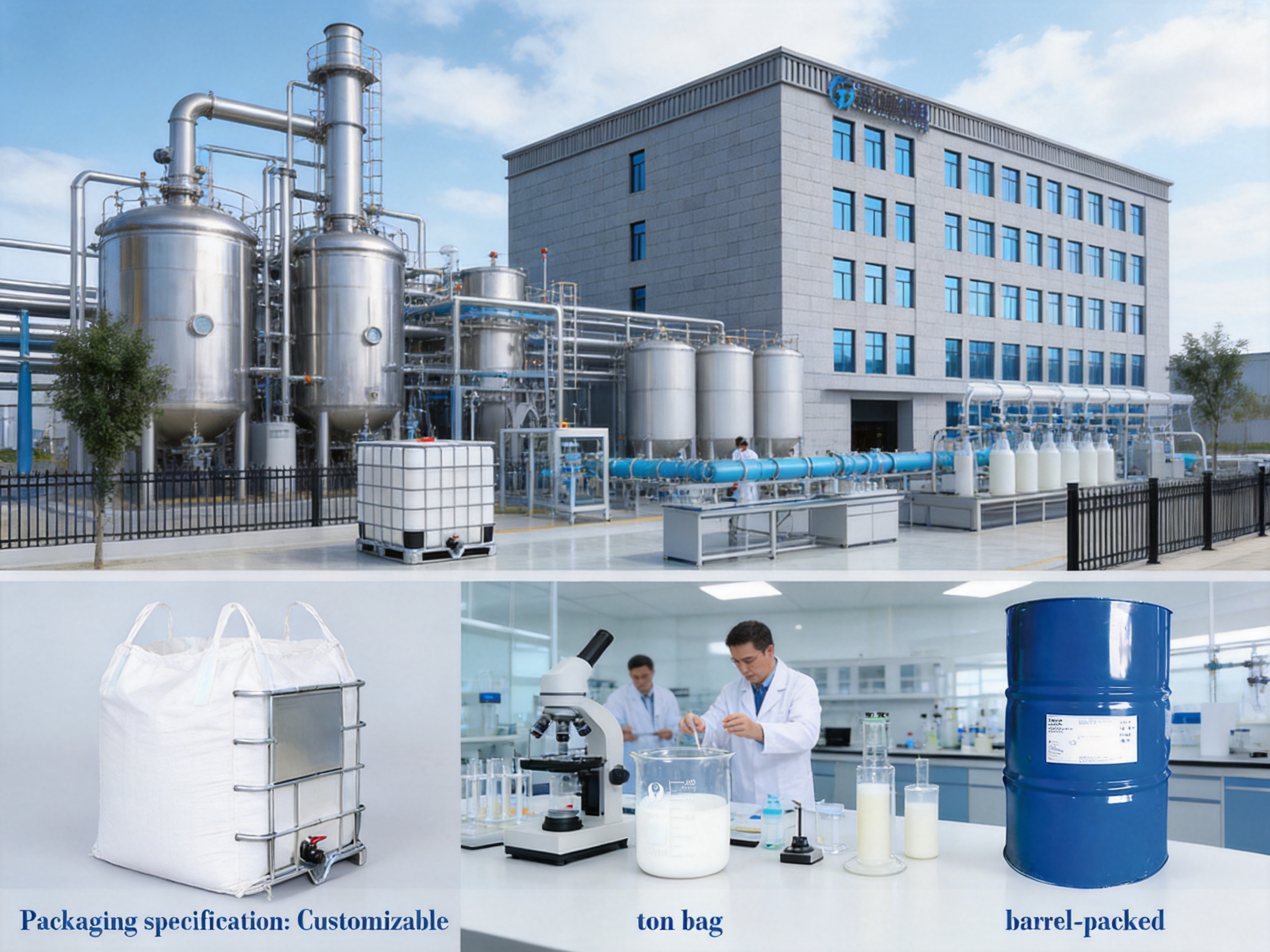
Competitive Value of LD-610
LD-610 offers competitive value through a combination of strong defoaming effect, stable physical properties, broad application potential, and support from a manufacturer focused on silicone material technology. Compared with basic foam control additives, it benefits from the inherent low surface tension and thermal stability of silicone oil. Compared with suppliers that only provide general-purpose products, Hebei Guituo New Material Co., Ltd. can draw on wider experience in silicone additives, surfactants, wetting agents, and modified silicone oils to support compatibility and customization.
The product is especially attractive for manufacturers that need foam control in complex systems. These include agrochemical producers dealing with surfactant-rich formulas, coating manufacturers needing bubble-free surfaces, textile processors working with agitated treatment baths, and chemical plants seeking stable filtration, washing, extraction, or evaporation. In each case, the defoamer contributes to smoother operation and more consistent output.
Its value also extends to production efficiency. Foam can waste time, reduce throughput, and require manual intervention. A reliable defoamer can reduce downtime, prevent overflow, improve filling accuracy, and help operators maintain stable process parameters. These operational benefits often matter as much as the direct chemical cost of the defoamer.
Environmental and Operational Considerations
Modern manufacturers increasingly consider environmental and safety factors when selecting additives. Organosilicone defoamer can support cleaner operations by preventing foam overflow and reducing material loss. Better foam control can also improve equipment efficiency and reduce the need for repeated processing. Because silicone defoamers may be effective at low dosage, they can limit the total amount of additive introduced into the system.
However, responsible use remains important. Users should follow safety data guidance, storage recommendations, and local regulatory requirements. Product suitability for specific regulated applications should be confirmed before use. Proper storage helps maintain emulsion stability, and containers should be sealed when not in use. Operators should avoid contamination and use appropriate protective measures according to workplace procedures.
Q&A Section
Q1: What is an organosilicone defoamer?
An organosilicone defoamer is a silicone-based foam control additive formulated to break existing foam and suppress new foam formation. It commonly uses silicone oil, modified silicone oil, emulsifiers, and functional additives to create a product that can disrupt foam films in liquid systems.
Q2: What is the main function of LD-610?
The main function of LD-610 is to eliminate and control foam generated during production, mixing, filling, filtration, washing, extraction, distillation, evaporation, dehydration, and drying processes. It helps improve production stability and equipment utilization.
Q3: Why are silicone defoamers often more efficient than conventional defoamers?
Silicone defoamers usually have very low surface tension and strong spreading ability. This allows them to enter and destabilize foam films quickly. As a result, they can often provide strong foam knockdown at relatively low dosage compared with many non-silicone alternatives.
Q4: Can LD-610 be used in water-based systems?
Yes. LD-610 is supplied as a white viscous emulsion, making it suitable for consideration in water-based systems. Proper dispersion, addition sequence, and compatibility testing are important to ensure stable performance and avoid defects.
Q5: Is organosilicone defoamer suitable for high-surfactant formulations?
Organosilicone defoamer can be suitable for high-surfactant formulations, including agricultural, detergent, textile, and chemical systems. Because surfactants can stabilize foam, product selection and dosage must be optimized to maintain defoaming activity without harming formulation stability.
Q6: What industries commonly use organosilicone defoamers?
Organosilicone defoamers are widely used in chemical processing, paper production, coatings, textile processing, agricultural formulations, daily chemicals, electronics-related processes, food-related processing, and pharmaceutical production. Application suitability should always be verified according to the specific system.
Q7: What makes compatibility important?
Compatibility determines whether the defoamer can function without causing oil spots, separation, haze, sedimentation, craters, fisheyes, or other defects. A compatible defoamer remains stable in the formulation and activates effectively when foam appears.
Q8: How should users determine the correct dosage?
Users should conduct laboratory testing at several dosage levels, then confirm results in pilot or production trials. The best dosage is usually the minimum amount that provides reliable foam control without affecting product appearance, stability, or performance.
Q9: What manufacturing strengths support stable product quality?
Stable quality is supported by advanced production equipment, precise testing facilities, full-process quality monitoring, experienced production personnel, and technical expertise in silicone materials. These factors help maintain consistent defoamer performance from batch to batch.
Q10: Can the product be customized?
Yes. Hebei Guituo New Material Co., Ltd. accepts OEM and ODM orders. Customization may include adjustments to silicone oil type, viscosity, emulsification system, active content, compatibility profile, and application performance for specific customer systems.
Conclusion
Organosilicone Defoamer LD-610 is a practical and efficient foam control solution for industrial and agricultural applications. Built on silicone oil technology, it offers rapid foam knockdown, strong suppression potential, broad temperature adaptability, chemical stability, and applicability across water-based, high-surfactant, oil-based, and solvent-related systems. Its role extends beyond removing visible foam; it supports filtration, washing, extraction, distillation, evaporation, dehydration, drying, filling, coating quality, textile processing stability, and agrochemical formulation efficiency.
The product’s competitive strength comes from both material performance and manufacturing support. Hebei Guituo New Material Co., Ltd. combines research and development, production, sales, advanced equipment, precise testing, and a broad silicone additive product matrix. This enables stable supply, consistent quality, and customization for customers with complex foam control needs. For manufacturers seeking reliable process improvement, LD-610 represents a strong organosilicone defoamer option with technical depth behind it.
References
1. Garrett, P. R. Defoaming: Theory and Industrial Applications. Marcel Dekker.
2. Schramm, L. L. Emulsions, Foams, and Suspensions: Fundamentals and Applications. Wiley-VCH.
3. Rosen, M. J., and Kunjappu, J. T. Surfactants and Interfacial Phenomena. John Wiley and Sons.
4. Noll, W. Chemistry and Technology of Silicones. Academic Press.
5. Owen, M. J., and Dvornic, P. R. Silicone Surface Science. Springer.
6. Industrial formulation guidance for silicone defoamers, antifoams, surfactants, and emulsion stability testing.
Product: Organosilicone Defoamer


Contact Information
Tel : +86-400-138-5268
Email : [email protected]
Phone : +86-15128434888 / +86-13511051998
Add : Xinqiao Environmental Protection Industrial Park, Wen'an County, Langfang City, Hebei Province, China
Contact Information
Copyright © Hebei Guituo New Material Co., Ltd. All Rights Reserved.
