

 English
  Français
  Português
 Home / Author / Li Mei, Product Sales Specialist (Agricultural Silicone Products) / Advanced Organosilicone Surfactants for High-Performance Agricultural Formulations
 Advanced Organosilicone Surfactants for High-Performance Agricultural Formulations
2026-08-16
Introduction
Modern agricultural formulations must deliver active ingredients efficiently, consistently, and safely under changing field conditions. Whether the formulation is a herbicide, fungicide, insecticide, plant growth regulator, or foliar fertilizer, its performance depends on more than the activity of the primary ingredient. Droplet spreading, leaf coverage, adhesion, penetration, dispersion, storage stability, and compatibility with other formulation components all influence the final result. An effective formulation therefore requires carefully selected additives that can improve application efficiency without creating unnecessary processing or environmental challenges.
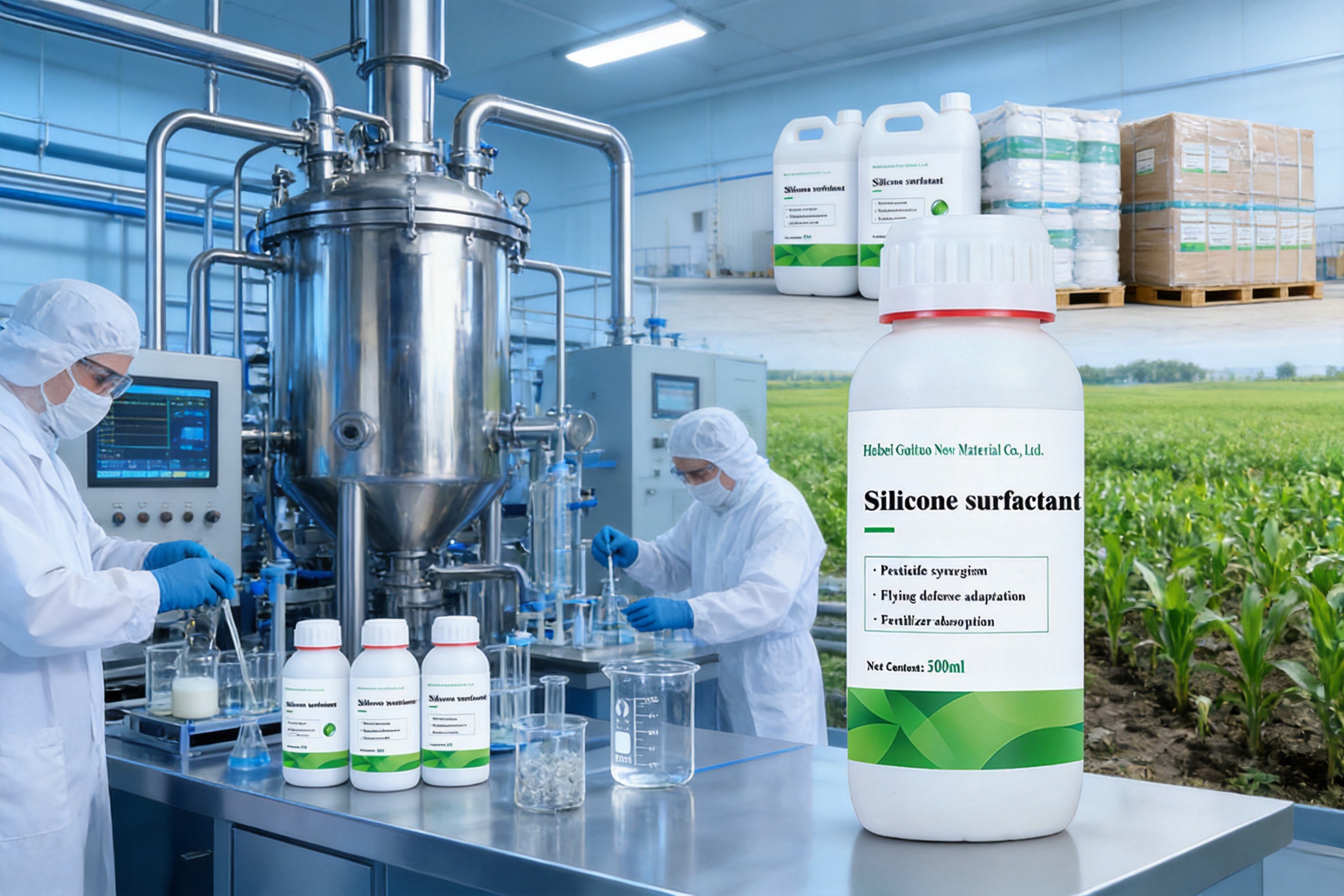
Organosilicone surfactants are among the most effective functional additives for improving these characteristics. By combining the low surface energy of silicone structures with the flexible behavior of organic polyether groups, they can reduce surface tension, improve wetting, promote spreading, support dispersion, and enhance the overall uniformity of agricultural sprays. The product discussed in this article, GT-7100 organosilicone surfactant, is a polyether-modified trisiloxane designed for demanding formulation and application environments.
GT-7100 is supplied with a reported purity of 99.8%, a viscosity of 30–50 mm²/s at 25°C, and a surface tension below 20.5 mN/m in a 0.1% by weight solution. Its relatively neutral pH range, controlled cloud point, and low use viscosity support practical handling in a variety of water-based and mixed agricultural systems. These properties make it suitable for formulators seeking a high-efficiency agricultural silicone wetting synergist with multiple functional benefits.
The value of an organosilicone surfactant is not limited to a single performance characteristic. A competitive product should help the formulation wet difficult plant surfaces, disperse ingredients evenly, maintain stability, and deliver reliable performance across different application conditions. It should also be manufactured through a controlled process supported by accurate testing, experienced technical personnel, and a dependable supply system. These factors are central to the product’s value and to the capabilities of its manufacturer.
What Is an Organosilicone Surfactant?
An organosilicone surfactant is a surface-active material that combines silicone chemistry with organic functional groups. Conventional organic surfactants generally contain a hydrophilic portion and a hydrophobic portion. Organosilicone surfactants add a silicone-based structure with exceptionally low surface energy, allowing the material to influence the behavior of liquids at interfaces more efficiently than many conventional surfactants.
GT-7100 is identified as a polyether-modified trisiloxane. In this structure, the trisiloxane segment provides strong surface activity and helps reduce the surface tension of aqueous formulations. The polyether segment contributes water compatibility, formulation flexibility, and interaction with other polar or nonpolar components. The combined structure allows the additive to function at low concentrations while supporting several formulation objectives at the same time.
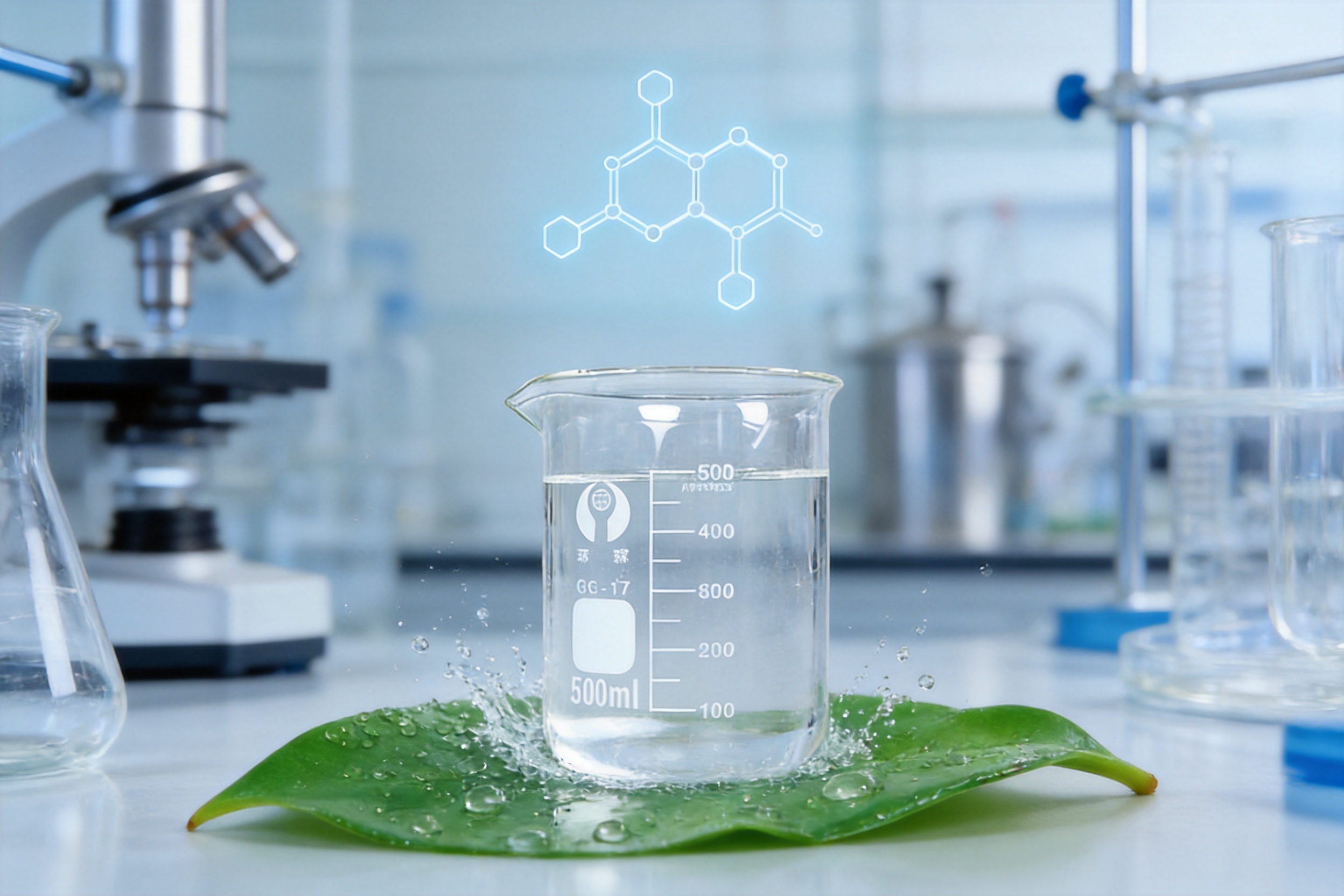
When added to a liquid formulation, the surfactant migrates toward interfaces such as air–liquid, liquid–solid, and oil–water boundaries. At these interfaces, it changes the balance of forces that normally cause droplets to contract into spherical shapes. As a result, the liquid can spread more readily across hydrophobic surfaces, enter small surface irregularities, and distribute active ingredients over a larger area.
This mechanism is particularly important in agriculture because many plant leaves are naturally water-repellent. Their waxy cuticles may cause ordinary water-based droplets to bead up, roll away, or remain concentrated in small areas. A suitable organosilicone surfactant helps overcome this barrier by lowering surface tension and improving the contact between the spray and the plant surface.
Key Product Specifications
| Property | Reported Value | Formulation Significance |
|---|---|---|
| Product model | GT-7100 | Product identification for technical and commercial use |
| Product name | Organosilicon surfactants | Surface-active silicone additive for industrial and agricultural systems |
| Chemical description | Polyether-modified trisiloxane | Combines strong silicone surface activity with organic compatibility |
| CAS number | 27306-78-1 | Reference for identification and documentation |
| Purity | 99.8% | Supports consistent composition and predictable performance |
| EINECS number | 608-078-3 | Regulatory and identification reference |
| Viscosity at 25°C | 30–50 mm²/s | Supports metering, blending, and practical handling |
| Surface tension at 0.1% by weight | Below 20.5 mN/m | Promotes rapid wetting and spreading |
| Cloud point at 1.0% by weight | Not higher than 35°C | Provides an indication of temperature-dependent solution behavior |
| pH of a 1% aqueous solution at 25°C | 6.5–7.5 | Near-neutral character can support compatibility in many systems |
These specifications provide a useful starting point for formulation development. However, the final suitability of the product depends on the active ingredient, solvent system, water quality, co-additives, temperature, concentration, and intended crop application. Laboratory compatibility testing and small-scale field evaluation remain important before commercial use.
How GT-7100 Improves Wetting and Spreading
Wetting describes the ability of a liquid to make and maintain contact with a solid surface. In an agricultural spray, good wetting means that droplets spread over the target leaf or plant tissue instead of remaining as isolated beads. The extent of spreading is affected by surface tension, contact angle, leaf wax composition, droplet size, humidity, temperature, and the presence of other formulation ingredients.
The reported surface tension of GT-7100 at a low concentration demonstrates its strong surface activity. A lower surface tension allows the spray liquid to overcome the natural tendency of a droplet to contract. Once the droplet contacts the plant, it can spread laterally and cover a greater area. This can improve the distribution of active ingredients and reduce areas of insufficient coverage.
Improved spreading can be especially valuable when the target surface is waxy, uneven, dusty, or partially shielded by plant structure. A spray that spreads evenly is more likely to reach the intended biological target. In herbicide applications, this may support more uniform contact with weed leaves. In fungicide applications, broader coverage may help protect more of the plant surface. In foliar fertilizer applications, even distribution can support more consistent nutrient contact.
Organosilicone surfactants may also reduce the tendency of droplets to form large concentrated spots. Large droplets can dry into deposits that contain a high local concentration of active ingredient while leaving nearby areas untreated. More uniform spreading can help distribute the active material over a wider surface, although the actual result depends on the formulation and the environmental conditions during spraying.
Another advantage is rapid surface interaction. Strongly active silicone surfactants can begin reducing interfacial resistance soon after dilution and application. This characteristic is useful when a spray must wet leaves quickly before wind, evaporation, or surface runoff changes the distribution of the liquid.
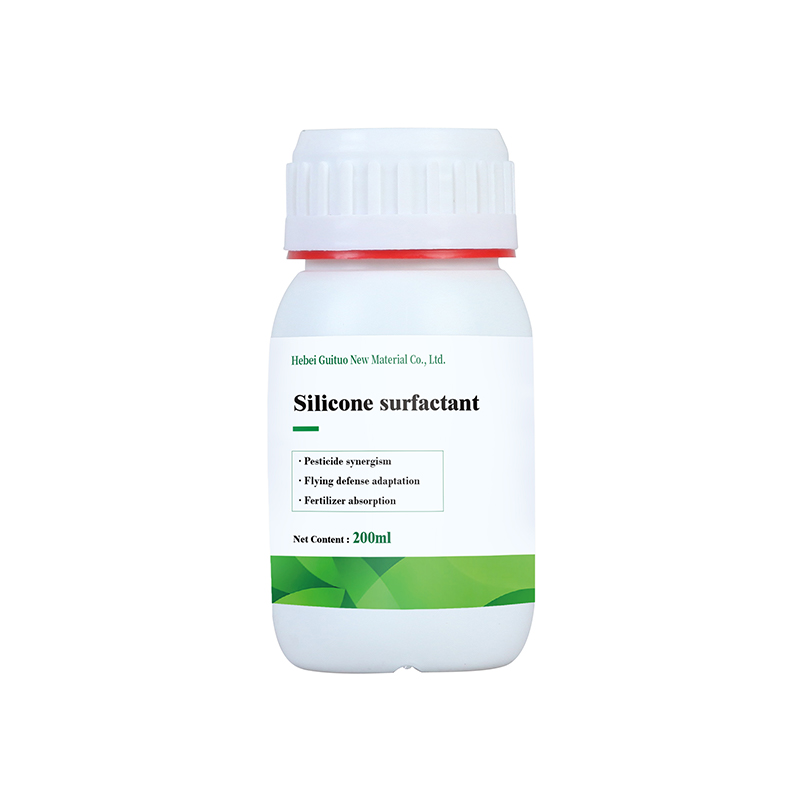
Organosilicone Surfactant
Enhancing Dispersion and Formulation Uniformity
Dispersion refers to the distribution of solid particles, droplets, or other components throughout a liquid medium. Many agricultural active ingredients have limited water solubility. They may be present as suspended particles, emulsified droplets, concentrated dispersions, or combinations of different phases. Without suitable stabilization, these components may settle, agglomerate, cream, or separate during storage and application.
GT-7100 can contribute to dispersion by helping reduce the interfacial tension between incompatible phases. When solid particles or oil droplets are more easily wetted by the surrounding liquid, the formulation can achieve a more uniform distribution. The surfactant may also help reduce the attraction between particles, limiting the formation of large agglomerates that settle quickly or block spray equipment.
Uniform dispersion is important for dosage consistency. If active ingredients settle at the bottom of a tank, the first and last portions of a spray mixture may contain different concentrations. This can lead to inconsistent field performance and make application management more difficult. An additive that supports a homogeneous mixture can help maintain more consistent delivery throughout the application period.
In suspension concentrates, the surfactant may support wetting of active ingredient particles during manufacture and dilution. In emulsifiable or oil-containing systems, it may help stabilize the interface between oil and water. In tank mixes, it may improve the interaction between multiple components, provided that the materials are chemically compatible and used at appropriate concentrations.
Dispersion performance should not be confused with complete solubilization. GT-7100 may assist the distribution of poorly soluble substances, but it cannot make every active ingredient fully dissolve. The desired physical state—solution, emulsion, suspension, or microdispersion—must be selected according to the active ingredient and the formulation design.
Emulsification, Demulsification, and Interfacial Control
Emulsification is the process of distributing one liquid phase into another immiscible liquid phase, such as oil in water or water in oil. A surfactant helps reduce the energy required to create the interface and can support the formation of smaller, more stable droplets. Organosilicone surfactants are therefore useful in formulations that contain oils, solvents, adjuvants, or hydrophobic active ingredients.
The same general interfacial activity can also be used for demulsification when the formulation objective is to break an unwanted emulsion and promote phase separation. This apparent contrast reflects the importance of concentration, molecular structure, phase composition, temperature, and shear conditions. A material that stabilizes one system at one concentration may destabilize another system under different conditions.
For agricultural formulators, the practical benefit is flexibility. An organosilicone surfactant can be evaluated as a wetting agent, emulsification aid, dispersion enhancer, or compatibility additive depending on the formulation architecture. The product’s broad functional profile reduces the need to use multiple additives for separate objectives, which may simplify formulation development and inventory management.
However, interfacial behavior must be evaluated carefully. Excessive surfactant can produce unwanted foaming, change emulsion stability, affect viscosity, or increase the risk of plant sensitivity. The optimum dosage should therefore be determined through controlled laboratory testing rather than by assuming that a higher concentration will always produce better performance.
Improving Plant Coverage and Penetration
Plant surfaces are complex substrates. Leaves contain waxes, hairs, veins, pores, and microscopic irregularities. The shape and orientation of the leaf can also influence how a droplet moves after impact. In addition, environmental factors such as sunlight, temperature, relative humidity, and wind can affect drying and retention.
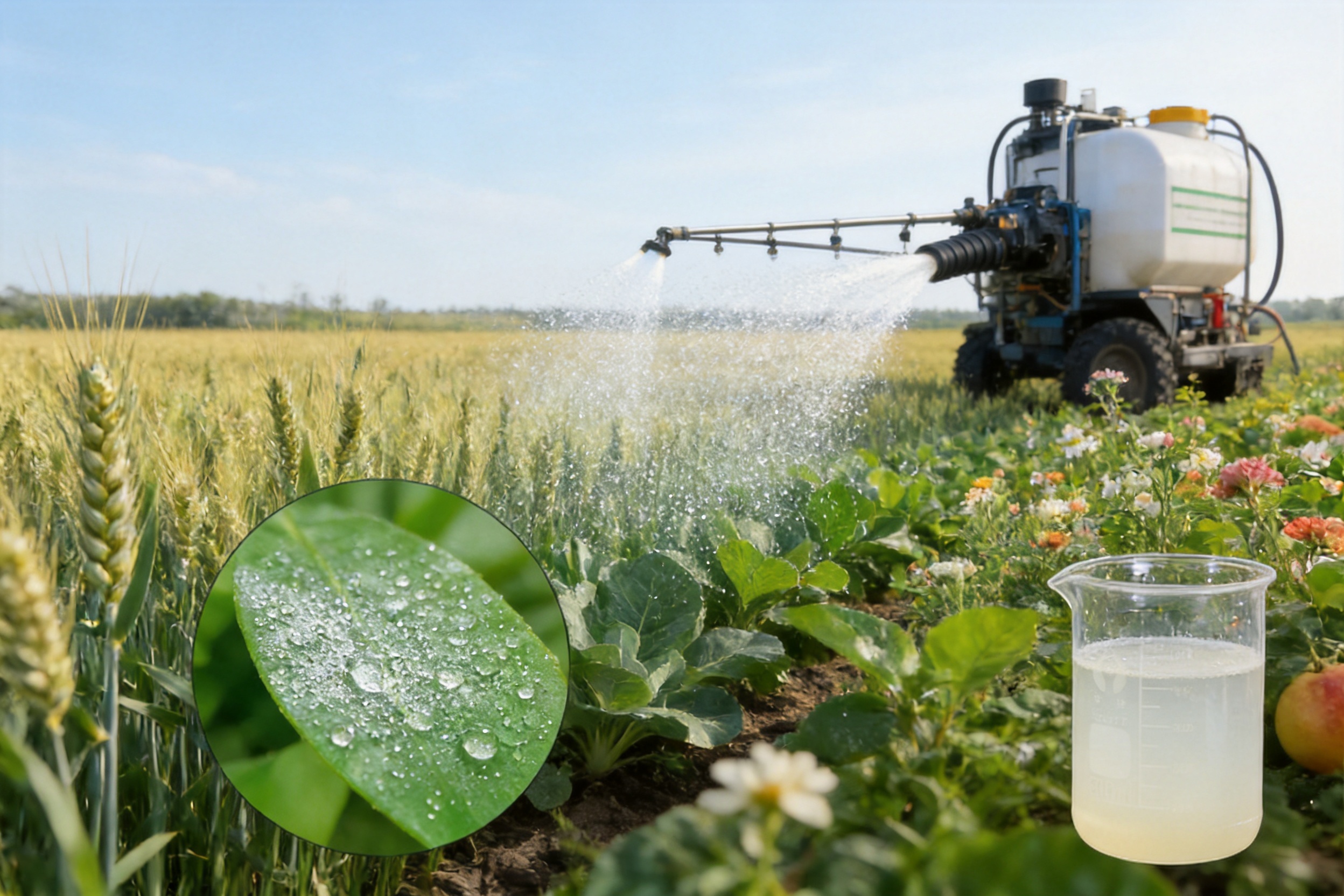
By improving wetting, GT-7100 can help a spray liquid form a more continuous film over the target surface. This may increase the contact area between the active ingredient and the plant. Better coverage is particularly useful when the biological target is distributed over a broad surface or when the active ingredient must remain in contact with the leaf for a specified period.
Some organosilicone surfactants may also facilitate movement of an active ingredient into surface microstructures or through portions of the plant cuticle. The actual degree of penetration depends on the active ingredient, the plant species, cuticle thickness, environmental conditions, and the presence of solvents or other adjuvants. It is therefore more accurate to describe GT-7100 as a penetration-supporting synergist rather than as a universal penetration enhancer.
Enhanced coverage and penetration can potentially improve the efficiency of agrochemical applications. In some cases, the same biological effect may be achieved with a lower amount of active ingredient, but any reduction in application rate must be established through regulatory-compliant efficacy testing. The surfactant should never be used to compensate for an inappropriate label rate or poor application practice.
Benefits in Major Agricultural Applications
Pesticide Formulations
In insecticide and acaricide formulations, the active ingredient must often reach insects located on leaf surfaces, stems, or protected plant structures. Poor wetting can create untreated areas and reduce contact with the target pest. GT-7100 can support more uniform spreading and help the formulation remain distributed over the plant surface.
Its dispersion function may also be valuable when the active ingredient is a water-insoluble solid or when the product is diluted into hard or mineral-rich water. A stable, evenly mixed spray can help deliver a more consistent amount of active ingredient to each target area.
Herbicide Products
Herbicide performance frequently depends on leaf coverage and the ability of the active ingredient to remain in contact with the weed. Many weed species have strongly water-repellent leaves, making them difficult to wet with water-based sprays. An organosilicone surfactant can reduce droplet contraction, improve spreading, and support more complete contact.
Improved coverage may be especially helpful when weeds have narrow leaves, dense wax layers, or upright growth habits. Nevertheless, crop safety must be considered because enhanced wetting and penetration can also increase the interaction of the formulation with sensitive crop tissues.
Fungicide Formulations
Fungicides often require broad and even coverage to protect plant surfaces. Inadequate deposition can leave untreated areas where infection may begin. GT-7100 can help the spray reach a larger portion of the leaf and may improve the uniformity of the protective film.
For systemic or translaminar fungicides, improved wetting may help the active ingredient interact more effectively with the leaf surface. For contact fungicides, even distribution is particularly important because biological activity depends on the presence of the active ingredient where infection occurs.
Foliar Fertilizers and Micronutrient Solutions
Foliar fertilizers may contain salts, chelated micronutrients, organic compounds, or suspended mineral components. These materials can have different solubility and wetting characteristics. GT-7100 may assist the spreading and distribution of nutrient solutions across leaves, supporting more uniform contact.
Because nutrient formulations can vary widely in ionic strength and pH, compatibility testing is essential. A formulation should be evaluated for precipitation, viscosity change, foam, leaf residue, and crop response after the surfactant is added.
Plant Growth Regulators and Specialty Mixtures
Plant growth regulators and specialty crop products are often applied at relatively low rates. Uniform distribution can be important because localized over-application may produce inconsistent plant responses. A suitable silicone synergist can improve the coverage of these low-dose formulations, provided the product is compatible with the active ingredient and crop.
Tank-Mix Applications
Farmers and professional applicators may combine several products in one spray tank to reduce labor and improve operational efficiency. Such mixtures can contain different solvents, salts, dispersants, oils, and active ingredients. GT-7100 may support wetting and dispersion in some tank mixes, but a jar test and application trial should be performed before large-scale use.
Advantages Compared with Conventional Surfactants
Traditional nonionic, anionic, cationic, and amphoteric surfactants each have useful properties, but their performance may be limited by the specific formulation or application environment. Some organic surfactants provide good emulsification but only moderate spreading. Others may produce excessive foam, show limited compatibility with electrolytes, or require relatively high concentrations.
The primary competitive advantage of a polyether-modified trisiloxane is its strong surface activity at low concentration. The silicone segment can reduce surface tension more effectively than many conventional organic structures, while the polyether segment supports water compatibility. This combination allows the additive to provide rapid wetting and spreading without necessarily requiring a large additive load.
GT-7100 also offers multifunctionality. It can contribute to wetting, penetration, dispersion, solubilization, emulsification, and foam management depending on the formulation design. A multifunctional additive may reduce the number of separate ingredients required, simplify batch processing, and provide a more integrated approach to formulation optimization.
The reported near-neutral pH range of 6.5–7.5 in a 1% aqueous solution can be advantageous in systems where strong acidity or alkalinity could affect active ingredients, packaging, or plant tolerance. This does not guarantee compatibility with every formulation, but it provides a balanced starting point for development.
The viscosity range of 30–50 mm²/s at 25°C also supports practical handling. Extremely viscous additives may be difficult to meter, transfer, or disperse during production. A controlled moderate viscosity can facilitate accurate dosing and improve process repeatability.
Another advantage is the ability to tailor the product to different end uses. Agricultural formulations differ significantly from textile, paint, release-agent, and chemical-processing systems. A manufacturer with experience in silicone additives can adjust product selection, dosage guidance, packaging, and technical support according to the customer’s application requirements.
Manufacturing Process and Quality Control
The quality of an organosilicone surfactant depends on the quality of its raw materials, reaction control, purification, blending, storage, and testing. A high-purity product cannot be achieved reliably through informal or poorly controlled processing. Consistent manufacturing requires defined procedures and monitoring at every important stage.
Raw Material Selection
The first stage is the selection and inspection of silicone intermediates, polyether components, catalysts, solvents, and processing aids. Raw materials must meet established specifications for purity, moisture, acidity, functionality, and appearance. Variations in these parameters can affect reaction conversion, molecular distribution, color, viscosity, and surface activity.
Incoming materials should be identified and tested before use. Batch records and traceability systems allow the manufacturer to connect finished-product performance with the raw-material lots used during production. This is essential for investigating deviations and maintaining stable supply to customers.
Controlled Chemical Reaction
Polyether-modified trisiloxanes are produced through controlled chemical processes that require accurate ratios, controlled temperature, appropriate mixing, and carefully managed reaction time. The reaction must be sufficiently complete to achieve the desired structure while minimizing unwanted by-products and residual materials.
Advanced production equipment helps maintain consistent heat transfer, agitation, pressure, and material contact. Automated or semi-automated control systems can reduce operator variation and improve repeatability from batch to batch. Process parameters are normally recorded so that technical personnel can compare production data with quality results.
Purification and Adjustment
After the main reaction, the material may require removal of residual catalyst, unreacted components, volatile materials, or other impurities. Purification and adjustment steps help achieve the desired purity, color, viscosity, and water compatibility. These steps must be performed carefully because excessive heat or prolonged processing may affect the product’s molecular structure.
The final product may then be adjusted to meet its target specifications. The reported purity of 99.8% indicates a high level of compositional control. For customers, high purity can support more predictable formulation behavior and reduce the risk that unknown impurities will interfere with active ingredients or processing equipment.
Testing and Release
Quality control should include tests relevant to the product’s intended function. Typical evaluations may include appearance, purity, viscosity, surface tension, pH, cloud point, moisture, and compatibility with water or representative formulation components. The manufacturer’s testing facilities and precise analytical equipment support the assessment of these parameters before shipment.
Surface tension testing is especially important because it directly relates to wetting and spreading behavior. Viscosity testing supports handling and dosing control. pH testing helps identify major deviations that could affect formulation stability. Cloud point testing provides information about temperature-dependent behavior in aqueous systems.
| Manufacturing and Quality Stage | Purpose | Customer Value |
|---|---|---|
| Raw-material inspection | Confirm identity, purity, and suitability of incoming materials | Improved batch consistency and traceability |
| Reaction control | Maintain accurate ratios, temperature, mixing, and reaction time | More predictable molecular structure and performance |
| Purification | Reduce residual impurities and unwanted by-products | Improved compatibility and product stability |
| Property adjustment | Bring viscosity, purity, and other properties into specification | Reliable handling and formulation behavior |
| Laboratory testing | Verify surface tension, pH, cloud point, viscosity, and appearance | Evidence-based product release |
| Packaging inspection | Protect the material during storage and transportation | Reduced risk of contamination or leakage |
| Technical documentation | Provide product identification and usage information | More efficient formulation development |
Manufacturing Strengths and Technical Support
The manufacturer behind GT-7100 operates as a high-technology new-materials enterprise integrating research and development, production, and sales. This integrated structure is important because product development and customer support are closely connected. A formulation problem can be studied by technical personnel who understand both the chemistry of the additive and the realities of industrial production.
The company has established production and testing capabilities intended to support stable quality and supply. Internationally advanced production equipment helps provide process control, while precise testing facilities support product verification. A full-process quality monitoring system extends from production-source management through finished-product delivery.
An experienced technical and production team is another important strength. Organosilicone surfactants are performance additives, so product value cannot be judged only by a specification sheet. Customers may need assistance with dosage selection, dilution order, tank-mix compatibility, foam control, storage stability, or adaptation to a specific active ingredient. Technical experience can shorten the development cycle and help avoid unnecessary trial-and-error work.
The manufacturer also maintains a broad product matrix that includes silicone additives, wetting agents, modified silicone oils, dimethyl silicone oils, surfactants, defoamers, and related materials. This product range allows customers to evaluate complementary additives from a single technical source. For complex formulations, the ability to compare several silicone-based options can be more efficient than sourcing each material from a different supplier.
A diversified production and application background also supports customization. Different customers may require different viscosity grades, compatibility profiles, active content, packaging formats, or performance targets. OEM and ODM services enable the product to be adapted for private-label supply, application-specific development, or customer-defined specifications.
Application Guidance and Formulation Considerations
GT-7100 should be added at a dosage appropriate to the formulation and intended use. The optimum level depends on the type and concentration of active ingredient, water hardness, solvent content, spray equipment, target crop, leaf surface, and environmental conditions. A general recommendation without testing may be unsuitable for a specialized product.
In water-based systems, the additive is commonly evaluated by preparing a diluted premix before incorporation into the main batch. This approach can improve distribution and reduce the risk of localized high concentrations. The order of addition should be selected according to the formulation design and confirmed through laboratory trials.
For tank-mix use, a practical sequence may involve filling the spray tank partially with clean water, starting agitation, adding products according to their physical form and label instructions, and incorporating the organosilicone surfactant at the recommended stage. The precise sequence can vary. A jar test is recommended to identify visible precipitation, layer formation, excessive foam, gel formation, or unexpected viscosity changes.
Water quality can influence performance. Hard water, high salt content, extreme pH, and suspended solids may affect dispersion and stability. If the formulation is sensitive to water quality, tests should be performed using the actual water source expected in commercial application.
Temperature also matters. The reported cloud point of not higher than 35°C at 1% by weight provides a reference for solution behavior, but a formulation’s actual clouding or phase behavior may differ because of salts, solvents, active ingredients, and other surfactants. Storage and application trials should therefore include realistic temperature conditions.
Foam should be evaluated during mixing and spraying. Organosilicone surfactants can be used in systems requiring foam suppression or foam management, but their behavior depends on agitation, equipment design, water quality, and the presence of other surface-active materials. If foam becomes excessive, a compatible defoamer or revised addition sequence may be required.
Storage, Handling, and Safety
The product should be stored in a clean, dry, and well-ventilated location in its original sealed packaging. Exposure to excessive heat, direct sunlight, freezing conditions, or contamination should be avoided. Containers should remain closed when the material is not being used, and storage areas should be managed to prevent accidental mixing with incompatible substances.
Personnel handling the product should review the applicable safety data sheet and follow site-specific chemical handling procedures. Suitable protective clothing, gloves, and eye protection should be selected according to the workplace risk assessment. Spills should be contained promptly and prevented from entering drains, soil, or surface water.
Although organosilicone surfactants are designed for use at low concentrations and may offer a favorable environmental profile compared with some traditional surfactants, responsible use remains essential. Biodegradability and lower toxicity claims should be interpreted within the context of the specific product, concentration, exposure pathway, and local regulatory requirements. Improper disposal or excessive runoff can still create environmental concerns.
Agricultural applications should follow approved product labels, local regulations, and recommended dilution rates. Operators should avoid spraying during conditions that increase drift or runoff, especially near sensitive water bodies. Crop safety testing is recommended whenever the additive is used on a new crop, under unusual weather conditions, or with a new active ingredient.
Environmental and Operational Benefits
Improved wetting and dispersion can provide operational benefits beyond basic formulation performance. If the active ingredient is distributed more evenly, the applicator may achieve more consistent field coverage with fewer untreated areas. Better formulation stability can reduce waste caused by settled or separated material. More efficient use of the active ingredient may also support resource-conscious agricultural practices, provided that efficacy and regulatory requirements are fully respected.
The product’s multifunctionality may reduce the number of additives required in a formulation. Fewer separate components can simplify raw-material storage, batching, quality control, and transportation. This does not automatically mean that every formulation will require less total additive, but it can provide formulators with more flexibility when optimizing the ingredient package.
A reliable domestic and international supply system is also an operational advantage. Stable quality and repeatable production help customers maintain their own manufacturing schedules. The manufacturer’s products are reported to serve agricultural, textile, daily chemical, electronic, and other industries, demonstrating experience in applications where consistent silicone performance is important.
Export activity and repeated purchases from overseas customers indicate that the product range is designed to meet customers with different technical and commercial expectations. International supply requires attention to documentation, packaging, shipment stability, communication, and quality consistency. These capabilities are relevant to buyers seeking a long-term material supplier rather than a one-time source.
Comparison with Other Additive Choices
When choosing a surfactant, formulators commonly compare silicone-based, nonionic organic, anionic, and specialized polymeric materials. Each type has a place in formulation design. The correct choice depends on the required surface tension, foam profile, electrolyte tolerance, biodegradation characteristics, compatibility, and cost target.
Compared with many conventional nonionic surfactants, GT-7100 may provide stronger spreading at a lower concentration because of its trisiloxane structure. Compared with highly ionic surfactants, its near-neutral aqueous pH may make it a useful option in formulations where ionic interactions could affect stability. Compared with single-purpose wetting agents, its combined wetting, dispersion, and interfacial functions can offer a broader performance platform.
Its advantages should not be overstated. A strong silicone surfactant may spread too aggressively on some crops, may increase penetration beyond the desired level, or may interact unfavorably with certain active ingredients. Therefore, the product is best understood as a high-performance formulation tool that must be matched to the application, not as a universal replacement for every other surfactant type.
Competitive evaluation should include more than price per kilogram. Important criteria include use concentration, effect on formulation stability, compatibility, batch consistency, technical support, packaging, delivery reliability, and total cost per treated area. A concentrated and efficient additive may provide better overall value when it achieves the target performance at a lower use rate.
Recommended Evaluation Program
A structured evaluation program helps customers determine whether GT-7100 meets their requirements. The first stage should define the target performance, such as lower surface tension, faster spreading, improved suspension stability, reduced sedimentation, enhanced leaf coverage, or better tank-mix behavior.
The second stage should involve laboratory screening. Candidate concentrations can be evaluated for surface tension, contact angle, spreading area, foam, viscosity, pH, clouding, and visual stability. Tests should be conducted using the actual active ingredient and water source whenever possible.
The third stage should assess accelerated storage stability. Samples may be observed under different temperatures and storage periods for phase separation, precipitation, color change, odor change, viscosity drift, and loss of surface activity. These tests do not replace full shelf-life studies, but they can identify formulation weaknesses early.
The fourth stage should evaluate spray behavior. Test the formulation through the intended equipment and nozzle system. Observe atomization, foam, droplet retention, drift tendency, and tank cleanliness. A product that performs well in a beaker may behave differently under high shear or continuous agitation.
The final stage should be crop and field evaluation. Compare treated surfaces with and without the surfactant, using appropriate controls and replicated conditions. Record coverage, drying behavior, rainfastness where relevant, crop tolerance, pest or disease response, and any visible residue. These results help establish a practical use rate and confirm that the additive improves the complete system rather than only one laboratory parameter.
Why Manufacturing Consistency Matters
Surfactants are often used at relatively low concentrations, which means small differences in composition can affect final performance. A change in molecular distribution may influence surface tension, cloud point, compatibility, or foam. For this reason, customers need a supplier capable of maintaining tight process control across multiple production batches.
Manufacturing consistency also affects downstream operations. If viscosity changes significantly, dosing pumps may require adjustment. If water compatibility varies, a previously stable formulation may become cloudy or separate. If impurities increase, the additive may interact with active ingredients or packaging. Strong quality systems reduce these risks and support reliable customer production.
The integrated approach of research, production, testing, and sales allows technical feedback to move more quickly through the organization. Customer observations can be used to improve product selection or customize a grade. Production data can be connected with application performance. This cycle of feedback is valuable for a specialty chemical supplier serving different markets.
Customer-Specific Customization
Agricultural chemical companies may require a surfactant designed for a particular formulation type, region, crop, or application method. Some customers may prioritize rapid spreading, while others may require low foam, improved dispersion, or compatibility with concentrated electrolytes. A customized product may also be needed for a private-label program or a defined packaging and delivery schedule.
OEM and ODM capabilities can support these requirements. Customization may involve product specification, packaging, labeling, technical documentation, or application guidance. Before customization begins, the customer and supplier should define measurable targets and acceptance criteria. These may include surface tension limits, viscosity range, pH range, appearance, storage stability, and performance in a representative formulation.
Customization should remain technically disciplined. Altering a silicone backbone, polyether structure, active content, or additive package can change performance and regulatory status. Each modified product should be evaluated through appropriate testing and supported by accurate documentation.
Q&A
Q: What is GT-7100 organosilicone surfactant?
A: GT-7100 is a polyether-modified trisiloxane organosilicone surfactant. It is designed to reduce surface tension and improve wetting, spreading, dispersion, penetration, and interfacial performance in agricultural and other industrial formulations.
Q: What is the reported purity of the product?
A: The reported purity is 99.8%. High purity can help provide more predictable formulation behavior and reduce the influence of unwanted impurities.
Q: What surface tension can the product achieve?
A: At a concentration of 0.1% by weight, the reported surface tension is below 20.5 mN/m. The actual result in a finished formulation depends on water quality, active ingredients, temperature, and other additives.
Q: Can it be used with herbicides, fungicides, and insecticides?
A: It is intended for evaluation in a wide range of agricultural formulations, including herbicides, fungicides, insecticides, pesticides, and foliar fertilizers. Compatibility testing should be completed with the specific active ingredient and formulation before commercial use.
Q: How does it improve agricultural spray performance?
A: It lowers surface tension, helping droplets spread more evenly over plant surfaces. It can also support dispersion and reduce separation in suitable formulations, which may improve the uniformity of active-ingredient delivery.
Q: Does the product improve plant penetration?
A: It may support penetration by improving wetting and contact with the plant cuticle. The degree of penetration depends on the active ingredient, crop, cuticle properties, environmental conditions, and the rest of the formulation.
Q: Is GT-7100 compatible with every agrochemical?
A: No additive should be assumed to be compatible with every agrochemical. A jar test, laboratory compatibility study, storage test, and crop-safety evaluation are recommended before wider application.
Q: Is it suitable for tank-mix applications?
A: It may be suitable for selected tank mixes, but the correct addition order and dosage must be established through testing. Water quality, salts, solvents, and other surfactants can change the behavior of the mixture.
Q: What does the near-neutral pH indicate?
A: A 1% aqueous solution has a reported pH of 6.5–7.5 at 25°C. This near-neutral range can be advantageous in many formulations, although it does not guarantee compatibility with all active ingredients or additives.
Q: What is the reported viscosity?
A: The reported viscosity is 30–50 mm²/s at 25°C. This moderate viscosity can support practical pumping, transfer, and metering during formulation production.
Q: What is the cloud point of the product?
A: The reported cloud point is not higher than 35°C at 1.0% by weight. Cloud point behavior in a complete formulation may differ because of salts, solvents, active ingredients, and other surfactants.
Q: Can the product be used outside agriculture?
A: The product range is associated with applications in agriculture, textiles, daily chemicals, electronics, coatings, and other industrial fields. The suitability of a specific grade should be verified for each application.
Q: What manufacturing strengths support the product?
A: The manufacturer integrates research and development, production, testing, and sales. It uses advanced production and testing equipment, maintains process monitoring from raw-material sourcing through finished-product delivery, and employs experienced technical and production personnel.
Q: Are customized products available?
A: OEM and ODM services are available for customers requiring application-specific products, private-label supply, or customized technical and packaging requirements. Customized grades should be developed against clearly defined performance specifications.
Q: How should the surfactant be stored?
A: It should be kept sealed in a clean, dry, well-ventilated place and protected from excessive heat, direct sunlight, freezing, and contamination. Users should consult the current safety data sheet for detailed handling and storage requirements.
Q: Is the product environmentally safe?
A: Organosilicone surfactants may offer a favorable environmental profile compared with some traditional surfactants, and the supplied material is described as biodegradable with generally low toxicity when properly used. Nevertheless, users must follow local regulations, approved rates, and runoff-prevention practices.
Conclusion
GT-7100 polyether-modified trisiloxane organosilicone surfactant is designed to address several important challenges in modern agricultural formulation. Its strong surface activity, reported surface tension below 20.5 mN/m at 0.1% concentration, high purity, moderate viscosity, near-neutral pH, and multifunctional behavior make it a useful candidate for wetting, spreading, dispersion, emulsification, and penetration-support applications.
Compared with many conventional additives, its principal advantages are strong performance at low concentration, broad interfacial functionality, practical handling, and potential compatibility with a wide variety of formulation systems. These advantages can contribute to more uniform plant coverage, improved active-ingredient distribution, enhanced formulation stability, and more efficient agricultural applications.
The product’s value is strengthened by the manufacturer’s integrated capabilities. Advanced production equipment, precise testing facilities, full-process quality monitoring, experienced technical personnel, a broad silicone-material product matrix, and OEM and ODM services provide a foundation for reliable supply and application-specific development.
Successful use still requires responsible formulation design. Customers should conduct compatibility studies, optimize dosage, evaluate storage stability, confirm crop safety, and follow all applicable application and environmental requirements. When selected and used correctly, GT-7100 can serve as a high-performance agricultural silicone wetting synergist and as a versatile organosilicone additive for demanding formulation applications.
References
1. Rosen, M. J., and Kunjappu, J. T. Surfactants and Interfacial Phenomena. General principles of surface tension, adsorption, wetting, emulsification, and dispersion.
2. Tadros, T. F. Applied Surfactants: Principles and Applications. Technical concepts relating to surfactant selection, formulation stability, and interfacial control.
3. Technical product information for GT-7100 polyether-modified trisiloxane organosilicone surfactant. Product specifications supplied for formulation evaluation.
4. Agricultural spray-adjuvant formulation principles. General considerations for droplet spreading, plant-surface coverage, retention, and compatibility.
5. General chemical quality-control practices for specialty silicone materials. Principles of raw-material inspection, process monitoring, analytical testing, traceability, and finished-product release.
Product: Organosilicone Surfactant


Contact Information
Tel : +86-400-138-5268
Email : [email protected]
Phone : +86-15128434888 / +86-13511051998
Add : Xinqiao Environmental Protection Industrial Park, Wen'an County, Langfang City, Hebei Province, China
Contact Information
Copyright © Hebei Guituo New Material Co., Ltd. All Rights Reserved.
