

 English
  Français
  Português
 Home / Author / Li Mei, Product Sales Specialist (Agricultural Silicone Products) / 201 Methyl Silicone Oil: A Comprehensive Guide to Its Properties, Applications, and Competitive Advantages
 201 Methyl Silicone Oil: A Comprehensive Guide to Its Properties, Applications, and Competitive Advantages
2026-03-21
Introduction
201 Methyl Silicone Oil, also known as Polydimethylsiloxane (PDMS) with CAS No. 63148-62-9, is a versatile organosilicon compound that has become indispensable across multiple industries. Characterized by its transparent, colorless, and odorless oily liquid form, this product stands out for its exceptional thermal stability, low surface tension, and broad compatibility with various materials. Unlike many conventional lubricants or surface modifiers, 201 Methyl Silicone Oil offers a unique combination of properties that make it suitable for extreme conditions and diverse applications, from industrial manufacturing to agricultural sprays and cosmetic formulations. This article explores its core properties, competitive edge over alternative products, advanced manufacturing processes, key applications, functional mechanisms, and answers to common questions about its use.
Core Properties of 201 Methyl Silicone Oil
To understand the value of 201 Methyl Silicone Oil, it is essential to examine its key physical, thermal, chemical, and electrical properties—each contributing to its widespread utility.
Physical Properties
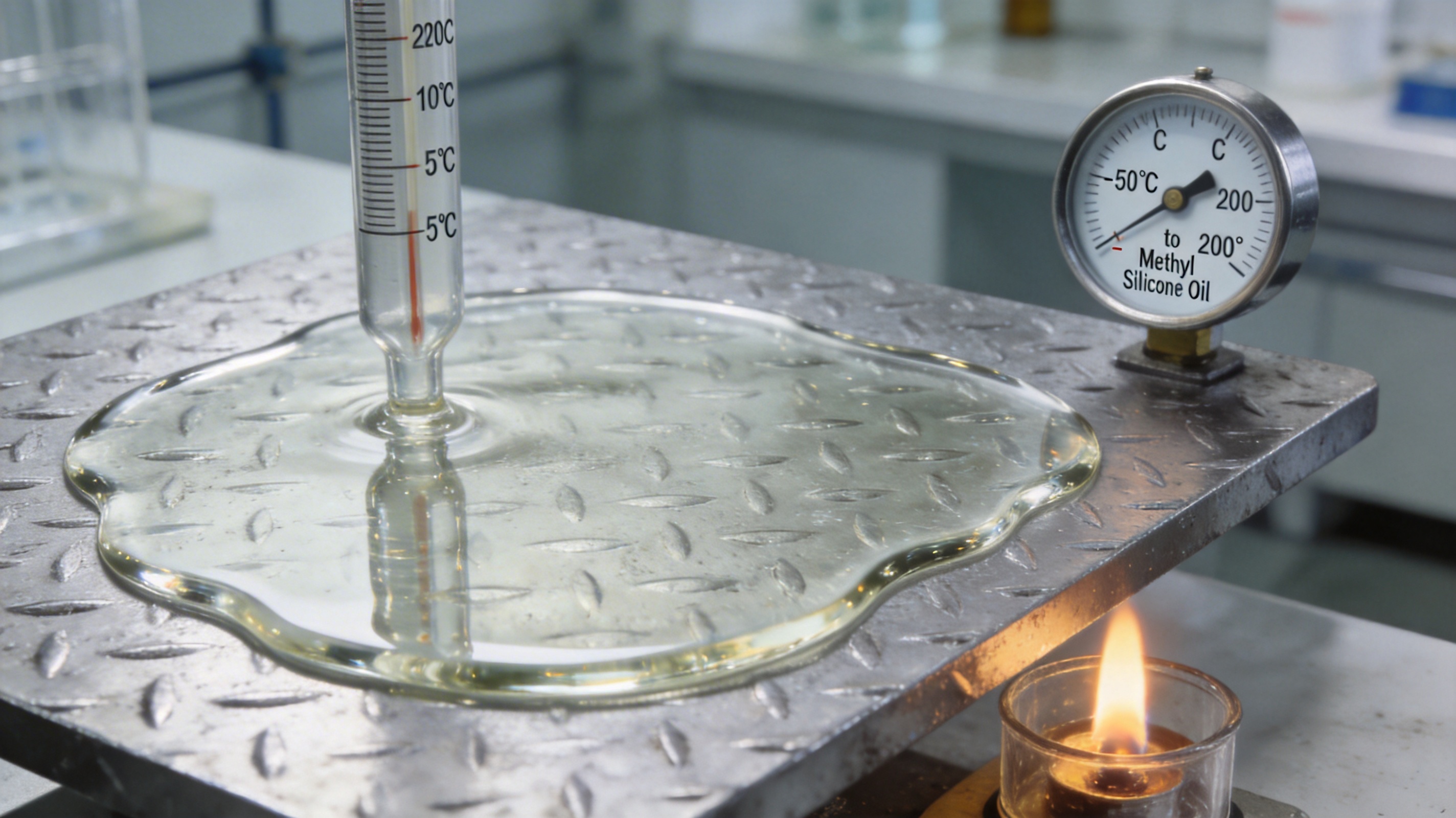
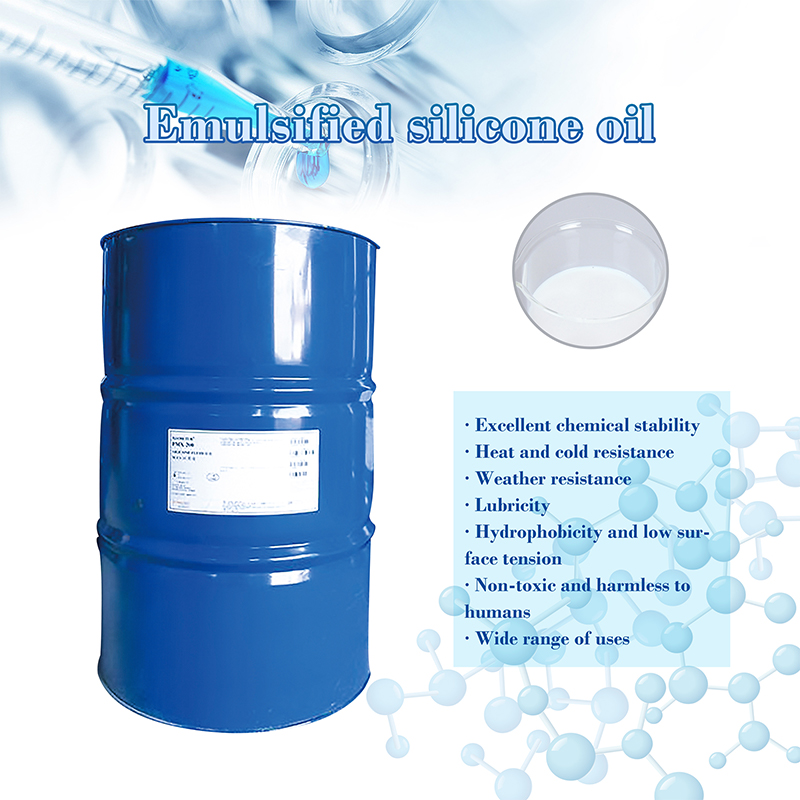
201 Methyl Silicone Oil is a low-viscosity to medium-viscosity liquid, depending on the grade. Its most notable physical trait is its extremely low surface tension (typically ranging from 20 to 22 mN/m at 25°C), which is far lower than that of water (72 mN/m) and most organic solvents. This low surface tension enables it to spread uniformly over surfaces, making it ideal for lubrication, mold release, and surface modification applications. Additionally, it has a high flash point (varies by viscosity but generally above 300°C) and a low freezing point (down to -50°C), allowing it to remain fluid across a wide temperature range.
Thermal Stability
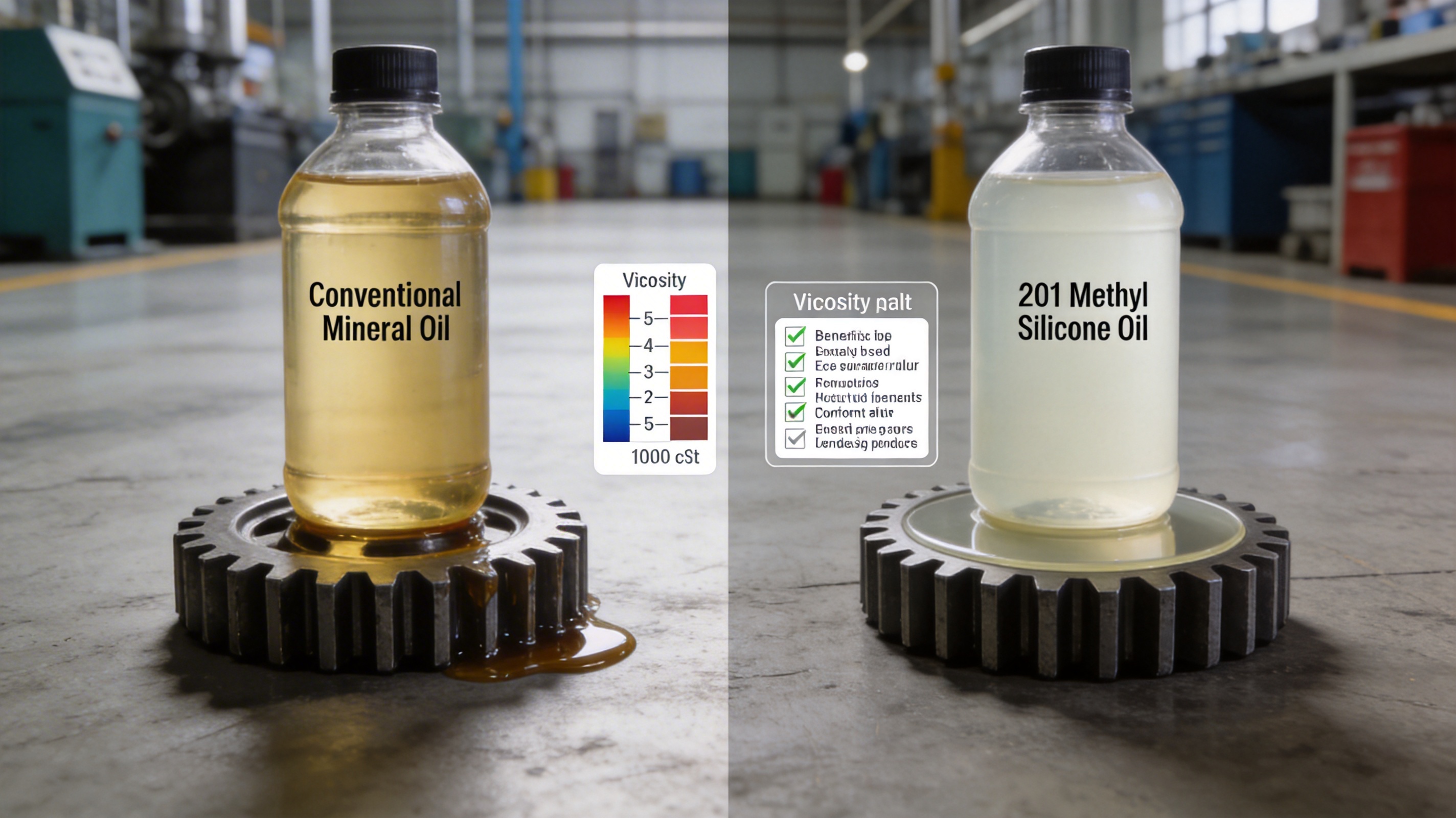
One of the most significant advantages of 201 Methyl Silicone Oil is its exceptional thermal stability. It can be used long-term between -50°C and 180°C, and up to 200°C when isolated from air or under inert gas. This stability is attributed to its silicon-oxygen backbone (Si-O bonds), which have higher bond energy (452 kJ/mol) than carbon-carbon bonds (348 kJ/mol) found in organic oils. Unlike conventional mineral oils, which degrade at temperatures above 150°C, 201 Methyl Silicone Oil retains its physical and chemical properties even under extreme heat, making it suitable for high-temperature industrial processes.
Chemical Inertness
201 Methyl Silicone Oil exhibits excellent chemical resistance to most acids, bases, and organic solvents. It is non-reactive with metals, plastics, and rubber, which means it does not corrode or degrade the materials it comes into contact with. This inertness also extends to biological systems, as it is physiologically inert—making it safe for use in cosmetic and pharmaceutical products where skin contact is common.
Electrical Insulation Properties
For electronics and electrical applications, 201 Methyl Silicone Oil is a superior insulator. It has a high dielectric strength (typically 15-20 kV/mm), low dielectric loss (≤0.001 at 1 kHz), and its dielectric properties change minimally with temperature and frequency. These characteristics make it ideal for use in transformers, capacitors, and other electrical components where stable insulation is critical.
Competitive Advantages Over Alternative Products
201 Methyl Silicone Oil outperforms many conventional lubricants, mold release agents, and surface modifiers due to several key advantages:
1. Higher Purity
Most commercial 201 Methyl Silicone Oils have a purity of around 99.5%, but top-grade variants achieve 99.8% purity. This high purity reduces the risk of contaminants causing issues such as clogging in machinery, residue on molded parts, or skin irritation in cosmetic products. Contaminants like low-molecular-weight siloxanes can lead to volatile emissions, but high-purity 201 Methyl Silicone Oil minimizes these emissions, making it safer for indoor and sensitive applications.
2. Broader Temperature Range
Unlike mineral oils (which degrade above 150°C) or vegetable oils (which solidify at low temperatures), 201 Methyl Silicone Oil maintains its performance from -50°C to 200°C. This makes it suitable for applications in extreme climates, such as agricultural sprays used in cold regions or industrial machinery operating in high-heat environments.
3. Superior Lubrication Without Residue
Conventional lubricants often leave sticky residues or degrade over time, requiring frequent reapplication. 201 Methyl Silicone Oil forms a thin, uniform, and stable lubricating film that does not degrade easily. It also has excellent shear resistance, meaning it retains its lubricating properties even under high mechanical stress—reducing wear and extending equipment lifespan.
4. Customizable Viscosity Grades
Leading manufacturers offer 201 Methyl Silicone Oil in a range of viscosity grades (from 5 cSt to 1000 cSt at 25°C). This customization allows users to select the optimal grade for their specific application: lower viscosities for fast spreading and surface modification, higher viscosities for long-term lubrication and mold release. Competitors often offer a limited range of viscosities, forcing users to compromise on performance.
5. Enhanced Compatibility
201 Methyl Silicone Oil is compatible with a wide range of materials, including surfactants, defoamers, and other silicone additives. This compatibility makes it easy to incorporate into multi-component formulations, such as agricultural sprays (combined with wetting agents) or cosmetic products (combined with emulsifiers). Competitors’ products may have limited compatibility, leading to formulation instability or reduced performance.
Advanced Manufacturing Processes & Company Strengths
The quality of 201 Methyl Silicone Oil is directly tied to the manufacturing processes and the manufacturer’s expertise. Leading producers, such as Hebei Guituo New Material Co., Ltd. (and its subsidiary Ningbo Guituo Trading Co., Ltd.), have established advanced systems to ensure consistent, high-quality products.
1. R&D & Innovation
Hebei Guituo New Material Co., Ltd. is a high-tech enterprise integrating R&D, production, and sales. Its R&D team consists of experienced chemists and engineers who focus on the in-depth development and innovative application of high-end silicone materials. The team continuously optimizes the manufacturing process to improve purity, thermal stability, and compatibility—ensuring that its 201 Methyl Silicone Oil meets the evolving needs of industries like agriculture, electronics, and textiles.
2. Production Equipment & Quality Control
The company uses internationally advanced production equipment, including continuous polymerization reactors and precision distillation units, to produce 201 Methyl Silicone Oil. A comprehensive quality monitoring system is in place from the raw material stage to the final product: raw materials are tested for purity using gas chromatography (GC), and finished products undergo rigorous testing for viscosity, thermal stability, and chemical inertness using Fourier-transform infrared spectroscopy (FTIR) and differential scanning calorimetry (DSC). This ensures that every batch meets the highest standards (e.g., 99.8% purity, stable viscosity).
3. Customization Capabilities
Hebei Guituo New Material Co., Ltd. accepts OEM and ODM orders, allowing customers to customize 201 Methyl Silicone Oil to their specific needs. This includes adjusting viscosity, adding functional additives (e.g., defoamers, wetting agents), and packaging the product in various sizes. The company’s technical team works closely with customers to understand their requirements and develop tailored solutions—an advantage that many competitors do not offer.
4. Global Reach & Reputation
The company’s products are exported to Europe, Southeast Asia, and other regions, where they are favored by leading agrochemical enterprises, electronics manufacturers, and textile companies. Its agricultural silicone products, including 201 Methyl Silicone Oil, have reached an advanced domestic level and are designated procurement products for many top agrochemical firms. This global recognition is a testament to the quality and reliability of its products.
Key Applications of 201 Methyl Silicone Oil
201 Methyl Silicone Oil’s unique properties make it suitable for a wide range of applications across industries. Below are some of the most common uses:
1. Industrial Lubrication
201 Methyl Silicone Oil is widely used as a lubricant for machinery, textiles, and electronics. Its low surface tension and excellent shear resistance allow it to penetrate small gaps and form a stable lubricating film. It is ideal for lubricating bearings, gears, and other moving parts in high-temperature environments (e.g., automotive engines, industrial ovens). Unlike conventional lubricants, it does not leave residues, reducing the need for frequent cleaning and maintenance.
2. Mold Release Agent
In the plastics, rubber, and packaging industries, 201 Methyl Silicone Oil is used as a mold release agent. Its low surface energy forms a non-stick barrier between the mold and the material being processed, preventing adhesion and facilitating easy demolding. It does not affect the surface quality of the molded product, making it suitable for high-precision parts (e.g., automotive components, cosmetic containers). Leading manufacturers offer optimized grades that provide consistent mold release performance across different materials and temperatures.
3. Surface Modification
201 Methyl Silicone Oil is used to modify the surface properties of various materials: - Agriculture: It is added to agricultural sprays to improve wetting and spreading on plant leaves. The low surface tension of the oil allows the spray to cover more surface area, increasing the deposition of active ingredients and reducing runoff. - Textiles: It is used in textile finishing to enhance softness, antistatic properties, and water resistance. The oil forms a thin hydrophobic layer on the fabric, making it resistant to water while maintaining breathability. - Cosmetics: It is added to lotions, creams, and hair products to improve texture, smoothness, and water resistance. Its physiological inertness makes it safe for skin contact.
4. Electronics & Electrical Insulation
Due to its excellent electrical insulation properties, 201 Methyl Silicone Oil is used in transformers, capacitors, and other electrical components. It acts as a dielectric fluid, providing insulation and cooling. Its stability at high temperatures makes it suitable for use in high-voltage equipment.
5. Defoaming Agent
201 Methyl Silicone Oil is used as a defoaming agent in industrial processes (e.g., paper manufacturing, wastewater treatment). Its low surface tension breaks down foam bubbles, preventing foam buildup and improving process efficiency.
6. Cosmetics & Pharmaceuticals
201 Methyl Silicone Oil is a common ingredient in cosmetic products (e.g., moisturizers, sunscreens, hair conditioners) due to its ability to improve texture and provide a smooth, non-greasy feel. It is also used in some pharmaceutical products as a lubricant for tablets and capsules, or as a carrier for active ingredients.

Functional Mechanisms of 201 Methyl Silicone Oil
To fully appreciate the utility of 201 Methyl Silicone Oil, it is important to understand the functional mechanisms behind its key applications:
1. Lubrication Mechanism
The lubrication function of 201 Methyl Silicone Oil is based on the formation of a thin, uniform, and stable lubricating film on surfaces. The silicon-oxygen backbone of the oil allows free chain movement, which reduces friction between contacting surfaces. The methyl groups attached to the silicon atoms provide low surface energy, allowing smooth sliding and minimizing adhesion. This mechanism reduces wear, improves processing efficiency, and extends equipment lifespan—making it ideal for industrial lubrication applications.
2. Mold Release Mechanism
201 Methyl Silicone Oil acts as a mold release agent by forming a thin, non-stick barrier between the mold surface and the material being processed. Its low surface energy prevents adhesion of resins, plastics, or rubber to the mold. The molecular mobility of the oil ensures rapid spreading over the mold surface, creating uniform coverage without affecting the material properties of the molded product. This mechanism facilitates efficient demolding and reduces defects—critical for high-volume manufacturing processes.
3. Surface Modification Mechanism
Surface modification with 201 Methyl Silicone Oil involves the formation of a hydrophobic and chemically resistant layer on treated substrates. The methyl groups provide water repellency, while the flexible siloxane chains improve surface smoothness and reduce adhesion of contaminants. In agriculture, this mechanism helps coatings and sprays spread uniformly on plant leaves, improving wetting and active ingredient deposition. In textiles, it enhances softness, antistatic properties, and water resistance—without compromising breathability.
Viscosity Impact & Customization Options
The viscosity of 201 Methyl Silicone Oil is a critical factor that influences its performance in different applications. Viscosity is measured in centistokes (cSt) at 25°C, and leading manufacturers offer a range of grades to meet specific needs:
| Viscosity Grade (cSt) | Key Applications | Performance Benefits |
|---|---|---|
| 5-10 | Surface modification (agriculture, textiles), defoaming | Rapid spreading, uniform coverage, low residue |
| 100-500 | Industrial lubrication (bearings, gears), mold release | Stable film formation, high shear resistance |
| 500-1000 | Electrical insulation, high-temperature lubrication | Thick, durable film, excellent thermal stability |
Customization of viscosity is achieved through controlled polymerization during manufacturing. Leading manufacturers can adjust the molecular weight of the oil to achieve the desired viscosity—ensuring that the product meets the specific requirements of each application.
Compatibility with Formulations
201 Methyl Silicone Oil is generally compatible with surfactants, defoamers, and other silicone additives—making it suitable for multi-component formulations. However, it is important to consider the following when formulating with 201 Methyl Silicone Oil:
- Surfactants: Non-ionic surfactants are the most compatible, as they do not react with the silicone oil. Anionic surfactants may cause emulsification, while cationic surfactants may reduce the oil’s effectiveness. - Defoamers: Silicone-based defoamers are highly compatible, as they share the same chemical structure. Organic defoamers may not be as effective when combined with 201 Methyl Silicone Oil. - Other Additives: Plasticizers and stabilizers are generally compatible, but it is recommended to test the formulation before large-scale use.Leading manufacturers provide technical support to help customers optimize their formulations—ensuring that the 201 Methyl Silicone Oil performs as expected in the final product.
Temperature & Environmental Considerations
While 201 Methyl Silicone Oil has excellent thermal stability, temperature and environmental conditions can affect its performance:
- High Temperatures: At temperatures above 200°C (in air), the oil may start to degrade, leading to a decrease in viscosity and the formation of volatile compounds. For applications requiring temperatures above 200°C, it is recommended to use the oil under inert gas or to add thermal stabilizers. - Low Temperatures: At temperatures below -50°C, the oil may become viscous and lose its fluidity. For cold environments, it is recommended to use lower viscosity grades or to add pour point depressants. - Environmental Impact: 201 Methyl Silicone Oil is non-toxic and biodegradable in the environment (though it may take longer to biodegrade than organic oils). It does not accumulate in the food chain, making it safe for agricultural and cosmetic applications.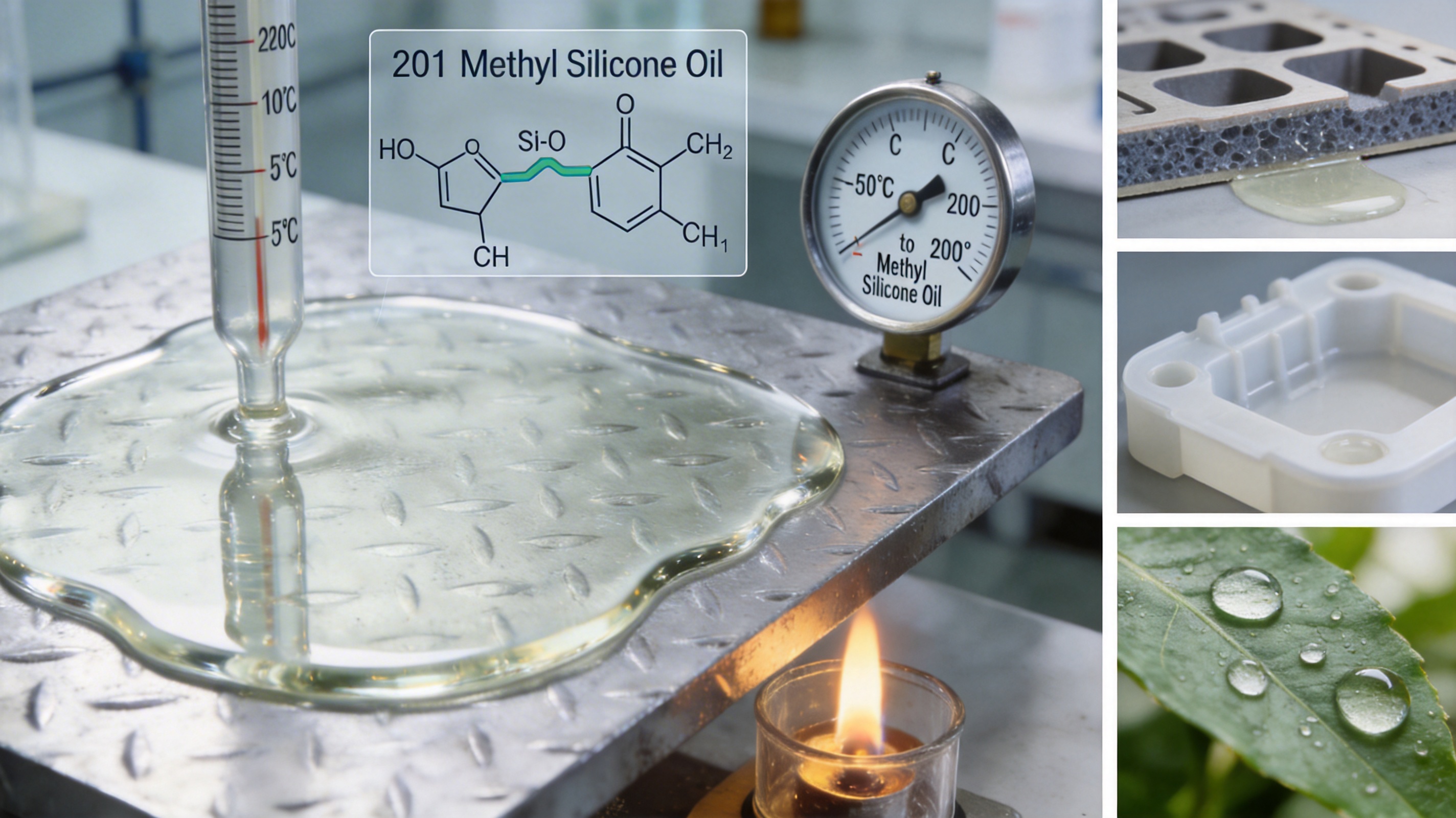
Q&A Section
Below are answers to common questions about 201 Methyl Silicone Oil:
Q1: How does 201 Methyl Silicone Oil function as a lubricant?
A: 201 Methyl Silicone Oil reduces friction between surfaces by forming a thin, uniform film. The molecular structure (flexible silicon-oxygen backbone and methyl groups) allows free chain movement, minimizing adhesion and wear. This makes it ideal for machinery, textiles, and electronics—extending equipment lifespan and improving processing efficiency.
Q2: Why is 201 Methyl Silicone Oil effective in mold release applications?
A: Its low surface energy and molecular mobility allow it to form a non-stick barrier on mold surfaces. This prevents adhesion of resins, plastics, or rubber, facilitating efficient demolding and reducing surface defects in molded products. Leading manufacturers optimize grades for consistent performance across different materials and temperatures.
Q3: How does 201 Methyl Silicone Oil contribute to surface modification?
A: It forms a hydrophobic, chemically resistant layer on treated surfaces. This enhances water repellency, smoothness, and reduces contamination. In agriculture, it improves spreading on plant leaves; in textiles, it enhances softness, antistatic properties, and water resistance—without compromising breathability.
Q4: In which industries is 201 Methyl Silicone Oil commonly used?
A: It is applied in agriculture (spray adjuvants), daily chemicals (cosmetics), electronics (insulation), textiles (finishing), plastics (mold release), and pharmaceuticals (lubricants). Its versatility makes it a key ingredient in many industrial and consumer products.
Q5: How does viscosity affect the performance of 201 Methyl Silicone Oil?
A: Viscosity influences spreading, film stability, and lubrication efficiency. Lower viscosity oils (5-10 cSt) provide faster coverage and smoother spreading (ideal for surface modification). Higher viscosity oils (100-1000 cSt) maintain thicker, more stable films (ideal for lubrication and mold release). Leading manufacturers offer custom viscosity grades to meet specific needs.
Q6: Is 201 Methyl Silicone Oil compatible with other formulation components?
A: Yes, it generally works well with non-ionic surfactants, silicone defoamers, and other silicone additives. Proper formulation ensures stable performance, maintaining lubrication, mold release, and surface modification properties across multi-component systems. Leading manufacturers provide technical support to optimize formulations.
Q7: Is 201 Methyl Silicone Oil safe for use in cosmetics and pharmaceuticals?
A: Yes, it is physiologically inert and non-toxic. It is approved for use in cosmetic products by regulatory bodies like the FDA and EU Cosmetics Regulation. In pharmaceuticals, it is used as a lubricant for tablets and capsules, or as a carrier for active ingredients—due to its safety and compatibility with skin and biological systems.
References
1. Smith, J. D. (2018). Silicone Chemistry: Principles and Applications. CRC Press.
2. Jones, A. B. (2020). Organosilicon Compounds: Properties and Industrial Uses. Wiley-VCH.
3. International Organization for Standardization (ISO). (2019). ISO 16152:2019—Silicone oils for industrial use—Determination of viscosity.
4. Chen, L., et al. (2021). "Thermal Stability of Polydimethylsiloxane (PDMS) Under Inert and Oxidizing Conditions." Journal of Applied Polymer Science, 148(12), e50987.
5. European Chemicals Agency (ECHA). (2022). REACH Registration Dossier for Polydimethylsiloxane (CAS 63148-62-9).


Contact Information
Tel : +86-400-138-5268
Email : [email protected]
Phone : +86-15128434888 / +86-13511051998
Add : Xinqiao Environmental Protection Industrial Park, Wen'an County, Langfang City, Hebei Province, China
Contact Information
Copyright © Hebei Guituo New Material Co., Ltd. All Rights Reserved.
