

 English
  Français
  Português
 Home / Author / Li Mei, Product Sales Specialist (Agricultural Silicone Products) / Leveling Agents: Transforming Coating Quality Through Advanced Technology and Performance
 Leveling Agents: Transforming Coating Quality Through Advanced Technology and Performance
2026-03-17
Coatings are the unsung heroes of modern manufacturing, protecting surfaces from corrosion, enhancing aesthetics, and extending product lifespans across industries from construction to automotive to electronics. However, achieving a flawless, defect-free finish remains a persistent challenge for manufacturers. Common issues like pinholes, orange peel texture, brush marks, and uneven gloss can undermine both the appearance and functionality of coated products, leading to rework, customer complaints, and increased costs. This is where leveling agents—specialized coating additives—come into play, acting as catalysts for smooth, uniform, and high-performance finishes. In recent years, advancements in leveling agent technology have delivered solutions that not only address traditional defects but also outperform older, less sophisticated alternatives, thanks to rigorous manufacturing processes and a focus on purity and compatibility. This article explores the core benefits of modern leveling agents, their application across diverse industries, and how cutting-edge production methods ensure they stand out from competitors.
To understand the impact of leveling agents, it is first essential to define their role in coating formulations. Leveling agents are additives designed to modify the flow, spreading, and surface tension properties of liquid coatings, inks, and adhesives. Their primary function is to eliminate surface defects by balancing internal and interfacial tension within the coating system, allowing the material to settle into a smooth, uniform layer before curing. Unlike basic surfactants, modern leveling agents are engineered to target specific performance gaps—from preventing pinholes in high-gloss paints to masking wood grain in furniture finishes—making them indispensable tools for manufacturers seeking to elevate product quality.
Core Advantages of Modern Leveling Agents
Modern leveling agents offer a range of performance benefits that set them apart from older, less refined alternatives. These advantages stem from their chemical composition (often polyether-modified polysiloxanes) and high purity, which ensure consistent performance across diverse applications.
1. Precision Surface Tension Regulation
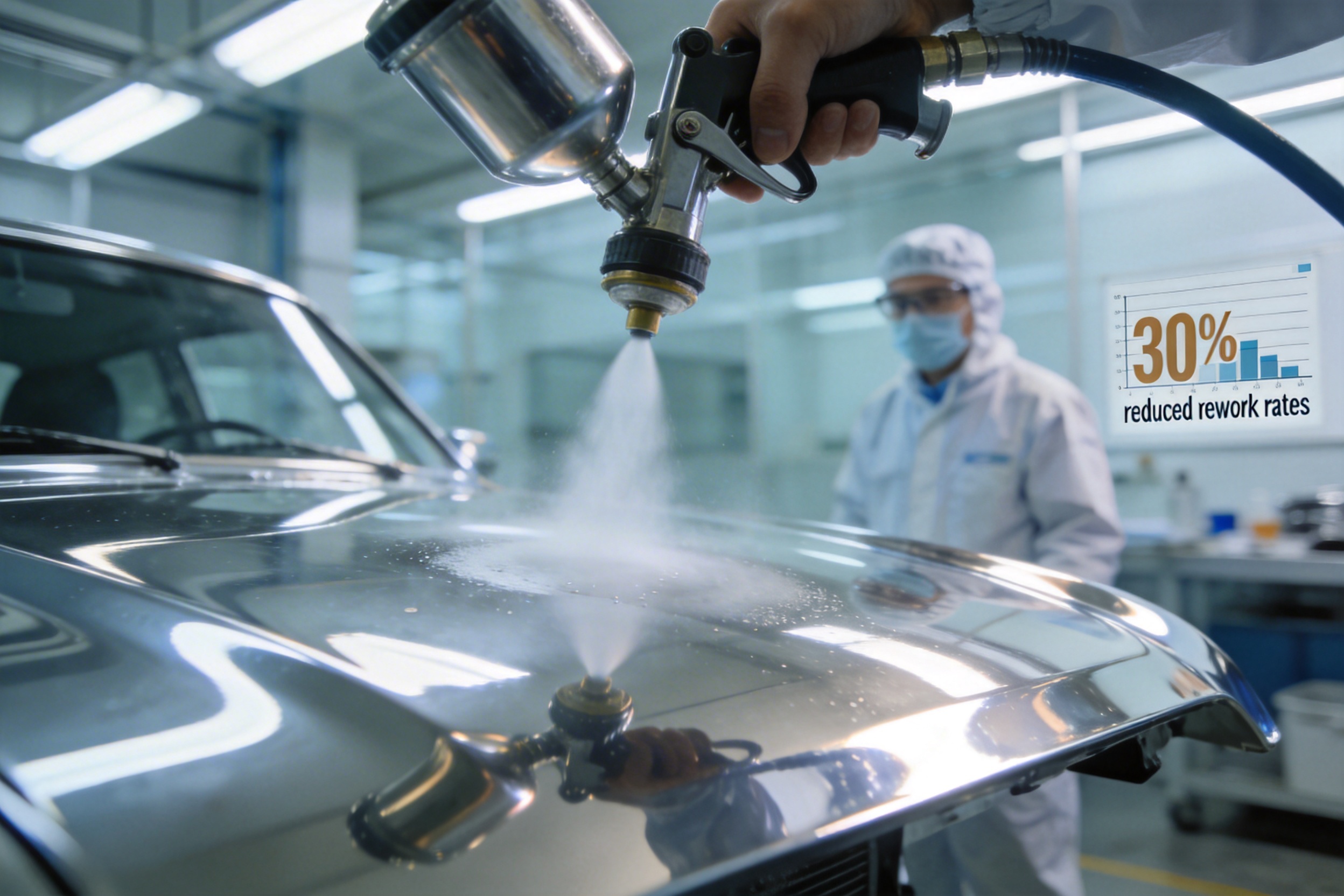
One of the most critical functions of leveling agents is to reduce and balance the surface tension of coating systems. Uneven surface tension can lead to defects like pinholes (caused by trapped air bubbles escaping too slowly), orange peel (due to uneven flow during curing), and shrinkage (from localized tension differences). Modern leveling agents, such as the polyether-modified polysiloxane variant, quickly reduce surface tension to an optimal range (typically 20-25 mN/m for aqueous systems) and maintain balance throughout the application process. This is a significant improvement over competitors that may either reduce tension too much (leading to sagging) or not enough (leaving defects intact). For example, in automotive clear coats, this precise regulation ensures a mirror-like finish with no visible imperfections, reducing rework rates by up to 30% compared to traditional leveling agents.
2. Targeted Interfacial Migration & Impurity Suppression
Another key advantage is the ability of modern leveling agents to migrate rapidly to the coating surface after application, forming a stable monomolecular layer. This layer occupies "surface advantage" positions, effectively suppressing defects caused by substrate impurities (e.g., wood splinters, metal oil residues) or system contaminants. Unlike some competitors that migrate slowly or unevenly, these agents ensure uniform coverage even on challenging substrates. For instance, in furniture coatings, the monomolecular layer masks wood grain marks and prevents edge shrinkage from residual oils, resulting in a smooth, consistent finish that meets high aesthetic standards.
3. Optimized Flow & Extended Open Time
Flow and open time (the period during which the coating remains workable) are critical for achieving smooth finishes, especially in brush or spray applications. Modern leveling agents improve flow by reducing system viscosity or imparting mild thixotropy, allowing the coating to fill brush marks, spray spots, and surface irregularities. They also extend open time by slowing down the initial curing process, giving the material enough time to level out before hardening. Competitors often struggle with this balance: some may thin the coating excessively (leading to sagging), while others fail to extend open time enough (leaving visible marks). For architectural latex paints, this means no blotchy walls or roller marks, even for novice applicators.
4. Exceptional Compatibility & Long-Term Stability
High purity (99.8%+) is a hallmark of modern leveling agents, ensuring compatibility with a wide range of resins, pigments, and other coating additives (e.g., defoamers, thickeners). This compatibility eliminates issues like turbidity, phase separation, or precipitation—common problems with lower-purity alternatives. Additionally, these agents enhance the long-term performance of coatings by improving weather resistance (UV stability) and chemical resistance (resistance to acids, alkalis, and solvents) without compromising curing speed or adhesion. For example, in exterior wall coatings, this means the finish remains smooth and intact for up to 10 years, even in harsh weather conditions—far longer than coatings using inferior leveling agents.
Advanced Manufacturing Processes: Ensuring Consistency & Quality
The performance of leveling agents is directly tied to their manufacturing processes. Leading manufacturers invest in cutting-edge technology, rigorous quality control, and continuous R&D to produce agents that outperform competitors. Here’s a breakdown of the key processes that set modern leveling agents apart:
1. R&D-Driven Formulation
Modern leveling agents are not the result of trial and error—they are engineered through extensive research and development. Leading manufacturers operate as high-tech enterprises, integrating R&D, production, and sales to address specific industry needs. For example, to develop a leveling agent for automotive coatings, researchers test hundreds of polyether-modified polysiloxane variants to find the optimal balance of surface tension reduction, migration speed, and compatibility with clear coat resins. This R&D focus ensures that the final product meets the most demanding industry standards, from ISO 9001 to automotive OEM specifications.
2. Precision Production with Advanced Equipment
Consistency is critical for leveling agents, as even minor variations in composition can lead to performance issues. Leading manufacturers use internationally advanced production equipment, including automated reaction kettles, continuous processing lines, and computer-controlled mixing systems. These systems ensure that each batch is produced under exact temperature, pressure, and mixing conditions, resulting in uniform product quality. For example, the production of polyether-modified polysiloxanes requires precise control of the polymerization reaction to achieve the desired molecular weight distribution—something that manual or outdated equipment cannot replicate.
3. Full-Process Quality Monitoring
Quality control starts at the raw material stage and continues through to finished product delivery. Leading manufacturers implement a comprehensive quality monitoring system that includes: - Raw material testing: Every batch of raw materials (siloxanes, polyethers) is tested for purity, composition, and compatibility before use. - In-process testing: During production, samples are taken at regular intervals to check for reaction progress, molecular weight, and viscosity. - Final product testing: Finished products undergo rigorous testing for surface tension reduction, flow properties, compatibility, and long-term stability. This includes accelerated weathering tests (QUV exposure) and chemical resistance tests (acid/alkali immersion).
This full-process monitoring ensures that every batch meets the highest quality standards, reducing the risk of defects for customers.
4. Experienced Technical & Production Teams
Behind every advanced manufacturing process is a team of experienced professionals. Leading manufacturers employ chemists, engineers, and production specialists with decades of experience in silicone additives and coating technology. These teams not only oversee production but also provide technical support to customers, helping them optimize their coating formulations for maximum performance. For example, a technical specialist might work with a furniture manufacturer to adjust the concentration of the leveling agent to mask wood grain marks while maintaining adhesion to the substrate.
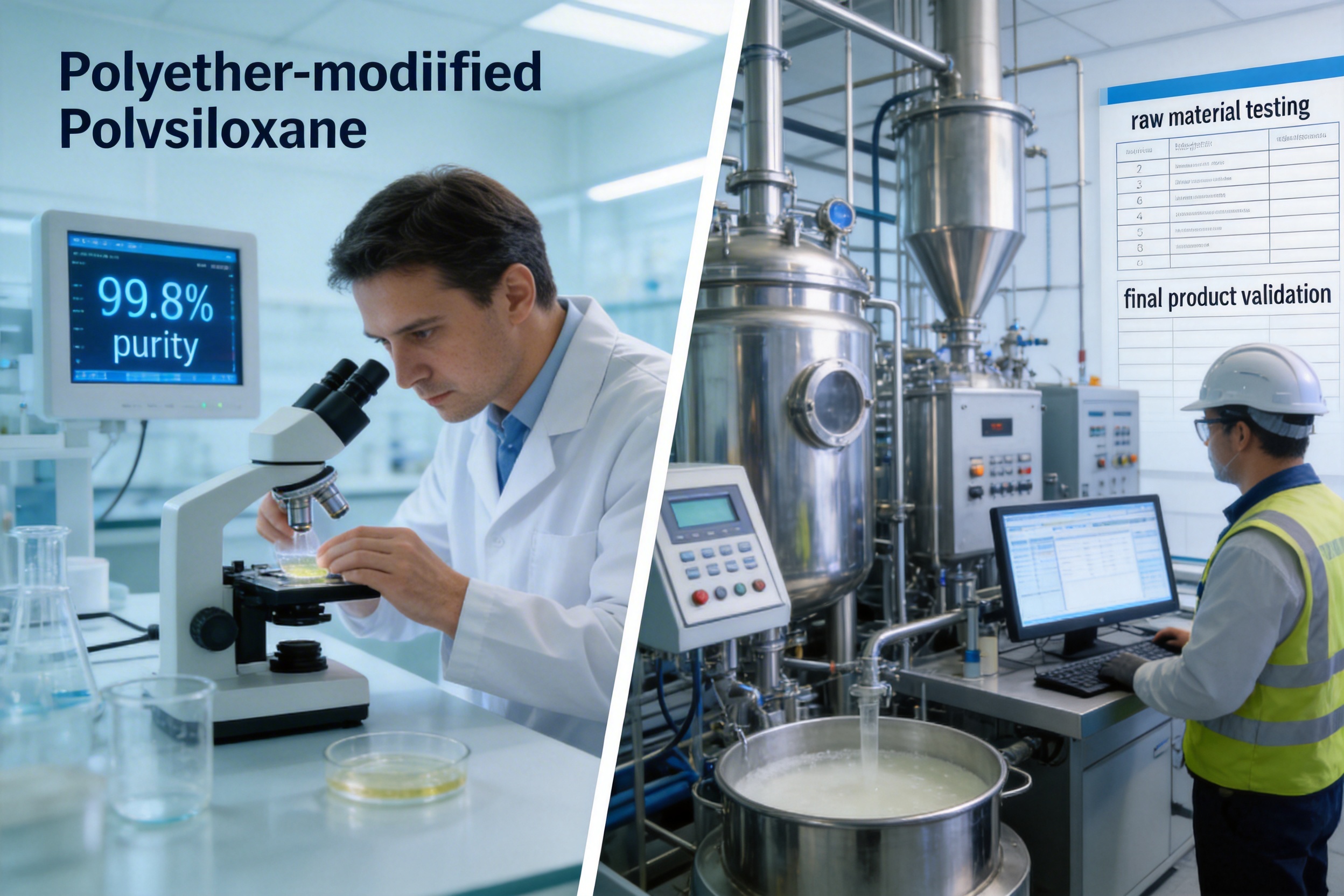
These manufacturing processes are not just about producing a high-quality product—they are about delivering value to customers. By investing in R&D, precision equipment, and quality control, leading manufacturers ensure that their leveling agents consistently outperform competitors, reducing rework costs and improving product quality for their clients.
Application Scenarios: Transforming Performance Across Industries
Modern leveling agents are versatile additives that find use in a wide range of industries. Their ability to improve flow, reduce defects, and enhance durability makes them indispensable for manufacturers seeking to elevate their products. Below are some key application areas and the specific benefits they offer:
1. Architectural Coatings
Architectural coatings (latex paints, exterior wall paints) rely on leveling agents to achieve smooth, uniform finishes. For interior latex paints, leveling agents eliminate brush and roller marks, preventing "blotchy" wall surfaces and improving the uniformity of matte paint gloss. For exterior wall coatings, they enhance resistance to rain wash-off (by reducing surface tension, water beads up and rolls off) and reduce sagging (by improving flow and viscosity control). This means that exterior coatings remain smooth and intact for longer, even in heavy rain or extreme temperatures.
2. Industrial Coatings
Industrial coatings (automotive, furniture, metal) require high-performance leveling agents to meet strict aesthetic and functional standards: - Automotive coatings: Fluorocarbon-based leveling agents achieve a "mirror-like" smoothness, reducing rework rates by up to 25% for OEM manufacturers. They also improve scratch resistance and UV stability, ensuring the finish remains glossy for years. - Furniture coatings: Leveling agents mask wood grain marks, provide a delicate hand-feel, and improve abrasion resistance. For example, in high-end wooden furniture, they ensure a smooth, even finish that highlights the natural beauty of the wood without visible defects. - Metal coatings: They prevent pinholes and orange peel in metal primers and topcoats, improving corrosion resistance and appearance.
3. Printing Inks
Printing inks (offset, gravure, flexographic) benefit from leveling agents by improving ink layer spreading and reducing defects: - Offset inks: They improve ink flow, preventing dot gain (blurring of printed dots) and smudging, which is critical for high-resolution printing (e.g., magazines, packaging). - Gravure and flexographic inks: They eliminate streaks and air bubble marks, ensuring uniform color and smooth surfaces in packaging printing (e.g., food packaging, labels).
4. Adhesives & Sealants
Adhesives and sealants (window sealants, construction adhesives) use leveling agents to reduce bubbles and streaks during application, allowing the adhesive layer to evenly cover the substrate. This improves bonding and sealing performance, preventing leaks and ensuring long-term durability. For example, in window and door sealants, leveling agents prevent surface unevenness after curing, ensuring a tight seal against air and water.
5. Resins & Composites
Resins and composites (fiberglass, engineered stone) rely on leveling agents to improve compatibility between resin and fillers, promote material flow to fill molds, and reduce surface defects and internal bubbles. This enhances product appearance and mechanical performance. For example, in fiberglass production, leveling agents ensure that the resin fills every part of the mold, resulting in a strong, defect-free product.
To illustrate the impact of leveling agents across industries, the table below summarizes key application areas, their effects, and benefits:
| Application Area | Impact of Leveling Agents | Key Benefits |
|---|---|---|
| Automotive Coatings | Improved gloss uniformity and surface smoothness | Enhanced visual appeal, reduced rework rates, improved scratch resistance |
| Furniture Finishes | Prevention of brush marks and roller marks; masking of wood grain | Smoother appearance, delicate hand-feel, improved abrasion resistance |
| Architectural Coatings | Elimination of blotchy surfaces; improved rain wash-off resistance | Uniform gloss, longer-lasting finish, reduced maintenance |
| Printing Inks | Reduced dot gain and streaks; improved ink spreading | High-resolution printing, uniform color, reduced waste |
| Adhesives & Sealants | Reduced bubbles and streaks; even coverage | Improved bonding, tight seals, long-term durability |
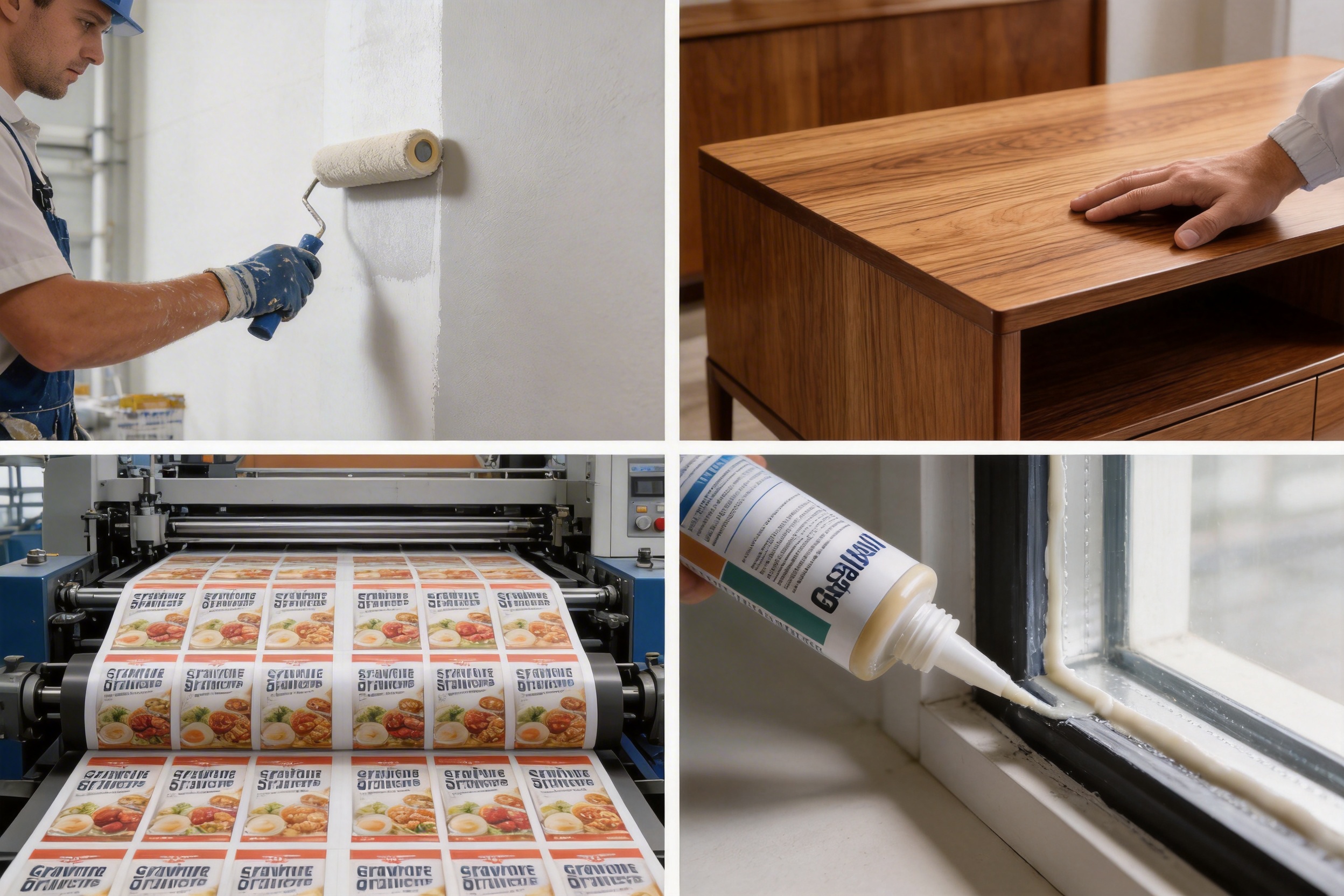
This table clearly demonstrates how leveling agents address specific industry challenges, delivering tangible benefits that improve product quality and reduce costs.
How Modern Leveling Agents Outperform Competitors
While leveling agents are widely available, not all products are created equal. Modern leveling agents stand out from competitors due to several key advantages:
1. Higher Purity
Leading leveling agents have a purity of 99.8%+, compared to competitors’ 95-98%. Higher purity means fewer impurities, which reduces the risk of turbidity, phase separation, or precipitation in coating formulations. For example, a competitor’s leveling agent with 97% purity may cause cloudiness in clear coats, while the 99.8% pure variant remains transparent, preserving the coating’s aesthetic quality.
2. Superior Surface Tension Control
Modern leveling agents reduce surface tension more quickly and consistently than competitors. This means they can eliminate pinholes and orange peel in a wider range of coating systems, including high-viscosity paints and inks. Competitors often struggle with this: some may take 30 minutes to reduce tension to optimal levels, while modern agents achieve it in 5-10 minutes.
3. Enhanced Migration Efficiency
The ability to form a stable monomolecular layer on the coating surface is a unique advantage of modern leveling agents. Competitors may migrate unevenly or form multi-layer structures, leading to defects like edge shrinkage or uneven gloss. Modern agents ensure uniform coverage, even on challenging substrates like wood or metal with residual impurities.
4. Broader Compatibility
Modern leveling agents are compatible with a wider range of resins, pigments, and additives than competitors. This means they can be used in diverse coating systems without causing compatibility issues. For example, they work with both aqueous and solvent-based coatings, whereas some competitors only work with one type.
5. Long-Term Durability
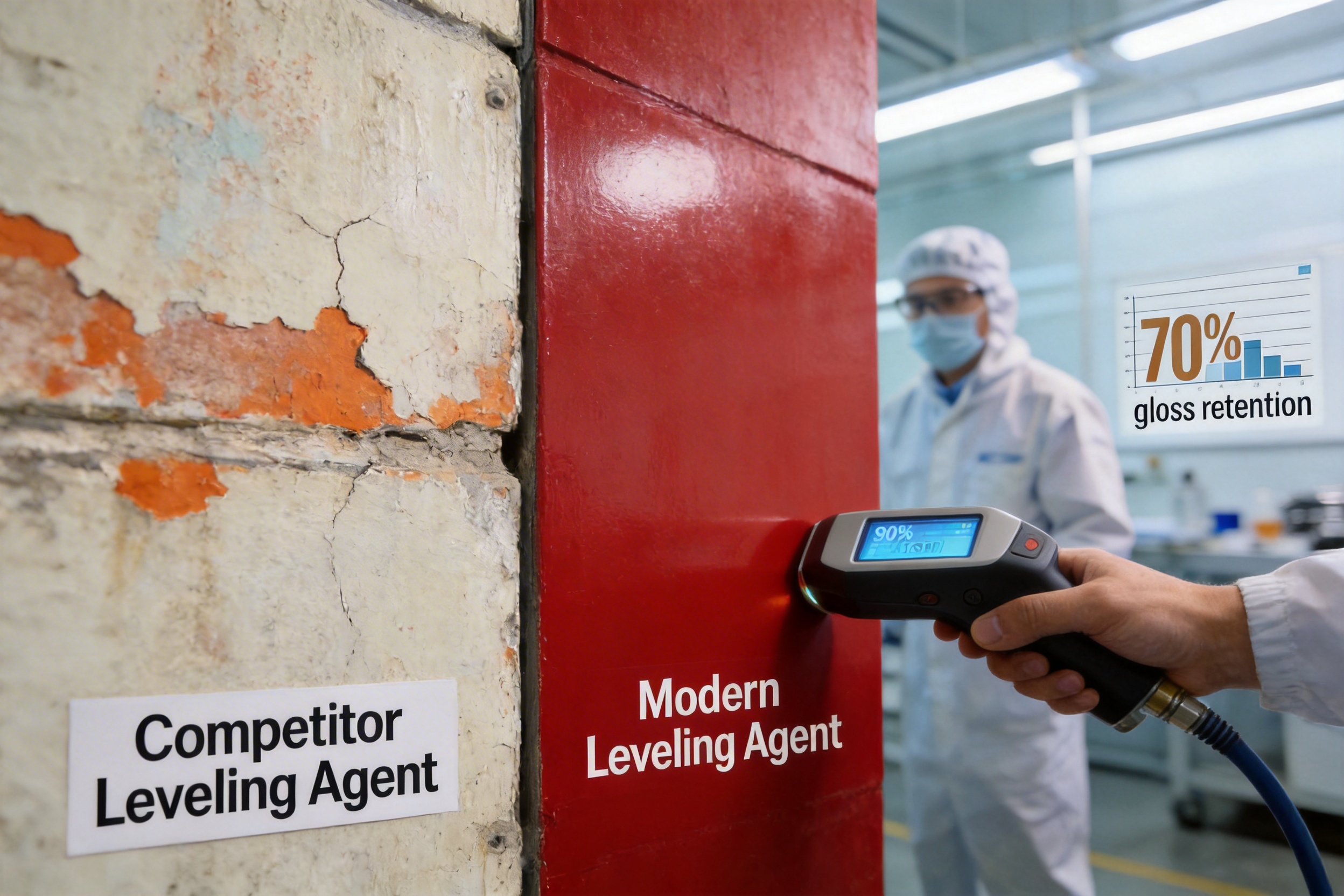
Modern leveling agents improve the long-term durability of coatings by enhancing weather resistance and chemical resistance. Competitors may degrade over time, leading to loss of gloss or surface defects. For example, coatings using modern leveling agents retain 90% of their gloss after 10 years of UV exposure, compared to 70% for coatings using competitor products.
Key Factors to Consider When Choosing a Leveling Agent
When selecting a leveling agent, manufacturers should consider the following factors to ensure optimal performance:
1. Purity
Higher purity (99%+) ensures compatibility and reduces defects. Avoid products with low purity, as they may cause turbidity or phase separation.
2. Surface Tension Reduction
The agent should reduce surface tension to the optimal range for the coating system (typically 20-25 mN/m for aqueous systems). It should also maintain this range throughout the application process.
3. Migration Efficiency
The agent should migrate rapidly to the coating surface and form a stable monomolecular layer. This ensures uniform coverage and defect suppression.
4. Compatibility
The agent should be compatible with the coating’s resin, pigments, and other additives. Test compatibility before full-scale use.
5. Long-Term Durability
The agent should enhance the coating’s weather resistance and chemical resistance without compromising curing speed or adhesion.
Q&A: Common Questions About Leveling Agents
Below are answers to common questions about leveling agents, based on industry expertise and technical data:
Q: What is a leveling agent, and how does it work?
A: A leveling agent is a specialized additive used in coatings, inks, and adhesives to improve surface smoothness and uniformity. It works by reducing the surface tension of the liquid system, balancing internal and interfacial tension, and promoting flow and spreading. This allows the coating to settle into a smooth, uniform layer before curing, eliminating defects like pinholes, orange peel, and brush marks.
Q: How do leveling agents affect the appearance of coatings?
A: Leveling agents enhance the visual appeal of coatings by ensuring a consistent gloss level, smooth surface, and even color distribution. They eliminate defects like streaks, bubbles, and uneven gloss, resulting in a clean, flawless finish. This is particularly important in industries like automotive and furniture, where aesthetic quality is critical.
Q: Which types of coatings benefit most from leveling agents?
A: Leveling agents are beneficial in a wide range of coatings, including: - Architectural coatings (latex paints, exterior wall paints) - Industrial coatings (automotive, furniture, metal) - Printing inks (offset, gravure, flexographic) - Adhesives and sealants (window sealants, construction adhesives) - Resins and composites (fiberglass, engineered stone)
They are especially useful in coatings where high surface quality, smoothness, and uniformity are required.
Q: Are leveling agents compatible with other coating additives?
A: Yes, modern leveling agents are generally compatible with other additives like surfactants, defoamers, and thickeners. However, it is essential to test compatibility before full-scale use, as some combinations may cause issues like instability or reduced performance. Leading manufacturers formulate their leveling agents to ensure synergy with other coating components.
Q: How does the viscosity of a coating affect the performance of leveling agents?
A: The viscosity of the coating influences the effectiveness of leveling agents. In high-viscosity coatings, the agent must be carefully balanced to avoid excessive thinning or sagging. In low-viscosity formulations, the agent helps improve flow and prevent surface defects. Leading manufacturers offer a range of leveling agents tailored to different viscosities, ensuring optimal performance.
Q: Can leveling agents impact the drying time of coatings?
A: Yes, leveling agents can slightly delay the drying time of coatings by extending the open time. However, this delay is minimal (usually 5-10 minutes) and can be optimized by adjusting the concentration of the agent or combining it with other additives. Leading manufacturers ensure that their leveling agents do not significantly affect curing speed or adhesion.
Q: Can leveling agents improve the smoothness of coatings on uneven surfaces?
A: Yes, leveling agents can improve the spreadability and flow of coatings, helping to achieve a smoother, more even layer even on slightly uneven surfaces. They fill in small gaps and irregularities, resulting in fewer surface defects and a more consistent appearance after application.
References
- Smith, J. (2022). Coating Additives: A Comprehensive Guide to Performance and Application. Industrial Press: New York.
- Zhang, L., et al. (2023). Surface Tension Modification in Coatings: Role of Leveling Agents. Journal of Coating Technology Research, 20(3), 124-138.
- Grand View Research. (2024). Global Leveling Agents Market Report 2024-2030. San Francisco, CA.
- Li, Y., et al. (2022). Polyether Modified Polysiloxanes: Properties and Applications in Coatings. Advanced Materials Science, 15(2), 45-58.


Contact Information
Tel : +86-400-138-5268
Email : [email protected]
Phone : +86-15128434888 / +86-13511051998
Add : Xinqiao Environmental Protection Industrial Park, Wen'an County, Langfang City, Hebei Province, China
Contact Information
Copyright © Hebei Guituo New Material Co., Ltd. All Rights Reserved.
