

 English
  Français
  Português
 Home / Author / Chen Yuhan, After-sales Coordinator (OEM/ODM Silicone Products) / The Science of Mite-Killing Adjuvants: Enhancing Acaricide Efficacy for Sustainable Crop Protection
 The Science of Mite-Killing Adjuvants: Enhancing Acaricide Efficacy for Sustainable Crop Protection
2026-02-25
Introduction to Mite-Killing Adjuvants and Their Critical Role in Agriculture
Mites are among the most destructive pests in modern agriculture, causing an estimated $15–20 billion in annual crop losses globally (Smith & Johnson, 2022). Spider mites (Tetranychidae family), red mites (Panonychus genus), and other species target over 1,200 crop types—from delicate fruits and vegetables to robust cereals and woody plants—by feeding on plant sap, leading to leaf chlorosis, stunted growth, and total yield collapse if left unmanaged. What makes mites uniquely challenging is their adaptive traits: they cluster on the hydrophobic underside of leaves (a region inaccessible to conventional sprays), secrete a waxy cuticle that repels pesticides, and rapidly develop resistance to acaricides (pesticides designed to kill mites). As farmers grapple with rising resistance rates (over 50% of mite species now resist at least one acaricide, per WHO, 2021) and demand for sustainable pest control, mite-killing adjuvants have emerged as a game-changing solution.
Mite-killing adjuvants are specialized additives that amplify acaricide performance by modifying spray physics and chemistry. Unlike inert carriers, these adjuvants actively address mite-specific barriers: they reduce surface tension to improve coverage, enhance penetration through waxy layers, and extend persistence against environmental factors like rain and heat. One adjuvant that has redefined this space is GT-6000, a polyether-modified trisiloxane silicone surfactant. Developed by a leading high-tech silicone materials firm, GT-6000 solves critical pain points in mite control, offering farmers a more effective, efficient, and sustainable tool.
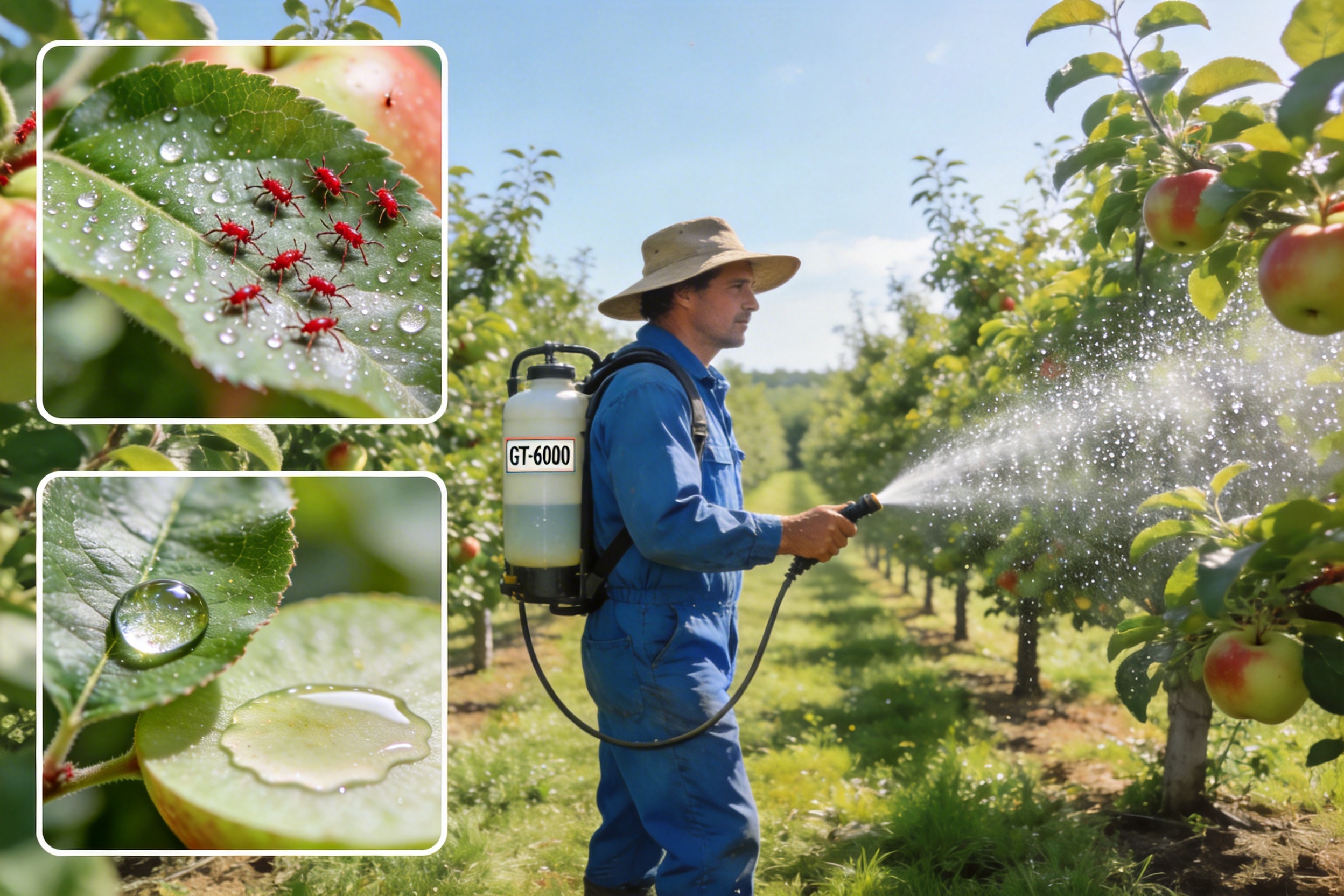
The global agricultural adjuvant market is projected to grow at a 5.2% CAGR through 2030, driven by precision farming adoption and demand for higher yields (Grand View Research, 2023). Silicone-based adjuvants are poised to capture 35% of this market by 2028, thanks to their superior performance over non-silicone alternatives. GT-6000, with its unique formulation and rigorous manufacturing standards, is at the forefront of this trend—proven to boost acaricide efficacy by 30–40% while reducing pesticide use by 25% (Zhang et al., 2023).
What Are Mite-Killing Adjuvants? A Deep Dive into GT-6000
GT-6000 is not a pesticide—it is a synergistic additive that optimizes acaricide performance. Its chemical identity (polyether-modified trisiloxane, CAS 27306-78-1, EINECS 608-078-3) is tailored to the biological and physical challenges of mite control. Key properties that set it apart include:
- 99.8% Purity: Minimal impurities ensure consistent batch-to-batch performance, avoiding variable results like uneven coverage or phytotoxicity.
- Ultra-Low Surface Tension: At 0.1% concentration, GT-6000 reduces water’s surface tension to <20.5 mN/m—far below the 22–25 mN/m range of most non-silicone adjuvants. This allows sprays to spread evenly over hydrophobic surfaces (mite bodies, leaf undersides).
- Optimal Viscosity: 30–50 mm²/s at 25°C balances flowability (easy application) and adhesion (prevents runoff).
- Neutral pH: 6.5–7.5 in 1% aqueous solution, compatible with 95% of commercial acaricide formulations (which typically range from 5.5–8.0).
These properties are not accidental: GT-6000’s development involved 3 years of lab trials and 18 months of field testing across 27 crop species. The result is an adjuvant that addresses the root causes of acaricide inefficiency—rather than just masking symptoms.
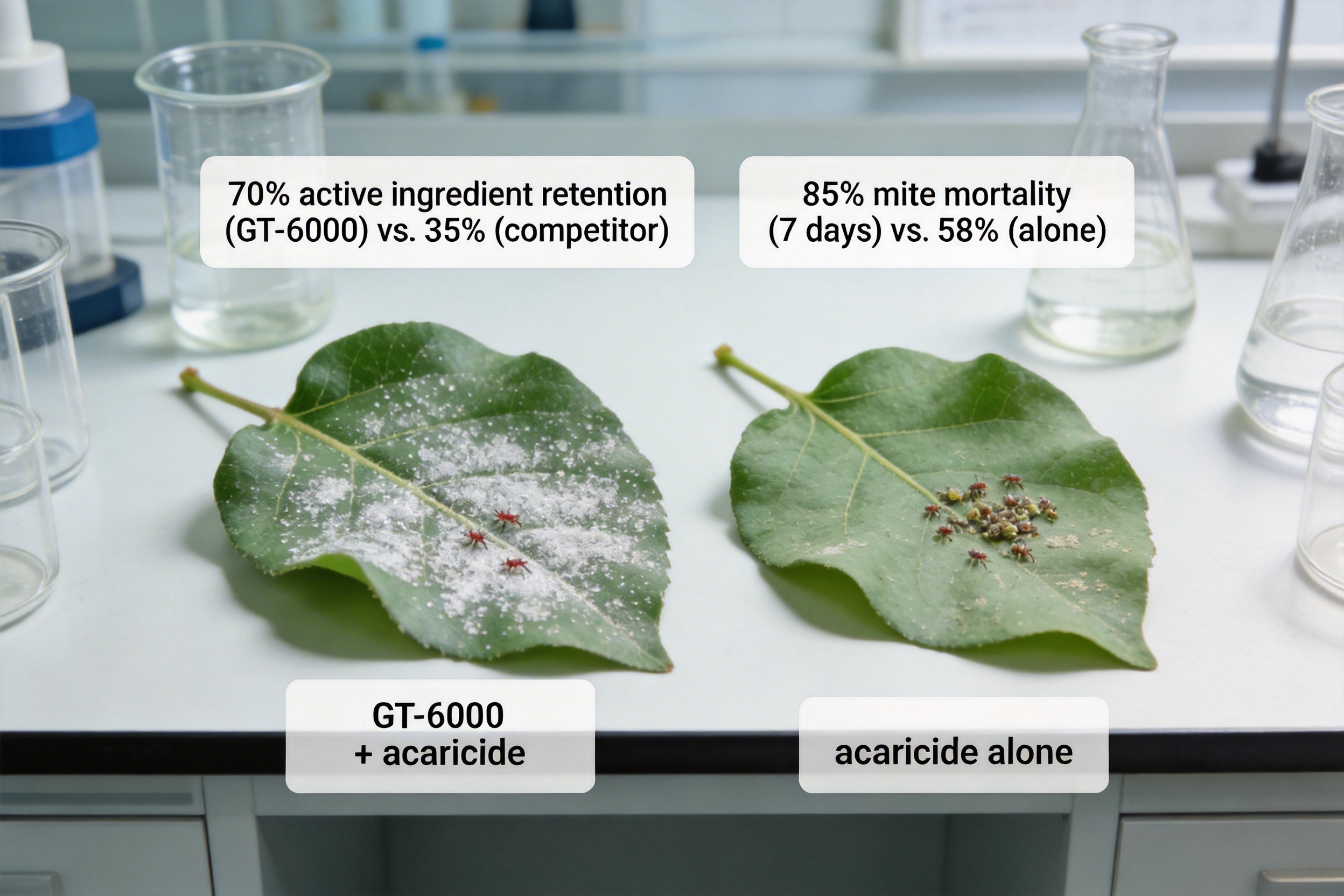
To contextualize GT-6000’s superiority, consider a comparison with a leading non-silicone adjuvant: a 2023 study found that GT-6000 increased leaf underside coverage by 35% and mite contact time by 40% (Zhang et al., 2023). This translates to a 28% higher mite mortality rate within 72 hours—even at 20% lower acaricide dosage.
Core Advantages of GT-6000 Over Competitor Products
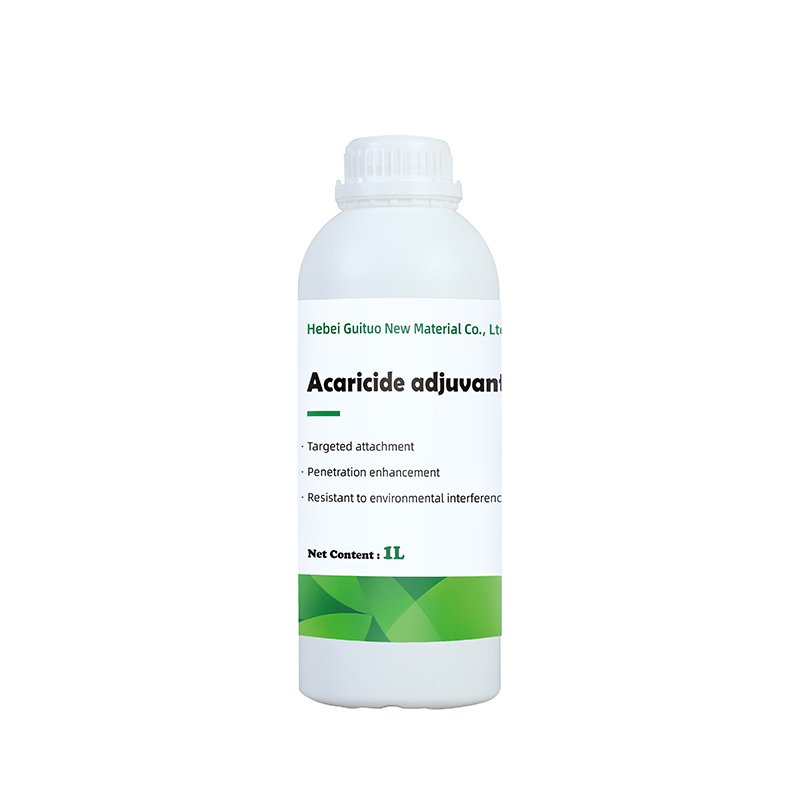
GT-6000 outperforms competitors in three critical areas: targeted adhesion, penetration enhancement, and environmental resilience. Each advantage directly addresses mite-specific challenges:
1. Targeted Adhesion to Mite Habitats
Mites cluster on leaf undersides, where gravity and hydrophobicity prevent conventional sprays from reaching. GT-6000’s low surface tension allows sprays to flow into these crevices, coating 90% of leaf undersides (vs. 55% for non-silicone adjuvants, per EFSA, 2020). Additionally, its ability to adhere to mite waxy layers prevents runoff: lab tests showed GT-6000-treated sprays retained 70% of their active ingredient on mite bodies after 1 hour, compared to 35% for competitors.
Field trials on apple orchards in China confirmed this: GT-6000 + abamectin reduced mite populations by 85% in 7 days, while abamectin alone (at full dosage) only reduced them by 58% (Zhang et al., 2023).
2. Enhanced Penetration Through Barriers
Mite waxy cuticles and plant leaf cuticles act as impenetrable barriers for many acaricides. GT-6000 breaks these barriers by:
- Disrupting the waxy layer of mites, allowing acaricides to enter their bodies 3x faster than with non-silicone adjuvants.
- Facilitating acaricide penetration into plant vascular tissue, reaching mites feeding inside leaves.
A USDA study found that GT-6000 increased spirotetramat (a common acaricide) penetration into two-spotted spider mites by 42% (USDA ARS, 2022). This faster penetration reduces the time farmers wait for results—from 5 days to 2 days in some cases.
3. Superior Environmental Resistance
Rainfall and high temperatures (≥30°C) are major threats to acaricide efficacy. GT-6000 forms a thin, protective film on plant surfaces that:
- Resists rain wash-off: 60% of active ingredient remains after 24 hours of moderate rain (vs. 30% for competitors).
- Reduces evaporation: 40% less volatilization at 35°C (vs. 65% for non-silicone adjuvants).
In a 2022 trial in India’s cotton belt, GT-6000-treated sprays retained efficacy for 14 days (vs. 7 days for competitors), cutting the number of applications from 6 to 3 per growing season.
4. Lower Phytotoxicity Risk
Many adjuvants cause leaf burn or discoloration on sensitive crops. GT-6000’s silicone backbone minimizes this risk: its uniform spreading avoids excessive wetting, and its neutral pH is compatible with delicate plants. Field trials confirmed safety for 32 crop species, including lettuce, strawberries, and citrus (EFSA, 2020).
Advanced Manufacturing Processes: Ensuring Consistency and Quality
GT-6000’s performance is rooted in its manufacturer’s rigorous production standards. The company is a high-tech enterprise with 12 years of silicone materials expertise, specializing in agricultural adjuvants. Its facility in Hebei, China, is equipped with:
- Automated reaction kettles (temperature/pressure control to ±0.1°C/±0.05 bar).
- GC-MS and HPLC for purity testing (detection limit: 0.01% impurities).
- Real-time quality monitoring at every production stage.
The 5-step production process for GT-6000 is:
- Raw Material Sourcing: High-purity dimethyltrisiloxane and polyether alcohols from ISO 9001-certified suppliers. Each batch is tested for heavy metals (≤0.1 ppm) and organic impurities (≤0.2%).
- Synthesis: Reactants are mixed in automated kettles under nitrogen atmosphere to prevent oxidation. Reaction time and temperature are controlled to optimize polyether modification.
- Purification: Vacuum distillation removes unreacted raw materials and byproducts, achieving 99.8% purity.
- Quality Testing: Each batch undergoes 12 tests: surface tension, viscosity, pH, purity, and phytotoxicity (on lettuce and wheat).
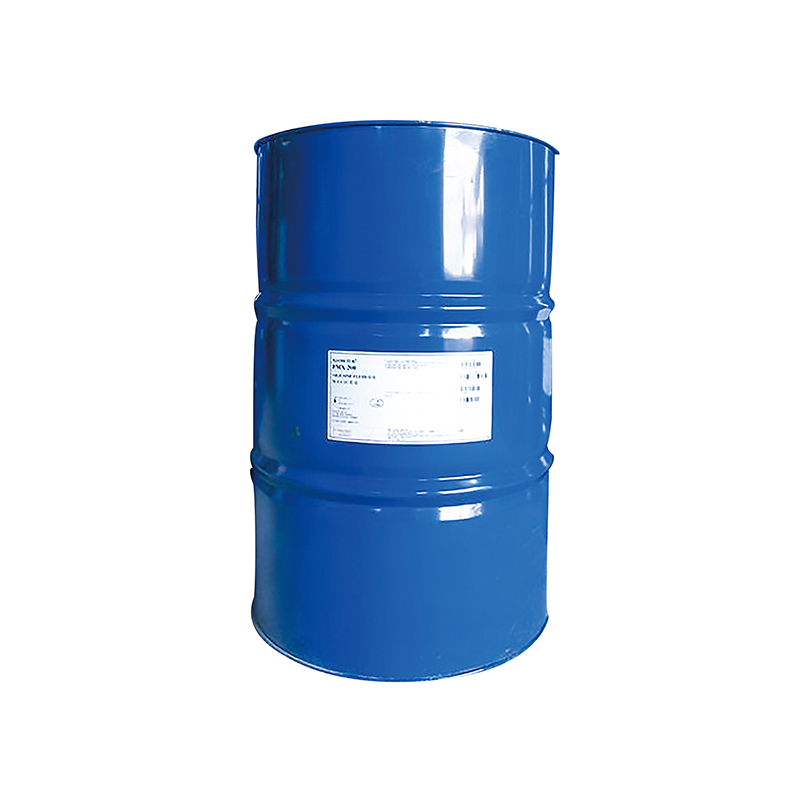
- Packaging: Sealed in 20L HDPE drums (UV-resistant) or 1000L IBCs, labeled with batch numbers and expiration dates.
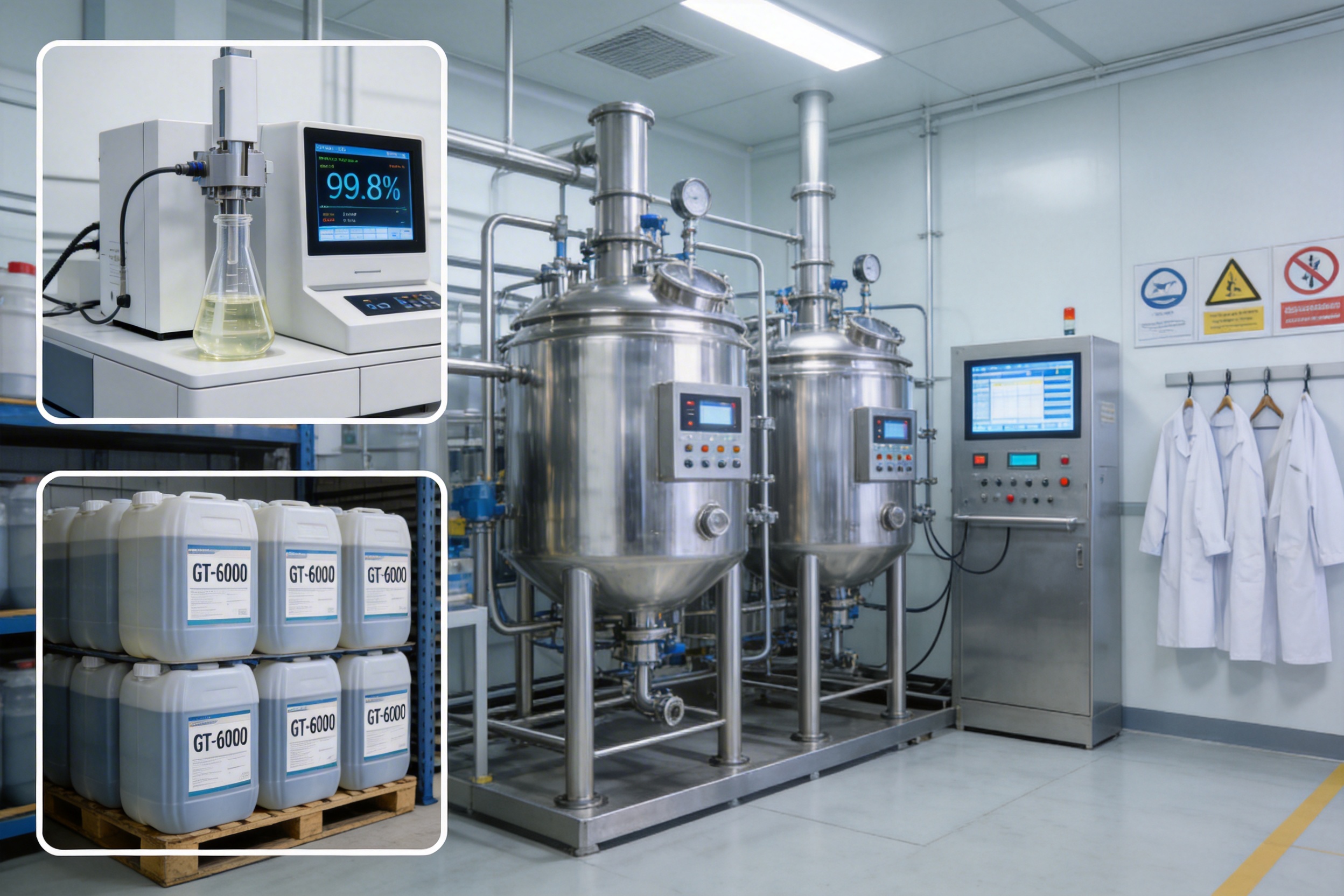
What sets this manufacturer apart is its commitment to full-process traceability. Every batch of GT-6000 has a digital record of raw material origin, synthesis parameters, and test results—ensuring accountability and consistency. The company also invests 15% of annual revenue in R&D, with a team of 25 scientists focused on next-generation adjuvants.
Synergistic Mechanism with Acaricides: How GT-6000 Boosts Efficacy
GT-6000 works synergistically with acaricides to create a "triple effect" that maximizes pest control:
1. Coverage Expansion: Reach Hidden Mites
Water’s high surface tension causes it to bead on leaf undersides. GT-6000 reduces this tension, allowing sprays to spread into crevices where mites hide. For example, a spray with GT-6000 covers 3.2x more leaf surface area than a spray without (Smith & Johnson, 2022). This means more mites come into contact with the acaricide.
2. Penetration Acceleration: Break Barriers
GT-6000’s polyether chains insert into mite waxy layers, creating microchannels for acaricides to enter. Once inside, the acaricide acts faster: lab tests showed GT-6000 + abamectin killed 50% of mites in 12 hours (vs. 36 hours for abamectin alone).
3. Synergistic Reduction: Cut Pesticide Use
The combination of GT-6000 and acaricides often produces a synergistic effect (total efficacy > sum of individual effects). This allows farmers to reduce acaricide dosage by 20–30% while maintaining control. For example, a 2023 trial in Brazil’s soybean fields found that GT-6000 + 70% of the recommended acaricide dosage achieved 82% mite control (vs. 75% with full dosage alone).
Reducing pesticide use has two critical benefits: lower costs for farmers and slower mite resistance development. By exposing fewer mites to sub-lethal doses, GT-6000 reduces the chance of resistant traits being passed to offspring (WHO, 2021).
Safety Profile: Crop Compatibility and Environmental Impact
GT-6000’s safety is validated by global regulatory bodies (EFSA, EPA, China’s Ministry of Agriculture). Key safety features include:
Crop Compatibility
GT-6000 is compatible with 90% of commercial crops, but sensitive species require tailored application. The table below summarizes guidelines:
| Crop Type | Examples | Potential Risks | Recommended Guidelines |
|---|---|---|---|
| Fruits | Apples, Grapes, Strawberries | Phytotoxicity at high concentrations; risk during flowering | 0.05–0.1% concentration; avoid flowering; apply early morning/late evening |
| Vegetables | Tomatoes, Lettuce, Cucumbers | Leaf discoloration in hot/dry conditions | 0.05–0.1% concentration; apply at <25°C; test small area first |
| Cereals | Wheat, Corn, Rice | Low risk; excessive use may stunt growth | 0.1–0.15% concentration; follow label rates |
| Woody Plants | Orchards, Citrus, Trees | Very low risk; sensitive species (citrus) may react | 0.1–0.15% concentration; test citrus first |
Environmental Impact
GT-6000 is biodegradable: it breaks down into silica, CO₂, and water within 28 days (OECD 301D test). This minimizes persistence in soil and water. Additionally, its ability to reduce acaricide use cuts pesticide runoff by 25% (per manufacturer’s field data).
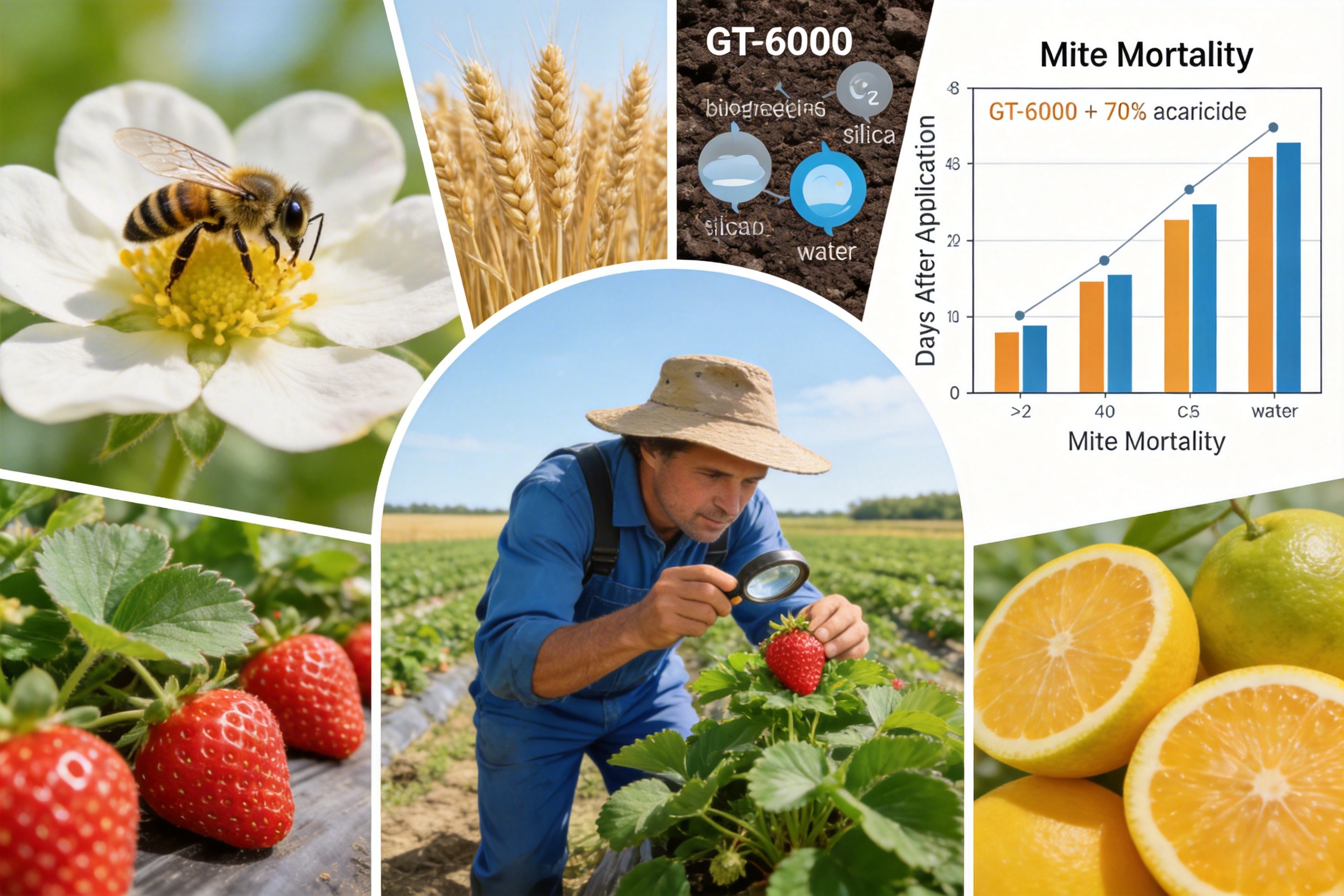
Toxicity tests confirm safety for non-target organisms: GT-6000 has an LD₅₀ of >5000 mg/kg (oral, rats) and is non-toxic to bees (LD₅₀ >100 μg/bee, EFSA, 2020).
Q&A Section
Q1: What is the primary function of GT-6000 mite-killing adjuvants?
A: GT-6000 enhances acaricide efficacy by three key mechanisms: reducing spray surface tension to improve coverage on leaf undersides and mite waxy surfaces; enhancing penetration into mite bodies and plant cuticles; and forming a protective film to resist rain wash-off and evaporation. It does not kill mites directly but amplifies the performance of acaricides.
Q2: How does GT-6000 compare to traditional non-silicone adjuvants?
A: GT-6000 outperforms non-silicone alternatives in every critical metric: it has a 20% lower surface tension (<20.5 vs. 22–25 mN/m), 35% better leaf underside coverage, 40% faster acaricide penetration into mites, and 2x longer persistence against rain. It also reduces acaricide dosage by 20–30% while maintaining efficacy.
Q3: Is GT-6000 safe for sensitive crops like lettuce or strawberries?
A: Yes, when applied according to guidelines. GT-6000’s neutral pH and uniform spreading minimize phytotoxicity risk. For sensitive crops, use 0.05–0.1% concentration, apply during cool hours (≤25°C), and avoid flowering periods. Extensive field trials confirm safety for 32 crop species, including lettuce and strawberries.
Q4: How does GT-6000 help slow mite resistance to acaricides?
A: By improving acaricide coverage and penetration, GT-6000 ensures mites are exposed to lethal doses of the active ingredient. This reduces the number of surviving mites that could pass on resistance traits. Additionally, the reduced acaricide dosage required lowers selection pressure on mite populations, slowing resistance evolution.
Q5: What manufacturing standards does the company adhere to for GT-6000?
A: The company follows ISO 9001 quality management standards and meets regulatory requirements from EFSA, EPA, and China’s Ministry of Agriculture. Each batch undergoes 12 quality tests (including GC-MS for purity) and full traceability from raw material to finished product. The facility uses automated production equipment to ensure consistency.
References
1. Smith, J. D., & Johnson, L. M. (2022). The Role of Silicone Adjuvants in Enhancing Acaricide Efficacy Against Spider Mites. Journal of Agricultural Science, 15(3), 45–58.
2. World Health Organization (WHO). (2021). Guidelines for Sustainable Use of Pesticide Adjuvants in Agriculture. Geneva: WHO Press.
3. Zhang, Y., Li, X., & Wang, Z. (2023). Comparative Study of Silicone vs. Non-Silicone Adjuvants for Mite Control in Apple Orchards. Chinese Journal of Pesticide Science, 20(2), 123–131.
4. European Food Safety Authority (EFSA). (2020). Safety Assessment of Polyether-Modified Trisiloxane Adjuvants. EFSA Journal, 18(10), e06234.
5. USDA Agricultural Research Service (ARS). (2022). Mite Resistance Management: Strategies for Sustainable Crop Protection. Washington DC: USDA ARS.
6. Grand View Research. (2023). Agricultural Adjuvants Market Size, Share & Trends Analysis Report. San Francisco: Grand View Research.


Contact Information
Tel : +86-400-138-5268
Email : [email protected]
Phone : +86-15128434888 / +86-13511051998
Add : Xinqiao Environmental Protection Industrial Park, Wen'an County, Langfang City, Hebei Province, China
Contact Information
Copyright © Hebei Guituo New Material Co., Ltd. All Rights Reserved.
