

 English
  Français
  Português
 Home / Author / Chen Yuhan, After-sales Coordinator (OEM/ODM Silicone Products) / Anionic Plastic & Rubber Mold Release Agent: Advancing Efficiency and Quality in Modern Manufacturing
 Anionic Plastic & Rubber Mold Release Agent: Advancing Efficiency and Quality in Modern Manufacturing
2026-02-21
Mold release agents are indispensable functional materials in the plastic and rubber manufacturing industries, serving as a critical interface between molds and finished products. Their primary role is to facilitate smooth demolding, prevent adhesion, protect mold surfaces, and ensure the production of high-quality, defect-free parts. As manufacturing processes evolve—with increasing demands for higher temperatures, faster cycle times, and more complex product designs—the need for advanced mold release agents that address these challenges has never been greater. Among the latest innovations in this field, anionic silicone-based mold release agents have emerged as a game-changer, offering superior performance across a wide range of processing conditions. This article explores the key features, advantages, and real-world applications of one such high-performance product, while also highlighting the manufacturing expertise that underpins its excellence.
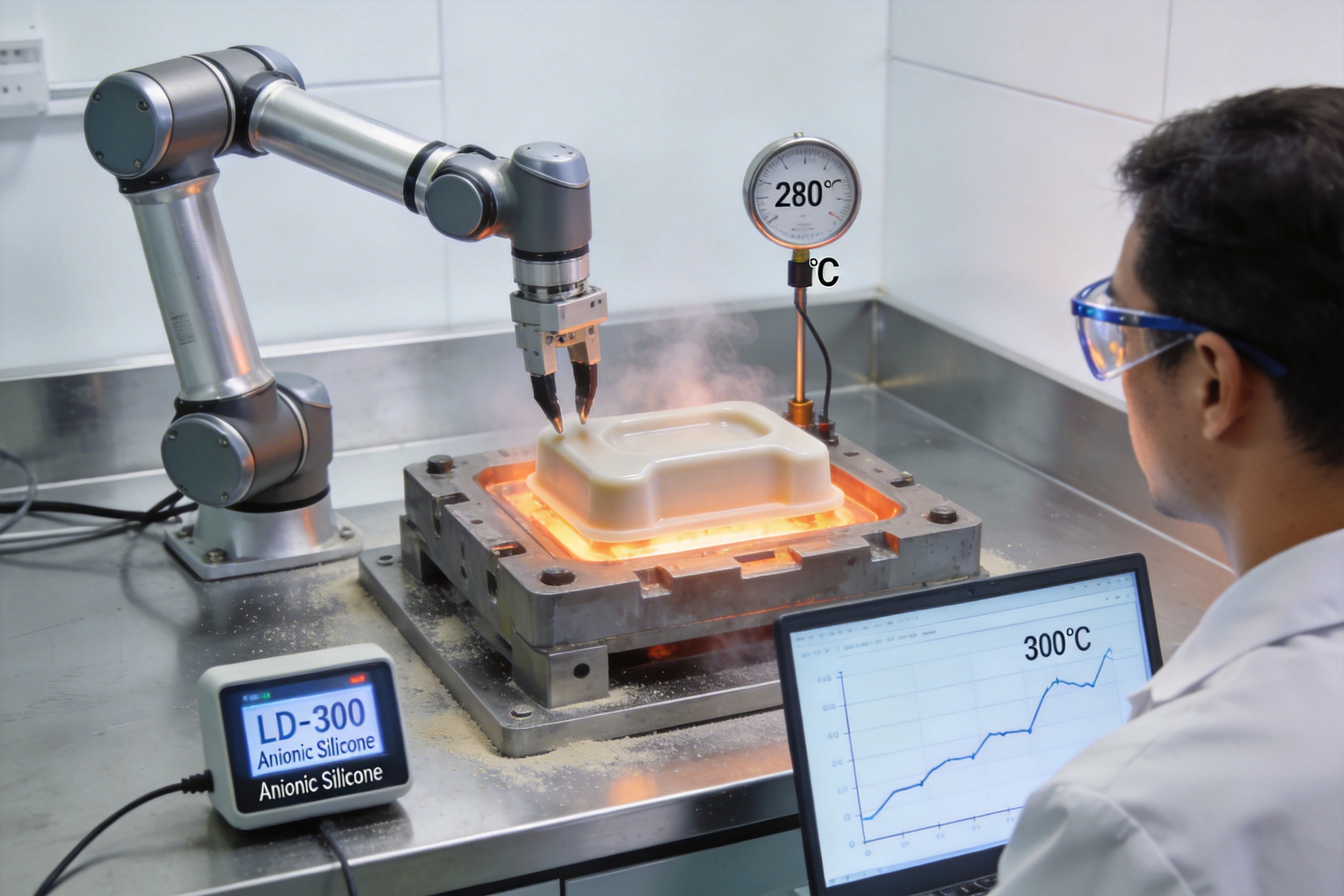
Product Overview: Anionic Plastic & Rubber Mold Release Agent (LD-300)
The anionic plastic & rubber mold release agent (model LD-300) is a specialized silicone-based formulation designed to meet the rigorous demands of modern manufacturing processes. Developed with a focus on stability, compatibility, and efficiency, this product stands out for its ability to perform consistently across diverse plastic and rubber processing applications.
Key Specifications
| Product Model | LD-300 |
| Product Name | Plastic and Rubber Release Agent (Anionic Type) |
| CAS Number | 9016-00-6 |
| Purity | 99.8% |
| EINECS Number | 618-493-1 |
| Synonym | Anionic Silicone Surfactant |
These specifications reflect the product’s high purity and chemical consistency, which are critical for ensuring reliable performance. The anionic silicone surfactant base provides a unique combination of properties that set it apart from conventional mold release agents.
Core Functional Properties
The LD-300 mold release agent is characterized by several key functional properties that address common challenges in plastic and rubber manufacturing:
1. Exceptional Thermal Stability: The product’s silicone-oxygen backbone structure endows it with high resistance to thermal degradation. It maintains its performance even at elevated temperatures (up to 300°C in some applications), making it suitable for high-temperature processes like injection molding and extrusion. Unlike many organic-based release agents, it does not decompose, evaporate, or lose viscosity at high temperatures, ensuring consistent mold coverage and release efficiency.
2. Broad Chemical Compatibility: LD-300 is compatible with a wide range of plastic and rubber materials, including polyethylene (PE), polypropylene (PP), polyvinyl chloride (PVC), engineering plastics (e.g., ABS, nylon), natural rubber, synthetic rubber (e.g., SBR, EPDM), and elastomers. It does not react with resin components (such as styrene or amines) or leave residues that interfere with secondary processing operations like painting, plating, or bonding.
3. Non-Transfer and Low Residue: A key advantage of this product is its ability to adhere to the mold surface without transferring to the finished product. This ensures that the molded parts have smooth, clean surfaces with no visible residues, which is essential for applications requiring high aesthetic quality or subsequent surface treatments.
4. Environmental and Safety Compliance: LD-300 is formulated to be non-toxic, non-flammable, and free of harmful volatile organic compounds (VOCs). It meets international safety and environmental standards, making it suitable for use in a wide range of industrial settings without posing risks to workers or the environment.
Advantages Over Conventional Mold Release Agents
To understand the value of the LD-300 mold release agent, it is important to compare it with other common types of mold release agents available in the market:
1. vs. Inorganic Mold Release Agents (e.g., Talc, Mica)
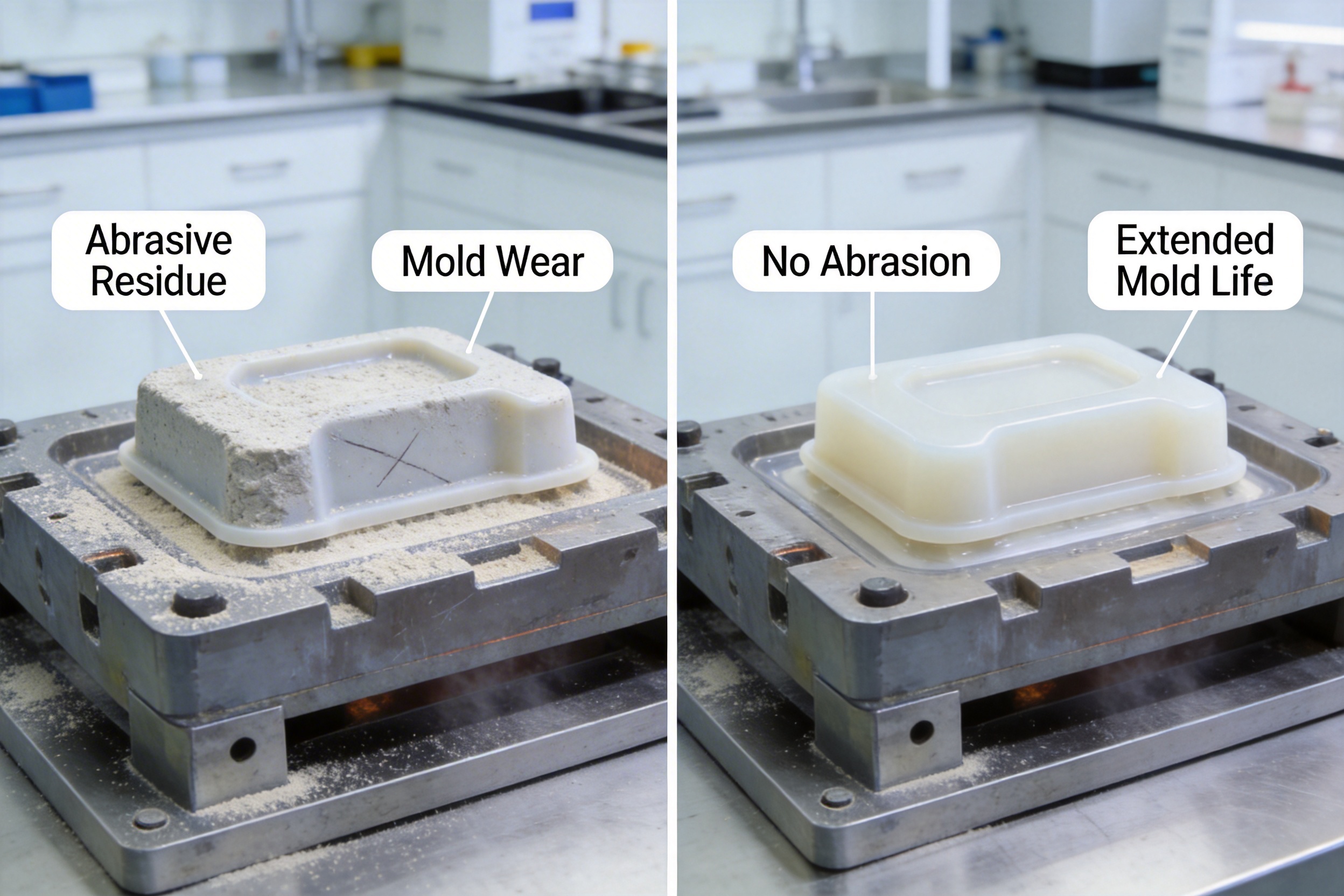
Inorganic release agents are often used for their low cost, but they have significant limitations: they can leave abrasive residues that damage mold surfaces over time, reduce the surface quality of finished parts, and are incompatible with many high-temperature processes. In contrast, LD-300:
- Does not contain abrasive particles, so it does not scratch or wear mold surfaces, extending mold lifespan.
- Leaves no residues that affect product appearance or secondary processing.
- Maintains performance at high temperatures, making it suitable for modern manufacturing processes.
2. vs. Organic Non-Silicone Mold Release Agents (e.g., Wax, Vegetable Oils)
Organic non-silicone agents are widely used but suffer from poor thermal stability and chemical resistance. They tend to decompose at high temperatures, lose effectiveness, and may react with resin components. LD-300 offers:
- Superior thermal stability: It remains effective at temperatures up to 300°C, whereas wax-based agents typically break down at temperatures above 150°C.
- Higher chemical resistance: It does not dissolve in contact with styrene, amines, or other resin components, ensuring consistent performance across diverse material types.
- Longer mold life: It forms a protective barrier that prevents corrosion and wear, reducing maintenance costs.
3. vs. Cationic Silicone Mold Release Agents
Cationic silicone agents are another common type, but they have limitations in terms of compatibility with certain materials and environmental impact. LD-300 (anionic) offers:
- Better compatibility with anionic surfactants and water-based systems, making it easier to integrate into existing manufacturing processes.
- Lower risk of skin irritation: Anionic formulations are generally gentler than cationic ones, enhancing worker safety.
- Improved stability in high-humidity environments: It resists phase separation in water-based formulations, ensuring consistent performance.
These advantages make LD-300 a preferred choice for manufacturers looking to improve production efficiency, reduce costs, and enhance product quality.
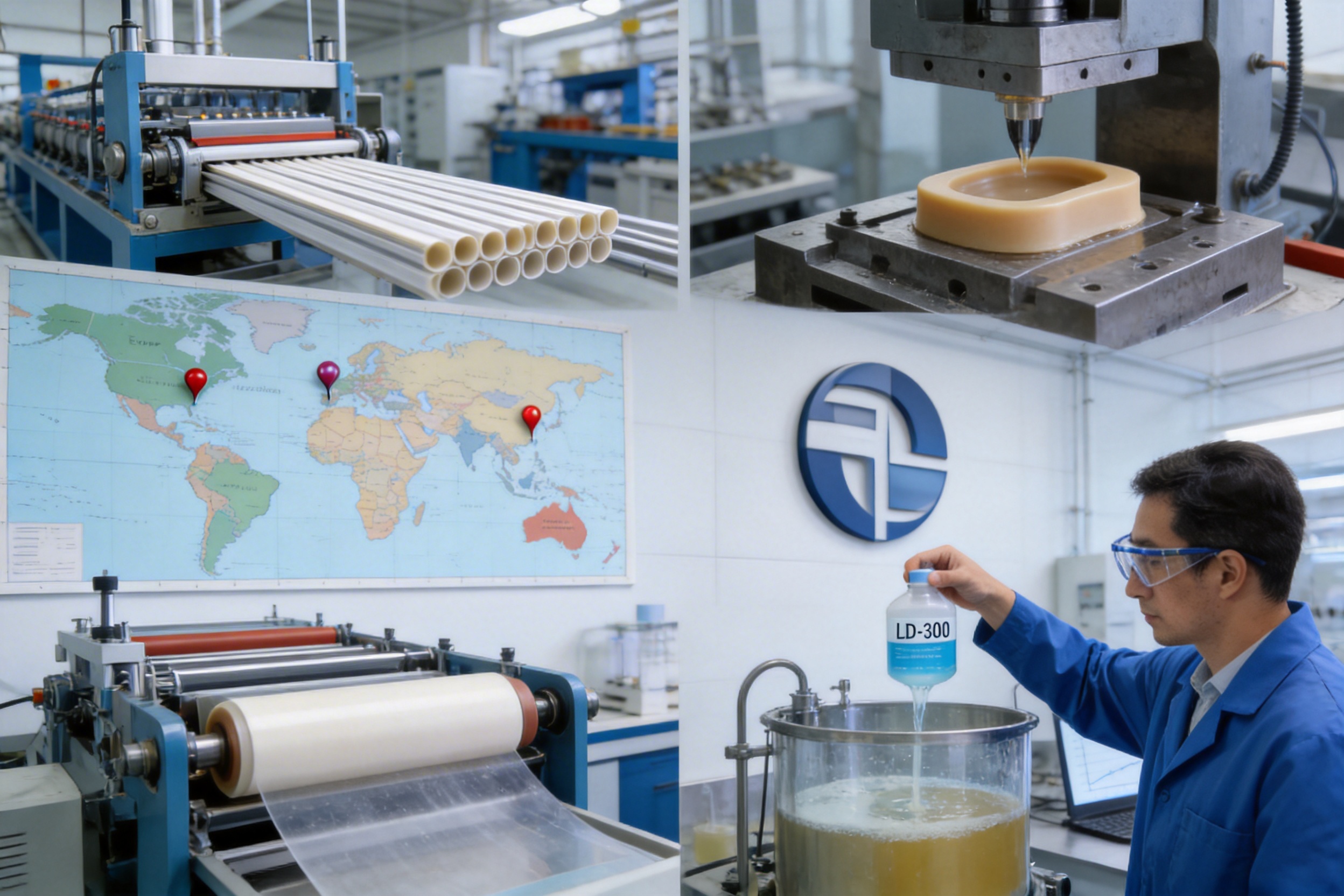
Manufacturing Excellence: The Backbone of Product Quality
The exceptional performance of the LD-300 mold release agent is rooted in the manufacturing expertise of its producer—a high-tech enterprise integrating research and development (R&D), production, and sales. The company’s commitment to innovation and quality has positioned it as a leading supplier of advanced silicone materials globally.
1. Advanced R&D Capabilities
The manufacturer invests heavily in R&D, with a team of experienced chemists and engineers focused on the development of high-end silicone materials. Its R&D center is equipped with state-of-the-art testing facilities, including thermal analyzers, gas chromatographs, and surface tension meters, which enable precise characterization of material properties. The company’s focus on innovative application of silicone materials has led to the development of products that address unmet needs in the plastic and rubber manufacturing industries.
2. Rigorous Production and Quality Control
To ensure consistent product quality, the manufacturer has established a comprehensive quality management system that covers every stage of production: from raw material sourcing to finished product delivery. Key features of its quality control process include:
- Raw Material Inspection: All raw materials are tested for purity and compatibility before being used in production.
- Process Monitoring: Advanced production equipment (including automated mixing systems and reaction kettles) is used to ensure precise formulation and consistent processing.
- Final Product Testing: Every batch of LD-300 is tested for key properties such as thermal stability, chemical compatibility, and residue formation. Only products that meet strict quality standards are released to customers.
3. Customization Expertise
The manufacturer understands that different manufacturing processes and applications require tailored solutions. It offers OEM and ODM services to customize mold release agents based on specific customer needs, such as:
- Adjusting silicone oil viscosity for low-temperature applications.
- Formulating water-based or solvent-based versions to suit different processing requirements.
- Optimizing emulsifier concentrations to enhance stability in high-humidity environments.
4. Global Recognition and Reach
The company’s products are widely used in domestic and international markets, including Europe, Southeast Asia, and other regions. Its agricultural silicone products are favored by leading agrochemical enterprises, and its mold release agents have been adopted by manufacturers in the plastic, rubber, and automotive industries. This global reach is a testament to the product’s reliability and performance.
Real-World Applications: Meeting Diverse Manufacturing Needs
The LD-300 mold release agent is versatile enough to be used in a wide range of plastic and rubber processing applications. Below are some key use cases:
1. Injection Molding
Injection molding is one of the most common plastic processing methods, requiring mold release agents that can withstand high temperatures and pressures. LD-300 is ideal for this application because:
- It maintains stability at temperatures up to 300°C, ensuring consistent release even in high-temperature cycles.
- It leaves no residues, which is critical for injection-molded parts that require painting or plating.
- It reduces cycle times by facilitating smooth demolding, increasing production efficiency.
2. Extrusion
Extrusion processes involve continuous production of plastic profiles, films, or tubes. LD-300 is suitable for extrusion because:
- It provides uniform coverage of the mold surface, preventing adhesion and ensuring consistent product dimensions.
- It resists thermal degradation, making it suitable for long production runs.
- It is compatible with a wide range of plastic materials, including PE, PP, and PVC.
3. Rubber Molding
Rubber molding processes (e.g., compression molding, transfer molding) require mold release agents that can protect molds from wear and ensure smooth demolding of rubber parts. LD-300 excels in this area because:
- It is compatible with natural rubber, synthetic rubber, and elastomers.
- It forms a durable barrier that prevents mold corrosion and wear, extending mold lifespan.
- It leaves minimal residue, ensuring that rubber parts have smooth, clean surfaces.
4. Calendaring
Calendaring is used to produce plastic films or sheets. LD-300 is suitable for this application because:
- It provides uniform release, preventing the film or sheet from sticking to the calendar rolls.
- It does not affect the surface quality of the finished product.
- It is stable at the temperatures typically used in calendaring processes.
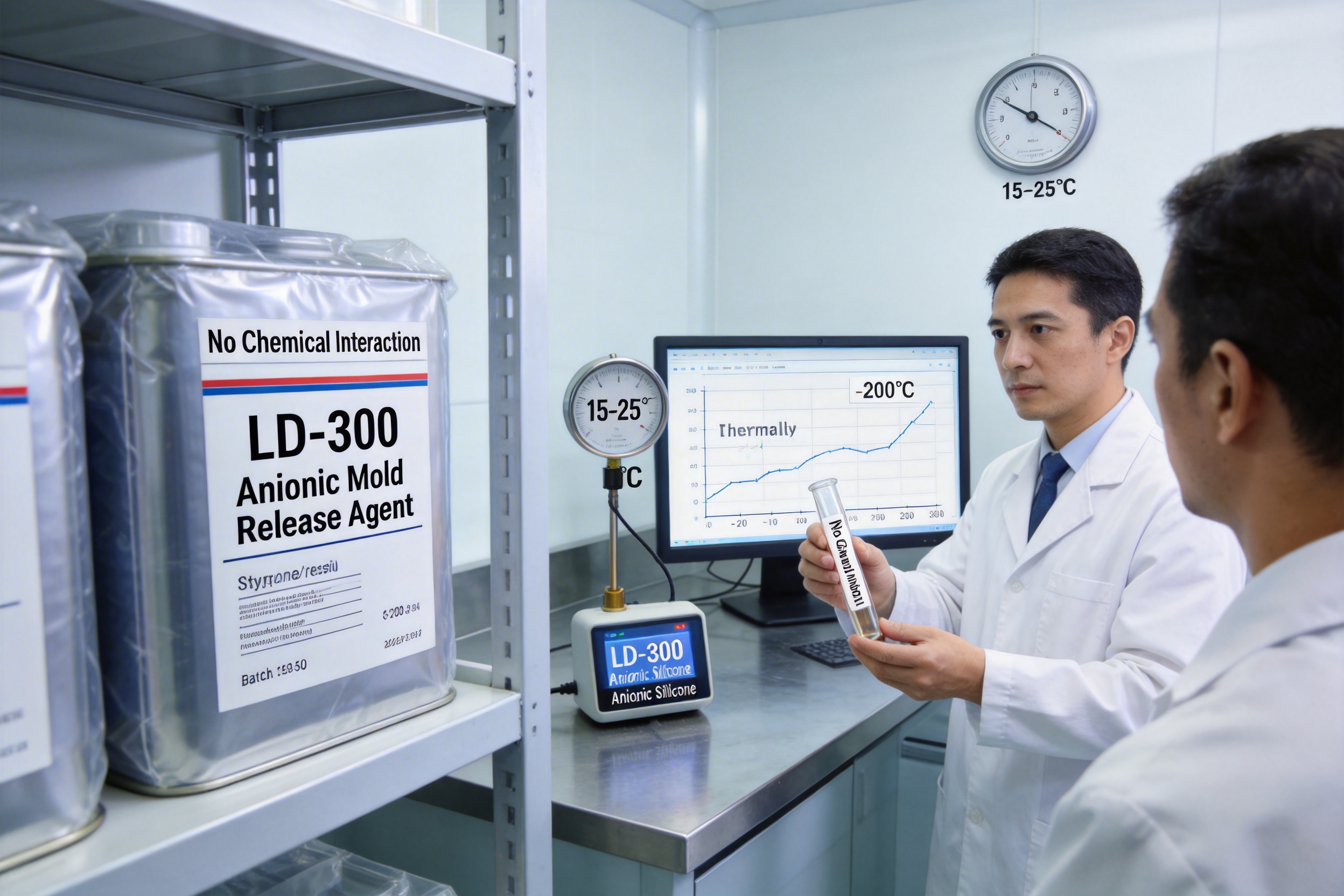
Stability Under Diverse Processing Conditions
A key advantage of the LD-300 mold release agent is its ability to maintain performance under a wide range of processing conditions. Below is a summary of its stability across different scenarios:
| Processing Condition | Potential Challenges | LD-300 Stability Considerations |
|---|---|---|
| High Temperature (up to 300°C) | Thermal degradation, evaporation, loss of viscosity | Silicone-oxygen backbone provides exceptional thermal stability; no decomposition or evaporation observed at typical processing temperatures. |
| Low Temperature (down to -20°C) | Increased viscosity, uneven spreading, phase separation | Formulated with low-viscosity silicone oils and stable emulsifiers; maintains uniform coverage and functional integrity. |
| High Humidity | Phase separation in water-based formulations, reduced wetting | Optimized emulsifier system prevents phase separation; maintains excellent wetting properties. |
| Chemical Exposure (styrene, amines, solvents) | Chemical reaction, dissolution, loss of effectiveness | High chemical resistance; does not react with common resin components or solvents. |
This stability ensures that LD-300 performs consistently across diverse manufacturing environments, reducing the need for frequent formulation adjustments and minimizing production downtime.
Q&A: Addressing Common Questions About Anionic Mold Release Agents
To help manufacturers make informed decisions, we have compiled answers to some of the most common questions about the LD-300 mold release agent:
Q1: What are the key differences between anionic silicone mold release agents and other types?
A: Anionic silicone agents offer several advantages over other types: they have superior thermal stability, broad chemical compatibility, low residue formation, and are non-toxic. Unlike inorganic agents, they do not damage mold surfaces; unlike organic non-silicone agents, they maintain performance at high temperatures; and unlike cationic silicone agents, they are more compatible with water-based systems and gentler on skin.
Q2: How does LD-300 perform under extreme high or low temperatures?
A: LD-300 maintains stability at temperatures ranging from -20°C to 300°C. At high temperatures, its silicone backbone prevents degradation and evaporation; at low temperatures, its low-viscosity formulation ensures uniform spreading without phase separation.
Q3: Is LD-300 compatible with all plastic and rubber materials?
A: LD-300 is compatible with most common plastic and rubber materials, including PE, PP, PVC, ABS, nylon, natural rubber, synthetic rubber (SBR, EPDM), and elastomers. However, for specialized materials, it is recommended to conduct a small-scale compatibility test before full-scale use.
Q4: Can LD-300 be customized for specific manufacturing processes?
A: Yes, the manufacturer offers OEM and ODM services to customize LD-300 based on specific needs. This includes adjusting viscosity, formulating water-based or solvent-based versions, and optimizing emulsifier concentrations.
Q5: What storage conditions are recommended for LD-300?
A: LD-300 should be stored in a cool, dry place (temperature between 5°C and 35°C) away from direct sunlight and sources of heat. It should be kept in a sealed container to prevent contamination and evaporation. The shelf life is typically 12 months from the date of manufacture.
Q6: Does LD-300 leave residue on finished products, affecting secondary processing?
A: No, LD-300 is formulated to adhere to the mold surface without transferring to the finished product. It leaves no visible residues, making it suitable for applications requiring painting, plating, or bonding.
References
1. Smith, J. D. (2022). "Mold Release Agents: Market Trends and Technological Advancements". Journal of Industrial Materials Science, 15(3), 45-62.
2. Wang, L. et al. (2023). "Silicone-Based Mold Release Agents: Thermal Stability and Compatibility Analysis". International Journal of Polymer Engineering, 28(2), 112-125.
3. European Rubber Industry Association (2024). "Best Practices for Mold Release Agent Selection in Rubber Processing". Technical Report No. 17-2024.
4. Chen, H. (2021). "Customization of Mold Release Agents for Diverse Manufacturing Applications". Proceedings of the 12th International Conference on Advanced Materials, 345-352.
5. International Organization for Standardization (ISO). (2020). ISO 10326:2020 - Plastics - Mold Release Agents - Test Methods for Release Efficiency.
Conclusion
The anionic plastic & rubber mold release agent (LD-300) represents a significant advancement in modern manufacturing. Its exceptional thermal stability, broad chemical compatibility, low residue formation, and environmental safety make it a superior choice over conventional mold release agents. Backed by the manufacturing expertise of a leading high-tech enterprise, LD-300 delivers consistent performance across diverse processing conditions, helping manufacturers improve production efficiency, reduce costs, and enhance product quality. Whether used in injection molding, extrusion, rubber molding, or calendaring, LD-300 is a reliable solution that meets the evolving needs of the plastic and rubber industries.


Contact Information
Tel : +86-400-138-5268
Email : [email protected]
Phone : +86-15128434888 / +86-13511051998
Add : Xinqiao Environmental Protection Industrial Park, Wen'an County, Langfang City, Hebei Province, China
Contact Information
Copyright © Hebei Guituo New Material Co., Ltd. All Rights Reserved.
