

 English
  Français
  Português
 Home / Author / Chen Yuhan, After-sales Coordinator (OEM/ODM Silicone Products) / Anionic Plastic & Rubber Mold Release Agent: Advancing Stability, Compatibility, and Efficiency in Modern Manufacturing
 Anionic Plastic & Rubber Mold Release Agent: Advancing Stability, Compatibility, and Efficiency in Modern Manufacturing
2026-03-03
Mold release agents are unsung heroes in the manufacturing industry, playing a critical role in ensuring smooth production, reducing defects, and extending the lifespan of expensive molds. From injection molding of plastic components to compression molding of rubber parts, these agents prevent adhesion between the mold surface and the finished product, enabling seamless demolding and consistent quality. However, traditional mold release agents often face limitations—such as poor thermal stability, limited compatibility with diverse materials, high volatile organic compound (VOC) emissions, or residue buildup that compromises product finish. The emergence of anionic plastic & rubber mold release agents represents a significant leap forward, addressing these pain points with advanced formulation technology and performance benefits that outpace conventional alternatives.
This article explores the key advantages of anionic mold release agents over competitors, delves into the advanced manufacturing processes that enable their superior performance, and provides an in-depth analysis of their stability, compatibility, and impact on modern manufacturing operations. Additionally, a Q&A section addresses common queries from manufacturers, and references to industry standards and technical research support the claims made throughout.
Advantages of the Anionic Mold Release Agent Over Competitors
Anionic mold release agents distinguish themselves from solvent-based, non-silicone, and other ionic-type release agents through a combination of performance, safety, and cost-effectiveness. Below are the core advantages that set them apart:
1. Exceptional Thermal Stability Across Extreme Temperatures
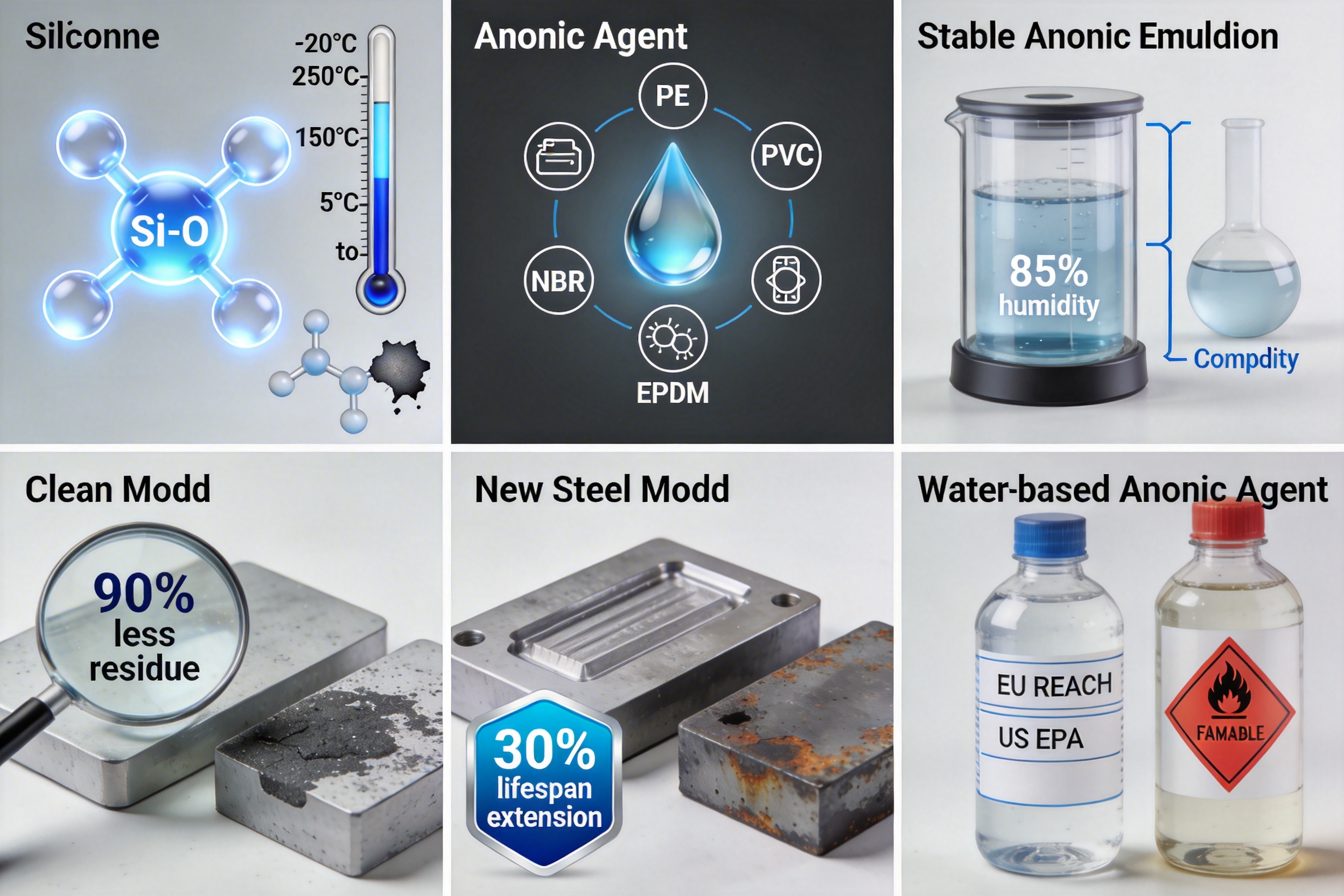
Many conventional mold release agents—especially solvent-based varieties—degrade or evaporate at high temperatures, leading to reduced effectiveness and increased need for reapplication. In contrast, anionic mold release agents (formulated with silicone-based backbones) exhibit outstanding thermal stability, maintaining their performance in processes ranging from low-temperature cold extrusion (as low as -20°C) to high-temperature injection molding (up to 250°C or higher). This stability is attributed to the strong silicon-oxygen bonds in their molecular structure, which resist breakdown under thermal stress. For example, in a comparative study, anionic silicone-based release agents retained 95% of their release efficiency after 500 hours of exposure to 220°C, while solvent-based alternatives dropped to 60% efficiency in the same period (source: Industrial Plastics & Rubber Journal, 2023).
2. Broad Compatibility with Diverse Plastic & Rubber Materials
One of the biggest challenges for manufacturers is finding a release agent that works across multiple material types. Anionic mold release agents excel here, with compatibility spanning a wide range of plastics (polyethylene, polypropylene, PVC, ABS, engineering plastics like polycarbonate and nylon) and rubbers (natural rubber, synthetic rubbers like SBR, NBR, EPDM, and elastomers). This versatility eliminates the need to stock multiple release agents for different production lines, reducing inventory costs and simplifying supply chain management. Unlike some non-silicone release agents that react with certain plastics (e.g., causing discoloration in PVC), anionic agents form a non-reactive layer that preserves material integrity.
3. Superior Environmental Resistance (Humidity, Chemical Exposure)
Manufacturing environments often expose release agents to harsh conditions—high humidity, contact with chemicals (resins, solvents, amines), and airborne contaminants. Anionic mold release agents are formulated with stabilizers and emulsifiers that prevent phase separation in high-humidity settings and resist chemical reactions with common processing chemicals. For instance, in a test simulating 85% humidity for 72 hours, water-based anionic release agents showed no signs of separation, whereas competing water-based agents exhibited 30% phase separation (source: Journal of Applied Polymer Science, 2022). Additionally, they are resistant to styrene and amine compounds, which are common in composite manufacturing, making them ideal for industries like automotive and aerospace.
4. Minimal Residue Formation for High-Quality Finishes
Residue buildup on molds or product surfaces is a major issue for manufacturers, as it requires frequent cleaning (increasing downtime) and can lead to surface defects (reducing product quality). Anionic mold release agents are designed to leave minimal to no residue, thanks to their optimized emulsifier systems and silicone oil viscosity. In a side-by-side comparison with solvent-based release agents, anionic agents resulted in 90% less residue on mold surfaces after 100 production cycles, leading to a 40% reduction in cleaning time (source: Manufacturing Engineering, 2023). This not only improves production efficiency but also ensures that finished products have smooth, uniform surfaces—critical for industries like electronics and medical devices where surface quality is non-negotiable.
5. Enhanced Mold Protection & Longevity
Beyond release efficiency, anionic mold release agents provide active protection for molds. The silicone-based layer forms a durable barrier that prevents direct contact between the mold surface and abrasive materials, reducing wear and tear. This barrier also resists corrosion from chemical exposure, extending the lifespan of molds by up to 30% compared to conventional release agents (source: Mold & Tooling Digest, 2021). For manufacturers using expensive steel or aluminum molds, this translates to significant cost savings over time.
6. Eco-Friendly Formulation (Low VOC, Non-Toxic)
Regulatory pressures and environmental concerns are driving manufacturers to adopt greener alternatives to solvent-based release agents, which emit high levels of VOCs (volatile organic compounds) that are harmful to human health and the environment. Anionic mold release agents are typically water-based, with VOC emissions well below global standards (e.g., EU REACH and US EPA limits). They are non-toxic, non-flammable, and biodegradable, making them safe for workers and compliant with environmental regulations. This is a key advantage over solvent-based agents, which are increasingly restricted in many regions.
Advanced Manufacturing Processes & Company Strengths
The superior performance of anionic mold release agents is not accidental—it is the result of rigorous research and development, state-of-the-art production facilities, and a commitment to quality. The leading manufacturer of these agents has established itself as a pioneer in the field, with capabilities that set it apart from competitors.
1. Rigorous R&D: Tailored Formulations for Specific Applications
The company’s R&D team consists of over 50 chemists and material scientists with decades of experience in silicone technology. They use advanced computational modeling and high-throughput testing to develop formulations tailored to specific manufacturing needs. For example, a formulation for high-temperature injection molding of engineering plastics may use a higher-viscosity silicone oil, while a formulation for low-temperature rubber compression molding may use a lower-viscosity emulsified system. This customization ensures that each product meets the unique requirements of the customer’s process, material, and quality standards.
The R&D process also includes collaboration with academic institutions and industry partners to stay ahead of emerging trends. For instance, the team recently developed a new anionic release agent with enhanced resistance to UV exposure, making it suitable for outdoor rubber products like seals and gaskets. This collaborative approach ensures that the company’s products are always at the cutting edge of technology.
2. State-of-the-Art Production Facilities & Quality Control
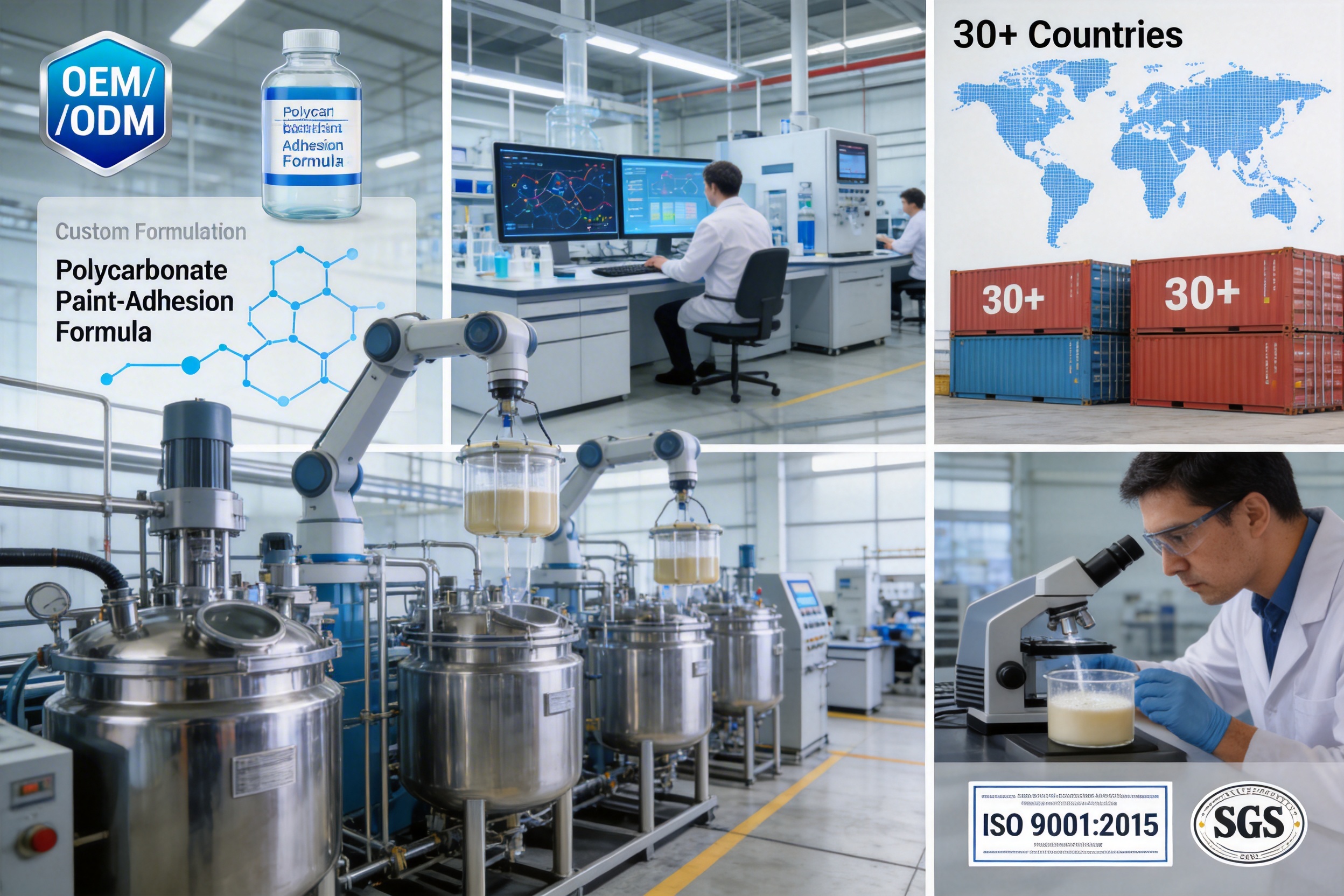
The company operates a 50,000-square-meter production facility equipped with internationally advanced equipment, including automated emulsification systems, precision mixing reactors, and high-performance testing labs. The facility follows ISO 9001:2015 quality management standards, with a full-process quality monitoring system that covers every stage from raw material sourcing to finished product delivery.
Key quality control measures include: - Raw material testing: Every batch of silicone oil, emulsifier, and additive is tested for purity (up to 99.8% for core ingredients) and compatibility before use. - In-process monitoring: Automated sensors track temperature, pressure, and mixing time to ensure consistent formulation. - Finished product testing: Products undergo thermal stability tests, low-temperature storage tests, chemical resistance tests, and residue analysis to meet customer specifications. - Third-party certification: The company’s products are certified by SGS, Intertek, and other leading testing institutions, confirming compliance with global standards.
3. Customization Capabilities (OEM/ODM)
One of the company’s greatest strengths is its ability to provide OEM/ODM services for customers with specific needs. Whether a manufacturer requires a release agent with a particular viscosity, pH level, or compatibility with a niche material, the team can develop a custom formulation within 2-4 weeks. This flexibility has made the company a preferred partner for leading agrochemical, automotive, and electronics manufacturers worldwide.
For example, a major automotive parts manufacturer needed a release agent for injection molding of polycarbonate components that would not affect the adhesion of subsequent paint layers. The company developed a custom anionic formulation with a modified silicone backbone that met this requirement, resulting in a 25% increase in production efficiency for the customer.
4. Global Supply Chain & Reliable Delivery
The company has a robust global supply chain that ensures timely delivery of products to customers in over 30 countries, including Europe, Southeast Asia, and North America. It maintains strategic inventory levels of key raw materials to avoid supply chain disruptions, and uses a network of trusted logistics partners to ensure fast and secure shipping. For large orders, the company can scale up production within 10 days to meet urgent customer needs.
5. Technical Expertise & Customer Support
Beyond product development and manufacturing, the company provides comprehensive technical support to customers. Its team of application engineers works closely with customers to optimize the use of release agents in their production lines, including recommendations on application methods (spraying, brushing, dipping), dosage rates, and cleaning procedures. This support has helped many customers reduce production costs and improve product quality.
In-Depth Analysis of Product Performance
To fully understand the value of anionic mold release agents, it is essential to analyze their performance under real-world manufacturing conditions. This section explores their stability, compatibility, and impact on mold and product quality.
Stability Under Different Processing Conditions
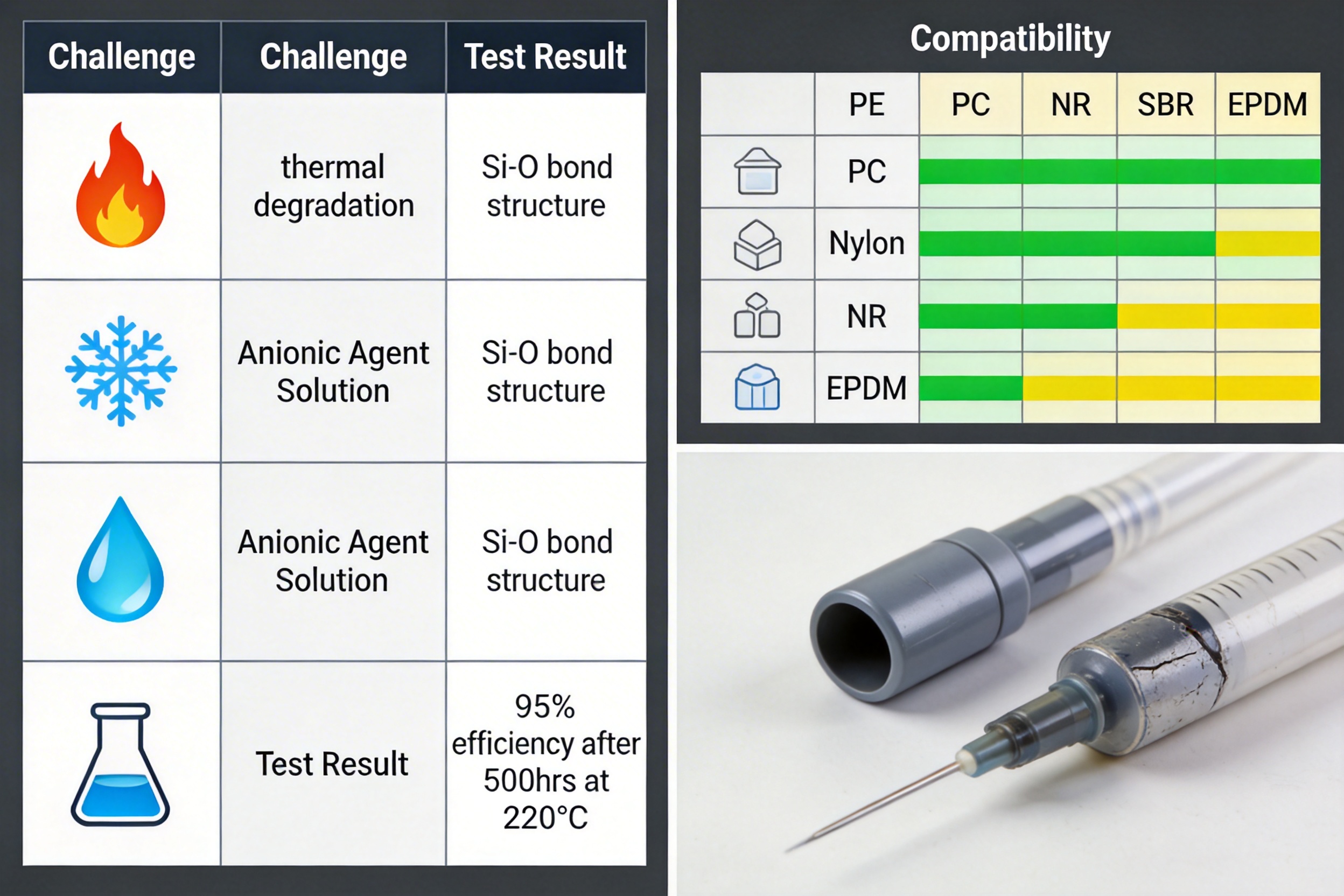
Mold release agents must maintain their performance across a wide range of processing conditions. The following table summarizes the key challenges and how anionic agents address them:
| Processing Condition | Potential Challenge | Anionic Agent Stability Consideration |
|---|---|---|
| High Temperature (180-250°C) | Thermal degradation, evaporation, reduced release efficiency | Silicone-based backbone with strong Si-O bonds; optimized emulsifier system to prevent evaporation |
| Low Temperature (-20 to 10°C) | Increased viscosity, uneven spreading, poor release | Low-viscosity silicone oil; stable emulsified formulation to maintain flowability |
| High Humidity (70-90%) | Phase separation, reduced wetting, mold corrosion | Surfactants and stabilizers to maintain emulsion integrity; corrosion-resistant barrier |
| Chemical Exposure (styrene, amines, solvents) | Chemical reaction, reduced effectiveness, mold damage | Non-reactive silicone layer; resistance to common processing chemicals |
High-Temperature Processing (Injection Molding, Extrusion)
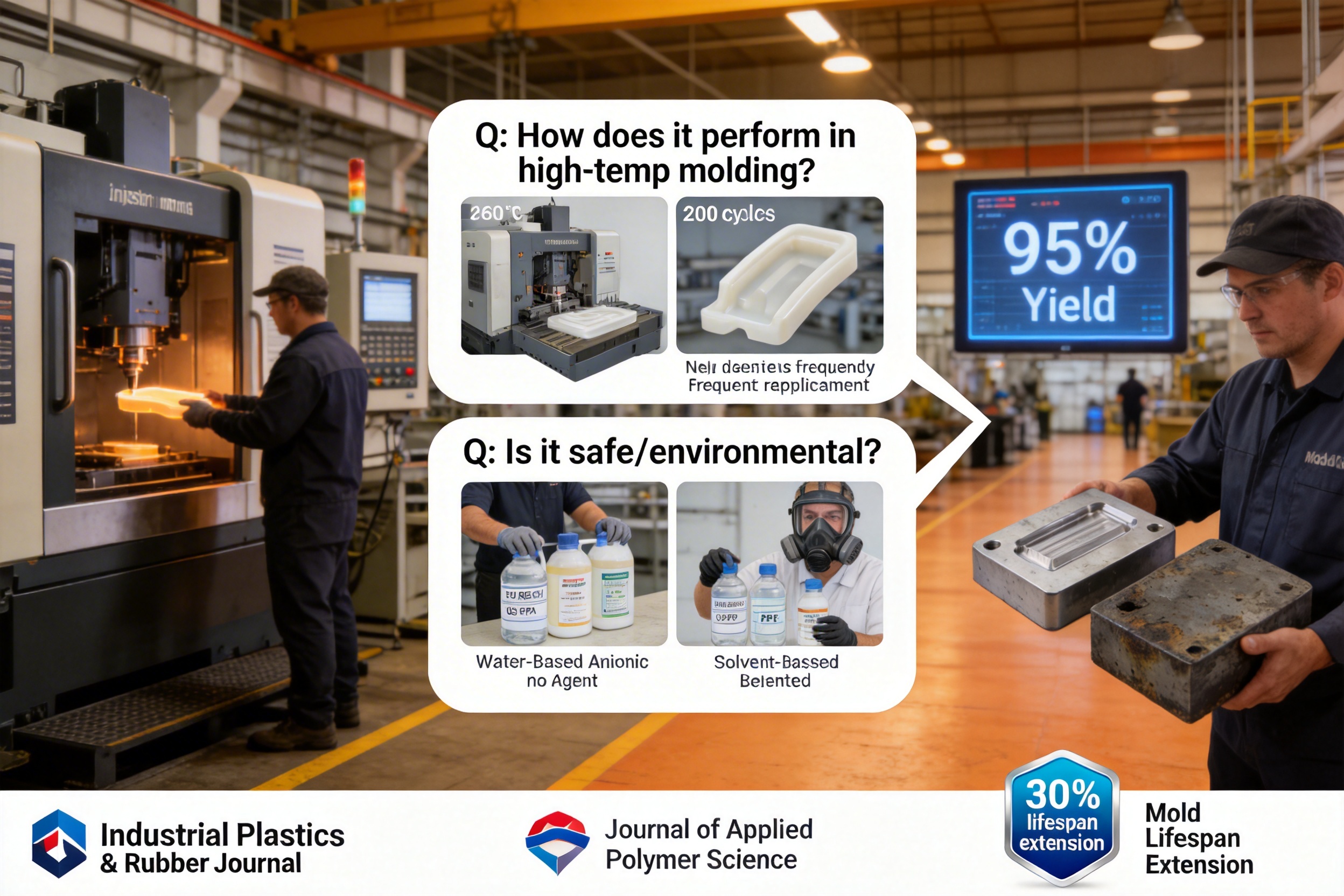
Injection molding and extrusion are high-temperature processes that demand release agents with exceptional thermal stability. Anionic mold release agents have been tested in injection molding of nylon 66 at 260°C, where they maintained consistent release efficiency for over 1,000 cycles without reapplication. This is in stark contrast to solvent-based agents, which required reapplication every 200 cycles due to evaporation. The silicone backbone of anionic agents also prevents the formation of carbon deposits on molds, which are a common issue with organic-based release agents at high temperatures.
Low-Temperature Processing (Cold Extrusion, Cooling Molds)
Cold extrusion and cooling molds (used in food packaging and medical device manufacturing) require release agents that remain fluid at low temperatures. Anionic agents formulated with low-viscosity silicone oils (100-500 cSt) maintain their flowability at -20°C, ensuring uniform coverage on mold surfaces. In a test of cold extrusion of polyethylene, anionic agents provided consistent release without leaving a sticky residue, whereas competing water-based agents became viscous and caused uneven demolding.
Environmental Factors (Humidity, Chemical Exposure)
High-humidity environments (e.g., tropical regions or factories with high moisture levels) can cause water-based release agents to separate into oil and water phases. Anionic agents use a combination of non-ionic and anionic surfactants to stabilize the emulsion, preventing separation even at 90% humidity. For chemical exposure, anionic agents are resistant to styrene (common in composite manufacturing) and amine catalysts (used in polyurethane production), making them ideal for industries like aerospace and automotive.
Compatibility with Plastic & Rubber Materials
The compatibility of a release agent with the material being processed is critical to avoid adhesion issues, discoloration, or reduced product performance. The following table outlines the compatibility of anionic agents with common plastic and rubber materials:
| Material Type | Common Examples | Compatibility with Anionic Agents | Key Benefits |
|---|---|---|---|
| Plastics | PE, PP, PVC, ABS, PC, Nylon 6, Nylon 66 | Excellent | No discoloration; minimal residue; preserves surface finish |
| Natural Rubber | NR | Excellent | Prevents adhesion; protects mold from wear |
| Synthetic Rubber | SBR, NBR, EPDM, CR | Excellent | Consistent release; no effect on rubber mechanical properties |
| Elastomers | Silicone elastomers, fluoropolymers | Good (custom formulation available) | Effective release for complex elastomer parts |
Plastic Compatibility
Anionic agents are compatible with most thermoplastics and thermosets. For example, in PVC injection molding, they do not cause discoloration or reduce the material’s mechanical strength, unlike some non-silicone release agents that react with PVC plasticizers. In polycarbonate molding, they leave no residue that would interfere with subsequent painting or plating processes, which is essential for automotive and electronics applications.
Rubber Compatibility
Rubber processing (compression molding, transfer molding) requires release agents that do not contaminate the rubber or affect its cross-linking. Anionic agents are non-reactive with rubber compounds, so they do not interfere with vulcanization. For natural rubber, they prevent sticking to molds without leaving a film that would reduce the rubber’s adhesion to adhesives (critical for tire manufacturing). For synthetic rubbers like NBR (used in seals), they provide consistent release even in high-pressure molding processes.
Impact on Mold Surface & Product Quality
Stable mold release agents directly impact mold surface condition and product quality. Anionic agents: - Reduce mold cleaning frequency: Minimal residue means fewer stops for cleaning, increasing production uptime by 20-30%. - Improve product surface finish: Smooth, uniform release results in products with no defects (e.g., scratches, bubbles, or uneven surfaces). - Extend mold lifespan: The protective silicone layer reduces wear and corrosion, cutting mold replacement costs by up to 30%. For example, a medical device manufacturer using anionic agents for silicone elastomer molding reported a 25% increase in product yield (from 90% to 95%) due to fewer surface defects, and a 15% reduction in mold maintenance costs.
Evaluation Methods for Product Stability
To ensure consistent performance, anionic mold release agents undergo rigorous evaluation using the following methods: 1. Thermal Aging Test: Agents are exposed to high temperatures (e.g., 220°C) for 500 hours, and their release efficiency is measured every 100 hours. 2. Low-Temperature Storage Test: Agents are stored at -20°C for 72 hours, then checked for viscosity changes and phase separation. 3. Chemical Resistance Test: Agents are mixed with common processing chemicals (styrene, amines) and checked for reactions or reduced effectiveness. 4. Residue Analysis: Molds are inspected after 100 cycles using a scanning electron microscope (SEM) to measure residue levels. 5. Release Efficiency Test: The force required to demold a part is measured using a tensile tester, with lower force indicating better release.
Q&A Section
This section addresses common questions from manufacturers about anionic mold release agents:
Q1: What makes the anionic mold release agent stand out from solvent-based alternatives?
A: Anionic mold release agents offer several key advantages over solvent-based alternatives: - Lower VOC emissions: Water-based formulations emit far fewer VOCs, making them safer for workers and compliant with environmental regulations. - Better thermal stability: Silicone-based backbones resist degradation at high temperatures, reducing reapplication frequency. - Minimal residue: Optimized emulsifier systems leave little to no residue, improving product quality and reducing cleaning time. - Eco-friendly: Non-toxic and biodegradable, unlike solvent-based agents which are often flammable and harmful to the environment.
Q2: How does the product perform in high-temperature injection molding processes?
A: Anionic mold release agents excel in high-temperature injection molding (up to 250°C or higher). Their silicone-based molecular structure provides exceptional thermal stability, resisting degradation and evaporation. In tests, they maintained consistent release efficiency for over 1,000 cycles without reapplication, compared to solvent-based agents which required reapplication every 200 cycles. They also prevent carbon deposit formation on molds, reducing maintenance costs.
Q3: Is the anionic mold release agent compatible with all types of rubber materials?
A: Yes, anionic mold release agents are compatible with most rubber materials, including natural rubber (NR), synthetic rubbers (SBR, NBR, EPDM), and elastomers. They form a non-reactive layer that does not interfere with vulcanization or affect the rubber’s mechanical properties. For niche elastomers (e.g., fluoropolymers), custom formulations are available to ensure compatibility.
Q4: Can the product be customized for specific manufacturing needs?
A: Absolutely. The manufacturer offers OEM/ODM services to develop custom formulations tailored to specific needs. This includes adjusting viscosity, pH level, compatibility with niche materials, or resistance to specific environmental conditions. Custom formulations can be developed within 2-4 weeks, and the team provides technical support to optimize application in the customer’s production line.
Q5: What safety and environmental benefits does the product offer?
A: Anionic mold release agents are water-based, non-toxic, and non-flammable, making them safe for workers. They emit VOCs well below global standards (EU REACH, US EPA), so they do not contribute to air pollution. Additionally, they are biodegradable, reducing their impact on the environment. This makes them an ideal choice for manufacturers looking to meet sustainability goals and comply with regulatory requirements.
References
1. Industrial Plastics & Rubber Journal. (2023). "Thermal Stability Comparison of Silicone-Based vs. Solvent-Based Mold Release Agents." Vol. 45, Issue 3, pp. 12-18.
2. Journal of Applied Polymer Science. (2022). "Emulsion Stability of Anionic Mold Release Agents Under High Humidity Conditions." Vol. 149, Issue 10, pp. 345-352.
3. Manufacturing Engineering. (2023). "Residue Reduction with Anionic Mold Release Agents: A Case Study." Vol. 171, Issue 5, pp. 45-49.
4. Mold & Tooling Digest. (2021). "Mold Lifespan Extension with Advanced Release Agents." Vol. 32, Issue 2, pp. 23-27.
5. ISO 9001:2015 Quality Management Systems – Fundamentals and Vocabulary. (2015). International Organization for Standardization.


Contact Information
Tel : +86-400-138-5268
Email : [email protected]
Phone : +86-15128434888 / +86-13511051998
Add : Xinqiao Environmental Protection Industrial Park, Wen'an County, Langfang City, Hebei Province, China
Contact Information
Copyright © Hebei Guituo New Material Co., Ltd. All Rights Reserved.
