

 English
  Français
  Português
 Home / Author / Chen Yuhan, After-sales Coordinator (OEM/ODM Silicone Products) / Organosilicone Defoamer for Reliable Foam Control in Industrial Formulations
 Organosilicone Defoamer for Reliable Foam Control in Industrial Formulations
2026-08-22
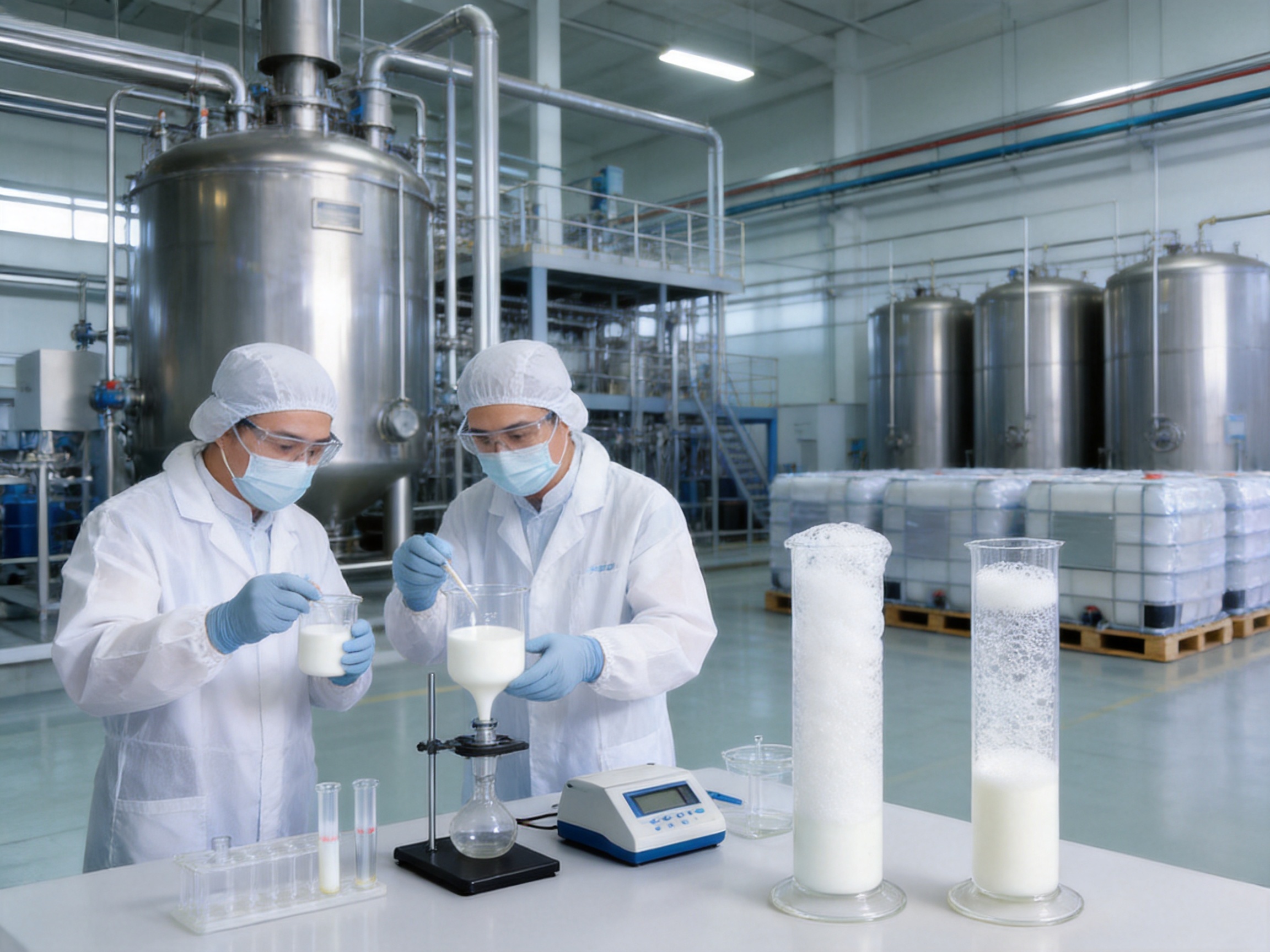
Foam is a common processing problem in chemical manufacturing, agricultural formulations, coatings, paper production, textiles, food processing, pharmaceuticals, electronics, and daily chemical products. It can appear during mixing, pumping, washing, extraction, filtration, heating, evaporation, filling, or packaging. Although foam may seem harmless, excessive foam can reduce production capacity, interrupt continuous operation, cause inaccurate filling, increase material loss, and affect the appearance and performance of the final product.
Organosilicone defoamer is designed to control this problem efficiently. Based mainly on silicone oil, modified silicone oil, emulsifiers, wetting agents, and functional additives, it reduces existing foam and limits the formation of new foam. Its performance is associated with low surface tension, rapid spreading, strong film-disrupting ability, thermal stability, and resistance to chemical interaction in many industrial systems.
LD-610 Organosilicon Defoamer is a silicone-based foam control product developed for demanding industrial applications. It is supplied as a white viscous emulsion and is identified by CAS No. 9016-00-6, EINECS No. 618-493-1, and the synonym Polydimethylsiloxane Emulsion. The product is listed with a purity of 99.8% and is intended for use in aqueous and other compatible formulation systems.
Manufactured and supplied by Hebei Guituo New Material Co., Ltd., LD-610 benefits from the company’s experience in silicone additives, modified silicone oils, surfactants, agricultural adjuvants, and other functional materials. The company integrates research and development, production, quality control, technical support, and international supply capabilities to provide stable foam control for customers with different process requirements.
What Is an Organosilicone Defoamer?
An organosilicone defoamer is a foam control agent containing organosilicon compounds, typically silicone oils or polydimethylsiloxane-based materials. It is formulated to destabilize foam in liquid systems. Depending on the application, the product may be supplied as an emulsion, dispersion, compound, or modified silicone formulation.
Foam consists of gas bubbles surrounded by thin liquid films. Surfactants, proteins, polymers, fine particles, and other formulation components may stabilize these films and allow foam to persist. When foam control is required, the defoamer must reach the air-liquid interface, spread across the bubble film, and weaken the film until the bubbles collapse.
Organosilicone materials are particularly effective because silicone oils generally have very low surface tension compared with water and many industrial liquids. This enables them to spread rapidly over foam films. When properly formulated, the defoamer can provide quick knockdown of existing foam while also offering persistent control during repeated agitation.
The efficiency of a defoamer does not depend only on the silicone oil itself. Emulsification technology, particle size, viscosity, surfactant selection, storage stability, dosing method, processing temperature, and compatibility with the host formulation all influence final performance. A well-designed organosilicone defoamer must therefore provide a balance between activity and compatibility.
Product Profile of LD-610
| Property | Product Information |
|---|---|
| Product model | LD-610 |
| Product name | Organosilicon Defoamer |
| Product type | Silicone-based foam control agent |
| Appearance | White viscous emulsion |
| CAS number | 9016-00-6 |
| EINECS number | 618-493-1 |
| Purity | 99.8% |
| Synonym | Polydimethylsiloxane Emulsion |
| Main functional component | Silicone oil and related functional additives |
The product profile indicates that LD-610 is intended to combine rapid foam suppression with practical handling in industrial production. Its emulsion form allows the silicone phase to be distributed through water-based systems when the formulation is properly mixed. This is particularly useful in agricultural products, daily chemical preparations, water-based coatings, textile auxiliaries, and other processes where water is the primary medium.
Actual dosage should be determined through application testing because foam behavior varies significantly between systems. Factors such as the type and concentration of surfactants, solids content, pH, temperature, shear rate, viscosity, and production equipment can influence the required amount.
How Organosilicone Defoamers Control Foam
Low Surface Tension and Rapid Spreading
The first important performance characteristic is low surface tension. Silicone oil can spread across the surface of many aqueous and non-aqueous liquids. When the defoamer reaches a foam film, it creates a local area with different interfacial properties. This interrupts the balance that keeps the bubble stable.
Rapid spreading is important in high-speed manufacturing. Mixing vessels, pumps, spray systems, and filling lines may generate foam faster than conventional defoamers can respond. An organosilicone defoamer can act quickly at the point where bubbles are forming, helping prevent foam from occupying excessive vessel volume.
Foam Film Disruption
Stable foam films often contain surfactants or other surface-active materials. These components form an elastic layer around gas bubbles. The silicone phase penetrates or spreads through this layer and reduces film strength. As drainage continues, the weakened bubble film ruptures and the foam collapses.
This mechanism can support both knockdown and persistence. Knockdown refers to the speed at which existing foam disappears, while persistence refers to the ability to continue controlling foam after further agitation or processing. A suitable product must be balanced so that it is active enough to break foam but not so incompatible that it creates surface defects or separation.
Controlled Dispersion
LD-610 is supplied as a viscous emulsion. In a suitable aqueous system, the emulsion can distribute the active silicone phase throughout the process liquid. Controlled dispersion helps the defoamer reach foam-generating areas without requiring excessive quantities.
The dispersion behavior depends on mixing conditions. Excessive shear may divide the active phase into particles that are too small to provide effective foam destruction, while insufficient mixing may leave concentrated areas of defoamer. For this reason, addition point, agitation speed, and dosing sequence should be evaluated during process development.
Advantages Compared with Conventional Foam Control Materials
Fast Foam Knockdown
One of the primary advantages of organosilicone technology is rapid foam suppression. Silicone-based materials can spread quickly across bubble surfaces, making them suitable for processes where foam must be controlled immediately. This is valuable during high-speed mixing, circulation, filling, and transfer operations.
Compared with some mineral oil, vegetable oil, or non-silicone defoamers, an organosilicone defoamer may require less time to reduce visible foam. Its low surface tension allows the active phase to reach foam films efficiently. Faster foam knockdown can shorten interruptions and improve the usable capacity of tanks and containers.
Strong Activity at Low Addition Levels
Silicone-based defoamers are known for strong foam control activity. Depending on the formulation, the required dosage may be relatively low compared with less active foam control materials. Lower addition levels can help preserve the original properties of the formulation, reduce material consumption, and simplify dosing.
Low-dose performance should not be assumed for every application. Highly surfactant-based systems, polymer-rich liquids, concentrated agricultural products, and systems with fine particles may require optimization. Nevertheless, the high activity of silicone materials provides a useful starting point for efficient formulation design.
Broad Temperature Tolerance
Silicone oils generally maintain stable physical behavior over a broad temperature range. This makes organosilicone defoamers useful in processes involving heating, cooling, evaporation, drying, or temperature cycling. They can support foam control where the process temperature changes during production.
Temperature tolerance does not mean that every formulation is automatically stable at every temperature. The emulsion system, host liquid, and storage conditions must be evaluated together. However, the inherent thermal stability of silicone materials provides an advantage over some organic oils that may oxidize, volatilize, or change viscosity more readily.
Chemical and Physical Stability
Silicone oils are relatively chemically inert under many ordinary processing conditions. They are resistant to numerous chemical environments and are not readily affected by moderate changes in processing conditions. Their low volatility at room temperature also supports consistent performance during storage and use.
Stable physical properties are especially important in industrial supply chains. A defoamer that changes significantly during storage may cause inconsistent dosing or variable foam control. LD-610 is designed as part of a controlled product system intended to provide reliable handling and consistent performance when stored and used according to appropriate conditions.
Compatibility with Multiple Formulation Types
Organosilicone defoamers can be formulated for water-based, oil-based, solvent-based, and complex multi-component systems. The exact compatibility profile depends on the silicone structure, emulsifier package, viscosity, and formulation design. Modified silicone oils can be selected when improved compatibility with a specific medium is required.
This versatility gives silicone defoamers an advantage over products designed for only one narrow application. A manufacturer with expertise in silicone additives and surfactants can adjust the formulation to address different polarity, viscosity, and surface tension requirements.
Support for Process Capacity
Foam occupies space that could otherwise be used for liquid or slurry. In a production vessel, excessive foam may force operators to reduce the fill level, slow the mixing rate, or stop the process. By controlling foam, an organosilicone defoamer can help improve the practical working capacity of equipment.
Foam control can also support filtration, washing, extraction, distillation, evaporation, dehydration, drying, and liquid discharge. When foam is reduced, gas-liquid separation may become easier, pumps may operate more consistently, and filling operations may be less vulnerable to overflow or inaccurate volume control.
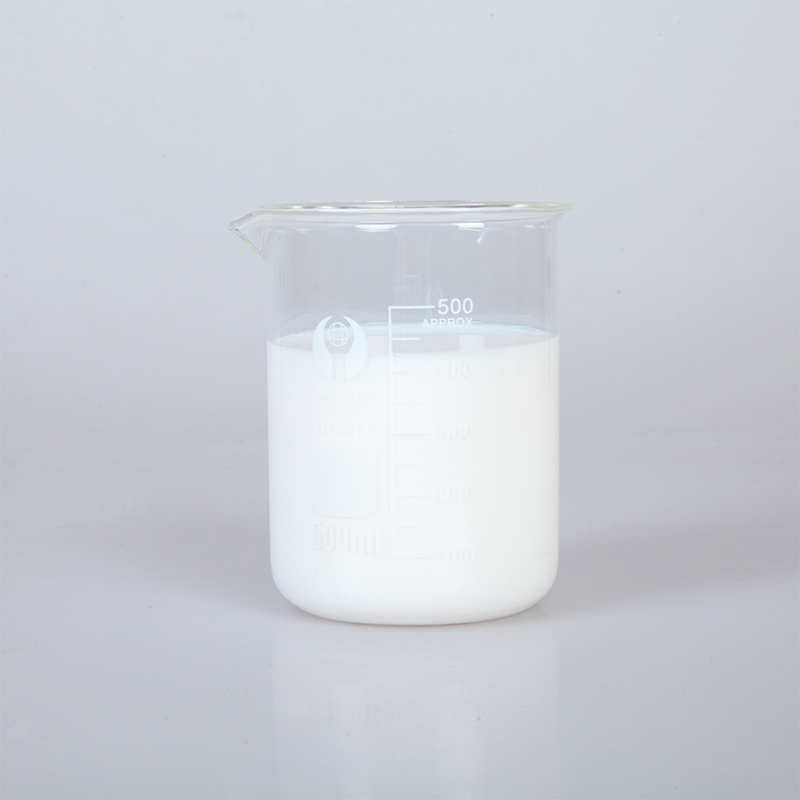
Organosilicone Defoamer
Compatibility in Water-Based Systems
Water-based systems are among the most common application environments for organosilicone defoamers. They include agricultural suspensions, emulsifiable formulations, liquid fertilizers, detergents, coatings, textile auxiliaries, paper chemicals, and industrial cleaning products.
In these systems, the main compatibility challenge is achieving adequate dispersion without producing oil spots, layering, haze, sedimentation, or surface defects. The emulsifier and wetting agent package must be selected carefully. If the defoamer is too incompatible, it may separate rapidly. If it is too compatible, it may remain uniformly dissolved or dispersed without reaching the air-liquid interface effectively enough to destroy foam.
LD-610 is designed to provide a practical balance between dispersion and activity. When added at an appropriate point and mixed under suitable conditions, the emulsion can distribute through the liquid system while retaining the ability to migrate toward foam films.
Water quality can also affect performance. Hardness ions, dissolved salts, pH, temperature, and other additives may change emulsion stability. Application testing should therefore use the actual process water and representative raw materials whenever possible.
Compatibility in High-Surfactant Formulations
High-surfactant formulations are often difficult to defoam. Surfactants stabilize bubbles by lowering surface tension and forming protective layers around gas cells. Detergents, agrochemical formulations, textile preparations, and some cleaning products may generate persistent foam during mixing or application.
An organosilicone defoamer with a suitable molecular structure can maintain activity in these conditions. Its low surface tension and spreading behavior help it compete with the surfactant network at the foam interface. The objective is not to remove the surfactant function but to control unwanted foam while preserving wetting, dispersing, cleaning, or spreading performance.
Hebei Guituo New Material Co., Ltd. produces silicone additives and surfactants as part of a broader product matrix. This combined technical background supports the evaluation of interactions between foam control agents and surface-active components. It also makes it possible to consider the total formulation rather than viewing the defoamer as an isolated ingredient.
Compatibility in Low-Surfactant Systems
Low-surfactant systems may require a different approach. Because the liquid may not contain enough surface-active material to stabilize the defoamer emulsion, an unsuitable product may spread too aggressively or create visible surface defects. Controlled spreading and moderate interfacial activity may therefore be more important than maximum knockdown speed.
In coatings, inks, textile treatments, and certain industrial liquids, excessive incompatibility can produce craters, fisheyes, pinholes, haze, or poor surface uniformity. The right organosilicone defoamer should control process foam without compromising the final appearance or functional properties of the treated material.
| System type | Main compatibility concern | Desired performance |
|---|---|---|
| Water-based formulation | Emulsion stability and uniform dispersion | Foam control without separation |
| High-surfactant system | Competition with stabilized foam films | Rapid knockdown and persistent suppression |
| Low-surfactant system | Excessive spreading or surface defects | Controlled activity and good appearance |
| Oil-based system | Solubility and phase compatibility | Stable distribution in non-aqueous media |
| Particle-containing system | Adsorption and sedimentation | Consistent foam control during agitation |
Performance in Agricultural Formulations
Agricultural formulations frequently generate foam because they contain surfactants, wetting agents, dispersants, polymers, active ingredients, and fine mineral or organic particles. Foam may form during concentrate production, dilution, tank mixing, circulation, transfer, and spray application.
Uncontrolled foam can make it difficult to measure concentrates accurately. It may cause tanks to overflow, delay filling, obstruct visual inspection, and create inconsistent application volumes. In field spraying, excessive foam can interfere with tank capacity and make it more difficult to achieve a stable mixture.
Organosilicone defoamers can help reduce foam while preserving the intended function of agricultural adjuvants. This is particularly important because agricultural products must maintain dispersion, wetting, spreading, and active ingredient distribution. A defoamer that destabilizes the formulation may be unsuitable even if it provides strong initial foam knockdown.
LD-610 can be evaluated in suspension concentrates, water-dispersible systems, liquid fertilizers, pesticide concentrates, and other agricultural formulations where silicone-based foam control is appropriate. The exact dosage and addition stage should be established through laboratory and pilot-scale testing.
Benefits for Agrochemical Production
During agrochemical manufacturing, raw materials are often added under high-speed agitation. Powder incorporation, recirculation, and homogenization can introduce air into the liquid. Foam may also increase when surfactants and dispersants are added. A suitable defoamer can help maintain usable vessel volume and improve process continuity.
During packaging, foam can reduce filling accuracy because bubbles occupy part of the apparent volume. Foam control can support cleaner filling and reduce the need for extended settling time before capping. This may improve throughput and reduce the risk of product remaining on container walls or filling equipment.
Hebei Guituo New Material Co., Ltd. has developed agricultural silicone products that are used by domestic agrochemical enterprises. Its experience with agricultural adjuvants, surfactants, modified silicone oils, and defoamers provides a foundation for application-specific support.
Applications in Other Industries
Coatings and Paint Additives
Foam can be introduced during pigment dispersion, grinding, high-speed mixing, pumping, and application. In water-based coatings, foam may lead to pinholes, craters, uneven films, and poor surface appearance. Organosilicone defoamers can reduce foam during production and help improve the uniformity of the coating film.
Compatibility is essential in coatings. The defoamer must control foam without causing loss of gloss, recoat problems, surface defects, or poor adhesion. Product selection should consider resin type, pigment concentration, solvent balance, viscosity, application method, and curing conditions.
Paper Production
Paper manufacturing involves water circulation, pulping, washing, coating, sizing, and wastewater treatment. These operations can generate persistent foam because of fibers, fillers, binders, dispersants, and dissolved organic substances.
Organosilicone defoamers can help reduce foam in process water and coating systems. Better foam control may support drainage, improve equipment visibility, reduce overflow, and help maintain more stable operating conditions. The selected defoamer must be compatible with fibers, fillers, sizing agents, coating binders, and downstream finishing requirements.
Textile Processing
Textile operations such as scouring, dyeing, washing, bleaching, finishing, and coating often involve surfactants and vigorous circulation. Foam can interfere with bath uniformity, fabric wetting, pumping, and process control.
A silicone-based defoamer can support stable operation by suppressing foam without excessively affecting wetting or penetration. Modified silicone technology may be used when the formulation requires a balance between foam control, surface slip, softness, and compatibility with textile auxiliaries.
Daily Chemical Products
Detergents, cleaners, shampoos, liquid soaps, and other daily chemical products may produce foam during manufacturing, filling, or transport. In some consumer products, foam is desirable during use, while uncontrolled manufacturing foam is not. The defoamer must therefore be selected and dosed carefully so that it controls process foam without undermining the product’s intended consumer experience.
Storage stability is also important. A compatible defoamer should not create oil separation, visible spots, or long-term sedimentation. Testing under accelerated and normal storage conditions can help determine whether the product remains physically stable over time.
Electronics and Industrial Processing
Electronics manufacturing and related industrial processes may use cleaning fluids, coatings, encapsulants, and solvent-based systems. Foam can interfere with circulation, coating uniformity, and surface quality. Modified silicone oils may offer better compatibility with nonpolar or semi-polar media than a standard aqueous emulsion.
Because electronic applications can be sensitive to contamination and surface defects, the defoamer must be assessed for residue, outgassing, electrical performance, and compatibility with the specific process. Selection should be based on the complete process requirement rather than foam suppression alone.
Food and Pharmaceutical Processing
Foam may affect filtration, fermentation, washing, separation, filling, and cleaning operations in food and pharmaceutical manufacturing. In these industries, regulatory status, purity, process compatibility, and application-specific approval requirements must be reviewed before use.
The silicone-based mechanism can provide efficient foam control, but the appropriate grade, dosage, and documentation depend on the intended application and local regulations. Users should obtain current technical and regulatory information before introducing a defoamer into a regulated process.
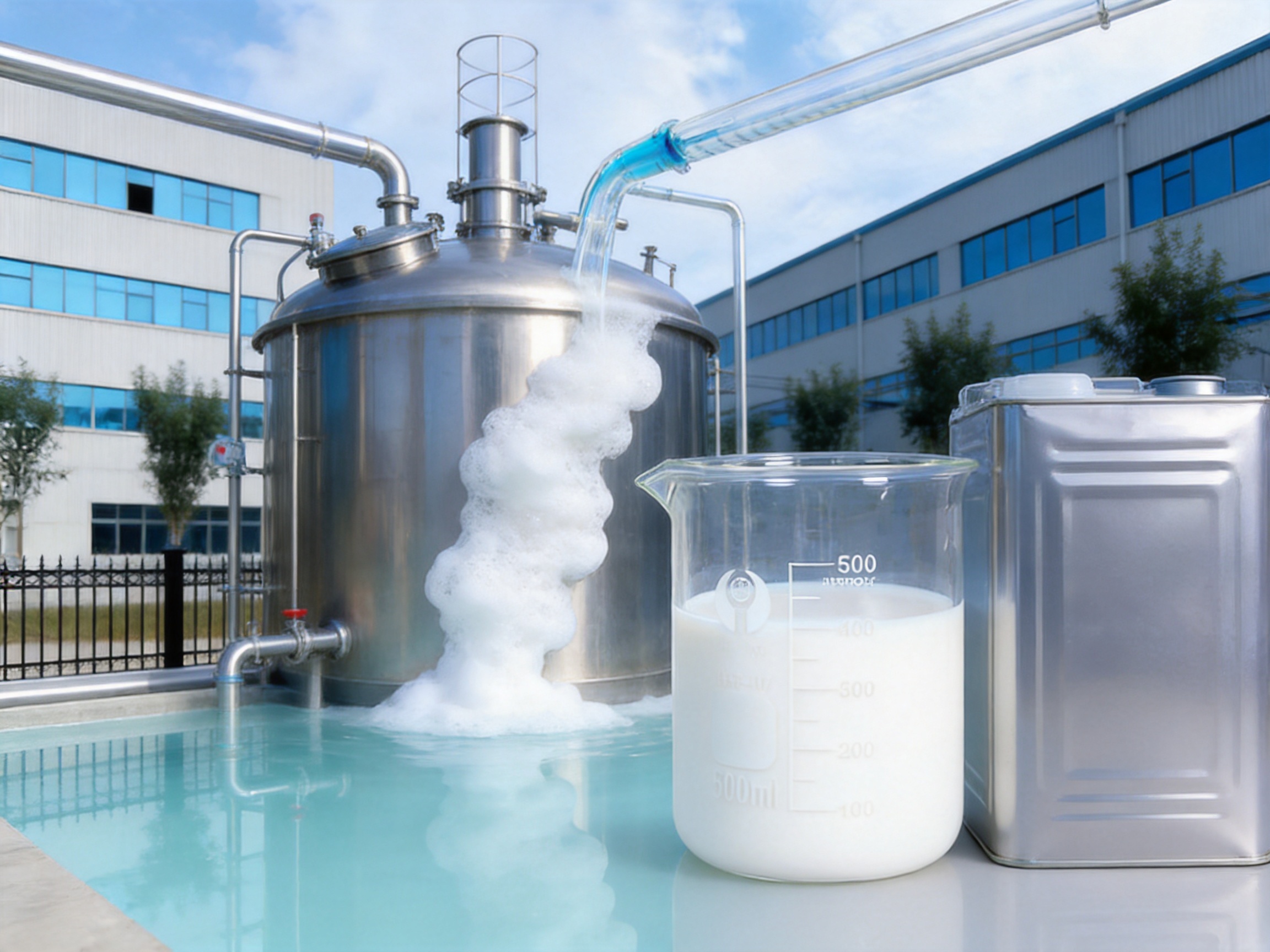
Manufacturing Strengths and Quality Management
The performance of an organosilicone defoamer depends on manufacturing consistency as much as on its basic chemistry. Small changes in silicone oil viscosity, emulsifier ratio, particle distribution, additive concentration, or processing temperature can affect foam knockdown, storage stability, and compatibility.
Hebei Guituo New Material Co., Ltd. is a high-tech enterprise integrating research and development, production, and sales. The company has established production and testing capabilities for high-end silicone materials and related additives. Its product matrix includes silicone additives, wetting agents, modified silicone oil, dimethyl silicone oil, surfactants, and defoamers.
Controlled Raw Material Selection
Consistent raw materials are essential for reliable defoamer production. Silicone oil selection may involve viscosity, molecular structure, purity, and compatibility with the intended emulsion system. Emulsifiers and wetting agents must also be selected according to the target medium and storage requirements.
Controlled raw material selection helps reduce batch-to-batch variation. It also supports customization because the manufacturer can select different material combinations for water-based, solvent-based, high-surfactant, or specialized industrial applications.
Advanced Production Equipment
The company is equipped with advanced production equipment and precise testing facilities. Modern mixing, dispersion, emulsification, and filling equipment can improve control over particle distribution, viscosity, and product uniformity.
Equipment capability is important for viscous emulsions. Poor mixing can cause uneven distribution of the silicone phase, while uncontrolled shear may influence emulsion structure. A controlled production process helps the finished defoamer maintain predictable behavior during storage and application.
Full-Process Quality Monitoring
Quality control should begin with incoming materials and continue through production, filling, storage, and delivery. A full-process monitoring mechanism allows manufacturers to identify deviations before they affect customer use.
Important evaluation areas may include appearance, viscosity, emulsion stability, active content, dispersion behavior, foam knockdown, foam persistence, and storage performance. Application tests can further assess compatibility with representative customer formulations.
| Quality stage | Typical control focus | Purpose |
|---|---|---|
| Raw material inspection | Identity, purity, viscosity, and consistency | Confirm suitability of incoming materials |
| Process monitoring | Mixing, emulsification, temperature, and shear | Maintain batch uniformity |
| Finished product testing | Appearance, stability, activity, and compatibility | Verify product performance |
| Packaging inspection | Container integrity, labeling, and filling accuracy | Protect product quality during logistics |
| Technical follow-up | Application feedback and performance review | Support continuous improvement |
Experienced Technical and Production Personnel
Organosilicone defoamers require knowledge of silicone chemistry, emulsification, surface science, and industrial processing. The company has assembled an experienced technical and production team with professional skills in these areas. This helps connect laboratory formulation work with large-scale production requirements.
Technical knowledge is also important when a customer’s formulation contains several active components. A defoamer may interact with surfactants, polymers, pigments, salts, oils, solvents, or particles. Experienced personnel can help identify the relevant variables and design a more efficient testing program.
OEM and ODM Support
Different customers may require different viscosity, dispersion, activity, packaging, labeling, or application characteristics. Hebei Guituo New Material Co., Ltd. accepts OEM and ODM orders, allowing product development to be aligned with customer specifications.
Customization may involve adjusting silicone oil viscosity, modifying the molecular structure, selecting a different emulsifier package, changing the active concentration, or adapting the product to a particular production process. Customization should always be validated through compatibility and performance testing.
Application and Dosing Considerations
The correct way to use an organosilicone defoamer depends on the host system. It may be added directly to the production vessel, diluted before addition, pre-dispersed in a compatible liquid, or introduced at a foam-generating point. The choice should be based on the formulation’s viscosity, mixing capacity, and process sequence.
Direct Addition
Direct addition is convenient for systems that can distribute the defoamer quickly. The product should be added gradually rather than poured into one location when local concentration could cause incompatibility. Moderate agitation can help distribute the emulsion throughout the vessel.
Predilution
Predilution may improve distribution in large tanks or highly viscous systems. The dilution medium must be compatible with both the defoamer and the host formulation. Inappropriate dilution can destabilize the emulsion or reduce foam control efficiency.
Addition Sequence
Adding the defoamer before foam forms may provide preventive control, while adding it after foam develops may provide corrective knockdown. Some processes benefit from a combination of an initial dose and a small maintenance dose during later stages.
The ideal addition point can be identified by comparing foam behavior after the addition of surfactants, powders, polymers, or other high-foam materials. Testing should reproduce actual production conditions as closely as possible.
Mixing and Shear
Mixing affects both foam generation and defoamer distribution. High shear can introduce air and may alter the defoamer dispersion. Low shear may be insufficient to distribute the product uniformly. The most suitable mixing conditions should be determined using the actual equipment or a representative pilot system.
Storage and Handling
The product should be stored in a clean, sealed container under conditions recommended by the supplier. Extreme temperatures, contamination, prolonged exposure to direct sunlight, and repeated freezing or overheating may affect emulsion stability. The material should be inspected before use, especially after long-term storage.
Users should consult the current safety data sheet and technical data sheet for handling, personal protection, storage, transport, and disposal requirements. Industrial users should also confirm that the selected grade is suitable for the intended regulatory environment.
Testing Organosilicone Defoamer Performance
Laboratory testing is essential because foam behavior is system-specific. A defoamer that performs well in one formulation may show different activity in another formulation with a different surfactant, polymer, salt, or solids content.
Initial Foam Knockdown Test
An initial foam knockdown test measures how quickly the defoamer reduces foam after addition. A representative sample is agitated using a defined method, and the defoamer is introduced at a controlled dosage. Foam height is recorded at regular intervals.
This test helps compare different products and dosages. It is particularly relevant to high-speed mixing, filling, and transfer processes where immediate foam reduction is important.
Persistent Foam Control Test
A persistent foam control test evaluates whether foam returns during repeated agitation. The sample is agitated, allowed to settle, and agitated again. Foam height and collapse time are measured over several cycles.
This test can reveal whether the defoamer remains active during extended processing. It is useful for agricultural formulations, detergents, textile baths, paper process liquids, and other systems exposed to repeated circulation.
Storage Stability Test
Storage testing evaluates appearance, phase separation, viscosity, sedimentation, and foam control after the product has been stored under defined conditions. Both the defoamer itself and the final formulation should be examined.
A compatible product should not cause obvious oil spots, layering, excessive haze, or sedimentation. Long-term evaluation is particularly important where the final formulation will be stored for months before use.
Compatibility and Appearance Test
Compatibility testing examines the impact of the defoamer on color, gloss, clarity, surface smoothness, wetting, dispersion, and other final-product characteristics. Coatings and inks may require microscope or drawdown evaluations, while agricultural products may require suspension and redispersibility tests.
| Evaluation aspect | Suggested observation | Positive indicator |
|---|---|---|
| Visual stability | Observe the sample during storage | No oil spots, layering, or severe haze |
| Foam knockdown | Measure foam height after dosing | Rapid reduction in foam |
| Foam persistence | Repeat agitation cycles | Consistent suppression over time |
| Formulation integrity | Check viscosity, dispersion, and sedimentation | Minimal change in product properties |
| Final appearance | Evaluate film, surface, or liquid appearance | No significant defects caused by the defoamer |
Why Choose a Specialized Silicone Material Supplier?
Purchasing an organosilicone defoamer from a specialized silicone material supplier offers advantages beyond the product itself. A supplier with related silicone technologies can better understand the interaction between defoamers, surfactants, wetting agents, modified silicone oils, and process conditions.
Hebei Guituo New Material Co., Ltd. has developed a diversified silicone product portfolio serving agriculture, daily chemicals, electronics, textiles, and other industries. This breadth allows the company to approach foam control as part of a complete formulation system.
The company’s products are supplied to domestic customers and exported to overseas markets, including Europe and Southeast Asia. Stable performance, reliable quality, technical support, and repeat customer demand contribute to its position as a supplier of silicone-based materials.
Customers may also benefit from the company’s OEM and ODM capabilities. Instead of selecting only from a fixed standard product, users can discuss specific requirements such as water compatibility, high-temperature operation, low-foam processing, storage stability, or application-specific performance.
Competitive Advantages of LD-610
LD-610 offers several advantages that can distinguish it from less specialized foam control products.
First, it uses an organosilicone-based approach that provides strong surface activity and rapid foam film disruption. This is suitable for processes where foam must be controlled quickly.
Second, its emulsion form is practical for many water-based industrial formulations. Properly selected emulsifiers and wetting agents help support distribution while maintaining defoaming activity.
Third, the product is designed for compatibility evaluation across water-based, high-surfactant, low-surfactant, agricultural, textile, daily chemical, and other systems. This broad application perspective reduces the risk of selecting a defoamer based only on one performance indicator.
Fourth, the manufacturer has expertise in related silicone technologies. The ability to work with silicone additives, surfactants, modified silicone oil, and wetting agents supports more informed formulation design and technical communication.
Fifth, advanced production equipment, testing facilities, and full-process quality monitoring support consistent supply. Consistency is a key competitive factor because industrial customers need predictable behavior from batch to batch.
Finally, OEM and ODM services provide flexibility for customers with special requirements. Custom development can help address difficult systems where a general-purpose defoamer is not sufficient.
Environmental, Safety, and Regulatory Considerations
Every industrial chemical should be evaluated according to its intended application, local regulations, and safety requirements. Silicone-based materials are widely used, but their acceptability depends on product grade, dosage, process conditions, and end-use regulations.
Users should review the current safety data sheet, technical data sheet, certificate information, and any application-specific documentation before use. Food, pharmaceutical, agricultural, and other regulated applications may require additional compliance evaluation.
Good industrial practice includes controlled dosing, suitable personal protective equipment, clean storage containers, spill prevention, and responsible waste management. The product should not be released into drains or the environment unless this is specifically permitted by applicable regulations.
Frequently Asked Questions
Q: What is the main function of an organosilicone defoamer?
A: Its main function is to reduce or eliminate foam generated during mixing, pumping, circulation, washing, filtration, extraction, distillation, evaporation, dehydration, drying, filling, and other industrial operations. It works by spreading across foam films and weakening the structure of gas bubbles.
Q: What is LD-610?
A: LD-610 is an organosilicon defoamer supplied as a white viscous emulsion. Its listed CAS number is 9016-00-6, its EINECS number is 618-493-1, and its synonym is Polydimethylsiloxane Emulsion. The listed purity is 99.8%.
Q: Can LD-610 be used in water-based formulations?
A: It is intended for evaluation in suitable water-based systems. Its emulsion form can support dispersion in aqueous formulations, but the final compatibility depends on surfactants, salts, polymers, pH, temperature, viscosity, and other ingredients. A laboratory test should be completed before commercial use.
Q: Is an organosilicone defoamer suitable for agricultural formulations?
A: Organosilicone defoamers are commonly evaluated in agricultural formulations because mixing and dilution can generate considerable foam. They can support foam control while preserving the performance of dispersants, wetting agents, and active ingredients when the formulation is properly matched and dosed.
Q: How does a silicone defoamer compare with a mineral oil defoamer?
A: Silicone defoamers generally provide lower surface tension, faster spreading, strong foam knockdown, and good performance across many processing conditions. Mineral oil defoamers may be suitable for certain systems, but the best choice depends on compatibility, temperature, viscosity, regulatory requirements, and final-product appearance.
Q: Can the product be used in high-surfactant systems?
A: It can be evaluated in high-surfactant systems such as detergents and some agricultural formulations. Because surfactants can stabilize foam films, dosage and addition sequence are important. Testing should confirm that foam control is achieved without disturbing the desired wetting or dispersing properties.
Q: What factors affect defoamer compatibility?
A: Important factors include system polarity, surfactant concentration, pH, ionic strength, temperature, shear force, viscosity, mixing sequence, solids content, and storage time. The silicone oil structure and emulsifier package also have a major influence.
Q: How should LD-610 be dosed?
A: The dosage should be established through application testing. Users should begin with a controlled trial, compare several dosage levels, and evaluate both immediate foam knockdown and persistent foam control. Overdosing may create incompatibility or surface defects in some formulations.
Q: Can the product be customized?
A: Hebei Guituo New Material Co., Ltd. accepts OEM and ODM orders. Possible development directions may include adjustment of silicone oil viscosity, active concentration, emulsification system, dispersion behavior, or application-specific compatibility.
Q: Which industries use organosilicone defoamers?
A: Common industries include agriculture, coatings, paints, paper, textiles, daily chemicals, electronics, industrial cleaning, food processing, pharmaceuticals, and general chemical manufacturing. The product must be selected according to the requirements of each process.
Q: How should the product be stored?
A: It should be kept in a clean, sealed container under supplier-recommended conditions. Users should protect it from contamination, extreme temperatures, direct sunlight, and conditions that may destabilize the emulsion. Current supplier documentation should be consulted for detailed storage instructions.
Conclusion
Organosilicone defoamers provide an efficient solution for foam control in complex industrial systems. Their low surface tension, rapid spreading, strong foam film disruption, broad temperature tolerance, and adaptable formulation technology make them useful across agriculture, coatings, paper, textiles, daily chemicals, electronics, and other applications.
LD-610 Organosilicon Defoamer combines silicone-based activity with an emulsion format suitable for evaluation in many water-based systems. Its listed purity, stable physical profile, and broad compatibility potential make it a practical option for manufacturers seeking reliable foam suppression.
The product’s competitive value is strengthened by the manufacturing and technical capabilities of Hebei Guituo New Material Co., Ltd. The company’s advanced equipment, testing facilities, full-process quality monitoring, experienced personnel, silicone product portfolio, international supply experience, and OEM and ODM services support consistent industrial application.
For best results, users should evaluate LD-610 in the actual formulation and process environment. Selecting the correct dosage, addition point, mixing method, and storage conditions will help maximize foam control while protecting product stability and final quality.
References
1. Guituo New Material product information for LD-610 Organosilicon Defoamer.
2. Guituo New Material technical information on silicone additives, modified silicone oils, surfactants, wetting agents, and agricultural adjuvants.
3. Rosen, M. J., and Kunjappu, J. T. Surfactants and Interfacial Phenomena. General principles of surface tension, adsorption, and foam stabilization.
4. Garrett, P. R. Defoaming: Theory and Industrial Applications. General mechanisms of foam formation, foam-film rupture, and defoamer selection.
5. Industrial formulation and process-control principles for aqueous emulsions, dispersions, coatings, agricultural products, and textile auxiliaries.
6. Applicable safety data sheets, technical data sheets, and local regulatory requirements for silicone-based foam control agents.
Product: Organosilicone Defoamer


Contact Information
Tel : +86-400-138-5268
Email : [email protected]
Phone : +86-15128434888 / +86-13511051998
Add : Xinqiao Environmental Protection Industrial Park, Wen'an County, Langfang City, Hebei Province, China
Contact Information
Copyright © Hebei Guituo New Material Co., Ltd. All Rights Reserved.
