

 English
  Français
  Português
 Home / Author / Zhang Xiaoyu, Regional Sales Manager (Southeast Asia) / High-Performance Organosilicone Surfactant for Agricultural Wetting, Spreading, and Formulation Stability
 High-Performance Organosilicone Surfactant for Agricultural Wetting, Spreading, and Formulation Stability
2026-07-05
Modern agricultural production depends not only on active ingredients, but also on the efficiency with which those active ingredients reach, cover, adhere to, and penetrate target surfaces. In pesticide, herbicide, fungicide, and foliar fertilizer applications, a significant portion of performance can be lost when spray droplets bounce off waxy leaves, bead up on hydrophobic surfaces, dry too quickly, or fail to disperse uniformly in the tank mix. A high-performance organosilicone surfactant is designed to solve these problems by dramatically reducing surface tension, improving wetting, enhancing spreading, supporting dispersion, and helping formulations work more consistently under demanding field conditions.
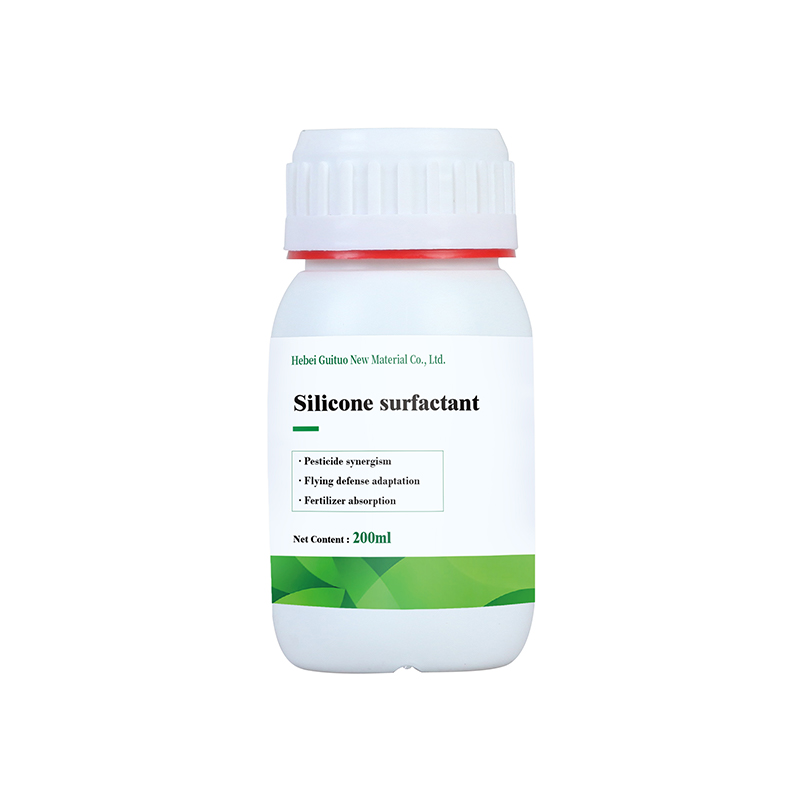
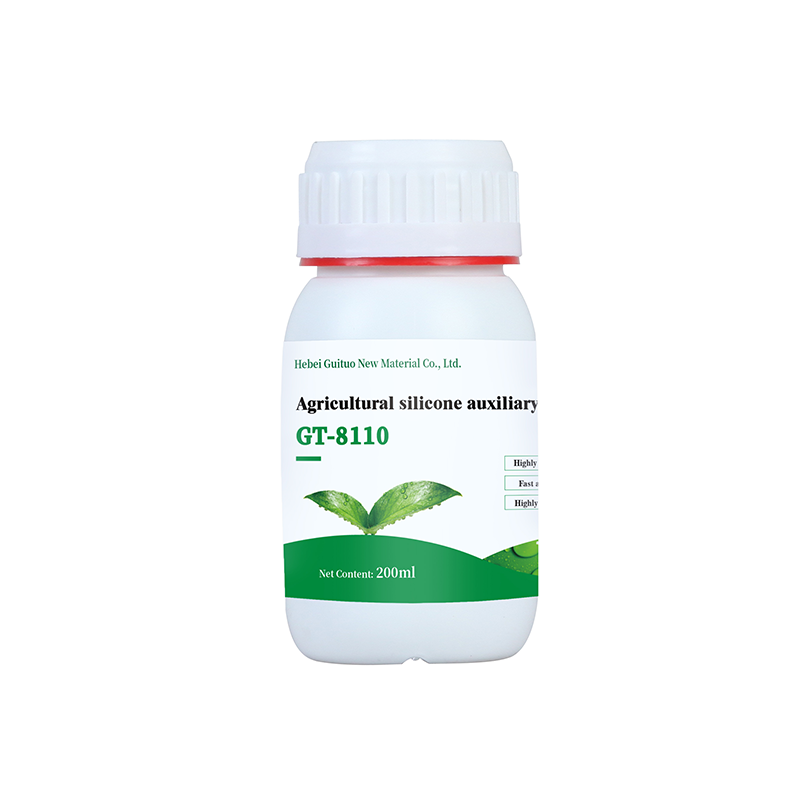
The organosilicone surfactant discussed in this article is a silicone-based agricultural synergist represented by model GT-7100. It is identified as an organosilicon surfactant, also known as silicone surfactant or polyether modified trisiloxane. With a CAS number of 27306-78-1, a reported purity of 99.8%, low viscosity, and very low surface tension at dilute concentration, this product is engineered for agricultural formulations that require rapid wetting, superior coverage, and improved delivery of active ingredients. It is especially suitable for use in agrochemical systems where conventional organic surfactants may not provide sufficient spreading or penetration performance.
Organosilicone surfactants are widely valued because they combine the flexible, low-surface-energy characteristics of silicone chemistry with the compatibility and functional adaptability of organic polyether structures. This hybrid architecture allows them to reduce surface tension more effectively than many traditional surfactants. In agricultural use, that means droplets can spread into thinner films, cover leaf surfaces more completely, and improve the contact between the formulation and the biological target. Better contact can translate into improved pesticide effectiveness, more uniform herbicide action, and more efficient foliar nutrient delivery.
Hebei Guituo New Material Co., Ltd., together with its trading subsidiary Ningbo Guituo Trading Co., Ltd., focuses on the research, development, manufacturing, and supply of high-end silicone materials for industrial and agricultural fields. The company’s product range includes silicone additives, wetting agents, modified silicone oil, dimethyl silicone oil, surfactants, defoamers, and related specialty materials. Its agricultural silicone products are positioned for high performance and stable quality, serving customers in domestic and overseas markets. The company also accepts OEM and ODM orders, enabling customers to obtain customized silicone-based solutions for specific formulation and application requirements.
Organosilicone Surfactant
Product Overview and Technical Profile
The organosilicone surfactant is designed as a functional additive for reducing surface and interfacial tension in liquid systems. Its principal role is to make liquids spread more easily on solid surfaces and to improve the interaction between different phases in a formulation. In agriculture, this can help water-based spray solutions wet waxy leaves, rough stems, dense canopies, and other difficult surfaces. In formulation work, it can support emulsification, dispersion, solubilization, and stability depending on the system in which it is used.
The product’s reported surface tension is less than 20.5 mN/m at 0.1% by weight, which indicates strong spreading capability. Traditional nonionic surfactants may reduce water surface tension to the range of approximately 30 to 40 mN/m, while high-quality organosilicone surfactants can reduce it substantially further. This difference is crucial because many plant leaf surfaces are hydrophobic and covered with waxy cuticles. A spray solution with insufficient wetting ability may form isolated beads and fail to cover the leaf evenly. By contrast, a solution containing an efficient organosilicone surfactant can spread rapidly and form a continuous thin film.
Another important parameter is viscosity. At 25°C, the product has a viscosity of 30 to 50 mm²/s, making it relatively easy to handle, measure, pump, and blend into liquid formulations. A moderate viscosity helps formulators incorporate the surfactant into concentrates or tank-mix additives without complicated processing. The product’s pH value in a 1% aqueous solution at 25°C is reported as 6.5 to 7.5, which is near neutral and useful for compatibility with many agricultural systems. Its cloud point at 1.0% by weight is no higher than 35°C, a parameter that formulators should consider when designing products for different storage and use conditions.
| Item | Typical Information | Practical Significance |
|---|---|---|
| Product Model | GT-7100 | Identifies the product for specification, supply, and formulation selection. |
| Chemical Type | Organosilicon surfactant | Combines silicone spreading performance with organic compatibility. |
| Synonyms | Silicone surfactant, polyether modified trisiloxane | Common industry names used in agricultural additive systems. |
| CAS Number | 27306-78-1 | Supports technical identification and regulatory documentation. |
| Purity | 99.8% | Indicates a highly refined product for stable formulation performance. |
| Viscosity at 25°C | 30-50 mm²/s | Provides convenient handling, blending, and dosing properties. |
| Surface Tension at 0.1% wt | <20.5 mN/m | Enables strong wetting, spreading, and spray coverage performance. |
| Cloud Point at 1.0% wt | ≤35°C | Important for formulation design and storage condition evaluation. |
| pH at 1% Aqueous Solution | 6.5-7.5 | Near-neutral behavior supports broad compatibility in many systems. |
How Organosilicone Surfactants Improve Wetting
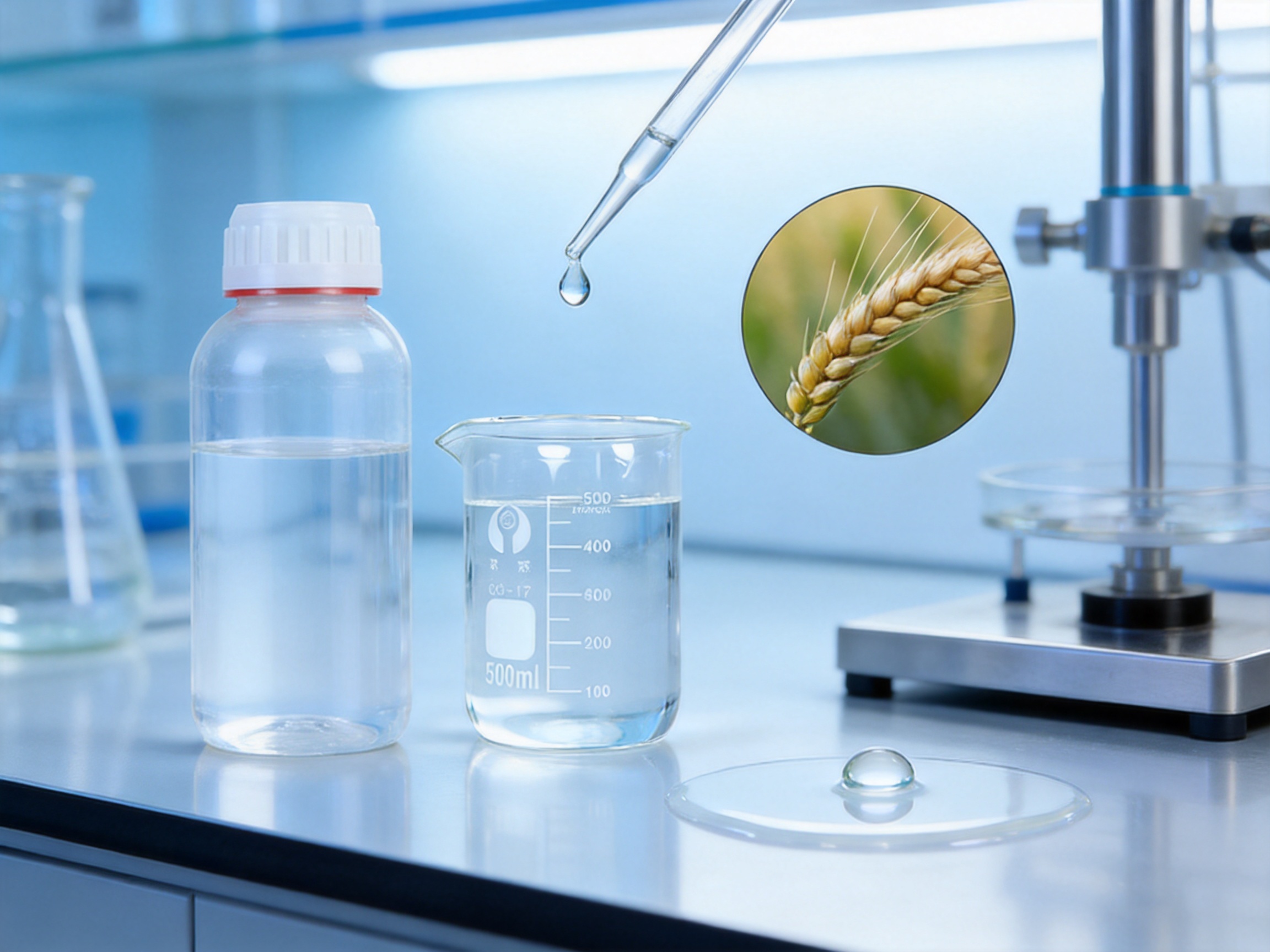
Wetting is one of the most fundamental functions of an agricultural adjuvant. A spray droplet must first wet a surface before an active ingredient can act effectively. Many crops have leaf surfaces with complex textures, wax layers, hairs, or natural water-repellent characteristics. Without an efficient wetting agent, spray droplets can remain as round beads, roll off the leaf, or deposit unevenly. This is particularly problematic for contact pesticides and herbicides, where surface coverage is directly connected to biological efficacy.
An organosilicone surfactant improves wetting by reducing the cohesive forces within the liquid. When surface tension is high, water tends to minimize its contact area and form rounded droplets. When surface tension is reduced, the liquid can spread more easily. The silicone backbone contributes very low surface energy, while the polyether modification improves compatibility with aqueous systems. This molecular design allows the surfactant to migrate rapidly to interfaces and reduce surface tension at low use concentrations.
The result is faster droplet flattening and more complete surface coverage. In practical spraying, this can help active ingredients reach small crevices, leaf edges, and irregular surfaces. Improved wetting also reduces the likelihood of visible spotting or uneven deposition. For foliar fertilizers, better wetting can improve nutrient contact with the leaf surface. For fungicides, more uniform coverage can help protect broader areas of the plant. For herbicides, spreading can improve contact with target weeds, which may support more reliable weed control.
Compared with many conventional surfactants, organosilicone surfactants can provide a phenomenon often described as “super-spreading.” This means that a small droplet can spread over a much larger area than it would with ordinary wetting agents. This advantage is especially valuable where spray coverage is difficult, such as on waxy, upright, or narrow leaves. It can also be useful when growers seek to improve coverage while optimizing spray volume, although application rates and label recommendations for the active ingredient must always be followed.
Dispersion, Solubilization, and Formulation Uniformity
Agricultural formulations often contain active ingredients that are not naturally soluble or easily dispersed in water. Suspensions, emulsions, soluble liquids, and tank mixtures all require physical stability to perform correctly. If particles settle, droplets separate, or active ingredients distribute unevenly, field performance can become inconsistent. A surfactant that supports dispersion and solubilization can help maintain a more uniform system from preparation through application.
The organosilicone surfactant assists dispersion by helping reduce interfacial tension between solid particles and the liquid medium. When particles are properly wetted, they are less likely to form agglomerates. This is important for formulations containing powders, suspension concentrates, or micronized active ingredients. Improved dispersion can lead to more consistent active ingredient delivery at the nozzle and more uniform deposit on the crop.
Solubilization is another useful function. Some active materials or formulation components have limited water compatibility. A surfactant can help incorporate these materials into the liquid phase more effectively. While an organosilicone surfactant is not a universal solvent, its interfacial activity can support compatibility in carefully designed systems. Formulators can use it as part of a broader additive package that may include emulsifiers, dispersants, solvents, defoamers, pH regulators, and stabilizers.
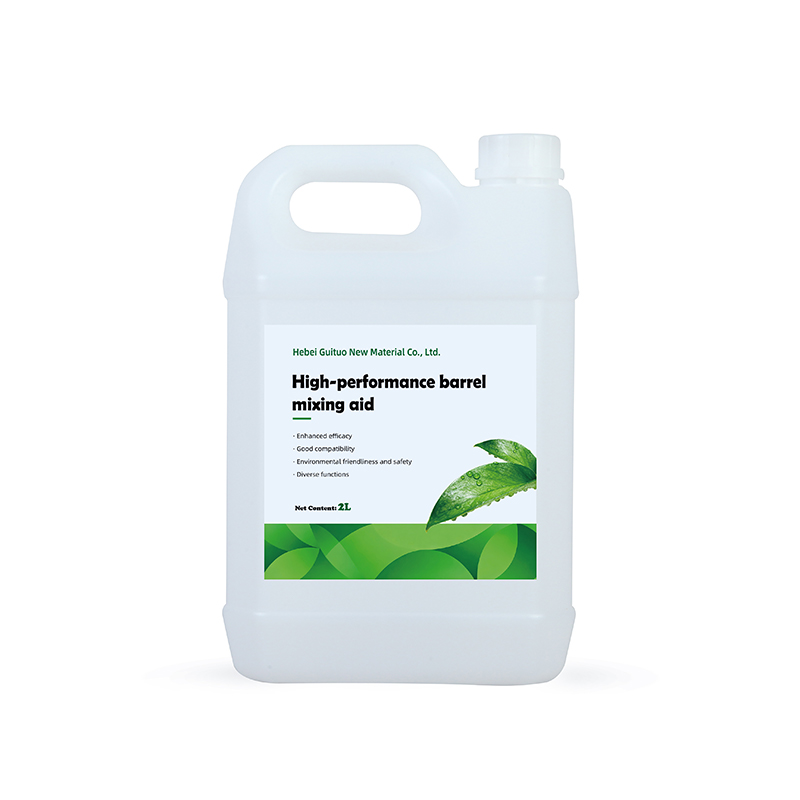
Uniformity is particularly important in agrochemical tank mixtures. Farmers often mix multiple products, such as herbicides, insecticides, fungicides, micronutrients, and adjuvants. A high-performance surfactant can help the spray solution remain more homogeneous, reducing the risk of inconsistent concentration during application. However, compatibility testing remains essential because agricultural products vary widely in chemistry. Jar testing and adherence to product instructions are recommended before large-scale use.
Emulsification and Demulsification Functions
The product description identifies both emulsification and demulsification as possible functions of organosilicone surfactants. These functions may appear opposite, but they reflect the broader ability of surfactants to influence oil-water interfaces. In some systems, the surfactant can help form stable emulsions by reducing interfacial tension and supporting uniform droplet distribution. In other systems, depending on formulation balance and use conditions, surfactants can assist separation processes by destabilizing existing emulsions.
In agricultural formulation, emulsification is commonly important for emulsifiable concentrates, oil dispersions, and other systems that involve hydrophobic active ingredients. Proper emulsification helps distribute oil-soluble or poorly water-soluble components throughout an aqueous spray solution. A uniform emulsion ensures that each droplet applied to the crop contains a representative amount of active material. Poor emulsification can lead to separation in the tank, nozzle blockage, or uneven biological activity.
The ability to manage interfacial behavior gives the organosilicone surfactant flexibility in formulation development. Its value depends on the complete system design. When paired with the correct co-emulsifiers and stabilizers, it can contribute to stable and efficient agricultural formulations. When used in other industrial contexts, its demulsifying potential may be useful where separation of oil and water phases is desired. This multifunctionality distinguishes silicone surfactants from simple wetting agents and makes them valuable in broader chemical raw material applications.
Foaming Control and Spray Application Quality
Foam can be a serious problem in agricultural mixing and spraying operations. Excessive foam in a spray tank can interfere with accurate filling, increase operator inconvenience, cause overflow, and produce inconsistent spray application. Some surfactants increase foam, while others help suppress or eliminate foam. The product information notes that this organosilicone surfactant can support foam-related requirements, including defoaming behavior when used appropriately.
Silicone chemistry is often associated with foam control because silicone-based materials can destabilize foam films. In agricultural systems, foam control must be balanced with wetting and spreading. A surfactant that provides strong wetting but creates uncontrollable foam may not be practical. The advantage of organosilicone technology is that it can be engineered to deliver strong surface activity while supporting manageable application behavior.
For formulators, foam behavior should be tested in the complete formulation and under practical mixing conditions. Water hardness, agitation level, tank size, temperature, active ingredient type, and co-adjuvants can all affect foaming. When the organosilicone surfactant is incorporated into a well-designed product, it can contribute to smoother mixing, easier handling, and more reliable spray operations. This practical advantage is important for distributors, formulators, and end users who need performance not only in laboratory measurements but also in real field conditions.
Penetration and Biological Performance
In many agricultural applications, surface coverage is only the first step. Some active ingredients must penetrate plant tissues or move through the cuticle to achieve their intended effect. The plant cuticle is a protective barrier made of waxes and polymers that can restrict absorption. Organosilicone surfactants can support penetration by improving contact between the spray solution and the cuticle, increasing the area of interaction, and helping the active ingredient remain in close contact with the surface.
Improved penetration can be beneficial for systemic herbicides, certain insecticides, plant growth regulators, and foliar nutrients. When active ingredients enter the plant more efficiently, performance may become faster or more reliable. This can be particularly important when application conditions are challenging, such as when target leaves are waxy, mature, or difficult to wet. Enhanced penetration may also help reduce waste caused by runoff or poor deposition.
However, penetration enhancement must be managed responsibly. Excessively aggressive wetting or penetration can increase the risk of crop injury with certain active ingredients or under stressful environmental conditions. For this reason, users should follow recommended rates, conduct compatibility tests, and observe crop safety guidelines. A high-performance surfactant is a powerful tool, and its benefits are greatest when it is used with technical understanding and proper dosage.
Advantages Over Conventional Surfactants
The most visible advantage of this organosilicone surfactant is its ability to reduce surface tension to a very low level. At a 0.1% concentration, the reported surface tension is below 20.5 mN/m. This level is significantly lower than what many conventional nonionic, anionic, or amphoteric surfactants can achieve in water. Lower surface tension enables faster spreading and broader coverage, especially on difficult hydrophobic surfaces.
A second advantage is rapid wetting. Conventional surfactants may improve wetting gradually, but organosilicone surfactants are known for fast migration to the interface and quick droplet spreading. In field spraying, the time between droplet impact and drying can be short. A surfactant that acts quickly can help ensure coverage before evaporation or runoff occurs. This speed is valuable in warm, dry, or windy environments where droplets have limited time to interact with the target surface.
A third advantage is multifunctionality. Many competing products specialize in only one role, such as wetting or emulsification. This organosilicone surfactant can contribute to wetting, penetration, dispersion, solubilization, emulsification, demulsification, and foam management depending on formulation design. Such versatility allows formulators to simplify additive packages or improve the performance of existing systems. It also makes the product useful beyond agriculture in fields such as paint additives, chemical raw materials, and release agent applications.
A fourth advantage is handling convenience. With a viscosity of 30 to 50 mm²/s at 25°C, the product can be easier to pump and blend than highly viscous silicone materials. This matters in manufacturing environments where efficient processing and accurate dosing are essential. A product that combines high performance with manageable viscosity can reduce production complications and improve batch-to-batch consistency.
A fifth advantage is near-neutral pH in aqueous solution. Extreme acidity or alkalinity can create compatibility challenges, especially in complex agrochemical formulations. A pH range of 6.5 to 7.5 at 1% aqueous solution supports use in many systems, although compatibility testing remains necessary. This characteristic gives formulators greater flexibility compared with additives that may shift formulation pH significantly.
Advantages for Agricultural End Users
For growers and agricultural service providers, the value of an adjuvant is measured by field performance, operational convenience, and consistency. A high-performance organosilicone surfactant can help improve spray coverage on plant surfaces, reduce beading, and support better distribution of active ingredients. These benefits can contribute to more efficient pest control, improved weed management, and more uniform nutrient application.
Improved spreading may help reduce the amount of spray solution wasted through runoff. When droplets spread evenly instead of forming large beads, more of the applied product remains in contact with the target. This can increase the practical efficiency of the spray program. In some situations, better coverage can improve the apparent performance of the active ingredient, though users must always follow label rates and regulatory requirements.
Another practical benefit is improved performance on difficult leaf surfaces. Crops and weeds vary greatly in surface characteristics. Some leaves are smooth and waxy; others are hairy, rough, or vertically oriented. Conventional spray solutions may struggle to remain on such surfaces. Organosilicone surfactants are especially useful in these scenarios because they help the liquid overcome natural water repellency.
Application consistency is also important. A spray program that performs well on one day but poorly on another creates uncertainty and cost. By improving wetting and dispersion, the surfactant helps reduce one source of variability. While weather, equipment, water quality, and active ingredient selection still matter, better adjuvant technology can make the spray solution more reliable.
Advantages for Formulators and Distributors
Formulators need additives that are effective, compatible, stable, and easy to incorporate into commercial products. This organosilicone surfactant offers a strong technical foundation for developing agricultural adjuvants, pesticide concentrates, foliar fertilizer aids, and specialty tank-mix products. Its low surface tension performance gives formulators a clear functional claim, while its multifunctionality allows it to participate in several aspects of formulation stability and application behavior.
Distributors benefit from products that address real user problems. Wetting, spreading, coverage, and efficiency are easy for customers to understand because they can often observe these effects directly. A silicone wetting synergist can be positioned as a performance-enhancing additive for growers who want better spray behavior and more consistent agrochemical use. When supported by reliable supply and technical documentation, it becomes a strong product in an agricultural input portfolio.
The product’s high reported purity supports consistent performance. Impurities in specialty surfactants can affect odor, color, compatibility, foaming, stability, and biological response. A refined product with stable specifications can reduce formulation variation and customer complaints. For distributors, consistent quality reduces risk and strengthens long-term customer confidence.
OEM and ODM flexibility is another advantage. Customers may require customized concentration, packaging, labeling, or formulation support. Hebei Guituo New Material Co., Ltd. accepts OEM and ODM orders, enabling partners to develop private-label adjuvants or specialized silicone additive systems for different markets. This capability is valuable in international trade, where requirements can vary by crop, climate, regulation, and customer preference.

Advanced Manufacturing Processes and Quality Strengths
The performance of an organosilicone surfactant depends not only on molecular design but also on manufacturing discipline. Silicone surfactant production requires careful control of raw materials, reaction conditions, purification, and final quality testing. Variations in molecular structure, residual components, or side reactions can influence surface tension, cloud point, viscosity, compatibility, and field behavior. Therefore, advanced manufacturing processes are essential for stable product quality.
Hebei Guituo New Material Co., Ltd. has established a comprehensive guarantee system for product quality and stable supply. The company is equipped with advanced production equipment and precise testing facilities. It applies full-process quality monitoring from the production source to finished product delivery. This system is important because customers in agriculture and industry require batch-to-batch consistency. A surfactant that performs well in one batch but differently in the next can create formulation failures, application problems, or customer dissatisfaction.
Raw material control is the first stage of manufacturing quality. High-quality silicone intermediates and polyether components are necessary to achieve the desired balance of hydrophobic and hydrophilic properties. Incoming materials should be inspected for identity, purity, moisture, and other critical parameters. By controlling inputs, the manufacturer reduces variability before synthesis begins.
Reaction control is the next critical stage. Polyether modified trisiloxane surfactants require controlled synthesis to achieve target molecular characteristics. Temperature, catalyst selection, reaction time, mixing efficiency, and process atmosphere can influence the final product. Advanced production equipment helps maintain stable conditions, while experienced technicians monitor key process indicators. This combination of equipment and expertise supports repeatable production.
Purification and finishing are also important. Specialty surfactants may require removal or reduction of residual reactants, volatile components, catalyst residues, or byproducts. Proper finishing improves odor, clarity, stability, and compatibility. It also helps achieve the reported purity level and stable performance indicators. In high-end agricultural applications, such refinement can distinguish a premium surfactant from lower-grade alternatives.
Quality testing closes the manufacturing loop. Key parameters such as viscosity, surface tension, pH, cloud point, purity, appearance, and compatibility can be tested before release. Surface tension testing is particularly important because it directly relates to wetting and spreading performance. pH testing helps confirm aqueous behavior. Viscosity testing supports handling and formulation design. Cloud point testing helps evaluate temperature-related behavior. These tests provide customers with confidence that the product meets specification.
Company Strengths in Research, Production, and Supply
Hebei Guituo New Material Co., Ltd. is described as a high-tech enterprise integrating research and development, production, and sales. This integrated model is important in specialty chemicals because customer needs often require technical communication, formulation adjustment, and application support. A company that only trades products may not be able to respond quickly to technical challenges. A company with R&D and production capabilities can better support customization, quality troubleshooting, and product improvement.
The company’s focus on high-end silicone materials gives it specialized experience in organosilicon chemistry. Its product matrix includes silicone additives, wetting agents, modified silicone oil, dimethyl silicone oil, surfactants, and defoamers. This broad portfolio creates technical synergy. Knowledge gained in defoamers can inform foam control in surfactants. Experience with modified silicone oil can support understanding of molecular compatibility. Agricultural wetting agent development can benefit from broader silicone additive expertise.
The company has assembled an experienced technical and production team with strong professional skills. In specialty material manufacturing, human expertise remains essential. Operators must understand process behavior, technicians must interpret test results, and engineers must optimize production conditions. Experienced teams can identify deviations early, reduce risk, and maintain stable output. This is especially important when supplying customers that depend on reliable performance in sensitive formulations.
Stable supply is another company strength. Agricultural seasons create demand peaks, and customers need timely delivery. A manufacturer with production equipment, testing facilities, and a full-process quality system is better positioned to provide dependable supply. For international buyers, stable production and export experience are especially important because delays can affect planting, spraying, and distribution schedules.
The company’s products are used in agriculture, daily chemicals, electronics, textiles, and other fields. This cross-industry presence indicates versatility and technical breadth. It also suggests that quality expectations come from multiple demanding markets. Agricultural customers benefit from a supplier that understands both field performance and industrial material standards.
Applications in Pesticides, Herbicides, Fungicides, and Fertilizers
In pesticide formulations, the organosilicone surfactant improves wetting and coverage on plant surfaces. Insect pests may hide on the undersides of leaves, in crevices, or along stems. Better spreading helps the spray solution reach more of these areas. Contact insecticides especially depend on coverage, but systemic insecticides may also benefit from improved deposition and absorption.
In herbicide applications, spreading and penetration can be decisive. Many weeds have waxy or narrow leaves that repel water. If herbicide droplets do not spread, active ingredient delivery may be uneven. An organosilicone surfactant can help the herbicide cover more leaf area and potentially enter the plant more efficiently. This may improve weed control consistency, particularly under conditions where ordinary wetting agents struggle.
In fungicide use, coverage is vital because fungal pathogens can infect multiple parts of the plant surface. A spray that leaves untreated gaps may allow disease development. Improved spreading can create a more continuous protective film. This is useful for protectant fungicides that remain on the surface, as well as for certain systemic or translaminar products that need contact and uptake.
In foliar fertilizer applications, nutrients must remain in contact with the leaf surface long enough to be absorbed. Poor wetting can reduce nutrient efficiency and lead to visible residues or runoff. The surfactant can improve leaf coverage and help distribute nutrients more uniformly. This can support more efficient foliar feeding programs, especially when micronutrients or specialty fertilizers are used.
In agrochemical mixtures, the surfactant can help prevent phase separation and settling of ingredients. Tank mixtures are common in modern farming because they save time and labor. However, mixing multiple products increases compatibility risk. A well-selected surfactant can support homogeneity, though it should never replace proper compatibility testing and recommended mixing order.
Use in Paint Additives, Chemical Raw Materials, and Release Agent Systems
Although the product is categorized primarily as an agricultural silicone synergist, organosilicone surfactants can also be relevant in paint additives, chemical raw materials, and release agent applications. In coatings and paints, surface tension control is essential for wetting pigments, leveling films, reducing defects, and improving substrate coverage. A silicone surfactant can help a coating spread on difficult surfaces and reduce surface defects caused by poor wetting.
In chemical raw material systems, the product can serve as a functional intermediate or processing aid. Its ability to influence interfacial tension makes it useful where liquids, solids, and dispersed phases must interact efficiently. It may support dispersion of powders, emulsification of oil-water systems, and solubilization of components with limited compatibility. These functions are valuable in specialty chemical manufacturing.
In release agent applications, silicone chemistry is widely appreciated for low surface energy and easy release behavior. A surfactant with silicone character can contribute to surface modification, wetting control, and interface management. The exact application depends on formulation design, substrate type, temperature, and performance requirements. This broader utility increases the commercial value of the product and gives customers more flexibility.
Environmental and Safety Considerations
Organosilicone surfactants are often described as having favorable performance at low use rates. By improving wetting and spreading, they may help reduce waste associated with runoff and poor coverage. Efficient deposition can support more responsible agrochemical use. However, environmental safety depends on correct application, proper dosage, compatibility with the active ingredient, and adherence to local regulations.
Users should avoid overuse. Because organosilicone surfactants are highly effective, excessive dosage can produce overly aggressive spreading, increased runoff from superspreading films, or potential crop stress in sensitive situations. Proper dilution and label compliance are essential. Applicators should also avoid spraying near water bodies under conditions that favor drift or runoff.
Personal protection and safe handling should follow the safety data sheet and local workplace requirements. Even when a product is considered relatively low in toxicity, chemical handling discipline remains important. Operators should avoid unnecessary skin or eye contact, use appropriate protective equipment, and store the product in suitable containers away from incompatible materials.
Formulators should evaluate the surfactant in the final product for storage stability, biological compatibility, and application safety. Environmental conditions such as temperature, humidity, plant stress, and water quality can influence results. Responsible use combines high-performance chemistry with good agronomic practice.
Why Manufacturing Quality Matters More Than Ever
The agricultural adjuvant market contains many wetting agents and surfactants, but not all products deliver the same level of consistency. Low-cost alternatives may vary in purity, active content, viscosity, odor, or surface tension performance. Such variation can create problems for formulators and end users. A product that looks acceptable in simple dilution may fail under complex field conditions or long-term storage.
Premium organosilicone surfactants require controlled molecular structure. If the balance between silicone and polyether segments is not optimized, the product may lose wetting power, become unstable, or show poor compatibility. If residual impurities are too high, formulation clarity, odor, and stability may suffer. If quality testing is incomplete, customers may not discover problems until after production or field use.
This is why Hebei Guituo New Material Co., Ltd.’s full-process quality monitoring is an important advantage. By controlling production from raw material sourcing through finished product delivery, the company can provide a more reliable surfactant for demanding customers. Its advanced equipment, precise testing facilities, and experienced team support consistent output. For customers developing agricultural formulations, this reliability reduces technical risk and strengthens product performance.

Practical Formulation Guidance
When using an organosilicone surfactant in agricultural formulations, the first step is to define the performance objective. If the goal is improved wetting, the formulation should be tested on representative crop or weed surfaces. If the goal is improved dispersion, particle size stability and sedimentation should be evaluated. If the goal is penetration enhancement, crop safety and active ingredient uptake should be assessed. Different objectives may require different use rates and co-additives.
Compatibility testing is essential. A surfactant may perform well in water but behave differently in the presence of salts, solvents, oils, pesticides, fertilizers, or pH modifiers. Jar testing can identify immediate problems such as separation, precipitation, excessive foaming, heat generation, or gel formation. Longer-term storage tests are needed for commercial formulations.
Water quality should also be considered. Hard water, high salinity, or extreme pH can affect agrochemical performance. Although the surfactant has near-neutral pH in aqueous solution, the final spray mixture may be influenced by other components. Formulators may need buffers, chelating agents, or water conditioners depending on the application.
Dosage should be optimized rather than maximized. More surfactant does not always mean better performance. Very low surface tension can improve coverage, but excessive spreading may lead to runoff or reduce deposit thickness. The best dosage balances wetting, retention, penetration, crop safety, cost, and regulatory requirements. Field trials are recommended before broad commercial recommendation.
Storage, Handling, and Packaging Considerations
For best performance, organosilicone surfactants should be stored in sealed containers in a cool, dry, and well-ventilated area. Exposure to excessive moisture, contamination, high heat, or incompatible chemicals should be avoided. Containers should be closed after use to prevent contamination and maintain product quality.
Because the product has moderate viscosity, it is generally convenient to handle with standard liquid chemical equipment. Pumps, meters, and mixing systems should be clean and compatible with silicone-based materials. If the product is used in cold environments, viscosity and flow should be checked before processing. If it is stored near or above its cloud point conditions in aqueous systems, formulators should evaluate appearance and performance before use.
Packaging requirements may vary by customer and market. Industrial buyers may prefer drums or intermediate bulk containers, while distributors may require smaller packages for agricultural retail channels. OEM and ODM services allow customized packaging, labeling, and product positioning. This flexibility is useful for companies that want to launch their own silicone wetting synergist products while relying on a specialized manufacturer.
Q&A Section
What is an organosilicone surfactant?
An organosilicone surfactant is a surface-active material that combines silicone and organic polyether structures. This design allows it to reduce surface tension, improve wetting, enhance spreading, support dispersion, and increase contact between liquid formulations and solid surfaces. In agriculture, it is commonly used with pesticides, herbicides, fungicides, and foliar fertilizers.
Why is low surface tension important in agricultural spraying?
Low surface tension allows spray droplets to spread more easily on hydrophobic plant surfaces. Instead of forming beads or rolling off leaves, the liquid forms a thinner and more uniform film. This improves coverage and can help active ingredients reach their target more effectively.
How does this product compare with conventional surfactants?
This organosilicone surfactant can reduce surface tension to below 20.5 mN/m at 0.1% by weight, which is lower than many conventional surfactants. It offers rapid wetting, super-spreading potential, multifunctional formulation support, moderate viscosity for easy handling, and near-neutral aqueous pH. These characteristics make it especially useful for demanding agricultural applications.
Can it improve pesticide effectiveness?
It can support pesticide effectiveness by improving wetting, spreading, and coverage on plant surfaces. Better coverage increases contact between the active ingredient and the target area. For some systems, improved penetration may also support better uptake. However, performance depends on the active ingredient, crop, pest, dosage, weather, and application method.
Is it suitable for herbicide formulations?
Yes, organosilicone surfactants are often used in herbicide systems to improve coverage and penetration on weed leaves. They can be particularly useful for waxy or difficult-to-wet weeds. Users should follow herbicide label guidance and test crop safety, because strong wetting and penetration may increase activity.
Can it be used in foliar fertilizers?
Yes, it can be used to improve the wetting and distribution of foliar fertilizer solutions. Better spreading can help nutrients contact the leaf surface more uniformly. Compatibility with fertilizer salts and micronutrient formulations should be tested before commercial use.
Does it help formulation stability?
It can support formulation stability by improving dispersion, solubilization, and interfacial behavior. It may help reduce settling, agglomeration, or phase separation in properly designed systems. However, complete formulation stability depends on all ingredients and should be verified through laboratory and storage testing.
What is the significance of the product’s viscosity?
The viscosity of 30 to 50 mm²/s at 25°C indicates that the product is relatively easy to handle, pump, and blend. This is useful for manufacturers and formulators who need efficient processing and accurate dosing.
Why should customers choose a manufacturer with advanced production and testing facilities?
Organosilicone surfactant performance depends on precise molecular structure and consistent quality. Advanced production equipment, strict process control, and accurate testing help ensure stable surface tension, viscosity, pH, cloud point, and purity. This reduces formulation risk and improves customer confidence.
Does the company provide customization?
Yes. Hebei Guituo New Material Co., Ltd. accepts OEM and ODM orders. Customers can request customized product solutions, packaging, labeling, or formulation support according to market and application needs.
Conclusion
A high-performance organosilicone surfactant is much more than a simple wetting agent. It is a multifunctional agricultural silicone synergist that improves wetting, spreading, dispersion, solubilization, emulsification behavior, foam management, coverage, and penetration. With very low surface tension, moderate viscosity, high reported purity, and near-neutral aqueous pH, the GT-7100 organosilicone surfactant provides a strong technical solution for modern agrochemical formulations.
Its advantages over many conventional surfactants are clear: faster wetting, stronger spreading, improved performance on hydrophobic surfaces, broader formulation functionality, and practical handling properties. For growers, it can help improve spray coverage and application efficiency. For formulators, it provides a powerful tool for designing high-value pesticide, herbicide, fungicide, and foliar fertilizer products. For distributors and private-label partners, it offers a competitive product supported by OEM and ODM flexibility.
The manufacturing strength behind the product is equally important. Hebei Guituo New Material Co., Ltd. integrates research, production, and sales, and supports its silicone material portfolio with advanced equipment, precise testing facilities, full-process quality monitoring, and an experienced technical team. These capabilities help ensure stable supply, consistent specifications, and reliable performance for customers in agriculture and other industries.
As agricultural production continues to demand greater efficiency, better coverage, and more responsible chemical use, organosilicone surfactants will remain essential formulation tools. By combining advanced silicone chemistry with disciplined manufacturing, this product offers a high-performance pathway to improved agrochemical delivery and stronger formulation value.
References
1. Rosen, M. J., and Kunjappu, J. T. Surfactants and Interfacial Phenomena. Wiley.
2. Tadros, T. F. Applied Surfactants: Principles and Applications. Wiley-VCH.
3. Stock, D., and Holloway, P. J. Possible Mechanisms for Surfactant-Induced Foliar Uptake of Agrochemicals. Pesticide Science.
4. Stevens, P. J. G. Organosilicone Surfactants as Adjuvants for Agrochemicals. Pesticide Science.
5. Knowles, A. Chemistry and Technology of Agrochemical Formulations. Springer.
6. Hazen, J. L. Adjuvants: Terminology, Classification, and Chemistry. Weed Technology.
7. ASTM International. Standard Test Methods for Surface and Interfacial Tension of Solutions of Surface-Active Agents.
8. McMullan, P. M. Utility Adjuvants. Weed Technology.
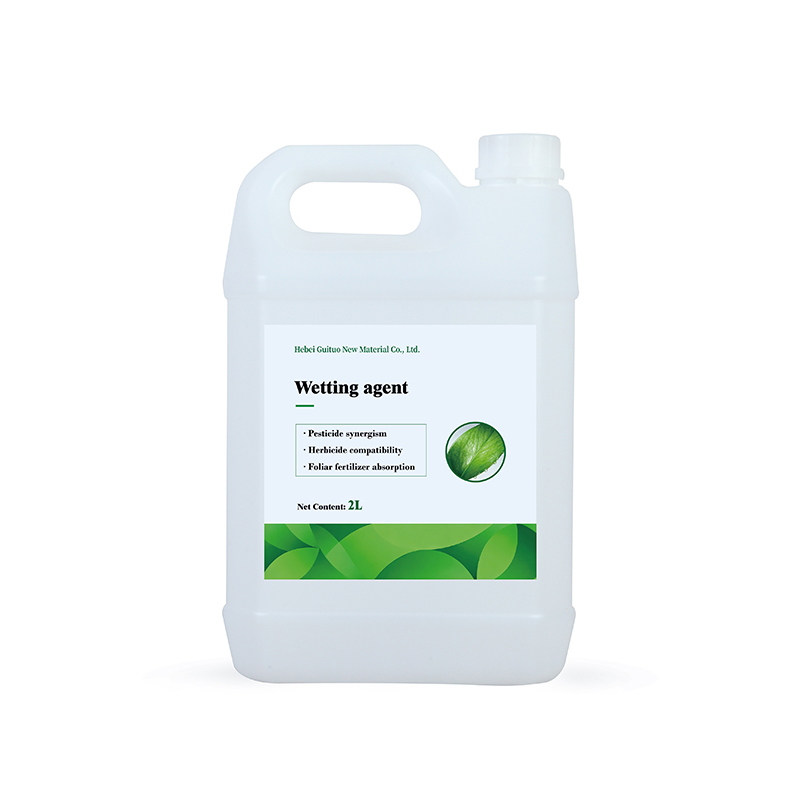
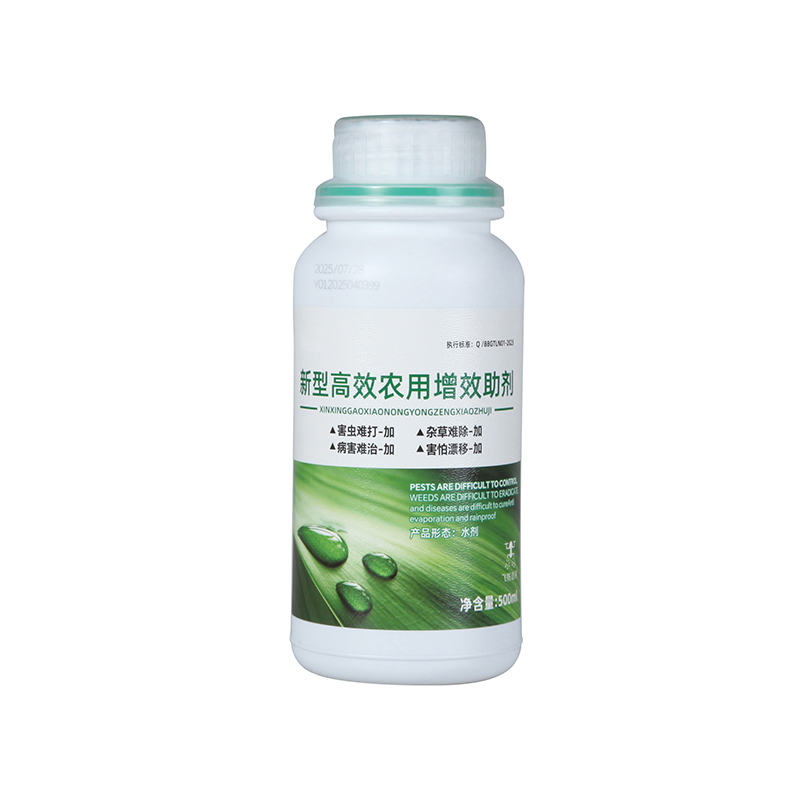
Product: Organosilicone Surfactant


Contact Information
Tel : +86-400-138-5268
Email : [email protected]
Phone : +86-15128434888 / +86-13511051998
Add : Xinqiao Environmental Protection Industrial Park, Wen'an County, Langfang City, Hebei Province, China
Contact Information
Copyright © Hebei Guituo New Material Co., Ltd. All Rights Reserved.
