

 English
  Français
  Português
 Home / Author / Zhang Xiaoyu, Regional Sales Manager (Southeast Asia) / Emulsified Silicone Oil: Performance, Manufacturing Excellence, and Industrial Applications
 Emulsified Silicone Oil: Performance, Manufacturing Excellence, and Industrial Applications
2026-09-05

Emulsified silicone oil is a versatile silicone-based material designed to deliver the surface performance of silicone oil in water-based or polar formulations. By dispersing silicone oil into a stable emulsion, this product combines the characteristic lubricity, low surface tension, water repellency, chemical stability, and release performance of silicone materials with the convenience of aqueous processing. The result is a multifunctional additive suitable for agriculture, personal care, textiles, coatings, plastics, rubber, metal processing, electronics, furniture care, leather treatment, and many other industries.
Among the available grades, LD-620 emulsified silicone oil is developed for applications that require reliable spreading, lubrication, surface protection, release behavior, polishing, and foam control. Its performance is influenced by the silicone oil used as the internal phase, the emulsifying system, droplet-size distribution, viscosity, storage stability, and compatibility with other formulation components. Properly engineered emulsions can provide more uniform coverage, easier dilution, and better incorporation into water-based systems than many conventional oil-based materials.
Hebei Guituo New Material Co., Ltd. supports the development and supply of emulsified silicone oil through a product portfolio that includes silicone additives, modified silicone oils, dimethyl silicone oils, surfactants, wetting agents, and defoamers. This broad materials platform helps the company select complementary components for different industries instead of relying on a single standard formulation for every application. The company also accepts OEM and ODM projects, allowing formulation parameters to be adjusted according to customer requirements.
1. Understanding Emulsified Silicone Oil
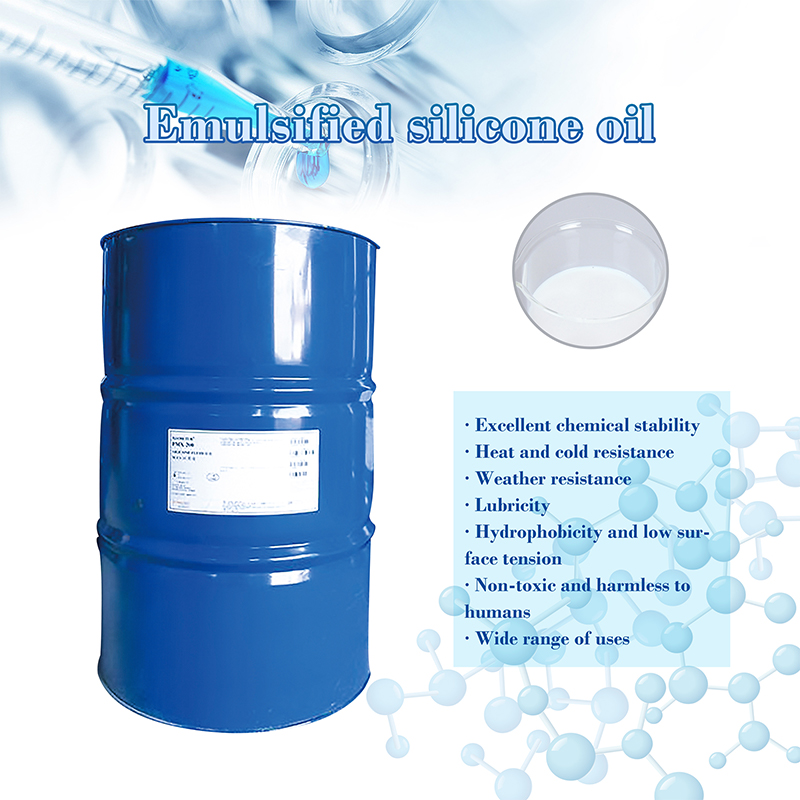
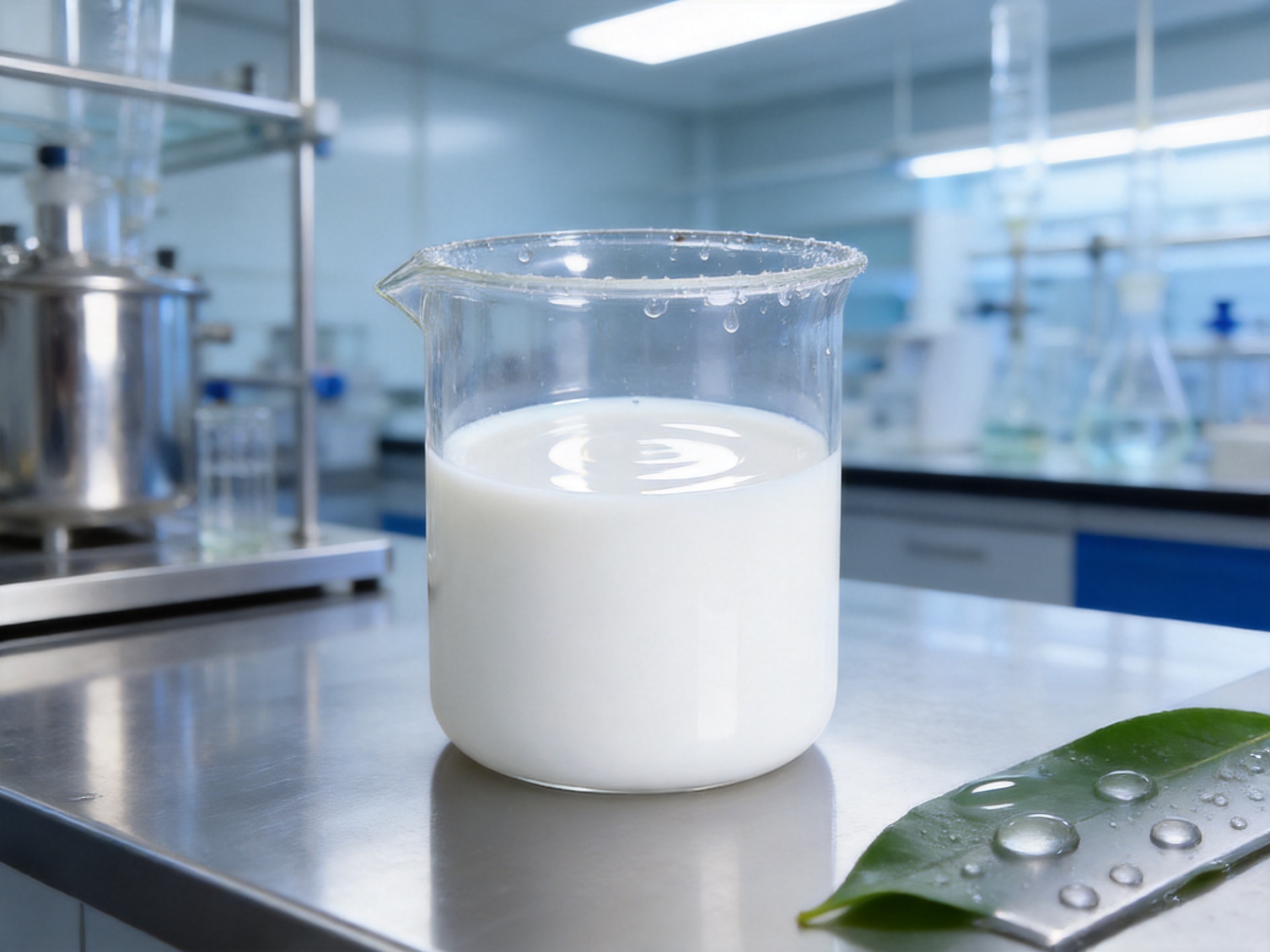
Emulsified silicone oil is a dispersion in which silicone oil droplets are distributed throughout water or another compatible polar medium. Because silicone oil and water normally have limited mutual solubility, surfactants, emulsifiers, stabilizers, and controlled processing conditions are required to form and maintain the dispersion. The resulting product may appear as a white or milky viscous liquid, depending on the oil content, droplet size, emulsifier system, and formulation structure.
The silicone phase may be based on polydimethylsiloxane or related silicone materials. Polydimethylsiloxane is valued for its low surface energy, smooth feel, thermal stability, chemical resistance, water repellency, and ability to form a thin protective film. When the silicone oil is converted into an emulsion, it can be incorporated into water-based products and industrial processes without requiring the direct use of large quantities of hydrocarbon solvents.
LD-620 is identified as emulsified silicone oil, with polydimethylsiloxane emulsion listed as a synonym. The supplied product information identifies CAS No. 9016-00-6, EINECS No. 618-493-1, and a stated purity of 99.8%. Actual handling, dilution, and application conditions should always be confirmed against the latest technical data sheet and the specific formulation requirements of the end user.
1.1 Basic Product Characteristics
The product is described as a white viscous liquid. It is insoluble in ethanol and methanol and soluble in aromatic hydrocarbons, aliphatic hydrocarbons, and chlorinated hydrocarbons such as benzene and carbon tetrachloride. These solvent characteristics are associated with the silicone oil phase and should be considered when the material is combined with other ingredients.
In practical water-based applications, the most important feature is not simple molecular solubility but emulsion stability and compatibility. A good emulsion remains evenly dispersed during storage, dilution, pumping, mixing, and application. It should resist excessive creaming, sedimentation, phase separation, and droplet coalescence under normal conditions. If the product is exposed to severe temperature changes, strong electrolytes, incompatible surfactants, or extreme pH conditions, additional evaluation may be required.
1.2 Main Functional Properties
Emulsified silicone oil offers several functions in one material. It can act as a lubricant, release agent, surface conditioner, polishing aid, water-repellent treatment, anti-stick additive, wetting modifier, smoothing agent, and foam-control component. The dominant function depends on the silicone oil viscosity, concentration, droplet size, emulsifier type, and dosage in the final product.
Its low surface tension allows the silicone phase to spread efficiently across many substrates. This is particularly valuable on hydrophobic surfaces such as leaves, plastics, rubber, treated metal, glass, ceramics, coated textiles, and polished furniture. The silicone film can reduce friction, improve visual appearance, limit water penetration, and make subsequent contact or release easier.
The product also has excellent chemical stability, heat resistance, cold resistance, weather resistance, lubricity, and water repellency. These characteristics help it maintain performance in both indoor and outdoor environments. However, each application should be tested under its actual temperature range, mechanical conditions, exposure to chemicals, and storage period.
Emulsified Silicone Oil
2. Competitive Advantages of Emulsified Silicone Oil
The market includes mineral oils, vegetable oils, hydrocarbon emulsions, wax dispersions, fluorinated materials, acrylic additives, and other surface modifiers. Emulsified silicone oil is competitive because it delivers a distinctive combination of spreading, surface slip, release performance, and resistance to environmental stress. It is not necessarily intended to replace every competing additive, but it can provide a stronger technical solution where low surface energy and lasting surface conditioning are important.
2.1 Efficient Surface Spreading
Silicone materials generally possess lower surface tension than many conventional organic oils. In an aqueous formulation, this enables the dispersed silicone droplets to spread over a substrate after application. The effect can improve surface coverage while using a relatively low addition level, although the optimum dosage depends on the substrate and the formulation.
In agricultural spray systems, better spreading can increase the contact area between a spray mixture and plant leaves. This may support more uniform deposition of active ingredients, especially on waxy or naturally water-repellent foliage. The emulsified silicone oil must remain compatible with the pesticide, fertilizer, adjuvant, and water quality used in the formulation. Field and crop safety testing are essential before commercial use.
2.2 Lubricity and Smooth Surface Feel
After the water phase evaporates or is removed, the silicone phase can form a smooth, low-friction film. This makes emulsified silicone oil useful in textile finishing, plastics processing, leather care, furniture polish, metal working, and personal care products. Compared with some non-silicone oils, silicone-based films can provide a cleaner slip profile and improved resistance to oxidation or thermal degradation.
In hair-care products, silicone emulsions can contribute to smoothness, combability, and a softer tactile effect. In textiles, they may improve hand feel, reduce fiber-to-fiber friction, and support more uniform finishing. In leather and furniture care products, they can enhance gloss, provide conditioning, and contribute to water repellency when used at an appropriate concentration.
2.3 Release and Anti-Stick Performance
Silicone oil has a low surface energy and limited adhesion to many materials. This property supports its use as a release agent for plastics, rubber, polyurethane, glass, ceramics, stone, metal, and composite materials. A properly selected emulsion can be applied to a mold or surface, followed by drying or process heating, to form a thin separating film.
In plastic film processing, emulsified silicone oil may help reduce unwanted adhesion and blocking. It can also support smoother movement through processing equipment. In polyurethane and rubber applications, release performance must be balanced carefully with subsequent painting, bonding, printing, or coating requirements. Excessive silicone transfer can interfere with later surface treatment, so dosage and application method are critical.
2.4 Water Repellency and Surface Protection
Silicone films can reduce the wetting of water on treated substrates. This property is useful for leather, textiles, wood, paper, ceramics, stone, building-related surfaces, and some metal components. Water repellency does not necessarily mean complete waterproofing; rather, the silicone treatment can reduce water spreading and penetration under specified conditions.
In metal processing, the product may contribute to surface lubrication and help reduce moisture contact. Where corrosion protection is required, it should be used as part of a validated anti-rust system rather than regarded as a universal replacement for dedicated corrosion inhibitors. Compatibility with paints, plating solutions, adhesives, and subsequent processing chemicals should be checked before use.
2.5 Resistance to Heat, Cold, and Weathering
Silicone chemistry is widely recognized for its ability to maintain useful properties across a broad temperature range. Emulsified silicone oil can therefore be advantageous in products exposed to heating, cooling, seasonal variation, or outdoor weathering. Its thermal and environmental resistance may exceed that of some conventional organic oils, which can oxidize, volatilize, or become sticky under demanding conditions.
The stability of the emulsion itself is different from the stability of the silicone oil. High temperatures may accelerate droplet coalescence, while low temperatures may increase viscosity or cause temporary instability. Formulation design, packaging, storage temperature, and freeze-thaw testing are therefore important. Guituo’s approach of evaluating emulsion behavior under different environmental conditions helps support consistent performance in practical use.
2.6 Water-Based Processing Convenience
Many modern production systems are moving toward water-based formulations to reduce solvent use, improve workplace conditions, and simplify cleaning. Emulsified silicone oil allows silicone performance to be introduced into such systems in a convenient liquid form. It can often be diluted or blended into water-based products, subject to compatibility testing and the recommendations of the supplier.
Compared with directly handling high-viscosity silicone oil, an emulsion can provide easier metering and more uniform distribution. This can be especially useful in spray applications, textile padding systems, coating lines, cleaning products, and agricultural formulations. The convenience of water-based processing is a major competitive advantage when the application does not require a solvent-based silicone solution.
3. Manufacturing Process and Technical Control
The performance of emulsified silicone oil depends strongly on manufacturing discipline. A stable product cannot be achieved only by mixing silicone oil and water. The manufacturer must select suitable raw materials, control the order of addition, manage shear energy, monitor temperature, control pH where necessary, and verify the final particle or droplet distribution.
Hebei Guituo New Material Co., Ltd. operates as a high-technology enterprise integrating research and development, production, and sales. According to the supplied company information, it is equipped with advanced production equipment and precision testing facilities. It has also established a full-process quality monitoring mechanism extending from production sources to finished-product delivery.
3.1 Raw Material Selection
The first stage of production is the selection and verification of the silicone oil, emulsifiers, surfactants, stabilizers, and auxiliary additives. Silicone oil viscosity is a key parameter because it affects droplet formation, flow behavior, film thickness, lubrication, and surface coverage. The emulsifier system must provide sufficient interfacial stabilization without creating unacceptable foam, odor, skin feel, or incompatibility in the final application.
Water quality is also important. Dissolved salts, hardness ions, microbial contamination, and pH can affect emulsion stability. A controlled water source and suitable pretreatment help minimize variation between batches. Where specialized applications require it, the manufacturer may adjust the formulation to tolerate a particular water hardness, electrolyte level, or pH range.
3.2 Premixing and Dispersion
During premixing, the silicone oil phase and emulsifier system are combined under controlled agitation. The purpose is to distribute the interfacial ingredients evenly before the main emulsification step. Poor premixing may lead to localized excesses of surfactant, incomplete wetting, or uneven droplet formation.
The aqueous phase is introduced according to a controlled process sequence. The rate of addition, agitation speed, temperature, and equipment geometry all influence the final emulsion. High-shear equipment may be used to reduce droplet size, while lower-shear mixing can be applied during subsequent homogenization or finishing to avoid unnecessary air entrainment and structural damage.
3.3 Homogenization and Droplet-Size Control
Droplet size is one of the most important variables in emulsified silicone oil. Fine droplets generally disperse rapidly and provide quick surface wetting. Larger droplets may produce stronger lubrication or thicker surface coverage but can be more sensitive to separation or sedimentation. A controlled droplet-size distribution supports predictable performance and improves batch-to-batch consistency.
The manufacturer can adjust droplet characteristics through oil viscosity, surfactant selection, mixing intensity, homogenization time, temperature, and the proportion of internal and external phases. The appropriate target depends on the end use. Agricultural sprays may benefit from rapid dispersion, while textile finishing or protective coatings may require a balance between spreading and film formation.
3.4 Temperature and Process Monitoring
Temperature affects silicone viscosity, water viscosity, surfactant behavior, and emulsion structure. If the temperature is too low, the oil may become difficult to disperse. If it is too high, the stability of certain emulsifiers may decline or excessive volatilization and foaming may occur. Controlled temperature management therefore contributes to a more uniform manufacturing process.
Process monitoring may include temperature, agitation speed, addition rate, pH, appearance, viscosity, solids content, and storage stability. These parameters provide early indications of potential batch variation. A full-process quality system helps prevent defects from remaining unnoticed until the material reaches the customer’s production line.
3.5 Quality Inspection
Finished-product evaluation may include visual appearance, viscosity, pH, solid content, density, dilution behavior, emulsion stability, freeze-thaw resistance, centrifuge stability, and compatibility with representative additives. Application-specific testing may also assess wetting, spreading, release force, surface gloss, lubricity, foam control, or water repellency.
Quality control is particularly important because a product can look acceptable while still showing poor performance after dilution or long-term storage. A stable white emulsion should maintain consistent appearance and function within its recommended storage conditions. The manufacturer’s testing facilities and technical team support the evaluation of both routine production batches and customized formulations.
3.6 Technical Team and Product Development
Guituo’s product matrix includes silicone additives, modified silicone oil, dimethyl silicone oil, surfactants, wetting agents, and defoamers. This combination provides a practical foundation for formulation development. If an agricultural customer needs improved leaf coverage, for example, the formulation may be adjusted through wetting-agent selection and emulsion design. If a textile customer requires a softer hand feel, the silicone viscosity and finishing behavior may be modified.
The same development capability can support daily chemicals, electronics, coatings, and industrial processing. Instead of treating emulsified silicone oil as an isolated product, the company can evaluate its interaction with other silicone and non-silicone ingredients. This integrated approach is a competitive advantage for customers who need technical support rather than only a standard commodity material.
4. Performance Factors in Different Applications
4.1 Agricultural Formulations
In agricultural formulations, emulsified silicone oil is primarily valued for wetting, spreading, and deposition. Many plant leaves have waxy surfaces that resist water-based spray droplets. A suitable silicone emulsion can reduce surface tension, improve droplet spreading, and support more uniform coverage of the plant surface.
Improved coverage may enhance the efficiency of active ingredients by reducing untreated areas caused by poor wetting. The product may be used with pesticides, foliar fertilizers, plant growth regulators, and other aqueous agrochemical systems, subject to compatibility and crop-safety testing. It is important to confirm that the silicone additive does not destabilize the formulation, cause excessive runoff, or create phytotoxicity under the intended application conditions.
Key agricultural evaluation metrics include contact angle, leaf coverage, retention after drying, rainfastness, deposition uniformity, dilution stability, and compatibility with the active ingredient. Water quality, spray pressure, nozzle type, temperature, humidity, and crop variety may all influence the final result.
4.2 Personal Care and Hair Care
Emulsified silicone oil can be incorporated into selected hair-care and personal-care products to improve smoothness, softness, combability, and sensory feel. It may help reduce friction between hair fibers and form a light conditioning film. In lotions, creams, cleansers, or other formulations, silicone emulsions can contribute to slip and spreadability.
Personal-care products require careful evaluation of skin feel, washability, emulsion compatibility, preservative systems, fragrance interactions, and regulatory requirements. The product should be selected according to the intended cosmetic application, dosage, and local regulations. A formulation that performs well in an industrial coating may not be suitable for a personal-care product without additional testing.
4.3 Textiles
Textile manufacturers use silicone-based materials to improve softness, smoothness, drape, sewing behavior, and fiber surface conditioning. Emulsified silicone oil can be applied through padding, spraying, exhaustion, or other finishing methods. The correct emulsion should provide uniform penetration or deposition without excessive staining, uneven hand, or unacceptable changes in fabric appearance.
Medium-viscosity silicone oils often provide a practical balance between spreading and surface protection. The final result depends on fiber type, fabric construction, bath concentration, curing conditions, drying temperature, and mechanical finishing. Customers may require customized formulations for cotton, polyester, nylon, wool, blended materials, or technical textiles.
4.4 Plastics, Rubber, and Polyurethane
In plastics and rubber processing, emulsified silicone oil can function as a mold-release aid, lubricant, or anti-stick additive. It can help reduce adhesion between the processed material and mold surfaces, improve demolding, and support cleaner production. In plastic film production, it may reduce blocking between film layers when the material is properly distributed.
Polyurethane systems require particular caution because silicone additives can affect cell structure, surface appearance, adhesion, and coating behavior. The material must be selected according to the specific polyurethane chemistry and process conditions. Small laboratory trials followed by pilot-scale testing are recommended before full-scale production.
4.5 Coatings and Paint Additives
Emulsified silicone oil can modify surface slip, leveling, gloss, water repellency, and foam behavior in water-based coatings. It may also reduce surface defects caused by uneven wetting. In some systems, the silicone emulsion can contribute to smoother application and improved appearance.
However, silicone additives can sometimes create recoatability or intercoat adhesion challenges if used at excessive levels. The compatibility of LD-620 with binders, pigments, dispersants, defoamers, and coalescing agents should be evaluated through drawdown tests, storage tests, and adhesion testing. A properly balanced formulation can obtain surface benefits without compromising later coating operations.
4.6 Metal Processing and Anti-Rust Applications
In metal processing, emulsified silicone oil may provide lubrication, surface slip, water repellency, and limited protective effects. It can be useful in polishing products, cleaning systems, and process aids. For serious corrosion protection, it should normally be combined with a dedicated inhibitor or protective coating system.
Performance depends on the metal type, surface cleanliness, temperature, contact time, and subsequent processing. Aluminum, steel, copper, galvanized surfaces, and coated metals may respond differently. Compatibility with plating, welding, painting, and adhesive bonding should be confirmed before use.
4.7 Leather, Furniture, Flooring, and Stone
Silicone emulsions can improve gloss, smoothness, water repellency, and tactile quality in leather polishes, furniture care products, floor treatments, and stone-care formulations. The material can distribute across the substrate and leave a thin film after the carrier phase has dried.
Application balance is important. Too little product may provide insufficient conditioning, while too much may create slipperiness, dust attraction, uneven gloss, or difficulty with later refinishing. The final product should be tested on representative materials, including finished and unfinished surfaces.
4.8 Glass, Ceramics, Paper, and Wood
Glass and ceramic processes may benefit from silicone-based lubrication, release, or water-repellent properties. In paper and wood applications, emulsified silicone oil can support smoothness, surface protection, and reduced water absorption. The result depends on the porosity and absorbency of the substrate.
For porous materials, the emulsion may penetrate rather than remain solely at the surface. This can be advantageous for conditioning but may require adjustments in concentration or application method. Drying temperature and substrate moisture should be controlled for consistent results.
4.9 Electronics
In electronics-related applications, emulsified silicone oil may be considered for lubrication, surface protection, and controlled release. Moderate or higher-viscosity silicone oils can provide a more durable film, while smaller droplets can improve distribution across complex surfaces.
Electronic assemblies are sensitive to contamination, ionic residues, outgassing, and changes in electrical properties. Therefore, the product must be evaluated for the specific component, process, and reliability standard. Cleaning requirements, dielectric behavior, thermal cycling, and long-term aging should be included in qualification testing.
4.10 Foam Control
Silicone oil is widely associated with foam-control technology. In emulsified form, it can help reduce unwanted foam in water-based coatings, industrial processing, detergents, and other systems. Defoaming behavior depends on the ability of silicone droplets to enter and destabilize foam films without causing surface defects.
Droplet size, silicone viscosity, emulsifier selection, and compatibility with the formulation all influence defoaming efficiency. Excessive defoamer can produce craters, fisheyes, loss of gloss, or poor recoatability. Guituo’s range of silicone additives and defoamers allows customers to assess foam suppression as part of a broader formulation rather than selecting a material solely by name.
| Application Area | Primary Function | Important Evaluation Factors |
|---|---|---|
| Agriculture | Wetting, spreading, and deposition | Leaf coverage, active-ingredient compatibility, crop safety, dilution stability |
| Personal care | Conditioning, slip, and sensory improvement | Skin feel, combability, washability, preservative compatibility |
| Textiles | Softening, smoothing, and fiber lubrication | Hand feel, penetration, uniformity, drying, fabric appearance |
| Plastics and rubber | Release and anti-stick performance | Demolding, transfer, adhesion, surface cleanliness |
| Coatings | Leveling, slip, gloss, and foam control | Storage stability, recoatability, adhesion, surface defects |
| Metal processing | Lubrication and water repellency | Corrosion behavior, process compatibility, cleaning, coating adhesion |
| Electronics | Lubrication and surface protection | Residues, dielectric properties, thermal aging, reliability |
5. Selecting the Correct Grade and Formulation
There is no single emulsified silicone oil formulation that is ideal for every application. Selection should begin with the required function and the conditions under which the product will be used. Important questions include whether the material must spread rapidly, produce a durable film, provide high lubricity, reduce foam, resist washing, tolerate heat, or remain stable in the presence of salts and other additives.
5.1 Silicone Oil Viscosity
Low-viscosity silicone oils generally produce finer droplets and faster dispersion. They are often considered for agricultural sprays, aqueous formulations, and applications where rapid surface wetting is important. Medium-viscosity oils can balance spreading, lubrication, and coating uniformity. High-viscosity oils may provide thicker coverage, stronger slip, and more persistent protective films.
Viscosity should not be considered independently from droplet size. A high-viscosity oil can still be processed into a relatively fine emulsion with suitable equipment, while a low-viscosity oil can produce unstable behavior if the emulsifier system is not properly designed. The desired final performance should determine the formulation choice.
5.2 Emulsion Stability
Stability should be evaluated during normal storage and after exposure to stress. Useful tests may include observation after standing, centrifugation, freeze-thaw cycles, heat aging, dilution, and mixing with representative formulation ingredients. Customers should specify their expected storage temperature, transport conditions, and shelf-life requirements.
A stable emulsion improves production reliability because it reduces the possibility of inconsistent dosing or blocked equipment. It also supports a more uniform final product. Guituo’s use of selected surfactants and polymeric stabilizers is intended to maintain emulsion integrity across practical storage and processing conditions.
5.3 Compatibility
Compatibility testing should cover surfactants, wetting agents, defoamers, active substances, solvents, pigments, binders, preservatives, salts, and pH modifiers used in the final system. A material may be stable by itself but destabilize after being added to a concentrated formulation.
Simple jar tests can provide an initial indication, but they should be followed by application testing. The evaluation should consider appearance, viscosity, phase separation, foam, wetting, drying, film formation, and performance after aging. For agricultural products, biological and crop-safety evaluations are also required.
5.4 Processing Method
The method of incorporation affects the final result. In many systems, the emulsion should be added slowly under moderate agitation rather than exposed to uncontrolled high shear. Some applications require predilution with water, while others may permit direct addition. The correct sequence should be determined through laboratory trials and confirmed at production scale.
Overmixing may introduce air or affect emulsion structure. Undermixing may lead to local concentration differences. Equipment, temperature, batch size, addition point, and mixing time should therefore be included in the process specification.

6. Customized Manufacturing and Customer Support
One of the important strengths of a specialized silicone-material supplier is the ability to customize performance. Different customers may use the same general product name while requiring very different viscosity, droplet size, active content, dilution behavior, surface feel, foam profile, or storage stability.
Hebei Guituo New Material Co., Ltd. provides OEM and ODM services and maintains a diverse silicone-material portfolio. This allows the company to work with customers on formulation adjustments instead of limiting them to a fixed standard grade. Customization may involve the silicone oil viscosity, emulsifier type, stabilizer package, solid content, wetting behavior, compatibility profile, or packaging format.
6.1 Development Procedure
A typical development project begins with an application review. The customer describes the substrate, process, dosage range, temperature, pH, storage conditions, other additives, and desired performance. The technical team then identifies the most suitable silicone base and supporting surfactant system.
Laboratory samples can be prepared for preliminary screening. Testing may compare spreading, lubricity, release, foam control, water repellency, gloss, or fabric hand feel. Based on the results, the formulation can be refined and tested under pilot-scale conditions. This staged process reduces the risk of transferring an unsuitable laboratory formulation directly into mass production.
6.2 Production Consistency
Customization is valuable only when the product can be produced consistently. Guituo’s quality system is described as covering the full process from production source to finished-product delivery. Raw-material control, equipment management, batch records, in-process testing, finished-product inspection, and packaging control all contribute to repeatability.
Consistent production is particularly important for customers whose products are manufactured continuously. Variations in droplet size, viscosity, active content, or emulsion stability can affect the final product and lead to increased waste. A reliable supplier should be able to maintain defined specifications and communicate any relevant changes in raw materials or process conditions.
6.3 International Supply Capability
The company supplies customers in domestic and overseas markets, including Europe and Southeast Asia, according to the provided company information. International customers often require stable documentation, consistent packaging, clear technical communication, and predictable delivery schedules. Experience with overseas supply can help support the coordination of samples, specifications, production batches, and shipping requirements.
Customers should confirm regulatory, labeling, packaging, transport, and import requirements for their destination market. Technical documentation should be reviewed before purchase, particularly when emulsified silicone oil is intended for agriculture, cosmetics, food-related processing, or other regulated applications.
7. Handling, Storage, and Application Guidance
Emulsified silicone oil should be stored in a clean, sealed container under the conditions recommended by the supplier. Extreme heat, freezing, prolonged exposure to direct sunlight, and repeated temperature cycling may affect emulsion stability. Containers should be protected from contamination and should not be left open for extended periods.
Before use, the product may be gently agitated if recommended. Strong uncontrolled agitation can generate foam, while insufficient mixing may result in uneven distribution if the product has experienced settling or creaming. The material should be inspected for unusual separation, gel formation, odor, or irreversible changes before use.
When diluting, the order of addition should be confirmed through technical testing. In many water-based systems, gradual addition to water under controlled agitation supports better distribution. Compatibility with hard water, salts, acids, alkalis, solvents, and other surfactants should be checked before large-scale use.
Personnel should follow the supplier’s safety data sheet and the rules applicable to the workplace. Although the supplied description characterizes the product as non-toxic and harmless to humans, handling procedures must still reflect the complete formulation, local regulations, exposure conditions, and intended use. Industrial hygiene, protective equipment, ventilation, and spill-control procedures should be maintained as appropriate.
8. Why Manufacturer Selection Matters
Choosing a supplier for emulsified silicone oil involves more than comparing price per kilogram. The product’s practical value depends on stable quality, technical support, formulation flexibility, manufacturing capability, and supply reliability. A low-cost material that causes separation, foam, poor coverage, or inconsistent release can create higher total costs in production.
A capable manufacturer should understand both silicone chemistry and the customer’s application process. It should be able to explain how viscosity, droplet size, emulsifier structure, and dosage affect performance. It should also support testing when the product is blended with other ingredients or used on a new substrate.
Guituo’s combination of research and development, production, quality control, and sales provides an integrated supply model. Its product range covers the principal materials often used alongside emulsified silicone oil. This can simplify sourcing for customers who need silicone additives, wetting agents, modified silicone oils, surfactants, and defoamers within the same technical supply network.
8.1 Advantages Over General-Purpose Suppliers
General-purpose chemical suppliers may offer a standard silicone emulsion without application-specific support. A specialized silicone-material manufacturer can provide more detailed guidance on formulation design and process conditions. This is especially valuable when a customer is trying to solve a specific problem such as poor leaf coverage, unstable dilution, excessive foam, uneven textile finishing, weak release, or inadequate water repellency.
Another advantage is the possibility of product customization. The customer may request a formulation with a particular solids content, viscosity, droplet structure, ionic character, or compatibility profile. While every request requires technical feasibility assessment, a manufacturer with in-house product development is better positioned to evaluate such requirements.
8.2 Quality and Reliability
Stable quality is supported by controlled raw materials, advanced production equipment, precise testing facilities, and experienced technical personnel. These elements work together. Equipment alone cannot ensure quality without suitable process control, and testing alone cannot correct poor raw-material selection.
The company’s stated focus on full-process quality monitoring demonstrates the importance of traceability and control. For customers, this can support more predictable production, fewer batch failures, and improved confidence in long-term supply. Quality documentation and agreed specifications should be established before regular purchasing begins.
9. Future Development of Silicone Emulsions
The use of water-based technologies is expected to remain important across agriculture, coatings, textiles, personal care, plastics, and industrial processing. This creates opportunities for silicone emulsions that deliver higher efficiency at lower dosage, improved compatibility, better storage stability, and more targeted performance.
Future development may focus on finer control of droplet size, multifunctional emulsions, lower-foam systems, improved electrolyte tolerance, enhanced biodegradability of auxiliary ingredients, and better compatibility with modern water-based binders and active substances. Customized silicone emulsions may also be designed for specific substrates or process windows rather than broad general-purpose use.
For agricultural applications, research may emphasize improved deposition, rain resistance, and compatibility with increasingly complex agrochemical mixtures. In textiles, manufacturers may seek softer and more durable finishes with lower processing energy. In coatings, the goal may be better leveling and slip without sacrificing adhesion or recoatability. In electronics, low-residue and high-reliability performance will remain important.
Companies that combine silicone chemistry, surfactant technology, application testing, and manufacturing control will be well positioned to respond to these demands. Guituo’s existing product matrix and OEM/ODM capability provide a foundation for continued development in these areas.
10. Q&A
Q1: What is emulsified silicone oil?
Emulsified silicone oil is a dispersion of silicone oil droplets in water or another polar medium. Surfactants and stabilizers help maintain the dispersion. It provides silicone properties such as low surface tension, lubricity, water repellency, release performance, and surface conditioning in a form that can be used in many water-based formulations.
Q2: What is LD-620 used for?
LD-620 is used as an emulsified silicone oil for applications including agriculture, personal care, textiles, coatings, plastics, rubber, polyurethane, metal processing, furniture care, leather care, flooring, glass, ceramics, stone, paper, wood, electronics, and foam control. The specific dosage and incorporation method depend on the final application.
Q3: What are the main advantages of emulsified silicone oil over conventional oils?
Its main advantages include low surface tension, strong spreading, smooth lubricity, water repellency, release behavior, chemical stability, weather resistance, and useful heat and cold resistance. It can also be incorporated into water-based systems, which may simplify processing and reduce dependence on hydrocarbon solvents.
Q4: How does emulsified silicone oil improve agricultural sprays?
It can reduce surface tension and improve wetting and spreading on plant leaves. This may lead to more uniform deposition of active ingredients, especially on hydrophobic foliage. Compatibility, crop safety, dosage, weather conditions, and the performance of the complete spray formulation must be evaluated before field use.
Q5: What effect does silicone oil viscosity have on performance?
Low-viscosity silicone oils generally support finer droplets and faster dispersion. Medium-viscosity oils offer a balance between spreading and lubrication. High-viscosity oils may provide thicker coverage, stronger slip, and more persistent protective films. The best viscosity depends on the substrate, application method, and required surface effect.
Q6: Can emulsified silicone oil be used in coatings?
Yes. It may be used to improve leveling, surface slip, gloss, water repellency, and foam control in selected water-based coatings. Compatibility testing is necessary because excessive silicone can affect intercoat adhesion, recoatability, or surface appearance.
Q7: Can it be used as a release agent?
Yes. Silicone’s low surface energy makes it suitable for release and anti-stick applications involving plastics, rubber, polyurethane, glass, ceramics, metal, and other materials. The correct grade and dosage should be selected to avoid unwanted transfer or interference with later painting, printing, or bonding.
Q8: Is emulsified silicone oil stable during storage?
A properly formulated emulsion can remain stable under recommended storage conditions. Stability depends on the silicone oil viscosity, emulsifier system, droplet size, pH, water quality, temperature, and exposure to other chemicals. Storage, freeze-thaw, heat-aging, and dilution tests should be performed for critical applications.
Q9: Can the product be customized?
Yes. Customization may involve viscosity, solids content, droplet-size behavior, surfactant selection, stability, wetting, foam control, or compatibility with a particular formulation. Hebei Guituo New Material Co., Ltd. accepts OEM and ODM projects and can evaluate application-specific requirements through its silicone and surfactant product platform.
Q10: What information should a customer provide when requesting a recommendation?
The customer should provide the intended application, substrate, processing method, operating temperature, pH, water quality, other formulation ingredients, target dosage, storage conditions, desired shelf life, and required performance. Samples of the final formulation or substrate can also help the technical team develop a more suitable recommendation.
Q11: Is emulsified silicone oil suitable for personal-care products?
It may be suitable for selected personal-care and hair-care applications, where it can improve smoothness, combability, slip, and sensory feel. The complete formulation must be evaluated for regulatory compliance, skin compatibility, preservative performance, stability, and the requirements of the target market.
Q12: How does emulsified silicone oil help control foam?
Silicone droplets can enter and destabilize foam films, reducing unwanted foam during mixing or application. Defoaming performance depends on droplet size, silicone viscosity, emulsion stability, and compatibility with the formulation. The dosage should be optimized to avoid surface defects or loss of coating quality.
Q13: What makes a silicone-emulsion manufacturer reliable?
Important factors include controlled raw materials, advanced production equipment, precise testing facilities, experienced technical personnel, full-process quality monitoring, consistent batch production, technical support, and the ability to customize formulations. Supply capability and clear documentation are also important for long-term industrial use.
Q14: How should customers begin testing LD-620?
Customers should begin with a small laboratory trial using the recommended dosage range and their actual formulation components. They should evaluate appearance, dilution behavior, viscosity, foam, wetting, spreading, storage stability, and the relevant end-use performance. Successful laboratory results should then be confirmed in pilot and production-scale trials.
11. Conclusion
Emulsified silicone oil is a multifunctional material that brings the advantages of silicone chemistry into water-based and polar formulations. Its low surface tension, spreading ability, lubricity, release performance, water repellency, chemical stability, and resistance to heat, cold, and weathering make it valuable across a wide range of industries.
LD-620 is positioned for applications that require stable silicone performance in agriculture, daily chemicals, textiles, coatings, plastics, rubber, polyurethane, metal processing, electronics, and surface-care products. Its final performance depends on formulation design, silicone viscosity, droplet-size control, emulsifier selection, compatibility, and application conditions.
Hebei Guituo New Material Co., Ltd. strengthens the product offering through integrated research and development, manufacturing, testing, quality monitoring, and technical support. Its portfolio of silicone additives, modified silicone oils, dimethyl silicone oils, surfactants, wetting agents, and defoamers supports customized solutions rather than one-size-fits-all products. With OEM and ODM capabilities, advanced production resources, and experience serving domestic and overseas customers, the company can provide emulsified silicone oil solutions tailored to specific performance and supply requirements.
References
1. Polydimethylsiloxane: General Principles of Silicone Chemistry, Materials Properties, and Industrial Applications.
2. Emulsion Technology: Principles of Surfactant Selection, Droplet-Size Control, and Colloidal Stability.
3. Agricultural Spray Adjuvants: Wetting, Spreading, Deposition, and Compatibility Considerations.
4. Silicone Materials in Textile Finishing, Surface Conditioning, and Fiber Lubrication.
5. Industrial Release Agents for Plastics, Rubber, Polyurethane, Glass, Ceramics, and Metal Processing.
6. Water-Based Coatings: Surface Modification, Foam Control, Leveling, and Recoatability.
7. Technical information supplied for LD-620 Emulsified Silicone Oil.
8. Company information supplied for Hebei Guituo New Material Co., Ltd., including manufacturing, quality-control, product-development, and OEM/ODM capabilities.
Product: Emulsified Silicone Oil


Contact Information
Tel : +86-400-138-5268
Email : [email protected]
Phone : +86-15128434888 / +86-13511051998
Add : Xinqiao Environmental Protection Industrial Park, Wen'an County, Langfang City, Hebei Province, China
Contact Information
Copyright © Hebei Guituo New Material Co., Ltd. All Rights Reserved.
