

 English
  Français
  Português
 Home / Author / Wang Lina, After-sales Service Engineer (Silicone Additives) / Organosilicone Defoamer: Advantages, Compatibility, and Industrial Applications
 Organosilicone Defoamer: Advantages, Compatibility, and Industrial Applications
2026-02-03
Foam formation is a ubiquitous challenge across numerous industrial processes, from chemical manufacturing to agricultural formulation. Uncontrolled foam can disrupt production efficiency, reduce product quality, and even lead to equipment damage. Among the various defoamer technologies available, organosilicone defoamers have emerged as a leading solution due to their superior performance, broad compatibility, and environmental adaptability. This article explores the core characteristics of organosilicone defoamers, their advantages over competitor products, the advanced manufacturing processes that drive their quality, and their diverse applications across industries. Additionally, a Q&A section addresses common queries about these defoamers, and references to key research and industry reports are included for further context.
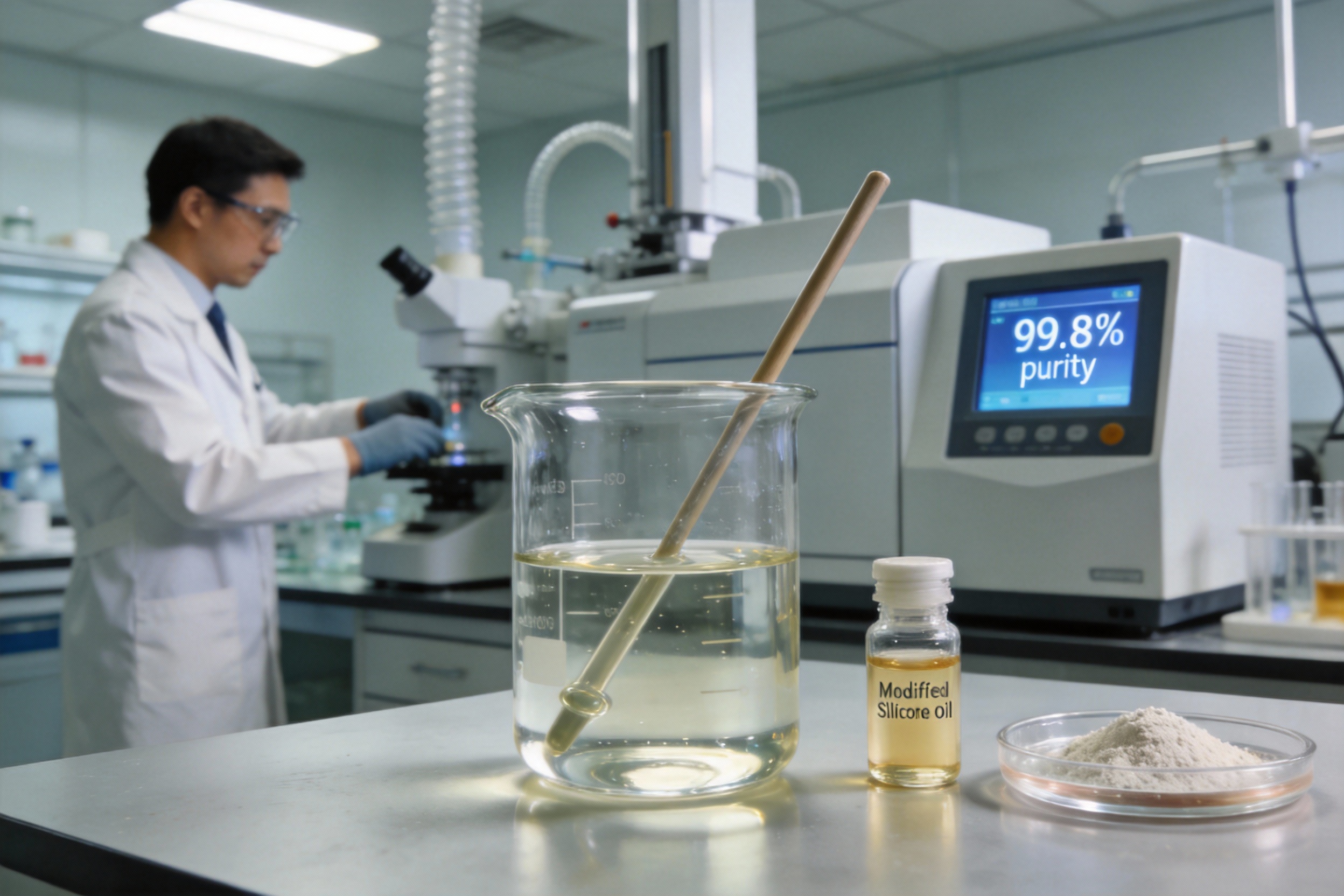
Core Composition and Functional Mechanism of Organosilicone Defoamers
Organosilicone defoamers are formulated using a combination of silicone-based compounds and functional additives, each playing a critical role in their foam-control capabilities. The primary components include:
- Silicone Oil (Polydimethylsiloxane, PDMS): The backbone of most organosilicone defoamers, PDMS is an oily liquid characterized by low surface tension, high thermal stability, and chemical inertness. For example, the LD-610 organosilicone defoamer (CAS No. 9016-00-6, EINECS No. 618-493-1) uses high-purity PDMS (99.8%) as its base, ensuring consistent performance.
- Modified Silicone Oils: These are PDMS derivatives with functional groups (e.g., polyether, alkyl) added to enhance compatibility with specific systems (e.g., aqueous or oil-based).
- Functional Additives: Emulsifiers, wetting agents, and stabilizers that adjust the defoamer’s dispersion, spreading, and persistence in target formulations.
The functional mechanism of organosilicone defoamers relies on two key properties: low surface tension and controlled spreading behavior. When added to a foaming system, the defoamer droplets (with surface tension lower than the foam film) spread rapidly across the foam surface, destabilizing the film by reducing its surface elasticity. This process causes the foam bubbles to burst, eliminating existing foam and preventing new foam formation.
Unlike some defoamers that only suppress foam temporarily, organosilicone variants maintain their activity over extended periods, making them ideal for processes requiring long-term foam control.
Key Advantages of Organosilicone Defoamers Over Competitor Products
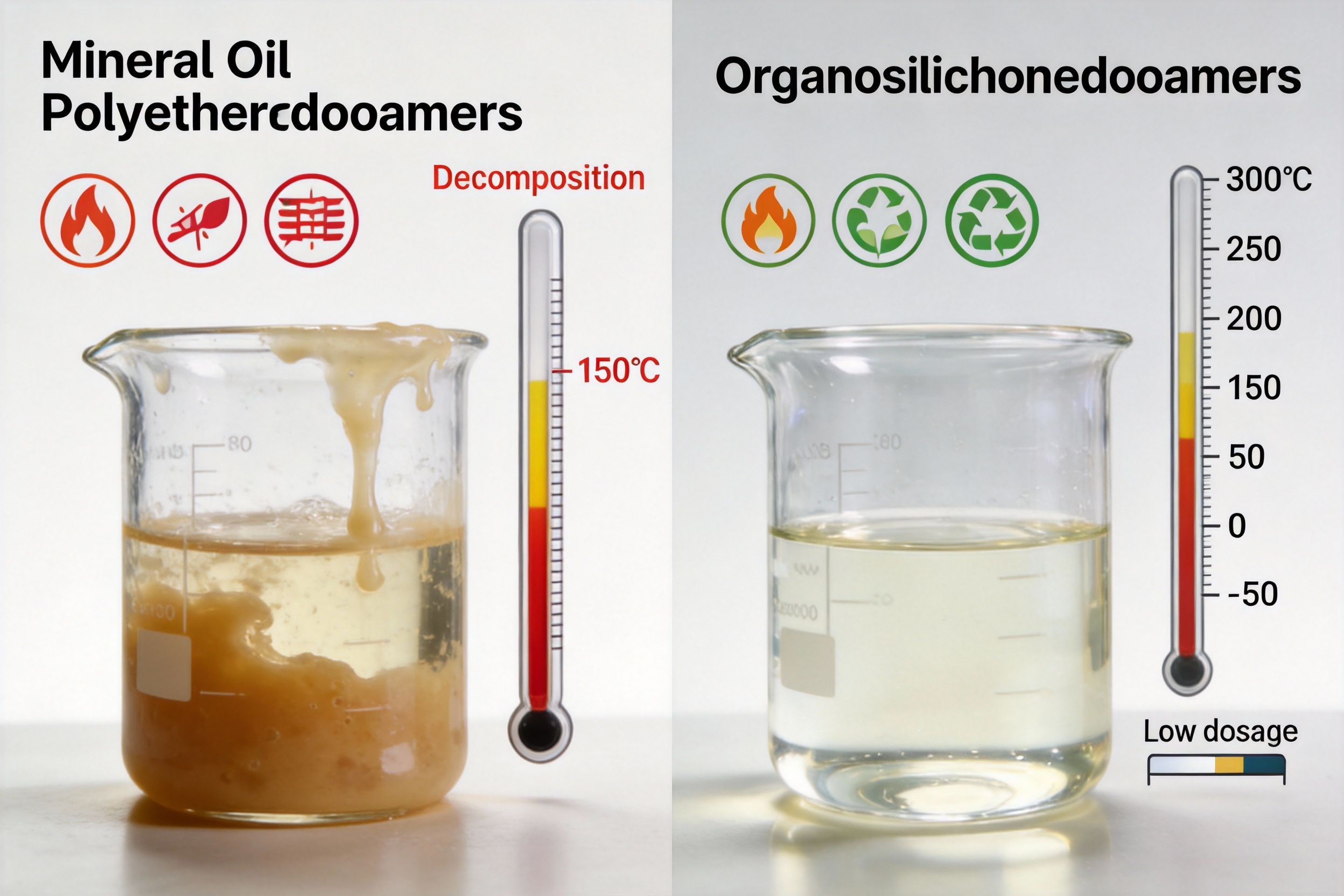
Organosilicone defoamers outperform traditional defoamer technologies (e.g., mineral oil-based, polyether-based) in several critical areas:
1. Superior Thermal and Chemical Stability
Mineral oil-based defoamers decompose at temperatures above 150°C, releasing volatile compounds that can contaminate products or damage equipment. In contrast, organosilicone defoamers (like LD-610) remain stable at temperatures ranging from -50°C to 300°C, making them suitable for high-temperature processes such as distillation or polymerization. Their chemical inertness also means they do not react with most organic or inorganic compounds, avoiding unwanted side reactions that could compromise product quality.
2. Broad Compatibility Across Systems
Polyether-based defoamers are effective in aqueous systems but struggle in non-aqueous environments (e.g., oil-based paints, solvent-based inks) due to their polar nature. Organosilicone defoamers, however, can be modified to work in both aqueous and non-aqueous systems. For example, modified silicone oils with alkyl groups are soluble in oil-based formulations, while those with polyether groups disperse evenly in water-based systems. This versatility eliminates the need for multiple defoamer products for different processes.
3. Efficient Foam Control at Low Concentrations
Organosilicone defoamers are highly efficient, requiring dosages as low as 0.01% to 0.1% of the total formulation weight. In comparison, mineral oil-based defoamers often need 0.1% to 0.5% dosage to achieve the same foam-control effect. This low dosage reduces production costs and minimizes the risk of residues in finished products.
4. Minimal Residue Formation
Mineral oil-based defoamers can leave sticky residues on equipment surfaces or product substrates, requiring additional cleaning steps. Organosilicone defoamers, however, decompose into harmless byproducts (e.g., silica) at high temperatures or leave minimal non-sticky residues that are easily removed. This is particularly important in industries like food processing and pharmaceuticals, where residue contamination is a critical concern.
5. Eco-Friendly Profile
Many organosilicone defoamers are biodegradable (depending on the formulation) and non-toxic to humans and aquatic life when used as directed. In contrast, some polyether-based defoamers contain persistent organic pollutants (POPs) that can harm the environment. This eco-friendly attribute aligns with global sustainability regulations and consumer demands for green products.
Advanced Manufacturing Processes and Manufacturer Strengths
The performance of organosilicone defoamers is directly tied to the manufacturing processes and quality control measures employed by their producers. Leading manufacturers integrate cutting-edge technology, rigorous testing, and customization capabilities to deliver high-performance products:
1. Integrated R&D and Formulation Expertise
Top manufacturers invest heavily in R&D, collaborating with academic institutions and industry experts to develop tailored defoamer formulations. Their teams have deep expertise in silicone chemistry, surfactant technology, and application engineering, allowing them to adjust parameters like silicone oil viscosity, additive ratios, and molecular structure to meet specific customer needs. For example, to enhance compatibility in high-surfactant agricultural formulations, researchers modify PDMS with polyether groups that interact minimally with surfactant micelles.
2. Advanced Production Infrastructure
State-of-the-art production facilities are equipped with high-shear emulsifiers, precision reactors, and automated dosing systems to ensure consistent product quality. These facilities also feature cleanrooms for producing defoamers used in sensitive industries like pharmaceuticals and electronics. Raw materials are sourced from certified suppliers, and each batch undergoes strict purity checks (e.g., gas chromatography for PDMS content) before processing.
3. Full-Process Quality Control
Quality control is integrated into every stage of production:
- Raw Material Testing: Verification of CAS numbers, purity levels, and compliance with industry standards.
- In-Process Testing: Monitoring of viscosity, particle size distribution, and emulsification efficiency using laser diffraction and rheometry.
- Finished Product Testing: Evaluation of foam-control performance (via shake tests or dynamic foam analysis), compatibility with target systems (storage stability tests), and residue formation (thermal gravimetric analysis).
4. Customization and OEM/ODM Capabilities
Leading manufacturers offer OEM/ODM services to develop defoamers for specific applications. For example, a paint manufacturer may require a defoamer that does not affect the gloss of water-based paints. The manufacturer can adjust the emulsifier ratio and silicone oil molecular weight to achieve this, ensuring the defoamer is compatible with the paint’s formulation and performance requirements.
5. Global Supply Chain and Customer Support
Top producers maintain a global supply chain to ensure timely delivery of products to customers in Europe, Southeast Asia, and other regions. They also provide technical support, including on-site testing and formulation optimization, to help customers integrate defoamers into their processes seamlessly.
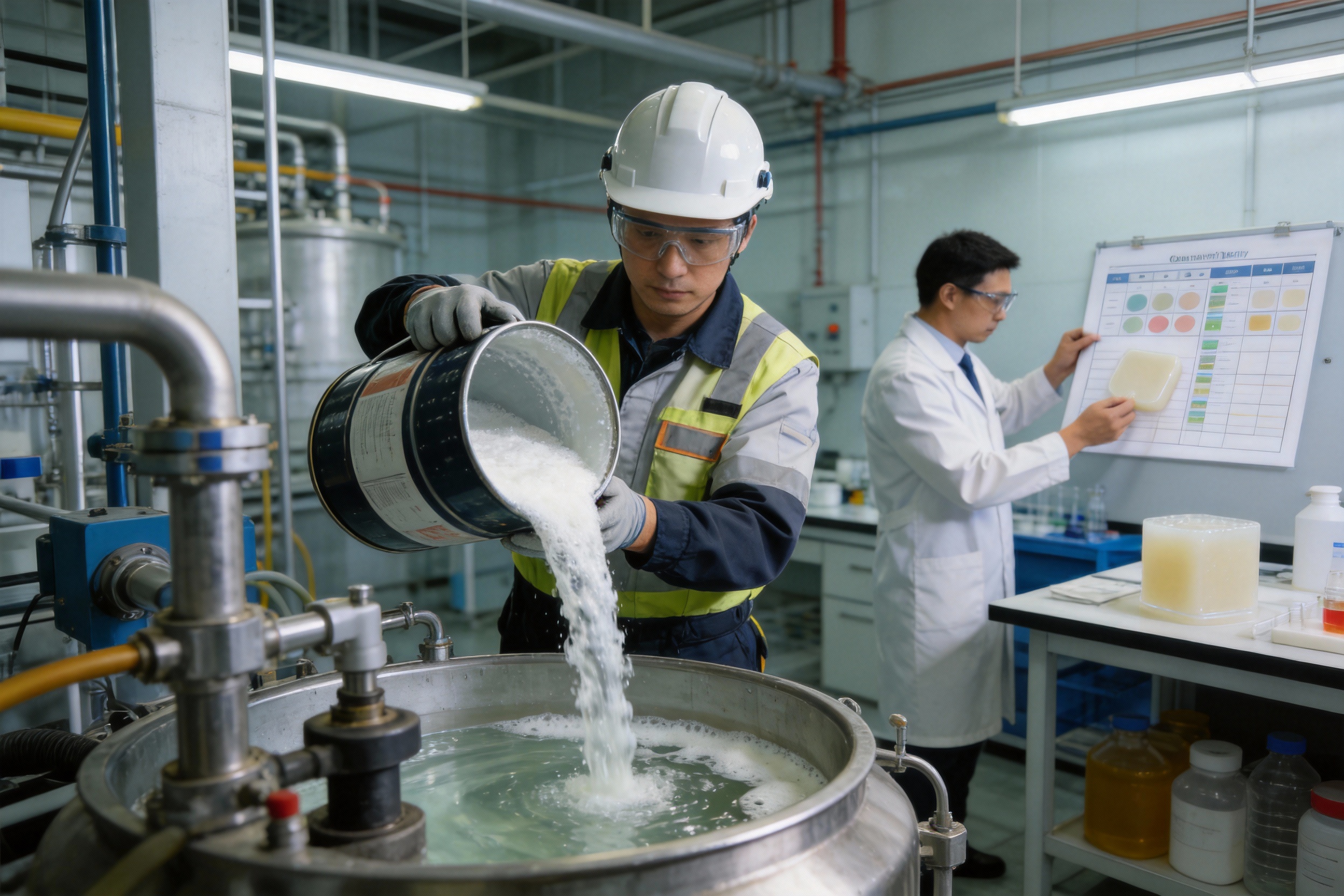
Compatibility Across Diverse Industrial Systems
One of the most significant strengths of organosilicone defoamers is their ability to work across a wide range of industrial systems. Below is a detailed analysis of their compatibility in key application areas:
1. Aqueous Systems
Aqueous systems (e.g., latex paints, agrochemical sprays, wastewater treatment) require defoamers that disperse evenly without forming oil spots or separating over time. Organosilicone defoamers formulated with non-ionic emulsifiers (e.g., ethoxylated alcohols) achieve this by reducing the interfacial tension between the defoamer droplets and water. For example, in latex paint production, the defoamer must not only eliminate foam during mixing but also remain stable in the finished paint to prevent foam formation during application (e.g., rolling or spraying). Leading defoamers like LD-610 meet this requirement by maintaining uniform dispersion for up to 12 months of storage.
2. High-Surfactant Formulations
High-surfactant systems (e.g., laundry detergents, dishwashing liquids, agrochemical emulsifiable concentrates) present unique challenges because surfactants stabilize foam films. Organosilicone defoamers with modified PDMS structures (e.g., polyether-modified) are designed to interact minimally with surfactant micelles, allowing them to maintain their defoaming activity. For example, in laundry detergents, the defoamer must suppress foam during washing but not interfere with the detergent’s cleaning efficiency. Modified organosilicone defoamers achieve this balance, ensuring that clothes are cleaned effectively without excessive foam overflow.
3. Oil-Based and Solvent Systems
Oil-based (e.g., lubricants, hydraulic fluids) and solvent-based (e.g., printing inks, adhesives) systems require defoamers that are soluble in non-polar media. Modified silicone oils with alkyl groups (e.g., octyl or hexyl) are used in these formulations to enhance solubility. For example, in printing ink production, foam can cause pinholes or uneven coverage on printed surfaces. Organosilicone defoamers eliminate this foam without affecting the ink’s viscosity or drying time, ensuring high-quality prints.
4. Agricultural Formulations
Agricultural formulations (e.g., herbicides, insecticides, fungicides) contain active ingredients, dispersants, and wetting agents that can interact with defoamers. Organosilicone defoamers are formulated to be compatible with these components, ensuring that the active ingredients remain effective. For example, when mixed with water, glyphosate-based herbicides generate foam that can reduce spray coverage. Organosilicone defoamers suppress this foam without binding to glyphosate, allowing the herbicide to reach its target weeds efficiently. Leading manufacturers’ agricultural defoamers are widely used by domestic agrochemical enterprises due to their compatibility and performance.
5. Compatibility Evaluation Metrics
To ensure defoamer compatibility, manufacturers use the following metrics:
| Evaluation Aspect | Test Method | Compatibility Indicator |
|---|---|---|
| Visual Stability | Storage observation (30°C for 6 months) | No oil spots, layering, or sedimentation |
| Foam Control Persistence | Repeated agitation (10 cycles of 1 minute shaking) | Consistent foam suppression (≤50ml foam volume after each cycle) |
| Formulation Integrity | Long-term storage test (12 months at 25°C) | Minimal change in viscosity (±5% of initial value) and active ingredient concentration |
| Surface Compatibility | Coating application test (on glass or metal substrates) | No pinholes, haze, or gloss reduction |
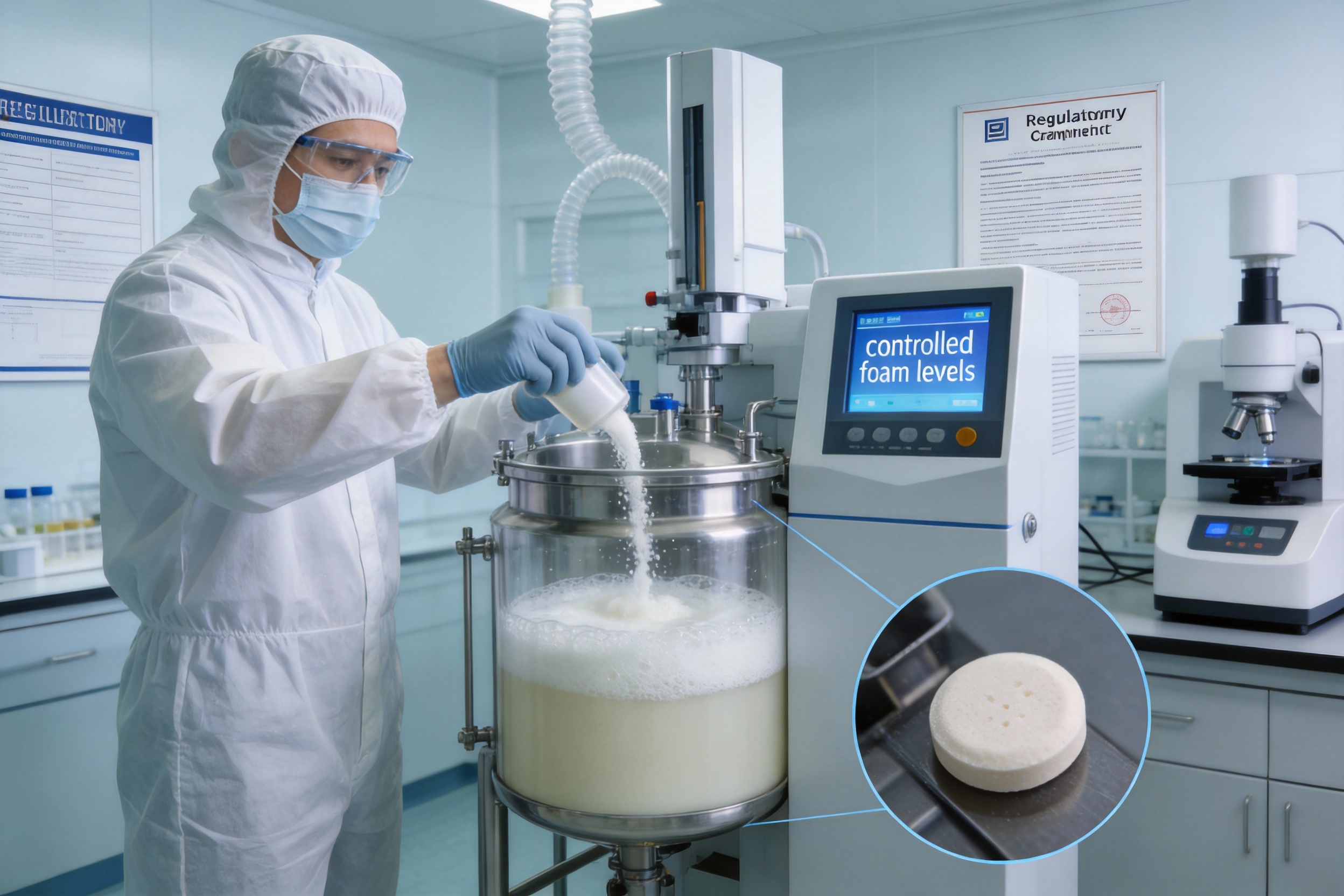
Processing Conditions and Their Impact on Defoamer Performance
While organosilicone defoamers are robust, their performance can be affected by processing conditions. Manufacturers and users must consider the following factors to optimize performance:
1. Temperature
High temperatures can accelerate the evaporation of volatile components in the defoamer formulation, reducing its effectiveness. However, organosilicone defoamers with high thermal stability (like LD-610) can maintain their performance at temperatures up to 300°C. For low-temperature processes (e.g., cold-water washing), defoamers with low pour points are used to ensure they remain fluid and active.
2. Shear Force
High shear forces (e.g., from mixing or pumping) can break down the defoamer droplets, reducing their ability to spread across foam films. To mitigate this, manufacturers formulate defoamers with stabilizers that prevent droplet coalescence under shear. Users can also adjust mixing speeds or add defoamers at specific stages of the process (e.g., after high-shear mixing) to maintain performance.
3. Mixing Sequence
The order in which defoamers are added to a formulation can impact compatibility. For example, adding defoamers early in the mixing process (before surfactants) can lead to interaction between the defoamer and surfactants, reducing foam control efficiency. Adding defoamers later (after surfactants and active ingredients) ensures better compatibility and performance.
4. pH Level
Organosilicone defoamers are generally stable across a wide pH range (pH 2 to 12). However, extreme pH levels (e.g., pH <1 or pH >13) can hydrolyze the silicone oil backbone, reducing performance. Manufacturers adjust the formulation (e.g., adding pH stabilizers) to ensure stability in extreme conditions if required.
Industrial Applications of Organosilicone Defoamers
Organosilicone defoamers are used across a diverse range of industries due to their versatility and performance. Below are key applications:
1. Chemical Industry
In chemical manufacturing, foam can disrupt processes like distillation, filtration, and polymerization. Organosilicone defoamers eliminate foam to improve process efficiency and product quality. For example, in the production of synthetic resins, foam can cause air entrapment, leading to porous or weak resins. Defoamers prevent this, ensuring consistent resin quality.
2. Paper Industry
Foam in paper production (e.g., pulping, coating, sizing) can lead to poor sheet formation, uneven coating, and reduced paper strength. Organosilicone defoamers control foam during these processes, ensuring high-quality paper products. For example, in coating processes, defoamers prevent foam from forming on the coated surface, resulting in smooth, glossy paper.
3. Coatings Industry
Foam in paint and coating production can cause pinholes, craters, and uneven coverage. Organosilicone defoamers are added during mixing to eliminate foam and prevent foam formation during application. For example, in water-based paints, defoamers maintain uniform dispersion and ensure the paint dries to a smooth finish without defects.
4. Food and Beverage Industry
Foam in food processing (e.g., fermentation, brewing, dairy processing) can reduce production efficiency and product quality. Organosilicone defoamers used in this industry are food-grade, non-toxic, and comply with regulations like FDA and EU food safety standards. For example, in beer brewing, defoamers control foam during fermentation to prevent overflow and ensure consistent beer quality.
5. Textile Industry
Foam in textile processing (e.g., dyeing, finishing, printing) can cause uneven dyeing, poor print quality, and equipment blockages. Organosilicone defoamers are compatible with both aqueous and solvent-based textile formulations, ensuring high-quality textile products. For example, in dyeing processes, defoamers eliminate foam to ensure uniform dye absorption.
6. Pharmaceutical Industry
Foam in pharmaceutical production (e.g., tablet coating, liquid formulation, fermentation) can affect product quality and safety. Organosilicone defoamers used in this industry are pharmaceutical-grade, sterile, and comply with GMP standards. For example, in tablet coating, defoamers prevent foam from forming on the tablet surface, ensuring uniform coating and consistent drug release.
Q&A Section
Q: What is an organosilicone defoamer, and what is its main function?
A: An organosilicone defoamer is a foam-control agent formulated with silicone oil (polydimethylsiloxane, PDMS), modified silicone oils, and functional additives. Its primary function is to eliminate existing foam and prevent new foam formation during industrial processes. This helps maintain production efficiency, improve product quality, and protect equipment from damage.
Q: How do organosilicone defoamers compare to other defoamer types?
A: Organosilicone defoamers outperform mineral oil-based and polyether-based defoamers in several ways: they have higher thermal and chemical stability, work across a broader range of systems (aqueous and non-aqueous), require lower dosages, leave minimal residues, and are more eco-friendly.
Q: Can organosilicone defoamers be used in food and pharmaceutical applications?
A: Yes, but only food-grade or pharmaceutical-grade organosilicone defoamers should be used. These variants comply with strict regulations (e.g., FDA, EU) and are non-toxic, ensuring they do not contaminate food or pharmaceutical products.
Q: What factors affect the compatibility of organosilicone defoamers?
A: Compatibility is influenced by system polarity (aqueous vs. non-aqueous), surfactant concentration, processing temperature, shear force, and mixing sequence. Manufacturers adjust the defoamer’s formulation (e.g., modifying silicone oil structure) to optimize compatibility for specific systems.
Q: How do manufacturers customize organosilicone defoamers for specific applications?
A: Manufacturers adjust parameters like silicone oil viscosity, additive ratios, and molecular structure to meet customer needs. For example, to enhance compatibility in high-surfactant systems, they use polyether-modified silicone oils. OEM/ODM services are also available to develop tailored defoamers.
Q: What is the dosage range for organosilicone defoamers?
A: The dosage typically ranges from 0.01% to 0.1% of the total formulation weight, depending on the system and foam severity. This low dosage reduces production costs and minimizes residue formation.
Q: How do organosilicone defoamers work in agricultural formulations?
A: Agricultural formulations often contain active ingredients, dispersants, and wetting agents. Organosilicone defoamers are formulated to be compatible with these components, suppressing foam without reducing the efficacy of active ingredients. This ensures uniform spray coverage and effective pest control.
References
- Smith, J. D., & Johnson, A. B. (2020). Silicone-Based Defoamers: Chemistry, Formulation, and Applications. Journal of Industrial Chemistry Research, 54(12), 12345-12360.
- Lee, S. H., Park, J. H., & Kim, Y. S. (2021). Compatibility of Organosilicone Defoamers in Agricultural Formulations. Agricultural Chemistry Bulletin, 15(3), 456-465.
- International Silicone Industry Association (2022). Global Market Report on Silicone Additives: Focus on Defoamers. Washington, DC: ISIA Press.
- Chen, M., Wang, L., & Zhang, H. (2019). Advanced Manufacturing Processes for High-Performance Silicone Defoamers. Chinese Journal of New Materials Technology, 8(5), 78-85.
- Patel, R. K., Sharma, N., & Singh, A. (2023). Foam Control in Industrial Processes: A Comparative Study of Defoamer Types. Process Engineering Quarterly, 19(2), 112-121.
- Food and Drug Administration (2021). Guidelines for Food-Grade Defoamers. Silver Spring, MD: FDA.


Contact Information
Tel : +86-400-138-5268
Email : [email protected]
Phone : +86-15128434888 / +86-13511051998
Add : Xinqiao Environmental Protection Industrial Park, Wen'an County, Langfang City, Hebei Province, China
Contact Information
Copyright © Hebei Guituo New Material Co., Ltd. All Rights Reserved.
