

 English
 Français
 Português

 Home / Author / Wang Lina, After-sales Service Engineer (Silicone Additives) / High-Performance Drum-Mix Adjuvants for More Efficient Agricultural Spraying
High-Performance Drum-Mix Adjuvants for More Efficient Agricultural Spraying
2026-11-08
Modern agriculture depends on efficient crop protection. Farmers must control weeds, insects, and diseases while managing labor, water, weather, operating costs, and increasing environmental expectations. The performance of a pesticide, however, does not depend only on its active ingredient. Spray coverage, wetting, adhesion, penetration, evaporation, drift, water quality, and application timing can all influence the final result. A technically suitable adjuvant can help address these factors and make a spray program more consistent.
High-Performance Drum-Mix Adjuvants, model GT-9200, are designed for direct addition to pesticide mixtures in a spray tank or agricultural sprayer. Based on polyether-modified trisiloxane silicone surfactant technology, the product is intended to improve spreading, wetting, adhesion, deposition, and penetration of pesticide formulations. It can be used with many common classes of agricultural pesticides, including herbicides, insecticides, and fungicides, subject to formulation compatibility and label requirements.
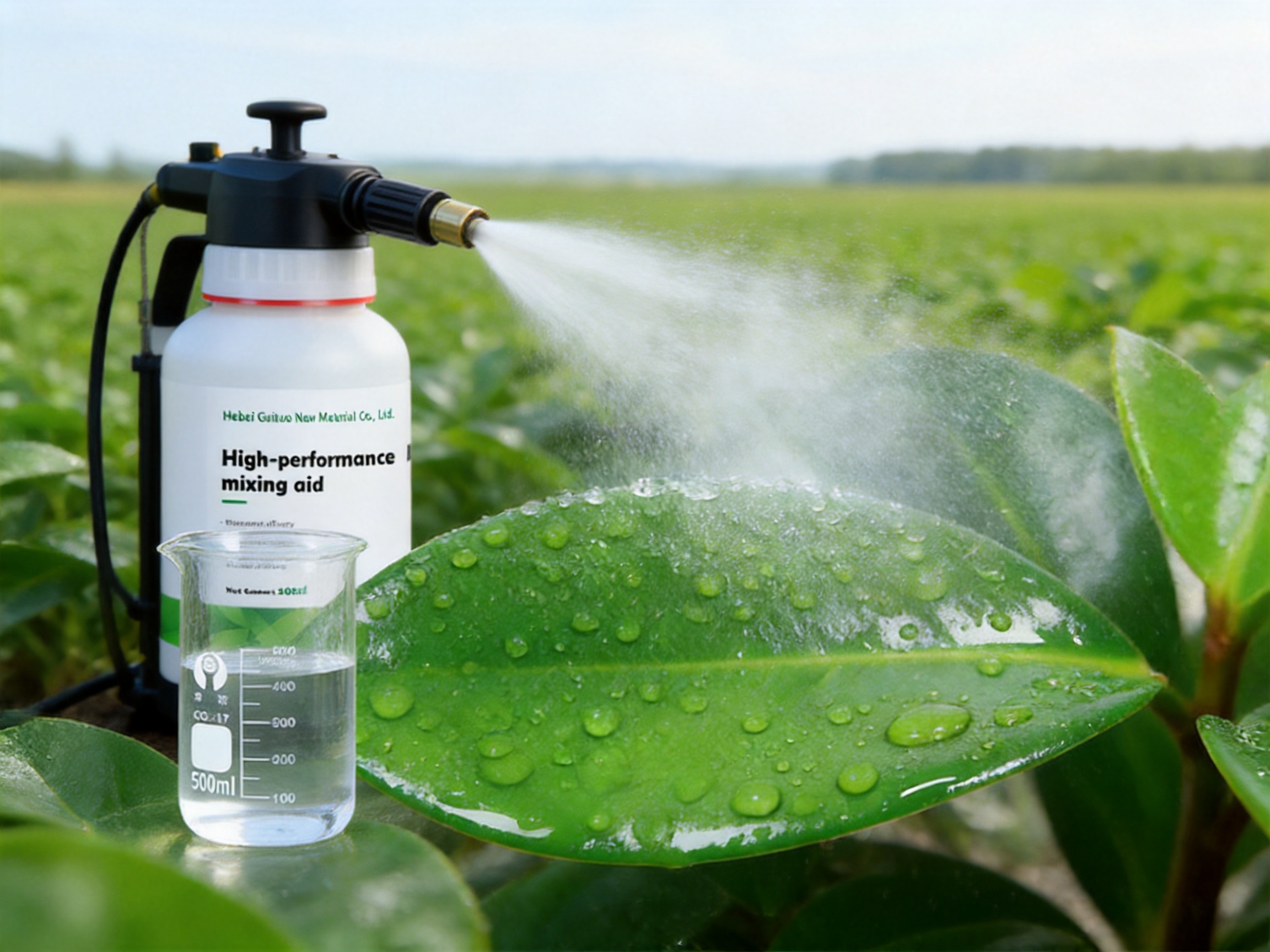
GT-9200 is developed for professional agricultural applications where reliable spray behavior and efficient active-ingredient use are important. Its low surface-tension performance helps droplets spread over plant surfaces, while its silicone-based structure supports rapid wetting and improved contact with difficult-to-cover foliage. The product also offers functions associated with anti-drift, anti-evaporation, and deposition promotion, making it suitable for conventional ground spraying and carefully managed drone-based aerial application.
As a product supplied by Hebei Guituo New Material Co., Ltd., GT-9200 forms part of a broader organosilicon material portfolio that includes silicone additives, wetting agents, modified silicone oils, dimethyl silicone oils, surfactants, defoamers, and related functional materials. The company combines research and development, production, testing, and sales to provide customers with a stable source of high-performance silicone materials for agricultural and industrial use.
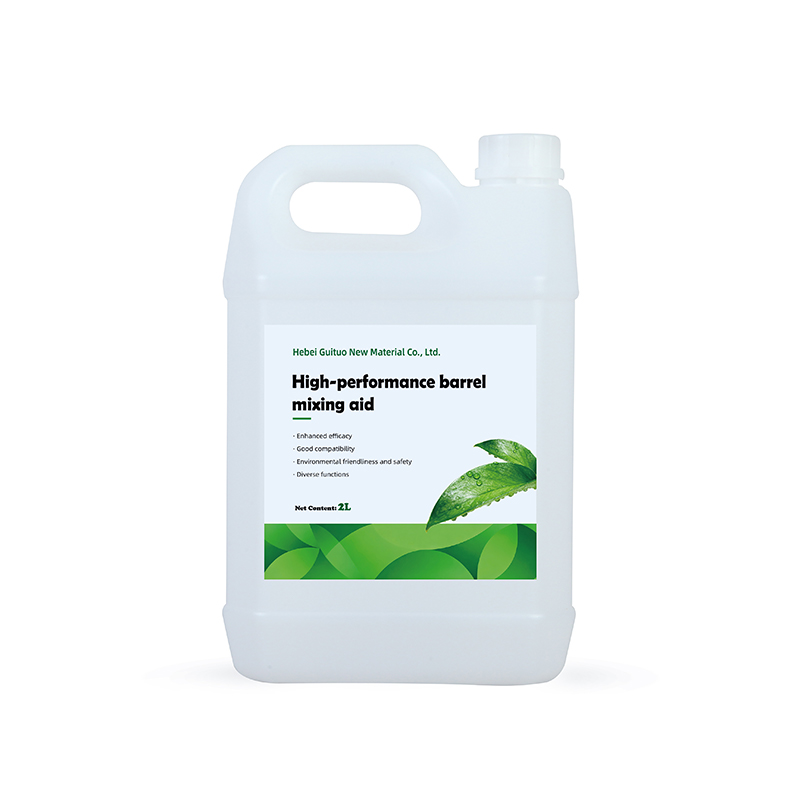
High-Performance Drum-Mix Adjuvants
Why Spray Adjuvants Matter in Modern Crop Protection
Pesticide application is a complex physical process. A spray droplet must leave the nozzle, travel through the air, reach the intended target, remain on the surface, spread across an appropriate area, and allow the active ingredient to move toward its biological site of action. Losses can occur at every stage. Droplets may drift away from the target, evaporate before deposition, bounce from waxy leaves, remain as isolated beads, or run off the plant surface before sufficient uptake occurs.
Drum-mix adjuvants are added to the spray tank to improve one or more of these processes. They are different from pesticide formulation ingredients incorporated by the original pesticide manufacturer. A drum-mix adjuvant is generally added by the user or applicator shortly before spraying, according to the instructions for the specific crop-protection product and application system.
A suitable adjuvant may improve the physical behavior of a spray without changing the identity of the pesticide active ingredient. It can influence surface tension, droplet spreading, wetting rate, adhesion, retention, and deposition. Depending on the formulation and use rate, it may also help the spray interact more effectively with leaf cuticles, insect bodies, stems, or other target surfaces.
These benefits are particularly relevant when crops have dense canopies, waxy foliage, vertical leaves, or surfaces that are difficult to wet. They are also important when application takes place under challenging conditions, such as moderate heat, low humidity, limited water volume, or the use of aerial equipment. An adjuvant cannot replace correct product selection, application timing, nozzle calibration, or compliance with pesticide instructions, but it can support a more efficient overall spray strategy.
Product Profile of GT-9200
GT-9200 is a high-performance agricultural silicone synergist based on a polyether-modified trisiloxane silicone surfactant. Its technical profile is designed for use as a drum-mix adjuvant in agricultural spray solutions. The material is supplied for applications where rapid wetting, low surface tension, and improved spray coverage are required.
| Parameter | Specification |
|---|---|
| Product model | GT-9200 |
| Product name | High-Performance Drum-Mix Adjuvants |
| Product category | Agricultural silicone synergist |
| Product type | Silicone surfactant and polyether-modified trisiloxane |
| CAS number | 27306-78-1 |
| EINECS number | 608-078-3 |
| Purity | 99.8% |
| Viscosity at 25°C | 30–50 mm²/s |
| Surface tension at 0.1% by weight | Less than 20.5 mN/m |
| Cloud point at 1.0% by weight | Not higher than 35°C |
| pH value of 1% aqueous solution at 25°C | 6.5–7.5 |
The combination of low surface tension and balanced viscosity is central to the product’s function. Low surface tension can help droplets spread across plant surfaces instead of remaining in isolated spherical deposits. The specified viscosity supports convenient handling and blending, while the near-neutral pH of the diluted aqueous solution can be advantageous when compatibility with a broad range of spray mixtures is required. Actual performance always depends on the pesticide formulation, water quality, concentration, crop surface, weather, and application equipment.
Improved Wetting and Spreading
One of the main advantages of GT-9200 is its ability to improve the wetting and spreading of spray droplets. Many crop surfaces contain natural waxes or have structures that make them difficult to wet. Without an appropriate adjuvant, a droplet may remain concentrated in a small area, roll away, or fail to contact important parts of the target surface.
The silicone surfactant structure of GT-9200 reduces the surface tension of the spray solution. At the specified concentration, its surface tension is below 20.5 mN/m. This low value helps the liquid move across the surface of leaves and other targets, increasing the area that can be contacted by the spray. Better spreading may support more uniform distribution of the active ingredient and reduce untreated spaces within the spray pattern.
Improved wetting is especially useful on plants with smooth, glossy, hairy, narrow, or water-repellent leaves. It can also be beneficial when low-volume spraying is used, because each droplet must provide effective coverage over a comparatively larger area. In dense crop canopies, more efficient spreading can help the spray reach surfaces that might otherwise receive only limited contact.
Compared with ordinary non-silicone wetting agents, a polyether-modified trisiloxane may provide faster and more extensive spreading at a relatively low concentration. This does not mean that every application should use the lowest possible dose. The correct rate must be determined through product instructions, local agronomic practice, compatibility testing, and field evaluation. Excessive surfactant can sometimes increase runoff, crop-safety risk, or unwanted penetration, so performance should always be balanced with application conditions.
Enhanced Adhesion and Deposition
Spray efficiency depends not only on whether a droplet reaches a leaf, but also on whether it remains there. Wind, rain, irrigation, leaf movement, and the physical characteristics of the plant can reduce retention. GT-9200 is designed to promote more effective deposition and adhesion of spray droplets on plant surfaces.
Improved adhesion can reduce the amount of spray that bounces, rolls, or is lost from the target immediately after contact. A more stable deposit gives the pesticide additional opportunity to remain in contact with the target and perform its intended function. This can be important for contact fungicides, insecticides that need to reach insect bodies, and herbicides that depend on adequate foliar coverage.
Deposition promotion is also relevant to aerial and drone applications. These systems often use smaller spray volumes and can produce droplets that are more sensitive to wind and evaporation. An appropriate adjuvant may help improve the proportion of the spray that reaches and remains on the intended crop. However, an adjuvant is not a substitute for responsible flight planning, suitable nozzle selection, correct droplet size, wind monitoring, buffer zones, and compliance with local regulations.
The practical advantage over a basic spreading agent is that GT-9200 is positioned as a multifunctional silicone synergist. It is intended to support wetting, spreading, adhesion, deposition, and penetration-related performance in one product. This can simplify adjuvant selection and reduce the need to combine several separate additives, although tank-mix testing remains essential.
Support for Pesticide Penetration and Utilization
For certain pesticide applications, surface contact is only the first step. The active ingredient may need to pass through a plant cuticle, reach a pest on a difficult surface, or move into a localized area of biological activity. By improving wetting and contact, GT-9200 can help create more favorable conditions for pesticide utilization.
On plant surfaces, a more uniform film may allow the active ingredient to contact a larger portion of the treated area. For insect control, improved spreading and wetting may increase contact with insect bodies or feeding sites. For fungicide programs, more consistent coverage can help reduce untreated portions of leaves where disease may establish. For herbicides, better contact with weed foliage can support more consistent performance when the selected active ingredient is suitable for foliar uptake.
The term “penetration” should be interpreted carefully. GT-9200 supports the physical conditions that can improve pesticide interaction with a target, but the extent of penetration depends on the active ingredient, formulation, plant species, leaf age, cuticle characteristics, temperature, humidity, and other factors. The adjuvant does not automatically make every pesticide systemic or increase the biological activity of an unsuitable product.
When used within an approved application program, the product may help reduce inefficient losses and improve the utilization of each spray pass. Better utilization can contribute to more consistent control and may reduce the need for unnecessary repeat applications. Any reduction in pesticide rate or number of applications must be based on the pesticide label, local registration requirements, professional agronomic guidance, and validated field results.
Compatibility with Common Pesticide Programs
GT-9200 is designed to be mixed with many common pesticide categories, including herbicides, insecticides, and fungicides. Its balanced pH profile and silicone surfactant chemistry support broad application potential. Nevertheless, broad compatibility should not be interpreted as universal compatibility. Each tank mixture must be evaluated because pesticide formulations can differ significantly in emulsifiers, solvents, salts, suspension systems, and active ingredients.
Compatibility involves both physical and biological considerations. A physically compatible mixture should remain uniform without excessive separation, flocculation, precipitation, gel formation, or uncontrolled foaming. Biological compatibility means that the adjuvant should not cause unacceptable crop injury or reduce the intended performance of the pesticide. Water hardness, alkalinity, temperature, mixing order, and storage time can all influence the result.
A jar test is a practical first step for evaluating a new tank mixture. The user should reproduce the intended water source, approximate concentration, and mixing sequence in a small container. The mixture can then be observed for separation, heat generation, precipitation, excessive foam, or other abnormal behavior. A successful jar test does not replace field testing, but it can identify obvious incompatibility before a full spray tank is prepared.
In general, the spray tank should be clean and partially filled with water before products are added. Agitation should be started before mixing and maintained during preparation and spraying. The pesticide label should determine the correct mixing order. GT-9200 should be added at the stage recommended by the supplier or technical adviser for the specific formulation. Applicators should not assume that a familiar mixing order is correct for every product combination.
Adaptability to Different Water Conditions
Water quality can have a substantial effect on pesticide performance. Hardness, alkalinity, pH, suspended solids, salinity, and organic matter may interfere with the behavior of a pesticide or adjuvant. In practical agriculture, spray water may come from wells, reservoirs, rivers, municipal supplies, or recycled sources, and its composition can vary from one farm or season to another.
GT-9200 is intended to adapt to a range of water conditions and help reduce the influence of water-related variation on spray behavior. Its function as a wetting and spreading agent can remain valuable when the water source changes, although testing is still recommended for difficult water conditions. The adjuvant should not be regarded as a complete water conditioner or as a universal solution for severe hardness, extreme pH, or contamination.
For demanding applications, water should be tested before a new spray program is adopted. If the water contains high levels of calcium, magnesium, bicarbonate, iron, or suspended solids, additional treatment may be needed. The pesticide manufacturer’s recommendations should be followed, particularly when the active ingredient is known to be sensitive to alkaline hydrolysis or cation binding.
The practical advantage of a broadly adaptable adjuvant is greater consistency across farms and application regions. A supplier serving different agricultural markets must be able to support customers who use different water sources, crops, pesticide programs, and equipment. GT-9200 is formulated as a versatile material for this type of variable operating environment.
Anti-Drift, Anti-Evaporation, and Deposition Functions
Drift and evaporation are important concerns in agricultural spraying. Drift can move pesticide away from the intended field, while evaporation can reduce the amount of liquid that reaches the crop and alter droplet size during flight. These issues may increase off-target exposure, reduce control, and create compliance or environmental risks.
GT-9200 offers anti-drift, anti-evaporation, and deposition-promoting functions as part of its intended performance profile. These functions are designed to support more controlled spray behavior, particularly when the application system produces fine droplets or when weather conditions increase the risk of loss.
Adjuvant selection should always be combined with engineering and operational controls. Applicators should use approved nozzles, maintain suitable pressure, avoid spraying in excessive wind or extreme heat, monitor humidity and temperature, and observe required buffer distances. Drone operators should also consider flight speed, height above the canopy, payload, swath width, and the interaction between rotor wash and droplet movement.
It is important to distinguish between drift reduction and drift elimination. No adjuvant can guarantee zero drift under all conditions. The product can support better deposition, but the final result is determined by the complete application system. Responsible users should stop spraying when conditions are unsuitable and should protect neighboring crops, water bodies, pollinators, workers, and residential areas.
Suitability for Drone-Based Aerial Spraying
Agricultural drones are increasingly used for crop monitoring and pesticide application. They can access wet fields, steep terrain, narrow plots, and areas where conventional machinery is difficult to operate. However, drone spraying can involve low application volumes, short spray windows, fine droplets, and rapidly changing airflow around the canopy.
GT-9200 is suitable for consideration in drone-based spray programs because its silicone surfactant performance can support spreading, wetting, retention, and deposition. These functions may help the spray make more effective contact with crop surfaces when the available water volume is limited.
Before a drone application, the operator should conduct a controlled trial. The trial should assess crop coverage, droplet distribution, visible deposition, runoff, crop tolerance, and pest-control results. The operator should also evaluate whether the selected adjuvant changes droplet size or increases the risk of off-target movement. Application settings should be adjusted based on local conditions rather than copied without verification from another field.
Compatibility with the drone tank, pump, filters, hoses, and nozzles should be reviewed. Some mixtures can foam or leave deposits that affect equipment performance. After use, the system should be cleaned according to the equipment and pesticide instructions. A well-designed spray program considers the adjuvant as one component of the complete drone operation.

Environmental and Safety Considerations
The environmental value of a drum-mix adjuvant is primarily associated with improved application efficiency. If better spreading, adhesion, and deposition allow a pesticide to perform more consistently, the spray program may reduce waste and avoid unnecessary repeat applications. More efficient use can help lower the amount of chemical released into soil and water, provided that the pesticide is applied at legally approved rates and according to its label.
GT-9200 is formulated with silicone surfactant technology intended for modern agricultural use. The product supports the goal of improving pesticide utilization while helping manage spray losses. However, environmental performance must be evaluated in the context of the complete formulation and application system. Users should not assume that an adjuvant makes a pesticide harmless, biodegradable, or suitable for unrestricted use.
Protection of aquatic organisms, pollinators, beneficial insects, soil organisms, and neighboring vegetation remains essential. Spray should not be allowed to enter drains, ponds, streams, or irrigation channels. Users should follow required setback distances and avoid application when wind, temperature, or humidity conditions increase the risk of movement. The pesticide label and local regulations take precedence over general product descriptions.
Safe handling also requires appropriate personal protective equipment. Gloves, protective clothing, eye protection, and other equipment should be selected according to the safety data sheet and the pesticide label. Applicators should avoid direct contact, prevent splashing, wash exposed skin after handling, and keep the product away from food, animal feed, children, and unauthorized personnel.
The near-neutral pH of a one-percent aqueous solution is a useful technical characteristic, but it does not remove the need for safe handling. Concentrated material can behave differently from diluted spray solution. Users should consult the current safety data sheet for storage, transport, spill response, disposal, and first-aid information.
Manufacturing and Quality-Control Strengths
Agricultural adjuvants require more than a suitable chemical formula. Consistent performance depends on raw-material control, reaction conditions, blending, purification, filling, testing, storage, and traceability. Small variations in molecular structure, active content, viscosity, or residual impurities can affect wetting behavior and compatibility in the field.
Hebei Guituo New Material Co., Ltd. integrates research and development, production, and sales. The company has established production capabilities supported by advanced manufacturing equipment and precise testing facilities. Its quality-control system covers the product process from raw-material input through finished-product delivery. This full-process approach is intended to support stable specifications and dependable supply.
Production of organosilicon additives requires controlled processing and disciplined handling. Important manufacturing considerations include accurate raw-material dosing, controlled reaction or modification conditions, effective mixing, temperature management, removal or control of unwanted by-products, and prevention of contamination. Finished-product homogenization is also important because customers need a consistent material from one batch to the next.
Testing facilities support the evaluation of key parameters such as purity, viscosity, surface tension, pH, appearance, and cloud point. For GT-9200, the stated purity is 99.8%, viscosity is 30–50 mm²/s at 25°C, surface tension is below 20.5 mN/m at 0.1% by weight, cloud point is no higher than 35°C at 1.0% by weight, and the pH of a one-percent aqueous solution is 6.5–7.5 at 25°C.
These specifications provide customers with objective reference points for incoming inspection and application planning. They also help technical personnel compare batches, investigate unusual performance, and maintain a consistent standard across different production lots. Quality control is particularly important for international customers who need reliable material for their own formulations or distribution programs.
The company’s experienced technical and production teams contribute to process control and customer support. In addition to standard products, the company accepts OEM and ODM orders. This capability can be valuable for customers who require customized concentration, packaging, labeling, viscosity, compatibility, or application characteristics, subject to technical feasibility and regulatory review.
Advantages Compared with Conventional Adjuvants
Traditional agricultural adjuvants can provide useful wetting or spreading effects, but they may not offer the same combination of rapid surface wetting, low surface tension, deposition support, and broad application flexibility as a high-performance organosilicon material. GT-9200 is designed to address several spray-performance requirements within one multifunctional product.
First, its silicone-based chemistry can produce very low surface tension at a practical dilution. This may provide more rapid and extensive spreading than many conventional non-silicone surfactants. Second, its polyether modification supports compatibility and water interaction, helping the material function in aqueous spray systems. Third, the product is designed to support not only spreading but also adhesion, deposition, anti-drift, and anti-evaporation performance.
A further advantage is formulation flexibility. Customers may use the product in programs involving different pesticide classes, crop types, water sources, and application systems. This can reduce the complexity of maintaining many separate adjuvants for different operations. However, technical evaluation remains necessary because no single additive can be optimal for every pesticide, crop, climate, or nozzle system.
Another advantage is supply-chain support. A manufacturer with its own research, production, testing, and technical teams can respond more effectively to questions about specifications, packaging, quality variation, and customization than a purely trading-based source. Stable production and controlled testing are particularly important for distributors, pesticide formulators, agricultural service providers, and large farming organizations.
Compared with low-cost products that provide limited technical documentation, GT-9200 is supported by a defined specification profile and a manufacturer focused on high-end silicone materials. Customers can use the technical data to establish receiving standards, conduct laboratory comparisons, and develop application protocols. The best choice should be based on verified field performance, safety, compatibility, regulatory status, and total application value rather than purchase price alone.
Application Guidance and Best Practices
GT-9200 should be used according to the supplier’s technical instructions and in accordance with the label requirements of the pesticide being applied. The correct dosage can vary according to crop, target pest, active ingredient, formulation type, water volume, weather, nozzle, and application method. Users should obtain a current technical data sheet and safety data sheet before commercial use.
Before preparing a full tank, users should check the condition of the equipment and confirm that the tank is clean. Water should be suitable for the pesticide program. A jar test should be performed when the combination is new, when the water source changes, or when several products are being mixed together.
The pesticide label should determine the mixing order. In general, water is added first, agitation is started, and products are introduced carefully in the recommended sequence. GT-9200 should be measured accurately and added in a way that promotes uniform dispersion. Agitation should continue throughout filling and application so that the mixture remains homogeneous.
Spraying should take place only under suitable conditions. Wind speed and direction should be monitored, and applications should be postponed when drift risk is excessive. High temperatures and low humidity can increase evaporation, while rain shortly after application may reduce retention or wash the product from the crop. The required rainfast period is determined by the pesticide label and should not be assumed from the adjuvant alone.
After spraying, equipment should be cleaned promptly and safely. Remaining mixture should be handled according to the pesticide label and local waste requirements. Containers should not be reused for food, water, or other purposes. Records should be kept for product batch, rate, water source, tank mixture, weather, equipment settings, and field performance.
Quality, Supply, and Customization Support
For commercial agricultural customers, product quality is only one part of supplier value. Reliable delivery, technical communication, packaging options, documentation, and responsive after-sales support are also important. A customer may need material in different container sizes, private-label packaging, or a specific concentration for a regional formulation.
Hebei Guituo New Material Co., Ltd. serves customers in domestic and overseas markets, including markets in Europe and Southeast Asia. Its product portfolio and manufacturing resources allow it to support agricultural, textile, daily chemical, electronic, and other industrial applications. The company’s emphasis on organosilicon materials gives it a focused technical foundation for the development of functional surfactants and additives.
OEM and ODM services provide additional flexibility. A customer may request a customized product for a particular pesticide formulation, climate, application volume, or packaging program. Such projects should begin with a clear technical brief describing the intended use, active ingredients, water quality, application equipment, target performance, regulatory market, and required documentation.
Customized products should undergo laboratory compatibility testing, stability evaluation, and field validation before commercial introduction. The supplier and customer should also determine responsibility for labeling, registration, transport classification, safety documentation, and local compliance. Customization is most successful when technical and regulatory requirements are defined at the beginning of the project.
Recommended Evaluation Program
Customers comparing GT-9200 with competing adjuvants should use a structured evaluation rather than relying only on visual appearance or a single field observation. Laboratory screening may include surface-tension measurement, contact-angle testing, spreading-area comparison, emulsion stability, foam behavior, and compatibility with representative pesticide formulations.
Greenhouse or small-plot trials can then compare leaf coverage, retention, rainfastness, crop tolerance, and biological performance. The trial should include an untreated control, the pesticide without an adjuvant, GT-9200 at the proposed rate, and one or more benchmark adjuvants. Application equipment, water volume, nozzle, pressure, weather, and assessment timing should be kept consistent.
Field testing should include more than one crop or environmental condition when the product is intended for broad distribution. Evaluation should examine pest-control consistency, crop safety, visible residue, runoff, spray drift indicators, and the need for repeat treatment. Economic analysis should consider the total cost per treated hectare and the value of improved control, not just the price per kilogram or liter of adjuvant.
This evidence-based approach helps customers identify where GT-9200 provides the greatest value. It also helps prevent inappropriate use, such as applying a strong silicone surfactant to a crop or pesticide that requires a milder adjuvant. The objective is not simply maximum spreading; it is balanced performance that improves efficacy while protecting crop safety and application control.

Frequently Asked Questions
What is GT-9200?
GT-9200 is a high-performance drum-mix agricultural adjuvant based on a polyether-modified trisiloxane silicone surfactant. It is designed to be added directly to pesticide spray mixtures to improve wetting, spreading, adhesion, deposition, and related spray-performance characteristics.
Which pesticides can be used with this adjuvant?
GT-9200 is intended for use with many herbicides, insecticides, and fungicides. Compatibility depends on the formulation, water quality, mixing order, crop, and application conditions. A jar test and, where appropriate, a small field trial should be completed before a new tank mixture is used commercially.
How does the product improve pesticide coverage?
The silicone surfactant lowers the surface tension of the spray solution. At a 0.1% by-weight concentration, the specified surface tension is below 20.5 mN/m. This can help droplets spread across plant surfaces, improve wetting of difficult foliage, and produce more uniform contact with the target.
Can GT-9200 improve pesticide penetration?
It can support the physical conditions associated with improved pesticide contact and uptake by promoting wetting, spreading, and adhesion. Actual penetration depends on the active ingredient, formulation, crop, leaf surface, weather, and application rate. The product does not make every pesticide systemic or eliminate the need to follow the pesticide label.
Is it suitable for drone spraying?
GT-9200 can be considered for drone-based applications because its wetting, spreading, and deposition functions may be useful in low-volume spraying. Drone settings, droplet size, flight height, wind, temperature, and crop canopy must be evaluated carefully. A controlled trial should be completed before large-scale use.
Does the product prevent drift?
No adjuvant can guarantee complete prevention of drift. GT-9200 is designed to support anti-drift and deposition performance, but drift is also affected by droplet size, nozzle type, pressure, wind, temperature, humidity, flight or boom height, and operator practices. Applications must comply with local regulations and pesticide instructions.
What is the pH of GT-9200?
The pH value of a one-percent aqueous solution at 25°C is specified as 6.5–7.5. The pH of the diluted spray mixture may differ depending on the water and other products in the tank.
What is the cloud point?
The cloud point of a one-percent-by-weight solution is specified as no higher than 35°C. Cloud point behavior can be affected by concentration, water quality, temperature, and the presence of other formulation components. Storage and application conditions should be evaluated for the intended use.
How should the product be stored?
GT-9200 should be stored in its original, properly closed container under the conditions stated in the current technical and safety documentation. It should be protected from contamination, excessive heat, freezing, and unauthorized access. Users should confirm the recommended storage temperature and shelf life with the supplier.
Can the product be customized?
Hebei Guituo New Material Co., Ltd. accepts OEM and ODM orders. Customization may involve concentration, packaging, labeling, or performance requirements. A technical review, compatibility assessment, stability evaluation, and regulatory review should be completed before a customized product is released for commercial use.
Why choose a silicone adjuvant instead of a conventional surfactant?
Silicone adjuvants can provide very low surface tension and rapid spreading at suitable concentrations. GT-9200 is also designed to support adhesion, deposition, anti-drift, and anti-evaporation performance. The best option depends on the crop, pesticide, application equipment, and required balance between spreading, retention, crop safety, and drift control.
Does using an adjuvant allow the pesticide rate to be reduced?
Not automatically. Any reduction in pesticide rate must be permitted by the product label, local regulations, and validated agronomic recommendations. The adjuvant may improve application efficiency, but it should not be used to change an approved pesticide rate without appropriate authorization and supporting evidence.
Conclusion
High-Performance Drum-Mix Adjuvants GT-9200 are designed to help agricultural professionals obtain more efficient and consistent pesticide applications. Its polyether-modified trisiloxane chemistry provides low surface tension, rapid wetting, improved spreading, enhanced adhesion, and deposition support. The product is intended for use with a broad range of pesticide programs and can be considered for ground, low-volume, and drone-based spraying when the complete application system is properly evaluated.
The product’s advantages extend beyond its spray-function profile. A defined technical specification, high stated purity, controlled viscosity, near-neutral diluted pH, and documented surface-tension performance provide useful benchmarks for quality control. The manufacturing strengths of Hebei Guituo New Material Co., Ltd., including integrated research, production, testing, technical expertise, and OEM or ODM support, provide a foundation for stable supply and application-specific development.
Compared with basic adjuvants that focus on only one function, GT-9200 is positioned as a multifunctional silicone synergist for wetting, spreading, adhesion, penetration support, deposition, anti-drift, and anti-evaporation performance. Its value is greatest when it is selected through compatibility testing and used as part of a complete, legally compliant spray-management program.
For product information, technical consultation, OEM or ODM discussions, and supply inquiries, customers may contact Hebei Guituo New Material Co., Ltd. through its commercial representatives. The company provides organosilicon additives and related silicone materials for agricultural and industrial applications, with a focus on stable quality, technical development, and long-term customer cooperation.
References
1. International Organization for Standardization. Surface Active Agents and Measurement of Surface Tension: General Principles and Laboratory Practices.
2. American Society for Testing and Materials. Standard Methods for Evaluating Surface Tension, Viscosity, and Compatibility of Liquid Chemical Products.
3. Food and Agriculture Organization of the United Nations. Guidelines on Good Practice for Pesticide Application and Responsible Crop Protection.
4. Organisation for Economic Co-operation and Development. Guidance Documents for the Environmental Assessment of Agricultural Chemicals.
5. CropLife International. Best Management Practices for Responsible Pesticide Handling and Application.
6. Technical specification for GT-9200 High-Performance Drum-Mix Adjuvants, manufacturer-provided product information.
7. Safety data and handling guidance for silicone surfactants, manufacturer-provided technical documentation.
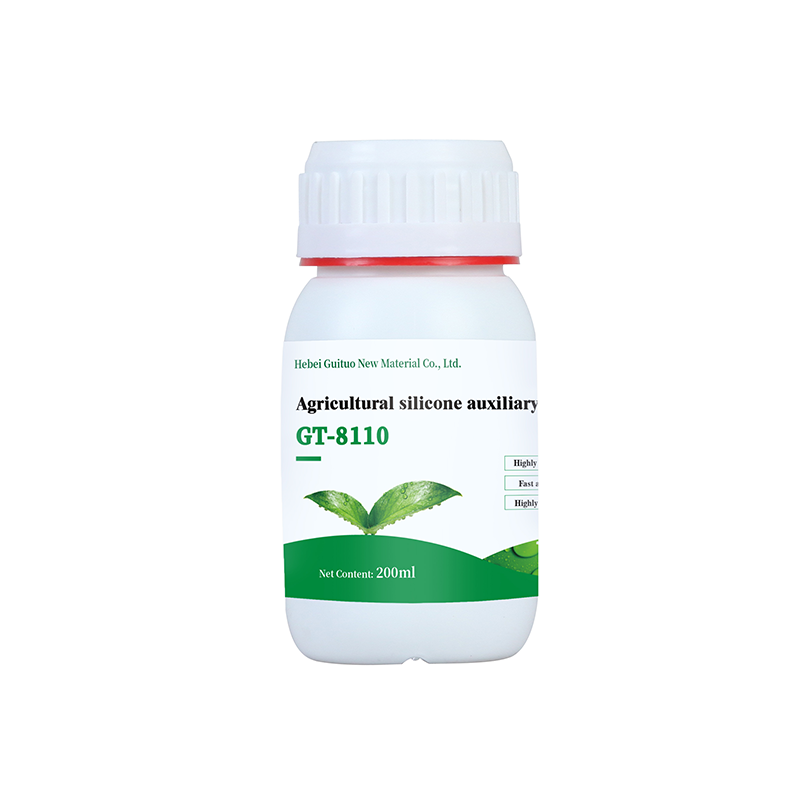
Product: High-Performance Drum-Mix Adjuvants


Contact Information
Tel : +86-400-138-5268
Email : [email protected]
Phone : +86-15128434888 / +86-13511051998
Add : Xinqiao Environmental Protection Industrial Park, Wen'an County, Langfang City, Hebei Province, China
Contact Information
Copyright © Hebei Guituo New Material Co., Ltd. All Rights Reserved.
