

 English
  Français
  Português
 Home / Author / Wang Lina, After-sales Service Engineer (Silicone Additives) / Anionic Plastic and Rubber Mold Release Agent for Stable High-Efficiency Demolding
 Anionic Plastic and Rubber Mold Release Agent for Stable High-Efficiency Demolding
2026-06-25
In plastic and rubber manufacturing, the release stage is often where hidden costs appear. A molded part may be perfectly formed, but if it sticks to the mold, tears during demolding, leaves residue, or requires excessive force to remove, the entire production cycle suffers. An effective mold release agent is therefore not a minor auxiliary material; it is a key process-control tool that protects molds, improves surface quality, shortens cycle time, and helps production teams achieve repeatable results.
Plastic & Rubber Mold Release Agent (Anionic Type), product model LD-300, is designed for this demanding role. It is a silicone-based anionic release solution intended for plastic and rubber processing applications where stability, clean separation, chemical resistance, and repeat mold use are essential. With a stated purity of 99.8%, CAS No. 9016-00-6, EINECS No. 618-493-1, and the synonym Anionic Silicone Surfactant, LD-300 reflects a formulation approach that combines silicone chemistry with surfactant performance to support reliable demolding under varied processing environments.
Unlike general-purpose release agents that may work only under narrow operating conditions, an anionic silicone release agent is valued for its ability to form a uniform separating layer between the mold and the molded product. This layer reduces adhesion without easily transferring to the finished part. For processors of plastic and rubber components, that distinction matters because excessive transfer can interfere with painting, bonding, printing, coating, or other secondary operations. A release material that helps parts separate cleanly while minimizing downstream interference offers practical value throughout the production chain.
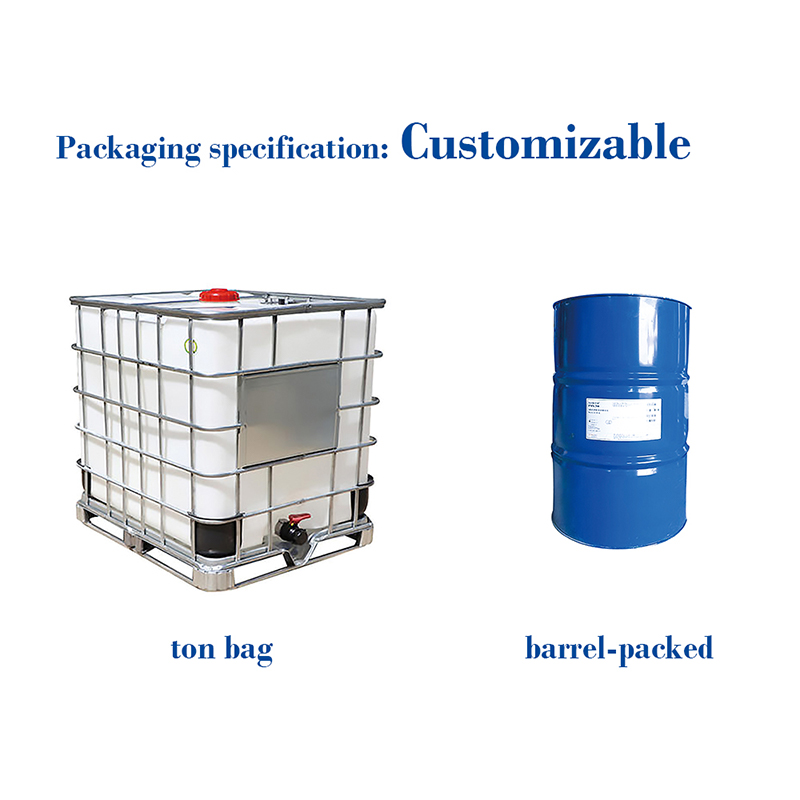
Plastic & Rubber Mold Release Agent (Anionic Type)
Product Overview and Technical Identity
LD-300 is identified as a Plastic and Rubber Release Agent of anionic type. Its functional purpose is to sit between the mold surface and the finished product, resisting heat, stress, and chemical attack while assisting smooth separation after curing, molding, extrusion, calendaring, lamination, or related forming operations. The product is positioned for industrial users who require dependable mold release performance in both plastic and rubber manufacturing environments.
The term “anionic type” indicates that the release agent is formulated with negatively charged surfactant characteristics. In many water-compatible or emulsified systems, anionic surfactant behavior can improve dispersion, wetting, and film distribution. These properties are useful when the release layer must spread evenly across complex mold geometries, corners, ribs, cavities, textured surfaces, and high-contact regions.
Silicone-based chemistry gives LD-300 a performance foundation that many traditional wax, oil, soap, or low-grade organic release agents cannot consistently match. The silicon-oxygen backbone of silicone materials is known for thermal stability, low surface tension, water repellency, lubricity, and resistance to oxidation. These characteristics help the release agent maintain a functional film under conditions that may cause competing products to degrade, evaporate, gum, carbonize, or produce residue.
| Item | Specification or Description |
|---|---|
| Product Model | LD-300 |
| Product Name | Plastic and Rubber Release Agent (Anionic Type) |
| CAS No. | 9016-00-6 |
| Purity | 99.8% |
| EINECS No. | 618-493-1 |
| Synonym | Anionic Silicone Surfactant |
| Main Application | Plastic and rubber mold release, mold protection, processing efficiency improvement |
| Key Functional Value | Uniform release film, heat resistance, chemical resistance, reduced adhesion, repeatable demolding |
Why Mold Release Performance Matters
In high-volume molding, the mold is not merely a tool; it is a capital asset. Precision molds can be costly to manufacture and maintain, and their surfaces directly determine the dimensional accuracy and finish of finished products. When a part sticks, operators may need to pry, scrape, or apply extra mechanical force. Over time, this can scratch the mold, deform edges, damage cavities, and shorten mold service life.
A stable mold release agent reduces this risk by forming a controlled interface. Instead of allowing molten plastic, uncured rubber, or reactive resin systems to bond directly with the metal or composite mold surface, the release agent creates a barrier. This barrier lowers friction and adhesion while allowing the part to retain the desired surface appearance.
Effective mold release also improves cycle time. If parts separate easily, operators spend less time removing them, cleaning molds, and correcting defects. Automated production lines also benefit because consistent release reduces downtime caused by part sticking, incomplete ejection, or mold contamination. For manufacturers producing plastic housings, rubber seals, elastomer components, industrial parts, consumer goods, or composite-related components, a dependable release agent can support both output and quality control.
Core Advantages of LD-300 Over Conventional Release Agents
High Thermal Stability
Many plastic and rubber molding processes involve elevated temperatures. Injection molding, compression molding, transfer molding, extrusion, calendaring, and vulcanization may expose release films to heat for repeated cycles. Conventional organic release agents can volatilize, decompose, smoke, or leave carbonized residues when exposed to these conditions. LD-300 benefits from silicone-based chemistry, which is recognized for strong heat resistance compared with many hydrocarbon-based materials.
This thermal stability helps maintain release effectiveness over production cycles. A more stable release film can reduce the need for frequent reapplication, especially in processes where repeated mold opening and closing would otherwise remove or degrade the release layer. Compared with lower-grade agents, LD-300 is better suited for users seeking consistent performance in changing thermal environments.
Chemical Resistance
Mold release agents frequently contact resins, plasticizers, fillers, curatives, amines, styrene-containing materials, pigments, rubbers, and additives. A weak release agent may dissolve, react, or lose its film-forming properties when exposed to these substances. LD-300 is described as chemically resistant and not easily dissolved when contacting different resin chemical components, including demanding materials such as styrene and amines.
This resistance is important because chemical instability can cause unpredictable demolding performance. If the release film is partially dissolved by the molded compound, the part may stick in some areas while releasing in others. Such uneven behavior often creates surface defects, tearing, residue spots, or local stress marks. LD-300 is designed to maintain a stable boundary layer even when the processing chemistry is complex.
Reduced Transfer to Finished Parts
Some release agents make demolding easy but create a new problem: contamination of the finished part. Excessive transfer can leave oily films, waxy residue, or silicone marks that interfere with painting, coating, printing, bonding, or assembly. LD-300 is intended to adhere to the mold surface without excessive transfer to the processed part, helping preserve downstream process compatibility.
This advantage is particularly valuable for plastic parts that need decorative painting, labeling, hot stamping, adhesive bonding, or surface finishing. It is also important for rubber products requiring post-curing, surface treatment, inspection, or bonding to metal and plastic substrates. By supporting clean release, LD-300 helps manufacturers reduce rework, cleaning steps, and customer complaints related to surface contamination.
Uniform Wetting and Film Formation
A release agent must not merely exist on the mold; it must spread. Complex molds can contain deep cavities, micro-textures, tight corners, undercuts, engraving, ventilation grooves, and high-shear contact areas. Uneven application can produce inconsistent release behavior. As an anionic silicone surfactant-type release agent, LD-300 is engineered to support wetting and dispersion, helping form a more uniform film over the working mold surface.
Uniform film formation is a key difference between professional-grade mold release agents and basic lubricants. A basic oil may pool in low regions and leave high-contact areas insufficiently protected. A wax may build unevenly. A poor emulsion may separate or streak. LD-300’s formulation approach is intended to maintain coverage consistency, which contributes to better demolding repeatability.
Protection of Mold Surfaces
Beyond releasing the part, the release layer helps protect the mold. It reduces direct friction between the molded material and the tooling surface. This can lower abrasion, reduce dragging damage, and limit contact with aggressive additives or reactive chemicals. In rubber molding, where fillers, carbon black, sulfur systems, peroxides, and processing aids may be present, the protective barrier is especially valuable.
By helping preserve mold surfaces, LD-300 contributes to longer mold life and reduced maintenance frequency. Cleaner molds also produce more consistent parts. When residue accumulation is minimized and release remains stable, operators can maintain production with fewer interruptions for cleaning, polishing, or repair.
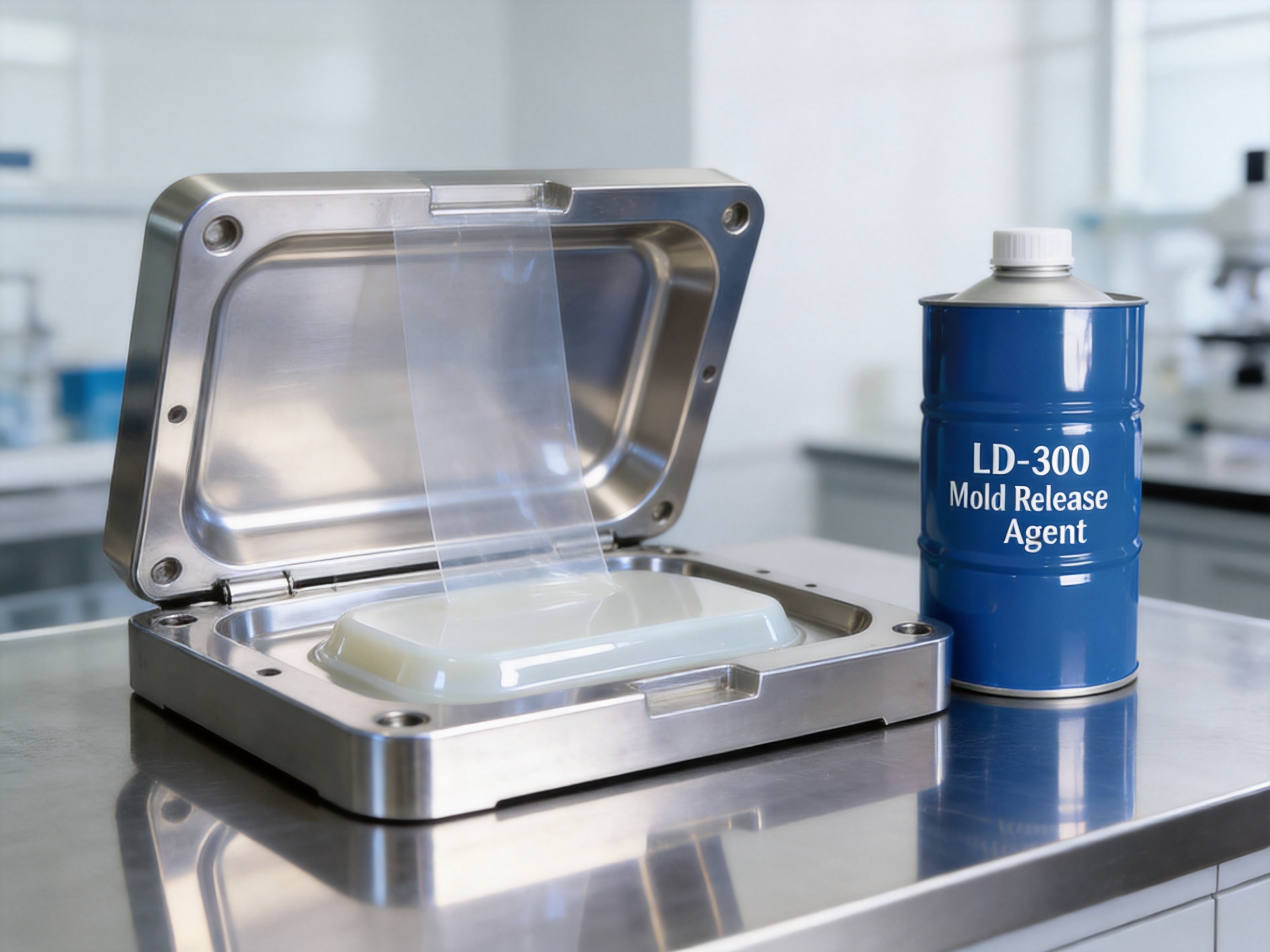
Applications in Plastic Processing
Plastic molding places heavy demands on release agents because processing conditions vary widely. Polyethylene, polypropylene, PVC, engineering plastics, and filled compounds may differ in melt temperature, viscosity, shrinkage, polarity, and adhesion behavior. A release agent that works on one material may not perform well on another. LD-300’s silicone-based release properties support compatibility across a broad plastic-processing range.
Injection Molding
Injection molding requires fast cycles, accurate part ejection, and stable mold surfaces. Sticking can lead to pin marks, deformation, incomplete ejection, and production delays. LD-300 can help reduce adhesion between plastic parts and the mold surface, improving ejection reliability and reducing the force required to remove parts.
In applications where parts have thin walls, ribs, textured surfaces, or complex geometries, release uniformity is especially important. An inconsistent release film may cause localized sticking that bends or breaks delicate part features. LD-300’s wetting and film-forming characteristics help address these challenges by supporting balanced surface coverage.
Extrusion and Calendaring
During extrusion and calendaring, plastic materials pass through dies, rollers, or forming surfaces under heat and pressure. Release performance helps prevent sticking, reduce surface defects, and maintain smooth throughput. LD-300 can assist in applications where plastic contact surfaces require lubrication and separation without excessive residue accumulation.
In calendaring, surface finish is critical. Any residue, streaking, or uneven lubrication may appear on films, sheets, or coated surfaces. A stable silicone-based release agent can help maintain uniform processing behavior and minimize defects caused by poor separation.
Lamination and Forming
Lamination and forming processes often involve heat, pressure, and multilayer materials. The release agent must withstand contact with adhesives, polymer films, coatings, or resin systems. LD-300’s chemical resistance and thermal stability make it suitable for supporting separation where ordinary release materials may fail under combined chemical and thermal stress.
In these processes, minimizing transfer is also valuable. A release agent that contaminates laminated products can compromise adhesion between layers or affect appearance. LD-300’s intended mold-adhering behavior helps reduce such risks when properly selected and applied.
Applications in Rubber Processing
Rubber molding presents unique release challenges. Rubber compounds can be sticky before curing and can develop strong mechanical grip after vulcanization. They may contain fillers, oils, sulfur, accelerators, antioxidants, pigments, and reinforcing materials that interact with the mold surface. A high-quality release agent must tolerate heat, pressure, chemical complexity, and repeated cycles.
Compression Molding
Compression molding often involves placing a rubber charge into a heated mold and applying pressure until curing is complete. The rubber can flow into fine details and adhere strongly to the mold. LD-300 helps create a release boundary that supports easier separation after curing, reducing the risk of torn edges, surface scarring, and operator fatigue.
Because compression molds may have broad contact areas, release film consistency matters. A stable anionic silicone release agent can help maintain coverage across the mold face, contributing to more predictable demolding.
Injection and Transfer Molding
Rubber injection and transfer molding apply heat, pressure, and flow through gates or channels. In these processes, residue buildup can interfere with mold details, vents, and flow paths. A release agent must therefore provide demolding assistance without heavy accumulation. LD-300 is designed to support efficient release while helping maintain clean mold surfaces when used under appropriate operating procedures.
High temperatures can accelerate degradation of weaker release agents. Silicone-based release agents are often preferred for these conditions because they maintain functional integrity under heat. LD-300’s heat resistance makes it appropriate for processors looking to reduce variation during repeated rubber-molding cycles.
Elastomers and Specialty Rubber Materials
Elastomers can vary from soft and tacky materials to high-performance synthetic compounds. Some release agents may stain, swell, or contaminate the product. LD-300’s silicone-based barrier behavior can support compatibility with many rubber types, including natural rubber, synthetic rubber, and elastomeric materials, while preserving surface appearance and demolding reliability.
For molded rubber seals, gaskets, industrial pads, flexible parts, and precision elastomer components, surface quality is not cosmetic only. It can influence sealing performance, friction behavior, installation ease, and long-term reliability. Clean release helps preserve the design intent of the molded part.
Stability Under High-Temperature Conditions
High-temperature processing is one of the main reasons manufacturers choose silicone-based release agents. Heat can cause many organic materials to thin, evaporate, oxidize, or decompose. When a release agent loses viscosity or breaks down, mold coverage becomes uneven and demolding failures increase. LD-300 is positioned as a release agent that is not easily decomposed or worn, making it suitable for demanding operations where thermal exposure is repeated.
The silicon-oxygen backbone of silicone materials provides a strong basis for thermal durability. In practice, this means the release layer can remain functional where many non-silicone alternatives may lose effectiveness. For manufacturers, the advantage is not only fewer stuck parts but also a more predictable production rhythm.
Thermal stability also affects cleanliness. Degraded release agents may create deposits that require mold cleaning. Cleaning interrupts production and may involve solvents, labor, downtime, and risk of mold surface damage. A more stable agent such as LD-300 can help reduce residue-related maintenance pressure and improve overall equipment utilization.
Performance in Low-Temperature and Variable Environments
Low-temperature or cooling-related processes create different challenges. Some release agents become too viscous, spread poorly, or form uneven films when temperature drops. If the release film becomes patchy, parts may stick at random locations. LD-300’s silicone surfactant nature supports wetting and stable film behavior across varied processing conditions.
Environmental humidity can also influence release performance, especially in water-based or emulsified systems. Poorly stabilized formulations may separate, lose wetting power, or produce inconsistent coverage. The formulation strategy behind LD-300 balances silicone materials with surfactant behavior to support stable application and reliable demolding under changing workshop conditions.
In real production environments, temperature, humidity, resin chemistry, mold condition, and cycle speed do not remain perfectly constant. A competitive release agent must tolerate variation. LD-300’s value lies in its ability to provide practical stability rather than performance only under ideal laboratory conditions.
Comparison with Common Competing Release Technologies
Manufacturers often choose among wax-based agents, mineral-oil-based agents, soap-based agents, solvent-based release agents, non-silicone polymer films, and silicone-based systems. Each category has advantages, but not all meet the combined requirements of heat resistance, chemical resistance, low transfer, mold protection, and repeatability.
Wax-based products may offer good initial release but can build up on mold surfaces, especially under repeated heat cycles. This buildup may change surface texture, reduce dimensional precision, and require frequent cleaning. Mineral oils may lubricate effectively but can transfer to parts and affect painting or bonding. Soap-based products can be economical but may lack high-temperature durability or chemical resistance. Solvent-based agents may dry quickly but can raise concerns about odor, flammability, volatile organic compounds, and worker safety.
LD-300 offers a more balanced approach. Its silicone-based chemistry supports heat resistance, low surface tension, and release efficiency, while its anionic surfactant character supports dispersion and wetting. Compared with lower-cost alternatives, its value is measured not only by purchase price but by reduced scrap, cleaner parts, shorter downtime, less mold wear, and better production stability.
| Release Agent Type | Common Limitation | LD-300 Advantage |
|---|---|---|
| Wax-based release agents | Possible buildup and cleaning burden | Designed for stable release with reduced residue concerns |
| Mineral-oil-based agents | Higher risk of transfer to parts | Supports mold adhesion and cleaner product surfaces |
| Soap-based agents | Limited heat and chemical resistance | Silicone-based thermal and chemical stability |
| Solvent-heavy agents | Odor, volatility, safety and environmental concerns | Can support safer formulation strategies depending on application system |
| Low-grade silicone agents | Uneven dispersion or inconsistent wetting | Anionic surfactant behavior supports more uniform film formation |
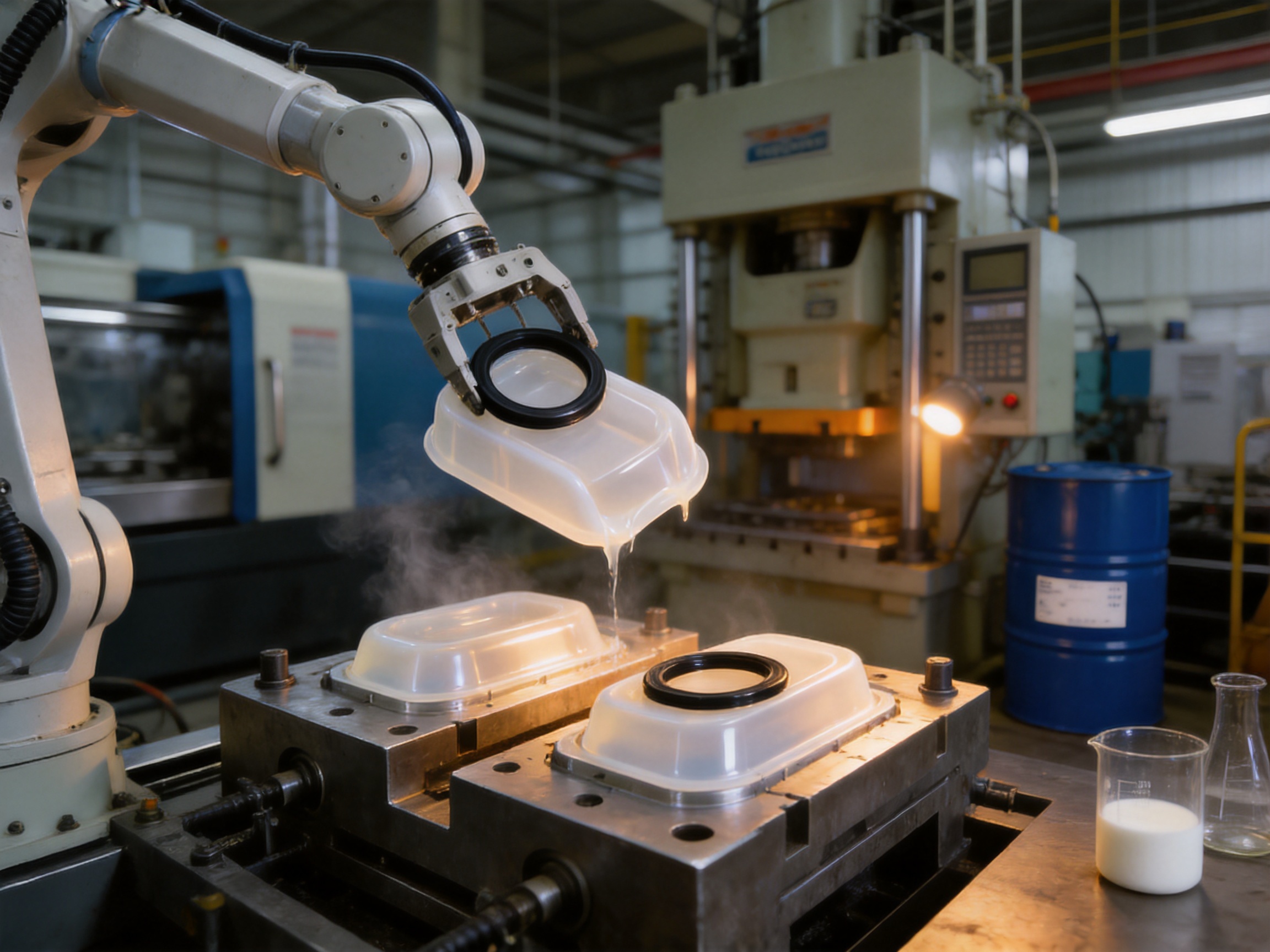
Manufacturing Strength Behind the Product
A high-performance release agent depends not only on raw chemistry but also on manufacturing discipline. Hebei Guituo New Material Co., Ltd. operates as a high-tech enterprise integrating research, development, production, and sales, with a product matrix covering silicone additives, wetting agents, modified silicone oils, dimethyl silicone oil, surfactants, defoamers, and related materials. This broad silicone foundation supports the technical development of LD-300 and related release solutions.
The company’s manufacturing strength begins with advanced production equipment. In silicone-based materials, process control is essential. Mixing uniformity, emulsification quality, temperature control, raw material purity, reaction consistency, filtration, and packaging cleanliness all influence final product stability. By using modern production equipment and precise testing facilities, the company can better manage these variables and produce release agents with repeatable quality.
Quality assurance is also central. A full-process quality monitoring mechanism from production source to finished-product delivery helps reduce batch variation. This is especially important for industrial customers who cannot afford unpredictable changes between shipments. A release agent that performs well in one batch but fails in another can disrupt production schedules and damage customer trust. Consistent quality control helps prevent such risks.
The company has also built an experienced technical and production team. In release-agent development, practical knowledge matters. Laboratory properties such as viscosity, active content, emulsion stability, and thermal resistance must translate into real molding performance. Technical staff with field experience can adjust formulations according to resin type, rubber compound, processing temperature, mold geometry, release frequency, and surface-finish requirements.
Advanced Process Control and Quality Testing
Manufacturing an anionic silicone mold release agent requires careful control of raw material selection, compatibility, dispersion, and stability. Silicone oils and modified silicone components must be balanced with surfactants and functional additives to achieve wetting, film formation, release strength, and storage stability. If the balance is poor, the product may separate, foam excessively, lose activity, or create residue.
Testing can include purity assessment, appearance inspection, emulsion stability observation, viscosity monitoring, heat-aging evaluation, low-temperature storage testing, chemical resistance checks, and practical mold-release trials. These evaluations help confirm that the product can maintain performance under different environments rather than merely meeting a narrow specification.
Thermal aging tests are particularly important for plastic and rubber processing. A release agent may look stable at room temperature but fail at molding temperature. By evaluating behavior after heat exposure, manufacturers can identify risks of decomposition, viscosity change, discoloration, odor, residue formation, or loss of release function.
Low-temperature storage tests are also valuable. Customers may store products in warehouses or transport them through different climates. If a release agent separates after cold exposure or becomes difficult to redisperse, production reliability suffers. Stability testing helps ensure that LD-300 remains practical for real supply-chain conditions.
Chemical compatibility evaluation is another crucial step. Release agents may contact styrene-containing resins, amines, plasticizers, rubber additives, pigments, fillers, and other process chemicals. A chemically resistant release agent must avoid unwanted reactions and maintain film integrity. LD-300 is positioned to provide such resistance, helping users manage complex processing environments.
Customization and OEM/ODM Capability
Not every molding operation requires the same release-agent profile. A processor making rigid polypropylene parts may need different properties from a rubber gasket manufacturer or a company producing complex elastomer components. Variables include mold temperature, part geometry, desired surface finish, reapplication frequency, post-processing requirements, and environmental restrictions.
Hebei Guituo New Material Co., Ltd. accepts OEM and ODM orders, allowing release-agent formulations to be adjusted for specific customer needs. Customization may involve silicone oil viscosity, surfactant type, active concentration, dilution behavior, residue profile, film strength, emulsion stability, or compatibility with particular plastic and rubber materials.
This customization capability is a competitive advantage over suppliers that offer only generic products. In many factories, the best release solution is not simply the strongest release film; it is the best balance between release, cleanliness, surface quality, mold protection, worker safety, cost, and downstream compatibility. A supplier with R&D and production integration can work with customers to identify this balance.
Role in Sustainable and Safer Production
Modern manufacturing increasingly values environmental performance and worker safety. Release agents that contain high levels of volatile solvents may create odor, flammability concerns, and workplace exposure issues. Silicone-based release technologies can support cleaner production strategies, especially when formulated to reduce harmful volatile emissions.
LD-300’s value in this context lies in its potential to reduce waste and rework. A product that improves demolding consistency can lower scrap rates. Fewer defective parts mean less raw material waste, less energy waste, and less time spent correcting production problems. Better mold protection can also extend tooling life, reducing the need for replacement or repair.
In addition, a release agent that leaves minimal residue may reduce cleaning frequency and lower the consumption of cleaning chemicals. These practical benefits support more efficient and responsible manufacturing without sacrificing productivity.
Best-Practice Considerations for Use
To obtain optimal results, users should treat mold release as a controlled process rather than a casual application step. The mold surface should be clean before initial application. Heavy contamination, old wax, degraded oil, rust, or processing residue can prevent uniform film formation. Cleaning and conditioning the mold can improve release-agent performance.
Application amount should be controlled. Too little release agent may cause sticking, while too much may create residue, surface defects, or transfer. Operators should aim for a thin and uniform film. Spray, wipe, brush, or automated application methods may be selected according to mold design and production requirements.
Drying or film-setting time should be considered if the application system requires it. Some processes perform best when the release layer is allowed to level and stabilize before molding begins. Reapplication frequency should be determined through production trials, considering part complexity, material adhesion, cycle temperature, and surface quality.
Compatibility testing is recommended before full-scale production, especially when parts require painting, printing, bonding, or coating. Although LD-300 is designed to minimize transfer and downstream interference, every production system has unique variables. A short validation trial can confirm that the release agent meets the required release and post-processing standards.
Quality Benefits for Finished Products
The quality of a molded part is influenced by how it leaves the mold. Even if the material fills perfectly and cures properly, damage during demolding can produce scrap. Sticking may cause tears, deformation, stress whitening, gloss variation, drag marks, incomplete details, or surface contamination. LD-300 helps reduce these risks by providing smooth separation.
For plastic products, a clean release can preserve surface gloss, texture, dimensional details, and edge definition. For rubber products, it can help prevent tearing, surface scuffing, and distortion. In both cases, smoother demolding contributes to more consistent inspection results and higher customer satisfaction.
Stable release can also help maintain repeatability across shifts and operators. When demolding is difficult, quality may depend heavily on operator skill. A reliable release agent reduces this dependence and supports more standardized production.
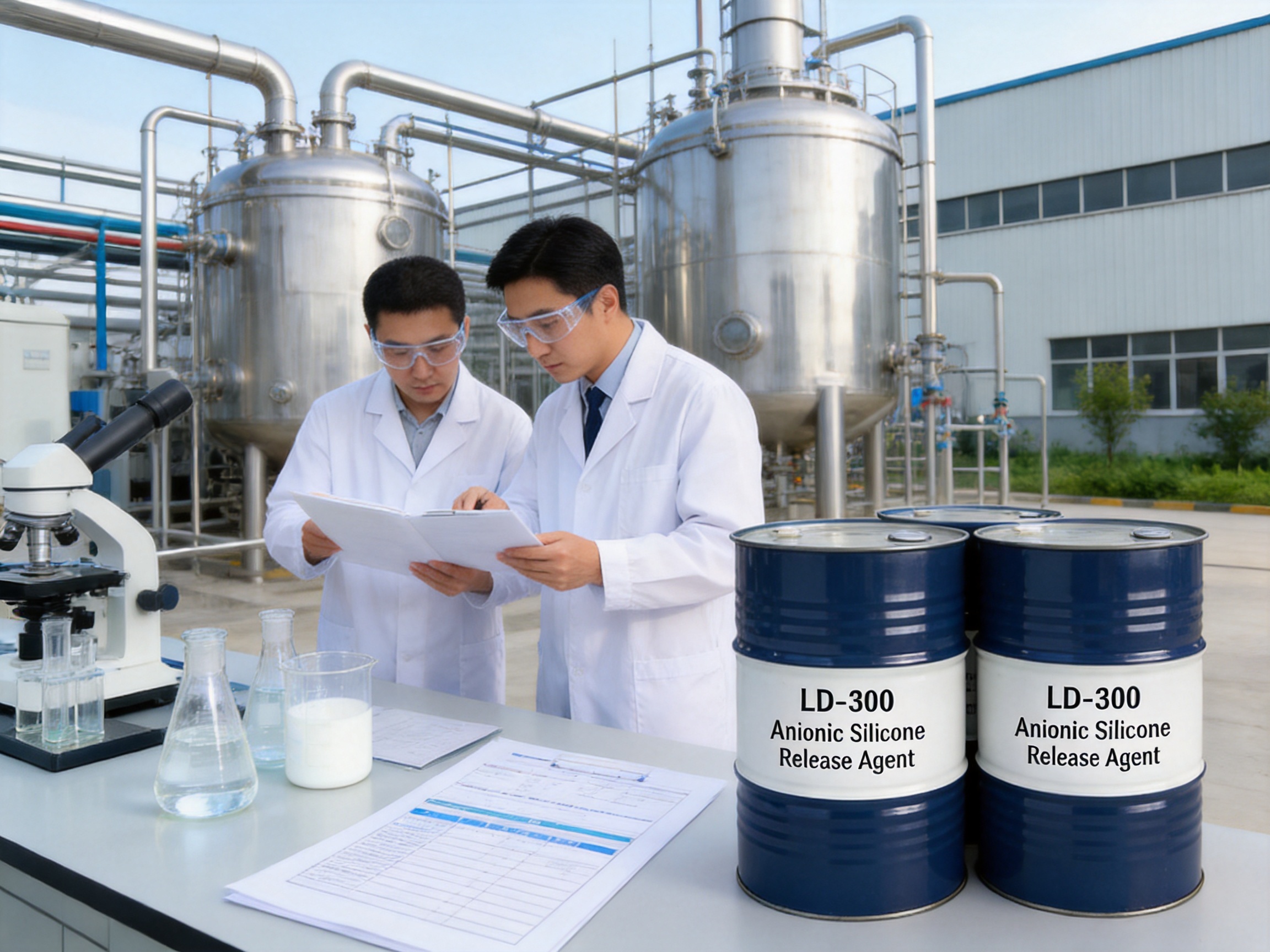
Economic Value and Production Efficiency
The economic value of LD-300 should be evaluated through total process cost, not only unit purchase price. A lower-cost release agent may appear attractive but can become expensive if it causes frequent reapplication, mold cleaning, part defects, downtime, or post-processing failures. A higher-performance release agent can save money by stabilizing the entire molding operation.
Key economic benefits may include reduced scrap rate, fewer stuck parts, less mold maintenance, shorter demolding time, improved cycle consistency, lower cleaning labor, longer mold life, and fewer customer returns caused by surface defects. These benefits are especially significant in high-volume manufacturing, where small improvements per cycle multiply into substantial annual savings.
For manufacturers operating multiple molds or continuous production lines, consistency is particularly valuable. Predictable release behavior helps production planners maintain schedules, reduce emergency maintenance, and improve equipment utilization. LD-300’s stability and professional formulation make it suitable for users who prioritize long-term operating reliability.
Company Capabilities Supporting Global Customers
Hebei Guituo New Material Co., Ltd. has developed a broad product layout in silicone-related materials and serves industries including agriculture, daily chemicals, electronics, textiles, plastics, and rubber processing. Its agricultural silicone products have reached an advanced domestic level and are used by leading agrochemical enterprises, demonstrating the company’s ability to produce performance-sensitive silicone additives at scale.
The company’s products are also exported to markets such as Europe and Southeast Asia, where stable performance and reliable quality have supported repeat purchases. International market acceptance indicates that the company can address not only domestic demand but also the expectations of customers operating under diverse climate, regulatory, and production conditions.
For industrial customers, supply reliability matters as much as technical performance. A release agent must be available when needed and consistent across deliveries. The company’s integrated R&D, production, quality control, and sales structure helps support dependable supply and technical communication.
Q&A: Practical Questions About Anionic Plastic and Rubber Mold Release Agent
What is the main function of LD-300?
LD-300 is designed to form a functional layer between the mold and the molded plastic or rubber product. This layer reduces adhesion, supports smooth demolding, protects the mold surface, and helps maintain product surface quality.
Why is silicone chemistry useful in a mold release agent?
Silicone materials offer low surface tension, heat resistance, lubricity, chemical stability, and good film-forming behavior. These properties help the release agent remain effective under processing conditions that may cause ordinary organic agents to degrade or leave residue.
What does “anionic type” mean?
Anionic type refers to negatively charged surfactant characteristics within the formulation. This can improve dispersion, wetting, and film uniformity, helping the release agent spread more evenly on mold surfaces.
Can LD-300 be used for both plastic and rubber?
Yes. LD-300 is positioned as a plastic and rubber release agent. It is suitable for applications where a stable release layer is needed to reduce sticking and protect molds during plastic and rubber processing.
How does LD-300 compare with wax-based release agents?
Wax-based agents may provide initial release but can build up on molds and require frequent cleaning. LD-300 offers silicone-based thermal stability and is designed for cleaner, more consistent release performance.
Will the release agent affect painting or secondary processing?
LD-300 is designed to adhere to the mold without excessive transfer to the processed part, helping reduce interference with painting or other secondary operations. However, users should always perform compatibility testing for critical painting, bonding, coating, or printing applications.
Is LD-300 suitable for high-temperature processing?
Yes. Silicone-based release agents are known for strong thermal stability, and LD-300 is designed to resist decomposition and wear under demanding molding conditions.
How should the release agent be applied?
Application should produce a thin, uniform film on a clean mold surface. The exact method may include spraying, wiping, brushing, or automated application depending on the mold design and production process.
Why is mold protection important?
Molds are valuable production assets. A release agent helps reduce friction, chemical contact, abrasion, and mechanical demolding damage, which can extend mold life and reduce maintenance costs.
Can the formulation be customized?
Yes. Hebei Guituo New Material Co., Ltd. accepts OEM and ODM orders and can adjust formulations according to customer requirements such as material type, processing temperature, surface finish, residue profile, and application method.
Conclusion
LD-300 Plastic & Rubber Mold Release Agent (Anionic Type) is a professional silicone-based release solution for manufacturers seeking stable demolding, mold protection, and improved production efficiency. Its advantages include heat resistance, chemical resistance, uniform wetting, reduced transfer, and compatibility with a wide range of plastic and rubber processing conditions.
Compared with conventional wax, oil, soap, or solvent-heavy release technologies, LD-300 provides a stronger balance of release performance, cleanliness, stability, and long-term process value. It helps reduce sticking, protect tooling, improve product surface quality, and support more consistent manufacturing cycles.
The product is further strengthened by the capabilities of Hebei Guituo New Material Co., Ltd., including advanced production equipment, precise testing facilities, full-process quality monitoring, experienced technical teams, broad silicone-material expertise, and OEM/ODM customization. For industrial users who need more than a basic release lubricant, LD-300 represents a practical and technically grounded choice for modern plastic and rubber molding operations.
References
1. Wacker Chemie AG. Silicone Fluids and Their Applications in Industrial Processing. Technical Literature.
2. Dow. Silicone Release Agents for Molded Rubber and Plastic Components. Application Guide.
3. Arkles, B. Silicones in Industrial Applications. Gelest Technical Library.
4. Brydson, J. A. Plastics Materials. Butterworth-Heinemann.
5. Morton, M. Rubber Technology. Springer.
6. Harper, C. A. Handbook of Plastics, Elastomers, and Composites. McGraw-Hill.
7. Flick, E. W. Industrial Surfactants. Noyes Publications.
8. Zweifel, H., Maier, R. D., and Schiller, M. Plastics Additives Handbook. Hanser Publishers.
Product: Plastic & Rubber Mold Release Agent (Anionic Type)


Contact Information
Tel : +86-400-138-5268
Email : [email protected]
Phone : +86-15128434888 / +86-13511051998
Add : Xinqiao Environmental Protection Industrial Park, Wen'an County, Langfang City, Hebei Province, China
Contact Information
Copyright © Hebei Guituo New Material Co., Ltd. All Rights Reserved.
