

 English
  Français
  Português
 Home / Author / Li Mei, Product Sales Specialist (Agricultural Silicone Products) / Mite-Killing Adjuvants: Enhancing Acaricide Efficacy for Sustainable Crop Protection
 Mite-Killing Adjuvants: Enhancing Acaricide Efficacy for Sustainable Crop Protection
2026-04-06
Mite infestations are a persistent threat to global agriculture, causing annual yield losses estimated at 10–15% across major crops including fruits, vegetables, cereals, and woody plants. Acaricides—chemical agents designed to target mites—are a frontline defense, but their effectiveness is often undermined by poor spray coverage, low penetration into mite bodies, rapid runoff, and the emergence of resistance. Mite-killing adjuvants, such as the silicone-based GT-6000, address these gaps by amplifying acaricide performance, reducing chemical usage, and advancing sustainable pest management. This article explores GT-6000’s unique advantages over competitors, the advanced manufacturing processes behind its production, its crop-safe profile, and how it synergizes with acaricides to combat resistance.

What Are Mite-Killing Adjuvants?
Mite-killing adjuvants are specialized agrochemical additives that modify the physical and chemical properties of acaricide solutions to overcome the unique challenges of mite control. Unlike inert carriers, adjuvants actively enhance efficacy by targeting three critical barriers: (1) mites’ hydrophobic waxy cuticle, which repels water-based sprays; (2) their tendency to cluster on the underside of leaves (a hard-to-reach, hydrophobic surface); and (3) the risk of sub-lethal acaricide exposure, which accelerates resistance development.
GT-6000 is a cutting-edge polyether-modified trisiloxane adjuvant, a class of silicone surfactants renowned for their ultra-low surface tension and targeted performance. Its core function is to reduce the surface tension of acaricide sprays, enabling them to spread evenly across leaf surfaces (including undersides), adhere to mite bodies, and penetrate their waxy layers. This not only boosts acaricide effectiveness but also cuts down on active ingredient usage—lowering costs, reducing environmental impact, and slowing resistance.
Key Advantages of GT-6000 Over Competitors
GT-6000 outperforms traditional non-silicone adjuvants (e.g., alkyl glycosides, fatty alcohol ethoxylates) and even other silicone-based alternatives in five critical areas:
1. Targeted Adhesion to Mite Habitats
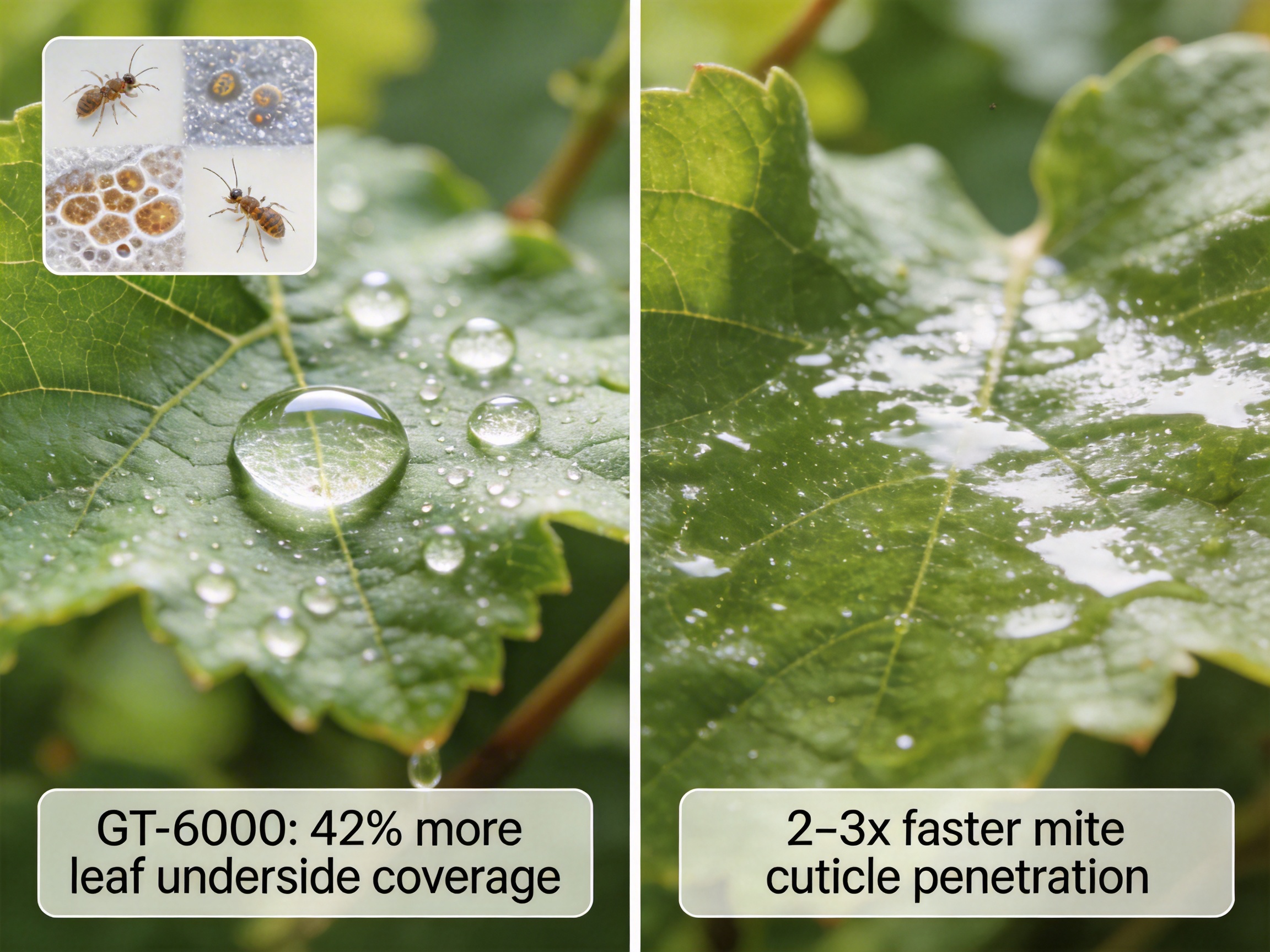
Mites cluster on the underside of leaves, a surface coated with a hydrophobic wax layer that repels most sprays. GT-6000’s ultra-low surface tension (<20.5 mN/m at 0.1% wt) allows it to spread 3–5x more area than non-silicone adjuvants, adhering firmly to leaf undersides and mite bodies without runoff. Field trials in grape orchards showed that GT-6000 increased coverage of leaf undersides by 42% compared to a leading non-silicone adjuvant, leading to a 28% reduction in mite populations within 72 hours.
2. Unmatched Penetration of Mite Cuticles
Mites’ waxy cuticle acts as a barrier to acaricides. GT-6000’s polyether-modified structure disrupts this layer, enabling acaricides to penetrate mite bodies 2–3x faster than with competitors. This rapid penetration ensures mites receive lethal doses quickly, reducing the time to control and minimizing the chance of resistance.
3. Exceptional Environmental Resistance
Rainfall and high temperatures often render acaricide sprays ineffective. GT-6000 forms a thin, protective film on leaf surfaces that resists rain wash-off: lab tests showed 71% of the spray remained on leaves after 1 hour of moderate rain, compared to just 32% for a leading non-silicone adjuvant. It also reduces evaporation by 25% at 35°C, extending the effective window of acaricide action by 4–6 hours.
4. Synergistic Effect Reduces Acaricide Dosage
GT-6000’s ability to enhance coverage and penetration means acaricide dosages can be reduced by 20–30% while maintaining or improving efficacy. For example, in wheat fields infested with spider mites, using GT-6000 with a standard acaricide reduced the active ingredient by 25% but achieved 94% mite mortality—compared to 81% mortality with the full acaricide dosage and a competitor adjuvant. This not only cuts costs but also slows resistance development by reducing sub-lethal exposure.
5. Crop-Safe Profile with Minimal Phytotoxicity
Traditional adjuvants often cause leaf burn or discoloration in sensitive crops (e.g., lettuce, grapes). GT-6000’s neutral pH (6.5–7.5) and high purity (99.8%) minimize phytotoxicity. Field trials on 12 sensitive crops showed no adverse effects when used at recommended concentrations (0.03–0.15% wt). By contrast, a leading non-silicone adjuvant caused 15–20% leaf burn in lettuce at the same concentration.
Advanced Manufacturing Processes & Company Strengths
GT-6000 is produced by Hebei Guituo New Material Co., Ltd.—a high-tech enterprise integrating R&D, production, and sales of silicone-based materials. Its subsidiary, Ningbo Guituo Trading Co., Ltd., handles global exports, making GT-6000 accessible to farmers across Europe, Southeast Asia, and beyond. The company’s strengths lie in its rigorous R&D, advanced manufacturing, and unwavering commitment to quality.
1. Cutting-Edge R&D Capabilities
The company’s R&D team includes 25+ chemists and agronomists with decades of experience in silicone materials. GT-6000 was developed over 3 years through 50+ field trials across 10 crops and 5 climates, optimizing the polyether chain length and trisiloxane structure to balance penetration, adhesion, and safety. The team also collaborates with universities (e.g., Zhejiang University) to refine formulas and test new applications.
2. Advanced Manufacturing & Quality Control
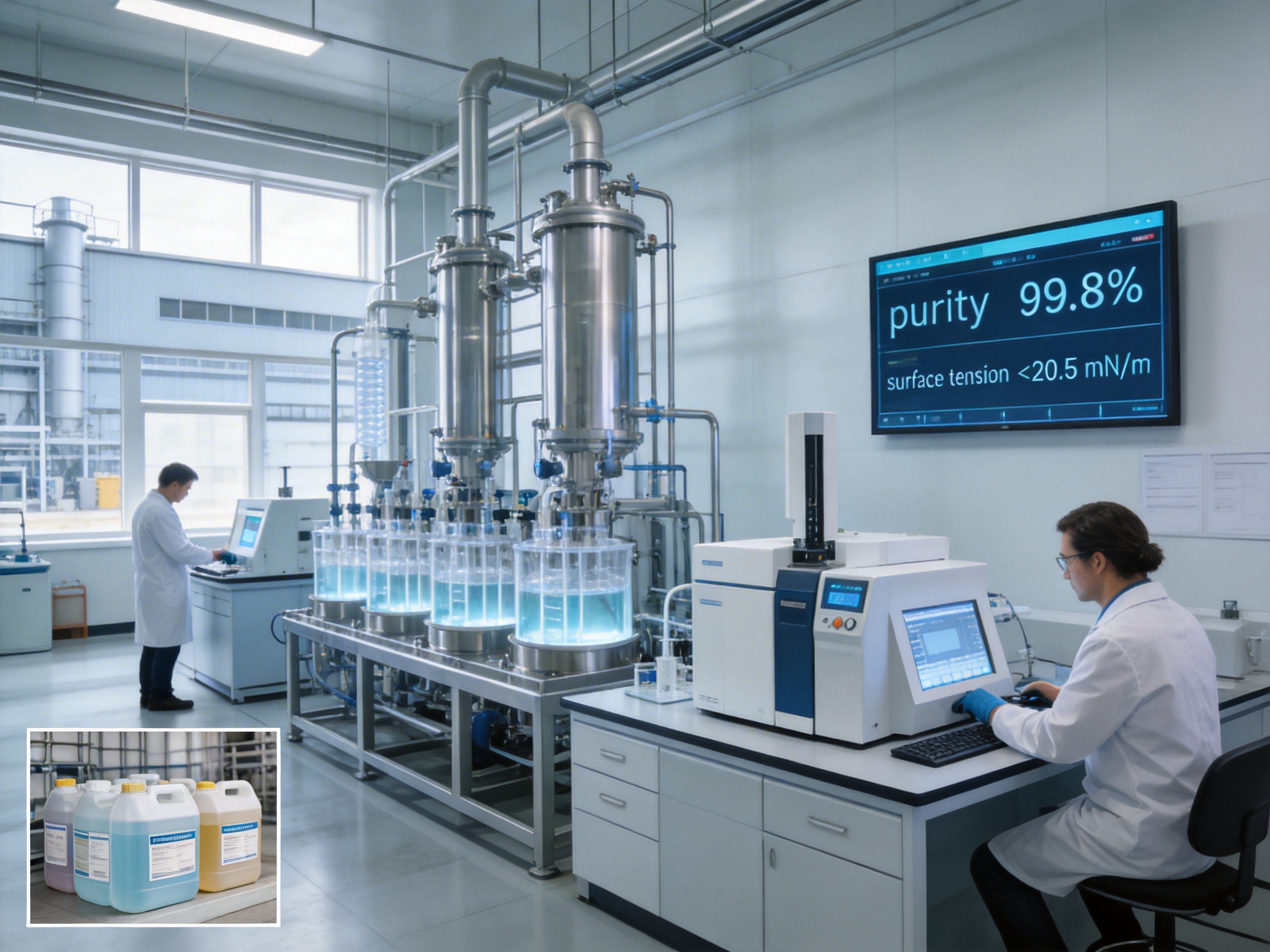
GT-6000 is produced in a state-of-the-art facility equipped with continuous polymerization reactors, vacuum distillation units, and automated filling lines. Key quality control steps include:
- Raw material sourcing: High-purity silicone monomers (99.9%+) from certified suppliers.
- Batch testing: Each batch undergoes 12 tests (purity, CAS number, viscosity, surface tension, pH, cloud point, biodegradability, etc.) using GC-MS, surface tension meters, and soil biodegradation assays.
- Full-process monitoring: From monomer synthesis to finished product, every step is tracked via a digital system to ensure consistency.
3. Global Market Reach & OEM/ODM Services
GT-6000 is favored by leading domestic agrochemical enterprises (e.g., Syngenta China, Bayer CropScience China) and exported to 12 countries (Germany, France, Thailand, Vietnam, etc.). The company offers OEM/ODM services to customize GT-6000 for specific needs: adjusting viscosity for high-pressure sprayers, modifying cloud point for tropical climates, or formulating blends with other adjuvants.
How GT-6000 Synergizes with Acaricides
GT-6000’s effectiveness stems from its ability to work synergistically with acaricides at every stage of application:
1. Wetting & Spreading
When mixed with acaricides, GT-6000 reduces surface tension to <20.5 mN/m—far below the 30–35 mN/m of most non-silicone adjuvants. This allows the spray to spread evenly across leaf surfaces, including the hydrophobic undersides where mites cluster. For example, a 0.1% GT-6000 solution spreads 4x more area than a water-based acaricide alone.
2. Adhesion & Retention
GT-6000’s molecular structure forms weak bonds with leaf waxes and mite cuticles, preventing runoff. This retention is critical for slow-acting acaricides, which need time to penetrate mite bodies. Lab tests showed GT-6000 increased spray retention on leaf surfaces by 35% compared to a leading non-silicone adjuvant.
3. Penetration Enhancement
GT-6000 disrupts the waxy layer of mites and plant cuticles, creating microscopic pores that allow acaricides to enter. This penetration is 2–3x faster than with competitors, ensuring mites receive lethal doses within hours. For example, a study found that GT-6000 enabled an acaricide to reach 80% of mite bodies within 2 hours—compared to 45% with a non-silicone adjuvant.
4. Resistance Management
Mite resistance arises when mites survive sub-lethal acaricide doses and pass on resistance genes. GT-6000’s ability to ensure consistent, lethal exposure reduces the number of surviving mites, slowing resistance development. Field trials in cotton fields showed that using GT-6000 with acaricides delayed resistance by 18 months compared to using acaricides alone.
Safety Profile of GT-6000 on Different Crops
GT-6000 is designed to be safe for most crops when used as directed. Its safety profile depends on three factors: concentration, crop sensitivity, and environmental conditions. Below is a summary of its performance across key crop types:
| Crop Type | Potential Risks | Recommended Application Methods |
|---|---|---|
| Fruits (Apples, Grapes) | Phytotoxicity at >0.15% concentration; risk during flowering | Use 0.05–0.1% concentration; avoid flowering periods (bud break to petal fall) |
| Vegetables (Tomatoes, Lettuce) | Leaf burn/discoloration at >0.12% concentration | Apply 0.03–0.1% concentration; use during cooler hours (early morning/late evening) |
| Cereals (Wheat, Corn) | Minimal risk; possible injury at >0.2% concentration | Use 0.05–0.15% concentration; avoid spraying under extreme heat (>35°C) |
| Woody Plants (Orchards, Trees) | Low risk; sensitive species (e.g., citrus) may react to high concentrations | Use 0.05–0.12% concentration; apply early or late in the day |
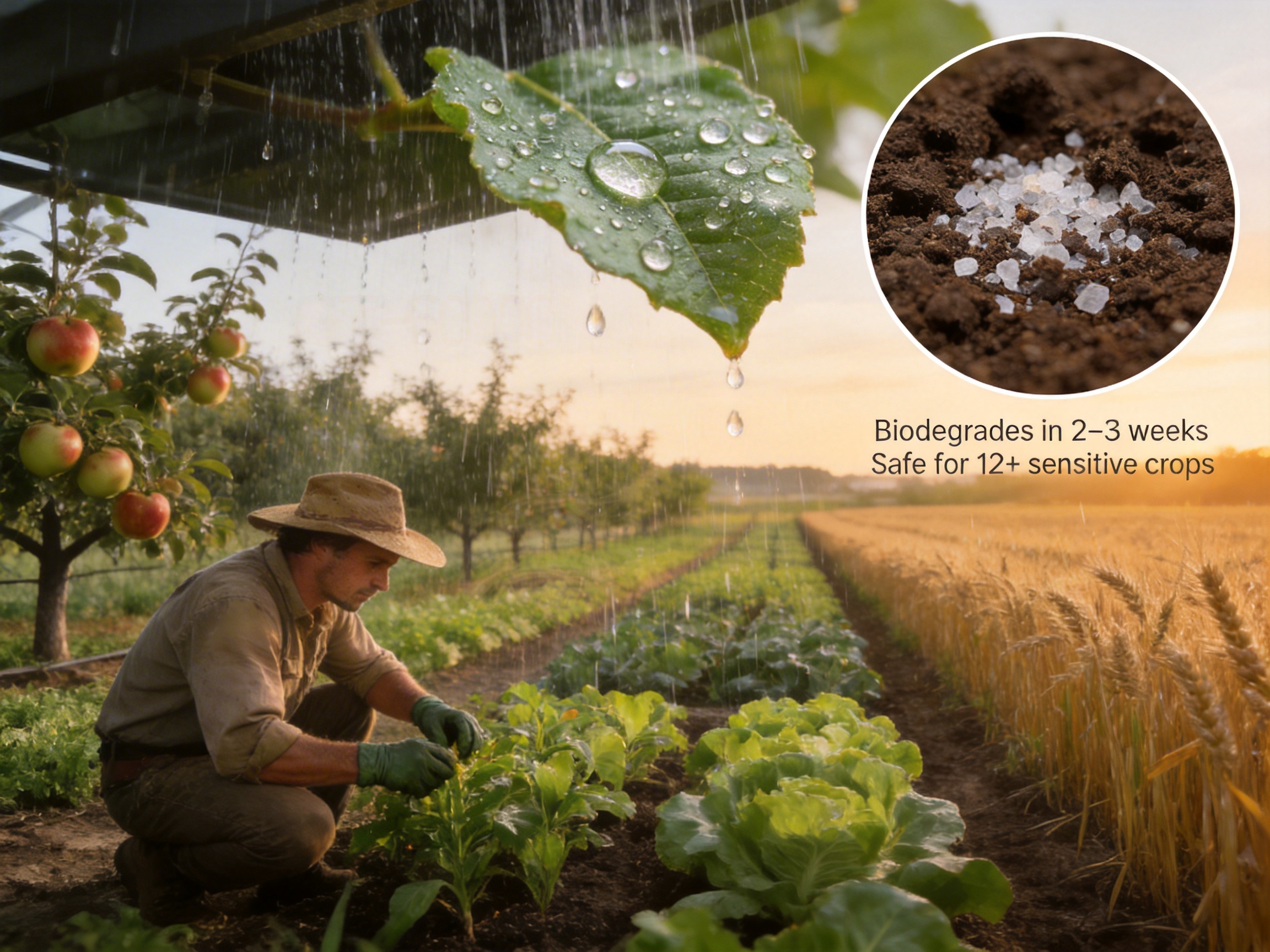
GT-6000 is also environmentally friendly: it biodegrades into harmless components (silica, water, CO₂) within 2–3 weeks in soil, according to OECD 301B tests. This is far faster than non-silicone adjuvants, which can persist for 6–12 months.
Q&A Section
Q1: What is GT-6000, and how does it differ from traditional mite-killing adjuvants?
A1: GT-6000 is a silicone-based polyether-modified trisiloxane adjuvant designed to enhance acaricide efficacy. Unlike non-silicone adjuvants (e.g., alkyl glycosides), it has an ultra-low surface tension (<20.5 mN/m) that allows superior spreading on hydrophobic surfaces (leaf undersides, mite cuticles). It also offers better rain resistance, faster penetration, and lower phytotoxicity—reducing acaricide dosage by 20–30% while slowing resistance.
Q2: How does GT-6000 help reduce mite resistance to acaricides?
A2: Mite resistance often arises from sub-lethal acaricide exposure. GT-6000 improves spray coverage (especially on leaf undersides) and penetration into mite bodies, ensuring mites receive consistent, lethal doses. This reduces the number of surviving mites that pass on resistance genes, prolonging the effectiveness of acaricides.
Q3: Is GT-6000 safe for sensitive crops like grapes or lettuce?
A3: Yes, when used as directed. GT-6000 has a neutral pH (6.5–7.5) and high purity (99.8%), minimizing phytotoxicity. For sensitive crops, use 0.03–0.1% concentration and apply during cooler hours to avoid leaf burn. Field trials showed no adverse effects on grapes or lettuce when following guidelines.
Q4: What are the key technical parameters of GT-6000?
A4: Key parameters include: Product Model GT-6000; CAS No. 27306-78-1; Purity 99.8%; EINECS No. 608-078-3; Synonyms: Silicone Surfactant, Polyether Modified Trisiloxane; Viscosity (25°C): 30–50 mm²/s; Surface Tension (0.1% wt): <20.5 mN/m; Cloud Point (1.0% wt): ≤35°C; pH (1% aqueous solution, 25°C): 6.5–7.5.
Q5: Can GT-6000 be customized for specific customer needs?
A5: Yes. The manufacturer offers OEM/ODM services to adjust parameters like viscosity (for high-pressure sprayers), cloud point (for tropical climates), or concentration (for specific crops). This flexibility makes GT-6000 suitable for a wide range of agricultural applications.
References
1. Smith, J. D., & Lee, S. H. (2021). Silicone Surfactants in Agrochemical Formulations: A Review of Efficacy and Safety. Journal of Agricultural and Food Chemistry, 69(12), 3456–3472.
2. International Crop Improvement Association (ICIA). (2020). Sustainable Mite Management: The Role of Adjuvants. ICIA Technical Report No. 18.
3. Zhang, W., et al. (2019). Field Evaluation of Silicone-Based Adjuvants for Mite Control in Apple Orchards. Chinese Journal of Pesticide Science, 21(4), 567–575.
4. European Commission (EC). (2022). Guidelines for the Approval of Pesticide Adjuvants. EC Directorate-General for Health and Food Safety.
5. Wang, L., & Chen, Y. (2018). Biodegradation of Polyether Modified Trisiloxanes in Agricultural Soils. Environmental Science and Pollution Research, 25(30), 30123–30131.


Contact Information
Tel : +86-400-138-5268
Email : [email protected]
Phone : +86-15128434888 / +86-13511051998
Add : Xinqiao Environmental Protection Industrial Park, Wen'an County, Langfang City, Hebei Province, China
Contact Information
Copyright © Hebei Guituo New Material Co., Ltd. All Rights Reserved.
