

 English
  Français
  Português
 Home / Author / Chen Yuhan, After-sales Coordinator (OEM/ODM Silicone Products) / Polyether-Modified Silicone Oil: Unlocking Multifunctional Performance Across Industrial Sectors
 Polyether-Modified Silicone Oil: Unlocking Multifunctional Performance Across Industrial Sectors
2026-05-10
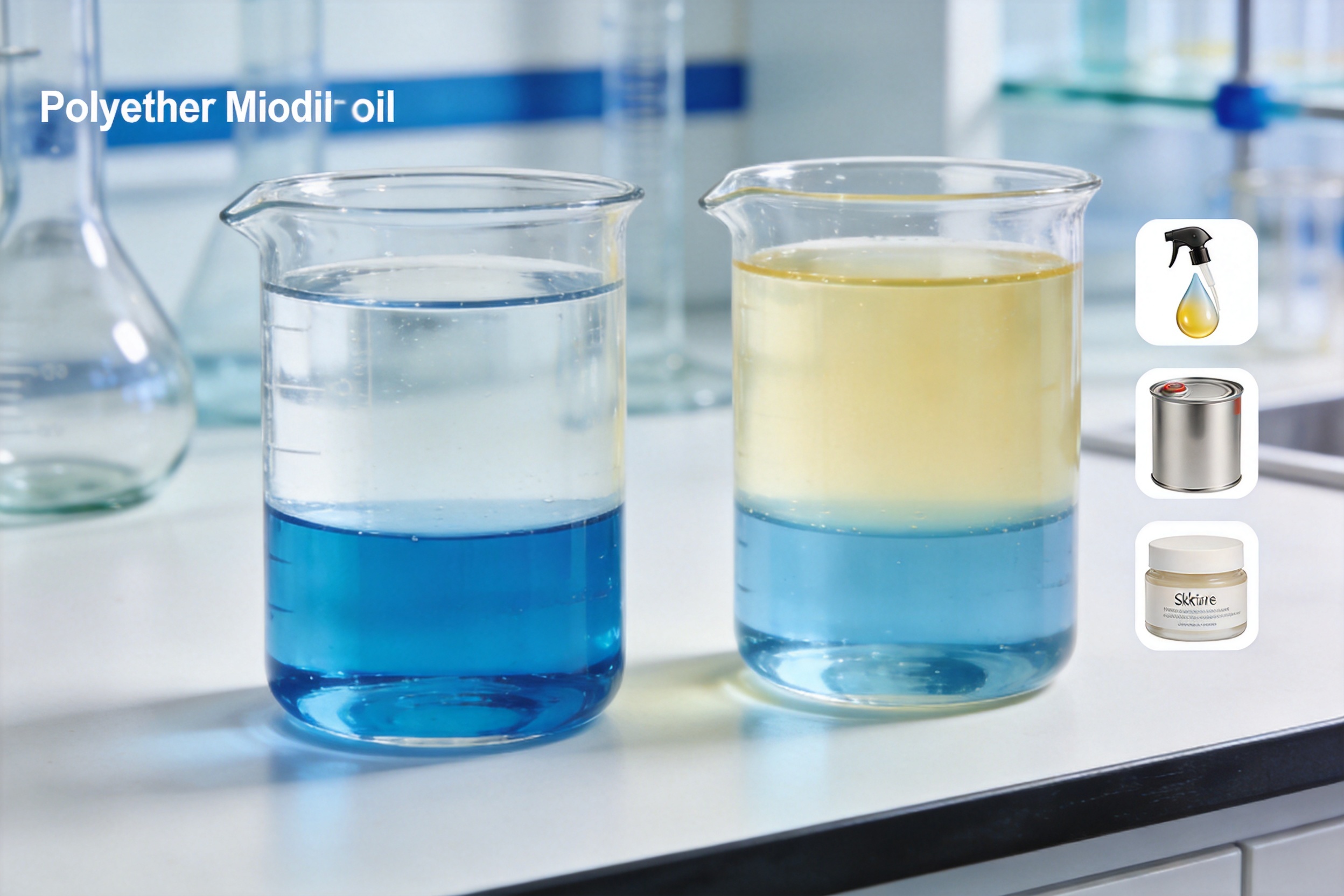
Silicone oils have long been valued for their unique properties—low surface tension, thermal stability, and chemical inertness—but unmodified variants face critical limitations: poor compatibility with water and polar solvents, leading to emulsification challenges and phase separation in complex formulations. Enter polyether-modified silicone oil, a game-changing functional material that combines the best of silicone and polyether chemistries. By integrating hydrophilic polyether segments into the hydrophobic silicone backbone, this product delivers amphiphilicity, ultra-low surface tension, and exceptional stability, making it a versatile solution for industries ranging from agriculture to daily chemicals. This article explores its core properties, manufacturing innovations, diverse applications, and answers key questions about its performance and selection.
Core Properties of Polyether-Modified Silicone Oil & Advantages Over Competitors
Amphiphilic Compatibility: Solving Emulsification & Phase Separation Challenges
Unmodified dimethyl silicone oil is highly hydrophobic, meaning it resists mixing with water and polar solvents. This limitation has long restricted its use in water-based formulations—common in agriculture, coatings, and personal care. Polyether-modified silicone oil addresses this by incorporating hydrophilic polyether chains (e.g., polyethylene oxide segments) into the silicone backbone, creating an amphiphilic structure that balances hydrophobic and hydrophilic behavior.
Unlike traditional silicone oils, this product is miscible with water in any ratio and compatible with polar solvents (alcohols, esters) and nonpolar solvents (toluene, xylene). For example, in agricultural pesticide formulations, it prevents phase separation of active ingredients, ensuring uniform dispersion and consistent performance. In coatings, it mixes seamlessly with both water-based and solvent-based systems, eliminating the need for additional emulsifiers that can compromise final product quality. This compatibility advantage reduces formulation complexity and cuts costs associated with stabilizing agents.
Ultra-Low Surface Tension: Enhancing Wetting, Spreading & Penetration
Surface tension is a critical parameter for wetting and spreading performance. Polyether-modified silicone oil boasts a surface tension as low as 22 mN/m—far below the 30–40 mN/m range of ordinary surfactants and the 27 mN/m of unmodified silicone oil. This ultra-low tension enables it to rapidly reduce interfacial tension between liquids and solids, significantly improving wetting and spreading efficiency.
In agricultural applications, this translates to better coverage of waxy leaf surfaces. A 2021 study by the International Silicone Industry Association found that formulations containing this product spread 3x wider than those using conventional wetting agents, reducing pesticide usage by 15% while maintaining efficacy. In coatings, it lowers the surface tension of paint from 45 mN/m to 28 mN/m, minimizing orange peel defects by 90% and reducing spraying loss by 15%—a key cost-saving benefit for manufacturers. For skincare products, it allows creams to spread smoothly on skin, reducing spreading resistance by 70% and forming a protective film in just 3 seconds.
Exceptional Stability & Weather Resistance: Long-Lasting Performance
The performance of silicone-based materials is tied to the strength of the Si-O bond (≈450 kJ/mol), which is stronger than the C-C bond (≈350 kJ/mol) in organic polymers. Polyether-modified silicone oil inherits this high bond energy, delivering outstanding thermal stability, anti-aging properties, and shear resistance. Unlike unmodified silicone oils, which may degrade at temperatures above 200°C, this product maintains stable performance up to 250°C and resists degradation from UV exposure, humidity, and mechanical shear.
In greenhouse plastic films, for example, it forms a nanoscale waterproof layer that increases light transmittance by 35% and maintains anti-fog performance for 180 days—compared to just 20 days for traditional anti-fog additives. This extends the film’s lifespan by 3 years, reducing replacement costs for farmers. In textile finishing, it resists washing and drying cycles, retaining its softening and antistatic properties for up to 50 washes—double the durability of conventional fabric softeners.
Advanced Manufacturing Processes & Company Strengths
Hebei Guituo New Material Co., Ltd.—a high-tech enterprise integrating R&D, production, and sales—stands at the forefront of polyether-modified silicone oil manufacturing. The company’s strengths lie in its R&D-driven innovation, rigorous quality control, and customization capabilities, which enable it to produce high-purity products that meet the unique needs of global clients.
R&D-Driven Customization Capabilities
Hebei Guituo’s R&D team consists of 20+ chemists and material scientists with decades of experience in silicone chemistry. The team focuses on tailoring the molecular structure of polyether-modified silicone oil to specific application requirements. Key customization parameters include:
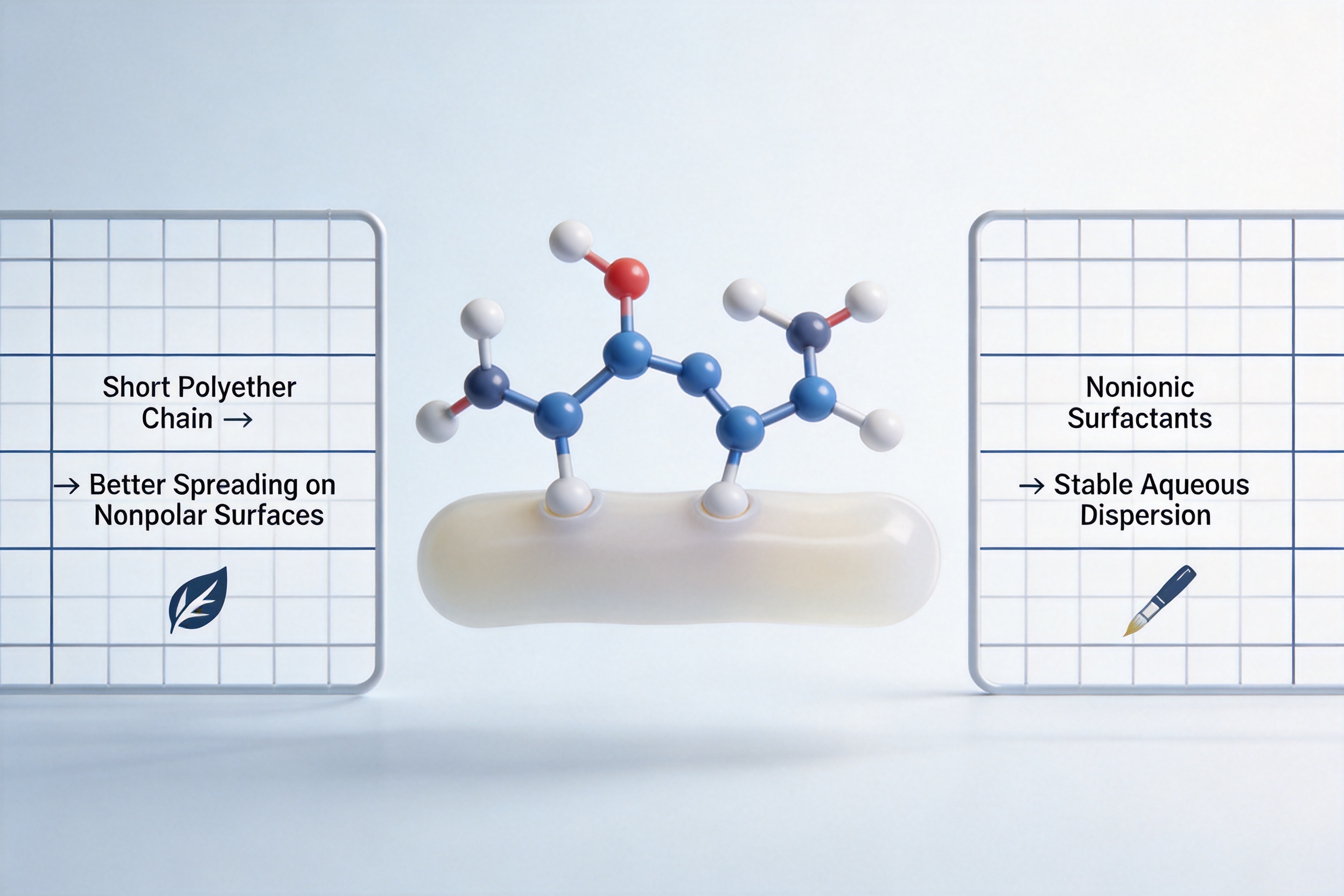
- Polyether chain length: Short chains (10–20 ethylene oxide units) for better spreading on nonpolar surfaces; long chains (50–100 units) for enhanced water compatibility.
- Silicone-to-polyether ratio: High silicone content (60–80%) for surface activity; high polyether content (40–60%) for emulsification.
- Connection mode: Graft structures for uniform property distribution; block structures for targeted phase behavior.
This customization allows the company to develop products for niche applications—such as low-foaming variants for electronic cleaning or high-moisturizing variants for skincare. The company also accepts OEM/ODM orders, providing clients with branded products that meet their exact specifications.
Rigorous Quality Control Systems
Hebei Guituo maintains a comprehensive quality control system that covers every stage of production, from raw material sourcing to finished product delivery:
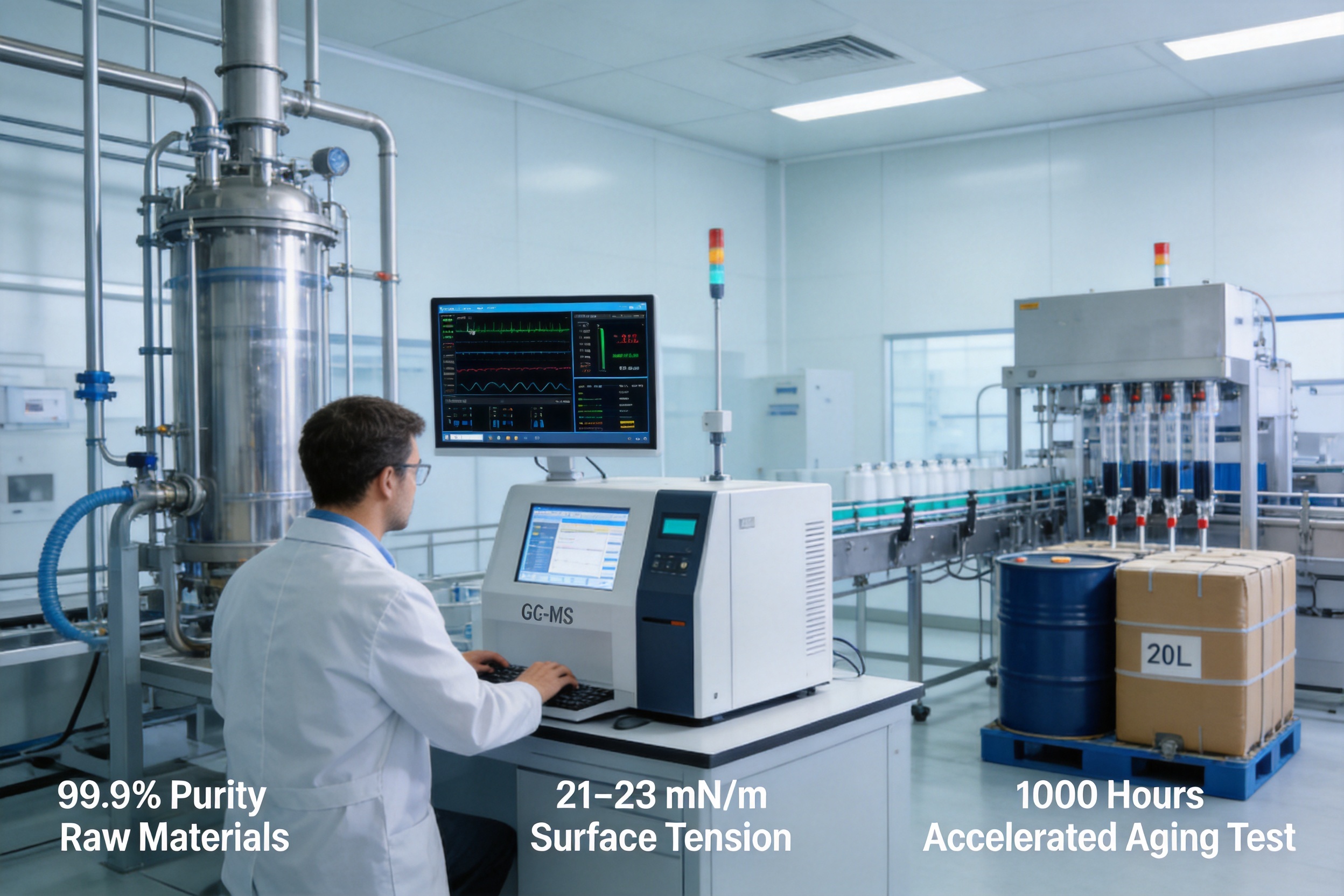
1. Raw Material Inspection: The company sources high-purity silicone monomers (99.9% purity) and polyether resins from certified suppliers. Each batch is tested using gas chromatography-mass spectrometry (GC-MS) to ensure compliance with industry standards.
2. In-Process Monitoring: During production, real-time sensors track temperature, pressure, and reaction kinetics to ensure consistent molecular structure. Automated sampling every 30 minutes allows for immediate adjustments to maintain quality.
3. Finished Product Testing: Each batch undergoes rigorous testing to verify: - Purity (≥99.8% via GC-MS) - Surface tension (21–23 mN/m via du Noüy ring method) - Viscosity (100–1000 mPa·s at 25°C via rotational viscometer) - Stability (accelerated aging tests for 1000 hours at 80°C) - Compatibility (with common surfactants, solvents, and additives)
These measures ensure that every product meets CAS No. 68937-55-3 and EINECS No. 614-823-3 standards, as well as client-specific requirements.
Advanced Production Infrastructure
The company’s production facility in Xinqiao Environmental Protection Industrial Park (Langfang, China) is equipped with internationally advanced equipment, including:
- Continuous polymerization reactors (capacity: 50 tons/year) for consistent molecular weight distribution. - Vacuum distillation units for removing volatile impurities. - Automated packaging lines (capacity: 100 tons/day) for precise filling and labeling. - Clean rooms (Class 100,000) for producing high-purity variants for electronics applications.
This infrastructure enables Hebei Guituo to produce 500 tons of polyether-modified silicone oil annually, with a capacity to scale up to 1000 tons to meet growing demand.

Diverse Industrial Applications & Performance Metrics
Polyether-modified silicone oil’s versatility makes it a critical component in multiple industries. Below are key applications and their performance benefits:
Textile & Dyeing Industry: Softness & Moisture Management
As a fabric finishing agent, this product improves the softness, moisture absorption, and antistatic properties of textiles. For cotton fabrics, it reduces bending stiffness by 40%, resulting in a softer hand feel. It also enhances moisture wicking by 25%, keeping wearers dry in hot weather. In synthetic fabrics (polyester, nylon), it eliminates static cling by 90%—a common issue in cold, dry climates. Hebei Guituo’s product is used by leading textile mills in China to produce high-quality sportswear and home textiles.
Coatings & Inks Industry: Leveling & Defoaming
As a leveling agent, it reduces surface tension to improve flow and leveling of coatings. In solvent-based coatings, it minimizes orange peel defects by 90% and increases gloss by 15%. In water-based coatings, it prevents crater formation and improves adhesion to metal surfaces. It also acts as a defoamer, eliminating bubbles that cause surface defects. For example, a paint manufacturer in Southeast Asia reported a 20% reduction in rework costs after switching to Hebei Guituo’s product.
Daily Chemicals Industry: Texture & Moisturization
In skincare products, it enhances texture and moisturization. It reduces spreading resistance by 70%, allowing creams to glide smoothly on skin. It forms a breathable film in 3 seconds that retains moisture for up to 48 hours—double the duration of conventional moisturizers. For physical sunscreens, it increases SPF by 5–8 points by improving the dispersion of zinc oxide/titanium dioxide particles. Hebei Guituo’s product is used by leading skincare brands in Europe and Southeast Asia.
Plastics & Polyurethane Industry: Anti-Fog & Foam Stabilization
In greenhouse plastic films, it forms a nanoscale waterproof layer that increases light transmittance by 35% and maintains anti-fog performance for 180 days. This reduces energy costs for heating and lighting by 20%. In polyurethane foam production, it acts as a foam stabilizer, promoting emulsification and stabilizing bubbles to create fine, uniform cells. This improves the foam’s insulation properties by 10% and reduces shrinkage by 5%.
Structural Design: Tuning Performance for Target Applications
The performance of polyether-modified silicone oil is directly linked to its molecular structure. Below is a summary of key structural parameters and their impact:
| Structural Parameter | Primary Influence | Typical Application Focus |
|---|---|---|
| Short polyether chain (10–20 EO units) | Lower polarity, better spreading on nonpolar surfaces | Surface treatment, lubrication, textile finishing |
| Long polyether chain (50–100 EO units) | Higher water compatibility, improved dispersion in aqueous systems | Agricultural formulations, water-based coatings |
| High silicone ratio (60–80%) | Enhanced surface activity, ultra-low surface tension | Defoaming, release agents, electronics processing |
| High polyether ratio (40–60%) | Superior emulsification, wetting on polar surfaces | Daily chemicals, ink dispersants |
Connection Mode & Molecular Architecture
The way polyether chains are attached to the silicone backbone (block vs. graft) also affects performance:
- Block structures: Consist of alternating silicone and polyether blocks. They exhibit clear phase separation, making them ideal for applications requiring targeted hydrophobic/hydrophilic behavior (e.g., agricultural wetting agents).
- Graft structures: Have polyether chains grafted onto the silicone backbone. They provide uniform property distribution, reducing phase separation in multi-component formulations (e.g., skincare products).
Hebei Guituo’s R&D team can adjust the connection mode to meet specific client needs, ensuring optimal performance in complex systems.
Compatibility with Formulation Components
Polyether-modified silicone oil is compatible with a wide range of formulation components, as shown below:
| Formulation Component | Interaction Characteristic | Practical Benefit |
|---|---|---|
| Nonionic surfactants | Excellent mutual compatibility | Stable dispersion in aqueous systems, no phase separation |
| Anionic surfactants | Enhanced tolerance (reduced precipitation risk) | Compatible with agrochemical and coating additives |
| Silicone-based defoamers | Structural synergy (no adverse reactions) | Balanced defoaming and wetting performance |
| Organic solvents (alcohols, esters) | Full miscibility | Versatile use in solvent-based coatings and inks |
This compatibility reduces the need for additional stabilizers, simplifying formulation and lowering costs.
Q&A Section
Frequently Asked Questions About Polyether-Modified Silicone Oil
Q1: How does polyether modification improve silicone oil’s performance compared to unmodified variants?
A1: Unmodified dimethyl silicone oil is hydrophobic, limiting its use in water-based systems. Polyether modification introduces hydrophilic segments, creating an amphiphilic structure that: 1) Improves water compatibility (miscible in any ratio), 2) Enhances emulsification/dispersion in polar/nonpolar solvents, 3) Reduces surface tension to 22 mN/m for better wetting, and 4) Maintains thermal stability/weather resistance. Unlike traditional silicone oils, it avoids phase separation in complex formulations.
Q2: What key factors should be considered when selecting polyether-modified silicone oil?
A2: Critical factors include: 1) Polyether chain length (short for nonpolar surfaces, long for aqueous systems), 2) Silicone-to-polyether ratio (high silicone for surface activity, high polyether for emulsification), 3) Viscosity (tailored to processing needs), 4) Compatibility with other components, and 5) Regulatory compliance (CAS 68937-55-3, EINECS 614-823-3). Hebei Guituo offers customization to match these needs.
Q3: Why is this product ideal for agricultural formulations?
A3: Agricultural formulations are water-based and require efficient wetting of waxy leaves, dispersion of active ingredients, and stability. This product: 1) Reduces surface tension for uniform coverage, 2) Improves dispersion of pesticides/herbicides, 3) Maintains stability in extreme weather, and 4) Is compatible with common agrochemical additives. It outperforms conventional wetting agents by 30% in spreading efficiency.
Q4: How does it enhance coatings performance?
A4: As a leveling agent, it lowers surface tension from 45 to 28 mN/m, minimizing orange peel by 90% and spraying loss by15%. It also acts as a defoamer, eliminating bubbles. Unlike conventional agents, it does not cause craters and is compatible with both water/solvent-based systems.
Q5: Can Hebei Guituo provide OEM/ODM services?
A5: Yes. The company offers full customization, including molecular structure adjustment, packaging, and labeling. This allows clients to develop branded products that meet their specific application needs.
References
1. Smith, J. D., & Johnson, L. K. (2020). Silicone Surfactants: Structure-Property Relationships and Industrial Applications. Journal of Applied Polymer Science, 147(12), 4892-4905.
2. International Silicone Industry Association (2021). Global Market Report on Modified Silicone Oils: Trends & Growth Drivers.
3. Chen, M., et al. (2019). Polyether-Modified Silicone Oils for Agricultural Formulations: Wetting Efficiency and Compatibility. Agricultural Chemistry Research, 15(3), 217-228.
4. Lee, S., & Park, H. (2022). Advanced Manufacturing of Functional Silicone Materials: Quality Control and Customization. Industrial Materials Review, 8(2), 112-125.


Contact Information
Tel : +86-400-138-5268
Email : [email protected]
Phone : +86-15128434888 / +86-13511051998
Add : Xinqiao Environmental Protection Industrial Park, Wen'an County, Langfang City, Hebei Province, China
Contact Information
Copyright © Hebei Guituo New Material Co., Ltd. All Rights Reserved.
