

 English
 Français
 Português

 Home / Author / Chen Yuhan, After-sales Coordinator (OEM/ODM Silicone Products) / Advanced Mite-Killing Adjuvants for High-Performance Crop Protection
Advanced Mite-Killing Adjuvants for High-Performance Crop Protection
2026-10-13
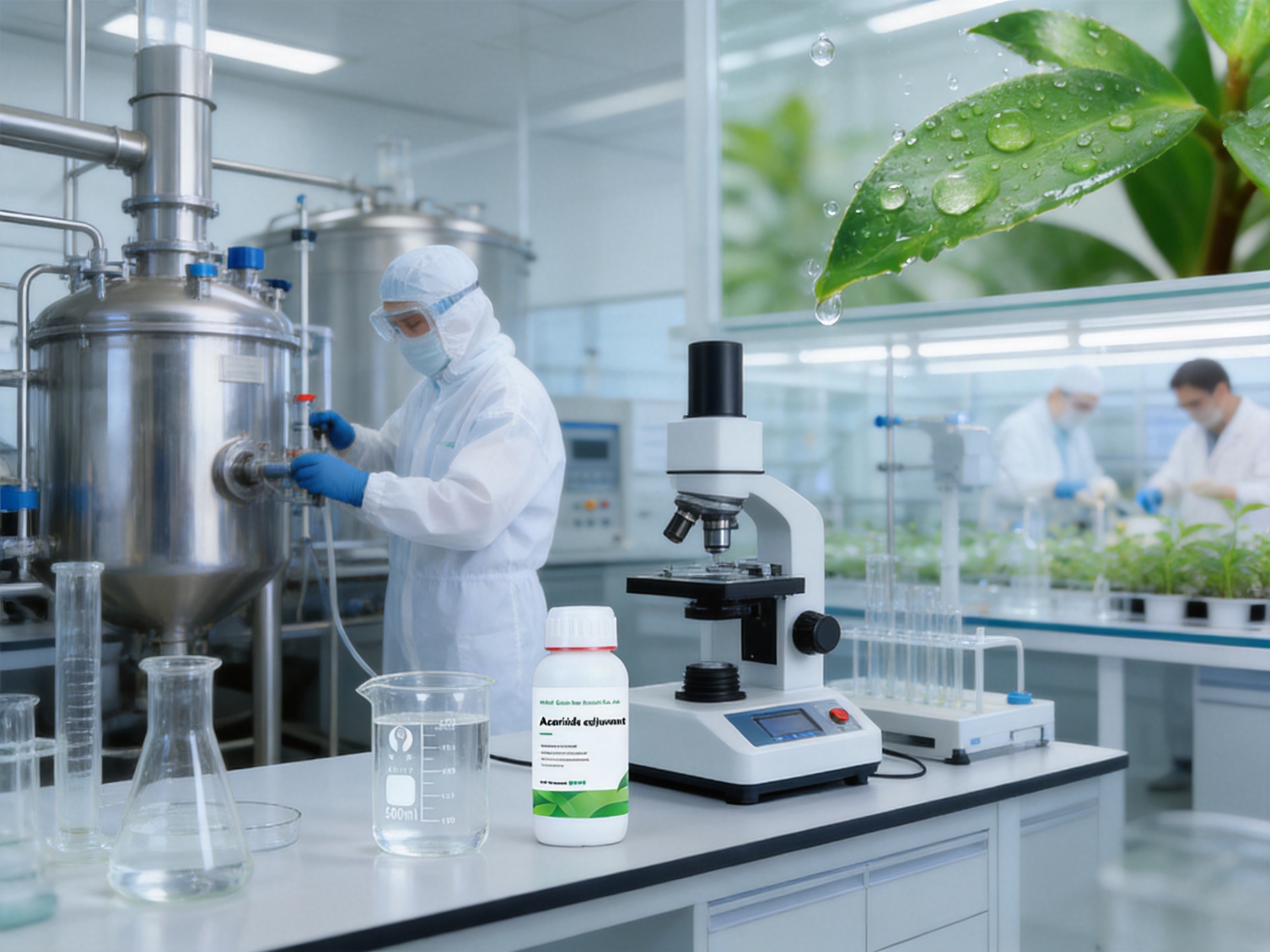
Effective mite management requires more than selecting a powerful acaricide. Mites frequently live on the undersides of leaves, occupy protected plant structures, and possess body surfaces that can limit the wetting and penetration of spray droplets. Even when an acaricide has strong biological activity, incomplete coverage, rapid runoff, evaporation, or insufficient contact can reduce field performance. A high-quality adjuvant helps overcome these application challenges by improving spreading, wetting, adhesion, and penetration.
GT-6000 Mite-Killing Adjuvants are agricultural silicone synergists developed for use with acaricides and other crop-protection formulations. Based on polyether-modified trisiloxane technology, the product is designed to reduce spray-solution surface tension, promote rapid and uniform coverage, improve contact with mites, and support more efficient delivery of active ingredients. The result is a more effective use of the acaricide already selected by the grower or formulation developer.
As an agricultural silicone synergist, GT-6000 is intended to improve the physical performance of spray applications rather than replace the acaricide itself. It can be incorporated into suitable tank mixtures or formulated products according to compatibility, regulatory, and label requirements. By helping the spray reach difficult targets, the adjuvant supports more precise pest management and may help reduce unnecessary losses caused by poor application efficiency.
Hebei Guituo New Material Co., Ltd. manufactures and supplies silicone-based agricultural additives, surfactants, wetting agents, modified silicone oils, defoamers, and related high-performance materials. Supported by research and development capabilities, specialized production equipment, testing facilities, and full-process quality control, the company provides products for agricultural, textile, daily chemical, electronic, and industrial applications. It also supports OEM and ODM cooperation for customers requiring customized specifications or formulation development.
1. The Importance of Adjuvants in Modern Mite Control
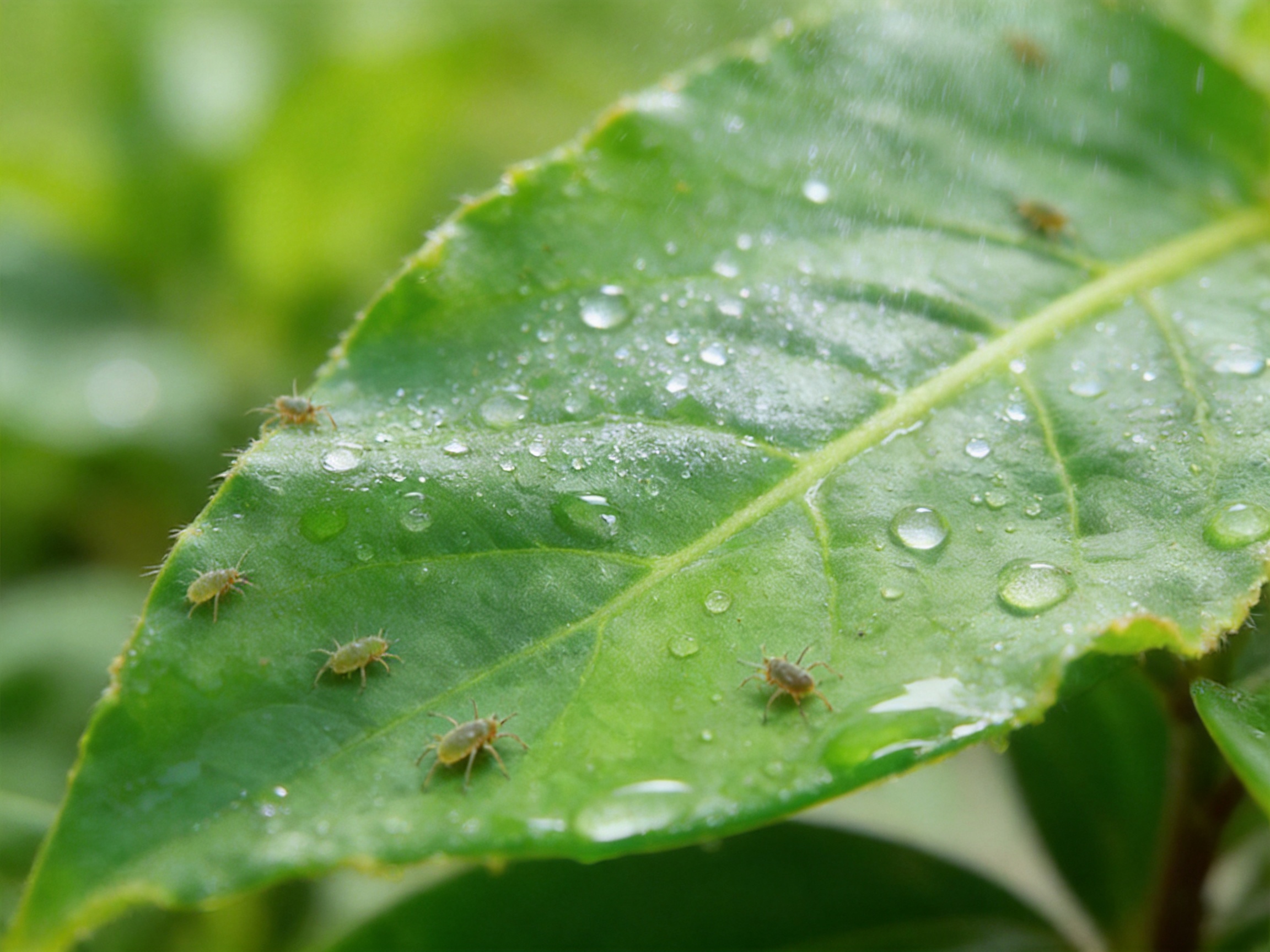
Mites are among the most persistent and difficult agricultural pests. Common mite populations can increase rapidly under favorable environmental conditions, particularly when temperatures are high and plant stress is significant. They may feed on leaf tissues, damage chlorophyll, reduce photosynthetic activity, and affect crop appearance, yield, and market value. Because many mite species occupy the lower leaf surface or protected plant locations, conventional spraying may not achieve sufficient coverage.
The performance of an acaricide depends on several factors. These include the biological activity of the active ingredient, the timing of application, the pest life stage, spray volume, droplet size, weather conditions, water quality, and the ability of the formulation to remain on the target surface. A product can perform below expectations when droplets bounce from a waxy leaf, run off before drying, or fail to reach the underside of the leaf.
Adjuvants address the physical side of this problem. They can modify the behavior of the spray solution by lowering surface tension and improving wetting. A droplet containing a suitable silicone surfactant can spread across a larger area than a droplet containing water and pesticide alone. Better spreading increases the probability that the acaricide will contact mites and reach areas that are otherwise difficult to treat.
The use of an adjuvant does not eliminate the need for correct application practice. It does not compensate for an unsuitable acaricide, incorrect dosage, poor timing, or inadequate spray equipment. Instead, it helps the selected crop-protection product perform more consistently by improving how the spray interacts with the plant and pest surfaces.
2. Product Overview of GT-6000
GT-6000 is a mite-killing adjuvant based on polyether-modified trisiloxane technology. It is also described as a silicone surfactant and agricultural silicone synergist. Its molecular structure is designed to combine the low surface tension performance associated with silicone chemistry with the compatibility and spreading characteristics required for agricultural spray applications.
The product is intended for use alongside acaricides in crop protection programs. Its primary functions include targeted adhesion, penetration enhancement, improved coverage, and increased resistance to environmental losses such as rain wash-off and high-temperature evaporation. The actual result depends on the crop, acaricide, water quality, application rate, weather conditions, and equipment configuration.
| Item | Specification |
|---|---|
| Product model | GT-6000 |
| Product name | Mite-Killing Adjuvants |
| Product type | Agricultural silicone synergist |
| Chemical description | Polyether-modified trisiloxane |
| CAS number | 27306-78-1 |
| EINECS number | 608-078-3 |
| Purity | 99.8% |
| Viscosity at 25°C | 30–50 mm²/s |
| Surface tension at 0.1% by weight | Less than 20.5 mN/m |
| Cloud point at 1.0% by weight | Not more than 35°C |
| pH value of 1% aqueous solution at 25°C | 6.5–7.5 |
| Common synonyms | Silicone surfactant, polyether-modified trisiloxane |
The specification profile demonstrates a balance between concentration, fluidity, surface activity, and aqueous-solution behavior. The purity value of 99.8% supports consistent formulation performance, while the controlled viscosity helps facilitate handling, blending, and dosing. The near-neutral pH range of a one-percent aqueous solution can be advantageous when compatibility with suitable agricultural formulations is being evaluated.
3. How the Product Improves Acaricide Application
3.1 Reduction of Surface Tension
Water-based spray droplets naturally tend to contract into rounded shapes because of surface tension. On waxy leaves, this can lead to poor spreading, droplet bounce, or runoff. GT-6000 reduces the surface tension of the spray solution, allowing droplets to flatten and spread over a wider area of the leaf surface.
This behavior is particularly valuable when treating crops with smooth, wax-coated, or hydrophobic leaves. A more evenly distributed spray can reduce untreated spaces and improve the contact probability between acaricide residues and mites. Better coverage is also important on the underside of leaves, where mites may shelter and reproduce.
3.2 Improved Wetting of Leaf Surfaces
Wetting refers to the ability of a liquid to make intimate contact with a solid surface. Poor wetting causes droplets to remain concentrated in isolated spots, while improved wetting enables more uniform distribution. The silicone surfactant in GT-6000 helps the spray solution interact more effectively with plant surfaces.
Improved wetting can be beneficial when the target plant has a thick cuticle, a waxy exterior, or a leaf angle that makes spray retention difficult. It can also support better use of lower-volume spray systems, provided that the selected application method produces adequate coverage and complies with the applicable product label.
3.3 Targeted Adhesion to Mite-Infested Areas
Mites frequently cluster in areas that are not easily reached by conventional spray droplets. The underside of a leaf may be shielded from direct spray impact, and dense foliage can create additional barriers. GT-6000 supports the retention of the acaricide solution on plant surfaces and can help the spray remain in contact with target areas for a longer period.
Adhesion is influenced by formulation composition, crop surface characteristics, humidity, temperature, and rainfall after application. The adjuvant is designed to reduce the tendency of the spray to run off immediately, but it should still be evaluated under the actual field conditions in which it will be used.
3.4 Enhanced Contact with the Mite Body Surface
Mites have a protective body surface that can limit the contact of water-based droplets. A suitable silicone adjuvant helps the spray solution spread over the mite’s body surface and may facilitate closer contact between the acaricide and the pest. This is especially relevant for contact-active acaricides that require sufficient physical coverage to achieve biological control.
The adjuvant does not independently provide the same biological function as an acaricide. Its role is to improve the delivery and contact conditions of the active ingredient. The final efficacy depends on the acaricide’s mode of action, the mite species, the pest population structure, and the quality of the overall integrated pest management program.
3.5 Support for Penetration
In agricultural spraying, penetration can refer to movement through waxy surfaces, improved access to protected plant areas, or closer interaction with the pest body surface. GT-6000 helps modify the physical properties of the spray so that the acaricide can reach the target more efficiently.
For mites located beneath leaves or within dense plant structures, improved penetration and spreading may help reduce the number of locations where the spray fails to reach. This can improve practical control without necessarily increasing the amount of acaricide applied. Any decision to adjust the acaricide dosage must be made only according to the product label, local regulations, and validated efficacy data.
4. Environmental Resistance and Longer Spray Persistence
After spraying, crop-protection droplets are exposed to environmental stress. Rain can wash the active ingredient away, high temperatures can accelerate evaporation, and strong sunlight may affect certain formulations. Wind can also cause drift and reduce deposition on the target surface. GT-6000 can help form a more persistent spray film and improve resistance to some of these losses.
Rainfastness is not an absolute property and should not be assumed to apply equally to every formulation. The time required for a spray to dry depends on temperature, humidity, airflow, crop canopy, spray volume, and the composition of the acaricide mixture. Nevertheless, improved adhesion can provide a practical benefit when weather conditions are variable.
Greater persistence can support a more stable treatment interval and reduce the risk that the acaricide will be removed before it can act. This is especially useful in situations where rainfall occurs shortly after application. Growers should still avoid spraying when heavy rain is expected and should follow the rainfastness requirements of the acaricide label.
By reducing evaporation and runoff losses, a high-performance adjuvant may also contribute to more efficient use of crop-protection inputs. When more of the spray reaches the intended target, less product may be lost to the surrounding environment. This benefit must be considered together with responsible application, buffer zones, drift management, and protection of aquatic organisms and beneficial insects.
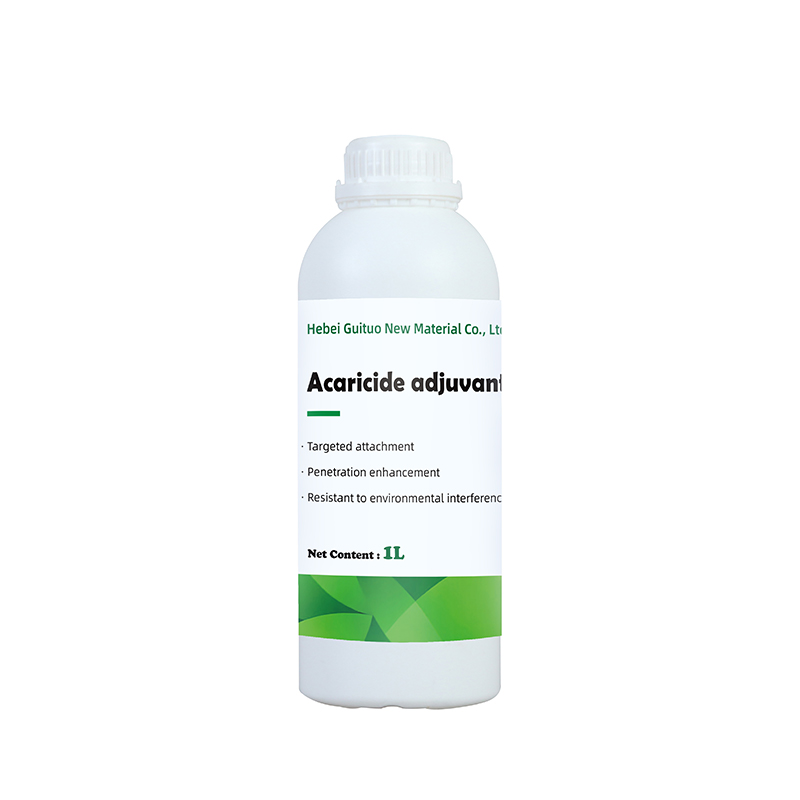
Mite-Killing Adjuvants
5. Advantages Compared with Conventional Agricultural Surfactants
5.1 Very Low Surface Tension
One of the key advantages of polyether-modified trisiloxane technology is its ability to produce very low surface tension at low use concentrations. GT-6000 has a surface tension of less than 20.5 mN/m at 0.1% by weight. This characteristic supports rapid spreading and efficient wetting of difficult plant surfaces.
Many conventional non-silicone surfactants can improve wetting, but they may require a higher concentration to reach comparable spreading performance. A silicone-based synergist can therefore provide strong surface activity while allowing formulators to evaluate lower addition levels. Actual dosage should be established through compatibility and efficacy testing rather than assumed solely from laboratory surface-tension data.
5.2 Better Coverage of Difficult Targets
Traditional spray systems may leave gaps on waxy leaves, folded foliage, dense canopies, or the lower surface of leaves. GT-6000 is designed to help the spray move across these surfaces more uniformly. This is a major advantage in mite control because mites are often protected from direct spray contact.
Improved coverage can be especially valuable in integrated programs where the objective is to achieve reliable control while avoiding excessive applications. A well-distributed spray gives the acaricide a better opportunity to contact mites at different locations and life stages.
5.3 Balanced Physical Properties
The product combines a viscosity range of 30–50 mm²/s at 25°C with a high purity specification and a controlled cloud point. These properties support consistent handling and help formulators evaluate the material in aqueous and mixed agricultural systems.
The cloud point of not more than 35°C at one percent by weight is an important formulation parameter because temperature can influence the appearance and behavior of nonionic surfactant systems. Compatibility testing remains necessary, but a defined cloud-point specification provides useful information during product development and quality control.
5.4 Potential for Reduced Active-Ingredient Loss
When spray droplets spread evenly and remain attached to the target surface, the proportion of the applied acaricide available for pest contact may increase. This can improve application efficiency and may help formulation developers investigate lower active-ingredient loading or optimized spray rates where permitted by efficacy data and regulations.
The objective is not simply to use less pesticide. The objective is to achieve the required control level with a more efficient and better-targeted application. Any reduction in acaricide dosage must be supported by crop-specific trials and must never violate label instructions.
5.5 Compatibility with Customized Formulation Development
Different agricultural customers may require different characteristics, including specific spreading speed, foam behavior, storage stability, compatibility with emulsifiable concentrates, or suitability for water-based systems. A manufacturer with experience in silicone additives can help evaluate the role of the adjuvant within the complete formulation rather than treating it as an isolated ingredient.
Hebei Guituo New Material Co., Ltd. provides OEM and ODM services, giving customers the opportunity to discuss customized grades, packaging, technical specifications, and application requirements. This flexibility can be valuable for pesticide manufacturers, distributors, and agricultural-input companies seeking a product adapted to regional crops and formulation systems.
6. Advanced Manufacturing and Quality Assurance
The performance of an agricultural silicone synergist depends heavily on manufacturing consistency. Small variations in raw-material quality, reaction conditions, purification, or blending can affect surface tension, viscosity, cloud point, storage stability, and compatibility. For this reason, GT-6000 is supported by a manufacturing and quality-control system covering production, testing, and delivery.
6.1 Controlled Raw-Material Selection
High-quality silicone additives begin with appropriate raw materials. The selection process should consider chemical purity, batch consistency, functional-group distribution, moisture content, and compatibility with the intended synthesis route. Consistent raw materials help reduce variation between production batches and support more predictable downstream performance.
The company’s product development approach focuses on high-end silicone materials for agricultural and industrial applications. This specialization allows production and technical teams to consider both the chemistry of the silicone backbone and the functional behavior required in a practical spray formulation.
6.2 Precision Reaction and Modification Technology
Polyether-modified trisiloxanes require controlled modification and blending steps to achieve the desired balance of silicone activity and hydrophilic behavior. Reaction temperature, feed ratio, mixing efficiency, reaction time, and post-treatment conditions can all influence the final product.
Accurate process control helps ensure that the material reaches the specified surface-tension performance without excessive variation. It also supports the desired viscosity and solution behavior. A controlled process is particularly important for customers that use the adjuvant in standardized pesticide formulations and require reproducible production results.
6.3 Advanced Production Equipment
The company has established production facilities equipped with advanced manufacturing equipment and precise testing instruments. Appropriate equipment supports stable mixing, controlled temperature management, efficient material transfer, and clean production conditions.
Production equipment alone does not determine product quality. Its value is realized through proper operation, preventive maintenance, process documentation, and trained personnel. Combining equipment capabilities with experienced technical and production teams helps create a more reliable manufacturing environment.
6.4 Full-Process Quality Monitoring
Quality control begins before production and continues through finished-product delivery. Incoming raw materials can be inspected against defined requirements. During production, process conditions and intermediate material characteristics can be monitored. Finished products can then be tested for key specifications such as purity, viscosity, surface tension, pH behavior, and cloud point.
This full-process model is more reliable than testing only the final batch. Early detection of deviations helps reduce the possibility of producing material that fails to meet customer requirements. It also supports traceability and continuous process improvement.
6.5 Laboratory Testing and Technical Support
Laboratory data are essential for confirming whether a silicone adjuvant is suitable for a particular application. Surface-tension testing can show the spreading potential of a diluted solution. Viscosity testing supports handling and formulation control. Cloud-point testing helps evaluate temperature-related behavior, while pH testing provides information about the aqueous solution.
In addition to standard specifications, customers may require application tests involving droplet spreading, leaf wetting, rainfastness, foam behavior, tank-mix compatibility, storage stability, and crop safety. Technical cooperation between the manufacturer and customer can help establish the correct use level and formulation method.
6.6 Experienced Technical and Production Personnel
Silicone chemistry requires specialized knowledge because small structural differences can strongly influence performance. Experienced personnel can help connect laboratory characteristics with field requirements. They can also assist with troubleshooting issues such as phase separation, excessive foam, unstable emulsions, poor wetting, or inconsistent spray behavior.
The company has assembled technical and production teams with professional experience in new materials. Their role supports product development, process optimization, quality assurance, customer communication, and continuous improvement of the product portfolio.
7. Application Benefits in Different Crop-Protection Situations
7.1 Fruit Crops and Orchards
Fruit trees often have dense canopies and complex leaf structures. Mites may remain on lower leaf surfaces or inside sheltered areas of the canopy. A silicone adjuvant can improve the spreading and retention of an acaricide, helping the spray reach more of the available leaf surface.
Because fruit crops can vary widely in sensitivity, small-scale testing is essential before broad application. Growers should avoid applying untested tank mixtures during periods of extreme heat, drought stress, flowering, or other sensitive growth stages unless the combination is specifically approved and supported by data.
7.2 Vegetable Crops
Vegetable leaves may be tender and sensitive to concentrated spray solutions. GT-6000 can help improve coverage, but using more adjuvant does not necessarily produce better results. Excessive surfactant levels can increase the risk of phytotoxicity, especially under hot, dry, or high-light conditions.
For vegetables such as tomatoes, peppers, cucurbits, and leafy crops, application trials should evaluate leaf burn, discoloration, growth effects, and residue considerations. Application during cooler hours and adherence to the recommended concentration can help manage risk.
7.3 Field Crops
Cereals and other field crops may tolerate a broader range of spray conditions, but coverage remains important where mites affect leaves during hot and dry periods. The adjuvant can improve the distribution of acaricides across plant surfaces and may help maintain more consistent contact under challenging conditions.
Field-crop applications should consider spray volume, nozzle selection, canopy density, wind speed, and the movement of droplets. An adjuvant cannot correct a spray pattern that does not reach the crop or a nozzle system that generates unacceptable drift.
7.4 Greenhouse and Protected Cultivation
Greenhouses and protected cultivation systems can create favorable conditions for rapid mite reproduction. High temperatures, low humidity, and continuous crop production may allow populations to increase quickly. Improved spray coverage is particularly important because foliage can be dense and the underside of leaves may be difficult to treat.
In enclosed systems, operators should pay close attention to ventilation, worker protection, crop sensitivity, and drying time. Compatibility and phytotoxicity trials are recommended before full-scale use, especially when the adjuvant is combined with other surfactants, oils, fertilizers, or biological products.
8. Recommended Evaluation and Use Procedure
Before commercial use, customers should evaluate GT-6000 through a structured process. First, confirm that the selected acaricide label or local regulatory framework permits the use of an adjuvant. Next, review the physical compatibility of the products and identify the required concentration range. A small jar test can provide an initial indication of separation, precipitation, excessive foaming, or other visible incompatibility.
A jar test is only a preliminary screening method. It cannot replace a crop-safety trial or field-efficacy evaluation. The next step should involve a small treated area representing the target crop, application equipment, spray volume, and environmental conditions. The treated area should be compared with an acaricide-only control and, where possible, an untreated control.
Evaluation should record visible wetting, spray retention, leaf coverage, drying behavior, pest activity, plant response, and control duration. Observations should be taken at multiple intervals rather than only immediately after application. This helps distinguish initial spray performance from long-term crop response.
| Evaluation stage | Main purpose | Key observations |
|---|---|---|
| Document review | Confirm regulatory and label suitability | Permitted crops, application restrictions, dosage requirements |
| Jar compatibility test | Identify obvious physical incompatibility | Separation, precipitation, gel formation, excessive foam |
| Small plot trial | Evaluate crop safety and spray performance | Leaf wetting, retention, crop injury, mite control |
| Field validation | Confirm performance under practical conditions | Coverage, rain response, control consistency, application economics |
| Commercial monitoring | Maintain quality and optimize use | Batch consistency, seasonal response, environmental effects |
When preparing a tank mixture, the operator should use clean water and follow the mixing order recommended for the complete formulation. In many systems, water conditioners, water-soluble products, suspension products, emulsifiable products, and adjuvants may need to be added in a specific sequence. The appropriate sequence depends on the formulation types and the instructions provided by the pesticide manufacturer.
Operators should avoid storing a diluted spray mixture longer than necessary. Extended storage can cause changes in emulsion stability, active-ingredient distribution, viscosity, or foam behavior. The mixture should be agitated as required and applied according to the approved instructions.
9. Crop Safety and Responsible Application
Silicone adjuvants are highly active surface modifiers, so crop safety must be considered carefully. The same spreading performance that improves coverage can increase wetting of sensitive tissues when the concentration is too high or the environmental conditions are unfavorable. Potential signs of phytotoxicity include leaf spotting, edge burn, discoloration, abnormal growth, or premature tissue deterioration.
Risk can increase when applications are made during high temperatures, intense sunlight, drought stress, high humidity, or slow-drying conditions. Risk may also increase when GT-6000 is combined with multiple surfactants, oils, fertilizers, or aggressive pesticide formulations. Testing the complete tank mixture is therefore more important than evaluating the adjuvant in isolation.
Application during early morning or late evening may reduce stress in some production systems, although local humidity and drying conditions must also be considered. Spraying during strong wind should be avoided because drift can expose non-target plants, workers, water bodies, and beneficial organisms.
Users should wear the personal protective equipment required by the applicable product labels and safety documentation. Storage containers should remain sealed and protected from unsuitable temperatures, contamination, and direct environmental exposure. Spills should be managed according to local safety and environmental procedures.
10. Supporting Resistance-Management Programs
Mite resistance to acaricides is a major concern because many mite populations reproduce quickly and can be exposed repeatedly to the same mode of action. Inadequate coverage may allow partially exposed individuals to survive, reproduce, and contribute to a less-sensitive population. Improving spray distribution can help reduce untreated areas and support more consistent exposure.
GT-6000 should be viewed as one component of an integrated resistance-management strategy. It cannot prevent resistance on its own. Effective programs should rotate acaricides with different modes of action, respect application intervals, avoid unnecessary treatments, monitor pest populations, preserve beneficial organisms where possible, and use cultural or biological control methods when appropriate.
More efficient coverage may help the grower obtain stronger performance from a properly selected acaricide. However, increasing the adjuvant concentration beyond the validated range is not a substitute for rotating modes of action. Resistance management depends on the complete program, not a single additive.
11. Sustainability and Environmental Considerations
Improving application efficiency can contribute to more responsible crop protection. When a larger proportion of the spray reaches the intended crop surface, the potential for waste through runoff or poor deposition may be reduced. Better spreading may also help avoid repeated applications caused by inadequate initial coverage.
Environmental performance must still be evaluated in the context of the entire tank mixture. The toxicity, persistence, mobility, and ecological effects of the acaricide remain important. Users should follow water-protection measures, maintain required buffer zones, and avoid contamination of ponds, streams, drainage systems, and irrigation channels.
The company’s silicone-material product portfolio is designed for applications where performance, consistency, and resource efficiency are important. Through process control and product optimization, manufacturers can support agricultural inputs that deliver reliable physical performance at practical use concentrations.
Responsible use also includes correct packaging disposal, spill prevention, worker training, and accurate record keeping. These measures help ensure that the benefits of improved spray performance do not create avoidable environmental or occupational risks.

12. Why Choose a Specialized Silicone-Material Manufacturer?
Purchasing a specialized agricultural adjuvant involves more than comparing a single specification or price. Customers need confidence in supply stability, batch consistency, technical support, communication, and the manufacturer’s ability to understand the final application. A company focused on silicone materials can provide more relevant expertise than a general chemical distributor with limited experience in modified silicone systems.
Hebei Guituo New Material Co., Ltd. integrates research and development, production, and sales. Its product portfolio covers silicone additives, wetting agents, modified silicone oil, dimethyl silicone oil, surfactants, defoamers, and other functional materials. This broad product structure enables the company to evaluate agricultural adjuvants within the wider context of formulation chemistry.
The company operates with advanced production and testing facilities and applies quality monitoring from raw-material sourcing through finished-product delivery. This approach is intended to support stable performance and dependable supply for domestic and overseas customers.
Its agricultural silicone products are used by agrochemical enterprises and are also supplied to international markets, including Europe and Southeast Asia. Stable quality and repeat purchasing provide practical evidence of market acceptance, although customers should always conduct their own qualification and regulatory review for the intended market.
OEM and ODM services provide additional flexibility. Customers may discuss packaging, private-label supply, technical specifications, product positioning, and application-oriented modifications. This can shorten the path between laboratory development and commercial product supply.
13. Commercial and Technical Advantages of GT-6000
GT-6000 offers several advantages for pesticide formulators, agricultural distributors, and professional growers. Its low surface tension supports efficient spreading at a low solution concentration. Its polyether-modified trisiloxane structure is suited to agricultural wetting and penetration applications. Its controlled viscosity, near-neutral aqueous-solution pH, purity specification, and cloud-point data provide a defined basis for formulation evaluation.
Compared with less active conventional surfactants, the product may provide stronger wetting and broader coverage at lower addition levels. Compared with unmodified silicone materials, its modified structure is intended to offer a more practical balance between silicone surface activity and aqueous-system compatibility. The final performance will depend on the complete formulation, but the product provides a strong platform for development.
Another advantage is application specificity. The product is not marketed as a general-purpose additive without a defined agricultural role. It is positioned as a mite-killing adjuvant and acaricide synergist, with performance objectives connected to mite control: reaching the underside of leaves, adhering to target surfaces, improving contact, and supporting the activity of acaricides.
The combination of product specialization and manufacturing capability can help customers reduce development uncertainty. Technical discussions can address the desired crop, pesticide type, spray equipment, water conditions, environmental factors, and regulatory market. This application-oriented approach is important because an adjuvant that performs well in one system may not be ideal in another.
14. Frequently Asked Questions
Q1: What is GT-6000 used for?
GT-6000 is an agricultural silicone synergist used with acaricides and suitable crop-protection formulations. It improves wetting, spreading, adhesion, and contact of the spray solution on plant and mite surfaces. It is particularly relevant to mite-control applications where pests may occupy the underside of leaves or other difficult-to-reach areas.
Q2: Does GT-6000 kill mites by itself?
GT-6000 is an adjuvant, not a replacement for an acaricide. Its primary function is to improve the physical delivery and performance of the selected acaricide. The biological control effect comes from the active ingredient in the crop-protection product used with it.
Q3: What makes a silicone adjuvant useful for mite control?
Mites are often protected by their location and body-surface characteristics. A silicone adjuvant can lower spray-solution surface tension, improve leaf wetting, increase spreading, and support more uniform contact. These properties help the acaricide reach more of the target surface and reduce the chance of untreated areas.
Q4: Can the product improve coverage on the underside of leaves?
It can support improved coverage by helping droplets spread and adhere to plant surfaces. However, underside coverage also depends on nozzle selection, spray direction, canopy density, spray volume, air movement, and application technique. The adjuvant should be used as part of a complete spray-management program.
Q5: Is GT-6000 compatible with every acaricide?
Compatibility cannot be guaranteed for every acaricide or tank mixture. Customers should conduct a jar test, review the relevant labels and safety documentation, and perform a crop-safety and efficacy trial before commercial use. Compatibility depends on the active ingredient, formulation type, water quality, mixing order, concentration, and environmental conditions.
Q6: Can the adjuvant reduce the required acaricide dosage?
Improved coverage and deposition may allow a formulation developer to investigate more efficient active-ingredient use. However, dosage reductions must be supported by validated efficacy data and must comply with the acaricide label and local regulations. Users should never reduce the recommended pesticide rate solely because an adjuvant has been added.
Q7: What is the recommended application concentration?
The correct concentration depends on the crop, acaricide, application method, water volume, and regulatory requirements. There is no universally correct rate for every application. The product should be evaluated according to technical recommendations and validated through small-scale testing before broad use.
Q8: Can GT-6000 cause crop injury?
Any highly active surfactant may cause crop injury if used at an excessive concentration or under stressful conditions. Sensitive crops, tender leaves, high temperatures, intense sunlight, drought stress, and complicated tank mixtures can increase risk. A small crop-safety trial is recommended before commercial application.
Q9: What quality indicators are provided for GT-6000?
The stated specifications include 99.8% purity, a viscosity of 30–50 mm²/s at 25°C, surface tension below 20.5 mN/m at 0.1% by weight, a cloud point of not more than 35°C at 1.0% by weight, and a pH value of 6.5–7.5 for a one-percent aqueous solution at 25°C.
Q10: Can the manufacturer provide customized products?
Yes. Hebei Guituo New Material Co., Ltd. accepts OEM and ODM cooperation. Customers can discuss customized specifications, packaging, formulation requirements, and application objectives with the technical and sales teams.
Q11: What industries does the company serve?
The company develops and supplies silicone-based materials for agriculture, textiles, daily chemicals, electronics, and other industrial fields. Its product range includes agricultural additives, wetting agents, modified silicone oils, dimethyl silicone oils, surfactants, and defoamers.
Q12: How should the product be stored?
GT-6000 should be stored in a sealed, clean container under conditions specified by the supplier’s technical and safety documentation. It should be protected from contamination, excessive heat, freezing, and direct exposure to unsuitable environmental conditions. The product should be inspected before use if it has been stored for an extended period.
15. Conclusion
Reliable mite control depends on more than the biological strength of an acaricide. The spray must reach the pest, wet the relevant plant surfaces, remain in place, and provide adequate contact under changing field conditions. GT-6000 Mite-Killing Adjuvants are designed to address these practical challenges through silicone-based surface modification.
With a polyether-modified trisiloxane structure, low surface-tension performance, controlled physical properties, and a product focus on acaricide enhancement, GT-6000 can help improve spreading, adhesion, penetration, and spray efficiency. These advantages may be especially valuable for crops with waxy leaves, dense canopies, or mite populations located on the underside of foliage.
The product is supported by the manufacturing strengths of Hebei Guituo New Material Co., Ltd., including research and development, advanced production equipment, precision testing, full-process quality monitoring, experienced technical personnel, and OEM and ODM capabilities. This combination provides customers with both a specialized material and a dependable supply partner.
For best results, GT-6000 should be selected and evaluated as part of a complete crop-protection program. Proper compatibility testing, crop-safety assessment, application calibration, resistance management, environmental protection, and compliance with local regulations remain essential. Used responsibly, a high-performance silicone adjuvant can help growers and formulators obtain more consistent value from acaricide applications while supporting more precise and efficient pest management.
References
1. International Organization for Standardization. Surface Tension Measurement and Related Laboratory Practices.
2. Food and Agriculture Organization of the United Nations. Guidance on Responsible Management of Pesticides and Integrated Pest Management.
3. United States Environmental Protection Agency. General Principles for Pesticide Adjuvant Evaluation and Crop Safety.
4. Organisation for Economic Co-operation and Development. Guidance Documents for Environmental and Agricultural Chemical Testing.
5. Crop Protection Handbook. Principles of Spray Adjuvants, Wetting Agents, and Surfactant Technology.
6. Integrated Pest Management Guidelines. Mite Monitoring, Acaricide Rotation, and Resistance Management Practices.
7. Technical Product Specification. GT-6000 Polyether-Modified Trisiloxane Agricultural Silicone Synergist.
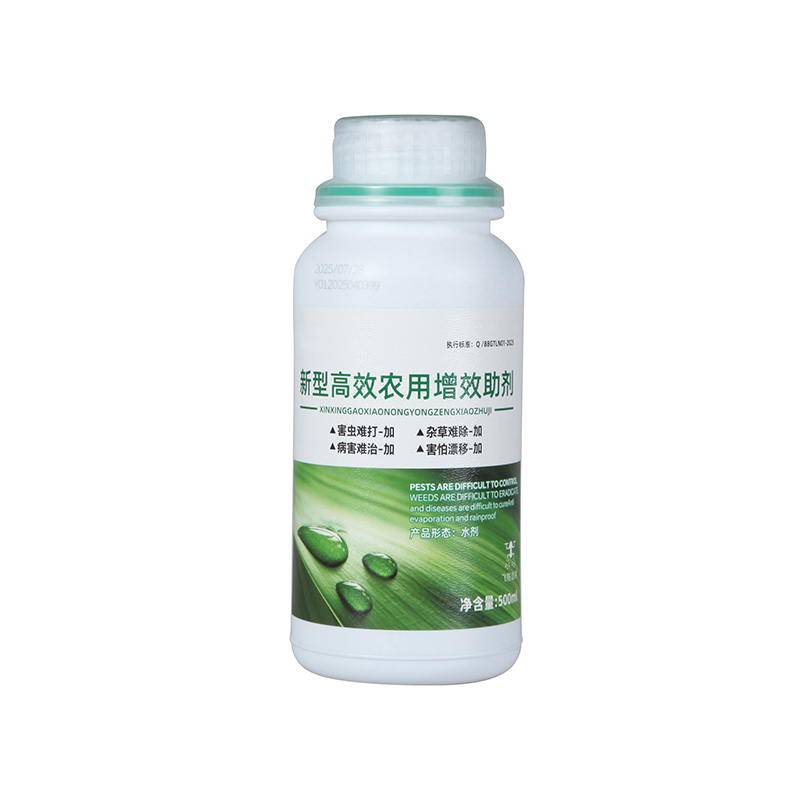
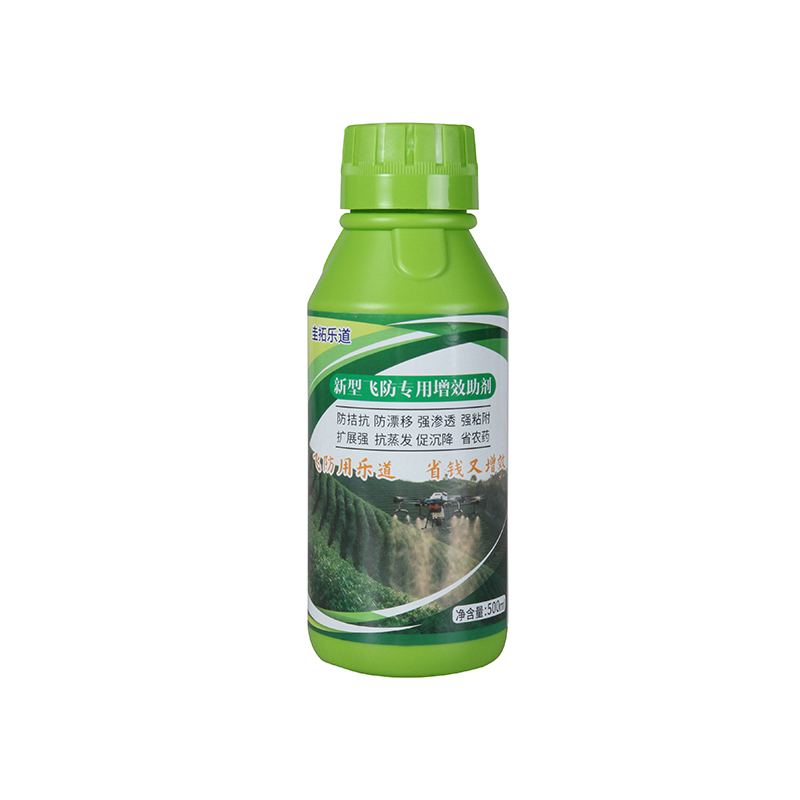
Product: Mite-Killing Adjuvants


Contact Information
Tel : +86-400-138-5268
Email : [email protected]
Phone : +86-15128434888 / +86-13511051998
Add : Xinqiao Environmental Protection Industrial Park, Wen'an County, Langfang City, Hebei Province, China
Contact Information
Copyright © Hebei Guituo New Material Co., Ltd. All Rights Reserved.
