

 English
 Français
 Português

 Home / Author / Zhang Xiaoyu, Regional Sales Manager (Southeast Asia) / Emulsified Silicone Oil: Performance, Applications, and Manufacturing Excellence
Emulsified Silicone Oil: Performance, Applications, and Manufacturing Excellence
2026-11-02

Emulsified silicone oil is a versatile silicone-based material designed to deliver the surface performance of silicone oil in a convenient, water-dispersible form. Combining low surface tension, lubricity, water repellency, release properties, chemical stability, and strong spreading behavior, it serves a wide range of industries, including agriculture, personal care, textiles, coatings, plastics, rubber, metal processing, electronics, furniture care, automotive products, and industrial cleaning.
Unlike many conventional mineral-oil, wax, or organic additive systems, emulsified silicone oil can provide effective surface modification at relatively low treatment levels. It can improve wetting on hydrophobic surfaces, support uniform coating, reduce sticking, assist mold release, enhance smoothness, and help control unwanted foam. The final performance depends on the silicone oil type, viscosity, emulsion structure, droplet size, emulsifier system, concentration, and compatibility with other formulation components.
Modern applications increasingly require additives that can perform several functions at the same time. A formulation may need rapid spreading, stable dispersion, lubrication, water resistance, and a clean surface finish without introducing excessive odor or harsh solvents. Emulsified silicone oil is well suited to these needs because its silicone phase offers distinctive interfacial properties, while the aqueous phase makes it easier to incorporate into many water-based systems.
The LD-620 emulsified silicone oil product is developed for customers seeking a stable, multipurpose silicone emulsion for industrial and commercial formulations. It is supplied by Hebei Guituo New Material Co., Ltd., a high-tech new materials enterprise specializing in silicone additives, modified silicone oils, dimethyl silicone oil, surfactants, wetting agents, defoamers, and related functional materials.
Understanding Emulsified Silicone Oil
Emulsified silicone oil is a dispersion of silicone oil droplets in water or another compatible polar medium. Because silicone oil and water are naturally incompatible, an emulsifier or stabilizing system is required to distribute the silicone phase evenly and maintain the desired emulsion structure. Depending on the formulation, the emulsion may be designed for rapid spreading, lubricity, protective coating, release performance, defoaming, or long-term storage stability.
The silicone phase is commonly based on polydimethylsiloxane or a related silicone material. Polydimethylsiloxane is valued for its flexible siloxane backbone, low surface tension, thermal stability, chemical resistance, and smooth tactile properties. When dispersed into a stable emulsion, it can be added to aqueous formulations without requiring the user to handle a large quantity of neat silicone oil or an aggressive organic solvent.
The product information for LD-620 identifies it as emulsified silicone oil, also known as polydimethylsiloxane emulsion. The listed CAS number is 9016-00-6, the listed EINECS number is 618-493-1, and the stated purity is 99.8%. These specifications provide a basic identification framework, while the complete technical data sheet should be consulted for parameters such as active content, viscosity, pH, ionic character, particle size, recommended dilution, storage conditions, and application dosage.
In practical use, emulsified silicone oil should not be evaluated only by the silicone oil content. The complete emulsion structure is equally important. Two emulsions containing similar silicone materials may behave differently because of differences in emulsifier selection, droplet size distribution, stabilizer concentration, processing energy, and compatibility with the customer’s formulation.
Core Performance Advantages
Low Surface Tension and Rapid Spreading
Silicone materials are known for their ability to reduce surface tension and spread efficiently across many surfaces. This behavior is particularly valuable on leaves, fibers, plastics, metals, glass, ceramics, coated panels, and other substrates that are difficult to wet with plain water.
When used in agricultural spray systems, emulsified silicone oil can help droplets spread across waxy or hydrophobic plant surfaces. Better spreading may support more uniform deposition of an active ingredient, especially when the spray solution would otherwise remain as isolated droplets or show poor coverage. The actual agricultural performance depends on the crop, active ingredient, water quality, weather conditions, spray equipment, and application rate.
In coatings and surface-care products, improved spreading can reduce visible application marks and help create a more even appearance. In textile processing, it can support more uniform distribution across fibers. In metalworking or industrial treatment, it can help the formulation reach narrow surface areas and form a more consistent film.
Lubricity and Smooth Surface Feel
Emulsified silicone oil can form a smooth, low-friction layer on many substrates. This property makes it useful in textile finishing, plastics processing, leather care, furniture polish, automotive products, and release applications.
For textiles, silicone deposition may improve softness, smoothness, hand feel, and fiber-to-fiber lubricity. For leather and synthetic leather, it can contribute to a smoother surface and improved tactile quality. In furniture and floor-care formulations, it may support a polished appearance and reduce the perception of roughness.
In plastics and rubber processing, the silicone phase can reduce adhesion between a molded article and a tool surface. It may also support anti-stick behavior in selected film and sheet applications. The level of lubrication and release performance depends on the silicone viscosity, emulsion concentration, substrate temperature, curing or drying conditions, and the interaction between the product and the material being processed.
Release and Anti-Stick Performance
Silicone oil is widely associated with release properties because it can create a low-adhesion surface film. Emulsified silicone oil offers a practical way to apply this film in water-based systems or to surfaces where a neat silicone oil is difficult to distribute uniformly.
It can be used in mold-release formulations for plastics, rubber, polyurethane, composite materials, and selected casting or forming operations. It may also be applied to plastic films to reduce blocking, provided that the formulation is compatible with the film and does not interfere with printing, lamination, sealing, or subsequent surface treatment.
Compared with some wax-based release systems, silicone emulsions can provide a smoother film and more efficient spreading. Compared with certain solvent-based release agents, water-based silicone emulsions can help reduce the need for volatile organic carriers. However, release-agent selection must always consider the molding temperature, mold material, production cycle, downstream bonding requirements, and desired surface appearance.
Water Repellency and Surface Protection
The hydrophobic nature of silicone can help reduce water penetration and improve water repellency on suitable substrates. This characteristic is useful in textile finishing, leather treatment, paper processing, wood care, construction-related surface treatment, furniture products, and selected stone or ceramic applications.
A silicone film may also make a surface easier to clean by reducing the adhesion of waterborne dirt and certain contaminants. In metal applications, a water-repellent surface can help reduce contact between moisture and the substrate, supporting a broader corrosion-control strategy. Emulsified silicone oil should not automatically be considered a complete corrosion inhibitor, but it can contribute to surface protection when used with appropriate rust-preventive ingredients.
Chemical, Thermal, and Weather Resistance
Silicone materials generally demonstrate strong resistance to heat, cold, oxidation, weathering, and many chemical environments. These properties help emulsified silicone oil maintain useful performance across a broad range of applications.
In outdoor agricultural and industrial systems, temperature changes can affect emulsion stability and application behavior. A well-designed emulsion should be evaluated under relevant storage and use conditions, including heat exposure, cold exposure, freeze-thaw cycles, dilution, agitation, and contact with other ingredients.
The silicone phase can retain its surface characteristics under conditions where some organic oils become sticky, oxidize rapidly, or lose their lubricating performance. Nevertheless, the overall emulsion still depends on its water phase, emulsifier system, preservative package, and storage environment. Therefore, chemical and thermal resistance should be assessed for the complete formulation rather than for the silicone phase alone.
Low Odor and Broad Formulation Utility
Emulsified silicone oil can be incorporated into many water-based formulations without relying primarily on aromatic or chlorinated solvents. This feature can be attractive in personal care, household products, coatings, textile auxiliaries, and industrial formulations where odor, handling, and workplace conditions are important considerations.
The supplied product description characterizes emulsified silicone oil as non-toxic and harmless to humans. Actual suitability for a particular consumer, food-contact, personal-care, or regulated application depends on the complete formulation, purity requirements, applicable regulations, manufacturing controls, and the intended use. Customers should obtain the relevant safety data and regulatory documentation before commercial application.
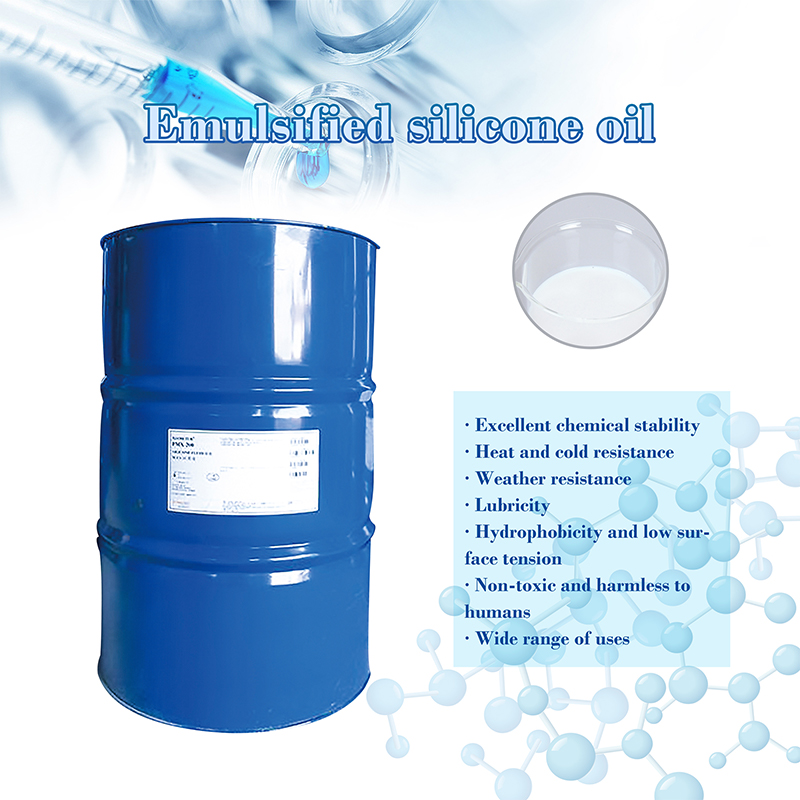
Emulsified Silicone Oil
Advantages Compared with Conventional Additives
Compared with Mineral Oils
Mineral oils are widely used for lubrication, surface conditioning, and processing assistance. However, some mineral-oil systems can produce a heavier, greasier, or more visible surface film. They may also show greater variation in odor, oxidation stability, and low-temperature performance depending on their composition.
Emulsified silicone oil can offer a lighter surface feel, better spreading, strong water repellency, and a smoother appearance. Its low surface tension may allow effective coverage at lower addition levels in certain formulations. It can also maintain useful lubricity over a wider temperature range than some conventional organic oils.
Compared with Wax Emulsions
Wax emulsions are valuable for hardness, gloss, scuff resistance, and protective film formation. However, wax systems may require specific melting or drying conditions and can sometimes produce a more noticeable film. Silicone emulsions generally offer superior slip, spreading, and tactile smoothness.
The two technologies can also be combined. A formulation may use wax for body and durability while using emulsified silicone oil to improve slip, release, leveling, and surface feel. Compatibility testing is essential because excessive silicone can affect adhesion, printing, coating recoatability, or other downstream operations.
Compared with Solvent-Based Silicone Products
Solvent-based silicone products can provide excellent surface coverage, but they may require flammable, volatile, aromatic, aliphatic, or chlorinated solvents. Emulsified silicone oil provides a water-dispersible alternative for many applications, helping formulators develop lower-solvent or water-based systems.
A water-based emulsion can simplify incorporation into aqueous coatings, cleaning products, agricultural sprays, textile baths, and industrial process liquids. It may also reduce the need for specialized solvent-handling equipment. However, water-based formulations require attention to microbial control, storage temperature, freeze-thaw stability, dilution water quality, and compatibility with ionic ingredients.
Compared with Non-Silicone Wetting Agents
Traditional surfactants can reduce surface tension and improve wetting, but they may also increase foaming, affect water resistance, or alter the final surface feel. Emulsified silicone oil can provide a different balance of wetting, spreading, lubrication, and hydrophobicity.
For agriculture, this balance may help improve leaf coverage without relying solely on conventional surfactants. For coatings and textiles, silicone can provide both spreading and a smoother surface. For cleaning and maintenance products, it can support water repellency and polished appearance after application.
Application Areas
Agricultural Formulations
Emulsified silicone oil is used in agricultural formulations as a wetting, spreading, deposition, and coverage aid. Plant leaves often have waxy or hydrophobic surfaces that resist water. As a result, a spray droplet may remain rounded, bounce, run off, or dry unevenly. A suitable silicone emulsion can reduce surface tension and support more complete coverage.
Improved coverage may enhance the distribution of compatible pesticides, foliar nutrients, plant growth regulators, or other agricultural actives. The product can be considered for water-based spray systems, tank mixtures, and formulated agricultural products where compatibility has been confirmed.
Key evaluation factors include:
• Compatibility with the active ingredient and co-formulants.
• Effect on droplet spreading, retention, and runoff.
• Crop safety under the proposed use conditions.
• Performance under different water hardness and pH conditions.
• Stability during storage and after dilution.
• Influence of temperature, humidity, sunlight, and rainfall.
• Recommended dosage and spray-volume requirements.
Agricultural performance should be verified through laboratory screening, greenhouse testing, and field trials. Increasing the dosage does not always improve results. Excessive spreading may increase runoff or alter the drying behavior of the spray. The best formulation is one that provides sufficient coverage while maintaining crop safety and compatibility.
Personal Care and Hair Care
Silicone emulsions are used in hair-care products to improve smoothness, combability, shine, and tactile quality. The silicone phase can deposit on the hair surface and reduce friction between fibers. This may help wet combing and dry combing, particularly in products designed for damaged, dry, or chemically treated hair.
In shampoos, conditioners, hair masks, and leave-on products, the emulsion must be compatible with surfactants, thickeners, fragrances, preservatives, salts, and conditioning polymers. Stability, sensory performance, deposition, and wash-off behavior should be evaluated together.
Personal-care suitability depends on the grade, impurity profile, microbiological quality, packaging, and regulatory requirements. Customers should confirm whether a specific grade is appropriate for cosmetic use before incorporating it into a finished product.
Textile Processing
In textile processing, emulsified silicone oil can be used as a softening, smoothing, lubricating, and finishing aid. It may improve fiber hand, reduce friction, enhance surface uniformity, and support a more comfortable fabric feel.
The product can be applied to natural fibers, synthetic fibers, blends, yarns, woven fabrics, and knitted materials, subject to compatibility and process testing. Important variables include bath concentration, liquor ratio, application temperature, pH, padding or exhaustion method, drying, curing, and fabric construction.
Low-viscosity emulsions may offer rapid dispersion and easier bath preparation. Medium-viscosity products can provide a balance of penetration and surface deposition. Higher-viscosity silicone systems may create a more substantial lubricating or protective effect, although they may require additional attention to dispersion and bath stability.
Leather and Synthetic Leather
Leather polishes and finishing products may use emulsified silicone oil to improve smoothness, gloss, water repellency, and touch. The silicone film can help reduce surface drag and provide a more refined feel.
For synthetic leather, artificial leather, and coated fabrics, the product may support anti-stick behavior and improve the appearance of the finished surface. The formulation should be tested for adhesion, printability, embossing, color, gloss, and resistance to rubbing.
Automotive and Furniture Care
Emulsified silicone oil is suitable for selected automotive, furniture, flooring, and household surface-care products. It can contribute to shine, smoothness, water repellency, and easier wiping. It may be incorporated into dashboard care products, plastic trim treatments, furniture polishes, floor-care products, and surface protectants.
The desired finish may range from a natural low-gloss appearance to a brighter polished effect. Product developers should control the silicone concentration and formulation rheology to avoid excessive greasiness, uneven application, dust attraction, or slippery floors.
Plastics, Rubber, and Polyurethane
In plastics, rubber, and polyurethane processing, emulsified silicone oil can serve as a release agent, anti-stick additive, lubricant, or surface modifier. It may be used for molded parts, elastomeric products, films, sheets, gaskets, foams, and other polymer-based materials.
Release-agent performance is influenced by mold temperature, cycle time, substrate chemistry, pressure, surface finish, and the required number of cycles between applications. The product should be tested for transfer, paintability, bonding, printing, sealing, and appearance if the molded component will undergo further processing.
Metal Processing and Rust Protection
Silicone emulsions can assist surface lubrication and water repellency in selected metal-processing applications. They may be incorporated into maintenance products or protective formulations where a thin, smooth film is required.
For rust prevention, emulsified silicone oil is generally most effective as part of a broader protective system. The formulation may need corrosion inhibitors, film-forming agents, chelating agents, or other additives selected for the specific metal and environment. Salt-spray testing, humidity testing, immersion testing, and storage evaluation can help determine suitability.
Coatings, Paints, and Defoamers
Emulsified silicone oil can be used in water-based coatings to improve leveling, surface slip, water repellency, and appearance. It may also help reduce certain surface defects caused by poor flow or uneven wetting.
Silicone materials are also associated with foam control. In some systems, silicone droplets can destabilize foam lamellae and help suppress unwanted bubbles generated during mixing, pumping, filling, or application. Defoaming performance depends strongly on droplet size, silicone viscosity, emulsion stability, hydrophobicity, and compatibility with the coating or process liquid.
Too much silicone can create craters, fisheyes, intercoat adhesion problems, or recoatability issues. For this reason, defoaming and leveling performance should be evaluated at realistic addition levels and under actual production conditions.
Glass, Ceramics, Stone, Paper, and Wood
Emulsified silicone oil can support water repellency, polishing, release, and surface conditioning in glass, ceramics, stone, paper, and wood-related applications. It may help provide a smoother finish and reduce the adhesion of moisture or contaminants.
Porous substrates require special attention because absorption can affect the final appearance and durability. The formulation may need to be adjusted for penetration, drying rate, film formation, and resistance to washing or abrasion. Testing should include both treated and untreated comparisons under realistic service conditions.
Key Formulation and Selection Factors
Silicone Oil Viscosity
Viscosity affects droplet formation, spreading, lubrication, film thickness, and the flow behavior of the finished emulsion. Lower-viscosity silicone oils generally disperse readily and can provide rapid spreading. Higher-viscosity oils may offer a thicker, more durable, or more lubricious surface film.
| Silicone Oil Viscosity | Typical Emulsion Behavior | Potential Application Focus |
|---|---|---|
| Low viscosity | Fine droplets, rapid dispersion, quick spreading | Agricultural sprays, aqueous formulations, light surface treatment |
| Medium viscosity | Balanced dispersion, coverage, and lubrication | Textile finishing, coatings, furniture care, general surface treatment |
| High viscosity | More substantial film, stronger lubrication, slower flow | Protective layers, release systems, heavy-duty surface conditioning |
Droplet Size
Droplet size influences emulsion appearance, storage stability, spreading, deposition, and film formation. Fine droplets may produce a smoother and more uniform emulsion, while larger droplets can provide a more concentrated surface effect in selected applications.
Droplet size is controlled by the silicone oil viscosity, emulsifier system, phase ratio, mixing energy, processing temperature, addition sequence, and homogenization conditions. A formulation should be selected according to the required application performance rather than according to droplet size alone.
Emulsifier Selection
The emulsifier system must stabilize the silicone phase without causing undesirable foam, irritation, incompatibility, or changes in the final surface. Nonionic, anionic, cationic, amphoteric, polymeric, and blended emulsifier systems may be considered depending on the application.
Emulsifier selection affects compatibility with pesticides, detergents, coatings, textile auxiliaries, preservatives, electrolytes, acids, bases, and other additives. It also influences dilution stability, freeze-thaw behavior, resistance to shear, and storage life.
pH and Ionic Compatibility
pH can influence emulsion stability, preservative performance, active-ingredient compatibility, and the behavior of other formulation components. Agricultural, personal-care, coating, and textile systems may each require a different pH range.
Ionic ingredients and high electrolyte concentrations can destabilize some emulsions. Customers should evaluate the product after dilution into the final formulation and after exposure to the expected storage temperature. Compatibility should be checked visually and analytically for separation, flocculation, viscosity change, odor, pH drift, and performance loss.
Storage and Temperature Stability
Emulsified silicone oil should be stored in a clean, tightly closed container under conditions recommended by the supplier. Excessive heat may accelerate separation, while freezing may damage the emulsion structure. Repeated temperature cycling can be more demanding than constant storage at either a high or low temperature.
Before use, the product may require gentle agitation to restore uniformity. Vigorous or uncontrolled mixing can introduce air or create excessive foam. The storage vessel, transfer equipment, and filling system should be selected to avoid contamination and prolonged exposure to incompatible materials.
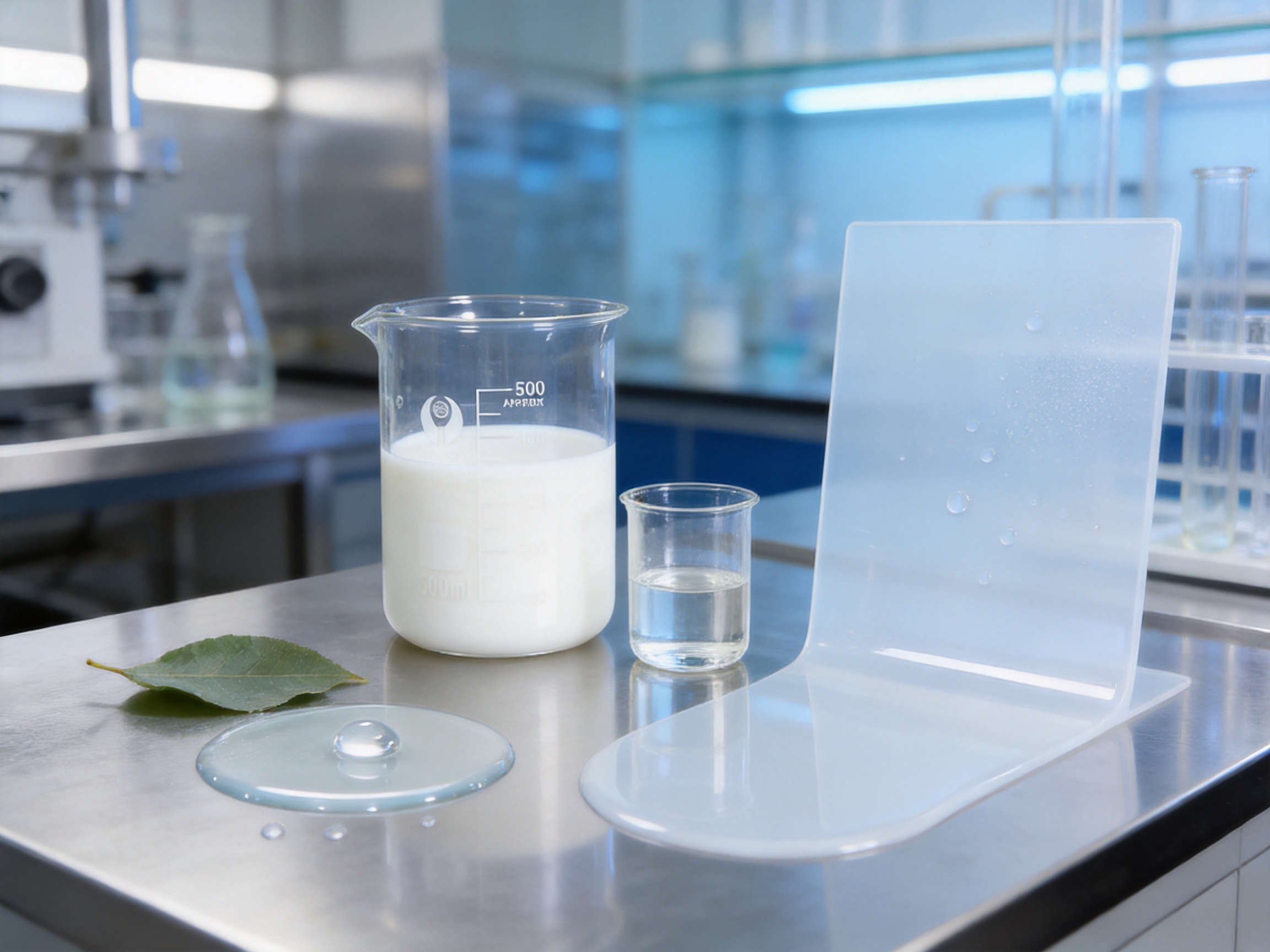
Manufacturing Process and Quality Strengths
Integrated Research and Development
Hebei Guituo New Material Co., Ltd. is described as a high-tech enterprise integrating research and development, production, and sales. This integrated structure supports closer communication between laboratory development, manufacturing, quality control, and customer service.
For emulsified silicone oil, such integration is important because performance depends on multiple interacting variables. A change in silicone viscosity may require an adjustment to the emulsifier ratio. A change in droplet size may influence storage stability. A change in the customer’s active ingredient or process temperature may require a different formulation approach.
An integrated technical team can evaluate these factors together rather than treating the silicone phase, water phase, and production process as independent elements. This supports more consistent product development and more practical customer recommendations.
Controlled Raw Material Selection
Reliable emulsified silicone oil begins with controlled raw materials. The silicone oil, emulsifiers, stabilizers, preservatives, and auxiliary components should be assessed for identity, purity, viscosity, moisture, ionic character, and batch consistency.
Consistent raw materials help reduce variation in droplet size, emulsion appearance, viscosity, pH, and storage behavior. They also make it easier to identify the cause of any deviation during production or application testing.
The company’s broader product matrix includes silicone additives, wetting agents, modified silicone oils, dimethyl silicone oils, surfactants, and defoamers. This product breadth gives its technical team access to related materials when a customer requires a customized formulation or a combined additive package.
Emulsion Preparation and Process Control
The manufacture of emulsified silicone oil requires careful control of phase preparation, addition sequence, mixing intensity, temperature, and processing time. The silicone phase and aqueous phase must be combined in a way that produces the required droplet structure while minimizing localized over-concentration and instability.
High-shear mixing or homogenization may be used to reduce droplet size and improve uniformity. The appropriate processing energy depends on the silicone viscosity, emulsifier system, target concentration, and desired application behavior. Excessive shear may introduce air, increase temperature, or negatively affect certain stabilizer systems, while insufficient shear may result in coarse droplets and poor storage stability.
Process control should also address water quality, equipment cleanliness, temperature uniformity, feeding speed, and batch aging. These factors influence the reproducibility of the finished product and are especially important for products supplied to customers with continuous production lines.
Full-Process Quality Monitoring
The company has established a full-process quality monitoring mechanism extending from production source to finished-product delivery. Such a system can include incoming raw-material inspection, in-process checks, intermediate-product testing, finished-product analysis, packaging inspection, and release approval.
Typical evaluation items for an emulsified silicone oil may include appearance, color, odor, pH, viscosity, solids or active content, particle or droplet size, dilution stability, centrifuge stability, freeze-thaw behavior, heat stability, and application performance. The exact test program should be defined according to the product grade and customer requirements.
Quality monitoring is particularly important because an emulsion may appear acceptable immediately after manufacture but show separation after storage, dilution, temperature cycling, or contact with other ingredients. Long-term stability testing and accelerated testing therefore provide valuable information before commercial shipment.
Advanced Equipment and Testing Facilities
The company reports that it is equipped with internationally advanced production equipment and precise testing facilities. Advanced equipment supports accurate control of mixing, homogenization, temperature, filling, and batch repeatability.
Testing facilities allow the manufacturer to evaluate both chemical and physical properties. In addition to routine quality checks, technical evaluation may include surface-tension behavior, wetting performance, spreading tests, foam-control assessment, coating compatibility, textile hand-feel testing, and release performance on representative substrates.
For customers, the value of testing is not limited to receiving a certificate of analysis. It also provides a foundation for troubleshooting, process optimization, product selection, and the development of application-specific grades.
Experienced Technical and Production Teams
The company has assembled experienced technical and production personnel with professional expertise in silicone materials and functional additives. This experience is valuable when customers face complex formulation problems, such as poor wetting, unstable dilution, excessive foam, uneven deposition, inadequate release, or incompatibility with a co-additive.
A knowledgeable technical team can help distinguish between problems caused by the emulsified silicone oil and problems caused by water quality, equipment, application rate, substrate condition, pH, temperature, or other formulation ingredients. This type of analysis can reduce unnecessary reformulation and shorten the time required for product validation.
OEM and ODM Capability
The company accepts OEM and ODM orders, allowing customers to request products developed around specific technical or commercial requirements. Customization may involve silicone oil viscosity, active content, emulsion type, droplet characteristics, pH, ionic behavior, packaging, application concentration, or compatibility with a particular formulation system.
OEM and ODM development normally begins with a technical brief covering the substrate, process conditions, target performance, dosage, storage requirements, regulatory expectations, and packaging format. Laboratory samples can then be evaluated before pilot production and scale-up.
Customization is especially valuable for agricultural, textile, coating, personal-care, and industrial customers whose processes differ significantly. A general-purpose emulsion may be adequate for one application but unsuitable for another. A tailored grade can provide a more balanced combination of spreading, lubrication, stability, foam control, and surface protection.
Application Performance Evaluation
Product selection should be based on measurable performance rather than on a single specification. The following evaluation framework can help customers compare emulsified silicone oil with competing products.
| Application Area | Primary Performance Objective | Recommended Evaluation Metrics |
|---|---|---|
| Agriculture | Wetting, spreading, retention, and active-ingredient compatibility | Leaf coverage, contact angle, deposition uniformity, runoff, crop safety |
| Daily chemicals | Emulsion stability, texture, gloss, and foam behavior | Visual stability, viscosity, foam consistency, sensory evaluation |
| Textiles | Softness, smoothness, fiber lubrication, and uniform deposition | Hand feel, friction, wettability, whiteness, wash durability |
| Coatings | Leveling, slip, appearance, and controlled foam reduction | Gloss, surface defects, recoatability, adhesion, foam height |
| Plastics and rubber | Release, anti-stick behavior, and surface finish | Demolding force, cycle performance, transfer, bonding compatibility |
| Metal treatment | Lubrication and water-repellent protection | Friction, humidity resistance, corrosion appearance, film uniformity |
| Electronics | Surface protection, lubrication, and clean application | Spread efficiency, film thickness, residue, insulation compatibility |
Laboratory testing should be followed by pilot-scale and production-scale trials. Laboratory glassware may not reproduce the shear, residence time, temperature, or application equipment used in a factory. Scale-up testing helps confirm that the emulsion remains stable during pumping, filtration, metering, spraying, padding, coating, or filling.
Recommended Handling and Incorporation Practices
Before use, the container should be inspected for damage, contamination, or abnormal separation. Gentle mixing may be used if recommended. Excessive agitation should be avoided when it creates foam or changes the emulsion structure.
When adding emulsified silicone oil to a formulation, gradual incorporation is generally preferred. Adding the product too quickly to a concentrated electrolyte solution, high-shear zone, or incompatible surfactant package may cause localized destabilization. Pre-dilution with suitable water can be considered when the formulation permits it.
The order of addition should be established through a small-scale compatibility trial. Some systems perform best when the silicone emulsion is added after the main surfactants have been dissolved. Other systems require the silicone emulsion to be introduced before thickening or before the addition of salts. There is no universal procedure because the correct sequence depends on the complete formulation.
Containers and transfer lines should be clean and compatible with the product. Cross-contamination with strong acids, strong bases, solvents, biocides, or incompatible surfactants may affect stability. Finished formulations should be evaluated after mixing and again after storage.
Why Choose a Specialized Silicone Material Supplier?
Emulsified silicone oil is not simply a commodity liquid. Its performance depends on formulation design, manufacturing precision, raw-material control, application knowledge, and technical support. A specialized supplier can provide more than a standard product by helping customers select the correct emulsion structure for their process.
Hebei Guituo New Material Co., Ltd. combines a broad silicone product portfolio with research, manufacturing, testing, and customization capabilities. Its products are used in agriculture, daily chemicals, electronics, textiles, and other fields. The company reports that its agricultural silicone products have reached an advanced domestic level and have been selected by leading domestic agrochemical enterprises.
The company also exports products to overseas markets, including Europe and Southeast Asia. Repeated purchases and international customer recognition indicate the importance of stable quality, reliable supply, and consistent technical performance in its business model.
Its connection with Ningbo Guituo Trading Co., Ltd. supports commercial communication and overseas supply, while the manufacturing base in Hebei provides production and technical resources. Customers can use this structure to discuss standard grades, customized specifications, OEM projects, ODM development, packaging, and application support.

Quality, Supply, and Customer Support
Stable supply is essential for customers who use emulsified silicone oil in continuous production. A change in supplier batch can influence surface appearance, wetting, foam behavior, textile hand, release force, or coating adhesion. Consistent production procedures and quality monitoring help reduce these risks.
Supplier evaluation should include technical documentation, sample approval, batch traceability, packaging integrity, production capacity, lead time, storage guidance, and response capability. It is also useful to confirm whether the supplier can support both regular orders and future product modifications.
Hebei Guituo New Material Co., Ltd. emphasizes production equipment, testing facilities, full-process quality control, experienced personnel, and a comprehensive silicone product matrix. These strengths can be valuable when a customer needs an emulsified silicone oil that performs consistently across different production locations or changing raw-material conditions.
Technical support may include recommended dosage, dilution method, compatibility screening, surface testing, storage evaluation, and troubleshooting. For agricultural applications, support may also involve spray coverage and formulation compatibility. For textile customers, it may involve bath stability and finishing conditions. For coatings and plastics, it may focus on leveling, release, adhesion, and surface appearance.
Frequently Asked Questions
What is emulsified silicone oil?
Emulsified silicone oil is a dispersion of silicone oil droplets in water or another polar medium. Surfactants, emulsifiers, or polymeric stabilizers are used to maintain the dispersion. The product combines silicone properties such as low surface tension, lubricity, water repellency, release performance, and chemical stability with the handling advantages of a water-dispersible formulation.
What is the product model described in this article?
The product model is LD-620. It is identified as emulsified silicone oil, with polydimethylsiloxane emulsion listed as a synonym. The supplied information lists CAS No. 9016-00-6, EINECS No. 618-493-1, and a stated purity of 99.8%. Customers should request the current technical data sheet for complete specifications.
How does emulsified silicone oil improve agricultural sprays?
It can reduce surface tension and improve wetting and spreading on hydrophobic plant surfaces. This may support more uniform deposition of compatible active ingredients. Agricultural performance depends on dosage, crop type, spray equipment, water quality, weather, active-ingredient compatibility, and crop safety. Laboratory and field testing are recommended before commercial use.
Can emulsified silicone oil be used in shampoos and hair-care products?
Silicone emulsions may be used in suitable hair-care formulations to improve smoothness, shine, combability, and tactile quality. Compatibility with surfactants, salts, thickeners, preservatives, fragrances, and conditioning ingredients must be evaluated. Regulatory and cosmetic-grade requirements should also be confirmed for the intended market.
What role does droplet size play?
Droplet size affects dispersion, spreading, deposition, appearance, and storage stability. Smaller droplets may disperse rapidly and provide uniform coverage, while larger droplets may offer a more substantial surface effect in certain applications. The appropriate droplet structure depends on the application and should be considered together with viscosity and emulsifier selection.
Is the product compatible with pesticides and fertilizers?
Compatibility can be good, but it should not be assumed for every formulation. Pesticides, fertilizers, salts, solvents, pH modifiers, and other surfactants may affect emulsion stability. A jar test, accelerated storage test, and application trial should be conducted before large-scale use.
Can it function as a defoamer?
Emulsified silicone oil may help reduce unwanted foam in selected water-based systems. Defoaming performance depends on silicone viscosity, droplet size, emulsion stability, dosage, and compatibility with the process liquid. In some applications, it may be used together with a dedicated silicone defoamer for stronger foam control.
Can it be used as a mold-release agent?
Yes, emulsified silicone oil can be used in selected plastic, rubber, polyurethane, and composite molding operations. The correct grade depends on mold temperature, material chemistry, cycle time, release force, desired surface finish, and downstream bonding or coating requirements. Production trials are necessary to confirm transfer and release performance.
How should emulsified silicone oil be stored?
It should be stored in a clean, tightly closed container under the supplier’s recommended temperature conditions. Freezing, overheating, contamination, and repeated severe temperature cycling should be avoided. Gentle agitation may be used if needed, but excessive mixing can create foam or affect emulsion stability.
Can the product be customized?
Customization may be available through adjustment of silicone viscosity, active content, emulsifier system, pH, droplet characteristics, packaging, and application properties. Hebei Guituo New Material Co., Ltd. accepts OEM and ODM orders and can discuss application-specific requirements with customers.
What information should customers provide when requesting a recommendation?
Useful information includes the intended application, substrate, formulation composition, pH, ionic strength, temperature, mixing equipment, dosage range, storage conditions, required surface effect, regulatory requirements, packaging format, and current performance problem. More detailed information allows the supplier to recommend a more suitable grade or develop a customized product.
Conclusion
Emulsified silicone oil is a multifunctional material that combines the distinctive surface behavior of silicone oil with the practical handling advantages of an aqueous emulsion. Its low surface tension, spreading ability, lubricity, water repellency, release performance, smooth surface feel, chemical stability, and potential foam-control function make it useful across agriculture, personal care, textiles, coatings, plastics, rubber, metal processing, automotive care, furniture care, electronics, and many other fields.
The performance of the product depends on more than the silicone oil itself. Viscosity, droplet size, emulsifier selection, pH, compatibility, processing conditions, storage stability, and application dosage all influence the final result. Careful testing is therefore essential when selecting a product for a new formulation or replacing an existing additive.
LD-620 is positioned as a versatile emulsified silicone oil for customers requiring stable dispersion, efficient spreading, surface lubrication, water repellency, release, and formulation flexibility. Through integrated research and development, controlled manufacturing, advanced equipment, testing facilities, a broad silicone product matrix, OEM and ODM capability, and international supply experience, Hebei Guituo New Material Co., Ltd. provides a strong foundation for customized silicone material solutions.
For product inquiries, technical consultation, sample evaluation, or customized development, customers may contact the supplier through its commercial and technical service channels. The most effective product selection process combines the supplier’s formulation expertise with application-specific testing performed under real operating conditions.
References
1. Product technical information for LD-620 Emulsified Silicone Oil, including product identification, application description, and listed physical properties.
2. General principles of silicone chemistry, polydimethylsiloxane behavior, surface tension reduction, lubricity, and thermal stability.
3. Technical literature on silicone surfactants, silicone emulsions, emulsion stability, droplet-size control, and interfacial phenomena.
4. Agricultural formulation references concerning spray wetting, leaf-surface coverage, deposition, retention, and adjuvant compatibility.
5. Textile finishing references concerning silicone softeners, fiber lubrication, fabric hand, surface smoothness, and application stability.
6. Coatings and surface-treatment references concerning leveling, slip control, defoaming, water repellency, and silicone compatibility.
7. Polymer-processing references concerning silicone mold-release agents, anti-stick additives, plastic-film treatment, and rubber processing.
8. Manufacturer information concerning silicone additives, modified silicone oils, dimethyl silicone oils, surfactants, wetting agents, defoamers, OEM services, and ODM development.
Product: Emulsified Silicone Oil

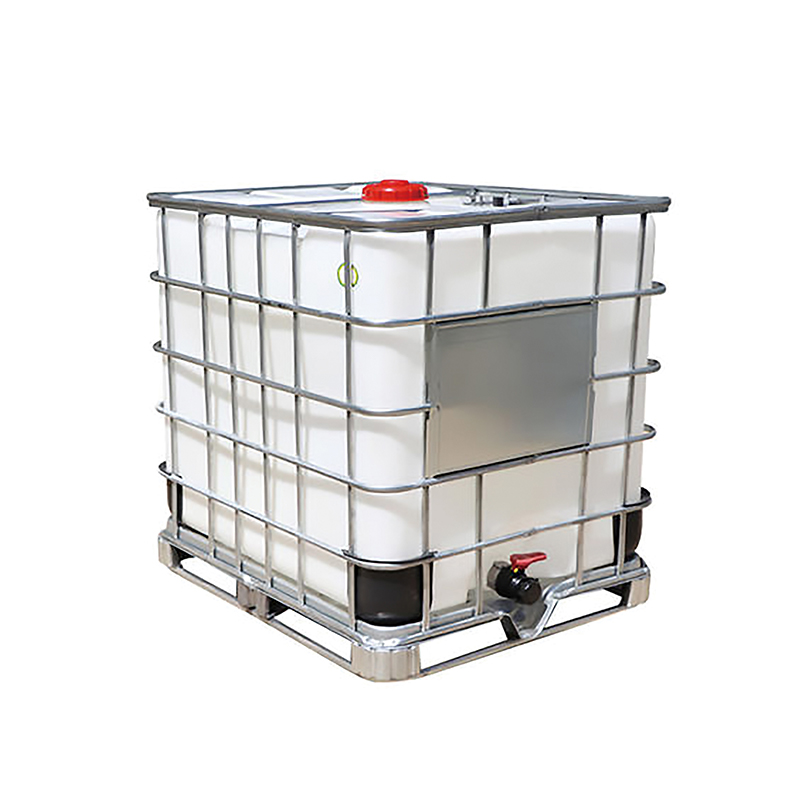
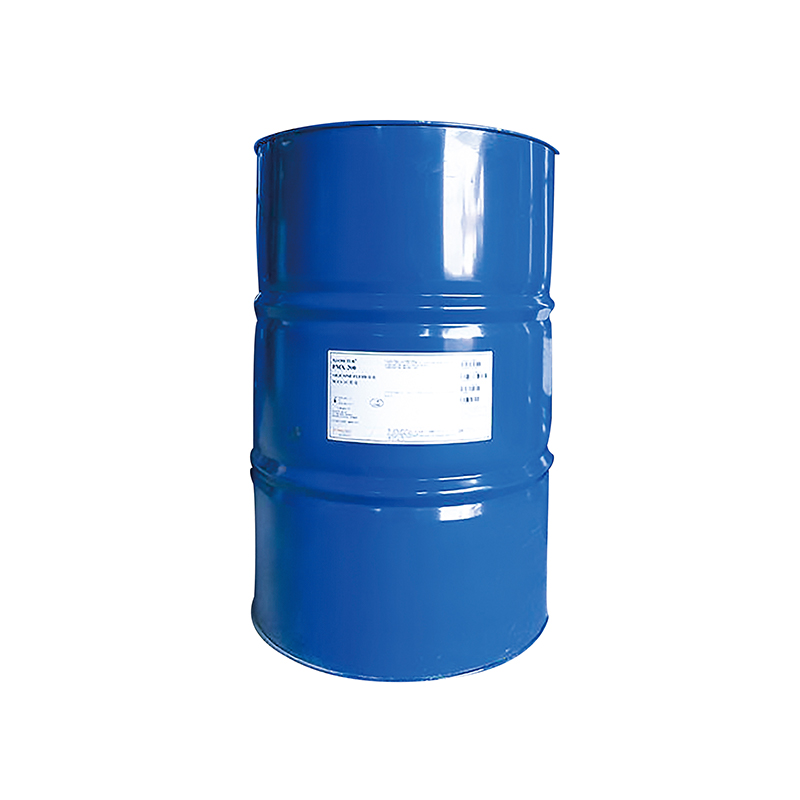

Contact Information
Tel : +86-400-138-5268
Email : [email protected]
Phone : +86-15128434888 / +86-13511051998
Add : Xinqiao Environmental Protection Industrial Park, Wen'an County, Langfang City, Hebei Province, China
Contact Information
Copyright © Hebei Guituo New Material Co., Ltd. All Rights Reserved.
