

 English
  Français
  Português
 Home / Author / Wang Lina, After-sales Service Engineer (Silicone Additives) / Agricultural Silicone Wetting Synergist for High-Efficiency Crop Spray Performance
 Agricultural Silicone Wetting Synergist for High-Efficiency Crop Spray Performance
2026-07-15
Agricultural production increasingly depends on precision, efficiency, and responsible chemical use. Growers, formulation engineers, and agrochemical distributors all face the same challenge: how to make every droplet of pesticide, herbicide, fungicide, foliar nutrient, or plant-growth solution reach the target surface more effectively. Agricultural Silicone Wetting Synergist is designed to answer this challenge by reducing surface tension, improving spreading, enhancing penetration, and supporting more uniform spray coverage on leaves, stems, fruit surfaces, and porous plant structures.
This article focuses on the performance value of Agricultural Silicone Wetting Synergist, especially the GT-7000 wetting agent based on polyether modified trisiloxane chemistry. It also explains how advanced manufacturing capability, strict quality control, and technical service strength from Hebei Guituo New Material Co., Ltd. support consistent product performance for agricultural and industrial users. The product is positioned as a high-performance silicone surfactant and wetting agent for modern agriculture, while also reflecting the broader technical advantages of organosilicon additives used in paint additives, chemical raw materials, release agents, textiles, daily chemicals, electronics, and related fields.
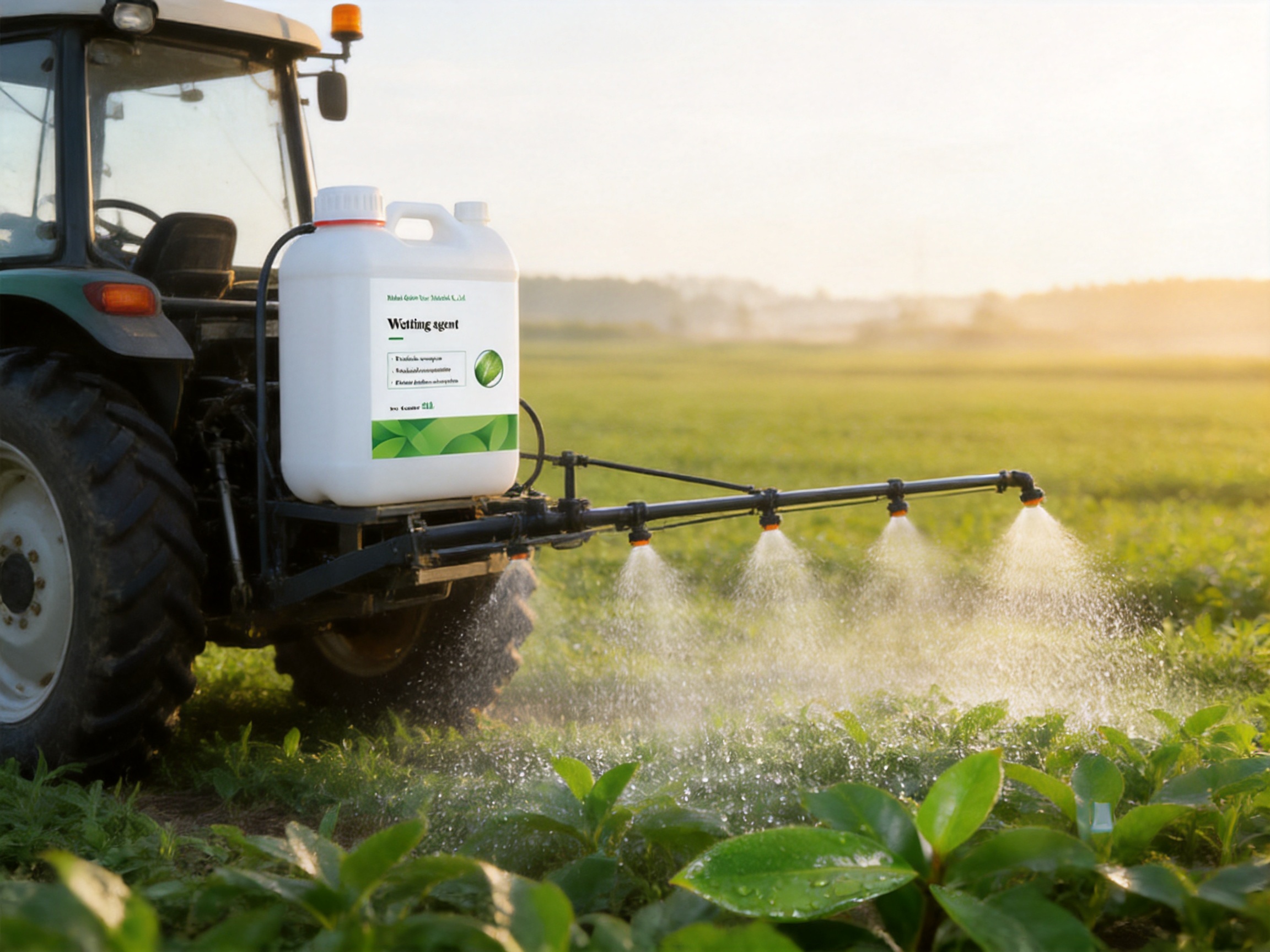
In practical field use, poor wetting often causes spray liquid to form beads on waxy or hydrophobic leaf surfaces. These beads can roll off the plant, evaporate quickly, or create uneven chemical distribution. A silicone wetting synergist changes this behavior. By sharply lowering the surface tension of the spray liquid, it allows droplets to expand from the contact point outward and form a thin, continuous film. This effect helps active ingredients cover more surface area with the same spray volume, improving utilization efficiency and reducing waste caused by runoff.
Agricultural Silicone Wetting Synergist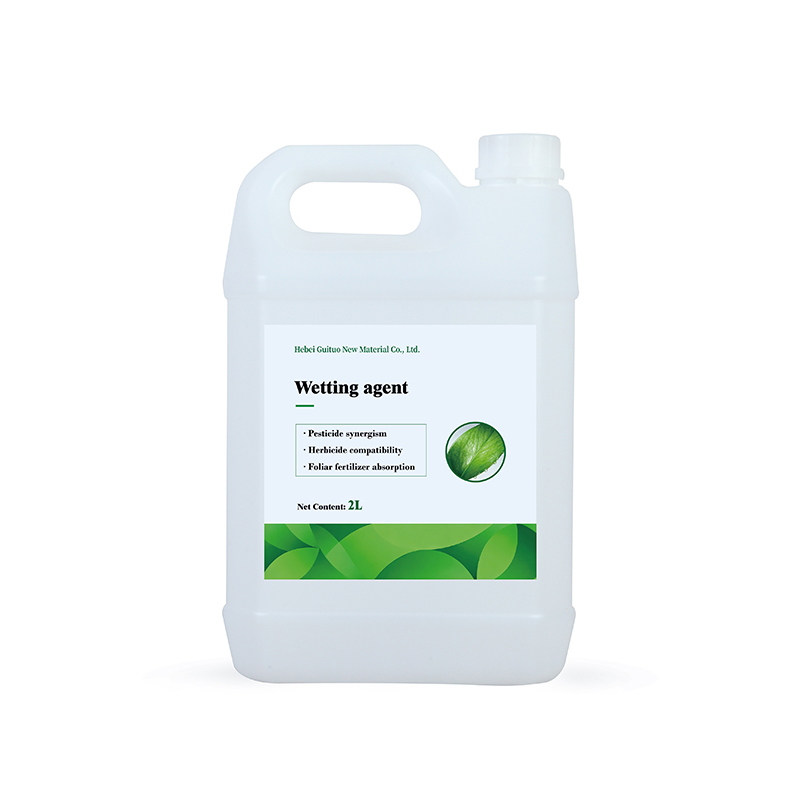
Product Overview
Agricultural Silicone Wetting Synergist is a surfactant-type additive that lowers the surface tension of liquid formulations and the interfacial tension between liquids and solid surfaces. Its molecular structure includes hydrophilic and lipophilic functional groups that help the liquid phase overcome natural contraction forces. As a result, the spray solution spreads more rapidly and evenly on plant surfaces that are normally difficult to wet.
The GT-7000 model is identified as a wetting agent with the CAS No. 27306-78-1 and EINECS No. 608-078-3. It is also described as a silicone surfactant and polyether modified trisiloxane. This chemistry is widely recognized for super-spreading behavior at low addition levels. Compared with many conventional nonionic surfactants, polyether modified trisiloxane products can achieve very low surface tension, which is especially useful for agrochemical sprays where fast spreading and complete surface coverage are essential.
The product offers four major functional advantages: reduction of surface tension, excellent spreading, penetration assistance, and formulation compatibility. These characteristics allow it to serve not only as a wetting agent but also as a synergistic additive that can improve the practical performance of agrochemical active ingredients. When used correctly, it supports more uniform pesticide distribution, better contact between the spray solution and the crop surface, improved absorption of foliar nutrients, and more efficient use of agricultural inputs.
For agricultural users, the value of a wetting synergist is not measured only by laboratory numbers. It is measured by field convenience, consistency, crop safety, compatibility with spray systems, and predictable behavior under real application conditions. A strong silicone wetting synergist should disperse well, be easy to handle, show reliable wetting in diluted solutions, and remain stable enough for normal storage and transport. GT-7000 is designed to meet these expectations through controlled formulation and careful quality inspection.
Key Product Specifications
The technical profile of GT-7000 demonstrates its suitability for high-efficiency wetting and spreading applications. The following table summarizes the key parameters provided for the product.
| Item | Specification | Practical Significance |
|---|---|---|
| Product Model | GT-7000 | Identifies the wetting agent grade for agricultural silicone applications |
| Name | Wetting Agents | Used to improve liquid wetting, spreading, and penetration |
| CAS No. | 27306-78-1 | Common identifier for the silicone surfactant chemistry |
| Purity | 99.8% | Indicates high active content and controlled formulation quality |
| EINECS No. | 608-078-3 | Reference for chemical substance identification |
| Synonym | Silicone Surfactant, Polyether Modified Trisiloxane | Describes the chemical class associated with super-spreading behavior |
| Viscosity at 25°C | 30–50 mm²/s | Supports convenient handling, blending, and dosing |
| Surface Tension at 0.1 wt% | Less than 20.5 mN/m | Shows strong ability to reduce surface tension for rapid spreading |
| Cloud Point at 1.0 wt% | ≤35°C | Provides guidance for formulation and storage behavior |
| pH Value, 1% Aqueous Solution at 25°C | 6.5–7.5 | Near-neutral profile supports compatibility with many crop spray systems |
The very low surface tension at 0.1 wt% is one of the most important features. Water at room temperature has a surface tension of approximately 72 mN/m. Many conventional wetting agents reduce this value, but silicone surfactants can reduce it much further. A value below 20.5 mN/m indicates that the diluted spray liquid can spread quickly across difficult surfaces. This is particularly useful on crops with waxy cuticles, dense hairs, uneven surfaces, or vertical leaves where standard sprays may bead and run off.
The viscosity range of 30–50 mm²/s at 25°C offers a balance between flowability and handling stability. A product that is too thick may be difficult to dose in production or field mixing, while a product that is too thin may be less convenient for controlled addition. The specified viscosity range makes GT-7000 practical for formulators, agrochemical producers, and large-scale distributors who need repeatable processing behavior.
How the Wetting Synergist Works
The central principle behind Agricultural Silicone Wetting Synergist is interfacial control. When a spray droplet lands on a surface, three forces determine whether it spreads or remains as a bead: the surface tension of the liquid, the surface energy of the solid, and the interaction between the two phases. Plant leaves are often covered with waxes, oils, microstructures, and natural protective layers that resist water. This is why ordinary water frequently forms droplets instead of a continuous film.
Polyether modified trisiloxane molecules migrate to the liquid-air and liquid-solid interfaces. The silicone segment provides extremely low surface energy, while the polyether segment helps the molecule remain compatible with aqueous systems. This dual character allows the surfactant to align at the interface and weaken the internal cohesion of the liquid droplet. As the surface tension decreases, the droplet no longer pulls itself into a tight sphere. Instead, it spreads outward, increasing the contact area with the target.
The spreading effect is more than visual. A larger contact area allows active ingredients to access more plant tissue. For contact pesticides, this can improve pest or disease coverage. For systemic herbicides and fungicides, better wetting can improve the opportunity for absorption. For foliar fertilizers, more uniform coverage can help nutrients reach more leaf surface area. In all cases, improved spreading can support more efficient use of the active product.
Penetration is another important function. Many plant surfaces and agricultural target materials have micro-pores, capillary gaps, or rough surface structures. Air trapped in these structures can prevent liquid from entering. A strong wetting agent helps the liquid overcome that air barrier and enter fine spaces more readily. This is why silicone wetting synergists are valuable in applications where quick penetration and high coverage uniformity are required.
Advantages Over Conventional Wetting Agents
Compared with many traditional surfactants, Agricultural Silicone Wetting Synergist offers several performance advantages. The most obvious is its ability to reduce surface tension to extremely low levels at low use concentrations. Conventional nonionic, anionic, or amphoteric surfactants may improve wetting, but they often cannot achieve the same super-spreading effect on waxy crop surfaces. For users, this means silicone wetting agents can deliver stronger coverage improvement with relatively small addition amounts.
Another advantage is rapid spreading speed. In agricultural spraying, time matters. Droplets may evaporate, roll off, or be displaced by wind before they fully interact with the plant surface. A fast-spreading additive increases the chance that the spray liquid will form an effective film immediately after contact. This is particularly valuable in hot, dry, or windy environments where spray retention is difficult.
The product also supports improved uniformity. Uneven spray coverage can create zones of excessive concentration and zones of insufficient treatment. Excessive concentration may increase the risk of local phytotoxicity, while insufficient coverage may reduce pest control or nutrient delivery. By promoting a more even film, the wetting synergist helps reduce the difference between over-treated and under-treated areas.
In comparison with lower-grade wetting agents, a high-purity silicone synergist can also offer better batch consistency. Purity and controlled production directly affect odor, clarity, color, viscosity, and wetting performance. Products with unstable composition may separate in formulations, show inconsistent dilution behavior, or perform unpredictably in the field. GT-7000 is designed with 99.8% purity and strict quality monitoring to help minimize these risks.
Compatibility is another practical advantage. Agricultural users rarely apply a wetting agent alone. It is usually combined with herbicides, insecticides, fungicides, fertilizers, plant growth regulators, or other adjuvants. A useful wetting synergist must mix well without causing phase separation, precipitation, or unwanted reactions. The near-neutral pH range of 6.5–7.5 in a 1% aqueous solution supports broad compatibility with many formulations, although users should always perform jar tests and follow label recommendations before large-scale application.
Benefits for Pesticide, Herbicide, and Fertilizer Applications
For pesticide applications, coverage is critical. Insects and disease organisms may hide on the underside of leaves, in dense canopy areas, or along irregular plant surfaces. A spray that beads and rolls off cannot provide complete contact. Agricultural Silicone Wetting Synergist helps the spray spread along the surface, improving contact between the pesticide solution and the treatment area. This can support better practical efficacy, especially where the target surface is difficult to wet.
For herbicide applications, wetting and absorption are often linked to performance. Many weeds have waxy leaves or surface hairs that resist aqueous sprays. A silicone wetting synergist can help the herbicide solution cover these surfaces more evenly. This improved coverage can be valuable for systemic herbicides that must enter plant tissue, as well as contact herbicides that depend on surface contact. Better spreading may also reduce the tendency of droplets to collect only at leaf tips or margins.
For fungicide applications, uniform protection is essential. Fungal infections can begin from small untreated areas, so coverage gaps reduce control reliability. A wetting synergist can help fungicide droplets distribute across leaf surfaces and plant structures more evenly. In protective fungicide programs, this can improve the quality of the treated barrier. In systemic fungicide programs, it may support more effective entry into the plant surface.
For foliar fertilizers, uniform nutrient delivery can be difficult because leaves are not naturally designed to absorb large volumes of water-based solutions. A wetting agent improves contact between nutrient droplets and the leaf surface. When the solution spreads into a thin film, water and dissolved nutrients are positioned across a wider area. This can support more efficient nutrient uptake and reduce visible residue caused by concentrated droplets drying in isolated spots.
For plant growth regulators and specialty crop treatments, precise application can be even more important. These products are often used at carefully controlled rates. Uneven coverage can cause inconsistent growth response. A silicone wetting synergist can contribute to more uniform distribution and improved repeatability of treatment results.
Crop Safety and Responsible Use
Agricultural Silicone Wetting Synergist is generally considered suitable for use in crop spray systems when applied according to recommended guidance. However, because it is highly effective at improving penetration and spreading, responsible use is essential. A powerful adjuvant can increase the delivery of active ingredients, which is beneficial when properly controlled but may create crop stress if used with overly concentrated pesticides, sensitive crops, high temperatures, or incompatible mixtures.
Users should follow manufacturer instructions and conduct compatibility and crop-safety tests before broad application, especially when treating high-value crops or using new tank mixtures. Application timing also matters. Spraying during extreme heat, strong sunlight, drought stress, or immediately before heavy rain may increase the risk of unwanted results. As with all agricultural inputs, best practice includes correct dosage, proper dilution, calibrated equipment, and attention to weather conditions.
The near-neutral pH of the product supports safe integration into many spray programs, but pH alone does not guarantee compatibility with every active ingredient. Some agrochemical formulations are sensitive to surfactants, oils, salts, fertilizers, or high-electrolyte solutions. Therefore, a small-scale jar test is recommended when combining the wetting synergist with unfamiliar products. The mixture should remain uniform without separation, flocculation, excessive foaming, or sediment formation.
Crop safety is also affected by coverage intensity. Because silicone wetting agents can create very strong spreading, they may increase the amount of active ingredient contacting delicate tissues. This is one reason dosage should not be increased casually. The goal is not to use the maximum possible amount but to use the correct amount that improves performance without causing unnecessary stress.
Environmental Considerations
Modern agriculture requires not only high productivity but also environmental responsibility. A wetting synergist can contribute to more efficient chemical use by improving coverage and reducing waste from droplet runoff. When spray solution remains on the target surface instead of falling to the soil, more of the applied product is used for its intended purpose. This supports better input efficiency and may help reduce unnecessary environmental loading.
At the same time, any agricultural additive must be managed carefully. Improper application near water bodies, during heavy rainfall, or under strong runoff conditions can increase the chance of movement into surrounding ecosystems. Users should follow local regulations, product guidance, and good agricultural practices. Buffer zones, weather monitoring, accurate dosing, and equipment calibration are important tools for minimizing environmental risk.
Silicone wetting agents are often valued because they are effective at low addition rates. Lower use levels can reduce the total amount of auxiliary chemical introduced into the spray system. However, effectiveness at low dosage should not lead to careless handling. Storage containers should remain sealed, properly labeled, and protected from extreme temperature and direct sunlight. Spills should be cleaned according to safety procedures, and empty packaging should be handled in compliance with local waste management requirements.
The product should be used as part of an integrated crop management approach rather than as a substitute for proper agronomic planning. Responsible chemical use includes pest monitoring, correct active ingredient selection, resistance management, and application only when treatment is justified. In this context, a wetting synergist is a tool for improving delivery efficiency, not a reason to overapply agrochemicals.

Manufacturing Strength and Quality Control
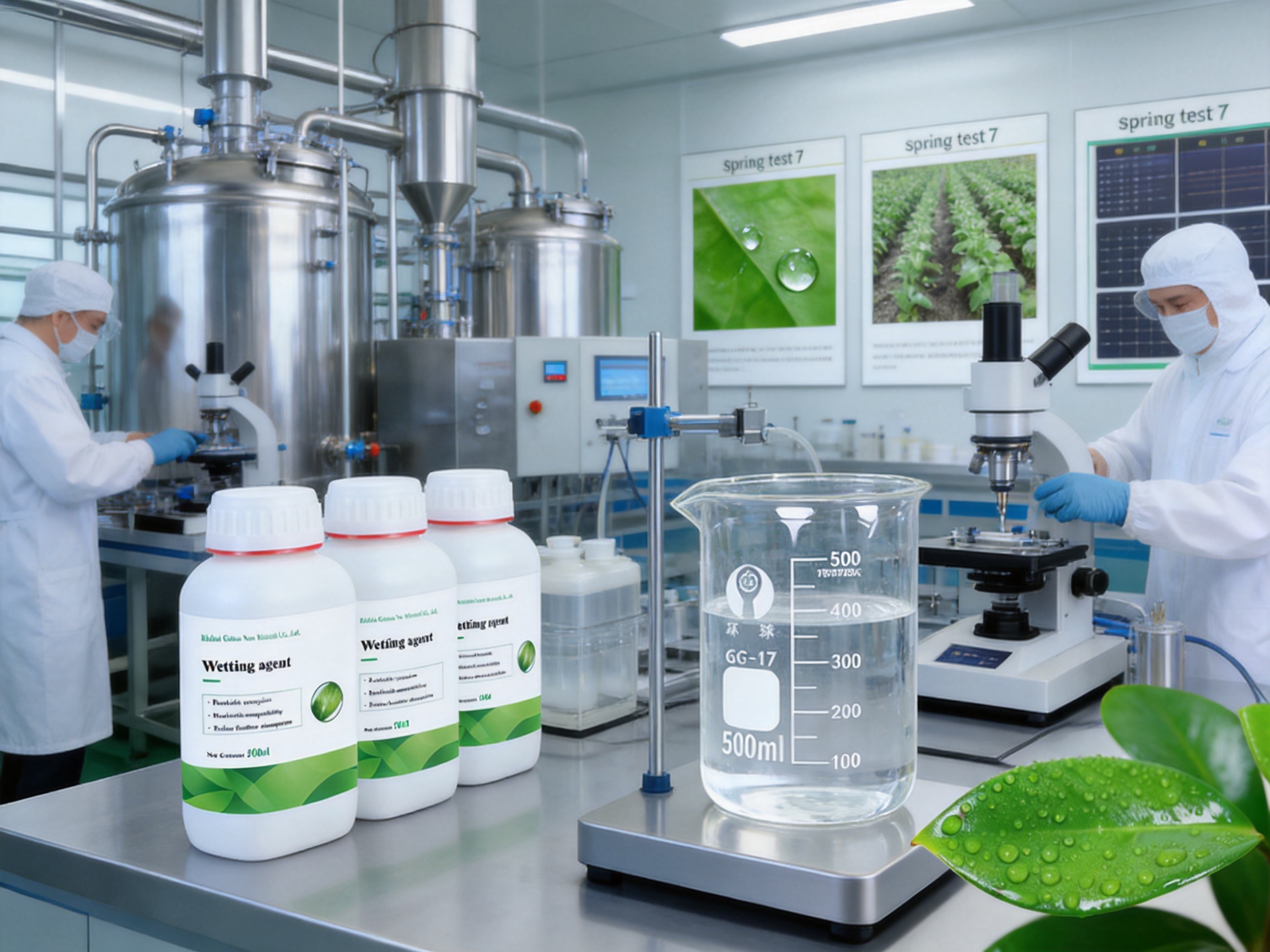
The performance of a silicone wetting synergist depends heavily on manufacturing quality. Small variations in molecular structure, raw material quality, reaction control, purification, and blending can change surface tension, viscosity, cloud point, odor, clarity, and compatibility. Hebei Guituo New Material Co., Ltd. supports product reliability through advanced production equipment, precise testing facilities, and a full-process quality monitoring mechanism from raw material input to finished product delivery.
The company is a high-tech enterprise integrating research and development, production, and sales. Its development model is based on technology as the core driving force, with a focus on high-end silicone materials for industrial and agricultural applications. This technical orientation is important because silicone surfactant production requires more than simple blending. It involves understanding organosilicon chemistry, polyether modification, molecular distribution, stability control, and performance testing under real application conditions.
Advanced manufacturing begins with raw material selection. Stable supply and consistent raw material quality help ensure that each batch meets the expected technical profile. In silicone surfactants, raw materials can influence active content, residual impurities, color, odor, and final application behavior. A strong manufacturer must evaluate incoming materials before they enter production and maintain clear traceability throughout the process.
Reaction control is another critical factor. Polyether modified trisiloxane products require controlled synthesis conditions to obtain the desired balance of hydrophilic and lipophilic properties. If the reaction is incomplete or poorly controlled, the resulting product may show weaker spreading, poor clarity, inconsistent viscosity, or reduced compatibility. Professional production facilities and trained technical teams help maintain process stability.
Testing is equally important. A high-quality wetting agent should be checked for surface tension, viscosity, pH value, cloud point, purity, appearance, and other quality indicators. These tests are not merely formalities. They confirm that the batch will behave predictably in customer formulations and field dilution systems. Precise testing facilities allow the company to detect deviations early and prevent unstable product from reaching the market.
The company has built a comprehensive guarantee system that includes advanced equipment, precise inspection, and experienced technical and production teams. This full-chain approach gives customers confidence in stable supply and consistent performance. For agrochemical enterprises, distributors, and OEM/ODM customers, consistency is especially valuable because changes in additive quality can affect finished product reputation and field results.
Research and Development Capability
Innovation in silicone additives depends on strong research and development. Agricultural conditions vary widely by crop, climate, active ingredient, water quality, spray equipment, and user practice. A single additive cannot solve every challenge unless it is supported by technical understanding and formulation flexibility. Hebei Guituo New Material Co., Ltd. focuses on the in-depth development and innovative application of high-end silicone materials, allowing it to serve both standard product demand and customized technical requirements.
R&D capability allows the company to optimize product performance for different application targets. For example, a wetting agent used in a pesticide concentrate may require different compatibility characteristics from one used directly as a tank-mix adjuvant. A product for hot-climate field spraying may need different stability considerations from one designed for controlled greenhouse environments. Through formulation knowledge and testing, the company can support customers in selecting suitable silicone additives for specific systems.
The company’s product matrix includes silicone additives, wetting agents, modified silicone oil, dimethyl silicone oil, surfactants, defoamers, and other related series. This wide product range gives the technical team broader formulation experience. Knowledge gained from industrial defoamers, textile additives, release agents, and paint additives can also support innovation in agricultural wetting systems. Organosilicon chemistry often has cross-industry value, and a manufacturer with diverse application experience can provide more practical solutions.
OEM and ODM service capability further demonstrates manufacturing flexibility. Some customers require private-label wetting agents, customized performance targets, adjusted packaging, or product development for specific market segments. A company with integrated R&D and production can respond more effectively than a supplier that only trades standard materials. This capability is especially useful for agrochemical brands seeking differentiated adjuvant products.
Why GT-7000 Offers Competitive Value
In a competitive market, a wetting synergist must provide measurable value beyond a generic surfactant label. GT-7000 offers competitive value through a combination of high purity, strong spreading performance, near-neutral pH, practical viscosity, and manufacturer-backed quality control. These characteristics address the main concerns of agrochemical manufacturers and agricultural users: performance, compatibility, safety, consistency, and supply reliability.
The surface tension value of less than 20.5 mN/m at 0.1 wt% is a major advantage. This indicates strong super-wetting capability, enabling spray droplets to spread across difficult plant surfaces. Competitor products that cannot reach similarly low surface tension may require higher dosage or may deliver weaker spreading under field conditions. Lower effective dosage can improve cost efficiency and reduce formulation burden.
The purity level of 99.8% helps distinguish the product from lower-quality alternatives. High purity supports more reliable performance and reduces the chance of unwanted impurities affecting finished formulations. In professional agricultural applications, low-cost but inconsistent additives may create hidden costs through customer complaints, unstable mixtures, reduced efficacy, or crop safety issues. A stable high-purity product can protect brand reputation and application reliability.
The product’s compatibility profile is another important advantage. Many users need a wetting synergist that can work with multiple active ingredient types. GT-7000 is described as generally mixing well with other adjuvants and base materials without causing phase separation, precipitation, or other adverse reactions. While testing is always recommended for specific formulations, this general compatibility expands the product’s practical usability.
Manufacturing strength further improves competitive value. A wetting agent from a supplier with advanced production equipment, precise testing facilities, and full-process quality monitoring is more dependable than a product sourced through unstable channels. For customers purchasing at scale, supply continuity and batch consistency are as important as initial performance. Hebei Guituo New Material Co., Ltd. supports both domestic and overseas markets, including Europe and Southeast Asia, which reflects its ability to meet broad customer expectations.
Applications Beyond Agriculture
Although the main focus is agricultural silicone wetting performance, organosilicon additives also have value in other industries. The product category information includes agricultural silicone synergists, paint additives, chemical raw materials, and release agents. The same fundamental properties that make silicone wetting agents effective in agriculture can also support industrial wetting, leveling, spreading, and surface modification.
In paint and coating systems, surface tension control is important for leveling, substrate wetting, anti-crater performance, and film uniformity. A coating that fails to wet the substrate may show defects such as fisheyes, pinholes, poor adhesion, or uneven gloss. Silicone additives can help reduce surface tension and improve flow, although formulation compatibility must be carefully evaluated to avoid excessive slip or recoat problems.
As chemical raw materials, silicone surfactants can be used in the development of specialty formulations where interface control is needed. These may include cleaning products, textile auxiliaries, emulsions, dispersions, and surface treatment systems. Their value lies in controlling how liquids interact with solid surfaces, other liquids, or air interfaces.
In release agent applications, organosilicon materials are well known for their low surface energy. They can help reduce adhesion between molded products and processing surfaces. While wetting agents and release agents are not identical products, the broader organosilicon technology platform supports both categories. A manufacturer experienced in multiple silicone product types can better understand how molecular structure affects surface behavior.
Storage, Handling, and Use Recommendations
Proper storage and handling help maintain product integrity. Agricultural Silicone Wetting Synergist should be stored in a cool, dry place away from direct sunlight and extreme temperatures. Containers should remain sealed when not in use to prevent contamination, moisture exposure, or accidental mixing with incompatible materials. Product labels and batch information should be retained for traceability.
During handling, users should follow standard chemical safety practices. Protective gloves, eye protection, and suitable work clothing are recommended, especially in industrial blending or large-volume agricultural preparation. Avoid unnecessary skin or eye contact. If accidental contact occurs, rinse according to safety guidance and seek medical attention if irritation persists.
When preparing spray mixtures, the wetting synergist should be added according to the recommended mixing procedure for the specific application. In many cases, the tank is partially filled with water, agitation is started, active ingredients are added in the correct sequence, and the adjuvant is added after the primary formulation disperses. However, the exact sequence can vary depending on the pesticide or fertilizer product. Users should follow the label of the active ingredient and the technical recommendation of the adjuvant supplier.
Before combining the wetting synergist with unfamiliar formulations, conduct a jar test. Mix small quantities in the same ratio intended for field use and observe the solution for separation, sediment, excessive foam, heat generation, or other abnormal behavior. If the mixture remains stable and uniform, proceed with a small crop test before broad application. This process helps reduce risk, especially with sensitive crops or complex tank mixes.
Quality Assurance From Production to Delivery
Quality assurance is not a single test at the end of production. It is a continuous system that starts with raw material qualification and continues through process control, intermediate testing, final inspection, packaging, storage, and shipment. Hebei Guituo New Material Co., Ltd. emphasizes a full-process quality monitoring mechanism from production source to finished product delivery. This approach is essential for high-performance silicone wetting agents.
During production, key parameters must be controlled to ensure that the final product meets the intended technical profile. These parameters may include reaction temperature, reaction time, material ratio, catalyst control, purification conditions, filtration, and blending uniformity. Process deviations can affect final wetting ability, so manufacturing discipline is crucial.
Final quality inspection verifies that each batch conforms to established standards. Surface tension testing confirms wetting strength. Viscosity testing confirms handling consistency. pH testing supports compatibility assessment. Cloud point testing provides information about solution behavior under changing temperature conditions. Appearance and purity checks help identify contamination or process irregularities.
Packaging also affects quality. Suitable containers protect the product from contamination and environmental exposure. Clear labeling supports traceability and safe handling. Stable logistics help ensure that customers receive product in usable condition. For overseas customers, export experience is valuable because long-distance transport requires strong packaging and documentation management.
Commercial Value for Distributors and Formulators
Distributors benefit from products that are technically strong, stable in supply, and easy to explain to end users. Agricultural Silicone Wetting Synergist has clear selling points: reduced surface tension, excellent spreading, penetration support, compatibility, and high purity. These features are practical and easy to demonstrate through simple wetting tests on leaves or hydrophobic surfaces.
Formulators benefit from a reliable active material that can be incorporated into finished adjuvant products, pesticide formulations, or specialty agricultural solutions. The product’s viscosity range and near-neutral pH support formulation convenience. Its high wetting strength can help formulators create premium products with visible performance differences compared with standard surfactant blends.
Agrochemical enterprises also value suppliers that can provide OEM and ODM service. Customization may include performance adjustment, private labeling, packaging format, concentration design, or formulation support. A supplier with integrated production and R&D can help customers develop products tailored to local market needs, crop systems, and regulatory expectations.
For international buyers, stable quality and export experience are especially important. Products shipped to different regions must perform consistently after storage and transport. Hebei Guituo New Material Co., Ltd. has products exported to Europe and Southeast Asia and has received recognition from overseas customers through stable performance and repeated purchases. This market feedback supports confidence in the company’s supply capability.
Role in Modern Sustainable Agriculture
Sustainable agriculture is not only about reducing chemical use; it is about improving the efficiency and precision of every input. A wetting synergist contributes to this goal by helping spray solutions reach target surfaces more effectively. If a pesticide, fungicide, herbicide, or fertilizer spreads properly, the grower has a better chance of achieving the desired result with planned application rates rather than compensating for poor coverage.
Improved wetting can also support better canopy penetration and surface contact, especially in dense crops. While spray equipment, nozzle selection, pressure, droplet size, and operator skill remain essential, adjuvant technology adds another layer of control. A well-formulated silicone wetting synergist can help reduce the limitations of water-based sprays on hydrophobic biological surfaces.
However, sustainability requires responsible use. Better spreading should not be used as a justification for careless application. Instead, it should be part of an integrated strategy that includes correct diagnosis, targeted treatment, resistance management, weather awareness, and environmental protection. When used responsibly, Agricultural Silicone Wetting Synergist can support higher efficiency and better stewardship of agricultural chemicals.
Q&A Section
Q1: What is Agricultural Silicone Wetting Synergist used for?
It is used to improve the wetting, spreading, and penetration of agricultural spray solutions such as pesticides, herbicides, fungicides, foliar fertilizers, and plant growth regulators. It helps droplets spread into a thin film instead of remaining as beads on plant surfaces.
Q2: Why is low surface tension important?
Low surface tension allows the spray liquid to spread more easily across hydrophobic or waxy surfaces. GT-7000 achieves a surface tension of less than 20.5 mN/m at 0.1 wt%, which supports rapid and uniform spreading.
Q3: How does this product improve pesticide performance?
It improves contact between the pesticide solution and the plant surface. Better spreading can increase the treated area, reduce runoff, and help active ingredients reach target locations more effectively.
Q4: Can it be used with herbicides and fungicides?
Yes, silicone wetting synergists are commonly used with herbicides, fungicides, and insecticides. However, compatibility depends on the specific formulation, so a jar test and label review are recommended before large-scale use.
Q5: Is the product safe for crops?
When used according to recommended instructions, it is generally suitable for many crop applications. Because it strongly enhances spreading and penetration, users should avoid excessive dosage and should test sensitive crops before broad application.
Q6: What makes GT-7000 different from ordinary wetting agents?
GT-7000 is a polyether modified trisiloxane silicone surfactant with high purity, very low surface tension, practical viscosity, near-neutral pH, and strong spreading performance. These features provide competitive advantages over many conventional surfactants.
Q7: Why is manufacturer quality control important?
Silicone surfactant performance depends on stable molecular structure and controlled production. Advanced equipment, precise testing, and full-process quality monitoring help ensure consistent surface tension, viscosity, pH, purity, and compatibility from batch to batch.
Q8: How should the product be stored?
It should be stored in a cool, dry place away from direct sunlight and extreme temperatures. Containers should remain sealed and properly labeled to prevent contamination and maintain product quality.
Q9: Can this wetting synergist reduce agricultural waste?
It can help reduce waste caused by poor wetting and droplet runoff by improving spray coverage on target surfaces. However, users must still follow responsible application practices to prevent runoff and environmental contamination.
Q10: Does the company support customized products?
Yes. Hebei Guituo New Material Co., Ltd. accepts OEM and ODM orders and can support customers with silicone additive products for agriculture and other industrial applications.
Conclusion
Agricultural Silicone Wetting Synergist is a high-value additive for modern crop spray systems. By reducing surface tension, improving spreading, supporting penetration, and enhancing coverage uniformity, it helps agricultural chemicals perform more efficiently on difficult plant surfaces. The GT-7000 wetting agent, based on polyether modified trisiloxane chemistry, offers strong technical indicators including 99.8% purity, surface tension below 20.5 mN/m at 0.1 wt%, viscosity of 30–50 mm²/s at 25°C, and a near-neutral pH of 6.5–7.5 in a 1% aqueous solution.
Its competitive advantages include rapid super-spreading, improved spray retention, broad practical compatibility, high active content, and reliable manufacturing support. Compared with ordinary wetting agents, it can deliver stronger wetting performance at low use levels, making it valuable for pesticides, herbicides, fungicides, foliar fertilizers, and specialty agricultural treatments.
The strength of Hebei Guituo New Material Co., Ltd. further enhances the product’s value. With advanced production equipment, precise testing facilities, experienced technical teams, full-process quality monitoring, R&D capability, and OEM/ODM service, the company provides not only a product but also a dependable technical supply platform. Its product matrix across silicone additives, wetting agents, modified silicone oil, dimethyl silicone oil, surfactants, defoamers, and related materials demonstrates broad organosilicon expertise.
For growers, formulators, distributors, and agrochemical brands seeking improved spray performance, Agricultural Silicone Wetting Synergist offers a practical solution that aligns with efficiency, consistency, and responsible input management. Used correctly, it can help transform spray droplets into uniform functional films, allowing agricultural treatments to reach their target more effectively and supporting better results in modern crop production.
References
1. Tadros, T. F. Applied Surfactants: Principles and Applications. Wiley-VCH.
2. Rosen, M. J., and Kunjappu, J. T. Surfactants and Interfacial Phenomena. John Wiley & Sons.
3. Knowles, A. Chemistry and Technology of Agrochemical Formulations. Springer.
4. Holloway, P. J. Surface Factors Affecting the Wetting of Leaves. Pesticide Science.
5. Stevens, P. J. G. Organosilicone Surfactants as Adjuvants for Agrochemicals. Pesticide Science.
6. ASTM International. Standard Test Methods Related to Surface Tension and Wetting Behavior.
7. Food and Agriculture Organization of the United Nations. Guidelines on Good Practice for Ground Application of Pesticides.
8. Matthews, G. A. Pesticide Application Methods. Wiley-Blackwell.
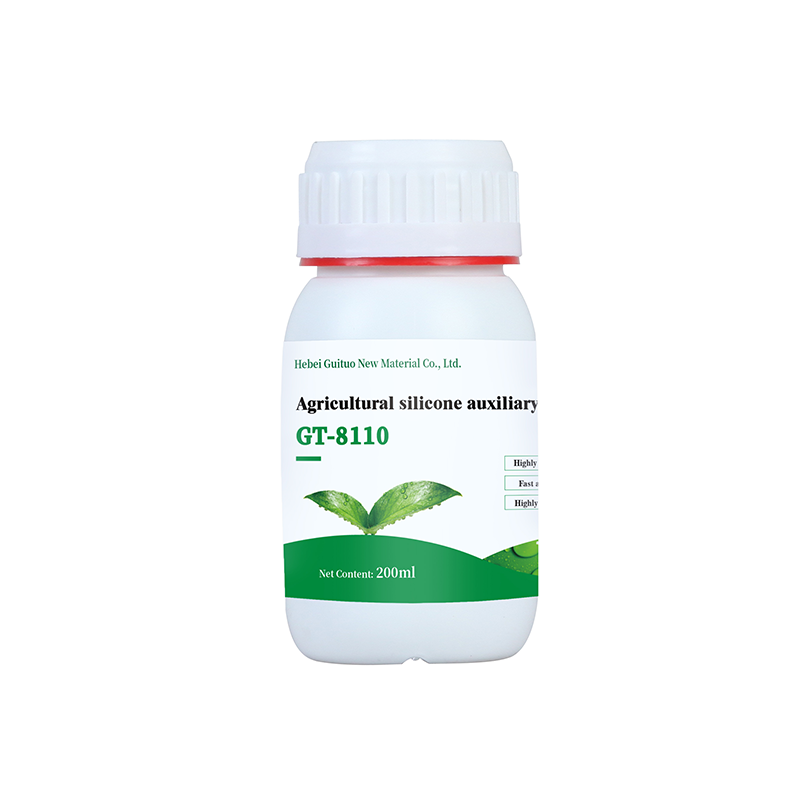
Product: Agricultural Silicone Wetting Synergist


Contact Information
Tel : +86-400-138-5268
Email : [email protected]
Phone : +86-15128434888 / +86-13511051998
Add : Xinqiao Environmental Protection Industrial Park, Wen'an County, Langfang City, Hebei Province, China
Contact Information
Copyright © Hebei Guituo New Material Co., Ltd. All Rights Reserved.
