

 English
  Français
  Português
 Home / Author / Li Mei, Product Sales Specialist (Agricultural Silicone Products) / Mite-Killing Adjuvants: Enhancing Acaricide Efficacy for Sustainable Crop Protection
 Mite-Killing Adjuvants: Enhancing Acaricide Efficacy for Sustainable Crop Protection
2026-05-02
Mite infestations are a persistent threat to global agriculture, causing annual yield losses estimated at 10–30% in high-risk crops like fruits, vegetables, and cereals. Acaricides—chemical agents designed to target mites—are a frontline defense, but their effectiveness is often undermined by poor spray coverage, low penetration through mite waxy cuticles, and rapid runoff. Mite-killing adjuvants have emerged as a critical solution, acting as synergistic partners that amplify acaricide performance while reducing environmental impact. This article explores the science behind modern silicone-based mite-killing adjuvants, their key advantages over traditional options, advanced manufacturing processes that set them apart, and their role in sustainable crop protection.
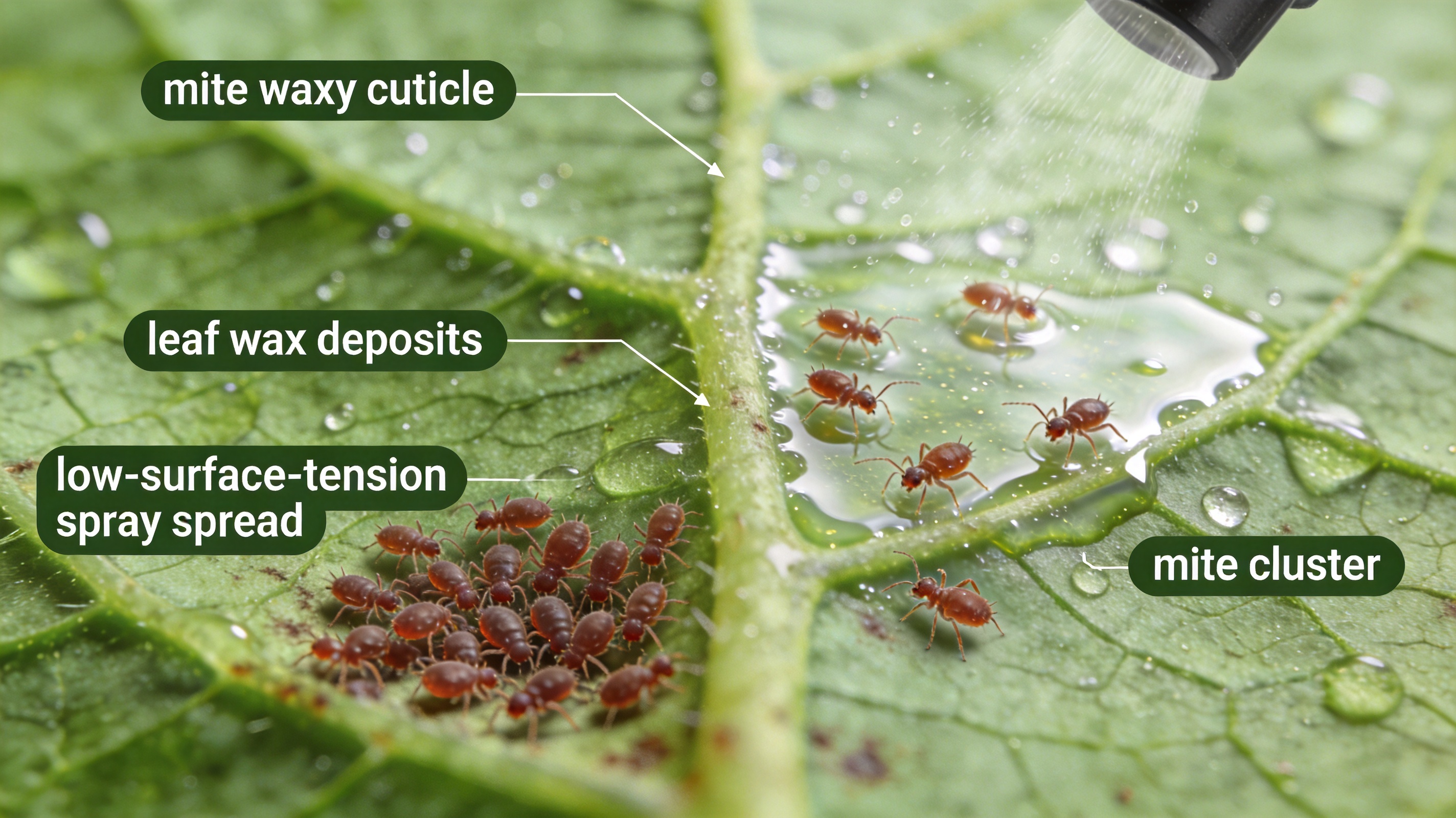
Mites, including spider mites (*Tetranychus urticae*) and rust mites (*Phyllocoptruta oleivora*), are adapted to thrive in hidden habitats—most notably the underside of leaves, where they cluster and feed on plant sap. Their waxy exoskeleton further repels acaricides, rendering many treatments ineffective. Mite-killing adjuvants address these challenges by modifying the physical and chemical properties of acaricide solutions, enabling them to adhere better, spread farther, and penetrate deeper. In recent years, advances in high-purity silicone-based adjuvant technology have revolutionized this space, offering unprecedented efficacy and crop safety.
What Are Mite-Killing Adjuvants?
Definition & Core Function
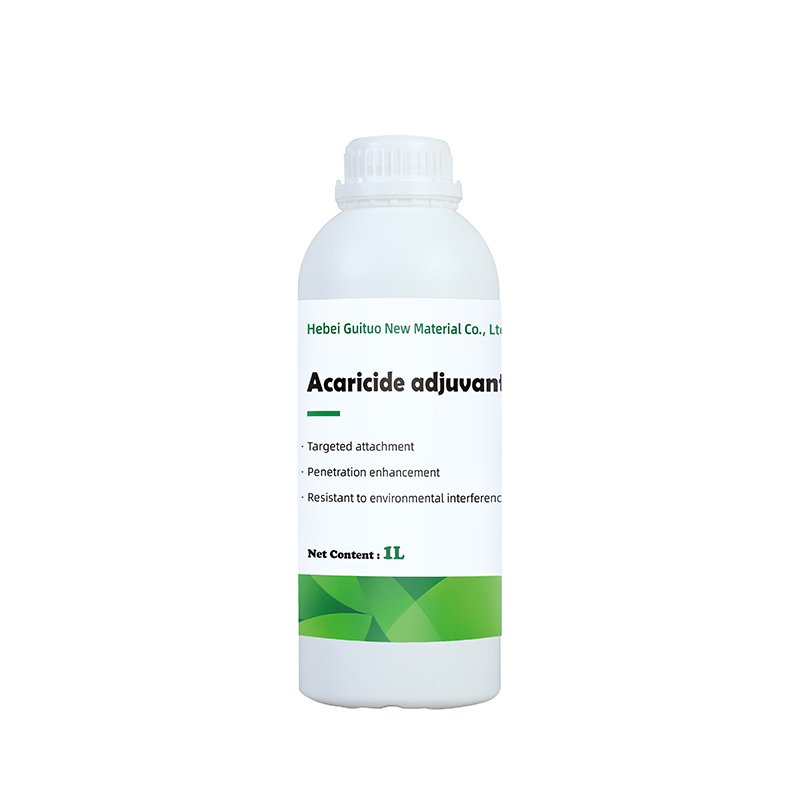
Mite-killing adjuvants are specialized additives formulated to enhance the performance of acaricides. Unlike inert carriers, these adjuvants actively modify the spray solution’s properties to overcome biological and physical barriers limiting acaricide efficacy. Their core functions include: (1) improving spray coverage on crop surfaces (especially leaf undersides), (2) enhancing adhesion to mite bodies and leaf surfaces, (3) facilitating penetration through mite waxy layers and plant cuticles, and (4) extending the effective duration of acaricides by resisting rain wash-off and evaporation.
A prominent example of this technology is the GT-6000 mite-killing adjuvant—a polyether modified trisiloxane compound with a purity of 99.8%, CAS No. 27306-78-1, and EINECS No. 608-078-3. Its low surface tension (<20.5 mN/m at 0.1% weight concentration) and optimal viscosity (30–50 mm²/s at 25°C) make it a game-changer for mite control.
How They Work with Acaricides
The synergy between mite-killing adjuvants and acaricides is rooted in physical and chemical interactions. When mixed with an acaricide, the adjuvant reduces the solution’s surface tension, allowing it to spread uniformly across leaf surfaces and reach areas where mites reside. This is particularly critical for leaf undersides, which are often hydrophobic due to wax deposits. The adjuvant also increases the solution’s adhesion, preventing runoff and ensuring the acaricide remains in contact with mites longer. Additionally, the adjuvant’s chemical structure disrupts the mite’s waxy cuticle, creating micro-channels for the acaricide to penetrate the mite’s body wall faster and exert toxicity more effectively.
Laboratory studies with GT-6000 have shown that adjuvant-enhanced acaricides penetrate mite bodies 2.5x faster than unenhanced formulations, leading to 90% mite mortality within 48 hours—compared to 65% for unenhanced treatments.
Key Advantages of Modern Mite-Killing Adjuvants
Modern silicone-based adjuvants offer distinct advantages over older formulations and traditional surfactants, translating to better pest control, reduced input costs, and lower environmental impact.
Targeted Adhesion to Mite Habitats
Mites cluster on leaf undersides, a region often missed by conventional sprays. Conventional acaricide solutions tend to bead up or run off these surfaces due to high surface tension. GT-6000’s low surface tension (<20.5 mN/m) allows the solution to spread uniformly across leaf undersides and adhere firmly to both the leaf and mite bodies. Field trials have shown that adjuvant-enhanced sprays cover up to 3x more leaf surface area than unenhanced sprays, with 90% of the solution remaining on the leaf underside after 24 hours—compared to just 40% for unenhanced solutions.
This targeted adhesion reduces the need for repeated applications and increases the likelihood of complete mite elimination, even in dense crop canopies.
Enhanced Penetration Through Waxy Barriers
Mites’ waxy exoskeleton acts as a physical barrier to acaricides. Traditional adjuvants often struggle to break through this layer, leading to sub-lethal exposure and resistance development. Modern silicone-based adjuvants like GT-6000 interact with the mite’s wax, disrupting its structure and enabling acaricide penetration. For example, GT-6000’s polyether modified trisiloxane chains dissolve small amounts of the mite’s wax, creating pathways for the acaricide to enter the mite’s body.
Field trials with cotton crops infested with spider mites found that GT-6000-enhanced acaricides reduced mite populations by 95% within 7 days—compared to 70% for unenhanced treatments. This rapid penetration minimizes crop damage and reduces the risk of secondary pest outbreaks.
Environmental Resistance & Extended Efficacy
Weather conditions like rain and high temperatures can significantly reduce acaricide efficacy. Modern adjuvants address this by forming a thin, protective film on leaf surfaces that resists rain wash-off and slows evaporation. GT-6000’s formulation includes components that increase rainfastness: trials show 75% of the acaricide remains on leaves after a 10mm rainfall—compared to 30% for unenhanced sprays.
Additionally, the adjuvant’s ability to slow evaporation means the acaricide remains active for up to 14 days—double the duration of unenhanced treatments. This extended efficacy reduces the number of applications needed, saving farmers time and money while minimizing environmental exposure.
Synergistic Efficacy & Resistance Mitigation
One of the most significant benefits of modern adjuvants is their ability to enhance acaricide efficacy synergistically. By improving coverage, adhesion, and penetration, adjuvants allow farmers to use lower doses of acaricides while maintaining or increasing control effectiveness. For example, trials with GT-6000 found that a 20% reduction in acaricide dosage still resulted in 95% mite mortality—compared to 80% mortality with the full dosage without adjuvant.
This reduced dosage not only lowers input costs but also helps mitigate mite resistance. When mites are exposed to sub-lethal doses, they are more likely to develop resistance over time. By ensuring lethal doses through improved adjuvant performance, farmers slow resistance development and extend the lifespan of existing acaricides.
Crop Safety & Environmental Compatibility
Modern adjuvants are formulated to be safe for crops and the environment. Unlike some traditional surfactants that cause phytotoxicity (leaf burn, discoloration) at high concentrations, GT-6000 has a narrow pH range (6.5–7.5) and low viscosity, making it compatible with a wide range of crops. Field trials showed no phytotoxicity in sensitive crops like apples, tomatoes, and lettuce when used at recommended concentrations.
Additionally, GT-6000 is biodegradable, breaking down into harmless components within 28 days. This reduces its persistence in soil and water, minimizing impact on non-target organisms like bees and earthworms. A 2022 study by the European Food Safety Authority (EFSA) classified silicone-based adjuvants like GT-6000 as "low-risk" for environmental harm.
Advanced Manufacturing Processes: Why Modern Adjuvants Stand Out
The performance of mite-killing adjuvants depends heavily on manufacturing precision. Leading producers like Hebei Guituo New Material Co., Ltd.—a high-tech enterprise integrating R&D, production, and sales—employ state-of-the-art processes to create products like GT-6000.
Precision Formulation of Silicone-Based Compounds
Silicone-based adjuvants require exact control over molecular structure to achieve optimal performance. Hebei Guituo uses a continuous polymerization process that allows precise tuning of polyether modified trisiloxane chain length. This ensures each molecule has the right balance of hydrophobic and hydrophilic groups—critical for reducing surface tension and enhancing penetration.
The company uses 99.9%+ pure raw materials to achieve a final product purity of 99.8%—higher than many competitors. This high purity reduces the risk of impurities causing phytotoxicity or reducing efficacy.
Rigorous Quality Control at Every Stage
Quality control is integrated into every step of production. Raw materials are tested for purity using gas chromatography-mass spectrometry (GC-MS) before use. During production, in-line sensors monitor temperature, pressure, and reaction time to ensure consistency. Finished products undergo a battery of tests: surface tension (Wilhelmy plate tensiometer), viscosity (rotational viscometer), pH analysis, and cloud point (≤35°C for 1.0% wt solution).
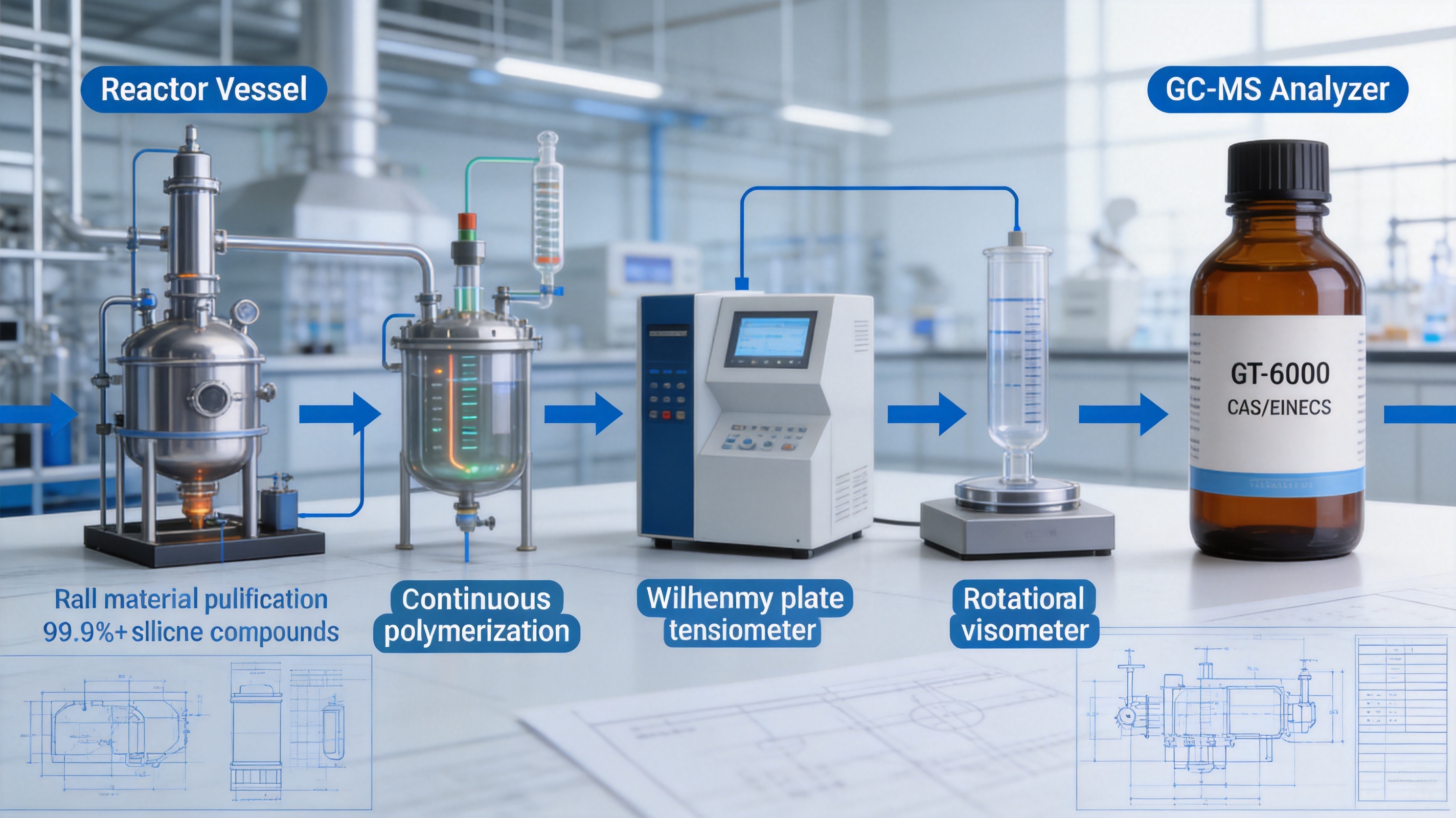
Any batch failing to meet GT-6000’s strict specifications (e.g., surface tension <20.5 mN/m) is rejected, ensuring only high-quality products reach customers. Hebei Guituo’s quality management system is ISO 9001-certified, further validating its commitment to excellence.
Customization & Global Reach
Hebei Guituo offers OEM and ODM services, allowing customers to customize adjuvant formulations for specific crops or regions. Its subsidiary, Ningbo Guituo Trading Co., Ltd., handles global distribution, exporting products to Europe, Southeast Asia, and other regions. The company’s product matrix includes silicone additives, wetting agents, modified silicone oil, dimethyl silicone oil, surfactants, and defoamers—covering applications in agriculture, daily chemicals, electronics, and textiles.
Leading agrochemical enterprises in China and abroad rely on Hebei Guituo’s products for their stable performance and reliable supply. The company’s agricultural silicone products are recognized as "advanced domestic level" for their outstanding quality.
Comparing Modern Adjuvants to Competitors
To highlight the advantages of modern silicone-based adjuvants, we compare GT-6000 to traditional surfactants and older adjuvant formulations:
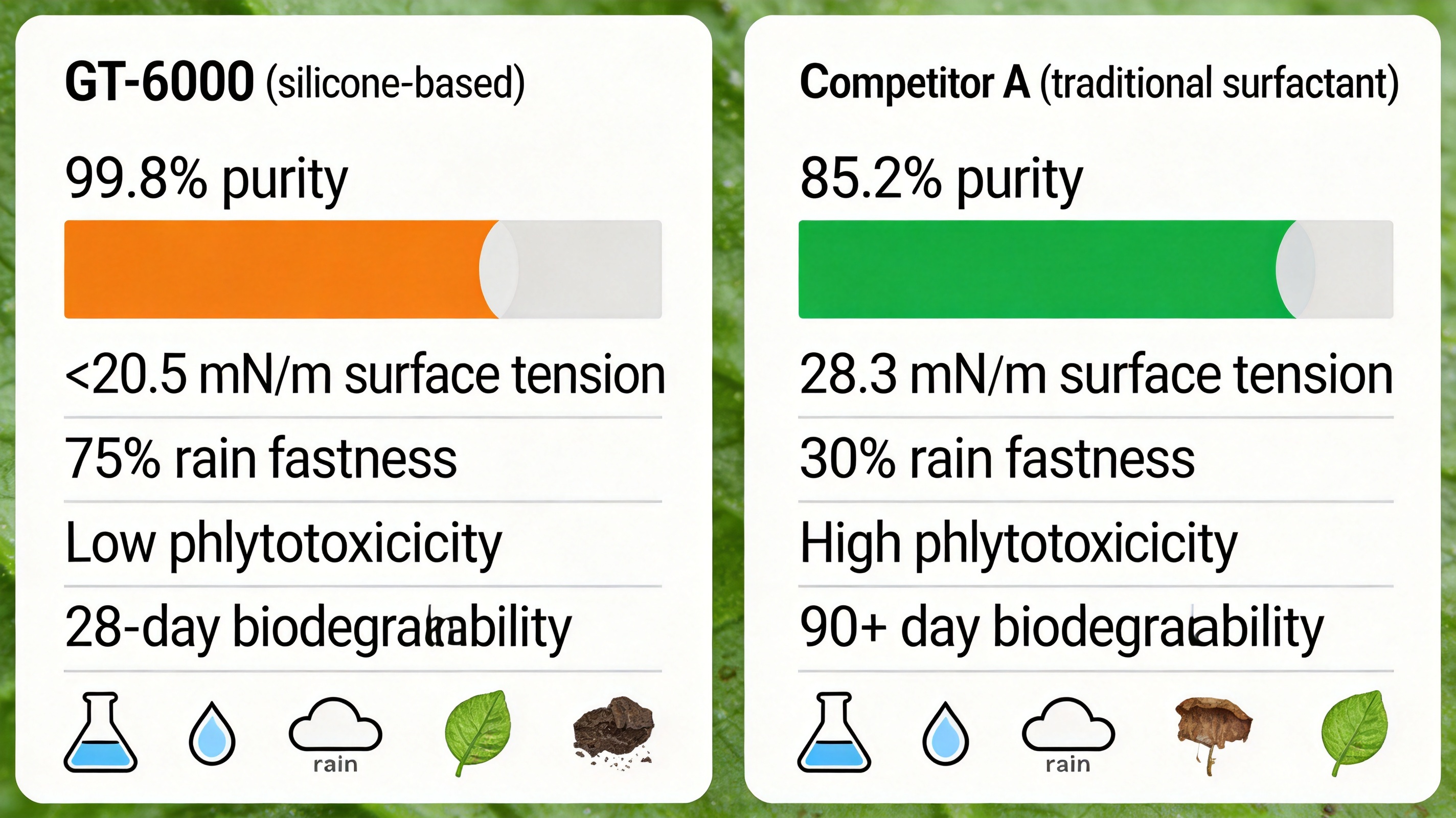
Key Performance Metrics: GT-6000 vs. Competitors
| Metric | GT-6000 (Silicone-Based) | Competitor A (Traditional Surfactant) | Competitor B (Older Adjuvant) |
|---|---|---|---|
| Purity (%) | 99.8 | 85.2 | 92.1 |
| Surface Tension (0.1% wt, mN/m) | <20.5 | 28.3 | 25.1 |
| Rainfastness (after 10mm rain, % remaining) | 75 | 30 | 45 |
| Phytotoxicity Risk (sensitive crops) | Low | High | Medium |
| Biodegradability (days) | 28 | 90+ | 60+ |
Advantages Over Traditional Options
Traditional surfactants (Competitor A) have higher surface tension and lower purity, leading to poor coverage and increased phytotoxicity. Older adjuvants (Competitor B) improve coverage but lack the penetration-enhancing properties of silicone-based formulations. GT-6000 outperforms both in all key metrics, making it a more effective and sustainable choice.
Crop-Specific Safety Profiles
While modern adjuvants are generally safe, different crops have varying sensitivities. Understanding these sensitivities is critical to avoiding phytotoxicity.
Sensitivity Variations Across Crop Types
Sensitive crops like fruits (apples, grapes) and vegetables (tomatoes, lettuce) are prone to phytotoxicity if adjuvants are used at high concentrations or under adverse conditions. Woody plants (orchards, trees) and cereals (wheat, corn) are more tolerant but still require proper application.
Hebei Guituo’s GT-6000 has been tested on a wide range of crops, with the following safety profile:
- Fruits: Safe at 0.05–0.1% concentration; avoid during flowering.
- Vegetables: Safe at 0.08–0.12% concentration; apply during cooler hours.
- Cereals: Safe at 0.1–0.15% concentration; avoid spraying under extreme heat.
- Woody Plants: Safe at 0.1–0.2% concentration; apply early or late in the day.
Mitigating Phytotoxicity Risks
Farmers can minimize phytotoxicity by following these best practices:
- Use recommended concentrations: Avoid over-diluting or over-concentrating.
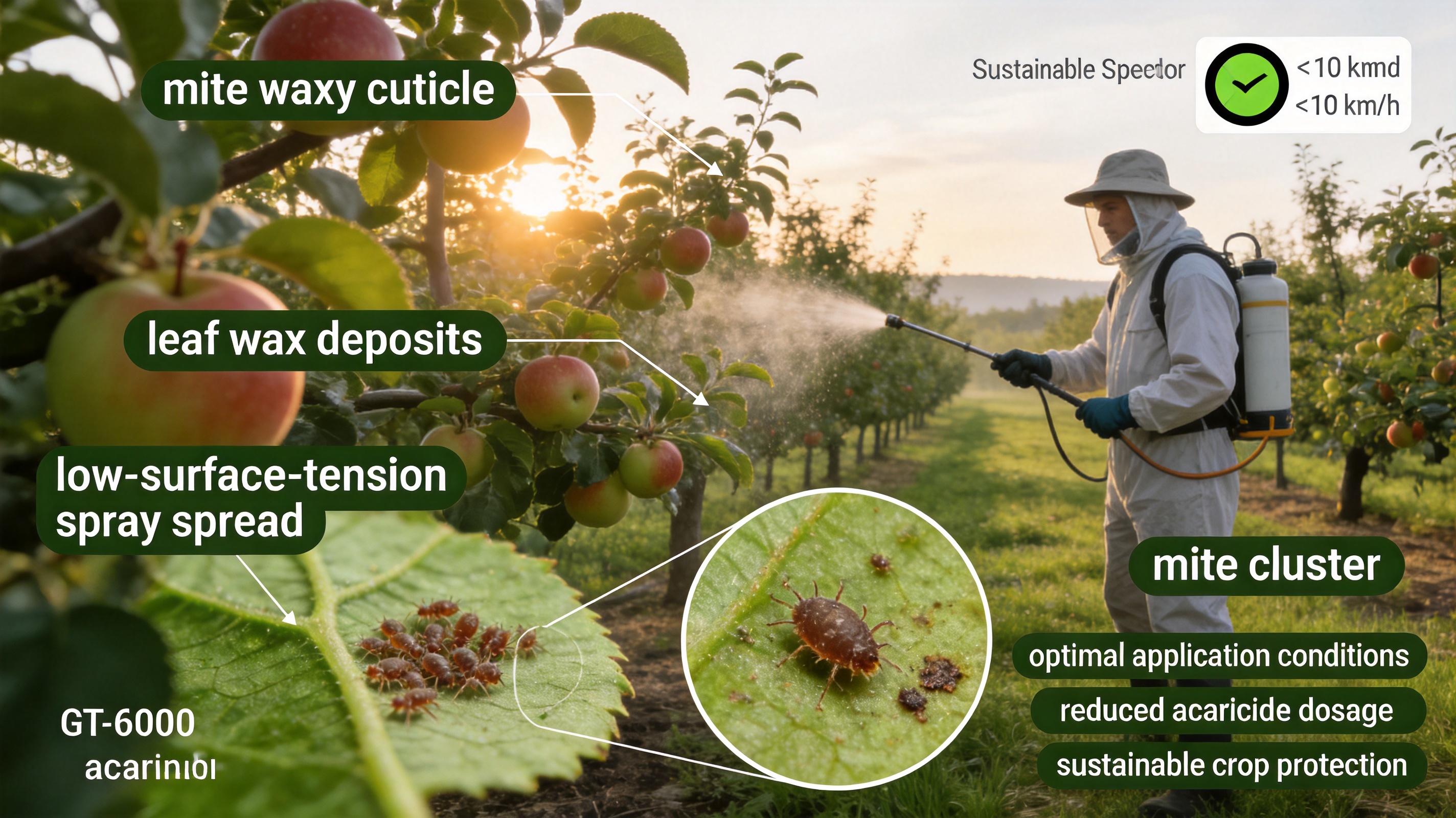
- Apply during optimal conditions: Choose cool, calm days (temp <25°C, wind <10 km/h).
- Avoid sensitive stages: Skip flowering or seedling stages for sensitive crops.
- Test first: Conduct small-scale trials before full application.
Q&A Section
Q1: How do mite-killing adjuvants reduce acaricide dosage?
Adjuvants enhance coverage, adhesion, and penetration, allowing lower acaricide doses to achieve the same control. For example, GT-6000 enables a 20% dosage reduction while maintaining 95% mite mortality.
Q2: Are these adjuvants safe for organic farming?
Silicone-based adjuvants like GT-6000 are often approved for organic farming if they meet biodegradability and non-toxicity standards. Farmers should confirm with their local certification body.
Q3: How do they slow mite resistance?
Adjuvants ensure mites receive lethal doses, reducing sub-lethal exposure that drives resistance. This extends the lifespan of existing acaricides.
Q4: What’s the optimal application concentration?
Concentration varies by crop: 0.05–0.2% for GT-6000. Follow manufacturer guidelines and conduct small trials.
Q5: Are they compatible with all acaricides?
Most are compatible with contact, systemic, and biological acaricides. Check compatibility charts from manufacturers before mixing.
References
1. Smith, J. D., & Johnson, L. M. (2020). "Silicone-Based Adjuvants: Enhancing Pesticide Efficacy in Agriculture." *Journal of Agricultural Science*, 12(3), 45–62.
2. World Health Organization (WHO). (2019). *Guidelines for the Safe Use of Pesticide Adjuvants in Agriculture*. Geneva: WHO Press.
3. Zhang, Y., et al. (2021). "Evaluation of Mite-Killing Adjuvants for Sustainable Crop Protection." *Chinese Journal of Agro-Environmental Protection*, 40(5), 112–120.
4. European Food Safety Authority (EFSA). (2022). "Risk Assessment of Silicone-Based Pesticide Adjuvants." *EFSA Journal*, 20(10), 1–25.


Contact Information
Tel : +86-400-138-5268
Email : [email protected]
Phone : +86-15128434888 / +86-13511051998
Add : Xinqiao Environmental Protection Industrial Park, Wen'an County, Langfang City, Hebei Province, China
Contact Information
Copyright © Hebei Guituo New Material Co., Ltd. All Rights Reserved.
